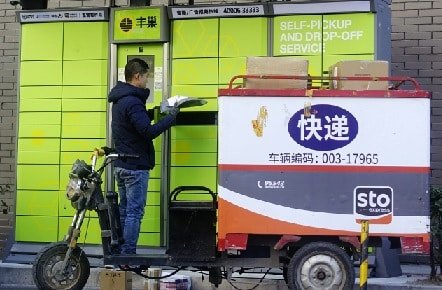
BEIJING, May 8 (Xinhua) — China’s courier sector registered expansion in April, a monthly industry index showed Sunday.
The monthly express delivery development index came in at 356.4 in April, up 47.7 percent year on year, according to the State Post Bureau.
The sub-index for the development scale grew 35.1 percent from a year earlier, the sub-index for development capacity picked up 25 percent year on year and the sub-index for development trend went up 18.1 percent year on year.
The monthly volume of parcels delivered is estimated to have gained 37 percent, while the express delivery revenue is expected to have climbed 31 percent in April.
Compiled on the basis of data from major logistics firms’ operating delivery services, the development index reflects the overall business activities and trends in the country’s courier sector.
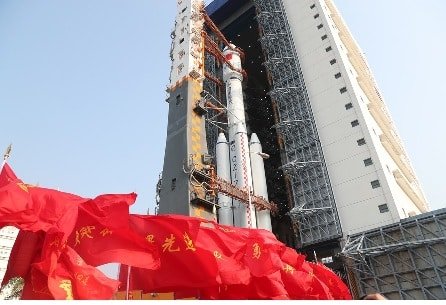
WENCHANG, Hainan, May 8 (Xinhua) — The combination of the Tianzhou-6 cargo spacecraft and a Long March-7 Y7 carrier rocket was vertically transferred to the launching area on Sunday.
The cargo spacecraft will be launched in the near future at an appropriate time, according to the China Manned Space Agency.
The facilities and equipment at the Wenchang Spacecraft Launch Site in China’s southern island province of Hainan are in good condition, and various pre-launch function checks and joint tests will be carried out as planned, the agency said in a statement.
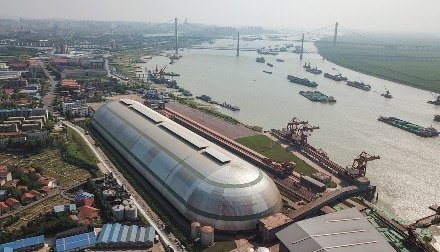
BEIJING, May 8 (Xinhua) — China’s warehouse storage activities further consolidated the trend of expansion in April, industry data shows.
The index tracking the sector’s development stood at 53.7 percent last month, up 3.5 percentage points from March, according to a survey jointly released by the China Federation of Logistics and Purchasing and CMST Development Co., Ltd.
A reading above 50 percent indicates expansion, while a reading below 50 percent reflects contraction.
The index has stayed in the expansion zone for three consecutive months, indicating a strong recovery of the sector, said Wang Yong, vice president of CMST Development.
The growth of major sub-indices of the sector suggests sound business operations, improved efficiency of goods turnover, and active stocking of enterprises.
Wang noted that the confidence of enterprises will continue to rise in the future, and the sector will maintain steady and sound performance, supported by sustained momentum of investment and accelerated recovery of offline consumption.
BEIJING, May 8 (Xinhua) — China’s gold reserves rose to 66.76 million ounces at the end of April, rising from 66.5 million ounces at end-March, data from the State Administration of Foreign Exchange showed Sunday.
According to the data, China’s foreign exchange reserves came in at 3.2048 trillion U.S. dollars at the end of April, up 0.66 percent from that at the end of March.
Taicang is probably better known in Germany than in China, said Shi Mingde, president of the China-Germany Friendship Association and former Chinese Ambassador to Germany.
That’s true. Taicang, a small county-level city located in Suzhou, east China’s Jiangsu province, is honored as “the hometown of German enterprises.” Since 1993 when Kern Liebers was the first German company settled in Taicang, there are more than 480 German companies. Thirty years on, fruitful results have been yielded in high-end industry cooperation, sci-tech innovation and cultural exchanges.
Advanced manufacturing cluster
Driven by innovation, German companies in Taicang have built the advanced manufacture industrial cluster and realized high-quality development in the fields of such as automobile, aerospace and machine tools. The cumulative use of German investment exceeded 6 billion USD in Taicang. With 0.24 percent of the land use, German enterprises have contributed 8 percent of the city’s GDP.
Ungemach, general manager of Zollner Electronic (Taicang) Co., Ltd. (PHOTO: S&T Daily/WANG Xiaoxia)
Although the concept of Industry 4.0 was proposed by Germany, it is implemented here in Taicang through localization, according to Viktor Ungemach, general manager of Zollner Electronic (Taicang). The company performed well in China’s high speed railway project and then manufactured traction and brake systems exclusively for China’s Fuxing bullet train.
Zollner, an electronic manufacturing services provider with its headquarters based in Bavaria, Germany, set up the Zollner Electronic (Taicang) Co., Ltd. in 2004, and achieved rapid growth in China thanks to the favorable policies, generous subsidies and the huge market. The annual output of Zollner Taicang accounts for around 10 percent of Zollner’s total, and 80 percent of the products made in Taicang are sold to Chinese consumers.
Two-way cooperation
Taicang emphasizes two -way cooperation in scientific and technological innovation. On one hand, it encourages German universities, institutions, and high-tech enterprises to establish branches in the city. According to local sci-tech authorities, more than 95 percent of German enterprises above designated size in Taicang have carried out R&D or localized application of technologies, with an annual R&D investment of nearly 1 billion RMB in total.
On the other hand, local enterprises go to Germany to carry out joint sci-tech innovation projects and construct innovation incubators. Taicang has built offshore innovation centers in Berlin and Aachen, Germany, and introduced research institutes such as Fraunhofer to accelerate the transformation of advanced technologies in Germany.
In Taicang, enterprises have carried out in-depth cooperation with domestic research institutes, and increased personnel exchanges between China and Germany. The “Zheng He Cup” Sino-German Youth Innovation and Entrepreneurship Competition has been held for six consecutive years, forming a global collaborative innovation system of “local + enclave + offshore.” In 2013, China’s Ministry of Science and Technology awarded Taicang the title of National Advanced Manufacturing Technology International Innovation Park.
Deep integration
To meet the increasing demand of advanced manufacturing industry for more capable workforce, Taicang has explored the dual system for vocational education, covering the whole system of secondary vocational schools, higher vocational colleges and undergraduate students.
Christian Kalkbrenner, CFO of ZAPP in Taicang. (PHOTO: S&T Daily/WANG Xiaoxia)
“Germany has a special system for the education of the technicians and can share its experience with China through the dual education system. Apart from theoretical education in the school, the trainees can learn skills in the company. After three years, they really have a good knowledge about their job and then can start as a full-time employee,” said Christian Kalkbrenner, CFO of ZAPP in Taicang, a German company that plays a leading role in the technology of high-performance materials and high-precision cold forming.
Since the first German enterprise technician training center in China was settled in Taicang, to date, Taicang has become the largest “German vocational qualification” examination and training base in China and founded the first AHK college and dual-system research institute.
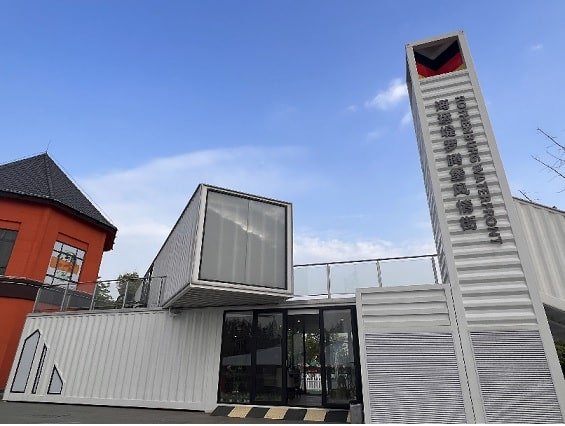
As the “hometown of German enterprises,” Taicang integrates German elements into urban development and construction. It has held 17 consecutive “Oktoberfest,” sports activities such as Sino-German table tennis friendly match, football league and New Year concert every year. There are German-style bars and bakeries, Sino-German friendship kindergarten and FC Bayern Football School. The Rothenburg WaterFront, a German style street, has become a popular destination for people to spend their leisure time.
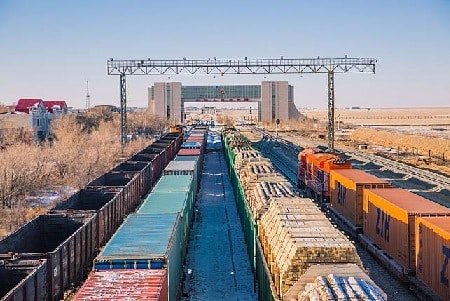
HOHHOT, May 5 (Xinhua) — Erenhot Port in north China’s Inner Mongolia Autonomous Region has logged over 1,000 China-Europe freight trains so far this year, the local railway authorities said on Thursday.
As of Wednesday, the port had handled a total of 1,042 China-Europe freight trains, up 7 percent year on year, 10 days earlier to reach more than 1,000 trains compared to the record of last year.
The Erenhot Port is the largest land port between China and Mongolia, through which 68 China-Europe freight train routes link China with more than 60 regions of over 10 countries, including Germany, Poland, and Mongolia.
Since the beginning of this year, the land port has opened a “green channel” for China-Europe freight trains, which has further improved the operational efficiency of the trains.
BEIJING, May 5 (Xinhua) — China’s non-ferrous metal sector logged rapid expansion in production in the first quarter of 2023, industrial data showed on Thursday.
The industrial added value of major enterprises in the sector expanded 5.8 percent year on year in the first quarter, Chen Xuesen, vice chairman of the China Non-ferrous Metals Industry Association, told a press conference.
The output of 10 types of non-ferrous metals reached 18.26 million tonnes, up 9 percent year on year, according to Chen.
The figure was calculated on the output of the new list of 10 leading non-ferrous metals, including copper, aluminum, lead, zinc, nickel, tin, antimony, silicon, magnesium, and titanium, Chen added.
Compared with the old version, silicon is included in the new list, while mercury is subtracted from it.
The fixed-asset investment in the industry rose 11.9 percent year on year, 1.2 percentage points higher than that for the same period last year, the data showed.
BEIJING, May 5 (Xinhua) — China’s central bank pumped cash into the money market in April to meet liquidity demand from financial institutions.
A total of 170 billion yuan (about 24.62 billion U.S. dollars) was injected into the market via the medium-term lending facility (MLF) last month to maintain liquidity in the banking system at a reasonably sufficient level, according to the People’s Bank of China.
The funds will mature in one year at an interest rate of 2.75 percent.
Total outstanding MLF loans reached nearly 5.13 trillion yuan at the end of April.
The MLF tool was introduced in 2014 to help commercial and policy banks maintain liquidity by allowing them to borrow from the central bank using securities as collateral.
Another 240 million yuan was lent to financial institutions through the standing lending facility to meet provisional liquidity demand.
BEIJING, May 5 (Xinhua) — Chinese authorities required further regulation of state-owned enterprises and listed companies to hire accounting firms, according to the Ministry of Finance on Thursday.
The regulation, jointly released by the Ministry of Finance, the State-owned Assets Supervision and Administration Commission of the State Council, and the China Securities Regulatory Commission recently, aimed to promote fair competition in the certified public accountant profession and improve audit quality.
The state-owned enterprises and the listed companies should employ recruitment methods, including competitive negotiation, open bidding, and invitations to tender to fully understand the competence of the accounting firms, according to the regulation.
The financial departments could, under the law, take such regulatory measures as ordering the accounting firm which violates the provisions to rectify its misconduct, summoning the firm for talks, issuing an inquiry or warning letter, and demanding its public explanation, the regulation added.
HEFEI, May 5 (Xinhua) — Despite working in the research field of magnetic confinement fusion for nine years, Wang Teng, 31, is still amazed by the fact that the scientific term he accidentally read in high school would later become his career, where he and his team have even been able to break world records.
On April 12, the experimental advanced superconducting tokamak (EAST), or the Chinese “artificial sun,” achieved a steady-state high confinement plasma operation for 403 seconds, a key step toward the development of a fusion reactor.
The breakthrough is a huge improvement over the original world record of 101 seconds, which was set by EAST in 2017. It is of great significance to improve the economy and feasibility of nuclear fusion energy, which is considered safer and cleaner, and therefore the ideal “ultimate energy” for the future of humanity.
As a “post-90s” researcher, Wang is a member of the Chinese “artificial sun” team.
“When I was a sophomore in high school, I saw a popular science article about magnetically confined fusion. I got so interested in this concept at that time, but I didn’t expect to be able to participate in related work,” Wang recalled.
In 2014, Wang joined the team of EAST, located at the Institute of Plasma Physics under the Chinese Academy of Sciences (ASIPP) in Hefei, capital of east China’s Anhui Province.
“People usually only see the joy of success, but the failure behind it is always unknown,” Wang said.
Wang said that it took more than four years to go from proposing a problem related to the quench detection for superconducting magnets to completing the system. There were no cases that could be used as a reference at home or abroad, with the very concept itself even facing scrutiny.
“I thought about giving up, but I kept telling myself that scientific exploration is often a process from zero to one, and the dawn is just ahead,” Wang said.
After countless failures and sleepless nights, he finally established a system to ensure the safe and stable operation of the device.
“Every technical breakthrough makes this young team grow,” said Song Yuntao, director of the ASIPP.
Qin Jinggang, 43, said that the process of leading the team to tackle superconducting cable technological problems of the EAST is the most memorable experience of his career.
As the leader of the applied superconducting engineering technology team of EAST, Qing recalled that after more than 1,000 days and nights of hard work, the team finally managed to make the superconducting cables unbreakable.
“We are a team consisting of members from different majors, but we have the same scientific goal,” Qing said, adding that most of the more than 30 researchers in the team are “post-80s” like him.
According to data from the Ministry of Science and Technology, more than 80 percent of the participants in China’s national key research and development programs are under the age of 45.
Sci-tech talent aged 39 and below accounted for 73.89 percent of all sci-tech personnel by the end of 2019, according to a report on the country’s sci-tech human resources development released by the China Association for Science and Technology in 2022.
“Our generation will take the baton from our predecessors and move forward,” Wang said.
Now, in addition to scientific research, he also devotes to science popularization work, hoping that more young people can join scientific research with curiosity and yearning for science like him.