JOHANNESBURG, May 2 (Xinhua) — BRICS countries (Brazil, Russia, India, China and South Africa) are expected to discuss measures to relax some trade hindrances, increase trade among member states and promote post-pandemic economic recovery, said Ayanda Ntsaluba, an official from the South African Chapter of BRICS Business Council, Tuesday.
Ntsaluba told Xinhua in an interview that they have been engaging with business councils from other BRICS countries on the ideas, and have invited leaders from regional economic communities to meet with the BRICS leaders to discuss business.
“We will be looking at how best we can give momentum to the shared commitment that trade should be more balanced, and should be exploiting areas of comparative advantage like agriculture. We have identified some areas (in) which we find obstacles that limit our ability across a variety of goods and services,” said Ntsaluba.
Bilateral trade between South Africa and China as well as that between South Africa and India have shown impressive growth, he noted, adding that they would like to further strengthen relatively low trade with Russia and Brazil.
Ntsaluba said they would like to explore how to increase the export of South African beef, grapes and wines to China and other BRICS countries.
South Africa will host the BRICS summit on Aug. 22-24, according to Ntsaluba, who expected that the whole African continent will be benefited by the event.
“We will explore ways to find synergy between BRICS and African Continental Free Trade Area, and to explore ways to enhance skills exchange among the countries,” Ntsaluba said.
Expecting to receive more tourists from other BRICS countries, Ntsaluba said they would like to work with neighboring countries to have a combo where tourists from BRICS countries can visit South Africa and other countries in the region.
“We will also explore how we can partner (with) BRICS countries to help us to skill our youths with critical skills to be more prepared for opportunities of the global economic craft,” he said.
South Africa assumed the BRICS presidency on Jan. 1, 2023, taking over from China.
GUANGZHOU, May 4 (Xinhua) — Having finished his light lunch, Babak Amin, an Iranian purchaser attending the Canton Fair in south China’s Guangzhou, gathered his stack of brochures and walked briskly into an exhibition hall. He was heading for yet another round of meetings with business partners, continuing a decade of profitable interactions through the fair.
The second phase of this year’s event, also known as the 133rd China Import and Export Fair, concluded last week. International buyers from all over the world, including Amin, participated in the fully resumed on-site activities.
Data shows that the second phase, featuring light industrial products including daily consumer goods, gifts and home decor, attracted about 12,000 participating companies. The exhibition center received some 815,000 visits, with export deals exceeding 4.5 billion U.S. dollars.
Having attended the Canton Fair for over 10 years, Amin said it displays China’s ability to provide suitable manufactured goods in response to customer requests.
“I obtain customized requirements from customers and then communicate the details to Chinese companies for production. Both sides have grown in this process,” he said.
With companies from various industries setting up booths at the fair, Amin said the event is very large in scale. He has already signed four new cooperation orders with Chinese suppliers at this year’s fair.
Also attending the fair this year is an Italian buyer who gave his name as Marco, whose focus is on horticultural products. He visited the booth of Guangzhou Light Holdings Ltd. and talked with the company’s manager about the products on offer.
“Everyone knows that China can offer quality products at a lower price,” he said. “In Italy, consumers are very happy to hear that the products they’re buying come from China.”
Many of the goods showcased in the second phase of the fair used to be classified as labor-intensive products. However, exhibitors have been accelerating the transformation and upgrading of traditional industries through innovative ideas, optimized designs and improved technology.
At the booth of Guangdong Xin Yu Technology Industrial Co., Ltd., a drummer is playing along with the music without physically striking the drums. The product, invented and manufactured by the company, features a gyroscope built into the electric drumstick that allows players to produce drum beats with waves of the stick.
On the other side of the exhibition hall, Ye Weilun, general manager of Guangzhou Megos Tech G.Z. Co., Ltd., said the company has focused on intellectual property rights to develop international markets.
During the second phase of the Canton Fair, Ye has already had discussions with dozens of domestic and foreign clients and has secured several intended orders.
“Our brand has always been global-oriented and we have to enhance the core competitiveness of our company,” said Ye.
BEIJING, May 3 (Xinhua) — In China’s pursuit of high-quality and low-carbon development, apparel, home appliances and furniture have given way to three tech-intensive green products as the top drivers of China’s foreign trade.
The new “three major ones,” namely solar batteries, lithium-ion batteries and electric vehicles, registered a 66.9 percent increase in the first quarter of this year, official data showed. Together they contributed 2 percentage points to the overall export growth, up from 1.7 percentage points for 2022.
“China’s foreign trade growth in Q1 is mainly buoyed by new energy-related exports,” said Zhou Maohua, an analyst with the China Everbright Bank.
This expansion is even more significant considering it continued whopping growth in 2022 as exports of electric vehicles, photovoltaic (PV) products and lithium-ion batteries hiked 131.8 percent, 67.8 percent and 86.7 percent, respectively.
Customs data also showed that the exports were sent to over 200 countries and regions across the globe in Q1, with their top five markets showing growth rates of over 80 percent. The top five markets were the European Union, the United States, the Association of Southeast Asian Nations, the Republic of Korea and the United Kingdom.
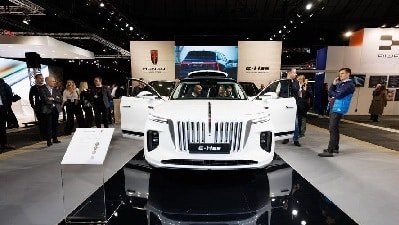
Global buyers thronged the booths of these products at the 133rd Canton Fair, which opened on April 15 in the southern city of Guangzhou. New-energy vehicles from companies like Dongfeng Liuzhou Motor and SAIC GM Wuling enjoyed new orders and avid inquiries from overseas clients within the first days of the event.
Low-carbon products went on to steal much of the limelight in the second phase of the Canton Fair from April 23 to 27, with some items selling for over 1 million dollars in a single deal, data from the Ministry of Commerce showed.
A symbol of China’s improved trade structure and high-quality trade growth, the rising presence of green exports over the past decade also revealed the competitive edge and potential of their respective sectors, analysts say.
China’s technological advantage in making quality electric vehicles, lithium-ion batteries and solar batteries, coupled with the growing global demand for low-carbon products, made China an important supplier for many economies, said Hong Yong, an e-commerce expert with the Chinese Academy of International Trade and Economic Cooperation.
The quality of Chinese new-energy vehicles (NEVs), for example, has been increasingly praised by foreign buyers, including those from Germany, Japan and Australia, according to an executive of Dongfeng Liuzhou Motor at the Canton Fair.
The expanding production capacity in these sectors has also bolstered exports. Official data showed that in the first two months, total output of lithium-ion batteries jumped 24 percent year on year, while major products of the PV sector logged growth rates of around 60 percent. In March, NEV production surged by 44.8 percent from a year earlier to about 674,000 units.
In the near future, analysts say green exports will remain an engine for high-quality growth, thanks to a nurturing policy environment and continued investment.
China has vowed to consolidate the foundation of self-reliance and strength in science and technology, and to cement and expand the advantages in NEV development, according to a leadership meeting in late April.
The country’s investment in high-tech industries continued to outpace overall growth. In Q1, investment in high-tech manufacturing and high-tech service sectors expanded by 15.2 percent and 17.8 percent, respectively, year on year.
ISTANBUL, May 2 (Xinhua) — Chinese smart devices maker Honor unveiled its new mobile phone on Tuesday at a ceremony held in Istanbul, Türkiye’s largest city.
Renowned for its durability, the Honor X9a model is the first of Honor’s X series to debut in Türkiye. The 175-gram, 7.9-mm phone broke sales records in its first week, selling 87 percent more than other phone series.
Sun Jingfei, Honor’s country manager for Türkiye, described Honor’s 13,000 staff, seven R&D centers and almost 300 patents as a reflection of fast growth in such a short period since it split from Chinese tech giant Huawei two years ago.
Cinar Turhan, the corporate communications and PR manager, said the company has developed a cellphone ecosystem to offer a fast and synergic user experience and has been investing in customization services.
Founded as a sub-brand of Huawei, Honor primarily develops and sells smart devices like smartphones, tablet computers and wearable technology.
JERUSALEM, May 2 (Xinhua) — Chinese models dominated electric car sales in Israel during the first four months of 2023, shows data released by the Israel Vehicle Importers Association on Tuesday.
The statistics showed that 66 percent of electric passenger cars sold in Israel in January-April were made by Chinese manufacturers, or 13,235 out of 19,982 cars.
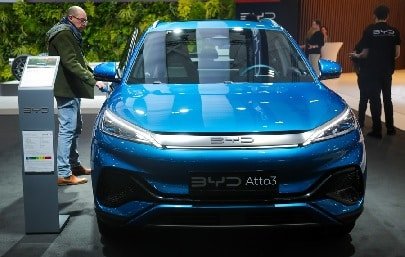
China’s leading electric car maker BYD ranked Israel’s top-selling electric cars brand in the period by selling 7,229 electric cars, mainly the subcompact crossover SUV Atto 3.
BYD was also the fifth best-selling brand among all types of vehicles sold in Israel in January-April, according to the association.
China’s automaker Geely Auto Group, which sold 3,639 compact crossover Geometry Cs, and South Korea’s biggest automaker Hyundai Motor, with 2,012 electric cars sold in the first four months, took second and third place.
Israeli customers buy for high-tech features of Chinese models, which are front-runners in the price range of 50,000 U.S. dollars, Tomer Hadar, an automotive editor for Israeli financial newspaper Calcalist, told Xinhua.
HARBIN, May 3 (Xinhua) — Heilongjiang Province, an old industrial base in northeast China, has seen rapid development in high-tech manufacturing, thanks to its focus on innovation and new technologies.
The added value of the high-tech manufacturing industry in Heilongjiang grew by 24.6 percent year on year in the first quarter of 2023, said the provincial statistical bureau.
The output of high-tech manufacturing products such as industrial robots and proprietary Chinese medicines surged by 520 percent and 63.7 percent year on year in the same period, respectively.
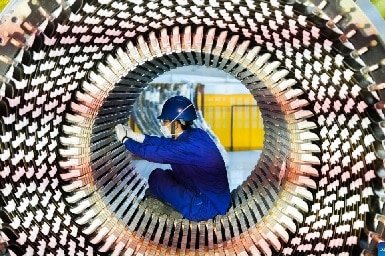
Harbin Electric Corporation, for example, now uses a range of high-tech automatic equipment, including robotic laminating workstations, welding workstations, and industrial manipulators.
“Our robotic lamination workstation can replace the heavy, repetitive workload of five to six people, and it only requires one person to operate,” said Wei Fangkai, deputy manager of the intelligent manufacturing process department of the corporation.
“These pieces of equipment have improved the efficiency and quality of our products while reducing production costs,” Wei added.
Driven by the development in automation, the corporation achieved a 22.2 percent year-on-year increase in revenue and a 170 percent rise in total profit in the first quarter of 2023.
Based in the provincial capital of Harbin, Harbin AVR Technology Co., Ltd. is a specialized innovative firm focusing on virtual reality technology. Xiang Zheng, the company’s board chairman, said it has seen a seven-fold increase in turnover in the past four years.
“With industrial policies supporting digital economy, we have great faith in developing a cluster of virtual reality industries and creating a new engine for Heilongjiang’s economy,” said Xiang.
The boom of high-tech manufacturing has also promoted the development of intelligent agriculture and service industries, attracting more investment in various sectors.
Investment in fixed assets in Heilongjiang grew by 8.4 percent year-on-year in the first quarter, while investment in the primary and tertiary industries surged by 27.1 percent and 14.9 percent, respectively.
“The Ningbo Chamber of Commerce in Heilongjiang has recruited more than 500 enterprises as its members and invested over 100 billion yuan (about 14 billion U.S. dollars) in Heilongjiang,” said Yang Changren, president of the chamber.
SHANGHAI, May 4 (Xinhua) — U.S. coffee giant Starbucks said Wednesday that the company has posted a recovery in its Chinese mainland business this year, fueled by a rebound in traffic as customers returned physically to the stores.
Starbucks achieved a net revenue growth of 3 percent in the Chinese mainland in the second quarter of the 2023 fiscal year, which runs from Jan. 2 to April 2, according to a fiscal report.
The coffee giant also saw a 3-percent increase in same-store sales, driven by a 4-percent increase in same-store transactions.
The net number of new stores opened by Starbucks China stood at 153 during the period, more than double the figure for the previous quarter.
By the end of the quarter, the company operated over 6,200 stores across 244 cities in Chinese mainland, on track to meet the goal of 9,000 stores by 2025, it said.
BEIJING, May 4 (Xinhua) — Enterprises listed on China’s NASDAQ-style board ChiNext saw improved performance in 2022, data shows.
Their average business revenue stood at about 2.81 billion yuan (about 405.83 million U.S. dollars) last year, up 20.43 percent year on year, according to data from the Shenzhen Stock Exchange.
Net profits of the enterprises averaged at 194 million yuan, surging 11.07 percent year on year, the data shows.
Around 60 percent of the enterprises saw year-on-year revenue growth, while the revenues of 99 companies surged over 50 percent.
Last year, the enterprises continued to ramp up research and development spending, with combined investment in the area amounting to 170 billion yuan, up nearly 20 percent year on year.
BEIJING, May 4 (Xinhua) — China’s fixed-asset investment in roads and waterways jumped 15 percent year on year during the first quarter of this year, official data shows.
More than 588.9 billion yuan (about 85.05 billion U.S. dollars) was invested in the construction of the country’s roads and waterways in the period, according to the Ministry of Transport.
Specifically, fixed-asset investment for roads stood at 548.63 billion yuan, up 14.1 percent from the same period last year, while that for waterways construction surged 29.9 percent to 40.27 billion yuan.
Fixed-asset investment in China’s transport sector jumped 13.3 percent year on year to 720.5 billion yuan in the first quarter, earlier data reveals.