Chinese manufacturers and exporters of electric vehicles, including motorbikes, bicycles and even scooters, have made a strong showing at the 2023 Panama E-Mobility Expo, underscoring their interest in promoting electric vehicles here. Designed to spur the sector’s development, the expo, running from Feb. 25 to 26 in Panama’s capital, also drew companies from Germany, Colombia, the United States, Britain, South Korea and Panama. Electric vehicles are poised to see a “boom” this year in the Central American country, thanks to a new Electric Mobility Law enacted in April last year by Panamanian President Laurentino Cortizo, which took effect this year to encourage government agencies and companies to make the move from fossil fuel-burning vehicles to electric ones, said German Mendez, commercial manager in Panama of Chinese electric carmaker BYD. “Fortunately, Panama has good energy. It has the electricity infrastructure to be able to support the demand, which of course has to keep growing,” said Mendez, noting Panama already has more than 200 charging stations for electric vehicles. BYD expects its market share to grow 40 percent to 50 percent in 2023, after expanding its business over the last two years, Mendez said. Moises Soto, commercial manager in Panama of Chinese carmaker Geely Auto, said that the new law has given the electric vehicle sector a notable boost. “The Electric Mobility Law has helped us a lot to knock on doors that we thought were closed to us,” said Soto. Geely is set to launch a seven-passenger light-hybrid vehicle next week, and in June it will present its first 100-percent electric car in Panama, said the manager. Meanwhile, Diego Castillero, manager in Panama of NIU Technologies which specializes in urban micromobility electric vehicles, highlighted the great business opportunity that exists in the transition to electric vehicles. China has extensive experience in manufacturing electric vehicles, which is why Chinese vehicles are currently more welcomed, said Welmar Diaz, the representative of Colombian energy company Celsia, a leader in Central America in installing EV charging stations. The new law, together with a more competitive market, will speed up the adoption of electric vehicles, according to Luis Felipe Gomez, commercial manager of the Green Energy division at battery-maker Casa de las Baterias. “Now that the market is starting to open up, electric vehicles will be more accessible for ordinary people,” said Gomez, noting that the trend will help the country get better infrastructure and become “greener.”
The People’s Bank of China, or the central bank, conducted a central bank bills swap (CBS) operation on Tuesday to improve the liquidity of perpetual bonds.
The CBS, valued at 5 billion yuan (about 719.2 million U.S. dollars), is open to primary dealers for bidding at a fixed rate of 0.1 percent, the central bank said in a statement.
The swap will be due on May 28, 2023, according to the statement. The CBS scheme allows dealers to swap the perpetual bonds they hold for central bank bills, which will boost market demand for perpetual bonds but have a neutral impact on liquidity in the banking system.
Perpetual bonds are fixed-income securities with no maturity date and are not redeemable but pay a steady stream of interest in perpetuity.
China has rolled out a plan for the overall layout of the country’s digital development.
Building a digital China is important for the advancement of Chinese modernization in the digital era, and provides solid support for the development of new advantages in the country’s competitiveness, according to the plan, which was jointly released by the Communist Party of China Central Committee and the State Council.
According to the plan, important progress will be made in the construction of a digital China by 2025, with effective interconnectivity in digital infrastructure, a significantly improved digital economy, and major breakthroughs achieved in digital technology innovation.
By 2035, China will be at the global forefront in terms of digital development, and its digital progress in the economic, political, cultural, social and ecological fields will be more coordinated and sufficient.
The plan includes support for the in-depth integration of digital technology and the real economy and the application of digital technology in the agriculture, manufacturing, finance, education, medical services, transportation and energy sectors.
The plan envisions a digital country with effective digital government services, a thriving cyberspace culture, widely accessible digital public services, and ecological governance empowered by digital technology. A system for independent digital technology innovation will be built, and businesses will be encouraged to play a leading role in technological innovation, according to the plan, which also calls for improved intellectual property protection.
 China's central bank and four other authorities have released measures to deepen financial reforms and opening up in Qianhai and Hengqin in southern Guangdong Province.
The nation's central bank and banking and insurance, securities, and foreign exchange regulators, as well as the Guangdong provincial government, on Thursday released 30 measures to support Shenzhen's Qianhai in achieving a high-level interconnection with Hong Kong's financial market by 2025.
The measures are aimed at establishing a financial rule system in line with international standards and a world-class financial environment inside the Qianhai Shenzhen-Hong Kong Modern Service Industry Cooperation Zone by 2035.
 Focusing on deepening financial cooperation between Shenzhen and Hong Kong, the newly-released measures will help Hong Kong residents to open accounts with mainland banks and beef up credit reporting cooperation, while helping enterprises to conduct credit financing, the central bank's sub-branch in Shenzhen said.
 The measures will comprehensively facilitate cross-border trade and investment as well as cross-border Renminbi settlement for new trade models.   Data shows that over 2,000 Hong Kong-funded financial institutions have registered in Qianhai.
 The five government authorities also released 30 measures to boost financial cooperation between Zhuhai's Hengqin and Macao on Thursday.   According to the new measures, services regarding the livelihoods of residents in the Guangdong-Macao In-depth Cooperation Zone in Hengqin, including individual cross-border transactions, mobile payments, credit financing, insurance and employment, will be facilitated.
 The new measures stress strengthening financial support for tourism, commerce and exhibition industries in Hengqin, as well as promoting the development of international financial leasing and factoring.   The measures expand the scope of cross-border asset transfer and promote cross-border Renminbi settlement, eyeing building a financial rule system on a par with international standards in Hengqin.
Representatives from Australian businesses expressed their anticipation and interest in opportunities in west China, as the latter is eyeing more investment and trade cooperation with foreign countries.
 "Western China International Fair is a fantastic opportunity for Australian businesses to showcase their products and to explore investment opportunities in western China," said Alison Airey, Chief Executive Officer of the New South Wales branch of the Australia China Business Council.   She made the remarks at a promotion presentation, held in Sydney on Friday, for the upcoming 19th Western China International Fair (WCIF), an international platform for western China to promote investment and trade, and carry out cooperation.
 This year's WCIF is scheduled to be hosted in Chengdu, capital of southwest China's Sichuan Province, from June 29 to July 3. It will feature an exhibition scale of 200,000 square meters with the participation of nearly 10,000 businesses from over 80 countries and regions, according to Yang Qinglong, secretary general of the secretariat of the WCIF organizing Committee.
The exhibition will not only include professional exhibitions themed digital economy, new energy, new industrialization and health care service, but also showcase local gourmets, snacks and special commodities all over China.
 Airey told Xinhua that as many international businesses have been gravitating towards cities like Beijing and Shanghai, the western part of China offers new opportunities for foreign investment.   "The benefit of western China is that it is less crowded.
There is a very warm welcome for foreign investment, as there are very affluent markets," she added.   Former Australian Minister for Trade and Investment Andrew Robb said that the promotion is "extremely timely" and he could sense "a wave of enthusiasm" around the commercial sector.   As one of the Australians who will be present in Chengdu in June, Marcello Pinto, investment director of a local company, told Xinhua that he is excited about the trip and is looking forward to gaining a deeper understanding of China through this opportunity.   "China is our (Australia's) biggest trading partner, almost all business owners who are international have some sort of deal with China," said Pinto.
 "We're looking to basically learn to see what China is doing and what we can learn from, because in China, many of the things are at the cutting edge."
After achieving a major and decisive victory in its COVID-19 prevention and control efforts since late 2022, China has put its economy back on the fast track, with the vigor of its development impacting the whole world. At a meeting last week, the Chinese leadership noted that China's COVID-19 response has accomplished a smooth transition in a relatively short time, citing continuous efforts made in optimizing relative prevention and control measures since November 2022. With enhanced social mobility and international exchanges, the world's second largest economy is on course for a robust economic comeback. ECONOMIC RESILIENCE The strong resilience of the Chinese economy can be seen in certain key statistics. In January, the country's manufacturing sector regained expansion after three consecutive monthly shrinkages, with the purchasing managers' index reaching 50.1, up from 47 in December, data from the National Bureau of Statistics showed. A reading above 50 indicates expansion, while a reading below reflects contraction.
The national consumer price index last month rose by 2.1 percent year on year. Compared with the price surge of major developed economies in the world, China's overall price level runs in an appropriate range, making the country an important "stabilizer" of global prices.   According to an earlier State Council executive meeting, China aimed to consolidate and expand the momentum of economic rebound, accelerate the recovery of consumption and stabilize foreign trade and investment.
 MARKET VITALITY   As China has optimized its epidemic prevention and control measures, the flow of people, goods and information has brought much vitality to the country.   As the world's second largest consumer market, China has been expanding its consumption, injecting new momentum into the global economic recovery.   After a three-year lapse, China's outbound group tour has restarted, with the first batch of tour groups arriving in Thailand, the United Arab Emirates and other countries.
According to a forecast of the UN World Tourism Organization, the orderly restoration of the outbound travels will greatly promote the recovery of tourism in the Asia-Pacific region and even the whole world.   The labor market has also been buzzing.   At the beginning of the Chinese Lunar New year, which started on Jan. 22 this year, labor-intensive provinces like Jiangsu, Zhejiang and Fujian launched cross-province recruitment. Government departments have led teams to central and western provinces to offer job information from enterprises and explain the recruitment policies.   Yang Daoling, a researcher with the State Information Center, said that the average flow of people around 100 representative incubators in January increased by 17.6 percent from the previous month.
 The Spring Festival travel rush, a mass-migration event marking the celebration of the Chinese New Year, witnessed more than 1.5 billion trips made by rail, highways, waterways and civil aviation in 40 days.
The figure marked a 50.5-percent increase over the same period in 2022.   Goods also moved at a faster pace. The country's courier companies hit the 10-billion-parcel mark within the first 39 days of 2023, which is 40 days quicker than in 2019, before the COVID-19 epidemic struck.
 This year's performance demonstrates the vitality, resilience and growth potential of China's express delivery industry, the State Post Bureau said, adding that it shows that consumer confidence is increasing, and the economic recovery is picking up pace.
 GROWTH FORECAST   The rebound of the Chinese economy has attracted global attention as well as sparking interest among international investors.   The foreign direct investment (FDI) into the Chinese mainland, in actual use, expanded 14.5 percent year on year to 127.69 billion yuan in January, according to the Ministry of Commerce.
High-tech industries saw a rapid FDI increase of 62.8 percent in January. Specifically, foreign investment in high-tech manufacturing surged 74.5 percent, while that in the high-tech service sector rose 59.6 percent.
Meng Huating, a Commerce Ministry official, said the country will actively guide foreign investment in sectors including advanced manufacturing, modern services, energy conservation and environmental protection, and will continue to attract investment in high-tech industries.   After international investment banks and financial institutions, including Morgan Stanley, Goldman Sachs, HSBC, Barclays and Natixis, upwardly revised their 2023 forecasts for China, the International Monetary Fund (IMF) also lifted its growth forecast of China's economic growth rate this year.
 "Growth in China is projected to rise to 5.2 percent in 2023, reflecting improving mobility," the IMF said in an update to its World Economic Outlook report. The updated number was 0.8 percentage points higher than the October 2022 forecast.
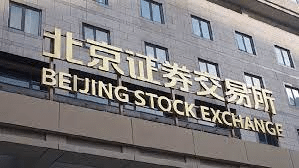
The outstanding margin trading and securities lending totaled 73.63 million yuan (about 10.68 million U.S. dollars) on the Beijing Stock Exchange (BSE) as of Thursday, according to data released by the bourse on Friday.
 The daily margin trading and the outstanding margin trading and securities lending have been increasing since the start of this business, according to the bourse.   The BSE launched the margin trading and securities lending transactions on Feb. 13, marking an important step to improve its market trading system as well as the pricing function of the secondary market.
 The BSE officially launched the market-making trading business on Monday, with 13 market makers participating in the trading business on the bourse.   Half of the 36 stocks listed on the exchange have seen higher daily transactions, up 65 percent on average compared with the previous week, according to the BSE.
 More follow-up reform measures are on the agenda that will aim to coordinate stock issuance, balance the development of the primary market and secondary market, facilitate fair pricing of stocks, improve the trading system, and strengthen the market liquidity and stability, the BSE said.
China's property insurance sector maintained stable growth in 2022, data from the China Banking and Insurance Regulatory Commission showed. The property insurers' premiums jumped to 1.5 trillion yuan (about 217.6 billion U.S. dollars) in 2022, up 8.7 percent year on year, while their payouts increased by 2.6 percent from a year ago to stand at 907.82 billion yuan, the data showed. By the end of 2022, the total assets of the property insurance sector reached 2.7 trillion yuan, up 9 percent year on year. The commission said it will guide the property insurance industry to continue deepening reforms and actively developing insurance varieties, including green insurance, climate insurance, cyber security insurance and new-energy insurance, in order to strongly support the real economy.
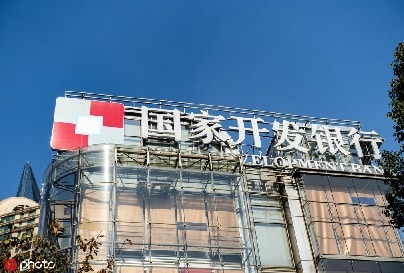
China Development Bank (CDB), one of the country's policy banks, boosted its financial support for the agriculture sector last year. CDB's outstanding agriculture-related loans newly added in 2022 amounted to 250 billion yuan (36.26 billion U.S. dollars), according to the bank. The loans have provided strong support for ensuring food security, agricultural and rural infrastructure construction, agricultural modernization, improving the rural living environment, and consolidating and expanding achievements in poverty alleviation, CDB said. It added that the bank also issued 8 billion yuan in special financial bonds for rural revitalization last year. In 2023, CDB will continue to increase financial support for agricultural and rural infrastructure, and for promoting rural revitalization, the bank said.
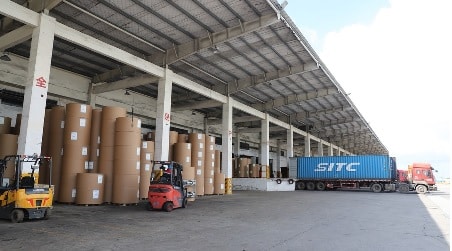
China's logistics sector reported steady growth in 2022, according to an industry report. Social logistics rose 3.4 percent year on year to 347.6 trillion yuan (about 50.4 trillion U.S. dollars) last year, the China Federation of Logistics and Purchasing said. During the period, the logistics for industrial products climbed 3.6 percent year on year, according to the report. The total revenues of the logistics industry rose 4.7 percent year on year to 12.7 trillion yuan during the period.