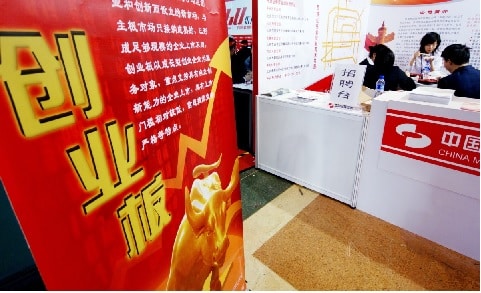
The ChiNext Index, tracking China’s Nasdaq-style board of growth enterprises, lost 0.44 percent to close at 2,469.81 points Tuesday.
The ChiNext Index, together with the Shenzhen Component Index and other indices, reflects the performance of stocks listed on the Shenzhen Stock Exchange
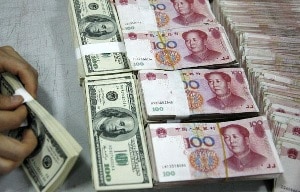
The following are the central parity rates of the Chinese currency renminbi, or the yuan, against 24 major currencies announced on Monday by the China Foreign Exchange Trade System:
Currency Unit Central parity rate in yuan
U.S. dollar 100 686.43
Euro 100 733.30
Japanese yen 100 5.1102
Hong Kong dollar 100 87.535
British pound 100 825.69
Australian dollar 100 471.47
New Zealand dollar 100 427.94
Singapore dollar 100 513.49
Swiss franc 100 742.28
Canadian dollar 100 509.05
Malaysian ringgit 64.499 100
Ruble 1,075.97 100
Rand 263.02 100
Korean won 18,903 100
UAE dirham 53.51 100
Saudi riyal 54.636 100
Hungarian forint 5,236.17 100
Polish zloty 64.93 100
Danish krone 101.55 100
Swedish krona 152.38 100
Norwegian krone 150.03 100
Turkish lira 274.525 100
Mexican peso 267.64 100
Thai baht 501.91 100
The central parity rate of the yuan against the U.S. dollar is based on a weighted average of prices offered by market makers before the opening of the interbank market each business day.
The central parity rate of the yuan against the Hong Kong dollar is based on the central parity rate of the yuan against the U.S. dollar and the exchange rate of the Hong Kong dollar against the U.S. dollar at 9 a.m. in international foreign exchange markets on the same business day.
The central parity rates of the yuan against the other 22 currencies are based on the average prices offered by market makers before the opening of the interbank foreign exchange market.
The central parity rate of the Chinese currency renminbi, or the yuan, strengthened 16 pips to 6.8643 against the U.S. dollar Monday, according to the China Foreign Exchange Trade System.
In China's spot foreign exchange market, the yuan is allowed to rise or fall by 2 percent from the central parity rate each trading day.
The central parity rate of the yuan against the U.S. dollar is based on a weighted average of prices offered by market makers before the opening of the interbank market each business day.
The ChiNext Index, tracking China's Nasdaq-style board of growth enterprises, was down 0.15 percent to open at 2,445.64 points Monday.
The ChiNext Index, together with the Shenzhen Component Index and other indices, reflects the performance of stocks listed on the Shenzhen Stock Exchange.
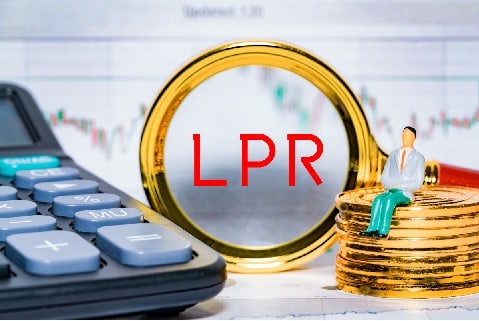
China's one-year loan prime rate (LPR), a market-based benchmark lending rate, came in at 3.65 percent Monday, unchanged from the previous month.
The over-five-year LPR, on which many lenders base their mortgage rates, also remained unchanged from the previous reading of 4.3 percent, according to the National Interbank Funding Center.
The country had lowered the one-year rate by 5 basis points to 3.65 percent in August 2022. The over-five-year rate had been slashed by 15 basis points twice last year, first in May and again in August to the current figure.
The monthly data is a pricing reference rate for banks and is based on rates of the central bank's open market operations, especially the medium-term lending facility rate.
ISLAMABAD, Feb. 17 (Xinhua) — The cooperation between Pakistan and China under the framework of the China-Pakistan Economic Corridor (CPEC) has been helping Pakistan achieve sustainable development goals, said Pakistani and Chinese experts on Friday.
CPEC, the flagship project of China’s Belt and Road Initiative, has opened new avenues of development for Pakistan and helped the country in accomplishing the United Nations’ 2030 Agenda for Sustainable Development, the experts said at a webinar titled “Pakistan-China Cooperation for Sustainable Development” organized by Asian Institute of Eco-civilization Research and Development, an Islamabad-based think tank.
China has been playing a vital role in global and regional growth by launching a number of projects such as Belt and Road Initiative (BRI), Global Development Initiative (GDI) and others, which is especially beneficial for developing countries like Pakistan, Shakeel Ahmad Ramay, chief executive officer of Asian Institute of Eco-civilization Research and Development said.
Under CPEC, Ramay said China has not only assisted Pakistan to overcome energy shortage by initiating a number of power projects under CPEC but also helped in building road infrastructure, thus making a firm base for economic growth by improving the business environment, enhancing exports, bringing in foreign investments, creating employment and alleviating poverty.
China has always stood by Pakistan during challenging times. Back in 2014, it was China who believed in Pakistan’s economic potential and brought in huge investments under CPEC, he said.
Zhou Taidong, an expert from the Global Development Research Division of China Center for International Knowledge on Development, said China-proposed GDI is a very important initiative to address common challenges facing humanity including climate change and pandemic and promote more sustainable and inclusive growth.
The people-centered development initiative provided countries around the globe with a practical path to expediting the implementation of the 2030 Agenda, he said.
Considering the initiative a promising one, the Chinese expert said that more than 100 countries have expressed their support for it, and over 60 countries have joined the Group of Friends of the GDI so far, showing the commitment of China towards multilateralism, open and inclusive spirit of cooperation and development.
In the wake of the recent catastrophic floods in Pakistan that destroyed millions of acres of crops, Vice Chancellor of the Islamia University of Bahawalpur Athar Mahboob said that the two countries are working towards enhancing agricultural cooperation under CPEC to combat climate change issues and ensure food security in Pakistan.
“China is one of the most important agricultural countries with advanced climate-resistant agricultural techniques and equipment. Pakistan has a lot to learn from China in this regard,” Mahboob said.
Agricultural cooperation between the two countries has been bringing huge benefits for Pakistani farmers and improving the livelihoods of people associated with the sector, he said, adding that China has provided Pakistan with hybrid high-quality seeds, high-yield cultivation and processing technology and water-saving irrigation technology to enhance the outputs of agricultural products and their exports.
Mahboob added that agricultural trade between Pakistan and China has also grown significantly over the years, bringing huge foreign exchange to Pakistan.
The actual use of foreign investment in north China's Tianjin Municipality increased 10.4 percent year on year to 5.95 billion U.S. dollars in 2022, the Tianjin municipal bureau of commerce said Friday.
For the second year running, Tianjin delivered double-digit growth in the actual use of foreign investment, the bureau added.
For 2023, the growth target has been set at 10 percent.
To this end, Tianjin is planning a raft of measures, including organizing overseas trips to attract investment, and dialogues between the municipal government and foreign-invested enterprises in Tianjin, according to Sun Jiannan, director of the commerce bureau.
A legion of enterprises from north China's Inner Mongolia Autonomous Region will leave for the United Arab Emirates and Saudi Arabia to seek business opportunities and cooperation, the regional commerce department said on Sunday.
Arranged by the local government, the trip will see 51 foreign trade companies bring local specialties and feature products covering 11 categories, including sunflower seeds, raw and cooked beef, lamb and tomato sauce, to expand their markets in the Middle Eastern countries.
A series of activities will be held after their arrival, including marketing events, business negotiations, exhibitions, investment research events, and visits to commodity distribution centers and local markets.
The trip is expected to help local enterprises sell their products abroad, and attract foreign enterprises to invest in Inner Mongolia, said Yang Jin, a regional government official.
Inner Mongolia also plans to help its companies seek business opportunities in other countries, including Russia, Mongolia, Japan and the Republic of Korea.