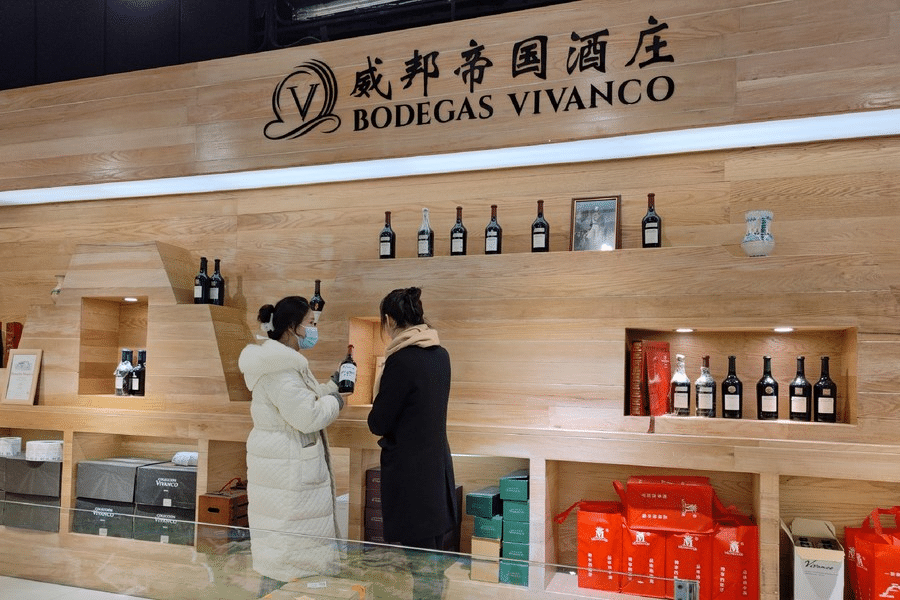
China is the fourth largest destination country for Spain's wine exports with sales increasing by 10 percent a year on average, the Spanish Institute for Foreign Trade (ICEX) reported on Wednesday.
Spain currently holds a 7 percent share of the Chinese market after France, Australia and Chile, and one of its main aims in the next few years will be to increase this figure, Maria Naranjo, director of food, wine and gastronomy at ICEX, told Xinhua.
"2023 will be a year of rebuilding in the Chinese market because the distribution channels need to be reestablished in the hospitality sector, which is fundamental so that wines -- particularly quality wines -- can find their niche," she said.
"Spanish wines are becoming especially valued in the Asian markets," she said, adding that she expects "the strong return of Chinese tourism to act as a driver for the sale of Spanish wines in the Chinese market."
Chinese importers of Spanish wine share Naranjo's optimism.
"The Chinese economy will recover very soon, and China has a large population," Jane Zheng from the Chinese wine importer Wajiu told Xinhua during the Barcelona Wine Week (BWW). "The quality of Spanish wine is improving and so I think sales will also grow."
"The situation is difficult because French wine, or wine from Chile, is more famous than Spanish wine. But the quality of Spanish wine is good and so is the price, so little by little it's becoming more popular in China," Luis Lei from the wine importer Xiamen Bodegas Castejon told Xinhua.
Around 70 percent of Spain's wine exports are concentrated in the European Union (EU), but the highest growth rates are in the Asian and Latin American markets. Chinese wine importers were among 1,800 key buyers of Spanish wine from around the world who attended the BWW between Feb. 6 and Feb. 8.
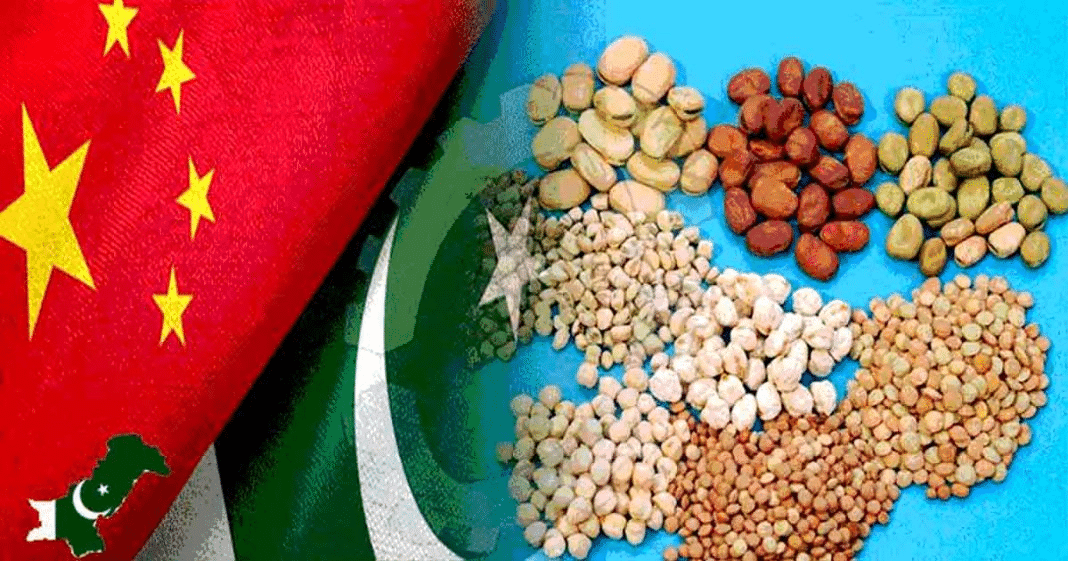
The new phase of seed cooperation between Pakistan and China is critically important for Pakistan to meet the food security challenge in the future, a Pakistani minister said.
China helped Pakistan take seven herbal seeds to the Chinese space station for space breeding by exposing them to cosmic radiation and microgravity to mutate their genes, and in this regard an event was held here to mark the successful return of the seeds.
On the sidelines of "Celebration of the Return of Pakistani Seeds from Chinese Space Station," Pakistani Minister for Planning, Development, and Special Initiatives Ahsan Iqbal said that the South Asian country is in dire need of seed cooperation to meet climate change challenges.
"Pakistan is very vulnerable to climate change, due to which we need smart agriculture, and for that we need new varieties of seeds, which are resistant to the new weather challenges, and which are more suitable to the climate change risks," Iqbal told Xinhua.
Liu Xinming, a chief scientist from China's Ningbo University, said the Chinese Ministry of Foreign Affairs transferred the seeds to China Manned Space Agency on April 12 last year.
The seeds were launched into outer space carried by Shenzhou-14 spaceship on June 5 2022, and after six months of flying, returned to the earth with the Shenzhou-14 astronaut crew on Dec. 4 last year, Liu added.
Atia-tul-Wahab, a professor at the International Center for Chemical and Biological Sciences, University of Karachi, said her institute proposed the government to send the herbs' seeds to space.
"We sent some grains to the space and kept the same quantity in our laboratory. Now upon their return, we will closely examine them and do their tests at our laboratory. Then both seed varieties will be sowed separately to see the end results through comparison," she told Xinhua.
Wahab said it is the first time that Pakistan sent seeds to space and it is a landmark achievement for the country, adding that her lab is eyeing sending food staples including rice, wheat and pulses to space for further research.
The professor told Xinhua that the herbs sent to space are used in traditional Pakistani medicine, and that it's hoped that the space breeding will enable scientists at her institute to produce medicine for incurable diseases.
Pang Chunxue, charge d'affaires of the Chinese Embassy in Pakistan, said the experiment will surely be recorded in the history of China-Pakistan friendship as a landmark of the science and technology cooperation of both countries.
China's international science and technology cooperation is an open, shared and inclusive cooperation that insists on conducting cooperation in space exploration on the basis of equality, mutual benefit, peaceful use and inclusive development, she said.
"All countries are welcome to actively participate in space exploration with China," the Chinese diplomat added.
China’s central bank continued to inject funds into the financial system through open market operations on Thursday.
T
he People’s Bank of China said on its website that it has conducted 453 billion yuan (about 66.7 billion U.S. dollars) of seven-day reverse repos at an interest rate of 2 percent.
The move is aimed at keeping liquidity reasonable and ample in the banking system, according to the central bank.
A reverse repo is a process in which the central bank purchases securities from commercial banks through bidding, with an agreement to sell them back in the future
China’s interbank treasury bond index in net price opened at 994.68 points Thursday, lower than the previous close of 994.77 points, according to the China Foreign Exchange Trade System.
The index reflects real-time trading of treasury bonds in China’s interbank bond market.
The index opens at 9 a.m. on every workday and is updated every five minutes until closing at 5 p.m.
The world's three largest initial public offerings (IPOs) in 2023 so far came from Germany and China, according to an analysis published by the consulting firm Ernst & Young (EY) on Wednesday.
The proceeds from the stock market debut of German web hosting company IONOS Group SE on Wednesday are expected to be 447 million euros (480.6 million U.S. dollars). This was the largest IPO globally so far this year, according to EY.
With an emission volume of 383 million U.S. dollars, the IPO of China's Cinda Securities Co. Ltd at the beginning of February was the second largest, followed by China's Hubei Jianghan New Materials Co. Ltd. with 352 million U.S. dollars.
Globally, the IPO year 2023 started "quite weak," EY said. In January, 77 IPOs raised a total of 2.55 billion U.S. dollars only. In the same period of 2022, 98 IPOs raked in 31.91 billion U.S. dollars.
"In the past year, the IPO pipeline has continued to build," Martin Steinbach, partner and head of IPO and Listing Services at EY, said in a statement. "Some of the IPO candidates that did not make it in 2022 due to the poor market environment are waiting for the right moment."
Following the record year of 2021, the number of IPOs in 2022 worldwide fell by 45 percent to 1,333, and the issue volume even dropped by 61 percent to 180 billion U.S. dollars, according to a previous EY study.
The largest IPO last year was the stock market debut of South Korean battery manufacturer LG Energy Solution, raising 10.7 billion U.S. dollars. German luxury sports car manufacturer Porsche AG came in second, followed by mobile communications provider China Mobile.
After the low point in October last year, general conditions have improved. "Volatility has fallen steadily," Steinbach said. At the same time, stock markets developed positively, so "higher valuations also seem to be within reach again."
For 2023, EY is cautiously optimistic and expects a recovery particularly in the second half of the year. "Currently, global IPO activity is predominantly taking place in the Asian region. In Europe and the U.S., the market will probably need a few more months to regain momentum," Steinbach said. (1 euro = 1.08 U.S. dollar)
A fully-loaded cargo train left the international land port of Urumqi for Kazakhstan on Monday, marking the departure of the 6,500th China-Europe freight train from the land port.
Land ports in northwest China's Xinjiang Uygur Autonomous Region are bustling with activity after the country optimized its COVID-19 response and adjusted entry and exit policies.
Customs officials have been busy checking the documentation of international travelers at the Horgos port, bordering Kazakhstan, since January.
Belik Zhanuzakov, a businessman from Kazakhstan, said he had to conduct business online due to the COVID-19 pandemic during the past few years, and he is thrilled about the reopening of the land port.
"Now that I can talk to my business partners face to face, I hope our cooperation will be greatly enhanced. Since bilateral relations between the two countries have strengthened, I anticipate that my business will improve," he said.
The Alataw port, one of the important ports for China-Europe freight trains, has also seen a boom in freight volume since the beginning of this year, with more than 1.11 million tonnes of cargo transported in January, up 12.8 percent year on year.
The customs, frontier inspection departments and Kazakhstan's railway department have strengthened coordination and exchange in an effort to improve the transportation efficiency of China-Europe freight trains, said Guo Hua, who works with the Alataw port.
Inbound and outbound trucks have also been spotted shuttling back and forth at the Bakti port. Ayden, a Kazakh driver, said he would transport grapefruits and fresh color bell peppers to Almaty.
"The freshness of agricultural products greatly determines the profit. Therefore, we constantly optimize clearance measures to complete the inspection within half an hour," said Alimira Nasim, a customs official, as she checked the cargo on Ayden's truck.
Official data showed inbound and outbound vehicles at the Bakti port exceeded 3,800 in January, an increase of over 156 percent year on year. Imports and exports there soared 125 percent year on year to over 34,106 tonnes.
Xinjiang will continue to boost foreign trade, further strengthen logistics and improve the business environment, said Li Kaiyi, an official with the Urumqi Customs, adding that the region will also take advantage of the preferential policies to promote its trade.
The total assets of Shanghai's local state-owned enterprises (SOEs) reached 27.59 trillion yuan (about 4 trillion U.S. dollars) by the end of 2022, up 5.24 percent year on year, local authorities said on Tuesday.
Local SOEs in Shanghai achieved operating revenue of 3.79 trillion yuan and a total profit of over 252.25 billion yuan in 2022, the Shanghai State-owned Assets Supervision and Administration Commission said at a conference.
"In 2022, Shanghai's local SOEs increased their presence in key industries such as integrated circuits, biomedicine and artificial intelligence, and invested nearly 100 billion yuan in strategic emerging industries," said Bai Tinghui, director of the commission.
By the end of 2022, the number of listed companies controlled by local SOEs in Shanghai was 96, with a total market value of 2.34 trillion yuan.
The following are the central parity rates of the Chinese currency renminbi, or the yuan, against 24 major currencies announced on Wednesday by the China Foreign Exchange Trade System:
Currency Unit Central parity rate in yuan
U.S. dollar 100 677.52
Euro 100 726.82
Japanese yen 100 5.1677
Hong Kong dollar 100 86.329
British pound 100 816.31
Australian dollar 100 471.39
New Zealand dollar 100 428.06
Singapore dollar 100 511.75
Swiss franc 100 735.06
Canadian dollar 100 505.71
Malaysian ringgit 63.427 100
Ruble 1,047.71 100
Rand 258.67 100
Korean won 18,520 100
UAE dirham 54.208 100
Saudi riyal 55.371 100
Hungarian forint 5,394.67 100
Polish zloty 65.31 100
Danish krone 102.37 100
Swedish krona 156.06 100
Norwegian krone 152.30 100
Turkish lira 277.849 100
Mexican peso 278.70 100
Thai baht 494.95 100
The central parity rate of the yuan against the U.S. dollar is based on a weighted average of prices offered by market makers before the opening of the interbank market each business day.
The central parity rate of the yuan against the Hong Kong dollar is based on the central parity rate of the yuan against the U.S. dollar and the exchange rate of the Hong Kong dollar against the U.S. dollar at 9 a.m. in international foreign exchange markets on the same business day.
The central parity rates of the yuan against the other 22 currencies are based on the average prices offered by market makers before the opening of the interbank foreign exchange market.
Thousands of cutting-edge equipment, including intelligent quantum computers 550A and 550C, anti-drone guns, nuclear weapon keys, and triggers, pile up in Yang Xu’s room. These are not lethal weapons but full-scale models that starred in China’s latest sci-fi blockbuster, The Wandering Earth II.
Since being released on Jan. 22, the Chinese sci-fi action-adventure film has so far earned a box office of over 3.4 billion yuan (about 500 million U.S. dollars). Over 50 million viewers went to theaters for this phenomenon movie, according to box office tracker Maoyan.
The movie was attractive for its imaginative plot and its exquisite props. In Shenzhen, south China’s Guangdong Province, designer Yang Xu and his team created over 1,000 props for the movie.
The designing and manufacturing of necessary props for sci-fi films are supported by complete, complex, and precise industrial processes, said Yang. Starting with conceptual design and structural modeling, gadgets and gizmos will go through steps including numerical control programming, machining, post-polishing and spray-painting, laser carving, and surface treatment.
Yang previously worked to design conceptual cars and then began to set foot in the film industry. In 2020, he moved from Beijing to Shenzhen, set up his studio and factory, and focused on conceptual design and prop production for the films.
As The Wandering Earth II started shooting in late 2021, Yang devoted himself to designing and producing props for the movie.
The schedule was tight for the prop production team. It only took 20 days for Yang and his team to bring the anti-drone guns from a blueprint to the screen.
All part and service suppliers for the movie props are within 10 km of the studio in Shenzhen, giving the team much confidence and ensuring that the manufacturing process and product quality are controllable.
The computer numerical-control method was applied in manufacturing to ensure the props look more realistic.
Yang and his team worked meticulously to ensure the triggers function well, the batteries could be removed and loaded, the Picatinny rails were installed correctly, and even the non-slip pads were involved.
Multiple types of computer numerical control tools were applied to better display the texture of the irregular metal shell of the intelligent quantum computer 550A.
“Devils are in the details,” said Yang.
High-tech companies from many parts of the country offered various props for the movie. The drivable and deformable operation machines were produced by the Xuzhou Construction Machinery Group Co., Ltd. in Jiangsu Province. The exoskeleton robots were made in Shanghai. Cameras with AI functions came from Zhejiang Province.
The exoskeleton robots cast in the movie were offered by ULS Robotics. By offering extra power to the wearer’s waist, they helped the actors lift a bag of sand of 30 kg without much effort.
Many of the props also have wider market potential. Guo Fan, director of The Wandering Earth II, said that some specific props in the movie reached commercial-use levels.
Yang is now planning to step into the peripheral products of sci-fi films. He is determined to utilize industrial manufacturing power to create more realistic props and products.
China's central bank has signed a memorandum of cooperation with the Central Bank of Brazil to establish renminbi (RMB) clearing arrangements in Brazil.
These arrangements will help enterprises and financial institutions in the two countries conduct cross-border transactions using the RMB, according to a statement on the People's Bank of China website on Tuesday.
They will also further facilitate bilateral trade and investment, the bank said.



 The new phase of seed cooperation between Pakistan and China is critically important for Pakistan to meet the food security challenge in the future, a Pakistani minister said.


