Wednesday, November 25, 2026

Home Blog Page 176

Shenzhen Developing Into High-Tech Hub

0

Nation’s first SEZ, set up 45 years ago, provides robotics, AI vision firms with fundamental R&D investment resources

By Li Jiaying | China Daily | Updated: 2025-08-26    

As morning light sweeps across Shenzhen’s skyline, the skyscrapers that have replaced the old fishing boats gleam in the sun. At the city’s core, the “Pioneering Bull” stands as a testament to the city’s relentless innovation and drive — qualities that have shaped its evolution into a global hub since its designation as China’s first special economic zone 45 years ago.

 “Technological innovation is not only a defining feature of Shenzhen, but also its flagship brand. From the government to businesses and individuals, the city attaches great importance to advancing innovation,” said Zhang Lin, head of the city’s science, technology and innovation bureau.

 According to data released by the National Bureau of Statistics late last year, Shenzhen’s total research and development investment reached 223.66 billion yuan ($32.7 billion) in 2023, up 18.9 percent year-on-year — marking nine consecutive years of double-digit growth.

 Notably, local enterprises contributed 93.3 percent of the total number, the highest share among all Chinese cities.

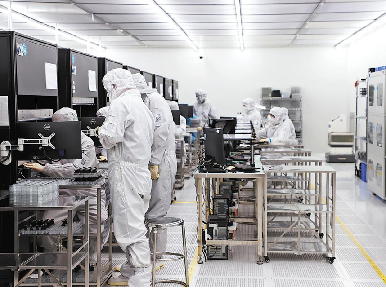
 Among Shenzhen SEZ’s many innovative trailblazers is Orbbec, Asia’s first company to mass-produce 3D vision sensors.

 Known as the “eyes” of robots, these sensors give machines the ability to perceive complex environments, avoid obstacles with precision, and navigate autonomously.

 Like many cutting-edge technologies, advances in robotics and AI vision rely on heavy investment in fundamental research and development.

 According to the company, between 2022 and the first half of this year, Orbbec invested nearly 1 billion yuan in R&D. As a result, it had secured 1,112 patents in 3D vision perception by the end of June 2025.

 “From core sensor technologies to underlying chips and downstream application algorithms, we have built a full-stack layout for 3D sensing. This is the key to sustaining our competitiveness in the field,” said Chen Bin, chief financial officer of Orbbec.

 Chen said Shenzhen’s innovation-driven environment, well-established industrial ecosystem and rich talent pool built over the years have all provided strong momentum for the company’s growth.

 “In fact, when we chose Shenzhen at the very beginning, it was because of the city’s strong atmosphere of pioneering and innovation. We usually require talent across multiple fields such as chips, algorithms, electronics, engineering and more. Decades of accumulation in Shenzhen have created fertile ground for attracting such professionals.”

Beyond components and software technologies, the pioneering city is also making strides in the broader field of humanoid robots.

 EngineAI, a Shenzhen-based robotics manufacturer, recently announced with its partners that they will hold the world’s first full-size humanoid robot combat tournament in the city in December.

 The company said participating robots should be full-sized, capable of simulating human motion patterns, executing combative actions under defined rules, and responding to dynamic environments through intelligent decision-making systems.

 “Robot combat demonstrates the comprehensive capabilities of humanoids — from motion control and environmental perception to computing power and algorithms,” said Yao Aiwen, co-founder of EngineAI.

 “Organizing such an event can help not only accelerate technological progress, but also test how well the industry ecosystem is working on final applications,” Yao said.

 Yao emphasized that supply chain support is critical in robotics manufacturing, where components require constant optimization, and Shenzhen offers precisely this foundation.

 “Here, we get to optimize or upgrade component parts in just two hours. Some of our suppliers are even located in the same building, making collaboration incredibly efficient,” he said.

From precision components to end-user applications, Shenzhen now boasts a complete robotics industry chain.

 In 2024, the city was home to 74,032 robotics enterprises, with the sector’s total output value surpassing 200 billion yuan for the first time, official data showed.

 In terms of the embodied intelligent robotics sector, the city aims to expand related industries to over 100 billion yuan in scale, and foster more than 1,200 enterprises in the embodied robotics cluster, according to its action plan for embodied intelligent robotics (2025-27).

 However, Shenzhen is not stopping there. Innovation is reshaping not only tech products, but also the ecosystem of services surrounding them.

 On July 28, the world’s first “6S store” for robots opened in Shenzhen’s Longgang district. Expanding on the traditional “4S store” model in the automotive sector, the new format incorporates “lease” and “customized” modules to create a six-in-one lifecycle service system — sales, spare parts, service, surveys, lease and customized — aiming to redefine service standards for the robotics industry.

 “The 6S store breaks down the ‘glass wall’ between R&D and market application. It helps companies understand what the market demands and helps users see what technology can deliver. Ultimately, this pushes robots from being laboratory products to becoming everyday essentials,” said Zhao Bingbing, head of Longgang’s artificial intelligence (robotics) administration.

 As the country’s first government agency dedicated to AI, the administration represents an innovative combination of government agencies, research institutions and industry associations, Zhao said, adding that it was first established to advance the AI and robotics sectors while also meeting the evolving need of enterprises.

 “Many companies come to us seeking funding or supportive policies, but don’t know which department to approach. Our role is to bridge industry needs with government resources, addressing their challenges directly,” the official explained.

The momentum is unfolding at a historic moment. Over the past 45 years, the SEZ has grown from a GDP of just 270 million yuan in 1980 to 3.68 trillion yuan in 2024, an increase of more than 10,000-fold.

 As Shenzhen marks the 45th anniversary of its special economic zone and the fifth year of its comprehensive reform pilot, the city is embarking on a new journey.

 In June, a set of guidelines released by the central authorities highlighted a new batch of measures for the SEZ to pioneer the development of a modernized, globally oriented and innovation-driven city.

 The guidelines call for launching a new wave of reform measures, rolling out fresh innovation trials and deepening opening-up initiatives, in an effort to break institutional barriers in education, science and talent development; strengthen the integration of innovation, industry, capital and talent chains; and explore new cooperation in the Guangdong-Hong Kong-Macao Greater Bay Area.

 At a news conference themed around the guidelines, Li Chunlin, deputy head of the National Development and Reform Commission, highlighted Shenzhen’s unique role as a pioneer of China’s reform and opening-up.

 With its advantages in leading development, abundant reform scenarios and favorable conditions for breakthroughs, Shenzhen SEZ has launched a series of exploratory measures in institutional opening-up, scientific innovation, talent development and governance models, Li said.

 “These reform initiatives carry distinct originality and pioneering value, and their outcomes will play an important role in setting an example nationwide.”

Article inline ad

CIFIT Seen As Key To Spurring Opening-Up

0

25th edition in coastal Xiamen to see participation of 77 BRI economies

By Zhong Nan | China Daily | Updated: 2025-08-27

China will steadily expand pilot programs and push ahead opening-up in new sectors, while ensuring foreign-invested businesses receive the same treatment as domestic companies, said senior government officials on Tuesday.

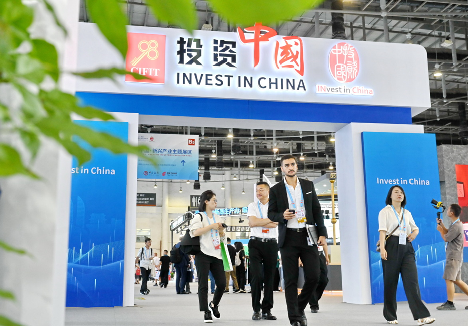
 Speaking at a news conference in Beijing ahead of the 25th China International Fair for Investment and Trade (CIFIT), to be held in Xiamen, Fujian province, from Sept 8 to 11, they said that China’s ongoing opening-up, high-quality industrial upgrading and massive consumer demand will keep foreign capital flowing.

 Ling Ji, vice-minister of commerce and deputy China international trade representative, said that trials launched in select regions last year to liberalize sectors including value-added telecommunications, biotechnology and wholly foreign-owned hospitals have already yielded encouraging results.

 Further efforts will be made to tackle specific market access issues, so that foreign companies can not only enter the Chinese market, but also operate here smoothly, said Ling.

 The CIFIT this year will feature an exhibition area of about 120,000 square meters, hosting more than 70 investment-themed activities and over 100 project roadshows, according to the Ministry of Commerce.

 Nearly 100 multinational corporations from sectors including energy, chemicals, agriculture, pharmaceuticals and intelligent manufacturing have confirmed attendance, with participation from both global headquarters and regional executives. Senior representatives from several sovereign wealth funds and international investment institutions have also confirmed their presence.

 The Commerce Ministry said the United Kingdom is the guest country of honor for this year’s CIFIT and will send a delegation of nearly 200 members from government, businesses and industry associations to Xiamen next month.

 Delegations from more than 110 countries and regions, as well as international organizations, have registered for the event, with 51 countries and regions setting up national pavilions.

 Wang Jinfu, vice-governor of Fujian, said that among them, a total of 77 economies participating in the Belt and Road Initiative have confirmed their participation in the CIFIT this year. High-level delegations from Azerbaijan, Cambodia and Uzbekistan will attend the event, while Serbia, Hungary, Slovenia and Thailand will set up national pavilions.

 On the investment front, foreign direct investment in China reached 121.04 billion yuan ($16.9 billion) in manufacturing and 336.25 billion yuan in services between January and July. The use of FDI in high-tech industries hit 137.36 billion yuan, with e-commerce services and aerospace equipment manufacturing recording year-on-year increases of 146.8 percent and 42.2 percent, respectively, statistics from the Commerce Ministry show.

 In the meantime, investments from Switzerland, Japan and the United Kingdom grew 63.9 percent, 53.7 percent and 19.5 percent on a yearly basis, respectively.

 PwC, a global accounting company, will showcase a special “Voyage Log” for companies that are “going global” at its booth during the 25th CIFIT, with a focus on risk mitigation.

 Zhou Xing, member of the management board at PwC China, said China is reshaping the global innovation ecosystem through new quality productive forces, unlocking fresh opportunities for investors.

 “Moving forward, we will further strengthen our role as a bridge, connecting global capital with high-potential projects in China, while supporting Chinese businesses in ‘going global and going deep’, injecting new momentum into China’s sustainable development,” said Zhou.

 China’s commitments to openness and sustainable growth have also reinforced foreign investors’ confidence, with many global companies seeing fresh opportunities in the nation’s transforming industries.

 Nathaniel Madarang, president for the Asia-Pacific region at Goodyear Tire and Rubber Co, a United States-based tire manufacturer, said as China’s auto industry is being reshaped by technology and changing consumer demand, the country will see strong growth in the electric vehicle, sport utility vehicle and luxury car segments.

 Madarang said that to stay competitive, Goodyear has recently introduced its latest SUV tire products in China and other Asia-Pacific markets.

 “We are committed to sustainable growth, aligning with China’s development goals for the automotive industry and creating value for our stakeholders in this dynamic market,” he added.

 zhongnan@chinadaily.com.cn


Article inline ad

Initiative On AI Hailed As Growth Catalyst

0

By FAN FEIFEI and OUYANG SHIJIA | CHINA DAILY | Updated: 2025-08-27

China’s emphasis on bolstering the extensive and in-depth integration of artificial intelligence in various fields will help the nation build up new growth drivers and inject strong impetus into high-quality economic development, solidifying its position as a global innovation powerhouse, said experts and company executives.

 As China recognizes AI as an essential tool in nurturing new quality productive forces, the application of AI will promote the transformation and upgrading of traditional industries as well as foster strategic emerging and future-oriented industries, they said.

 Their comments follow the recent unveiling of a guideline by the State Council, China’s Cabinet, on deeply implementing the “AI Plus” initiative.

 According to the guideline, the country will promote the use of AI in science and technology, industrial development, consumption, people’s well-being, governance capability and global cooperation.

 By 2027, China will make achievements in the extensive and deeper integration of AI in six key sectors, with the penetration rate of new-generation intelligent terminals and AI agents surpassing 70 percent, and this figure will exceed 90 percent by 2030, the guideline said.

 By 2035, China will enter a new stage of intelligent economy and intelligent society, providing strong support for basically realizing socialist modernization, the guideline added.

 Xu Qiang, president of the State Information Center, said, “As a strategic technology spearheading a new wave of technological revolution and industrial transformation, AI is profoundly reshaping the way human beings work and live.”

 He highlighted the importance of technological modernization, saying that it is key to advancing Chinese modernization.

 The guideline on implementing the “AI Plus” initiative aims to promote the in-depth integration of AI in various sectors of the economy and society, Xu said, adding that it will help raise the total factor productivity and play a crucial strategic role in supporting the Chinese modernization drive.

 Weng Xi, a professor at Peking University’s Guanghua School of Management, said the “AI Plus “initiative serves as a vital measure for propelling the shift of growth drivers from old to new ones, as AI has become a new engine bolstering China’s economic development and industrial upgrading.

 “The in-depth industrial integration of AI will enhance production efficiency, optimize operational processes and lower energy consumption and costs, thereby promoting traditional industries, including steel, textile and equipment manufacturing, toward high-end, intelligent and green development,” Weng said.

 The guideline states that efforts will be made to improve the basic abilities of AI models, strengthen innovation in data supply, enhance intelligent computing power and reinforce the construction of talent teams.

 Wang Yiming, vice-chairman of the China Center for International Economic Exchanges, noted that China has unique advantages in promoting the “AI Plus” initiative, given its abundant data resources, a complete industrial system that offers rich application scenarios, an ultra-large domestic market, and a sound policy and institutional environment.

 Looking forward, Wang said the sustained implementation of the “AI Plus” initiative requires breakthroughs in basic research and key and core technologies, and stronger infrastructure construction such as data and computing power.

 “It also calls for building an intelligent industrial ecosystem and open-source community, strengthening talent development, improving policy and regulatory systems and enhancing security capabilities,” he added.

 Sun Ke, deputy director of the China Academy of Information and Communications Technology’s policy and economic research institute, underscored the significant role of AI in cultivating new quality productive forces and reshaping new competitive advantages.

 Deeply implementing the “AI Plus” initiative is conducive to accelerating the deeper integration of AI with the real economy, giving rise to new industries and new business forms, such as intelligent robots, self-driving vehicles and smart home devices, and strengthening China’s core competitiveness on the global stage, Sun said.

 Zhou Yunjie, chairman and CEO of Haier Group, said that currently, the deployment of AI in enterprises mainly concentrates on manufacturing, research and development, sales, procurement and services.

 The integration of AI models with home service robots and terminal devices will create new consumption growth points for the global consumer electronics industry, Zhou said, adding that his company is promoting the application of AI in a wide range of fields, including smart homes and industrial internet.

 Cui Jingyi, vice-president and general manager of industrial software developer Aveva China, said the country is becoming a market with the most extensive application of AI technologies globally, bringing new opportunities for many companies, including Aveva.

 She added that the company is willing to accelerate the application of AI through collaboration with Chinese local partners.

Article inline ad

Etfs Enjoying Current A-Share Bull Market Run

0

Resources, innovative drugs, defense may continue strong performance

By SHI JING in Shanghai and ZHOU LANXU in Beijing | China Daily | Updated: 2025-08-27

New records seem to be par for the course in the A-share market lately amid a sustained bull run, and exchange-traded funds (ETFs) have been no exception, as their total value stood at a record high of 5.07 trillion yuan ($710 billion) on Monday.

 It has been only four months since the ETF value first hit the 4 trillion yuan watershed.

 Stock-based ETFs took the lion’s share, as their combined value approached 3.46 trillion yuan on Monday. The CSI 300 ETF managed by Huatai-PineBridge Investments — valued at 412.9 billion yuan — was not only the largest stock ETF, but also larger than the remaining 1,270 ETFs trading in the A-share market.

 Qiu Xiang, chief A-share market strategist of CITIC Securities, said the better-performing ETFs have reflected the logic of the recent bull run.

 Computer games and Hong Kong-listed insurance companies, which are less affected by tariff policies, reported stronger growth in the first quarter, helped game-themed ETFs and non-banking ETFs — up 47.9 percent and 61.4 percent, respectively, since early April. The market’s high expectations for future computing demand have pushed 5G-telecommunication-themed ETFs up 68 percent since late May, Qiu said.

 This reflects that the latest market rally is all about industry trends and strong business performance. Therefore, companies with core technology assets and high profitability — especially those from the A-share resources sector, innovative drugs, games and defense — may continue their bullish performance, he added.

 Liu Jipeng, a professor at the Business School of China University of Political Science and Law and a senior expert on capital markets, said A shares have entered a slow but steady bull run, supported by reform measures aimed at bolstering investor confidence and recent fund inflows.

 To ensure that the bull run is sustainable, Liu stressed the need to further close regulatory loopholes that allow major shareholders to gain excessive profits from listings and stock sales, building a fairer market where most investors, including retail investors, can share returns and grow their wealth.

 A recent Bloomberg report showed that China has already overtaken Japan to become the largest ETF market in the Asia-Pacific region. The Chinese ETF market is likely to hit the $8 trillion level in 2035, surpassing Europe and attracting the participation of more foreign investors.

 The rapid growth of the Chinese ETF market is closely related to the government’s substantial support, including accelerated approval for new products, removing the cap for financing and introducing market makers, said Bloomberg experts.

 The China Securities Regulatory Commission, the country’s top securities watchdog, released in late January an action plan to promote the high-quality development of index-based investment, underscoring the development of stock-based ETFs.

 ETFs have been more widely adopted by Chinese investors thanks to their lower costs, transparency, higher accessibility and the ability to diversify risk, said Yang Delong, chief economist from First Seafront Fund.

 Mixed performance was seen among A shares on Tuesday, with the benchmark Shanghai Composite Index shedding 0.39 percent while the Shenzhen Component Index closed up 0.26 percent.

 Liu cautioned that the A-share market might face corrections given recent gap-up openings of the Shanghai Composite Index while some individual stocks could face profit-taking pressure after sharp rises, though such fluctuations are unlikely to alter the overall upward trend.

 Wang Chengchang, investment strategy analyst at China Securities, said that investment has become “crowded” in A-share sectors such as automobiles, non-banking financial and basic chemicals. When there are too many industries entering such status, the market may adjust downward to some degree, he said.

 Contact the writers at shijing@chinadaily.com.cn


Article inline ad

China Issues Guideline To Accelerate ‘AI Plus’ Integration Across Key Sectors

0

By Fan Feifei | chinadaily.com.cn | Updated: 2025-08-26

China issued a guideline on Tuesday to implement the “AI Plus” initiative, promoting the extensive and in-depth integration of AI across various fields to accelerate the cultivation of new quality productive forces.

 According to a guideline released by the State Council, China’s Cabinet, the country will bolster the application of AI in science and technology, industrial development, consumption upgrades, people’s well-being, governance and global cooperation.

 By 2027, China aims to achieve significant progress in the deep integration of AI in six key sectors, with the penetration rate of new-generation intelligent terminals and AI agents expected to surpass 70 percent, the guideline said. The core industries of the intelligent economy will see rapid growth and the role of AI in public governance will be significantly enhanced.

 The guideline also stated that by 2030, AI will empower China’s high-quality development across all fronts, with the penetration rate of next-generation smart terminals and AI agents exceeding 90 percent, highlighting that the intelligent economy will become a significant growth driver for China’s economy.

 By 2035, China will enter a new stage of intelligent economy and intelligent society comprehensively, providing strong support for realizing socialist modernization, according to the guideline.

 Efforts will be made to improve the basic capabilities of AI models, strengthen the innovation of data supply, enhance intelligent computing power, promote the development of open-source ecosystem and reinforce the construction of talent teams, it added.

Article inline ad

‘Seminar On Jointly Building A New Engine For China-ASEAN Blue Economy’ Held In Kuala Lumpur

0

chinadaily.com.cn | Updated: 2025-08-26

Building a China-ASEAN blue economy big common market has become a major option for China and ASEAN to create a “blue engine” for economic growth and to promote regional economic integration. To foster in-depth cooperation between China and ASEAN in the field of blue economy and inject new impetus into regional integration, on August 25, 2025, “Seminar on Jointly Building a New Engine for China-ASEAN Blue Economy” was held in Kuala Lumpur, Malaysia. The seminar was co-hosted by China Institute for Reform and Development (CIRD), the Institute of Asian Studies, China Foreign Affairs University (CFAU), and the Maritime Institute of Malaysia (MIMA), with Department of International and Strategic Studies, Universiti Malaya as co-organizer, and Hainan Institute for Free Trade Port Studies (HIFTPS) as supporting organization.

 The seminar focused on such topics as “Unleashing the potential value of marine resources to promote the integration of the China-ASEAN blue economy”, “Strengthening cooperation on smart ports and green shipping to facilitate connectivity of the marine economy” and “Leveraging the platform of Hainan Free Trade Port to build a China-ASEAN marine tourism and cultural economic circle”. It brought together more than 40 participants, including government officials, experts and scholars, business representatives, and journalists from China, Malaysia, the Philippines, and Thailand, to jointly explore the pathways and opportunities for cooperation in blue economy.

 Professor Chi Fulin, president of CIRD and president of HIFTPS, and Monaliza binti Suhaimi, director-general of MIMA, delivered opening remarks. The opening ceremony was moderated by Yang Rui, executive president of CIRD and president of RCEP Research Institute.

 Professor Chi highlighted CIRD’s long-standing efforts in advancing China-ASEAN cooperation in blue economy. From 2015 to 2016, CIRD proposed the concept of a “Pan-South China Sea Economic Cooperation Circle”; from 2018 to 2019, it advanced the idea of establishing an “Island Tourism Economic Community”; from 2021 to 2023, it advocated “Cooperation-led Governance”; and in 2024, it introduced the vision of “China-ASEAN Blue Economy Integration”. Professor Chi emphasized that blue economy represents a common market for China and ASEAN, serving as a key driver for economic growth, trade cooperation, and industrial transformation. He underscored the need to build a common market led by marine tourism, encompassing common markets for marine tourism, marine fisheries, renewable energy, and emerging fields such as marine biological resource development. To achieve this, he called for strengthening connectivity of marine infrastructure with ports as the focal point, extending RCEP trade and economic rules to cover the maritime sector, and establishing a cooperative governance framework guided by ecological and resource conservation.

 Monaliza binti Suhaimi noted that China-ASEAN Blue Economy Partnership not only aligns with deepening cooperation between China and ASEAN, but also reflects their shared priorities of economic growth, security, and sustainability. She emphasized that implementing China-ASEAN Blue Economy Blueprint will require substantial and well-targeted investment in sustainable and high-value marine sectors, advances in policy and technological innovation, and the promotion of inclusive and resilient cooperative governance and capacity building.

 Session 1 on “China-ASEAN Blue Economy Integration and Regional Economic Cooperation” was moderated by Li Fujian, deputy director of the Center for Global Biosecurity Governance at China Foreign Affairs University.

 Rommel Banlaoi, president of Philippine Society for International Security Studies, emphasized the importance of establishing a comprehensive framework that links the China-ASEAN Free Trade Area (ACFTA) with RCEP, and called for the early conclusion of a Code of Conduct in the South China Sea. Ngeow Chow Bing, director of the Institute of China Studies at Universiti Malaya, noted that in the face of geopolitical challenges, it is essential to strengthen blue economy cooperation by fully leveraging ASEAN’s role as a key platform and regional organization. Mazlinawati Abdul Majid, centre head of Maritime Economics and Industries of MIMA, suggested leveraging Hainan Free Trade Port as a China-ASEAN tourism platform. She underlined that its significance lies not only in tourism itself, but also in building long-term and transformative partnerships that attract high-value tourism, stimulate coastal development, and advance the China-ASEAN blue economy agenda. Cui Shaozhong, associate professor at the School of International Economics at China Foreign Affairs University, proposed that promoting China-ASEAN blue economy integration and regional cooperation could begin with areas such as marine science and technology, marine tourism, and marine infrastructure. Guo Da, executive president of HIFTPS, suggested that Hainan Free Trade Port should play a leading role in advancing the China-ASEAN common market for blue economy. He called for enhancing port connectivity, strengthening linkages between China and ASEAN fisheries markets, establishing a China-ASEAN cruise tourism cooperation circle, and promoting sustainable marine development with a focus on marine ecological protection. Nur Zulaikha Yusof, head of Sustainability and Strategic Planning at Hexagon Synergy (M) Sdn. Bhd., recommended that China and ASEAN enhance monitoring, reporting, and enforcement against illegal dumping, promote regional cooperation on port logistics, build waste management capacity and technology sharing, and pursue cross-border cooperation, mutual recognition of standards, and joint enforcement.

 Session 2 on “Practical Measures and Major Breakthroughs in Promoting the Connectivity of China-ASEAN Blue Economy” was moderated by Ong Chong Yi, senior research fellow of HIFTPS. Mohd Fadzil Mohd Akhir, pro-vice-chancellor of Universiti Malaysia Terengganu, stressed that universities can play an important role in advancing the blue economy by strengthening education, research, and exchanges in this field. Preeda Youngsuksathaporn, secretary-general of Fish Marketing Organization of Ministry of Agriculture and Cooperatives, Thailand, highlighted Thailand’s ongoing initiatives such as building digital fishing ports, advancing green transformation in shipping, and enhancing the value of seafood products to promote the blue economy. Looking ahead, he called for stronger China-ASEAN cooperation in blue economy to reduce waste emissions and to develop a low-carbon, sustainable fisheries supply chain. Chan Kim Lian, professor of Universiti Malaysia Sabah, noted that the ASEAN blue economy is of critical importance and that regional cooperation is becoming increasingly vital. She emphasized that promoting the China-ASEAN blue economy cooperation, particularly in tourism, requires strengthening infrastructure connectivity, jointly addressing climate change, and enhancing collaboration among research institutes, the private sector, and governments. Muhammad Nur Arif Othman, centre head of Coastal and Marine Environment of MIMA, pointed out that Other Effective Area-Based Conservation Measures (OECMs) can link conservation with economic growth by connecting transboundary ecosystems and fostering sustainable development of China-ASEAN blue economy. He suggested strengthening the sharing of successful OECM cases between China and ASEAN, as well as enhancing cooperation in marine ecological protection and capacity building. Ben Lee, executive director of Lu Haifeng Development Sdn. Bhd, suggested leveraging the Hainan Free Trade Port to advance China-ASEAN blue economy cooperation by focusing on innovation and infrastructure improvement, jointly developing new energy potential, implementing climate resource-sharing programs, building a marine economy big data cooperation platform, and collaborating on the development of marine ranching. Li Chun, Director of CIRD-GRANDALL Center of FTP Law Studies, emphasized that there remains considerable space for China-ASEAN cooperation on marine ranching. However, he underscored the need to strengthen awareness of the importance of standards, laws, policies, and values, and to actively promote cooperation in marine-related services to jointly build a resilient marine industry and supply chain.

Article inline ad

China, S. Korea To Expedite 2nd Phase Of Free Trade Negotiations

0

By Zhong Nan | chinadaily.com.cn | Updated: 2025-08-26

China and South Korea are willing to accelerate negotiations on the second phase of their bilateral free trade agreement to deepen economic ties and enhance regional cooperation, officials from both countries said.

 During his meeting with Park Byeong-seug, special envoy of the President of the Republic of Korea, in Beijing on Monday, Commerce Minister Wang Wentao reaffirmed China’s commitment to working with South Korea to safeguard the stability of industrial and supply chains, speed up talks on the second phase of the China–South Korea Free Trade Agreement and expand cooperation in new industries and emerging sectors.

 Trade between China and South Korea has surged more than 60-fold over the past 33 years since the establishment of diplomatic ties. China is now South Korea’s largest trading partner, while South Korea is China’s second-largest trading partner, said the Ministry of Commerce in a statement.

 Park said that in light of new changes in both economies and industries, China and South Korea should work together to identify new opportunities.

 South Korea is ready to strengthen communication with China, jointly ensure resilient supply chains, advance the negotiation process of the second phase of the China–South Korea Free Trade Agreement, and enhance cooperation within regional and multilateral frameworks to address the evolving global trade environment, said Park.

 The China-South Korea Free Trade Agreement, a comprehensive pact which covers goods, services and investment, entered into force in 2015, with the aim of removing tariffs and expanding market access.

Article inline ad

China Optimizes Credit Structure, Boosting Support For Key Sectors

0

By Jiang Xueqing | chinadaily.com.cn | Updated: 2025-08-26

Since the beginning of this year, China has continued to optimize its credit structure, further increasing support for sectors such as technology, green development, inclusive finance, elderly care, and the digital economy.

 A report recently released by the People’s Bank of China, the central bank, shows that as of the end of June, loans to technology, green development, inclusive finance, elderly care, and the digital economy had grown year-on-year by 12.5 percent, 25.5 percent, 11.5 percent, 43 percent, and 11.5 percent, respectively — all faster than the pace of total loan growth.

 Over the past decade, the structure of credit allocation has undergone profound changes, with the main driving factors shifting from heavy asset industries to high-quality development areas, according to the report.

 Currently, new loans to the five major areas mentioned above account for about 70 percent of total new lending. This stands in stark contrast to 2016, when real estate and infrastructure loans made up more than 60 percent of the increase in new lending, the central bank report said.

 Supporting technological innovation has become a key direction for improving financial services. As of the end of June, the outstanding balance of technology loans in China reached 44.1 trillion yuan ($6.16 trillion), up 12.5 percent year-on-year, 5.8 percentage points faster than total loan growth during the same period. Among them, loans to technology-focused small and medium-sized enterprises have maintained a growth rate of over 20 percent so far this year.

 Green finance has provided strong support for sustainable economic development. The balance of green loans rose from 9.9 trillion yuan at the end of 2019 to 36.6 trillion yuan at the end of 2024, with an average annual growth rate of over 20 percent.

 Inclusive finance refers to providing appropriate and effective financial services at affordable costs to all segments and groups of society that have financial service needs, based on the principles of equal opportunity and commercial sustainability. Vigorously developing inclusive finance helps promote the sustainable and balanced development of the financial sector, while enhancing social equity and harmony.

 By the end of the second quarter, the balance of inclusive loans for small and micro enterprises stood at 36 trillion yuan, up 12.3 percent year-on-year. The balance of inclusive agriculture-related loans reached 13.9 trillion yuan, an increase of 1.1 trillion yuan from the beginning of the year, according to the National Financial Regulatory Administration.

 Zeng Gang, chief expert and director of the Shanghai Institution for Finance & Development, noted that financial resources have been significantly tilted toward key areas of the real economy, precisely meeting the financing needs of SMEs as well as agriculture, rural areas, and farmers. This demonstrates both the inclusiveness and the targeted nature of financial services.

 “Looking ahead, banks must further optimize the credit structure while maintaining stable operations. They should continue to strengthen support for the real economy, while also enhancing resilience through refined risk management, thereby promoting a virtuous cycle between finance and the economy,” Zeng said.

 Official data show that by the end of the second quarter, the balance of nonperforming loans in China’s commercial banks stood at 3.4 trillion yuan, a decrease of 2.4 billion yuan quarter-on-quarter. The NPL ratio was 1.49 percent, down 0.02 percentage points.

 “The double decline in NPLs both in balance and ratio at the end of the second quarter was mainly due to commercial banks accelerating the disposal of nonperforming assets, as well as the faster pace of loan issuance, which produced a dilution effect,”

 Dong Ximiao, chief researcher at Merchants Union Consumer Finance, said.

 However, he cautioned that pressure on asset quality remains significant, particularly regarding inclusive SME loans, real estate lending, and non-credit asset risks, which have not yet been fully resolved. Accelerating the disposal of existing risks and strengthening the prevention of new risks remain major challenges, he said.

Article inline ad

Abu Dhabi Strengthens Economic Ties With Nation

0

By Ouyang Shijia | China Daily | Updated: 2025-08-26

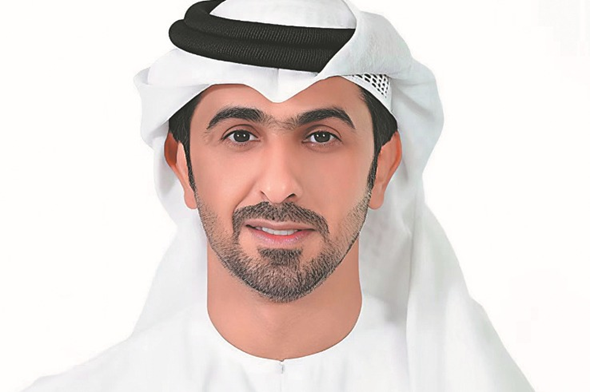
 Hamad Sayah Al Mazrouei, undersecretary of the Abu Dhabi Department of Economic Development.

Abu Dhabi is stepping up efforts to strengthen its economic partnership with China in areas ranging from artificial intelligence to advanced manufacturing, as the largest emirate in the United Arab Emirates aims to diversify beyond oil and position itself as a global hub for future industries.

 “China is a vital partner in Abu Dhabi’s economic transformation journey, particularly as the emirate further accelerates its economic diversification into high-growth, knowledge-driven sectors,” Hamad Sayah Al Mazrouei, undersecretary of the Abu Dhabi Department of Economic Development, said during an exclusive interview with China Daily recently.

 The UAE and China have forged a strong bilateral relationship over the past few decades. China has been the UAE’s largest trade partner for years. What began as a $2 billion trade relationship between the UAE and China in 2000 has expanded 50-fold, reaching $102 billion in 2024, official data show.

 The undersecretary said the UAE-China economic relationship has expanded well beyond trade into long-term collaboration on industrial projects, innovation and sustainability.

 “Our bilateral cooperation has matured far beyond trade flows. It now encompasses transformational investments, next-generation infrastructure and clean energy collaboration,” he added. “Chinese investment into the UAE has grown 16 percent, while the UAE’s investment into China has surged by 120 percent, reflecting reciprocal trust and institutional confidence.”

 Looking forward, the undersecretary said he believes Abu Dhabi and China share highly complementary strengths across several future-focused sectors, paving the way for deeper bilateral cooperation in key areas including advanced manufacturing and industrial integration, clean and renewable energy, AI, life sciences as well as food and water security.

 “There is a strong strategic alignment between Abu Dhabi’s sector-focused clusters and China’s global industrial strengths,” he noted. “Initiatives such as the Smart and Autonomous Vehicle Industries Cluster, the AgriFood Growth and Water Abundance Cluster, and the Health, Endurance, Longevity and Medicine Cluster reflect Abu Dhabi’s targeted approach to economic development. These clusters closely mirror China’s leadership in advanced manufacturing, clean energy, biotech and smart logistics.”

 A flagship of Abu Dhabi-China collaboration is JOCIC Park, where nearly 40 Chinese firms have collectively invested over $10 billion in energy equipment, chemicals and smart manufacturing, helping Abu Dhabi significantly scale up its industrial capabilities.

 “Abu Dhabi and China are not just trading partners, they are co-architects of a new global economic era, grounded in mutual respect and driven by a shared vision of future-ready growth,” he said.

 In 2024, the launch of the Qingdao Overseas Integrated Service Center marked the partnership’s new phase, he said. The center serves as a gateway for Chinese enterprises to expand in the Middle East while giving Abu Dhabi companies access to Chinese technology and expertise. Priority areas include high-end manufacturing, new energy, advanced materials and information technology.

 “Abu Dhabi is rapidly expanding its innovation ecosystem and views China as a key strategic partner in the development of future-oriented, technology-led industries,” he said. “The partnership potential spans a wide range of priority sectors, starting with AI and advanced technologies.”

 Abu Dhabi, home to the world’s first graduate-level AI university — the Mohamed bin Zayed University of Artificial Intelligence — is actively pursuing joint AI research initiatives with Chinese institutions to apply AI in areas including healthcare, energy, urban planning and language processing.

 The emirate is also pushing into smart cities, urban innovations and the mobility sector, with opportunities for Chinese firms in 5G-enabled systems, internet of things applications, electric vehicles and battery technology. In fintech and digital finance, Abu Dhabi sees scope for Chinese companies to work alongside Abu Dhabi counterparts in cross-border payment solutions, e-KYC (know your customer) systems, and digital asset products tailored to emerging markets.

 “Abu Dhabi presents a future-ready environment rooted in innovation, where Chinese enterprises and institutions can collaborate not only for shared economic benefit, but also to codevelop global benchmarks and breakthrough technologies that address pressing development challenges across sectors,” he said.

Article inline ad

Guangdong Liwei Chemical Industry Co., Ltd.,

0

Guangdong Liwei Chemical Industry Co., Ltd., established in 1987, is a state-appointed pesticide-manufacturing factory with several subsidiaries including Guangdong Liwei Import & Export Co., Ltd, Maoming Liqiang Chemical Co., Ltd, Inner Mongolia Liwei Biotechnology Co., Ltd. and Guangxi Liwei New Material Technology Co., Ltd, etc. Liwei Chemicals is a company committed to R&D, production and sales of pesticides technical and formulations. Also providing the high qualified products with perfect solutions and professional services to customers and farmers. We are the top 30 Agrochemical company ranked by CCPIA 2022, ISO 91001 certified and trading more than 50 countries including Africa, South America, Middle-East, South East Asia, Central Asia etc, total sales volume amounts over 500 million dollars in 2022.

       Liwei Chemical is based on “Technology and Innovation” to achieve sustainable development. We have also formed long-term partnerships with the Chengdu Institute of Organic Chemistry of the Chinese Academy of Sciences, Sun Yat-sen University and the Guangdong Petrochemical Research Institute. We invest a fixed amount of money each year as R&D funds, specifically for the development of new pesticides with high efficiency and low toxicity.

       Through hard work over more than 35 years, the “Liwei” brand enjoys a high reputation in agrochemicals fields. Some products are even named as “Guangdong Brand-Named Products”, and the company is also honored with “Specialization and new types of ‘small giant’ enterprises”, “Maoming Top 10 Enterprise”, the “Advanced Enterprise of Guangdong Province”, “Honest Business Enterprise of Guangdong Province”, “Chinese High-tech Enterprise”, “Top 100 of Chinese Agricultural Industry” in 2017-2022.

      We promise to do our best to provide our new and old customers with the best quality products, the most competitive prices and the most sincere services. We sincerely hope to cooperate with you and create a bright future together!


Products:

Technical products

Boutique

Pyrethroid

Insecticide

Fungicide

herbicide

Acaricide

Nematicides

http://www.liweichem.com/en/productslist_306.html

Contact

Factory Add:

Jintang Town, Maonan District, Maoming City, Guangdong Province

Office Add:

Room 813,815, No.111 Siyouxinma Road, Yuexiu District,Guangzhou City

Office TEL: +86(020)-87376285

Factory TEL: +86-(0668)-2367298

E-mail: Global market: zsz@liweichem.net

China market: liwei@liweichem.com

Article inline ad