Wednesday, November 25, 2026

Home Blog Page 201

Nanjing Eyeing For A ‘Silicon Valley’

0

By TAN GUOLING | China Daily | Updated: 2025-07-16

Jiangsu province’s capital Nanjing — a semi-provincial megacity with some 9.57 million residents living in 11 districts — has developed into a national advanced manufacturing base.

 Among the city’s 500 major projects slated for this year, 228 are focused on advanced manufacturing. The Xinde Technology Artificial Intelligence Advanced Packaging and Testing Base Project initiated construction work with a total investment of 5.5 billion yuan ($774 million).

 Located in Jiangbei New Area, the base will have an annual packaging capacity of 300 million high-performance chips upon completion, becoming a key player in Nanjing’s “Silicon Valley” aspirations.

 Divided into two phases, the project will witness its first phase — with an input of 1 billion yuan — usher in a modern factory occupying 153,000 square meters. Equipped with advanced production equipment, it will focus on the challenges of packaging AI computing chips to precisely meet the high-performance packaging needs of 5G communication and automotive-grade chips.

 “The scale of this project is immense, while its demand for construction electricity is high,” said Zhou Hongxiang, a manager from State Grid Nanjing’s Jiangbei New Area Power Supply Co, adding that power supply for the base must be safe and stable, as when its production lines start operation, electricity requirements will climb further.

 To help the project start its operations as soon as possible, State Grid Nanjing tailor-made a high-quality power supply plan for it which meets current construction needs while reserving sufficient load margin for future production, Zhou said.

 He said that as they consider major projects in the city as a stabilizer and propeller of economic growth, State Grid Nanjing has implemented an “Electric Engine” special action campaign to enhance services for major projects, having conducted power connection work for 38 projects at the provincial and municipal level.

 While northern Nanjing strives to build a “Silicon Valley “for integrated circuit industry development, Lishui in southern Nanjing has made new energy vehicles one of its pillars.

 On July 4, Nanjing Ecar Technology Co Ltd, a leading enterprise in the field of urban service vehicle manufacturing, moved to its new production plant in Lishui Economic Development Zone.

 In late February, Du Wanyun — general manager of Ecar’s Lishui project — submitted an application for 3,000 kilovolt amperes of electricity to the local power supply company for the new factory.

 The local power supplier formulated a power supply plan for it through a government-enterprise data sharing platform, thus simultaneously advancing the power supporting project with the factory construction.

 “The power supply company is very efficient. The related manager also briefed us on the policies concerning electricity prices, peak-avoidance use and fast implementation work, enabling us to optimize our production schedules,” said Du.

 When the new factory of Ecar is put into production, its production scale is expected to reach an annual output of 20,000 unmanned vehicles for each shift.

 tanguoling@chinadaily.com.cn

Article inline ad

China’s Silver Economy Sees Rapid Growth In H1, Tax Data Shows

0

Xinhua | Updated: 2025-07-17

BEIJING — China’s silver economy has seen robust growth in the first half of this year, with related industries recording significant revenue increases, value-added tax invoice data released Wednesday by the State Taxation Administration revealed.

 On the supply side, elderly care services expanded rapidly, with sales revenue in nursing services for the elderly and disabled, elderly-friendly home services, and elderly-friendly social care and assistance services growing by 40.9 percent, 14.1 percent, and 8.8 percent year-on-year, respectively.

 The number of enterprises manufacturing products for the elderly increased by 14.1 percent year-on-year. Revenue from elderly-friendly fitness equipment, rehabilitation aids, and nutritional health food manufacturing rose by 14.7 percent, 12.1 percent, and 6.9 percent, respectively.

 On the demand side, revenue from mobility and hearing assistance products, elderly nutrition and health products, and health monitoring equipment rose by 32.2 percent, 30.1 percent, and 7.5 percent year-on-year, respectively, in the first six months.

 Notably, sales revenues for elderly travel services, sports and health services, and cultural entertainment activities increased by 26.2 percent, 23.9 percent, and 20.7 percent, respectively.

 The data also showed an increasing integration of new information technologies in the silver industry, with elderly care enterprises raising their purchases of information technology services by 16.9 percent.

 An official from the State Taxation Administration said the tax authority will continue to implement supportive tax policies to boost the silver economy and promote consumption upgrading.

 According to the Ministry of Civil Affairs, China’s elderly population is projected to grow by more than 10 million annually over the next decade. By 2035, the silver economy is expected to account for 9 percent of China’s gross domestic product, up from 6 percent today.


Article inline ad

Hong Kong Regaining Status As Premier IPO Market

0

By OSWALD CHAN in Hong Kong | China Daily | Updated: 2025-07-17

Hong Kong’s initial public offering market is gaining depth and dynamism and reinforcing its role as a premier global listing venue, with abundant liquidity, attractive valuations and market reforms contributing to the resurgence of IPO activities, global auditing firms and investment managers said.

 The Hong Kong bourse gained 18 percent in 2024 and has risen another 20 percent so far this year, and IPOs on the Hong Kong stock exchange have raised about $16 billion so far in 2025, making the city the top global IPO venue, according to Hong Kong Special Administrative Region Financial Secretary Paul Chan Mo-po.

 Shenzhen-listed battery giant Contemporary Amperex Technology raised over HK$41 billion ($5.22 billion) by listing shares on the Hong Kong stock exchange in May, the world’s largest equity offering to date this year. The CATL’s listing has attracted many US and European funds as the major new share subscribers.

 Data compiled by PricewaterhouseCoopers (PwC) show 44 IPOs took place in Hong Kong in the first half of this year, representing an annual increase of 47 percent.

 PwC said the fundraising amount in the first half of 2025 has already surpassed the entire amount raised in 2024.

 Global business accounting firms such as PwC and Deloitte argue that strong capital flows associated with the high level of liquidity in Hong Kong’s banking system are creating favorable conditions for IPO fundraising in the second half of the year. They expect Hong Kong to regain the status of being the first fundraising platform globally in terms of IPO proceeds this year.

 The SAR’s finance chief said total bank deposits in Hong Kong now exceed $2.3 trillion, equivalent to six times the city’s gross domestic product. The figure grew 7 percent last year and by another 7 percent so far this year.

 “Improved market liquidity and rising valuations are encouraging more companies to turn to Hong Kong’s capital markets, underscoring the city’s long-term financial resilience,” PwC Hong Kong Capital Markets Leader Eddie Wong Kamchin said.

 He added that Hong Kong Exchanges and Clearing has undertaken market reforms, including creating more favorable conditions for various company types, streamlining approval processes, and enhancing transparency and efficiency.

 The Securities and Futures Commission in Hong Kong and HKEX have further ramped up the city’s IPO listing regime by launching a dedicated “Technology Enterprises Channel” in May to further facilitate new listing applications from prospective specialist technology companies and biotech companies.

 “A-share listed companies are capitalizing on Hong Kong’s international fundraising platform to access global capital. At the same time, HKEX’s new policy initiatives such as the Technology Enterprises Channel are set to facilitate listings of more biotech and specialist technology companies, further fueling growth in fundraising volumes,” Deloitte China Southern Region Managing Partner Edward Au Chunhing noted.

 PwC and Deloitte project total fundraising from Hong Kong IPOs will exceed HK$200 billion this year, contributed by 80 to 100 deals, mainly from technology, media and telecommunications, as well as consumer companies.

 Global investment fund managers argue that a lower HIBOR(Hong Kong Interbank Offered Rate) could provide mild impetus to Hong Kong dollar-denominated assets, likely bolstering the Hong Kong IPO market.


Article inline ad

Stabilizing Global Supply Chains Vital To Intl Market

0

Vice-premier stresses greater cooperation for digital, smart and green network

By Zhong Nan | chinadaily.com.cn | Updated: 2025-07-16

Ensuring the stability of global supply chains is vital to addressing rising costs, geopolitical tensions and protectionism, and to preventing a downturn in global trade, government officials and business executives said on Wednesday.

 While delivering a speech at the opening ceremony of the third China International Supply Chain Expo in Beijing, Vice-Premier He Lifeng said that China will speed up building a modern industrial system based on advanced manufacturing, and strengthen cooperation with all parties to make global supply chains more digital, smart and green.

 This year’s grand event, which runs through Sunday, has drawn participation from 651 companies and institutions from 75 countries and regions, according to the Beijing-based China Council for the Promotion of International Trade, the expo’s organizer.

 South Africa’s Deputy President Paul Mashatile said his country is committed to strengthening global supply chains and fostering resilience in the face of challenges.

 “In today’s rapidly changing world, the global supply chain landscape is facing unprecedented challenges, from natural disasters to political upheavals,” he said.

 Ekachat Seetavorarat, deputy permanent secretary of Thailand’s Ministry of Commerce, stressed the importance of regional cooperation in navigating such disruptions.

 “In response, the member economies of the Regional Comprehensive Economic Partnership should deepen trade connectivity and uphold the principles of openness in markets and investment,” he said, adding that such joint efforts are essential for enhancing the security and resilience of regional and global supply chains and for safeguarding the stability of international trade.

 Underscoring the urgency of such efforts, a recent study by the Paris-based International Chamber of Commerce warned that if current global trade tensions continue to escalate, the world’s trading system could face severe disruption, with nonfuel exports from developing countries projected to decline by 33 percent over the next five years.

 Amid an increasingly uncertain global landscape, business leaders said that supply chain adaptation has become a top priority for many multinational companies.

 Oliver Oehms, executive director of the German Chamber of Commerce in China-North China, said that German companies in China are increasingly localizing their supply chains. This is a symptom of the tough domestic price competition, but also an indication of the excellent supplies that are now available locally.

 Lin Chunmei, president and general manager of Corning China, said, “We will strengthen close cooperation with industrial partners through the (China International Supply Chain Expo), and jointly promote industrial upgrades and the development of new quality productive forces.”

 Syngenta Group, a company based in Basel, Switzerland, showcased a comprehensive portfolio of solutions spanning seed innovation, sustainable crop protection, digital agriculture and integrated technical services at this year’s expo.

 Su Fu, president of Syngenta Group China, said the company aims to work closely with partners across the supply chain to jointly build a green, efficient and resilient agricultural ecosystem, reinforcing China’s strong commitment to open and collaborative development in the agricultural sector.

 As a first-time participant in the expo, Jensen Huang, founder and CEO of United States semiconductor company Nvidia, said that artificial intelligence will be central to every industry, company, product and service. He added that AI has sparked a new industrial revolution and created a significant growth opportunity for China’s incredible supply chain ecosystem.


Article inline ad

Collaborate To Innovate,, Cooperate To Rejuvenate

0

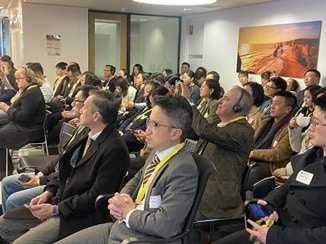
The 2025 Victoria-Jiangsu Industry and Innovation Exchange & Matchmaking Event was successfully held

On July 10, 2025, the 2025 Victoria- Jiangsu Industry and Innovation Exchange Matchmaking Event was held in Melbourne, hosted by the Jiangsu Provincial Department of Industry and Information Technology and co-organized by the Victorian Branch of the Australia China Business Council and other organizations.

Collaborate To Innovate,, Cooperate To Rejuvenate-zhsailing

This event was organized by the Jiangsu Provincial Department of Industry and Information Technology, and key enterprises in Jiangsu Province participated in this industry and innovation exchange event.

The event focused on the two major fields of “new materials” and “life and health”, and deepened the cooperation between the government, enterprises and scientific research institutions, and promoted the integrated development of the China-Australia industrial chain and innovation chain. The event started with Tom, the national CEO of the Australia China Business Council. Parkers first delivered a welcome speech, and then Director Qin Fei of Jiangsu Provincial Department of Industry and Information Technology delivered a speech.

Then Keynote Speeches by Prof Patrick Kwan Monash University speech:” Point-of-care genetic and biomarker testing in neurological diseases”.

IMG 9595

Wang Shanhe from the New Materials Industry Department of Jiangsu Provincial Department of Industry and Information Technology(zhsailing.com photo)

In the new materials special session of the project roadshow and interactive exchanges, Wang Shanhe from the New Materials Industry Department of Jiangsu Provincial Department of Industry and Information Technology introduced the ” Overew of the Development of Jiangsu’s New Material Industry “.

IMG 9599

Professor Lingxue Kong Deakin in University(zhsailing photo)

Australian experts and scholars also made speeches: Professor Lingxue Kong Deakin in University : Materials research and commercialization at IFM in Deakin University;

IMG 9600

Professor Ai jun Huang(zhsailing photo)

Professor Ai jun Huang , Vice Dean of the School of Engineering at Monash University, gave a speech on: AI-Driven rapid design and manufacturing of metallic device and implants.  Dr. Mengyao Li from the University of New South Wales gave a speech “Advanced materials for the Next- Generation Sustainable energy devices”.

IMG 9602

Gigi Yan(zhsailing photo))

Gigi Yan from Jiangsu Enterprise Weiheng Intelligent introduced’ Intelligent modular energy storage system suitable for multiple scenarios”.

IMG 9604

Mr Yibiao Wu, Chairman of Jiangsu Hualun Chemical Co., Ltd(zhsailing photo))

Mr Yibiao Wu, Chairman of Jiangsu Hualun Chemical Co., Ltd., introduced the company’s profile and current technical needs.

IMG 9605

Jianguo Li, Chairman of Nanjing Baoneng Technology(zhsailin photo))

Jianguo Li, Chairman of Nanjing Baoneng Technology, introduced the company’s profile and energy products. In the life and health special session,

IMG 9610

Ms Li Li(zhsailing photo)

Ms Li Li from the New Materials Industry Department of Jiangsu Provincial Department of Industry and Information Technology introduced the “Overview of the Development of Jiangsu’s Biopharmaceutical Industry”;

IMG 9611 1

Mr. Nigel Blair(zhsailing photo)

Mr. Nigel Blair: introduced “SKYDD Biotechnology and RRR home heart defibrillator”;

IMG 9612

Dr Rodney Luwor(zhsailing photo)

Dr Rodney Luwor, professor at the University of Melbourne: made a speech on “TGFb is a biomarker for Alzheimer’s Disease”;

IMG 9613

Professor Ben Gu(zhsailin photo)

Professor Ben Gu made a speech on “Promoting Innate Phagocytosis: Novel Treatment Strategies for Alzheimer’s disease “;

IMG 9614

Dr. Yaoyao Jia Monash University(zhsailing photo)

Dr. Yaoyao Jia Monash University made a speech on “Trailblazer in Global Expansion of POCT Molecular Diagnostic Platform Powered by LAMP-BIOSENSOR-AI Technology”. During the break in the meeting, entrepreneurs, scientists and scholars from Australia and China also talked and took photos.

 zhsailing.com

Article inline ad

Tianzhou 9 Embarks On Cargo Mission To Tiangong

0

By ZHAO LEI | chinadaily.com.cn | Updated: 2025-07-15

The Tianzhou 9 robotic spaceship was launched on Tuesday morning in Hainan province, marking the first and only cargo mission to China’s Tiangong space station this year.

 A Long March 7 rocket, carrying the cargo vessel on top, lifted off at 5:34 am from the Wenchang Space Launch Center located along Hainan’s southeastern coast, according to the China Manned Space Agency.

 After a short flight, the rocket placed Tianzhou 9 in its preset low-Earth orbit, and the solar wings on the robotic vessel unfolded, marking the successful completion of the launch mission. About three hours later, the spacecraft docked with the space station’s Tianhe core module, the agency said in a news release.

 As the 17th spaceship and eighth cargo vessel to dock with the Chinese space station, Tianzhou 9 is tasked with delivering propellants, science payloads and daily necessities for the Shenzhou XX astronauts, who have been in orbit for nearly three months, as well as for their successors, who will board the Shenzhou XXI spaceflight this winter.

 Designed and built by the China Academy of Space Technology in Beijing, Tianzhou 9 — like its predecessors in the Tianzhou series — has the largest carrying capacity and the highest transport efficiency of its kind in the world, according to mission planners.

 The vessel is carrying hundreds of packages with a combined weight of nearly 6.5 metric tons, including several science and technology apparatus and two new spacewalk suits. This is the heaviest cargo delivery any Tianzhou vessel has ever performed.

 Gong Yongsheng, a researcher at the Chinese Academy of Sciences’ Technology and Engineering Center for Space Utilization, said that Tianzhou 9 is carrying 776.5 kilograms of science payloads related to 23 experiments.

 According to the Astronaut Center of China, the two new spacewalk suits feature optimized design and longer life span. Compared with the current type that can facilitate 15 spacewalks, the new ones will support 20.

 In addition, the cargo vessel is carrying a workout instrument for astronauts to perform core-muscle exercises and more than 190 kinds of foods to offer crew members more options, the center said.

 Orbiting Earth at about 400 kilometers above the ground, Tiangong is now the only space station in orbit that is independently operated by a single nation. It has three permanent components — a core module and two science capsules — and regularly connects with several visiting crew and cargo spaceships.

 The Tianzhou 8 robotic spaceship, the predecessor of the current cargo vessel, undocked from the Tiangong space station on July 8 and reentered Earth’s atmosphere the next morning guided by ground controllers.

 Most of the spacecraft disintegrated and burned during reentry as expected, with a small amount of debris falling into designated areas of the ocean, the China Manned Space Agency said.


Article inline ad

Industrial Sector Puts Up Solid Half

0

Equipment manufacturing surges 10.2%; high-tech up 9.5% y-o-y

By FAN FEIFEI | CHINA DAILY | Updated: 2025-07-16

China’s industrial sector has maintained a steady recovery momentum in the first half, with equipment manufacturing and high-tech manufacturing posting rapid growth despite challenges and external uncertainties, officials and experts said.

 Their comments came after data from the National Bureau of Statistics showed on Tuesday that China’s industrial output, a gauge of activity in manufacturing, mining and utilities, grew 6.4 percent year-on-year in the first six months. The figure rose 6.8 percent year-on-year in June after a 5.8 percent growth in May.

 Equipment manufacturing output surged 10.2 percent year-on-year while high-tech manufacturing jumped 9.5 percent — 3.8 percentage points and 3.1 percentage points higher than that of overall industrial output, respectively, during the period.

 Sheng Laiyun, deputy head of the NBS, said at a news conference in Beijing that the country has attached great importance to developing new quality productive forces, bolstering the integration of technological innovation and industrial innovation, and promoting the transformation and upgrading of traditional industries.

 Sheng said emerging industries and the digital economy have witnessed robust growth, while the output of new energy vehicles and lithium-ion batteries rose more than 30 percent and 53.3 percent year-on-year, respectively, in the first half.

 Pan Helin, a member of the Expert Committee for Information and Communication Economy, which is part of the Ministry of Industry and Information Technology, said the recovery of industrial production has accelerated as the country has rolled out a series of policy measures to boost innovation and optimize the business environment.

 “The high-tech sector and high-end equipment manufacturing are picking up steam, which shows that the Chinese economy is transitioning toward high-quality and innovation-led growth,” Pan said, adding that emerging industries, enterprises’ intelligent transformation and digital infrastructure have become new engines bolstering growth of industry.

 Luo Zhongwei, a researcher at the Chinese Academy of Social Sciences’ Institute of Industrial Economics, said that China’s high-tech manufacturing sector has become a cornerstone in promoting high-quality economic growth, helping the country gain an upper hand in increasingly fierce international competition, and strengthen its capacity to withstand external risks and shocks.

 Noting that sci-tech innovation is crucial for cultivating new growth engines and competitive advantages, Luo added that it is of vital significance to push the manufacturing sector toward higher-end, smarter and greener production through the adoption of new-generation information technologies, including artificial intelligence, 5G, big data and the internet of things.

 More efforts should also be made to increase investment in technological frontiers and vigorously develop strategic emerging sectors and future-oriented industries, including AI, quantum computing, biotechnology, new energy and new materials, he added.

 China’s future economic growth will be increasingly propelled by smart manufacturing, the digital economy and green technology, and the country has demonstrated immense potential for industrial transformation, said Norbert Meyring, head of industrial manufacturing and automotive sector at KPMG China.

 “China’s focus on nurturing new quality productive forces marks a strategic shift from scale-driven growth to innovation-led and sustainable development. This approach leverages cutting-edge technologies, such as AI, green tech and advanced manufacturing to upgrade industries and drive high-quality economic expansion,” Meyring said.

 He added that China’s attractiveness to foreign businesses remains fundamentally robust, as the country’s vast consumer base and integrated industrial ecosystem remain irreplaceable for companies’ global business expansion, especially in advanced sectors like EVs, green tech and digital services.

 By giving play to the leading role of enterprises in bolstering sci-tech innovation as well as stimulating their innovation vitality, the country could speed up the formation of sound institutions and mechanisms for fostering new quality productive forces, said Li Dongsheng, founder and chairman of Chinese consumer electronics maker TCL Technology Group Corp.


Article inline ad

Nvidia To Resume Sale Of H20 Chips To China

0

By MA SI | CHINA DAILY | Updated: 2025-07-16

US semiconductor company Nvidia said on Tuesday that it will resume sales of H20 chips to China.

 It also announced a new, fully compliant GPU, or graphics processing unit, for Chinese market.

 The development came after Nvidia founder and CEO Jensen Huang promoted artificial intelligence in both Washington and Beijing earlier this month — emphasizing the benefits that AI will bring to businesses and society worldwide.

 In Beijing, Huang met with government and industry officials to discuss how AI will raise productivity and expand opportunity. He is scheduled to attend the opening ceremony of the China International Supply Chain Expo on Wednesday.

 Huang said Nvidia is filing applications to sell the H20 GPU to China again as the US government has assured the company that licenses will be granted, and that Nvidia hopes to start deliveries soon.

 Huang also announced a new, fully compliant RTX PRO GPU that “is ideal for digital twin AI for smart factories and logistics”.

 Huang said that the world had reached an inflection point — AI has become a fundamental resource, like energy, water and the internet.

 He emphasized the company’s commitment to supporting open-source research, foundation models and applications, which democratize AI and will empower emerging economies in every region, including Latin America, Europe, Asia and beyond.

 Xiang Ligang, director-general of the Zhongguancun Modern Information Consumer Application Industry Technology Alliance, a telecom industry association, said the resumption in sales of H20 chips was good news to both Nvidia and Chinese companies that seek to purchase such chips.

 “This is a win-win result,” Xiang said, adding that China is the world’s largest semiconductor market that no company can ignore and give up.

 The Chinese mainland consumes more than half of the world’s semiconductors, which are then assembled into tech products and reexported or sold in the domestic market, according to research firm Daxue Consulting.

 Huang said at a tech forum in May that the US government’s export controls on AI chips to China were “a failure”.

 “All in all, the export control was a failure. The fundamental assumptions that led to the AI diffusion rule in the beginning, have been proven to be fundamentally flawed,” Huang said.

 Nvidia’s market share in China, Huang said, has plunged to 50 percent from 95 percent at the start of former US president Joe Biden’s administration.

 masi@chinadaily.com.cn

Article inline ad

Turnaround In China-Australia Ties Benefits Both

0

President Xi stresses importance of treating each other as equals, seeking common ground

By Cao Desheng | China Daily | Updated: 2025-07-16

China and Australia vowed on Tuesday to enhance bilateral ties, and work together to uphold multilateralism and free trade and jointly cope with global challenges amid the transformation and turbulence in the international landscape.

 During their meeting in Beijing, President Xi Jinping and Australian Prime Minister Anthony Albanese reaffirmed their commitment to adhering to the principle of “seeking common ground while shelving differences” in further promoting ties between the two countries to pursue mutually beneficial cooperation.

 Premier Li Qiang held a grand welcoming ceremony on Tuesday for Albanese, who started a weeklong official visit to China on Saturday spanning Shanghai, Beijing and Chengdu in Sichuan province.

 The two prime ministers witnessed the signing of a slew of cooperation documents in the fields of trade, customs, tourism and agriculture after they co-chaired the 10th China-Australia Annual Leaders’ Meeting. In a statement issued after the meeting, both prime ministers reiterated the importance of a mature, stable and constructive bilateral relationship.

 Xi told the Australian prime minister that the “turnaround” of China-Australia relations has proved that “adhering to the principles of treating each other as equals, seeking common ground while shelving differences, and engaging in mutually beneficial cooperation” is in line with the fundamental interests of both China and Australia as well as their peoples.

 Regardless of how the international situation evolves, this overarching principle should be unwaveringly upheld, he said.

 Xi underlined the need for both countries to make consistent efforts to enhance strategic mutual trust, expand mutually beneficial cooperation, strengthen people-to-people bonds, and jointly cope with global risks and challenges.

 China’s determination for peaceful development will not waver, its commitment to common development will remain steadfast, and its policy to promote cooperation and development in the Asia-Pacific region will not change, he said.

 China advocates that countries promote unity and cooperation, advance the construction of the Asia-Pacific Free Trade Area, facilitate the liberalization and facilitation of trade and investment, and promote regional peace, development and prosperity, he added.

 Noting that China has been Australia’s largest trading partner for 16 consecutive years, he stressed the importance of enhancing the alignment of the countries’ development strategies and creating a favorable business environment for enterprises in both countries.

 Faced with the complex and changing international situation, all countries should collaborate to uphold international fairness and justice, support multilateralism and free trade, defend the international system with the United Nations at the core and the international order underpinned by international law, and promote the international order toward a more just and reasonable direction, Xi said.

 Albanese affirmed the positive progress in Australia-China relations in recent years, saying that Canberra attaches great importance to its ties with China.

 He assured Xi that Australia adheres to the one-China policy and does not support “Taiwan independence”.

 While recognizing that China’s development is vital to Australia, the Australian prime minister pledged that Australia does not seek decoupling from the Chinese economy.

 Australia is willing to maintain unimpeded trade with China and promote pragmatic cooperation in fields including green industry, climate change response and medical technology, in order to seek mutually beneficial, win-win results, he said.

 Albanese also expressed Australia’s commitment to working with China to uphold multilateralism.

 China-Australia relations have been improving since Albanese took office in 2022, and the Australian prime minister has advocated effective communication between the two countries. This visit marks his second within less than two years, with the previous one taking place in November 2023.

 In December last year, China lifted import restrictions on Australian lobsters, marking a significant move to ease tensions in the bilateral relationship, which had been strained since 2017.

 This year marks the 10th anniversary of the implementation of the China-Australia Free Trade Agreement. While meeting with entrepreneurs attending the 8th China-Australia CEO Roundtable Meeting in Beijing with Albanese, Premier Li said that over the past decade, the economic and trade cooperation between China and Australia has shown strong resilience and vitality, despite some twists and turns.

 Li highlighted the strong economic complementarity between China and Australia, and called for higher-quality cooperation in trade and investment.

 On Tuesday, Albanese also met in Beijing with Zhao Leji, chairman of the Standing Committee of the National People’s Congress, China’s top legislative body.

 caodesheng@chinadaily.com.cn

Article inline ad

Why Stable China-US Trade Matters More Than Ever

0

By John Quelch | China Daily | Updated: 2025-07-14

In a time of rising global economic uncertainty and geopolitical fragmentation, the trade relationship between China and the United States remains one of the world’s most consequential. Despite current tensions, it is critical to recognize that economic cooperation between the world’s two largest economies is not just a bilateral matter — it is a stabilizing force with global implications.

 Historically, China-US trade has been broadly mutually beneficial, contributing to prosperity and innovation in both nations. While China has consistently maintained a trade surplus in goods — fueled in part by its strength in manufacturing and export-driven growth — the US has benefited from a significant surplus in services, including education, entertainment, tourism, financial services and intellectual property licensing. US firms, particularly in the consumer, automotive, pharmaceutical and tech sectors, have flourished by tapping into China’s vast and increasingly affluent domestic market. Many of these firms also benefit from access to highly educated Chinese talent, which has enriched their global competitiveness.

 Conversely, Chinese companies have gained immensely from their access to US capital markets, advanced technologies and management practices. Listing on US exchanges has enabled Chinese firms to raise capital efficiently and adopt international governance standards. Many have used this foundation to modernize operations, strengthen global branding and accelerate international expansion. These interdependencies have created a deep, if complex, web of economic linkages that have underpinned global growth and innovation for decades.

 However, at its core, the current trade frictions stem not from trade imbalances alone, but from broader concerns around technological leadership, national security and economic dependency. The challenge lies in managing strategic competition without undermining the significant mutual value created through trade between the two countries.

 As both countries navigate the complexities of a shifting geopolitical landscape, it is increasingly clear that trade policy is no longer only about economic efficiency or comparative advantage. It is now deeply intertwined with national strategy. US concerns about intellectual property protection, cybersecurity and technology transfers are mirrored by Chinese concerns about trade restrictions and over-dependence on foreign technologies. These underlying anxieties feed into a cycle of suspicion and countermeasures, complicating efforts to maintain open channels for commerce. The task, therefore, is not simply to rebalance trade flows, but to reestablish a working relationship grounded in transparency, reciprocity and mutual respect.

 Recent trade engagements in Geneva and London mark a modest but meaningful turning point. With both the US trade representative and the US secretary of commerce participating, it’s clear that tariffs and export controls are now being negotiated in parallel — reflecting the central role of strategic technologies in the evolving trade agenda. The US trade representative and the secretary of commerce have jurisdiction over tariffs and export controls, respectively. This is no longer a conventional trade dispute centered on deficits and surpluses. It is a structural negotiation about the rules governing 21st-century innovation and industrial policy. The presence of both senior US officials also signals a recognition that economic statecraft must be coordinated across agencies to be effective.

 Early signs of reciprocity

 China lifting blocks on critical minerals such as rare earths and the US offering limited easing of export controls on aircraft parts, software and certain semiconductors are promising developments. While no formal agreement has emerged, the professional tone and shared willingness to reengage inspire cautious optimism. Crucially, these talks suggest that neither side wants a breakdown in dialogue. Instead, there appears to be a growing recognition that a tit-for-tat approach to policymaking is unsustainable. If both sides continue to engage with a commitment to parallel, good-faith actions, the result could be a more stable and constructive economic relationship.

 But the risks of missteps remain. Calls for “decoupling” have gained political traction in both countries, yet the economic consequences of such a move would be severe. Interdependence, especially in areas like rare earths, semiconductors and pharmaceuticals, is not a vulnerability — it is a strength that capitalizes on each other’s competitive advantages. Full-scale disengagement would undermine global supply chains, increase costs and diminish the efficiency that has powered decades of shared prosperity. In a world of interlocking economic systems, decoupling would also reduce the incentives for diplomatic cooperation, increasing the risk of misunderstanding and miscalculation.

 The rare earths sector offers a cautionary tale. China currently dominates global refining capacity for these critical materials, which are essential for goods such as smartphones, electric vehicles and military equipment. US efforts to develop domestic alternatives are hampered by environmental, financial and regulatory challenges.

 At the same time, while Chinese firms like Huawei have made impressive gains in chip design and telecommunications, it will take years to match the depth and sophistication of US firms like Nvidia or Intel. This mutual dependency suggests that selective diversification and greater resilience are necessary, but a wholesale separation is both impractical and counterproductive.

 That view is echoed by the latest survey from AmCham China, which found that most US firms remain committed to operating in China despite higher tariffs and mounting political pressure. This is not sentimentality — it is pragmatism. China offers scale, skilled talent and an integrated industrial base that cannot be easily replicated. Companies are localizing supply chains and managing risks, but few are prepared to walk away from one of the world’s largest consumer markets.

 For the broader global trading system, resilience depends on predictability and rules-based governance. In response to unilateral tariff actions, countries should recommit to multilateralism, support regional trade frameworks and modernize institutions like the WTO. Importantly, nations must resist retaliatory measures and instead focus on long-term strategies such as building diversified, geopolitically balanced supply chains. Transparency, regulatory coherence and dispute resolution mechanisms must be reinforced to ensure that global commerce remains a positive-sum game.

 China’s own role as a pillar of global economic stability cannot be overstated. Throughout the 2008 financial crisis and the pandemic-era recovery, China’s steady macroeconomic policies contributed to global confidence. Amid today’s uncertainty, China’s continued policy stability provides reassurance to international investors and developing economies alike. A stable China supports global growth, cushions shocks in emerging markets and adds predictability to an increasingly volatile world order.

 With greater economic influence, however, comes greater responsibility. Global stakeholders increasingly expect China — and all other major economies — to uphold principles of openness, regulatory transparency, and fair, reciprocal trade. Upholding these principles will be critical to deepening trust and sustaining mutually beneficial relationships with partners around the world. Meeting these expectations will also help China demonstrate global leadership in trade governance at a time when institutions are under strain.

 There is still a window to shift from confrontation to constructive — even if competitive — coexistence. Strategic competition needs not preclude cooperation, especially in areas of shared interest such as climate change, public health, artificial intelligence and global security. A functioning, forward-looking China-US economic relationship is not just desirable; it is indispensable for global progress.

 The views do not necessarily reflect those of China Daily.

 The writer is executive vice-chancellor, American president and distinguished professor of social science at Duke Kunshan University in China and the John deButts professor of practice at Duke University’s Fuqua School of Business in the United States.


Article inline ad