Thursday, November 26, 2026

Home Blog Page 247

Financial Policy Package Injects Cash, Confidence Into Economic Vibrancy

0

China Daily | Updated: 2025-05-16

A 0.5 percentage-point reduction in the reserve requirement ratio for eligible financial institutions took effect on Thursday, with the move expected to inject roughly 1 trillion yuan ($139 billion) of long-term liquidity into China’s financial market.

 The RRR cut, the first such move since the start of the year, comes after the seven-day reverse repo rate was cut by 0.1 percentage point by the Chinese central bank, which took effect on May 8.

 The reduction in the RRR and reverse repo rate, along with expanding re-lending facilities and sci-tech innovation bonds issuances, were among a raft of supportive measures announced last week by monetary and financial regulatory bodies, as the world’s second-largest economy steps up efforts to stabilize markets and sustain economic recovery amid external headwinds.

 Analysts believe this package of supportive financial policies, by boosting liquidity supplies and reducing borrowing costs for both businesses and residents, will create a favorable financial environment for stabilizing market expectations and making an impact on consumption growth and economic restructuring.

 These supportive policies are in line with the guiding principles unveiled at a meeting of the Political Bureau of the Central Committee of the Communist Party of China in April, which called for efforts to accelerate the implementation of more proactive and effective macroeconomic policies and make full use of a more proactive fiscal policy and a moderately loose monetary policy.

 Maintaining ample liquidity through measures such as the RRR cut can provide sufficient resources for financial institutions and support lending to the real economy, while the reduction in interest rates and innovation in structural monetary policy tools will help stimulate effective domestic demand, a view broadly shared by experts.

 “A 0.5 percentage-point cut in the RRR will effectively meet the market’s demand for long-term liquidity,” said Dong Ximiao, chief researcher at Merchants Union Consumer Finance Co Ltd.

 Also starting on May 8, the RRR for auto financing and financial leasing companies was slashed by 5 percentage points to zero percent, with the cut expected to increase the credit supply capacity of these two types of institutions in their respective fields.

 Dong said that this notable RRR cut targeting auto financing and financial leasing companies has drawn significant market attention because of their anticipated impact on boosting car consumption and equipment upgrade investment.

 China’s central bank governor, Pan Gongsheng, said last week that the seven-day reverse repo rate cut is expected to result in the loan prime rate, a market-based benchmark lending rate, dropping by 0.1 percentage point.

 Effective on May 8, the interest rates on personal housing provident fund loans were also lowered by 0.25 percentage point. Meanwhile, the rate of re-lending, a structural monetary tool via which the central bank provides loans to financial institutions, was also lowered by 0.25 percentage point starting from May 7, with the cut aiming to guide financial institutions to enhance financial support for the nation’s key strategies and development fields as well as weak links.

 Chen Wenjing, director of policy research at the China Index Academy, said that the reduction in the interest rate for personal housing provident fund loans is expected to further alleviate the pressure on residents to purchase houses and boost home purchase demand.

 Analysts say the adjustment and optimization of the structural monetary policy tools are in line with the nation’s economic restructuring efforts and are geared toward promoting consumption and sci-tech innovation, with all these recent supportive policies helping boost market confidence amid external uncertainties.

 Xinhua

Article inline ad

Over 1,800 Exhibitors Gather At Changsha’s Construction Machinery Expo

0

By Zou Shuo and Zhu Youfang | chinadaily.com.cn | Updated: 2025-05-15    

The fourth Changsha International Construction Equipment Exhibition opened on Thursday in Changsha, Hunan province, and will run through Sunday.

 The event has attracted 1,806 exhibitors from both domestic and international markets. Spanning 300,000 square meters, the exhibition showcases over 20,000 pieces (sets) of equipment, including more than 1,500 new products and technologies making their global debut.

Recognized as one of the world’s largest and most influential trade fairs for construction machinery, this year’s exhibition features 13 indoor halls and four outdoor zones, covering five sectors: construction machinery, emergency equipment, mining equipment, agricultural machinery, and transportation equipment.

 Notably, 35 brands from the global top 50 construction machinery manufacturers are participating, alongside 1,666 industrial chain enterprises.

The event includes new zones for emergency rescue equipment, mining equipment, and transportation equipment. Over 11 industry-academia-research collaboration events and 160 academic presentations will be held during the exhibition, creating an open innovation platform to advance China’s manufacturing sector globally.

 According to Changsha Customs, Hunan’s construction machinery exports surpassed 30 billion yuan ($4.16 billion) for the first time in 2024, reaching 31.63 billion yuan. The province produces 12 major categories, over 100 subcategories, and nearly 500 models of equipment, accounting for approximately 70 percent of China’s total construction machinery varieties.

The Changsha construction machinery cluster ranks as the world’s third-largest hub in the sector, following Illinois in the United States and Tokyo in Japan.

Article inline ad

China’s Service Trade Fair To Open In September

0

Xinhua | Updated: 2025-05-15

BEIJING — The 2025 China International Fair for Trade in Services (CIFTIS) is scheduled to open on Sept 10 in Beijing, with Australia invited as the guest country of honor.

 Starting this year, the fair will adopt a fixed schedule, opening on the second Wednesday of September every year, Zhao Qizhou, an official with the Beijing Municipal Commerce Bureau, told a press conference on Thursday.

 It will be held at Shougang Park, a 3-square-kilometer industrial heritage site and a previous venue of the Beijing 2022 Winter Olympics.

 The fair consists of sectors including finance, culture and tourism, education, sports, supply chain and healthcare services.

 The event will run for five days — the first three days designated for professional visitors and the last two for public access.

 The Global Trade in Services Summit, co-hosted by the United Nations Conference on Trade and Development, China’s Ministry of Commerce and the Beijing municipal government, will be held on Sept 10.

 Since its inception in 2012, CIFTIS has brought together enterprises from around the world to share opportunities stemming from China’s opening up and development of trade in services.

 Last year’s edition attracted over 450 Fortune 500 enterprises and companies taking the lead in their respective industries, as well as participants from 85 countries and international organizations.

Article inline ad

Construction Of Shanghai Port’s Largest Automated Container Terminal In Full Swing

0

chinadaily.com.cn | Updated: 2025-05-15

Shanghai is developing the north area of Xiaoyangshan Island into Shanghai Port’s largest automated container terminal, according to a recent briefing by the Shanghai International Port Group (SIPG).

 Upon completion, the project, which is a pivotal initiative for Shanghai and is identified as a national key project in the 14th Five-Year Plan (2021-2025) , will become a next-generation intelligent container terminal and an environmentally sustainable green port zone.

 As the world’s busiest container port, Shanghai Port achieved a remarkable feat by handling 51.51 million TEUs (twenty-foot equivalent units) in 2024, maintaining its position as the global leader in container throughput for 15 consecutive years. Despite its success, Shanghai Port has faced challenges due to a scarcity of shoreline resources, prompting a focus on enhancing operational efficiency rather than expanding infrastructure in recent years, except for the initial phase of the container port renovation project at Luojing Port.

 The ongoing development in the north area of Xiaoyangshan Island aims to address this issue by adding a new shoreline spanning 6,100 meters. This expansion includes a container terminal shoreline of 5,500 meters, featuring seven 70,000-tonnage and 15 20,000-tonnage container berths, with a designed annual throughput capacity of 11.6 million TEUs.

 The project, which will take around eight years to complete, will integrate cutting-edge automated terminal technologies and adhere strictly to ecological and green port standards from construction to future operations. It is set to establish a new benchmark for the digital, intelligent, and sustainable transformation of Shanghai International Shipping Center’s infrastructure, according to Shanghai Port.

 Described as one of China’s most significant maritime endeavors, the project involves reclaiming approximately 100 million cubic meters of land, as highlighted by Wu Qingfei, deputy director of the engineering command center at SIPG. By the end of 2024, investments in the project had surpassed 6 billion yuan ($0.83 billion), with an additional projected investment of over 4 billion yuan in 2025.

 To facilitate the massive undertaking, the operational zone has been segmented into four sections from west to east to ensure continuous construction and phased operation. The first section is scheduled for completion by the end of 2026, followed by inspection and trial operations.

 The construction team faces unique challenges in the north area of Xiaoyangshan Island, where the absence of a natural barrier exposes the site to winter cold waves and northeasterly winds, limiting the effective construction period to just 10 days per month from November to March the following year. In response, a 7,500-meter-long breakwater is being constructed at sea parallel to the dockyard, utilizing innovative “large cylindrical buckets” as foundations, a pioneering approach in offshore dock and revetment structures.

 Li Junfeng contributed to this story.


Article inline ad

Internet Majors See Accelerated Growth

0

By FAN FEIFEI | CHINA DAILY | Updated: 2025-05-17

Chinese internet heavyweights have returned to a rapid upward trajectory fueled by the continuously improved business environment and the application of rapidly evolving artificial intelligence technology, as they posted the fastest quarterly revenue growth in core businesses.

 Experts said the robust financial performance demonstrates the immense potential and resilience of Chinese platform enterprises, which have played a pivotal role in expanding domestic demand and boosting consumption, stabilizing employment and driving economic growth.

 Alibaba Group said on Thursday that its revenue stood at 236.45 billion yuan ($32.8 billion) during the January-March period, up 7 percent year-on-year, while its net income reached 29.85 billion yuan, rising 22 percent year-on-year.

 Notably, revenue from its cloud computing business logged the highest growth level in three years, surging 18 percent year-on-year to 30.13 billion yuan, with AI-related product revenue achieving triple-digit growth for the seventh consecutive quarter.

 Wu Yongming, CEO of Alibaba Group, said that looking ahead, the company will remain focused on its core businesses and continue to drive AI and cloud businesses as a new engine for its long-term growth.

 The company has announced that it will invest more than 380 billion yuan in building cloud and AI hardware infrastructure in the next three years. The investment figure exceeds Alibaba’s total cloud and AI spending over the past decade, highlighting its focus on an AI-driven growth strategy.

 JD posted better-than-expected financial results, with its revenue reaching 301.1 billion yuan in the first quarter, an increase of 15.8 percent year-on-year. This represents the highest year-on-year growth rate for the company in nearly three years.

 Xu Ran, CEO of JD, said that its earnings were boosted by improving consumer sentiment and continued enhancements to JD’s supply chain capabilities and user experience. The company aims to capture the emerging market opportunities driven by consumption support policies and the rise of AI large language models.

 Jiang Han, a senior analyst at market consultancy Pangoal, said that Chinese platform companies, which mainly leverage digital platforms to provide services such as e-commerce, payment, short videos and games, have effectively stimulated domestic demand and consumption by providing products and services online for consumers.

 “They have created a large number of jobs, including logistics and distribution, customer services and software development, and played a critical role in bolstering technological innovation, especially in AI, which will be conducive to enhancing production efficiency and bolstering industrial upgrading,” Jiang said.

 He noted that their strong performance in earnings results reflects China’s continued efforts to promote the healthy and well-regulated development of the platform economy by creating a favorable business environment and removing market barriers, while significantly boosting their vitality and confidence. Meanwhile, these companies’ increased investments in cutting-edge technologies, such as AI, have already yielded substantial returns.

 Tencent Holdings said that its revenue rose 13 percent year-on-year to 180 billion yuan in the first quarter, its largest quarterly income since listing in Hong Kong in 2004, driven by continued efforts in AI and video gaming.

 NetEase reported a 7.4 percent year-on-year increase in total revenue, beating market expectations, as the company continues to innovate with AI-driven enhancements in gaming experiences and educational services.

 Zhu Keli, founding director of the China Institute of New Economy, said that the platform economy has become the core engine driving China’s economic transformation and upgrading, with its resilience reflected in the highly efficient matching ability between supply and demand.

 Highlighting platform companies’ significant role in fostering new growth drivers, Zhu called for efforts to encourage enterprises to beef up investment in state-of-the-art technologies and forward-looking fields that better empower the real economy.

 China’s tech and internet sector has garnered revamped interest from investors since the appearance of the AI large language model DeepSeek in January. Leading internet companies have invested large sums of money into a new race to develop and integrate the most cutting-edge AI applications.

 fanfeifei@chinadaily.com.cn

Article inline ad

Tetra Pak Targets China’s Protein RTD Market With New Solutions

0

By Wang Zhuoqiong | chinadaily.com.cn | Updated: 2025-05-16

As Chinese consumers grow increasingly health-conscious, demand for high-protein functional beverages is surging, prompting the global food packaging and processing solutions company Tetra Pak to double down on the category’s potential in China with its customized end-to-end solution ready for local brands.

 At the recent FBIF 2025 Food and Beverage Innovation Forum, Tetra Pak highlighted its ambitions in the ready-to-drink (RTD) protein segment, a fast-growing space fueled by the expansion of fitness culture beyond gyms to the broader public.

 The company showcased its range of end-to-end solutions for high-protein beverages, designed to help local brands accelerate product development and commercialization.

 “Protein has become one of the top functional claims in the food and beverage industry,” Jordi Torres, vice president of Marketing, Tetra Pak Greater China, said. “In China, 61 percent of consumers cite protein as the most interesting health-related claim to them”.

 China’s sports nutrition market is estimated to be worth around 1 billion euros ($1.1 billion), or 7.5 billion yuan, with over 500 million people engaging in regular exercise and showing growing interest in nutrition, according to the data shared by Tetra Pak. The gym industry alone counts about 70 million members—many of whom are willing to pay more for products that enhance their health.

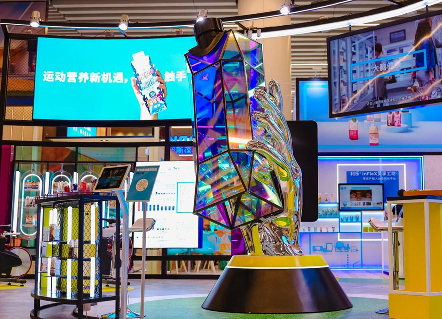
 To help food and beverage brands capture this rising demand, Tetra Pak introduced its InFleX Innovation and Incubation Workshop—a zero-asset investment platform that provides one-stop product development support, from R&D to market testing.

 “The workshop also provides the flexibility from the processing technology to the packaging format without the brand owner having to invest in the very beginning,” said Torres. “It helps the brand produce industrialized products with minimum risk”.

 The highlight of the model is allowing companies to industrialize new RTD products with access to Tetra Pak’s co-packing network, which is already available from beverage enterprises that acquired Tetra Pak’s processing and packaging facilities.

 The company’s new Industrial Protein Mixer, for instance, is designed to optimize the blending of complex ingredients while preserving protein quality by eliminating foam generation and minimizing raw material waste—critical factors for cost control and nutritional efficacy.

 “Protein is an ingredient that needs to be handled gently,” Torres said. “With our integrated technologies and InFleX, we enable our partners to test and scale protein-based drinks efficiently, helping them reduce waste and bring high-quality products to market faster.”

Article inline ad

Atlas Copco Opens Smart Green Factory In Wuxi

0

By LIN SHUJUAN in Shanghai | China Daily | Updated: 2025-05-16

Swedish industrial giant Atlas Copco Group marked a milestone in its 152-year history with the grand opening of its new China headquarters for compressor technologies in Wuxi, Jiangsu province, on Wednesday.

 The campus, representing a 3 billion yuan ($416 million) investment, the division’s largest since 1997, underscores the company’s deepening commitment to innovation and sustainability in one of its fastest-growing markets.

 The Swedish company, renowned for its world-class air and gas compressors, vacuum systems, industrial tools and energy-efficient technologies, has positioned the Wuxi facility as one of its global hubs for research and development, production and distribution. The campus is set to become one of Atlas Copco’s largest manufacturing and innovation bases worldwide.

 Since establishing its first Chinese production site in Wuxi in 1994, Atlas Copco has seen sustained expansion in the region. Today, products engineered and manufactured in Wuxi serve industries across China and over 180 global markets.

 “China’s importance to our growth trajectory cannot be overstated,” said Vagner Rego, global CEO of Atlas Copco Group, during an exclusive interview with China Daily ahead of the inauguration.

 He said the campus is a testament to Atlas Copco Group’s partnership with China and its thriving semiconductor, automotive and renewable energy sectors — all of which are driving unprecedented demand for innovative solutions.

 The facility integrates an intelligent green factory designed to boost output of core equipment while prioritizing energy efficiency. Advanced technologies, including variable speed drive compressors and oil-free systems, aim to slash industrial energy consumption — critical in a nation where compressors account for over 9 percent of industrial electricity use. The campus also debuts a breakthrough heat pump system that captures and repurposes waste heat from compressors, drastically reducing carbon emissions.

 “China’s clear roadmap to carbon neutrality aligns perfectly with our sustainability goals,” Rego said. The company has pledged to expand investments in Wuxi, focusing on high-quality, locally tailored innovations to strengthen supply chains and accelerate decarbonization. A dedicated R&D center at the site will leverage China’s robust supply network and growing talent pool to develop next-generation solutions.

 Rego highlighted China’s dual role as both a market and an innovation incubator: “Our Wuxi team has cultivated exceptional expertise and collaboration with local suppliers. With this new infrastructure, we’re poised to deliver breakthroughs that empower industries worldwide to achieve greener operations.”

Article inline ad

Qatar Airways Cargo Flies High On China’s Output

0

Qatar Airways Cargo flies high on China’s output

By ZHU WENQIAN | China Daily | Updated: 2025-05-16

Qatar Airways Cargo, a unit of the national airline of Qatar, said demand from China has grown steadily, led by the rapid rise of cross-border e-commerce, and the carrier sees this growth as a long-term trajectory given China’s manufacturing depth and export capacity.

 China’s cargo transport demand for electronic products such as smartphones, as well as aircraft parts, has continued to gain momentum. In particular, Shenzhen, Guangdong province, is a major center for electronic products and innovation, with corresponding high demand for freight transport, the carrier said.

 The Doha-based carrier said its current frequency is designed to match the intensity of this demand. Its global network and infrastructure are aligned with market dynamics, and the firm will continue to invest to capture the demand.

 Mark Drusch

“China continues to be a key engine of global trade, particularly in sectors aligned with air cargo. We are not just watching that growth, we are aligned with it, operationally and strategically. Our setup is built to support the pace of this market and to stay ahead of its next moves,” said Mark Drusch, chief cargo officer of Qatar Airways Cargo.

 Chinese e-commerce platforms such as Alibaba Group’s platforms, Shein and PDD Holdings’ Temu are reshaping global flows, and the carrier is moving significant volumes across that segment. In parallel, it has seen sharp demand for highly specialized logistics, particularly in technology and aerospace, which prompted the company to launch two dedicated products for the sectors.

 Last year, Qatar Airways Cargo carried 46,000 metric tons of inbound cargo and 145,600 tons of outbound cargo from the Chinese mainland, with weekly volumes averaging 886 tons and 2,800 tons, respectively, and this is complemented by strong flows through the special administrative regions of Hong Kong and Macao.

 The carrier said it has a diverse customer base in China, including e-commerce industry players, technology product exporters, and clients in the pharmaceutical and aerospace sectors, and it is seeing growing demand from companies operating in high-stakes and high-growth environments.

 “We deploy capacity where the market calls for it. Our network already covers the Chinese mainland’s key industrial hubs and is reinforced by strong operations in Hong Kong and Macao. As volumes evolve, especially in sectors like e-commerce, we are ready to add capacity with agility,” Drusch said.

 In addition, the carrier further strengthened its partnership late last year with Alibaba Group’s logistics arm Cainiao Group to further enhance its ability to serve complex and fast-moving markets, like the transport of e-commerce products. Since then, the two sides have streamlined flows and reduced transit times across key regions such as Europe, the Middle East and Africa.

 The United Arab Emirates’ Etihad Cargo, a unit of Etihad Airways, has also expanded its capacity to meet growing demand in China. The carrier has increased its total flights to and from China from 11 weekly flights last year to a planned total of 18 this year.

 To satisfy growing market demand, Etihad Cargo has added three additional weekly freighter flights between Abu Dhabi and Shenzhen.

 Meanwhile, the International Air Transport Association recently released data for global air cargo markets in March. Total demand, measured in cargo ton-kilometers, grew by 4.4 percent year-on-year, a historic peak for March. Jet fuel prices dropped 17.3 percent year-on-year, marking nine straight months of declines on a yearly basis, IATA said.

 “March cargo volumes were strong. It is possible that this is partly a front-loading of demand as some businesses tried to beat the well-telegraphed April 2 tariff announcement by the United States,” said Willie Walsh, IATA’s director general.

 “Within the temporary pause on implementation, we hope that political leaders will be able to shift trade tensions to reliable agreements that can restore confidence in global supply chains,” Walsh said.


Article inline ad

China Telecom Scores Big In Quantum Sector

0

Industrial giant integrates cutting-edge technology into cryptography system

By MA SI | China Daily | Updated: 2025-05-16

China has ushered in a new era of cybersecurity with the world’s first commercially ready cryptography system that integrates quantum key distribution and post-quantum cryptography, marking a groundbreaking leap in defending against next-generation quantum computing threats.

 In a landmark demonstration, China Telecom Quantum Group, which has developed the cryptography system, said it has successfully conducted a cross-province quantum-encrypted voice call spanning over 1,000 kilometers, showcasing the system’s stability and real-world viability. This milestone underscores China’s leadership in transitioning quantum-resistant technologies from labs to commercial applications.

 Peng Chengzhi, chief quantum scientist at China Telecom Quantum Group, a unit of telecom carrier China Telecom, said the global development of quantum computing poses severe challenges to information security based on public-key cryptography, necessitating accelerated efforts to build new quantum-resistant information security infrastructure.

 As a critical component of this infrastructure, quantum communication will play a foundational role in safeguarding national security by providing robust defenses against quantum computing threats, Peng said.

 The move is part of China Telecom’s broader push to develop quantum communication technologies.

 The company said its quantum backbone now spans 16 cities including Hefei, Anhui province; Beijing; Shanghai; and Guangzhou, Guangdong province through metropolitan quantum networks, protecting government, finance, energy and other high-risk sectors.

 China Telecom has also unveiled the Tianyan quantum computing cloud platform to demonstrate quantum computational advantages and the ability of quantum systems to solve problems beyond classical computers’ reach.

 The Tianyan platform runs an 880-qubit superconducting quantum computing cluster, which comprises one 24-qubit computer, two 176-qubit computers, and the Tianyan-504 superconducting quantum computer.

 A classical computing bit can have a value of either 0 or 1, but a qubit can have a value that is either 0, 1 or a quantum superposition of 0 and 1. This gives quantum computers the ability to process some equations and algorithms exponentially faster than classical computers. The more qubits a quantum computer has, the more powerful it is, said Jia Zhilong, deputy director of the Anhui Quantum Computing Engineering Research Center’s Quantum Computing Chip Provincial Key Laboratory.

 Since its beta release, the Tianyan platform has garnered over 27 million global accesses, serving researchers and enterprises across more than 50 countries and regions. Users have submitted 1.4 million experimental tasks, China Telecom said.

 According to the company, the Tianyan platform plans to connect to Zuchongzhi-3 — a superconducting quantum computer prototype developed by a team of Chinese quantum physicists that includes Pan Jianwei and Zhu Xiaobo.

 Zuchongzhi-3 features 105 readable qubits and 182 couplers. It can process quantum random circuit sampling tasks at speeds a quadrillion times faster than the world’s most powerful supercomputer, and 1 million times faster than results achieved by Google that were published in the journal Nature in October 2024, according to the team.

Article inline ad

Infra Firms Boost Latam’s Development

0

By WANG KEJU | China Daily | Updated: 2025-05-16

Latin America’s rapid urbanization and industrialization have led to a rising need for improved transportation, energy, and telecommunication networks, presenting a significant opportunity for Chinese infrastructure firms to engage in mutually beneficial cooperation, analysts said.

 The unique strengths and expertise of Chinese infrastructure firms, honed through decades of large-scale project execution, make them well-positioned to contribute to Latin America’s development aspirations, they added.

 From Chancay Port in Peru and Bogota Metro Line 1 in Colombia to Jamaica’s first modern highway and an ultrahigh voltage power transmission line in Brazil, the scale of China-Latin America cooperation in the field of infrastructure has continued to expand in recent years.

 China Development Bank told China Daily that it completed the latest round of RMB-denominated financing for an ultrahigh voltage direct current transmission project in northeastern Brazil, to facilitate the purchase of relevant large-scale equipment.

 Brazil, a country of vast geographical expanse, faces the challenge of reconciling the uneven distribution of its abundant hydroelectric resources in the north with the concentrated power demand in the large cities of the southeast, said Cui Dawei, deputy director of the engineering technology department of State Grid Brazil Holding.

 “Addressing this mismatch between energy supply and load has been a long-standing issue for Brazil’s energy sector,” Cui said. “China’s experience in developing ultrahigh voltage direct current transmission projects has provided a viable solution to this challenge.”

 According to Cui, the 1,468-kilometer transmission line will transmit clean energy, including wind, solar, and hydropower, from the northeastern and northern regions of Brazil to the Federal District, home to the capital Brasilia, meeting the electricity needs of approximately 12 million people.

 As of the end of April, China Development Bank has cumulatively provided around $165 billion in financing support to over 260 projects across 21 countries in Latin America.

 China’s infrastructure investments in Latin America span a wide geographical area, covering the major countries in the region and encompassing diverse sectors such as ports, power, railways, and urban transportation, said Wang Fei, associate researcher at the Institute of Latin American Studies, which is part of the Chinese Academy of Social Sciences.

 From enhancing port capacities and upgrading power grids to building modern railways and urban transit systems, China’s infrastructure projects have had a tangible and far-reaching impact on the economies and communities of Latin American countries, Wang said.

 The substantial investment amounts and the associated job creation have been crucial in supporting the economic development and social well-being of the region, Wang added.

 The cooperation models between China and Latin America have also been constantly improving, adapting to local conditions and market-driven principles, Wang said, adding that the two sides have explored a variety of collaborative formats, including joint ventures, public-private partnerships, and concession agreements.

 Wang noted that the Belt and Road Initiative has provided important policy support for China-Latin America infrastructure cooperation.

 So far, over 20 countries in Latin America and the Caribbean have joined the Belt and Road cooperation framework.

 Qiu Xiaoqi, special representative of the Chinese government on Latin American affairs, said that looking ahead, Beijing will prioritize the enhancement of connectivity networks between China and Latin America, with a focus on building a comprehensive land-and-sea integrated connectivity system.

 “China and Latin America are among the most dynamic and fastest-growing nations and regions, forming a crucial part of the Global South,” Qiu said, noting that trade volume between China and the region reached $518.4 billion last year, more than double the volume of a decade ago.

 By strengthening their unity and cooperation, the two sides not only have the potential to create a vast trans-Pacific supermarket, but also the unwavering drive to fend off the onslaught of unilateralism and protectionism, enabling their respective development and revitalization, Qiu added.

Article inline ad