Saturday, November 28, 2026

Home Blog Page 527

1st LD-Writethru: China To Promote Sustained, Healthy Development Of Platform Economy

0

BEIJING, July 8 (Xinhua) — China will further enhance the innovation capabilities of platform enterprises and foster the sustained and healthy development of the platform economy, according to a State Council executive meeting chaired by Premier Li Qiang on Friday.

   The platform economy refers to tech-driven online marketplaces and other similar operations, such as ride-hailing and food delivery services.

   The meeting discussed and studied several issues, including the role of the platform economy in promoting the high-quality development of the digital economy.

   It is essential for China to foster the deep integration of digital technology with the real economy, advance the industrialization of digital technology and digitize traditional industries to fully empower economic and social development, according to a read-out of the meeting.

   It’s crucial to persistently refine the ecosystem for the digital economy to flourish, the meeting decided, urging a coordinated effort to enhance foundational data frameworks and digital infrastructure while advancing the market-based allocation of data as a key economic input.

   Other topics discussed at the meeting included innovative pharmaceuticals, the development of the country’s western regions, and growth in the Tianjin Binhai New Area.

   The meeting urged relevant government departments to make full use of policies on pricing, medical insurance payments and commercial insurance to promote innovative pharmaceuticals. Efforts should also be made to encourage sci-tech innovation and basic research.

   It was decided at the meeting that the country’s western regions, which play a pivotal role in national reform, development and stability, should strive for overall growth and pursue sustainable development.

   Regarding the Tianjin Binhai New Area, the meeting called for the area’s policies to be aligned with those of its neighboring Beijing and Hebei, enhancing its status as a port and shipping hub, and advancing reform to develop a pilot free trade zone.

   The meeting also emphasized the need to address all irregularities in the execution of the 2023 central budget and other financial revenues and expenditures. 

Article inline ad

Chinese Company Erects Longest Bridge On Marka-Bangula Railway In Malawi

0

 NSANJE, Malawi, July 7 (Xinhua) — China Railway 20th Bureau Group (CR20), contracted to rehabilitate the 72-km railway from Marka, the southern border station with Mozambique, to Bangula in Nsanje district, erected the longest bridge on the railway on Friday.

   The bridge was completed with the placement of a 20.6-meter precast T-beam, weighing 38 metric tons, on the pier. This is one of 20 new bridges being constructed along the stretch, which will also feature 40 tunnels, 121 new culverts, and four stations, according to a statement released by the company on Friday.

   Expected to be completed by October 2025, the project will facilitate the exchange of passengers and goods between Zambia and the port of Beira, Mozambique, creating a vital sea passage for southern African countries. Dubbed the “road of happiness that connects the world” by local residents, the railway will support the import and export of cross-border minerals, agricultural products and other resources.

   Ru Hong, director of the Engineering Management Department for the Marka-Bangula Railway Project at China Railway 20th Bureau Group, said that the completion of the railway will “achieve Malawi and Mozambique railway interoperability” and enable the passage of Malawi’s agricultural products, minerals and other resources to global markets.

   The railway will also help Zambia and other landlocked countries transport their resources through Malawi to the seaport, Ru added.

   The Marka-Bangula Railway was destroyed by floods in 1997, rendering it completely out of service. CR20 officially began reconstruction in January 2023. 

Article inline ad

Economic Watch: Foreign Institutions Raise Growth Expectations Amid China’s Economic Recovery

0

BEIJING, July 8 (Xinhua) — As China maintains its steady economic growth momentum, foreign-invested institutions have increasingly raised growth expectations for the country’s economy, with Chinese assets attracting growing attention.

   Multiple institutes, including Barclays and Goldman Sachs, have raised their forecast for China’s GDP growth rate in 2024 to 5 percent from the previous 4.4 percent and 4.8 percent respectively, and Fitch adjusted its estimates from 4.5 percent to 4.8 percent.

   The World Bank also recently revised its forecast for China’s economic growth, predicting a GDP growth rate of 4.8 percent in 2024, an increase of 0.3 percentage points from its December 2023 forecast.

   The macroeconomic fundamentals of the Chinese economy remain sound with signs including falling unemployment, rising per capita disposable income and booming strategic emerging industries in multiple provinces nationwide, and the factors provide a solid foundation for steady recovery, a report from the ASEAN+3 Macroeconomic Research Office (AMRO) stated.

   The AMRO’s estimation of China’s 2024 GDP growth came in at 5.3 percent, according to this report.

   Industry insiders believe that the collective upward revision of China’s economic growth forecasts by international institutions reflects strong confidence in China’s economic prospects and trust in the resilience and potential of the country’s economy.

   Hu Yifan, chief investment officer and macroeconomic director of Asia Pacific at UBS Wealth Management, said that UBS projected China’s consumption for the whole year to register a 6-percent growth.

   “Service sector consumption is expected to show resilience first, particularly in industries such as travel, transportation, hotels, restaurants and box offices, which have shown relatively evident growth surpassing 2019 levels,” Hu said.

   In the context of macroeconomic stabilization and recovery, foreign institutions have also shown interest in Chinese assets at low valuations.

   “Since the end of October 2023, J.P. Morgan has been fully bullish on Chinese equities,” said Wendy Liu, chief Asia and China equity strategist at J.P. Morgan, noting that China has shown significant economic recovery, which is conducive to the performance of A-shares and Hong Kong stocks, further supporting stock valuations.

   Valuations in consumer sectors such as catering and social services are at historically low levels, and low valuations are a good way to weather the current global uncertainty, according to Japanese financial services group Nomura.

   With the continuous deepening of comprehensive reforms in China’s capital market and institutional opening up, global capital investment in the Chinese market has also become easier.

   Earlier in April, China’s State Council released a guideline on strengthening regulation, forestalling risks and promoting the high-quality development of the capital market, calling for efforts to optimize the cross-border interconnection mechanism of the capital market and broadening the financing channels for overseas listing of enterprises while enhancing international securities cooperation.

   In the meantime, China will simplify and improve fund management for the dollar-denominated Qualified Foreign Institutional Investor scheme (QFII) and its yuan-denominated sibling, RQFII, Zhu Hexin, deputy governor of the People’s Bank of China, said earlier at the Lujiazui Forum held in Shanghai.

   “We are revising relevant fund management regulations,” said Zhu, who is also the head of the State Administration of Foreign Exchange, calling for efforts to facilitate foreign investors’ participation in domestic securities investment and promote financial market connectivity.

   The QFII and RQFII programs are designed to allow overseas investors to invest in China’s domestic capital markets.

   Since 2020, more than 300 qualified foreign institutional investors have completed foreign exchange registration. 

Article inline ad

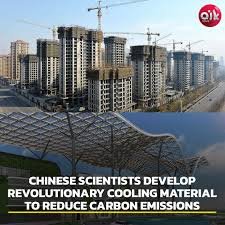
Chinese Scientists Design New Cooling Material For Buildings To Reduce Carbon Emissions

0

CHENGDU, July 8 (Xinhua) — In a world experiencing rapid warming, effectively cooling our homes during sweltering summer months with reduced energy consumption and lower greenhouse gas emissions is crucial for meeting carbon reduction targets.

   A team of Chinese researchers has crafted an innovative biomass-derived material using DNA, the genetic blueprint of life. This aerogel demonstrates a remarkable ability to reduce ambient temperatures by 16 degrees Celsius on sunny days, even under intense solar radiation.

   The researchers combined DNA and gelatin into an ordered layered aerogel structure that converts absorbed ultraviolet light into visible light to surpass 100 percent solar reflectance, yielding exceptional radiative cooling.

   The adoption of biopolymer-based radiative cooling material helps mitigate environmental pollution, according to the study published on Friday in the journal Science.

   Moreover, these aerogels, efficiently fabricated on a large scale through water welding, demonstrate remarkable reparability, recyclability and biodegradability.

   This aerogel material is poised to revolutionize the energy efficiency of urban architecture as an outer protective layer, said the paper’s corresponding author Zhao Haibo from Sichuan University.

   The simulation outcomes of the study have demonstrated a substantial reduction in annual energy expenditure in cooling for buildings across all modeled cities.

   The novel aerogel holds promise for significantly reducing carbon emissions and energy consumption and paves the way for innovative and sustainable radiative cooling materials in the future, Zhao said.

   China has committed to the dual carbon goals of peaking carbon emissions by 2030 and achieving carbon neutrality by 2060. 

Article inline ad

China Focus: China Spearheads Collaborative, Inclusive Agenda For Global AI Governance

0

SHANGHAI, July 8 (Xinhua) — As global scrutiny on the governance of artificial intelligence (AI) intensifies, China has emphasized the critical need to develop this transformative technology in a way that is safe, reliable, inherently controllable and equitable.

   In a declaration unveiled at the ongoing World Artificial Intelligence Conference (WAIC), China underscored the importance of ethical and responsible AI development while advocating for the use of AI to bolster the capabilities of developing nations.

   The development of AI technologies faces a series of new challenges in areas such as law, security, employment and moral ethics, said Chinese Premier Li Qiang while addressing the opening ceremony of the WAIC.

   “The risks associated with AI range from data leaks, privacy and copyright infringements to disinformation and ethical issues like bias and discrimination,” said Zhou Bowen, director of Shanghai Artificial Intelligence Laboratory, in a keynote speech at the WAIC. “There is also growing concern about its potential disruption to employment,” Zhou added.

   “While perspectives on AI may vary, one consensus is clear: we must ensure that AI is always subject to human oversight to achieve safe and constructive outcomes, and achieving this goal demands a collaborative approach from nations worldwide,” said Yin Hejun, Chinese minister of science and technology.

   China’s proposal for global AI governance has been widely endorsed by WAIC attendees from across the world. They agreed on the pressing need to bolster international collaboration to effectively mitigate the potential risks posed by this groundbreaking technological progress.

   The best approach to strike a balance between the pace of AI innovation and the need for responsible development is to “work together globally,” ensuring that these remarkable new capabilities are deployed responsibly, noted Sassine Ghazi, president and CEO of Synopsys.

   Addressing the main forum on AI governance at the WAIC, Chinese vice foreign minister Ma Zhaoxu voiced strong opposition to attempts to monopolize AI resources, unilaterally dictate the formulation of rules, or create exclusionary alliances. He also denounced any malicious interference in the initiatives of other countries.

   George Chen, an analyst at the Asia Group, a consultancy firm headquartered in Washington D.C., said that it is understandable for Washington to seek a significant advantage in its competitive stance against Beijing.

   Chen, however, stressed the critical need for a global consensus to “prevent AI from being weaponized,” and cautioned that without such an agreement, “the consequence can be unthinkable.”

   China’s advocacy for AI governance has placed a special focus on ensuring that developing nations do not lag behind in the global AI landscape. The effort includes initiatives such as the Global AI Governance Initiative launched by the country, and a resolution unanimously adopted at the 78th UN General Assembly to enhance international cooperation on AI capacity building.

   “Every nation, irrespective of its size, power, wealth, or social structure, holds an inherent right to the equitable advancement and application of AI,” said Ma. “It is particularly crucial to increase the representation and influence of developing countries.”

   “There is a gap between what you see in the Global South and in developed countries,” said Jose Roberto, deputy consul-general of Brazil in Shanghai.

“After WAIC, we are creating an agenda of visits to AI institutions in Shanghai and in Beijing,” Roberto added. “I’m very excited for the collaboration.”

Article inline ad

China Focus: China Beefs Up Computing Power As New Economic Catalyst

0

BEIJING, July 8 (Xinhua) — Amid the global race to build artificial general intelligence, the development of stronger computing power has become a major focal point of China’s strategic initiatives, driven by the needs of a booming digital economy and innovations in large language models.

   Data revealed at the Global Digital Economy Conference 2024, which closed on Friday in Beijing, showed that by the end of last year, the total number of standard racks in use at data centers nationwide had exceeded 8.1 million in China, with a total computing power of 230 EFLOPS. EFLOPS is a measurement unit used to determine a computer’s speed. A 1 EFLOPS computing system can complete 1 quintillion floating-point operations per second.

   In the era of interconnected devices and data surges, computing power, as the “new energy” of the digital economy, is reshaping global economic landscapes at an unprecedented pace, said Wang Xiaoli, who is with the China Academy of Information and Communications Technology, at the conference.

   Looking ahead, China aims to boost the country’s aggregate computing power by more than 30 percent by 2025, according to a plan released by six government departments in October 2023. The plan also sets a target for China’s total computing power to reach 300 EFLOPS by 2025.

   During this process, computing systems and data centers require substantial electricity to operate and cool hardware, making energy efficiency a critical consideration in the development of computing power.

   In order to meet increasing energy demands, China’s related sectors have undertaken extensive efforts to integrate the development of green energy with computing power. At the just-concluded conference, Yan Gang, technical director of Yovole Network, a Shanghai-based cloud computing data center service provider, outlined their strategy for efficient energy storage using advanced energy management technologies.

   “Our intelligent computing center employs combined cooling, heating, and power systems using hydrogen energy, photovoltaic storage, indirect evaporative cooling and liquid cooling technologies. In April, we also partnered with Tesla to apply their Megapack energy storage technology at our intelligent computing center,” Yan said.

   Meanwhile, due to the strong demand for computing power, eastern regions of China have shared development opportunities in the digital era with the rest of the country.

   Expansive and resource-rich western provincial-level regions in China leverage significant advantages in terms of green energy and favorable geographical conditions. These factors enable them to provide high-quality computing resources and have led them to seize the opportunity to establish massive data centers that support the country’s intelligent industries.

   In December 2023, the city of Ulanqab in north China’s Inner Mongolia Autonomous Region signed a strategic cooperation memorandum with the Beijing Municipal Commission of Economy and Information Technology to promote the influx of green computing power into Beijing.

   According to Chai Yue, vice mayor of Ulanqab, the city plans to provide Beijing with over 10,000 PFLOPS of green general-purpose computing power annually by 2025. One PFLOP, or petaFLOP, equals one quadrillion floating-point operations per second.

   Additionally, the region’s computing power resources have transformed it from a traditional hub of the livestock industry into an attraction for AI-related sectors. According to the Big Data Management Bureau of Hohhot, the regional capital, half of the 70 large models registered in Beijing are undergoing training in Inner Mongolia.

   In addition to establishing infrastructure such as data centers, computing service providers across various industries are exploring ways to integrate computing power directly into enterprises, households and business districts.

   This promising sector is exploring the “computing power plus” model, forging deep collaborations with sectors including finance, education, healthcare, and transportation.

   In 2020, Beijing launched an autonomous driving demonstration area in Yizhuang, located in a southern suburb of the capital. The intelligent road system utilizes holographic smart devices to monitor traffic conditions, supported by multifunctional poles along the road that transmit computational data to vehicles and real-time cloud systems. This vehicle-road collaboration technology, powered by abundant computing resources, optimizes driving solutions for cars, thereby enhancing traffic safety and efficiency.

   “Computing power is widely applied across various sectors, including government, industry, transportation, and healthcare, continually driving the emergence of new technologies, models, and business forms. This infusion of innovation is providing significant momentum for high-quality economic development,” said Jin Zhuanglong, minister of industry and information technology. 

Article inline ad

Tesla Emerges As New Participant In Chinese Government Procurement

0

SHANGHAI, July 8 (Xinhua) — Several state-owned enterprises in the Shanghai pilot free trade zone have recently procured a batch of Tesla Model Y vehicles for corporate use, marking Tesla’s entry into China’s government procurement arena, local authorities said.

   According to the administration of China (Shanghai) Pilot Free Trade Zone Lingang New Area, the move has demonstrated Lingang’s commitment to treating domestic and foreign enterprises equally in government procurement activities.

   It also highlights Lingang’s ongoing efforts to enhance the business environment and expand openness, said an official with the administration.

   Last month, announcements on the government procurement website of the neighboring Jiangsu Province, a major economic powerhouse, confirmed Tesla’s entry into the province’s new energy vehicle procurement catalog.

   According to an official report in April on automotive data security compliance, Tesla was the sole foreign automaker among six companies that had met the specified criteria.

   “Tesla’s inclusion in multiple government procurement catalogs shows China’s equal treatment of domestic and foreign enterprises. An open Chinese market will create more opportunities for international businesses,” said Sun Yuanxin, an expert with the Collaborative Innovation Center of China Pilot Free Trade Zone at Shanghai University of Finance and Economics.

   In May, Vice Commerce Minister Ling Ji emphasized China’s openness to foreign-invested companies participating in government procurement during a roundtable discussion.

   The Chinese government is committed to promoting high-standard opening up, expanding institutional opening up and practicing the principle of fair competition, Ling said.

Also in May, Tesla broke ground on a mega factory in Shanghai to manufacture its energy-storage batteries, known as Megapacks. It is the first factory of its kind to be built by Tesla outside the United States and is the company’s second plant in Shanghai, following the inauguration of its gigafactory in 2019.

Article inline ad

China Focus: Turning Red Planet Into Green? Chinese Study Reveals Potential Of Moss

0

BEIJING, July 8 (Xinhua) — A futuristic study conducted by Chinese scientists has shed light on the potential of using moss to transform Mars’s barren red landscape into a lush green environment.

   Scientists have recently found that Syntrichia caninervis, a desert moss that thrives in various extreme environments on Earth, is a promising pioneer plant for colonizing extraterrestrial environments.

   The study, conducted by researchers from the Xinjiang Institute of Ecology and Geography (XIEG), the National Space Science Center, and the Institute of Botany under the Chinese Academy of Sciences (CAS), was recently published in the journal The Innovation.

   Syntrichia caninervis is a globally distributed moss species that flourishes in harsh deserts, mountainous regions and circumpolar regions. It forms part of the biological soil crust.

   Using samples from the Gurbantunggut Desert in northwest China’s Xinjiang Uygur Autonomous Region, one of the most concentrated distributions of Syntrichia caninervis, the researchers evaluated the moss’s extraordinary resilience under extreme desiccation, ultra-low temperatures and intense radiation, as well as in a simulated Martian environment combining several of these stress factors.

   They found that the moss has remarkable desiccation tolerance. Even after losing over 98 percent of its cellular water content, it can recover photosynthetic and physiological activities within seconds after rehydration.

   “We subjected this moss to an air-drying regimen in the laboratory. The plants appeared green when saturated with water, turned dark green and then black as the water was gradually lost, and turned green again only two seconds after rehydration,” Li Xiaoshuang, a researcher at XIEG, said.

   According to Li, the plant has the special power of “drying without dying” and “freezing without dying.”

   “We exposed intact plants to minus 80 degrees Celsius in an ultra-low-temperature freezer for five years and to minus 196 degrees Celsius in a liquid nitrogen storage tank for 30 days. The plants survived and regenerated new branches after these low-temperature treatments,” said Li.

   Moreover, the researcher found that the moss can survive super-intense gamma radiation exposure that would kill most plants and can maintain vitality in simulated Mars conditions.

   “Using the CAS’ Planetary Atmospheres Simulation Facility, we simulated Mars conditions, which included air composed of 95 percent of carbon dioxide, temperatures that fluctuated from minus 60 degrees Celsius to 20 degrees Celsius, high levels of UV radiation, and low atmospheric pressure,” added Zhang Daoyuan, a researcher at XIEG.

   Mars is considered to be the planet most likely to be colonized by humans in the future. However, no life forms have been detected on Mars to date. Therefore, introducing organisms from Earth might be required to produce Earth-like conditions suitable for human life on Mars, a process scientists call terraforming.

   “Terraforming will require the selection of suitable organisms from Earth or the engineering of novel organisms that can thrive in challenging extraterrestrial conditions,” Zhang said.

   To date, only a few studies have focused on testing the ability of organisms to withstand the extreme environments of outer space or Mars. Those studies have primarily focused on microorganisms, algae and lichens.

   “Our study shows that Syntrichia caninervis is one of the toughest organisms on Earth,” said Li.

   “This work provides fundamental insights into the multi-stress tolerance of the desert moss Syntrichia caninervis, laying the foundation for building biologically sustainable human habitats beyond Earth,” Li added.

   According to Li, research is still ongoing. This includes extending the treatment period to further explore the moss’s stress tolerance limits, revealing the “undead” mechanisms, and testing its performance in simulated Martian soil.

   “In the future, we plan to conduct space flight experiments involving exposure to space conditions,” Zhang added. “We eagerly anticipate witnessing what a terraformed Mars might look like.” 

Article inline ad

China To Jointly Promote Nuclear Science, Technology With Developing Countries

0

 BEIJING, July 8 (Xinhua) — China is willing to provide more nuclear science and technology solutions to a vast number of developing countries, according to China Atomic Energy Authority (CAEA).

   Liu Jing, deputy director of the CAEA, highlighted the need to work together in order to cope with sustainable development challenges such as climate change, food security, health and environmental governance. He made the remarks during an event held to mark the 40th anniversary of China’s accession to the International Atomic Energy Agency (IAEA).

   Envoys from 11 countries including Argentina, South Africa and Pakistan, who are stationed in the organizations affiliated to the United Nations and other international organizations in Vienna, were invited to China. They visited nuclear science and technology bases in south China’s Hainan Province and Beijing, including the Linglong One, a small nuclear reactor at the Changjiang nuclear power plant, China Institute of Atomic Energy, and the Chinese Academy of Agricultural Sciences. Additionally, they also interacted with relevant Chinese experts and scholars.

   Representatives of China Atomic Energy Authority (CAEA) introduced the envoys to China’s efforts to promote the sustainable development of nuclear energy. They discussed the benefits of nuclear technology for society and people’s livelihoods, and highlighted China’s cooperation with developing countries in the peaceful uses of nuclear technology.

   The foreign envoys agreed that China’s achievements, experience and cooperative spirit in the field of peaceful uses of nuclear technology have greatly benefited the developing countries.

   The event, organized by the CAEA, the Ministry of Foreign Affairs and the Permanent Mission of China in Vienna, was part of a series of activities marking the 40th anniversary of China’s accession to the IAEA. 

Article inline ad

China Focus: China Revs Up Smart City Building With Latest Digital Tech

0

BEIJING, July 8 (Xinhua) — In late June, passengers traveling between Beijing Daxing International Airport and Yizhuang, a southern district of Beijing, were able to choose, if they like, the services provided by driverless robotaxis, with just a few clicks on their mobile phones.

   Although for security concerns, these robotaxis are operating under the supervision of safety drivers behind the wheels, this breakthrough in the commercialization of self-driving technology marks a significant step for Beijing’s intelligent transportation.

   Even with about 40 km of highway to travel during the whole journey, these autonomous vehicles can run smoothly and pass through toll stations with ease.

   “I feel like sometimes I don’t respond as quickly as the self-driving system does,” said Tang Zhiyuan, a safety driver at Pony.ai, one of the two domestic autonomous driving service providers approved to offer such services in the capital city.

   This increasingly intelligent travel experience is a result of China’s accelerated efforts to build smart city over the years. A nationwide network of integrated intelligent vehicles, smart roads, and real-time cloud technologies is being rolled out.

   Yizhuang initiated an autonomous driving demonstration area in 2020. The intelligent road system there can sense traffic conditions using holographic smart devices, while multifunctional poles positioned along the road transmit computational data to vehicles and real-time cloud systems. Thanks to vehicle-road collaboration technology, cars receive optimal travel solutions, significantly improving traffic safety and efficiency.

   “With the construction of the roadside sensing system, the traffic lights at the intersections in Yizhuang can now be dynamically adjusted 110 times a day according to the traffic flow,” said Zhai Qian, deputy director of the city operation bureau in Yizhuang. “Despite a 20 percent increase in local traffic volume last year, the average vehicle speed has risen by more than 15 percent.”

   Last month, Beijing expanded its designated autonomous driving zone from 160 square km to 600 square km. More than 400 road intersections and 10 km of expressways in the area have been equipped with roadside intelligent facilities and a dedicated smart city network.

   Five ministries, including the Ministry of Industry and Information Technology and the Ministry of Transport, jointly issued a notice on Wednesday to identify 20 cities or urban agglomerations, including Beijing, Shanghai and Guangzhou, as pilot areas for the application of the intelligent network integrating vehicles, roads and cloud.

   “Without the development of communication infrastructure and intelligent computing technology, these intelligent interconnections cannot be realized,” said Chen Fengxian, a senior analyst at China Telecom Research Institute.

   By the end of May, China had built over 3.83 million 5G base stations, accounting for over 60 percent of the global total, according to the Ministry of Industry and Information Technology.

   According to a report released by the World Intellectual Property Organization, 54,000 generative AI patent applications were filed globally in the past decade, and China filed over 38,000 patents, ranking first in the world.

   In addition to playing an increasingly important role in smart travel and addressing “big city diseases” such as traffic congestion and environmental pollution, digital technology is also reshaping the emergency management mechanisms of Chinese cities.

   Southwest China’s Chongqing Municipality, located at the confluence of the Yangtze and Jialing rivers, is actively exploring new paths to modernize megacities. Last July, Chongqing launched an intelligent flood prevention and rescue system as part of this effort.

   The collaborative application system connects over 2,800 automatic weather stations and 32 hydrographic stations in the Jialing River basin, enabling real-time big-data monitoring of rain and water conditions across the entire basin. Additionally, it uses three-dimensional modeling of buildings along the river to accurately delineate disaster areas, facilitating the evacuation of local residents in case of emergency.

   In May, China unveiled a guideline on promoting the development of smart cities and urban digital transformation to make urban management smarter. By 2027, China expects to see significant progress in the digital transformation of urban areas and will have built a number of smart cities that are more livable and resilient, according to the guideline.

   Despite the challenges of data sharing and data security in the development of smart cities in China, Chen remains optimistic.

   “Challenges always come hand-in-hand with opportunities. This policy will further address the bottlenecks in China’s smart city development,” Chen said. 

Article inline ad