Sunday, November 29, 2026

Home Blog Page 570

Chinese Yuan Weakens To 7.1108 Against USD Thursday

0

BEIJING, June 6 (Xinhua) — The central parity rate of the Chinese currency renminbi, or the yuan, weakened 11 pips to 7.1108 against the U.S. dollar Thursday, according to the China Foreign Exchange Trade System.

   In China’s spot foreign exchange market, the yuan is allowed to rise or fall by 2 percent from the central parity rate each trading day.

   The central parity rate of the yuan against the U.S. dollar is based on a weighted average of prices offered by market makers before the opening of the interbank market each business day.

Article inline ad

Chinext Index Opens Higher Thursday

0

BEIJING, June 6 (Xinhua) — The ChiNext Index, tracking China’s Nasdaq-style board of growth enterprises, was up 0.37 percent to open at 1,840.25 points Thursday.

   The ChiNext Index, together with the Shenzhen Component Index and other indices, reflects the performance of stocks listed on the Shenzhen Stock Exchange.

Article inline ad

Chinese Shares Open Higher Thursday

0

BEIJING, June 6 (Xinhua) — Chinese stocks opened higher on Thursday, with the benchmark Shanghai Composite Index up 0.13 percent to open at 3,069.44 points.

   The Shenzhen Component Index opened 0.26 percent higher at 9,417.93 points.

Article inline ad

China’s Benchmark Interbank Gold Prices Lower Thursday

0

 BEIJING, June 6 (Xinhua) — China’s benchmark prices for spot interbank gold transactions were lower Thursday, according to the China Foreign Exchange Trade System.

   The benchmark price for gold that is 99.95 percent pure or above stood at 549.52 yuan (about 77.28 U.S. dollars) per gram, 3.60 yuan lower than the previous trading day, while the price for gold that is 99.99 percent pure or above went down 3.24 yuan from the previous trading day to 550.25 yuan.

   Spot transaction prices on the interbank price inquiry market are allowed to rise or fall within 15 percent from the benchmark prices each trading day.

   The interbank gold price inquiry business was introduced in 2012 to enhance market liquidity and enrich trading models.

Article inline ad

China’s Interbank Treasury Bond Index Opens Higher Thursday

0

BEIJING, June 6 (Xinhua) — China’s interbank treasury bond index in net price opened at 1,024.80 points Thursday, higher than the previous close of 1,024.47 points, according to the China Foreign Exchange Trade System.

   The index reflects real-time trading of treasury bonds in China’s interbank bond market.

The index opens at 9 a.m. on every workday and is updated every five minutes until closing at 5 p.m.

Article inline ad

China Box Office Daily Report

0

BEIJING, June 6 (Xinhua) — Box office figures of the top-grossing films on the Chinese mainland on June 5 were as follows:

   Title                                       Daily Gross (million yuan)

   “The Last Frenzy”                           4.36

   “Twilight of the Warriors: Walled In”       3.43

   “The Garfield Movie”                        2.82

   “Crisis Negotiators”                        2.37

   “Walk the Line”                             2.33

   (1 U.S. dollar = 7.1108 yuan)

Source: China Movie Data Information Network.

Article inline ad

Asia Pacific International Arbitration Chamber

0
logo en about banner


https://apiac.sg/

Asia Pacific International Arbitration Chamber (“APIAC”) was jointly initiated by arbitration experts from Mainland China, Hong Kong S.A.R., Macau S.A.R., Singapore, Malaysia, Indonesia, the United States, and other Pacific Rim countries and regions. It was registered at Accounting and Corporate Regulatory Authority of Singapore in 2023 after receiving preliminary name approval from the Ministry of Law of Singapore. Since its establishment, APIAC has targeted the market for trade disputes within the framework of the “Belt and Road” initiative and China-ASEAN cooperation, providing international arbitration legal services. Relying on Singapore’s existing status as an international arbitration and mediation center, APIAC will play a pivotal role in promoting dispute resolution across the Asia-Pacific region and beyond.

Efficiency
Arbitration has the characteristics of short period and final arbitration. On the premise that the parties agree to waive the right of time limit, APIAC can make a ruling within one week at the earliest.
Professionalism
Arbitrators of APIAC come from various professional fields and different countries, and they are highly professional in ruling. The parties are free to choose arbitrators who meet the requirements.
Independence
APIAC independently administers the arbitration process. After the arbitrator of APIAC is selected by the parties or jointly selected by arbitrators or appointed by the President of APIAC, the arbitration tribunal shall be established and make an independent award according to law.
Fairness
Arbitrators employed by APIAC all uphold the concept of fairness and justice, have good professional ethics and pay attention to personal reputation. The ultimate goal of each award is to solve disputes fairly and justly.
banner service 01
icon service 01
In-depth service
We focus on serving commercial disputes in Southeast Asia and the Guangdong-Hong Kong-Macao Greater Bay Area. With our professional knowledge and experience, we inject stability and predictability into the local business environment.
banner service 02 1 1
icon service 02
Adaptive service
We attach great importance to the needs of small and medium-sized dispute cases, providing them with fast, economical, and fair solutions.
banner service 03
icon service 03Innovative service
We adopt digital technology and enhance the use of artificial intelligence in arbitration to improve efficiency, ensure fairness, and meet new challenges in the trend of globalization and digitization.
Article inline ad

Across China: Robot Fuels Hydrogen-Powered Trains

0

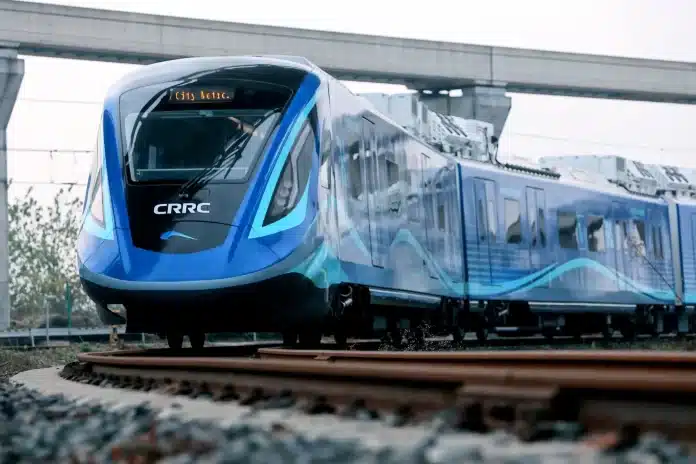
HOHHOT, June 5 (Xinhua) — As a heavy-haul train entered a hydrogen fueling station, an automatic robot extended its arm, took out the hydrogenation nozzle and began refueling the train.

   The hydrogen fueling station for CHN Energy’s heavy-haul trains recently started commercial operation in Batuta, Inner Mongolia Autonomous Region, north China.

   The station is equipped with a low-temperature resistant automatic hydrogenation robot and a high-flow hydrogenation machine, independently developed and manufactured in China.

   The robot can refuel a hydrogen-powered train within 30 minutes, which will power the train for eight hours, according to CHN Energy, which added that the train boasts a range of 800 kilometers before it needs refueling.

   The robot can not only achieve all-weather continuous operation and large flow automatic hydrogenation at temperatures as low as minus 25 degrees Celsius, but also ensure safe and stable operation, effectively reduce personnel errors, control safety risks and save operational costs.

   Boasting explosion-proof, electronic control and air-operation systems, the robot’s anti-interference 3D camera combination can conduct visual positioning of moving targets.

   Under the outdoor lighting, it can automatically complete visual identification and fueling without manual intervention, said Zhang Kai, a technician at the hydrogen fueling station.

   The fault self-diagnosis and alarm functions can monitor the operating environment of both trains and the robot in real time and ensure a reliable, stable and safe hydrogen fueling service.

   The robot has passed strict explosion-proof tests and achieved certificate in this regard, said Zhang.

   Research and development of the automatic hydrogenation robot, which was designed to serve high-power hydrogen trains, started in 2022.

   CHN Energy, one of the robot’s developers, promised to continue promoting the application of intelligent robot technology and to extend the research on automatic petrol refueling robots and non-petrol service robots.

   From 2015 to 2022, China’s annual production of industrial robots soared from 33,000 units to 443,000 units. The latest data from the National Bureau of Statistics shows that the production volume in the first quarter of this year reached 120,000 units.

   After rapid development in recent years, China’s industrial robot industry has made significant strides in both product technology and practical application. 


Article inline ad

Across China: New Energy Revitalizes Coal Mining Subsidence Area

0

 by Xinhua writers Ye Ting, Li Ziyi, Liu Lihang

   TAIYUAN, June 5 (Xinhua) — Dubbed “sunflowers” by the maintenance staff, rows of photovoltaic panels rotate with the rising and setting of sun. This consistent provision of clean energy to the grid, amidst the surrounding greenery, has drastically improved the lives of local residents who were once plagued by blowing sand.

   The Datong Coal Mining Subsidence Area National Advanced Technology Photovoltaic Demonstration Base is located in Datong City, north China’s coal-rich province of Shanxi, where an area of about 1,687 square kilometers has subsided due to prolonged and large-scale of coal mining.

   The harmonious coexistence of photovoltaic technology and ecological shrubs we see today was once hard to envision, as the subsidence area was previously identified as uninhabitable and unsuitable for industrial use.

   Nevertheless, the area boasts advantageous conditions such as abundant solar energy resources and favorable grid access. These benefits have allowed the local government to revitalize the area with the photovoltaic industry.

   The base began construction in September 2015 and has drawn a total of 13 enterprises to invest and operate the photovoltaic panels, such as China General Nuclear Power Group and State Power Investment Corporation.

   It was built with a total construction scale of 1.5 million kilowatts, comprising twelve 100,000-kilowatt projects, six 50,000-kilowatt projects, three 220-kilovolt gathering stations, and 68 monitoring points for subsidence conditions.

   The first-phase project covers 49,600 mu (about 3,306.7 hectares) with a construction scale of 1 million kilowatts. By the end of April 2024, the base had generated a cumulative total of 12.67 billion kilowatt-hours of electricity, according to Wang Zhiwei, chairman of Datong City New Energy Resources Development Corporation.

   Over the course of nearly eight years of operation, the photovoltaic modules at the base have undergone continuous upgrades and iterations in an effort to increase power generation efficiency.

   “We employ four types of mounting methods for the photovoltaic modules at our base. Among them, the dual-axis tracker can rotate the panels to follow the direction of the sunlight, consistently maintaining the optimal angle and capturing solar radiation more efficiently,” said Han Zhicheng, director of an information monitoring service center with the base.

   To optimize the use of solar energy resources and efficiently utilize the idle land in the coal mining subsidence area, the base adopted an ‘agrovoltaic’ ecological restoration model. This involves planting vegetation beneath the photovoltaic panels, maintaining power generation efficiency while promoting soil and water conservation and improving the ecological environment.

   Data provided by the municipal energy bureau showed that last year, Datong’s new and renewable energy capacity reached 8.75 million kilowatts, accounting for 52 percent of the total installed capacity. The grid-connected capacity for photovoltaic and wind power reached 8.62 million kilowatts, placing Datong in the top tier in Shanxi Province.

   New energy, together with traditional energy, has turbocharged the sustainable development of high-tech enterprises and boosted the economic growth of local industries.

   In Yanggao County, 89 kilometers away from the base, one of China’s largest data center clusters — the ZDATA Green Cloud Valley — is working on the construction of a zero-carbon data forest.

   “Yanggao County is close to Beijing and rich in energy resources, meeting our high energy demands,” said Ma Chao, vice president of ZDATA Group. He noted that the company aims to build a green, low-carbon data computing center, introducing various self-built and cooperative new energy projects to provide clean energy for the data center.

   In the future, the municipal energy bureau will focus on new energy projects in the coal mining subsidence area, advance digital innovation in the energy system, meet the energy needs of high-tech enterprises, and promote integrated wind, solar, thermal, and storage energy solutions to drive Datong’s energy transition and ecological development. 

Article inline ad

China Focus: China Promotes Bamboo As Eco-Friendly Substitute For Plastic

0

HANGZHOU, June 5 (Xinhua) — Bamboo tableware, bamboo toothbrushes, bamboo fiber towels… A resident surnamed Wang from Hangzhou, staying at a homestay in Baofu Township, Anji County of east China’s Zhejiang Province, was delighted to find that products and toiletries used daily were crafted from bamboo.

   “Anji, renowned as China’s ‘bamboo county,’ offers these products that are not only locally-made but also eco-friendly,” Wang said.

   Anji County, with its vast expanse of over 1 million mu (about 66,667 hectares) of bamboo forests, has been a pioneer in integrating bamboo into various sectors such as construction, decoration, furniture, packaging, textiles, and disposable products across China. The county has been at the forefront of promoting bamboo as an alternative to plastic in recent years.

   “Bamboo, being one of the fastest-growing plants with exceptional carbon sequestration capabilities, is an ideal material for sustainable and green practices. It is estimated that utilizing 100 million tonnes of bamboo to replace PVC products could potentially reduce carbon dioxide emissions by approximately 600 million tonnes,” explained Chen Jie, director of the Bamboo Industry Development Center under the county’s forestry bureau, highlighting the significance of the “bamboo instead of plastic” initiative.

   A report from the Organization for Economic Cooperation and Development in 2022 projected that by 2060, the annual global production of plastic products could soar to around 1.2 billion tonnes, nearly tripling the current levels. The study warns that if recycling rates do not improve, the volume of plastic waste could also nearly triple by then.

   Experts advocate for “bamboo instead of plastic” as an effective strategy to mitigate plastic usage and pollution at its source. Data indicates that in 2021, China’s bamboo forest area stood at some 7.56 million square hectares, representing 3.31 percent of the total forest area. With over 10,000 bamboo processing enterprises, China’s bamboo industry output value has seen a remarkable increase from 82 billion yuan (about 11.54 billion U.S. dollars) in 2010 to 415.3 billion yuan in 2022, boasting an average annual growth rate of over 30 percent.

   In November 2023, the Chinese government, in collaboration with the International Bamboo and Rattan Organization, launched the Global Action Plan for Bamboo as a Substitute for Plastic (2023-2030). This initiative calls upon international organizations, government departments, and research and educational institutions worldwide to collectively reduce plastic pollution.

   To further control plastic pollution across the entire chain, in December 2023, Chinese authorities formulated a three-year action plan aimed at accelerating the development of “bamboo instead of plastic.” The plan sets forth ambitious goals: by 2025, to establish an industrial system and to make more detailed arrangements for enhancing the quality, variety, scale, and overall benefits of bamboo products.

   Anji County has set an example by increasing its bamboo tableware to over 6,000 sets, covering nearly 300 hotels with a 100-percent coverage rate, resulting in a cumulative reduction of over 3.5 million sets of disposable plastic consumables.

   Jiangxi Province has set a target for its bamboo industry to reach a comprehensive output value of 100 billion yuan by 2025, with the bamboo forest area stabilized at 16 million mu.

   Fujian Province aims to stabilize its bamboo forest area at 18.19 million mu by 2025, construct 5,000 km of bamboo mountain roads, and achieve a total output value of 120 billion yuan for the bamboo industry, with an average annual growth rate of over 10 percent.

   “‘Bamboo instead of plastic’ is an emerging industry. Despite its current small industry scale, low output, high costs, and relatively outdated technology and equipment, the true potential of bamboo as a substitute for plastic lies in further promoting its high added value with technological advancements,” said Wang Yixiang, professor of Zhejiang Agriculture and Forestry University.

   Wang believes that advancing the initiative will become an effective way to control plastic pollution in China and is expected to offer a solution for global plastic pollution management. 

Article inline ad