Sunday, November 29, 2026

Home Blog Page 840

China’s economy ushers in digital transformation

0

16996559813590HANGZHOU, Nov. 10 (Xinhua) — One can get information about physical conditions, advice on diet, and even prescriptions by putting a hand into a small AI-powered instrument for two minutes.

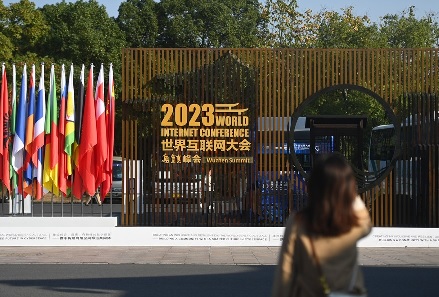
   This is not a science fiction scenario, but a real practice demonstrated at the ongoing expo of the 2023 World Internet Conference (WIC) Wuzhen Summit held in east China’s Zhejiang Province.

   It comes amid the immense progress China has made in digitalization over the past decade. In 2022, China’s digital economy had reached 50.2 trillion yuan (about 6.99 trillion U.S. dollars), up from 11 trillion yuan in 2012, said Xia Xueping, head of the Chinese Academy of Cyberspace Studies, at a press conference during the summit.

   By June 2023, China had about 1.08 billion internet users, nearly double the number recorded at the end of 2012. Meanwhile, internet penetration increased to 76.4 percent from 42.1 percent during this period.

   On the basis of this huge digital community, internet enterprises thrived in China over the past decade. The number of Chinese internet enterprises listed on the stock market had increased from just over 50 in December 2012 to nearly 160 in June 2023, including internet giants like ByteDance and Pinduoduo, while the scale of leading internet enterprises also continued to grow.

   AI technologies, especially AI foundation models, are developing at a rapid pace and profoundly reshaping both the digital and real worlds. AI is boosting productivity and generating new momentum for the development of various industries in China.

   Tencent Cloud, one of China’s top cloud service vendors, has provided more than 50 foundation models for 10 industries such as finance, culture and tourism, media, government affairs, and education.

   For example, travel plans can be made by a tour guide or travel agent, but now may also be created by AI.

   With personalized travel services using the Language Models on Tencent Cloud, users can simply provide their preferences, budget and general route to generate a detailed travel plan and schedule their daily itinerary in advance.

   Some traditional industries are taking the initiative to embrace digital transformation.

   Xinfengming Group, a chemical fiber manufacturer based in Zhejiang’s Tongxiang City, where the WIC Wuzhen Summit is being held, has used a wide range of intelligent robots on its production lines. In its factory, robots are tasked with duties such as product inspection and delivery.

   “With the help of robots, our factory’s per capita output value is twice the industry average,” said Yang Zhongjie, manager of the factory.

   China’s digital economy, now ranking second in the world in terms of the overall scale, has shown strong growth momentum. However, there are still obstacles in the process of its development.

   The China Internet Development Report 2023, released Wednesday at the WIC Wuzhen Summit, revealed that China aims to step up research, development and application of new technologies to make AI more widely utilized in major fields such as agriculture, industry, finance, education and medical services, while also diversifying application scenarios.

   “Many small and medium-sized enterprises form the main body of the supply, industrial and ecological chains. These are often sluggish in undergoing digital transformation, due to issues such as a lack of funds, talent and technologies,” said Zhou Hongyi, founder of Chinese internet security firm Qihoo 360.

   At the national level, China will promote deeper integration of the digital and real economies, and support small and medium-sized enterprises in speeding up transformation, the report said.

   Yang Yuanqing, Lenovo Group’s chairman and CEO, pointed out at the summit that in the application of AI foundation models, there are still some practical problems to be solved. “While generating productivity, they should also protect privacy and data security,” Yang said.

   China sees a need for international cooperation in tackling issues concerning digital applications. During the past few years, China has proposed multiple initiatives to promote the formulation of global digital governance rules.

   Meanwhile, the “Digital Silk Road” construction is expected to let internet development benefit more people in the world.

   “This year’s summit is not only a review of global digital economic development over the past decade, but also a look ahead seeking more inclusive and equitable development in the next stage,” said Pan Helin, a researcher at the International Business School of Zhejiang University, noting that China is willing to promote regional collaboration and the flow of digital elements to create a fairer and more open development environment for all.  

Article inline ad

U.S. companies seize opportunities at China import expo

0

16996562895506SHANGHAI, Nov. 10 (Xinhua) — The sixth China International Import Expo (CIIE) in Shanghai has been underway for just four days and U.S. enterprise Anderson Northwest has already sealed deals with a Chinese trader from Nanjing, capital of eastern Jiangsu Province, for the purchase of dry peas and green lentils worth 4 million U.S. dollars.

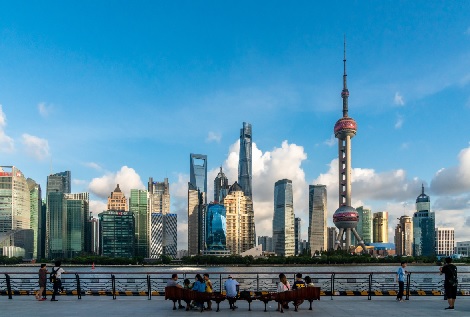
   The second edition of the CIIE in 2019 was the U.S. trading company’s first attendance at the import expo, during which it forged a partnership worth 1 million U.S. dollars with this same Chinese trader.

   The deal came as a pleasant surprise, recalls Mike Anderson, the president and fourth-generation successor of Anderson Northwest, who has attended the CIIE four times. During last year’s expo, the duo inked purchase intents exceeding 5 million U.S. dollars.

   The successful deals of Anderson Northwest exemplify how U.S. businesses seize opportunities at the CIIE, standing in stark contrast to the rhetoric of so-called “decoupling” or “de-risking” from China promoted by some U.S. politicians.

   This year, more than 200 U.S. exhibitors in agricultural, semiconductors, medical devices, new energy vehicles, cosmetics, and other sectors have attended the annual import expo, marking the largest U.S. presence in the history of the CIIE. Among the exhibitors are 17 from the agricultural and food industry, led by the U.S. government for the first time.

   As the world’s first import-themed national-level expo, the CIIE fully resumed offline exhibitions for the first time after COVID-19 this year. This development came as a source of great excitement for Anderson.

   “For our farm, the expo is an invaluable platform, offering us great opportunities to meet potential customers,” he said.

   China’s market is stable, which provides a large room for cooperation, he added. “Partnering with Chinese enterprises reduces potential risks we may face amid global uncertainties.”

   A stable economic and trade relationship between China and the United States is what Anderson yearns for. “The recent positive momentum in Sino-U.S. relations is very encouraging. I believe the two countries should have a friendly and cooperative relationship,” he said.

   U.S. enterprises are actively exploring new opportunities brought by China’s high-quality development through the CIIE, and Pennsylvania-based Air Products is among them.

   The chemicals giant exhibited technologies and solutions for the entire hydrogen energy industry chain and sustainable industrial gases, targeting business opportunities arising from China’s energy transformation and low-carbon development.

   “The expo is a window as well as a starting point,” said Saw Choon Seong, Air Products’ China president. “In addition to facilitating transactions, the CIIE also builds a bridge for us to achieve broader and deeper cooperation with local governments and customers.”

   The U.S. enterprise made its debut at the CIIE in 2020 and built contacts with government officials from east China’s Zhejiang Province. These connections have yielded substantial results as China’s first commercial liquid hydrogen plant, developed with investments from Air Products, is expected to start operations next year in Zhejiang.

   “China is an emerging economy with huge energy demand, and it has also made significant progress in environmental protection, which made us a perfect match,” said Saw. “Both Chinese and U.S. enterprises are very interested in trade and environmental protection, and there are great opportunities for cooperation.”

   “We have never slowed down our investment in China, instead we have always wanted to accelerate it,” Saw said. “As the world’s top two largest economies, China and the United States are interdependent, and only through cooperation can we solve global issues such as carbon reduction and environmental protection.”

   Since the first CIIE in 2018, U.S. exhibitors have been at the forefront among participating countries in terms of exhibition space and exhibitor numbers.

   According to data from the U.S. Department of Commerce, the total trade in goods between the U.S. and China in 2022 reached a record high of 690.6 billion U.S. dollars.

   “For many U.S. companies, China is their biggest market and they have no reason to leave,” said Eric Zheng, president of the American Chamber of Commerce in Shanghai.

   “China and the United States actually have more room for cooperation, and we hope that more U.S. businesses will come to attend the expo in the future,” Zheng added.  

Article inline ad

Foreign firms vying to explore Chinese market

0

16996565106625BEIJING, Nov. 10 (Xinhua) — Air Products, a world-leading supplier of gases for industrial uses, has announced that it will open a new Asia hydrogen energy application and R&D center in east China’s Zhejiang Province, during the ongoing sixth China International Import Expo (CIIE) in Shanghai.

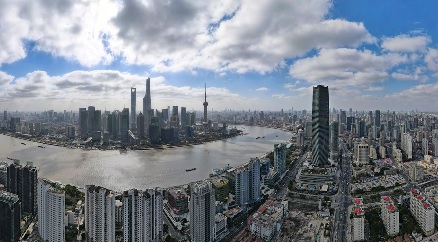
   “We have never slowed down our investment in China. Rather, we have always hoped to accelerate it,” said Su Junxiong, president of Air Products China.

   Like Air Products, many other foreign firms and financial institutions are vying to explore new opportunities in the Chinese market as they continue to be optimistic about the growth and the business environment in China.

   “We’re quite upbeat about the prospect of the Chinese market,” James Ye, vice chairman of CP Group China, told Xinhua at the CIIE.

   CP Group is one of the more than 3,400 exhibitors participating in this year’s CIIE, which has attracted participants and guests from 154 countries, regions and international organizations, marking a full recovery to pre-pandemic levels.

   Global financial institutions were also increasing their holdings of Chinese assets as they are upbeat on the recovery of the world’s second-largest economy amid robust support measures.

   By the end of September, 202 banks from 52 countries and regions had set up offices in China, the National Financial Regulatory Administration data showed. From 2020 to the end of September 2023, the total capital increase of foreign banks in China reached 18.73 billion yuan (about 2.61 billion U.S. dollars).

   By the end of September, a total of 1,110 foreign institutions had entered China’s bond market and held 3.3 trillion yuan of Chinese bonds, up nearly 200 percent from five years ago, according to the People’s Bank of China.

   China’s financial opening up, which is proactive, prudent and for mutual benefit, is an important driving force for this sector’s reform and development, Li Yunze, head of the National Financial Regulatory Administration, said on Wednesday while delivering a speech at the Annual Conference of Financial Street Forum 2023 in Beijing.

   The country has rolled out over 50 measures to expand financial opening up, including scrapping foreign ownership caps in the banking and insurance sectors, and slashing access thresholds for foreign investors, Li said.

   At present, 30 global systemically important banks all have branches in China, and nearly half of the 40 largest insurance companies in the world have entered the Chinese market, Li noted, adding that the country is now the second-largest asset and wealth management market in the world.

   Following the release of China’s economic data for the first three quarters, with third-quarter performance surpassing market expectations, a number of international financial institutions have expressed optimism about China’s growth outlook for 2023.

   China’s real gross domestic product (GDP) is projected to grow by 5.4 percent in 2023, an International Monetary Fund (IMF) statement said on Tuesday.

   “The Chinese economy is on track to meet the government’s 2023 growth target, reflecting a strong post-COVID recovery,” read the statement issued by the IMF’s First Deputy Managing Director, Gita Gopinath, following a visit to China.

   China’s GDP expanded 4.9 percent in the third quarter (Q3). It grew 5.2 percent year on year in the first three quarters of 2023, according to the National Bureau of Statistics. China only needs GDP growth of 4.4 percent year on year in the fourth quarter to meet its annual growth target of around 5 percent.

   The UBS also raised its forecast for China’s GDP growth in 2023 to 5.2 percent from 4.8 percent previously, while Deutsche Bank, Nomura and J.P. Morgan have all raised China’s full-year GDP growth forecast.

   Thomas Helbling, deputy director of the IMF’s Asia and Pacific Department, said at a briefing on Tuesday that China’s future opportunities arise from good fundamentals, including its human capital and good business environment.

   China has moved up the value chain and strengthened research and development, said Helbling, adding that “we would expect the R&D and innovation will play a great role going forward.”

   Global investors have to “be watching and investing” in China to tap into the innovation and growth in the region, Citadel founder Ken Griffin was quoted as saying on Tuesday.  

Article inline ad

China retains strong appeal for foreign banks amid high-standard opening up

0

16996566637459 BEIJING, Nov. 10 (Xinhua) — China’s opening up of its financial sector with greater depth will bring more opportunities for foreign institutions and encourage them to invest in the country, according to government officials.

   “Over the past few years, China has been actively aligning with international rules and has further enhanced a series of regulatory rules,” said Gao Song, an official with the National Financial Regulatory Administration, on the sidelines of the opening ceremony of Thailand’s Kasikornbank (China) Beijing branch.

   The establishment of the lender’s Beijing branch is the latest example reflecting the attractiveness of China’s financial markets, Gao said. Kasikornbank (China), a subsidiary of Kasikornbank, one of the major lenders in Thailand, now has branches in Shenzhen, Shanghai, Chengdu and Beijing.

   Not just Kasikornbank (China), but many foreign financial institutions have been increasing their investment in China. From 2020 to the end of September this year, foreign banks in China added a total investment of 18.73 billion yuan (about 2.61 billion U.S. dollars).

   By the end of September, 202 banks from 52 countries and regions had set up offices in China, while overseas insurance institutions had established a total of 67 branches and 73 representative offices in the country.

   The total assets of foreign banks reached 3.79 trillion yuan at the end of September, and those of foreign insurance institutions stood at around 2.33 trillion yuan.

   Foreign banks reaped 16.47 billion yuan in net profits during the first three quarters. Their non-performing loan ratio was 0.94 percent and the liquidity ratio was 72.52 percent at the end of September, beating the average performance of domestic commercial banks.

   “On the whole, foreign financial institutions have maintained sound operations in China, which fully demonstrate the positive results of China’s financial sector opening up,” said Zhou Gengqiang, deputy secretary general of the China Banking Association.

   With equal emphasis on both “bringing in” and “going global,” China has also accelerated its pace to expand into overseas markets in recent years.

   For instance, 13 Chinese banks had set up 145 branches in 50 Belt and Road (BRI) participating countries by the end of June, and six Chinese insurance institutions had opened 15 overseas branches in eight BRI participating countries.

   Cooperation in the financial sector has also strengthened. By the end of September, the National Financial Regulatory Administration had signed 126 cooperation agreements with its counterparts in 87 countries and regions, Gao said.

   In the central financial work conference held last month, the country’s leadership underlined that China will steadily expand institutional opening up in the financial sector and facilitate cross-border investment and financing.

   Stressing high-standard financial opening up, the conference sent positive signals for the future development of foreign financial institutions in China, Zhou said.

   “China’s financial sector will continue to open wider and create a market-oriented, law-based and international business environment for foreign financial institutions and long-term capital,” Gao added.  

Article inline ad

Comprehensive Solution of LiuGong Equipment in the Caribbean —Feature Story 18 of the 20th Anniversary of LiuGong’s Globalization

0

16724517704084

“LiuGong equipment is powerful, durable, and very suitable for both rock and

coal mining work,” said Mr. Jose Saade, General Manager of an important key account in the Caribbean.

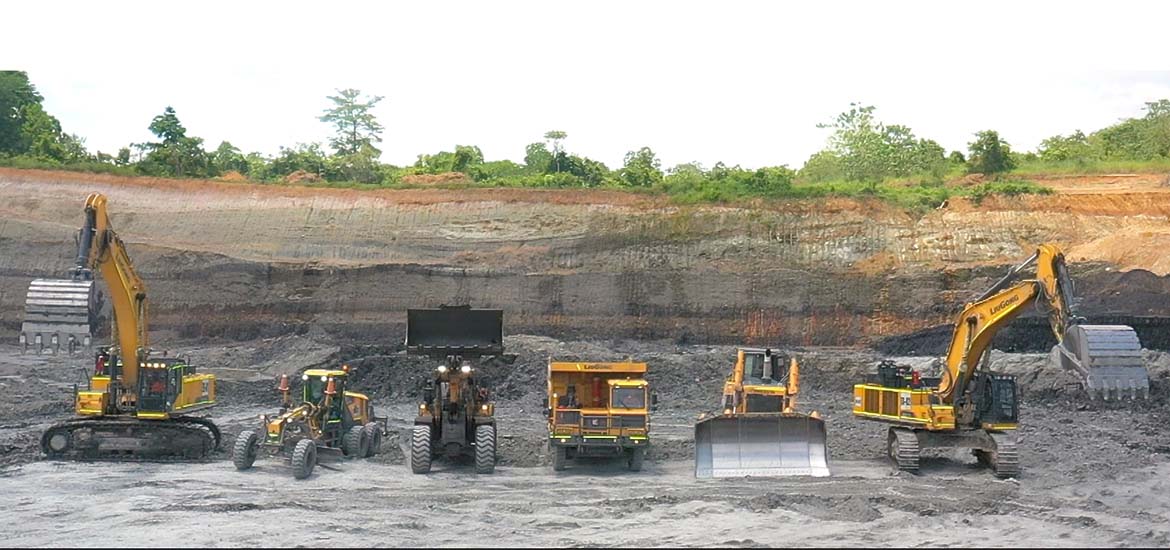
The customer’s large-scale open-pit coal mine adopts 7 categories, 38 units of LiuGong equipment, including DW90A mining trucks, 930E, 936E, and 970E excavators, Dressta TD40, TD20 bulldozers, 877H wheel loaders, 4230D motor graders, 766A backhoe loaders, and 375B skid steer loaders, which interprets a classic product combination application case, showing LiuGong’s comprehensive solutions and advantages in the mining field.

The customer’s company was founded in 2019. It has participated in a national project, which deals with the exploitation of coal for thermal power plants, with a production volume target of 1.2 million tons per year.

16724518284687

“We are highly satisfied with the friendly, quality service and efficient response of LiuGong and its local dealer.” Mr. Jose Saade praised the excellent after-sales support, “After purchasing the new LiuGong equipment, we haven’t required many parts but have received what we need in advance. And that has helped us a lot to complete the production goals.”

The customer pointed out that LiuGong equipment can well adapt to and meet the production requirements under environmental conditions of up to 40℃. They are satisfied with the superior performance of the equipment and plan to buy more LiuGong machines for the project in 2023 with the gradual increase of production volume.

Article inline ad

Sci-tech collaboration empowers Belt and Road Initiative

0

16996034195192 CHONGQING, Nov. 9 (Xinhua) — Wajahi Hussain, a Pakistani student newly enrolled at Southwest University, Chongqing, is diligently immersing himself in the study of a unique potato variety, with a view to taking part in laboratory experiments.

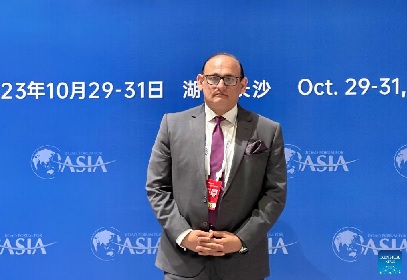
   He is pursuing a master’s degree at the university, but his ultimate aim is to introduce this high-yield potato variety into his country.

   Named Red Rose, the variety was developed by Southwest University for the Belt and Road Initiative (BRI) participating countries. According to Hussain, the yield of this variety is more than 30 percent higher than that of local potatoes in Pakistan.

   The potato seedlings are now growing vigorously in a laboratory at the university’s Integrative Science Center of Germplasm Creation in Western China (Chongqing) Science City.

   “After completing my studies, I will go back to my country to work on potato crops and develop new varieties that will benefit the public and my country,” Hussain said.

   In 2020, a Belt and Road international innovation institute of potato industry was established as a collaboration between Southwest University, the International Potato Center-China Center for Asia Pacific and over 10 BRI countries, including Kazakhstan, Russia, Egypt and Iran. The institute is dedicated to joint efforts on germplasm creation, utilization and promotion.

   Under the initiative, China has shared advanced technologies for potato cultivation and seed-potato quality control with participating countries, thereby boosting local potato production and improving the economic benefits for the local potato farmers.

   In recent years, China has been injecting new vitality into the BRI through various activities, such as scientific cooperation, academic exchanges, talent mobility and technology transfers with BRI countries. This in-depth and multi-dimensional scientific collaboration has invigorated the further development of the BRI.

   Since China proposed the BRI in 2013, scientific and technological cooperation has consistently been a highlight. Over the past decade, China has inked government-to-government agreements on scientific and technological cooperation with more than 80 BRI participating countries and has established intellectual property cooperation relationships with over 50 BRI countries.

   Ghassan Karam, from the World Health Organization, said the BRI also contributes to international medical scientific and technological innovation, makes collaboration within the framework of international cooperation on scientific research more standardized and efficient, ensuring that it better meets the demands of clinical research to benefit people worldwide.

   China regards scientific and technological development and cooperation as solutions to addressing global challenges and has been strengthening technological collaboration within the BRI framework, said Istvan Jakab, deputy speaker of the Hungarian National Assembly.

   Speaking at the first Belt and Road Conference on Science and Technology Exchange in Chongqing, he said Hungary is looking forward to closer and more practical cooperation between the two sides within the context of the BRI.  

Article inline ad

BRI yields fruitful results in China-Pakistan cooperation

0

16996068481595 CHANGSHA, Nov. 9 (Xinhua) — In October, in the Thatta district of southern Pakistan’s Sindh province, more than 100 wind turbines are constantly delivering green power to households in the rural areas.

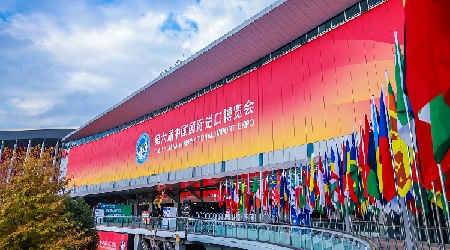
   “This is an important part of our wind power project portfolio, and at present, all 12 wind power projects, with a total installed capacity of 610 MW, have been connected to the grid,” said Yang Jianduo, chief representative of PowerChina in Pakistan.

   According to Yang, the project portfolio has created over 20,000 jobs for locals, and once fully completed, it will provide 2 billion kilowatt-hours of clean energy annually, equivalent to a 2-million-tonne reduction in carbon dioxide emissions.

   These projects are under the framework of the 3,000-km-long China-Pakistan Economic Corridor (CPEC), a flagship project of the China-proposed Belt and Road Initiative (BRI).

   Launched in 2013, the CPEC is a corridor linking Pakistan’s Gwadar port with Kashgar in northwest China’s Xinjiang Uygur Autonomous Region, highlighting energy, transport and industrial cooperation.

   The CPEC has achieved fruitful results, noted Hassan Daud Butt, senior advisor at the China Study Center of the Sustainable Development Policy Institute, an Islamabad-based think tank.

   By the end of 2022, the CPEC had brought a direct investment of 25.4 billion U.S. dollars to Pakistan, created 236,000 jobs and helped Pakistan add 510 kilometers of expressways and 8,000 megawatts of power supply, he said while attending the Second Conference of Global Economic Development and Security Forum of Boao Forum for Asia, held in late October in Changsha, central China’s Hunan Province.

   “We are very happy and proud to say that we have actually achieved most of our targets and projects,” he added.

   Over 2,500 representatives from government departments, international organizations, academia and leading multinationals attended the conference, which aimed to explore the interrelationship and impact between development and security and better cope with global economic risks and structural problems.

   Cooperation under the framework of the BRI was a major topic for discussion at the conference as this year marks the 10th anniversary of its launch.

   In Pakistan’s northwestern province of Khyber Pakhtunkhwa, the 272-meter-high Diamer-Bhasha Dam on the River Indus is under intensive construction.

   As a landmark project of China-Pakistan friendship and cooperation, it will be the tallest roller compact concrete dam in the world, with an installed capacity of 4.5 million kilowatt once completed, generating an estimated 18.1 billion kilowatt-hours of electricity every year.

   Tabi Satti, who returned to Pakistan in 2021 after six years of study and work in China, now works as the project manager.

   “When I was studying in China, every time I returned home, I could see the changes that BRI has brought to my hometown,” he said. “We have smoother roads, easier travel, better quality and stable electricity, and more importantly, more job opportunities… BRI has brought broad development opportunities to Pakistan, and has given me the confidence to participate in it.”

   Over the past decade, CPEC has turned vision into reality in Pakistan, and it continues to do so.

   The China-funded New Gwadar International Airport and Gwadar East-Bay Expressway will soon be put into operation, investment is pouring in for the first phase of the Rashakai special economic zone (SEZ), and China’s hybrid rice has significantly increased Pakistan’s total crop yield.  

Article inline ad

Success stories mirror shared opportunities at China’s import expo

0

16993424293967SHANGHAI, Nov. 7 (Xinhua) — Participating in the China International Import Expo (CIIE) for the sixth successive year, doTERRA, a U.S. essential oil company, has witnessed the continued growth of not only its exhibition area but also its ever-deepening ties with the Chinese market.

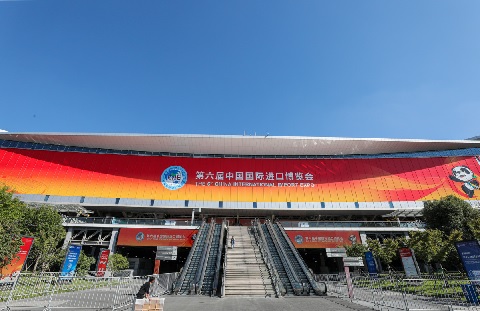
   In November 2018, doTERRA attended the first CIIE without anticipating that this new platform on the other side of the Pacific would reshape its future. With an exhibition area of only 9 square meters, the company garnered a surprising 380 million yuan (about 53 million U.S. dollars).

   Today, China has become the company’s second-largest market worldwide.

   “We are like standing on the shoulders of giants to sell products,” said Owen Messick, president of doTERRA China, while recalling his company’s journey at the expo, which entered its sixth edition on Sunday.

   To seize the enormous business opportunities brought by the annual expo, doTERRA has launched an essential oil product characterized by Chinese elements at every CIIE since 2019. The company has also established its first overseas R&D center in China.

   “After six years of participation, doTERRA has benefited from the unlimited development possibilities brought by the CIIE,” Messick said, adding that doTERRA looks forward to the prospect of the Chinese market and expects China to surpass the United States to become the company’s largest market by 2030.

   Like doTERRA, exhibitors from all around the globe have seen their business growing together with the CIIE. Their success stories evidence how the world’s first import-themed national-level expo serves as a public good to bring shared opportunities to the world.

   In the previous five editions of the expo, 131 countries and international organizations participated in country exhibitions, with a total intended turnover of nearly 350 billion U.S. dollars.

   A frequenter of the CIIE, Takeda has also witnessed business expansion since it first participated in the CIIE in 2018 when it was a mid-sized pharmaceutical company. Now, its Chinese subsidiary has developed into one of the best-performing transnational pharmaceutical firms in China.

   “We have been deeply impressed by the improvement in China’s business environment since the first CIIE,” said Shan Guohong, senior vice president of Takeda and president of Takeda China.

   Over ten innovative medical products and solutions the company has showcased at the CIIE have been greenlighted for sale in the Chinese market since 2020, thanks to government efforts to speed up approval procedures.

   Shan said that at this year’s CIIE, he has again felt China’s dedication to opening up and high-quality development, stressing that Takeda would continue ramping up investment in the Chinese market.

   “I believe that Takeda will continue to grow in China, and China will become our second-largest market globally only next to the United States,” Shan noted.

   The CIIE also offers growth opportunities for small players. The number of overseas-organized small and medium-sized companies at this year’s expo surged nearly 40 percent from last year to reach around 1,500, data from the CIIE Bureau show.

   “In the past, it was extremely difficult for small businesses in Afghanistan to find overseas markets for local products,” said Ali Faiz from the Biraro Trading Company.

   It is the fourth time Faiz has participated in the expo since his first attendance in 2020 when he brought the handmade wool carpet, a specialty product of Afghanistan. The expo helped him obtain over 2,000 orders of carpets, which meant incomes for more than 2,000 local families for an entire year.

   The demand for Afghan handmade carpets in China has kept increasing. Now Faiz needs to replenish goods twice a month, compared with only once in six months in the past.

   “The CIIE provides us with a valuable window of opportunity so we can integrate into economic globalization and enjoy its benefits like those in more developed regions,” he said.

   The appeal of the CIIE has grown against headwinds, including a sluggish global economic recovery, anti-globalization waves, and the COVID pandemic. At this year’s expo, the total exhibition area for businesses and the number of participating industry leaders hit a record high.

   The CIIE is not China’s solo show but a chorus involving all countries, Chinese President Xi Jinping once said.

   The CIIE is widely welcomed globally not just because of the massive potential of the Chinese market but also for the reason that people from all corners of the world benefit more from economic globalization through this platform, said Zhang Yong, deputy head of Shanghai Advanced Institute of Finance affiliated with Shanghai Jiaotong University.

   “Plenty of success stories at the expo have proved that more inclusive and balanced globalization can be realized,” said Julie Dong, head of the Syria National Pavilion at the Greenland Global Commodity Trading Hub.  

Article inline ad

6th CIIE to shine spotlight on enhanced openness, win-win cooperation

0

16990081868495SHANGHAI, Nov. 3 (Xinhua) — The sixth China International Import Expo (CIIE), scheduled in Shanghai from Nov. 5 to 10, signifies the event’s first full return to in-person exhibitions since the onset of COVID-19.

   As the world’s first import-themed national-level expo, CIIE is a showcase for China’s new development paradigm, a platform for high-standard opening up, and a public good for the whole world, said Vice Minister of Commerce Sheng Qiuping at a press conference.

   This edition of the CIIE has set a new record with 289 Global Fortune 500 companies and industry leaders in attendance. Over 3,400 exhibitors and 394,000 professional visitors have registered for the event, signifying a full recovery to pre-pandemic levels.

   “The ongoing improvement in the quality and standard of the expo is a testament to China’s unwavering commitment to opening up and its determination to interact with the global economy in a positive way,” stated Wang Xiaosong, a researcher from the National Academy of Development and Strategy at the Renmin University of China.

   GLOBAL PARTICIPANTS

   Every year, the thriving CIIE reflects the unwavering confidence that global players across various sectors have in the Chinese market and its development prospects. This event welcomes both first-time visitors and returning attendees.

   This year’s CIIE has attracted attendees from 154 countries, regions and international organizations, including the least developed, developing and developed nations.

   According to Sun Chenghai, deputy director of the CIIE Bureau, approximately 200 companies have committed to participating for the sixth consecutive year, and some 400 businesses are returning to the expo after a hiatus of two years or more.

   Capitalizing on the opportunity, new participants are eager to try their luck in the burgeoning Chinese market. This year’s expo marks the debut of 11 countries in the Country Exhibition, with 34 countries set to make their first offline appearance.

   The expo has drawn the participation of nearly 20 Global Fortune 500 companies and industry-leading enterprises who will be attending for the first time. Over 500 small and medium-sized enterprises have also registered for their inaugural appearance at this grand event.

   Among them is the U.S. tech company Analog Devices (ADI). The company secured a 300-square-meter booth in the intelligent industry and information technology pavilion. The company will showcase not only a variety of products and solutions for the first time in China but also focus on cutting-edge technologies such as edge intelligence.

   “China’s robust development of the digital economy, promotion of industrial upgrading, and transition to an environmentally friendly economy provide us with significant opportunities,” said Zhao Chuanyu, vice president of sales for ADI China.

   NEW PRODUCTS, NEW TECHNOLOGIES

   Over 400 new products, technologies and services are expected to be unveiled during this year’s expo.

   U.S. medical technology company GE Healthcare, a frequent exhibitor at the CIIE, will display nearly 30 products at the expo, of which 10 will make their debut in China. Leading U.S. chip manufacturer Qualcomm will bring its flagship mobile platform — the Snapdragon 8 Gen 3 — to the expo, to present the new experiences that 5G and Artificial Intelligence will bring to mobile phones, automobiles, wearable devices and other terminals.

   French company Schneider Electric will showcase its latest digital technologies through zero-carbon application scenarios covering 14 major industries. According to Yin Zheng, executive vice president of Schneider Electric’s China & East Asia Operations, the company will continue to work with the upstream and downstream of the industrial chain to promote digitalization and low-carbon transformation.

   KraussMaffei, a German manufacturer of plastics and rubber machinery, will display a range of solutions in the field of new energy vehicle manufacturing. “Through the CIIE platform, we will further understand the needs of users, continue to conduct technology research and development, and provide high-quality products, services and solutions for the Chinese market,” said Li Yong, CEO of KraussMaffei Group.

   SUPPORTING LEAST DEVELOPED COUNTRIES

   As a global public good, the CIIE shares development opportunities with the world’s least developed countries. In this year’s Country Exhibition, 16 of the 69 countries are the world’s least developed countries.

   The CIIE will promote the entry of local specialty products from these least developed countries into the Chinese market by providing free booths, subsidies and preferential tax policies.

   “We have been ramping up the policy support so that products from these least developed countries and regions can gain much attention,” said Shi Huangjun, an official with the National Convention and Exhibition Center (Shanghai).

   “The CIIE issues invitations to the world’s least developed countries to share China’s development dividends and seek win-win cooperation and common prosperity, highlighting our endeavor to build a community with a shared future for humanity,” said Feng Wenmeng, a researcher with the Development Research Center of the State Council.

Article inline ad

Four more Chinese projects designated world heritage irrigation structures

0

16993103732552 BEIJING, Nov. 6 (Xinhua) — Four more ancient Chinese irrigation projects have been designated as World Heritage Irrigation Structures (WHIS), the Ministry of Water Resources said on Saturday.

   This was according to a list of WHIS for 2023 announced during the 74th International Executive Council Meeting of the International Commission on Irrigation and Drainage (ICID) being held in India.

   The inclusion of the Qimenyan Irrigation System, the Hongze Lake Irrigation System, the Huoquan Spring Irrigation System, and the Baini Weirs brought the total number of Chinese irrigation projects on the WHIS list to 34, according to the ministry.

   The Qimenyan Irrigation System in east China’s Anhui Province was first established in Western Han Dynasty (202 B.C.-25 A.D.). For over 2,000 years, the project has played an important role in irrigation, flood control, and drought prevention. It currently still irrigates about 13,000 hectares of farmland.

   The Hongze Lake Irrigation System in eastern Jiangsu Province is a water storage irrigation area. Since the Eastern Han Dynasty (25-220), ancient people have diverted water for irrigation and farming. The irrigation system nowadays keeps irrigating farmland.

   The Huoquan Spring Irrigation System in northern Shanxi Province has a history of nearly 1,400 years. The irrigation projects still play a role in irrigation, water supply, ecology, and tourism. The Baini Weirs in central Hubei Province still play a role in irrigation, flood control, drought relief, water supply, and other functions.

   Chen Mingzhong, an official with the ministry, said that China is a country with the richest types of irrigation engineering heritage that also boasts the most widespread distribution.

   Along with the four Chinese projects, another 15 irrigation projects in countries including India, Indonesia, Iraq, Japan, Thailand, and Türkiye were also added to the ICID’s WHIS-2023 list this year. The ICID’s WHIS list now covers 159 projects around the world.

   Established in 1950, the ICID is an international organization aimed at boosting scientific and technological exchanges on irrigation, drainage, and flood control.

   The WHIS designation, established by the ICID in 2014, aims to protect and promote irrigation projects of historical value and scientific experience.

   According to a statement on the website of the ICID, nominations are invited from ICID National Committees for the selection of World Heritage Irrigation Structures that include both old operational irrigation structures as well as those having archival value.  

Article inline ad