Wednesday, November 25, 2026

Home Blog Page 102

China Remains World’s Largest Online Retail Market For 13th Straight Year

0

Xinhua | Updated: 2026-01-15

BEIJING – China has remained the world’s largest online retail market for a 13th consecutive year, with its digital consumption exceeding 23.8 trillion yuan ($3.39 trillion), official data shows.

 The figure was released at a national e-commerce work conference held from Tuesday to Wednesday.

 The conference said that China’s e-commerce sector has achieved solid gains in high-quality development over the past five years, emerging as a new source of momentum to foster new quality productive forces and playing an important role in advancing the country’s new development paradigm.

 Despite rising external uncertainties, China has continued to expand its win-win cooperation, increasing the number of Silk Road e-commerce cooperation partner countries to 36.

 E-commerce has become a major engine for job creation and industrial upgrading. Employment in the sector has surpassed 78 million, and express delivery volumes have seen an average annual growth of nearly 20 percent over the past five years.

 Software and information services linked to cloud computing and big data have also expanded rapidly.

 The conference outlined the Ministry of Commerce’s e-commerce policy priorities for 2026, including strengthening innovation-driven growth, improving the country’s development environment, and expanding international cooperation.


Article inline ad

New Milestone For Offshore Turbine Tech

0

By Zheng Xin | China Daily | Updated: 2026-01-15

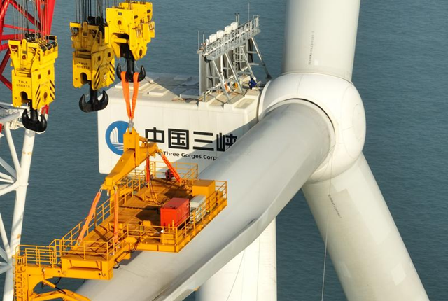
The nation’s successful installation of the world’s first 20-megawatt offshore wind turbine has redefined the technological frontier for renewable energy, signaling that the era of ultra-large-scale maritime power has arrived, said industry experts.

 As part of a national key research and development program, the project, located in the waters off East China’s Fujian province, has all its major components independently developed and produced in China, according to its operator China Three Gorges Corp.

 Located more than 30 kilometers off the coast of Fujian province in depths exceeding 40 meters, the installation proves that massive-scale wind power is now viable in harsh, far-shore environments, said CTG.

 Industry analysts note that by pushing single-unit capacity to such heights, China is effectively circumventing the logistic bottlenecks that have stalled offshore wind projects in Europe and North America.

 The successful installation signals a qualitative shift in China’s offshore energy strategy, transitioning from nearshore exploration to the deployment of high-capacity, efficient units in deeper and more remote waters, said Lin Boqiang, director of the China Center for Energy Economics Research at Xiamen University.

 The project establishes new benchmarks for global maritime engineering and highlights China’s pivotal role as the world’s leading energy producer and consumer, he said.

 By aggressively scaling wind and solar infrastructure, the nation is increasingly defining the trajectory of both domestic and international green energy transitions, he said.

 According to Peng Peng, secretary-general of the China New Energy Investment and Financing Alliance, an industry group, deep-sea and far-offshore wind projects currently continue to face challenges related to relatively high development and subsequent operation and maintenance costs.

 If offshore wind can be integrated with other industrial sectors, it will enhance the economic viability of the industry and inject greater vitality into the broader marine economy, she said.

 During the 15th Five-Year Plan period (2026-30), the country aims for annual new wind power installations of no less than 120 gigawatts, with offshore wind accounting for at least 15 GW annually.

 According to statistics from the National Energy Administration, China’s cumulative wind power installed capacity reached 520 GW by 2024, marking a 147.62 percent increase from 2019. Annual new installations between 2020 and 2024 consistently exceeded 60 GW, it said.

 According to the Energy Economics Institute of the China National Offshore Oil Corp, the country’s largest offshore driller, offshore areas of China will become a major energy growth driver in the country for years to come.

 Historically, the cost of subsea foundations and the difficulty of maritime logistics in deep water have made such projects prohibitively expensive. However, this 20-MW unit features a breakthrough in lightweight engineering, with its weight-per-megawatt ratio reduced by more than 20 percent compared to current industry averages.

 This mass reduction allows for significantly more affordable underwater foundations, lowering the total capital expenditure required for deep-sea installations, said CTG.

 With a rotor diameter of 300 meters, the turbine’s swept area covers approximately 66,000 square meters, equivalent to nearly 10 standard football fields. The installation served as a live demonstration of China’s advanced maritime engineering capabilities, said CTG.

 To manage the immense risks of working at extreme heights in complex sea states, crews utilized a fourth-generation wind power installation vessel with a 2,000-metric-ton lifting capacity.

 The operation relied on high-precision intelligent positioning systems to ensure the giant blades could be connected to the structure with millimeter-level accuracy.


Article inline ad

Green Tech Leader Envision Unveils Model To Shape World’s Largest Physical AI System

0

By Zheng Xin | chinadaily.com.cn | Updated: 2026-01-15

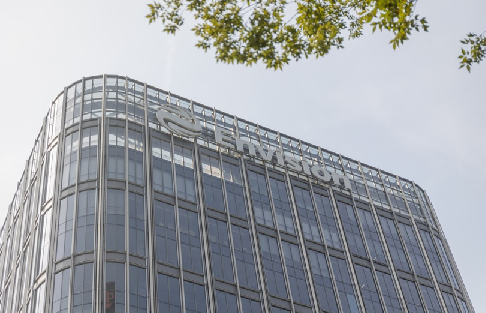
Envision, the global leader in green technology, announced on Thursday the launch of Dubhe, its energy foundation model, designed to shape the world’s largest physical AI system – the AI energy system.

 Dubhe sits at the core of Envision’s physical AI architecture, analyzing vast real-world energy data streams to orchestrate renewable generation, storage, grids and demand in real time.

 By unlocking the abundance of renewable resources and driving costs toward near-zero marginal levels, Dubhe enables energy systems to scale in step with AI—addressing the unprecedented energy demands that AI places on global infrastructure.

 Dubhe is designed to shape the AI energy system with a foundation that is infinite, intelligent, and inexpensive, supporting the prosperity of a new civilization, said Zhang Lei, founder and CEO of Envision, during the Abu Dhabi Sustainability Week.

 While large language models have transformed the digital world, Envision believes the next leap lies in physical artificial intelligence—AI that directly governs the physical systems essential to human survival and prosperity.

 Dubhe works in tandem with Tianji, Envision’s large-scale weather foundation model, which provides the predictive intelligence that allows physical AI to anticipate and respond to weather-driven variability, ensuring the energy system operates efficiently and reliably at scale.

 zhengxin@chinadaily.com.cn

Article inline ad

Visa Teams Up With Apple To Enable Overseas Apple Pay Payments For China Cardholders

0

By Jiang Xueqing | chinadaily.com.cn | Updated: 2026-01-15

Visa, a global payments technology company, announced on Thursday that it will work with Apple to enable cardholders in China to add their Visa cards to Apple Pay and make payments overseas in a wide range of scenarios — including at on and offline merchants and within mobile apps.

 “As global digital payments continue to grow at a rapid pace, consumer demand for mobile, interoperable payment solutions has also risen steadily,” Yin Xiaolong, Visa’s president for the Chinese mainland, said.

 “Upholding our long-term commitment to the China market and its cardholders, Visa has increased investment in data and payment security by launching tokenization services and taking the lead in applying them to cross-border payment scenarios,” Yin said. “We are pleased to work with Apple and financial institutions to be among the first to bring Chinese cardholders a safer and more convenient mobile payment experience.”

 The first batch of issuing banks supporting Apple Pay linking for Visa cardholders in China includes Industrial and Commercial Bank of China, Bank of China, Agricultural Bank of China, Bank of Communications, China Merchants Bank, China CITIC Bank, Ping An Bank, and Industrial Bank. Visa and Apple are working closely with additional banks, with more features to be rolled out in the future.

 Mastercard said on Thursday that Mastercard-branded credit and debit cards issued in China will also soon support Apple Pay. Cardholders can check the Apple website, the Mastercard and Mastercard NetsUnion websites, as well as card issuing banks’ websites and apps for information on availability and activation.

 jiangxueqing@chinadaily.com.cn


Article inline ad

Alibaba Upgrades Qwen App With Agentic Capabilities

0

By Fan Feifei and Zhang Chenxu | China Daily | Updated: 2026-01-15

Alibaba Group announced on Thursday a major upgrade to its flagship consumer-facing artificial intelligence application, Qwen App, marking a further step in the company’s long-term strategy to bring advanced AI capabilities into practical everyday use.

 This shift from “AI that responds” to “AI that acts” is enabled by Qwen App’s deep integration with core services from Alibaba’s ecosystem, including Taobao, Taobao Instant Commerce, Alipay, Fliggy, and Amap. Qwen App intelligently coordinates services across multiple platforms through a unified AI interface, allowing users to move seamlessly from intent to completion. These new features are now available for public testing in China.

 With the latest upgrade, Qwen App is moving beyond conversational interaction to become a system capable of autonomously completing end-to-end actions.

 With a single voice or text request, users can now order food, complete in-chat payments, plan and book travel, call restaurants, and manage multi-step tasks — without switching between applications or manually navigating workflows.

 “AI is evolving from intelligence to agency,” said Wu Jia, vice-president of Alibaba Group. “What we are launching today represents a shift from models that understand to systems that act — deeply connected to real-world services.”

 “Wu added that Qwen App is Alibaba’s approach to the next era of AI applications: not just powerful, but genuinely useful in everyday life. “By making these capabilities freely available, we aim to help users offload repetitive tasks to an intelligent assistant they can rely on.”

 The initial set of agentic capabilities focuses on scenarios where users already have established habits and expectations, such as local services, shopping and travel.

 In quick commerce, Qwen App can place real-time food and beverage orders through Taobao Instant Commerce, with available promotions automatically applied and payments completed directly within the conversation.


Article inline ad

Huawei Reclaims Top Spot In China’s Smartphone Market In 2025

0

By Ma Si | chinadaily.com.cn | Updated: 2026-01-14

Huawei has returned to the number one position in China’s smartphone market in 2025, according to the latest report from the market research company International Data Corp.

 This marks a significant shift in the competitive landscape of the world’s largest smartphone market as Huawei managed to overcome the challenges from the US government’s restrictions to revive its smartphone business.

 The report, released on Wednesday, outlined the annual shipment rankings for the Chinese smartphone market. Huawei secured the top position with shipments reaching 46.7 million units, capturing a 16.4 percent market share. It was followed closely by Apple, which shipped 46.2 million units, accounting for 16.2 percent of the market.

 Vivo, Xiaomi, and Oppo rounded out the top five. Notably, Honor dropped out of the top-five rankings for the year.

 Overall, the Chinese smartphone market saw a slight contraction in 2025, with total shipments declining by 0.6 percent year-on-year to approximately 285 million units.

 The report highlights Huawei’s successful re-emergence as a major force, demonstrating its resilient brand appeal and product strength among Chinese consumers. The intensified competition at the top, with Huawei and Apple separated by a mere half a percentage point in market share, sets the stage for a fierce battle in the coming year.

 Despite the reshuffle among leading brands, the market faces significant headwinds. IDC analysts point to the persistent pressure from rising component costs, particularly for memory storage, which is expected to see substantial price increases. This will further squeeze profit margins for all manufacturers.

 Looking ahead, industry experts anticipate a more pronounced decline in China’s smartphone shipments for 2026, driven by these escalating cost pressures, market saturation, and extended replacement cycles.

Article inline ad

China Still Has Room For RRR And Interest Rate Cuts, Central Bank Says

0

By Zhou Lanxu | chinadaily.com.cn | Updated: 2026-01-15

China still has room for cuts in the reserve requirement ratio and interest rates this year, with a firm yuan performance and stabilizing bank net interest margins providing the scope, said Zou Lan, vice-governor of the People’s Bank of China.

 The average RRR for financial institutions currently stands at 6.3 percent, indicating that further RRR cuts remain possible, Zou said at a news conference on Thursday.

 As for policy interest rate benchmarks, external constraints are not particularly binding at the moment: the renminbi exchange rate has remained relatively stable, and the US dollar is in a rate-cutting cycle, Zou said.

 “Overall, the exchange rate does not pose a strong constraint,” Zou said.

 Domestically, banks’ net interest margins have shown signs of stabilizing since 2025, Zou said, while the latest cut in the rates of various structural monetary policy tools will help reduce banks’ funding costs and create additional room for further rate cuts.

 Zou added that the central bank will continue to increase liquidity injections and will flexibly conduct operations such as buying and selling government bonds to create a supportive monetary and financial environment for the smooth issuance of government debt.

Article inline ad

China’s Financing Activity Sees Steady Momentum In 2025

0

By Zhou Lanxu | chinadaily.com.cn | Updated: 2026-01-15

China’s financing activity maintained steady momentum in 2025, with financial aggregates rising relatively quickly, driven by lower financing costs and improved structures, official data showed on Thursday.

 The country’s aggregate social financing — the total amount of financing to the real economy — reached 35.6 trillion yuan ($5.1 trillion) in 2025, an increase of 3.34 trillion yuan compared to the same period last year, according to the People’s Bank of China, the country’s central bank.

 The central bank said that outstanding aggregate social financing stood at 442.12 trillion yuan by the end of December, marking an 8.3 percent year-on-year increase, compared with 8 percent for 2024.

 The broad money supply, or M2, reached 340.29 trillion yuan at the end of last year, rising 8.5 percent year-on-year, compared with 7.3 percent in 2024, the central bank said.

 In December, the weighted average interest rates for newly issued corporate loans and newly issued individual housing mortgages both stood at around 3.1 percent. Compared with the second half of 2018, they have fallen by 2.5 percentage points and 2.6 percentage points, respectively, the PBOC said.

 Financing channels other than loans, including bonds, accounted for more than 50 percent of newly-added social financing, demonstrating remarkable achievements in the supply-side structural reform of the financial sector, according to the central bank.

 The country’s new yuan-denominated loans came in at 16.27 trillion yuan in 2025, compared with 18.09 trillion yuan in 2024, the PBOC added.

Article inline ad

China To Reduce Interest Rates To Encourage Lending

0

By Zhou Lanxu | chinadaily.com.cn | Updated: 2026-01-15

China will reduce the interest rates of various structural monetary instruments by 0.25 percentage points in order to boost lending, with the one-year interest rate on various central bank lending facilities to be lowered from the current 1.5 percent to 1.25 percent, Zou Lan, vice-governor of the People’s Bank of China, said.

 The minimum down payment ratio for loans to purchase commercial properties will be lowered to 30 percent to help reduce inventory in the commercial real estate market, Zou said at a news conference on Thursday.

 The PBOC will also increase the central bank lending quota for technological innovation and equipment upgrades by 40 billion yuan ($5.74 billion) — from 80 billion yuan to 120 billion yuan — while incorporating private small and medium-sized enterprises with relatively high research and development investment in the eligible coverage.

 Financing channels other than loans, such as bonds, accounted for more than 50 percent of newly-added social financing in 2025, demonstrating the achievements of the supply-side structural reform of the financial sector, Zou added.

Article inline ad

China’s Central Bank To Conduct 900-Billion-Yuan Outright Reverse Repo Operation

0

Xinhua | Updated: 2026-01-15

BEIJING – The People’s Bank of China, the country’s central bank, announced on Wednesday that it will conduct a 900-billion-yuan ($128.35 billion) outright reverse repo operation on Thursday to maintain ample liquidity in the banking system.

 The operation will be carried out with a fixed quantity through interest-rate bidding, with winning bids determined at multiple price levels. It will have a tenor of six months, or 181 days, according to the central bank.

 Outright reverse repo operations – a tool the central bank introduced in October 2024 to manage liquidity in the national banking system — are conducted each month with a tenor of no more than one year.

 These operations have enriched the country’s monetary policy toolkit, complementing previous measures such as temporary repos, temporary reverse repos, and the buying and selling of treasury bonds.

Article inline ad