Wednesday, November 25, 2026

Home Blog Page 106

Cycling Economy Fueling Sports-Related Spending

0

China Daily | Updated: 2026-01-12

BEIJING — Whether traversing the breezy coastal greenways of Shenzhen, a coastal city in southern China, or “looping” the 100-kilometer urban parkway in Chengdu, renowned as a “leisure city”, cycling has emerged as a vibrant lifestyle choice, a social gathering hub, and a key driver of China’s burgeoning outdoor economy.

 According to an industry report on outdoor sports released by the General Administration of Sport, China’s bicycle industry achieved a total output value of over 300 billion yuan ($42.97 billion) by the end of 2024. Notably, sales of sports bicycles and smart e-bikes surged by 18 percent and 25 percent year-on-year, respectively.

 In Shenzhen, where half is mountain and sea and the other half city, a 260-kilometer coastline serves as a scenic backdrop for cycling enthusiasts.

 “The government has actively incorporated feedback from the cycling community to develop a more professional and accessible path system,” said Pan Yong, president of Shenzhen’s cycling association. The city aims to complete a leisure cycling network exceeding 1,000 km by 2035.

 Meanwhile, in Chengdu, the 100 km round-the-city greenway has evolved into a legendary “cycling loop”.

 Zhang Yu, a local cyclist outfitted with professional gear, usually dedicates six hours on weekends to completing the full loop. “It’s an ideal way to unwind while immersing oneself in the scenery,”Zhang said.

 With a cycling population exceeding 2 million and daily shared-bike rides surpassing 2.2 million, the highest in the country, Chengdu’s sports consumption is experiencing explosive growth. In the first half of 2025 alone, the city’s sports-related spending, fueled by cycling, was projected to hit 41 billion yuan.

 Cycling is no longer just about the bike; it is about the community. In Shenzhen, cycling paths now link major business districts, parks and cultural landmarks, fostering vibrant “stay-and-spend” hotspots.

 “A cycling park is a destination for social engagement,” said You Fangfang, a brand planner at Kaledo. The brand’s “Corner Cycling Life Festival” in the Greater Bay Area has attracted up to 60,000 visitors per weekend, blending cycling with coffee culture, rock climbing and pet-friendly activities.

 The trend has also captivated global attention. After retiring, world champion cyclist Wong Wan-Yiu relocated to Shenzhen’s Yantian district, where she started a bike motocross club.

 “I live right by the sea,” Wong said. “My Hong Kong friends often come to Shenzhen for weekend rides, and many young riders from Hong Kong join our club for training sessions.”

 To bridge the “last kilometer” for riders, Shenzhen has launched dedicated “cycling buses” and “bike-friendly” subway trains, enabling enthusiasts to transport their bicycles directly to the start of scenic routes.

 The cycling craze has directly spurred a shift from basic utility to professional performance. Li Junshang, head of cycling community operations at Decathlon Shenzhen, noted that consumers are increasingly “choosing equipment based on specific needs”.

 “Sales of folding bikes have surged by 30 percent year-on-year, while demand for children’s bikes and touring models continues to grow steadily,” Li said. “Cycling is now an integral part of diverse lifestyles, from commuting to parent-child outings and outdoor exploration.”

 This growing demand is fueling high-tech manufacturing. DAHON, a leading folding bike manufacturer headquartered in Shenzhen, holds over 600 patents.

 “Our growth demonstrates that ‘small wheels’ can indeed propel a big industry,” said David T Hon, an 80-year-old laser physicist and chairman of DAHON. He attributed the company’s expanding business to the government’s emphasis on innovation and intellectual property protection.

 Xinhua

Article inline ad

China, EU Agree On Guidance For Price Undertakings On Chinese EV Exports

0

By Wang Keju | chinadaily.com.cn | Updated: 2026-01-12

China and the European Union have agreed to provide general guidance on price undertakings — commitments to maintain minimum prices — for Chinese exporters of battery electric vehicles to the bloc, the Ministry of Commerce said on Monday.

 This move will enable Chinese exporters to address the EU’s anti-subsidy case concerning Chinese EVs in a way that is more practical, targeted, and consistent with WTO rules, the ministry said.

 To this end, the EU will issue a guidance document on the submission of price undertaking offers, in which the EU acknowledges that it will assess each price undertaking offer against the same legal criteria in an objective and fair manner, following the principle of non-discrimination and in accordance with relevant WTO rules, the ministry said.

 It shows that both China and the EU have the ability and willingness to properly resolve differences through dialogue and consultation under the framework of WTO rules and maintain the stability of automotive industrial and supply chains in China, the EU, and the whole world, the ministry said.

 This is conducive not only to ensuring the healthy development of China-EU economic and trade relations, but also to safeguarding the rules-based international trade order, the ministry added.

Article inline ad

Economy Remains Stable, Resilience Set To Persist

0

By Cheng Shi | China Daily | Updated: 2026-01-12

As 2025 enters the annals of history, some major international institutions — including the World Bank, the International Monetary Fund, the Asian Development Bank and the Organization for Economic Co-operation and Development — raised their growth forecasts for China. Moreover, the annual Central Economic Work Conference in December set out a clear assessment of current economic conditions, reaffirming the principles of pursuing progress while maintaining stability and signaling a more proactive macroeconomic stance aimed at reinforcing domestic demand alongside innovation-driven growth.

 Against the backdrop of subdued growth expectations across most major economies, the alignment between external upgrades and domestic policy direction points to a shared judgment that China’s economy remains broadly stable, with its resilience set to persist.

 As the drag from high interest rates eases and policy coordination improves, the global economy entered a transition phase in 2025 characterized by recovery alongside structural adjustment. By 2026, the momentum accumulated earlier is expected to become clearer, while divergent growth paths across economies are likely to emerge.

 At this juncture, China has outlined a forward-looking strategy aimed at cushioning external volatility with institutional stability, advancing structural upgrading to unlock long-term growth potential, fostering new quality productive forces to strengthen future competitiveness and energizing its vast domestic market through a stronger domestic demand framework.

 First, China is seeking to secure long-term competitiveness through proactive structural adjustments. The Recommendations of the Central Committee of the Communist Party of China for Formulating the 15th Five-Year Plan for National Economic and Social Development call for upgrading the economic structure, improving the allocation of new resources and making better use of existing ones. Within this framework, the economy is undergoing a clear structural shift. The boundaries between traditional, emerging and future industries are becoming increasingly fluid, as the industrial system moves away from linear, chain-based volume expansion toward a more integrated, ecosystem-driven model. Competitive advantage is rapidly shifting from low costs to innovation, while growth is becoming less dependent on factor inputs and more driven by efficiency gains. At the same time, closer interaction between industrial restructuring and upgrading demand is strengthening domestic momentum. As supply and demand become better aligned, this structural realignment is providing sustained support for the development of a stronger and more resilient domestic market.

 Taken together, these trends suggest that structural upgrading is becoming a key anchor for China as it navigates a more fragmented and uncertain global economy. Looking at 2026, investment in manufacturing is widely expected to continue growing faster than overall investment, reinforcing its role in supporting technological self-reliance and strengthening domestic demand. As innovation-driven growth gains traction, new technologies and capabilities are likely to spread more quickly and more broadly across the industrial landscape.

 Second, China is drawing long-term momentum from its vast domestic market by strengthening the consumption cycle. Consumer demand is shifting away from reliance on short-term stimulus measures toward more durable, institution-based support, resulting in lower volatility and greater resilience. The structure of consumption is also changing, with growth increasingly driven by both goods and services, while services and digital spending are emerging as key new engines. At the same time, gains in purchasing power are spreading beyond a narrow group to encompass both urban and rural consumers, widening and deepening the foundations of domestic demand and reinforcing the stability of China’s large domestic market.

 Furthermore, economic indicators suggest that China still has considerable scope to strengthen consumption as a growth driver. In 2024, household final consumption accounted for about 40 percent of GDP, while the marginal propensity to consume was around 66 percent — both noticeably lower than in most advanced economies, indicating significant latent demand. The Recommendations of the CPC Central Committee for Formulating the 15th Five-Year Plan for National Economic and Social Development emphasize improving living standards while increasing consumer spending, and combining investment in physical assets with investment in human capital. Over time, consumption growth is likely to be driven more by structural factors such as income growth, stronger social protections and better public services. Together with supply-side innovation and ongoing institutional reform, these forces are expected to support a steady expansion in retail sales, with growth projected to reach around 4.6 percent by the end of 2026.

 A stronger consumption cycle starts with rising purchasing power. In the first three quarters of 2025, per capita disposable income grew by 5.1 percent nationwide, with rural incomes rising even faster at 5.7 percent. Estimates suggest that if rural income growth runs two percentage points above its historical average, it could generate around 3.5 trillion yuan ($500 billion) in additional consumer demand between 2025 and 2029. At the same time, changes in the structure of consumption are becoming a key driver of demand expansion. China’s huge domestic market is fostering rapid innovation on the supply side, as livestreamed e-commerce, instant retail and other new formats gain momentum, reshaping consumer behavior and accelerating deeper shifts in how consumption takes place.

 As incomes rise and consumption patterns evolve, spending on services is moving into a period of rapid expansion, with demand accelerating across culture and entertainment, tourism, and health and eldercare. By the third quarter of 2025, services spending accounted for 46.8 percent of per capita household consumption, and a further rise toward 53 percent could, in theory, unlock around 14.9 trillion yuan in additional demand between 2025 and 2029, positioning services as the main engine of domestic demand growth.

 Third, policy certainty is emerging as a key pillar underpinning China’s economic stability. As global volatility intensifies and cyclical pressures overlap, a steadier, more forward-looking and better-coordinated macro policy framework is providing a solid foundation for growth at the outset of the 15th Five-Year Plan (2026-30) period.

 On the fiscal front, greater emphasis will be placed on achieving a long-term balance between stabilizing growth, improving public well-being and containing risks. On the one hand, the fiscal deficit ratio in 2026 is expected to remain at around 4 percent, with new local government debt quotas likely to be issued earlier in the year, enabling front-loaded investment and helping stabilize the pace of infrastructure and public project construction. On the other hand, the structure of fiscal spending will continue to improve, with more resources directed toward education, healthcare, eldercare and technological innovation — areas that represent long-term investment in people — to foster growth models led by domestic demand, driven by consumption and sustained by self-reinforcing momentum.

 Looking at 2026, monetary policy is expected to stay moderately accommodative, with further scope for easing through policy rates and the reserve requirement ratio. At the same time, policy-based financial instruments are expected to be further expanded and more closely aligned with central bank tools such as re-lending and rediscount facilities, creating stronger policy synergies.

 The writer is chief economist at ICBC International Holdings Ltd. The article was originally published on Sina Finance Column.

 The views do not necessarily reflect those of China Daily.

Article inline ad

China Unfazed By Japan’s Possible Bans

0

Domestic chipmakers express calibrated confidence, eye homemade substitutes

By Ma Si | China Daily | Updated: 2026-01-09

If Japan moves to restrict the export of photoresist — a key material in semiconductor manufacturing — to China, Beijing is prepared to cope with the challenge, and can find both domestic and foreign alternatives to fill the gap, corporate executives and experts said on Thursday.

 Recent market speculation suggests Japan may consider restricting exports of photoresist, the light-sensitive “ink” essential for etching microscopic circuits onto silicon wafers, to China. Japan commands over 70 percent of the global photoresist market, according to Japanese media outlet Nikkei. This potential move is viewed as a possible response to China’s latest ban on exporting dual-use items to Japan.

 However, a chorus of voices from within China’s semiconductor ecosystem is expressing not panic, but a calibrated confidence, underpinned by strategies of domestic substitution and supply chain diversification.

 Though challenges exist, the immediate reaction from key industry players is one of operational calm. “From the actual situation on the market end, we have not heard of any customer production being affected so far,” Yi Rongkun, general manager of Xiamen Hengkun New Material Technology Co Ltd, a Chinese company involved in photoresist-related business, told China Daily.

 Yi said he acknowledges the industry’s proactive mindset, adding, “Of course, the basic consensus within the industry is still to prepare for rainy days and prevent worst-case scenarios.”

 This sentiment is echoed by sources from leading Chinese chipmakers like Semiconductor Manufacturing International Corp and Huahong Group. Sources from the two companies told China Daily that no current ban exists yet and point to “significant progress” in domestic photoresist production potential.

 Jiangsu Nata Opto-electronic Material, which has developed one of China’s first batches of self-developed photoresist for ArF DUV (argon fluoride deep ultraviolet) lithography — a type of high-end photoresist — said the company’s revenue from ArF photoresist exceeded 10 million yuan ($1.43 million) in 2024, and it maintained a stable supply of ArF photoresist in 2025.

 Financial markets have delivered a bullish verdict on the Chinese photoresist sector’s prospects. Shares of companies in the photoresist and related materials sector opened significantly higher on Thursday. Shanghai Pret Composites Co Ltd, for instance, surged by the daily limit of 10 percent.

 Industry players such as Jiangsu Nata Opto-electronic Material and Anhui Guofeng New Materials Co Ltd also saw substantial gains. This investor optimism reflects a growing belief in the viability and commercial future of China’s semiconductor materials industry, betting that geopolitical pressures will fuel, not cripple, its growth, experts said.

 Such confidence stems from what appears to be a multilayered strategic preparation. Roger Sheng, vice-president of research at the US market research company Gartner, said: “We believe there must be contingency plans for Japanese chip-related products, if Japan retaliates. Photoresist, materials, equipment — there must already be alternative substitution plans.”

 Sheng highlighted diversified options from South Korean supplies, noting that South Korean President Lee Jae-myung just visited China.

 He also pointed to a critical nuance tempering the challenge: “The photoresist we need isn’t at the EUV (extreme ultraviolet) level,” referring to the advanced grade required for the cutting-edge chips, which remains a harder-to-replace segment.

 Experts argue that any disruptions would primarily accelerate two existing trends: the rapid development of China’s local photoresist sector and a pivot to alternative foreign suppliers.

 He Hui, semiconductor research director at UK-based tech research firm Omdia, provided a clear analysis.

 “If Japan cuts off the supply of photoresist to China, it would only accelerate the industrialization of China’s local self-sufficiency. We could import from South Korea or other countries,” she said.

 Domestic alternatives are already available for some applications, though not yet for all. More importantly, she said, is drawing a direct parallel to a historical precedent: Japan’s 2019 export restrictions on key materials, including photoresist, to South Korea.

 That move, amid a political dispute, initially squeezed chipmakers like Samsung and SK Hynix but ultimately catalyzed South Korea’s drive for supply chain independence.

 “It actually increased South Korea’s local substitution,” she said, suggesting that China is poised to follow a similar, if not faster, path.

 An executive from a Chinese semiconductor equipment company who declined to be named, voiced a common belief in stronger resilience, stating plainly: “Even if it (the ban) were real, it would be fine. Our capacity to withstand this is stronger than South Korea’s.”

 The current discourse reveals a strategic shift in China’s semiconductor approach. The era of passive reliance on a single foreign supply chain is being consciously phased out, experts added.

 masi@chinadaily.com.cn

Article inline ad

Minimax Sees Market Value Cross HK$100b After Shares Jump 100% On Debut

0

By WANG YING | chinadaily.com.cn | Updated: 2026-01-10

Shanghai-based AI company MiniMax closed 109.9 percent higher at HK$345 ($44.26) per share in Hong Kong on Friday, raising its total market value to HK$106.7 billion on its initial public offering.

 The capital raised from the listing will be mainly used for upgrading large models and developing AI products in the next five years, according to Economic Information Daily, a newspaper under Xinhua News Agency, citing sources from MiniMax.

 Regarding the capitalization scale, local news outlet Shanghai Observer called MiniMax’s IPO the largest ever as an AI large model company.

 Founded in 2022, MiniMax has independently researched and developed a series of general large models, including a video generation model and a large-scale open-source reasoning model.

 MiniMax boasted more than 212 million individual users across more than 200 countries and regions as of September. The company reported its revenue increased more than 170 percent year-on-year in the first nine months of last year, with overseas markets contributing over 70 percent.

 “The true value of an artificial intelligence company lies in continuously providing advanced intelligence for people to use,” said Yan Junjie, founder and CEO of MiniMax, during the IPO ceremony.

 Yan added that the company would proceed with advancement in intelligence and make a greater contribution to social and economic progress.


Article inline ad

White Paper Details Shanghai’s Rise As AI Manufacturing Hub

0

By WANG YING in Shanghai | chinadaily.com.cn | Updated: 2026-01-08

Thanks to the explosive development in AI’s industrial scale and holding one-third of the nation’s AI talents, Shanghai has established itself as a highland for AI. The city’s AI-powered manufacturing is set to play a greater role, according to the white paper on 2025 Shanghai’s AI manufacturing development released on Thursday.

 As of Dec 24, 2025, a total of 139 large AI models had been registered across the city. Shanghai is home to nearly 300,000 AI professionals, accounting for about one-third of the nation’s total talent pool, the white paper stated, which was released at a conference focused on facilitating its manufacturing sector’s digital transformation held in Shanghai.

 According to the report, Shanghai’s artificial intelligence industry staged explosive growth with total output of the city’s 394 AI enterprises above designated size, or those with an annual revenue of 20 million yuan or above, reaching 435.49 billion yuan ($62.35 billion), up 39.6 percent year-on-year, in the first nine months of 2025. During the same period, these companies’ combined profits amounted to 40.78 billion yuan, an increase of 11.4 percent from a year ago.

 “The report is rooted in the construction of Shanghai’s modern industrial system,” said Wu Xiaodong, vice-president of Shanghai Industrial Internet Association.

 According to him, the report focused on policy deployment, application scenarios with technological breakthroughs, and ecosystem development.

 “Through systematically reviewing Shanghai’s practical experiences and implementation models in AI manufacturing, the white paper analyzes opportunities and challenges, as well as offers policy recommendations,” Wu said.

 “The city is actively leveraging its strengths in AI manufacturing, accelerating application in key industries, and fostering a dynamic AI application ecosystem,” said Zhang Ying, deputy secretary-general of the Shanghai Municipal government.

 Looking ahead, Shanghai will promote the large-scale development of AI manufacturing during the 15th Five-Year Plan (2026-30) period, Zhang said.

 Enterprises are already seeing concrete benefits from AI integration. “AI applications have proven highly effective, whether in accelerating design processes, shortening product delivery times, reducing costs, or improving success rates,” said Gu Guifeng, vice-president of Shanghai Kaiquan Pump (Group) Co Ltd.

 Yu Fangqiang, chief information officer of Shanghai Construction Group, noted that although AI currently accounts for only 10 percent of the group’s daily operations, its future potential is virtually unlimited.

 “While the application of AI may take time to move from consumer sectors into construction, enterprises must proactively embrace it,” said Yu.

 During the event, 21 new enterprises were certified as industrial internet pioneers.

 Since 2022, Shanghai has focused on key industries including automobiles, high-end equipment and aerospace, with 42 enterprises receiving certification as industrial internet pioneers to cultivate and lead digital and intelligent transformation in key industries. These efforts have connected more than 360,000 enterprises, empowered over 7,000 core companies, reduced operational costs by 20 percent and lowered equipment energy consumption by 10 percent.

 Shanghai’s latest AI manufacturing achievements come as the Ministry of Industry and Information Technology and seven other central government departments issued the implementation guidelines for the special action on AI manufacturing on Wednesday. The document sets a target of achieving secure and reliable supply of key AI technologies, along with globally leading industry scale and empowerment capacity, by 2027.

Article inline ad

China’s Homegrown Gear Makers Rev Up For Bigger Shares Of Winter Sports Market

0

Xinhua | Updated: 2026-01-10

HARBIN — As China vigorously develops the ice and snow economy to boost consumption, homegrown gear makers are aiming for rapid growth in the winter sports market, seeking to catch up with foreign brands that have long dominated the sector.

 The momentum was on full display at the 2026 Harbin International Ice and Snow Economy Expo, a three-day trade fair drawing over 300 ice-and-snow sports gear makers from more than 20 countries and regions.

 Amidst the buzz, a clear narrative emerged as Chinese companies harness local manufacturing expertise and a booming domestic winter sports market to strengthen their competitiveness.

 The expo concluded on Thursday in Harbin, capital of Northeast China’s Jilin province. China’s burgeoning winter sports sector showcased high-performance gear products ranging from futuristic unmanned snow removal machines, carbon fiber skis, to low-temperature resistant solid-state batteries.

 Li Zhibo, general manager of Harbin Qianmao Snow Dragon Sports Equipment Co Ltd, presented a sleek black snowboard at the fair. “This is a competition snowboard that we developed specifically for China’s national team,” he said.

 Boasting aerospace-grade composite materials to keep the snowboards lightweight and more durable, while costing half as much as imported products, the new model is expected to debut at the Milan-Cortina 2026 Winter Olympics scheduled from Feb 6 to 22 this year, according to Li.

 Established in 2002, Qianmao’s full range of ski products is available at 80 percent of ski resorts across China.

 Li said that with national policy support to boost the ice and snow economy, along with China hosting the Asian Winter Games in Harbin in 2025, the country’s ice and snow equipment manufacturing industry has a great opportunity to grow.

 At the expo, Bingxuehuanteng Sports Equipment Technology (Harbin) Co Ltd launched 13 new products featuring aerospace-grade carbon fiber technology that reduces weight without compromising strength, which attracted the attention of many skiing enthusiasts and industry insiders.

 Qin Wenbao, product manager of the company, said that the company has formed a partnership with Chinese research units and universities such as the Harbin Institute of Technology to boost its competitiveness.

 Yu Yang, president of Beijing Carving Ski Sports Development Group Co Ltd, said China is a latecomer in the global ice and snow equipment manufacturing industry, so it will still take time for domestic companies to carve out space in the global market.

 Despite the world’s leading snowmaking machine maker, TechnoAlpin, being present at the expo, Yu noted that the Chinese company still found a niche market for its new product — a snowmaking machine featuring energy-efficient and environmentally friendly effects.

 The global supply sector is also looking to seize new opportunities amid the boom in ice-and-snow tourism.

 Italian company TechnoAlpin, which holds around 60 percent of the global market for snowmaking systems, reported that about 90 percent of ski resorts in China use its snowmaking machines.

 Shen Yumei, marketing director for the company’s China business, said that the boom in winter sports in China is giving global enterprises greater confidence in the market.

 “We plan to build the company’s fourth-largest global equipment center in China, serving markets across other Asian countries. The company’s advanced ice and snow technologies and experiences will contribute to the vigorous development of China’s ice and snow sports and industry,” Shen added.

 According to a China Tourism Academy report released at the Ice and Snow Tourism Development Forum 2026 in Harbin earlier this week, China’s ice and snow tourism is entering “a new stage of sustained prosperity,” with more than 14,000 related enterprises operating in the sector at the end of 2025, up 11 percent year-on-year.

 The scale of China’s ice and snow economy exceeded 1 trillion yuan (about $143 billion) in 2025, nearly four times its 270-billion-yuan size in 2015.

Article inline ad

Shipping Rates Diverge Sharply

0

By ZHONG NAN | CHINA DAILY | Updated: 2026-01-10

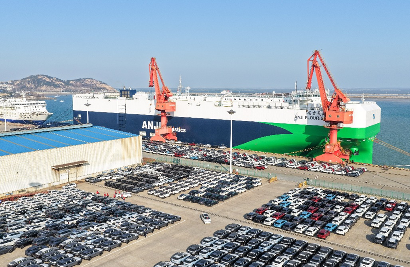
Shipping rates between China and its major trading partners have diverged sharply in recent weeks, with short-haul routes to Southeast Asia recording sustained price increases, while long-haul services to the West Coast of the United States have faced downward pressure.

 Freight forwarders and market watchers said that the contrasting movements underscore structural differences in demand and capacity across key global trade lanes.

 Jin Er, senior manager overseeing Asia route operations at Southeast Logistics Group in Ningbo, Zhejiang province, said that since mid-October, freight rates on Southeast Asia routes have continued to rise, with customer inquiries and bookings becoming more frequent.

 As a result, his workload has increased, prompting him to arrive at the office early each day to handle emails.

 Prices for a forty-foot equivalent unit (FEU) climbed from about $600 in late September to nearly $1,000 on services from Ningbo to Thailand last week, while rates from Ningbo to Myanmar increased from roughly $1,200 to around $1,500 over the same period, data from Ningbo Customs showed.

 “Faster services operated by carriers such as Maersk Line and SITC International Holdings Co can cost up to $2,000, while rates to Ho Chi Minh City in Vietnam tend to be slightly lower,” said Jin.

 In the same office, however, US route manager Liang Ying has been dealing with a different situation. She said that since November, freight rates on US West Coast routes have moved lower, at times falling below those on some short-haul regional services.

 Freight rates from Ningbo-Zhoushan Port to the Port of Los Angeles have fallen from about $3,100 per FEU in November to around $2,800 per FEU this week, after briefly touching lows of $1,600 in December — a level rarely seen on US trade lanes, she said.

 Qian Hanglu, an analyst at Ningbo Shipping Exchange, said with demand in the US remaining relatively weak, excess capacity on US routes has put downward pressure on freight rates.

 As the run-up to the Chinese New Year is a busy period for container shipping, several carriers have announced plans to lift rates on US West Coast routes by about $1,000 per FEU from January 2026.

 “Whether such increases will ultimately hold will depend on how supply and demand evolve in the coming weeks,” said Qian.

 Since October, freight rates on Thailand and Vietnam routes have shown a strong upward trend. Although prices have eased in recent weeks, they remain at relatively elevated levels, she added.

 The rise reflects strong trade flows between China and Southeast Asia, underpinned by complementary industrial structures and policy tailwinds from the Regional Comprehensive Economic Partnership, said Chen Jianwei, a researcher at the University of International Business and Economics’ Academy of China Open Economy Studies in Beijing.

 ASEAN remained China’s largest trading partner between January and November of 2025, with total bilateral trade surging 8.5 percent year-on-year to 6.82 trillion yuan ($976.78 billion), statistics from the General Administration of Customs showed.

 “Although many new container vessels have been delivered over the past two years, most are large ships with capacities of more than 10,000 twenty-foot equivalent units. Some Southeast Asian ports, constrained by water depth, navigational capacity and infrastructure, are unable to accommodate such vessels,” said Chen.

 By contrast, these mega container ships have been deployed mainly on routes to the US, resulting in ample overall capacity on those lanes, he added.

 zhongnan@chinadaily.com.cn

Article inline ad

Experts: Strong Gold-Buying Momentum Expected To Continue

0

By JIANG XUEQING | CHINA DAILY | Updated: 2026-01-10

Increasing gold holdings remains a long-term strategic direction for China’s central bank as it works to optimize the composition of its international reserves, while the fundamental drivers supporting a long-term rise in gold prices remain intact, experts said.

 China’s gold reserves stood at 74.15 million ounces as of the end of December 2025, up 30,000 ounces from the previous month, with the increase matching that of the prior month. This marked the 14th consecutive month of gold purchases by the People’s Bank of China, the country’s central bank, according to official data released on Wednesday.

 The PBOC’s continued modest gold purchases amid sustained rises and repeated record highs in gold prices highlight efforts to optimize the composition of its international reserves, said Wang Qing, chief macro analyst at Orient Golden Credit Rating International.

 From the perspective of improving the structure of international reserves, steadily and prudently advancing the internationalization of the renminbi, and responding to changes in the global environment, increasing gold holdings remains a long-term strategic direction for China’s central bank, Wang said.

 Wen Bin, chief economist at China Minsheng Bank, said the fundamental logic supporting a long-term rise in gold prices remains intact. On the one hand, intensifying geopolitical conflicts and major-power rivalry have further weakened market confidence in the creditworthiness of the US dollar. On the other hand, amid the trend of “de-dollarization”, central banks around the world continue to optimize their foreign exchange reserve structures by increasing gold holdings, Wen said.

 The US Federal Reserve cut interest rates as expected in December. Coupled with setbacks in prospects for a Russia-Ukraine ceasefire and escalating tensions between the United States and Venezuela, London spot gold prices rose 2.36 percent during the month. On Dec 29, London spot gold prices hit an intraday high of $4,550.52 per ounce, setting a record.

 Since the beginning of 2026, gold prices have continued to trend upward amid volatility. London spot gold prices once again broke above $4,500 per ounce intraday on Wednesday, and closed at $4,477.83 per ounce on Thursday, according to data compiled by market tracker Wind Info.

 Ming Ming, chief economist at CITIC Securities, said there is a high degree of certainty that gold prices will continue to rise. He cited two main reasons: the combination of accommodative US monetary policy and expansionary fiscal policy, and policies of the Donald Trump administration that have intensified stagflationary pressures in the United States.

 Analysts at CITIC Securities said in a recent report that compared with 2025, they expect greater certainty in China-US economic and trade relations in 2026. As a result, one of the key drivers of gold price gains last year — uncertainty surrounding US economic and trade policy and rising trade barriers — may have a limited impact in 2026.

 However, whether it concerns China-US economic and trade relations, or the situation in geopolitical hotspots, significant improvement is unlikely to materialize in 2026. Global central banks are expected to maintain strong gold-buying momentum throughout the year, the analysts said.

 As gold prices continue to climb and volatility intensifies, some banks have raised risk assessment requirements for gold investment products in an effort to protect investors.

 Industrial and Commercial Bank of China, the country’s largest State-owned commercial lender, recently announced that starting Jan 12, individual clients opening accounts for accumulated gold investment products, making active contributions, or adding regular investment plans, must undergo a risk tolerance assessment using the bank’s standardized questionnaire, and obtain a balanced or higher rating. Some other banks have also introduced similar requirements.

 At the same time, a number of banks have rolled out structured deposit products linked to gold or gold mining companies, with varying maturities and minimum investment amounts.

 Experts said allocating gold to a portfolio can help mitigate risks and enhance overall portfolio resilience, but investors should fully understand the risk characteristics of gold-related products and ensure these align with their own risk tolerance.

 jiangxueqing@chinadaily.com.cn

Article inline ad

Canton Fair Launches Indoor Navigation For Vast Exhibition Halls

0

By Zheng Caixiong in Guangzhou | chinadaily.com.cn | Updated: 2026-01-09

The China Import and Export Fair, often called the Canton Fair, has rolled out a new indoor navigation service aimed at helping exhibitors and buyers find their way through its vast exhibition complex, organizers said on Thursday.

 The system provides booth-level navigation in selected halls using a combination of Bluetooth, Beidou satellite positioning, and 5G technology. A pilot program is currently operating in 10 exhibition halls, according to a statement released Thursday by China Foreign Trade Center Group.

 Organizers said the technology is intended to address long-standing difficulties with indoor positioning at large-scale venues. The system allows users to locate exhibition halls and individual booths through the Canton Fair mobile app.

 The updated app also includes route-planning functions that allow users to generate customized visiting paths based on selected exhibitors or procurement needs. Navigation features are linked with information on service facilities inside the venue, such as catering and logistics areas.

 Held twice a year in Guangzhou, Guangdong province, the Canton Fair is China’s largest trade exhibition. The 138th session, which ended on Nov 4, attracted more than 310,000 overseas buyers from 223 countries and regions, official data shows. Intended on-site export transactions totaled $25.65 billion.

 The 139th session of the fair will open on April 15 at the Canton Fair Exhibition Hall in Guangzhou’s Haizhu district. It is jointly hosted by the Ministry of Commerce and the Guangdong provincial government.


Article inline ad