Wednesday, November 25, 2026

Home Blog Page 105

Merger To Bolster Jet Fuel Consumption

0

By Zheng Xin | China Daily | Updated: 2026-01-14

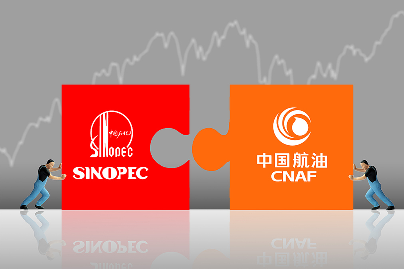
China has greenlit a landmark merger between its top refiner China Petroleum and Chemical Corp (Sinopec) and China National Aviation Fuel Group, creating a vertically integrated giant to anchor a market where jet fuel consumption is set to nearly double by 2040, said industry experts.

 The State-led consolidation between the country’s largest refiner and Asia’s largest aviation transportation service provider is designed to dismantle the logistic barriers between Sinopec’s massive refining capacity and CNAF’s nationwide airport network, they say.

 The restructuring of Sinopec and CNAF was announced by the State-owned Assets Supervision and Administration Commission of the State Council on Thursday.

 This synergy arrives as China’s aviation fuel demand is projected to surge from around 39 million metric tons in 2024 to 75 million tons by 2040, requiring a more resilient and cost-effective supply chain to support the world’s fastest-growing aviation market.

 According to a recently released report by Economics & Development Research Institute under China Petroleum and Chemical Corp, jet fuel has emerged as the sole growth engine in China’s future refined oil consumption structure.

 Forecasts by S&P Global also reveal that China’s aviation fuel consumption is projected to reach 75 million tons by 2040.

 Industry insiders believe that the restructuring is expected to lower aviation fuel supply costs, boost the industry’s competitive edge, and support a green transition in the aviation sector.

 The combined entity will leverage its strengths in integrated refining and petrochemical operations and its aviation fuel supply security system, said Liu Xingguo, a researcher with China Enterprise Confederation.

 Sinopec, the world’s largest oil refiner and China’s top aviation fuel producer, processes crude into oil products, including jet fuel, supplying it to CNAF, the country’s largest State-owned aviation fuel supplier which integrates the purchase, transportation, storage, quality management, sales and into-plane service of aviation fuel.

 By eliminating intermediary links and reducing supply costs, the merger will provide a robust guarantee for China’s aviation energy security, said Liu.

 Currently, major international aviation fuel service providers are primarily integrated petrochemical giants, characterized by massive production scales, robust infrastructure support, and extensive sales networks, having established a fully integrated production-supply-marketing business model.

 The merger will allow both domestic enterprises to leverage complementary strengths, scaling up China’s aviation fuel industry while sharpening its global competitiveness and accelerating the sector’s green transition.

 Aviation has long been one of the most difficult transportation sectors to decarbonize, with sustainable aviation fuel widely recognized as the primary pathway to net-zero.

 According to International Air Transport Association data, global SAF consumption was expected to reach 6 million tons in 2025, surging to 18 million tons by 2030.

 Sinopec was Asia’s first company to master proprietary R&D and commercial production of bio-jet fuel, while CNAF plays a pivotal role in market promotion and ecosystem building.

 “This restructuring is a forward-looking move to seize the high ground in green aviation and cultivate a new growth engine,” said Zhu Changming, a partner at Sunshine Law Firm.

 Sinopec announced earlier a Heads of Agreement with French energy giant TotalEnergies to jointly develop a sustainable aviation fuel production unit at Sinopec’s refinery in China. The planned unit, jointly owned by Sinopec and TotalEnergies, will have the capacity to produce 230,000 tons of sustainable aviation fuel per year and will process local waste or residues from the circular economy, including cooking oils and animal fats.

 Restructuring the State-owned economy is a key step toward building more competitive and sizable State-owned enterprises and capital. During the 14th Five-Year Plan (2021-25) period, China strategically restructured 10 centrally-administered SOEs into six groups and established nine new central SOEs, effectively enhancing the allocation and operational efficiency of State-owned capital.

 zhengxin@chinadaily.com.cn
Article inline ad

China Raises Minimum Margin Requirement To Lower Stock Market Leverage

0

By Zhou Lanxu | chinadaily.com.cn | Updated: 2026-01-14

China’s major stock exchanges raised the minimum margin requirement for margin trading on Wednesday — a move aimed at moderating leverage and promoting the capital market’s long-term stability and healthy development.

 The move came after A-share market turnover surged to a record 3.7 trillion yuan ($530.4 billion) in a single session on Tuesday, marking the third consecutive day with turnover above 3 trillion yuan. Analysts said the adjustment reflects regulators’ focus on guiding the market toward stable and rational development, rather than overheated short-term speculation.

 With approval from the China Securities Regulatory Commission, the Shanghai, Shenzhen, and Beijing stock exchanges announced on Wednesday that the minimum margin ratio for investors’ margin purchases of securities was lifted from 80 percent to 100 percent.

 The adjustment means investors will be required to use more of their own funds when financing stock purchases, leaving less room for borrowing and lowering leverage in new margin trades.

 The exchanges lowered the minimum ratio from 100 percent to 80 percent in August 2023, a move that helped support a steady rise in financing balances and trading turnover.

 “Recently, margin trading has become notably more active and market liquidity has been relatively ample,” the Shanghai Stock Exchange said in a statement.

 “In line with statutory counter-cyclical regulatory arrangements, moderately bringing the requirement back to 100 percent is conducive to appropriately reducing leverage levels, better protecting investors’ legitimate rights and interests, and fostering the market’s long-term stable and healthy development,” the exchange said.

 The exchange clarified that the adjustment applies only to newly opened margin trading contracts. Existing margin trading positions agreed before Wednesday and their contract rollovers will continue to follow the previous rules.

 Also on Tuesday, the ministry said in a separate statement that China will also continue to impose countervailing duties on imports of solar-grade polysilicon from the US for a period of five years. Effective on Wednesday, the duty rates for US companies range from 0 percent to 2.1 percent.

 wangkeju@chinadaily.com.cn


Article inline ad

Govt Funds For Investment In Reform Focus

0

Standardizing moves in pipeline to better serve major national strategies

By OUYANG SHIJIA and ZHANG CHENXU | China Daily | Updated: 2026-01-14

China’s latest move on standardizing government investment funds is expected to steer monies toward more refined management, boost entrepreneurship and innovation, and promote industrial upgrading, underscoring efforts by policymakers to better leverage the funds in serving national strategies and promoting high-quality economic development, experts said.

 In a bid to better guide the planning and allocation of government investment funds, authorities will further underscore the policy role of the funds and their guiding function, with a focus on major national strategies, key sectors and areas where market forces fall short, according to a document jointly released by the National Development and Reform Commission and three other government departments on Monday.

 Experts said the move marks the first comprehensive national-level framework governing the deployment of government investment funds, shifting the focus from expanding their scale to investing with greater precision and efficacy.

 Notably, the document calls for stronger support for the development of sectors with competitive strengths and distinctive features, while requiring the funds to focus on early-stage investments in startups and small enterprises, long-term commitments and hard technology.

 Liu Guoyan, a researcher at the Chinese Academy of Macroeconomic Research (CAMR), said the move is expected to improve the efficiency of fiscal funds and optimize the structure of capital supply.

 “It will channel capital toward areas of the real economy where it is most needed — particularly longer-term, higher-risk sectors where private investment has been limited — enabling government investment funds to step in, fill gaps and bring in more private capital,” Liu said.

 Meanwhile, the document spells out a range of prohibited activities for government investment funds, such as using equity-in-name, debt-in-substance structures to build up hidden local government debt, engaging in publicly traded equity investments — except in certain circumstances — trading in futures or other derivatives, providing guarantees for enterprises or projects and making investments that carry unlimited liability.

 “The document sets clear, nonnegotiable boundaries for the operation of government investment funds, serving as a critical safeguard against financial and local government debt risks and ensuring safe and sound operations,” said Liu Naijin, a senior partner at Grandall Law Firm.

 In parallel, the country’s top economic regulator also rolled out a trial regulation aimed at improving the evaluation and management of fund allocations on Monday.

 The regulation lays out performance benchmarks for government investment funds in supporting national priorities, such as fostering new quality productive forces, advancing technological innovation and the commercialization of research outcomes, and supporting the development of a unified national market.

 The evaluation results will be linked with the credit-building work of government investment funds and released in an appropriate manner, the NDRC said.

 Highlighting the coordinated implementation of the two policy documents, Liu Guoyan said they are designed to reinforce each other and form a coherent and comprehensive management framework, adding that this will help promote the sound and orderly development of the fund industry.

 “The two policy documents mark an important step toward strengthening the modern budget system, refining macroeconomic management and putting national strategies into action through investment, helping further modernize the governance system and capacity,” the CAMR’s Liu added.

 The policy move comes after China’s recent launch of a State-backed venture capital guidance fund aimed at channeling long-term capital into strategic emerging and future industries and fostering new quality productive forces, while leveraging government funding to bring in private investment.


Article inline ad

China Extends Anti-Dumping Duties Policy For Solar-Grade Polysilicon Imported From US And South Korea

0

By Wang Keju | chinadaily.com.cn | Updated: 2026-01-13

China will continue to impose anti-dumping duties on imported solar-grade polysilicon originating from the United States and South Korea for another five years, the Ministry of Commerce said on Tuesday.

 The anti-dumping duty rates, effective on Wednesday, are set from between 53.3 percent to 57 percent for US companies and between 4.4 percent and 113.8 percent for South Korean companies, the ministry said in a statement.

 Solar-grade polysilicon is an essential raw material for manufacturing solar cells used in photovoltaic panels.

 China originally imposed anti-dumping duties on solar-grade polysilicon imports from the US and South Korea in 2014 for a five-year period. Following a five-year extension in 2020, these duties have now been extended again, as noted in the Tuesday’s announcement.


Article inline ad

Meta Rings Opening Bell In Age Of AI Agents

0

By Cheng Yu | China Daily | Updated: 2026-01-12

As 2025 drew to a close, US-based Meta completed a multibillion-dollar acquisition of Butterfly Effect, the Chinese startup behind the artificial agent product Manus. The deal, though faces potential antitrust assessment and risks, has forced the global tech industry to recalibrate.

 I remember my first reaction was not of surprise at the price — thought to be around $2 billion, according to some reports, but at the timing. This was not a defensive acquisition made under pressure, nor a speculative bet on a distant future. It was decisive. Meta was buying a ready-to-deploy AI agent company at precisely the moment when the industry narrative was shifting — from competing over model parameters to competing over real-world application.

 Inside the industry, the transaction made an immediate impact. This was Meta’s third-largest acquisition ever. More importantly, it was a signal that the AI race has entered a new phase. The era of “who has the bigger model” is giving way to a far more brutal contest: who can turn intelligence into action, at scale, for users who are not AI engineers.

 Manus sits squarely in that transition. Unlike traditional chat-based AI products, it operates as an agent — planning tasks, calling multiple models, executing workflows and consuming orders of magnitude more inference resources in the process. Research firms estimate that a single Manus task can require up to 100,000 tokens, roughly 100 times the inference load of a standard conversational query.

 That number matters. It explains why Meta was willing to pay billions, and why this deal is not simply about acquiring talent or technology, it is about controlling the next layer of AI consumption — the layer that will determine future demand for computing power, cloud infrastructure and downstream services.

 Among Chinese investors and founders, the reaction was more conflicted. Some described it as Mark Zuckerberg “buying a ticket onto the AI agent ship”. Others lamented yet another Chinese AI company being absorbed by a US tech giant. But reducing the deal to capital arbitrage misses the deeper issue.

 Manus followed a familiar path. It was founded by a Chinese team, backed early by top domestic funds including ZhenFund, Hongshan and Tencent, and grew rapidly with a global user base. What is less discussed is that earlier acquisition offers from Chinese tech firms reportedly valued the company at only tens of millions of dollars — two orders of magnitude below Meta’s final price.

 That gap reflects a structural mispricing of AI application value inside China’s tech ecosystem. For years, attention and capital flowed overwhelmingly toward foundation models and infrastructure. Application-layer innovation was treated as secondary, incremental, or easily replicable. Meta’s move suggests the opposite: whoever controls agent-level intelligence may ultimately dictate how models are used, monetized and scaled.

 From an industry perspective, the implications are stark.

 For China’s tech ecosystem, it shows that the country can produce world-class AI application teams. What remains uncertain is whether it can retain them. Capital exits are not failures in themselves. But when the most valuable outcomes consistently flow outward, it raises questions about long-term industrial depth and strategic autonomy.

 This deal also effectively sets the tone for the AI agent sector. Meta has declared agents a strategic battleground. It is difficult to imagine Google, OpenAI, ByteDance or Tencent standing still. For smaller startups, the choice will narrow quickly: be acquired, or retreat into deep vertical niches with defensible domain expertise.

 Still, Meta’s logic is clear. In the AI era, tickets to the future are not free. They are purchased with capital, computing power and control over how intelligence is deployed in the real world.

 As I step back from the headlines, one conclusion stands out. This acquisition is not an ending, it is the opening bell for the AI agent age. Over the next year, consolidation will accelerate, boundaries will harden and the gap between model builders and application owners will widen.

 And somewhere, Chinese investors are already asking the next question: where will the next Manus be born — and will it stay?


Article inline ad

China Files Plans For 200,000-Plus Satellites With Global Body

0

By CHENG YU and MA SI | chinadaily.com.cn | Updated: 2026-01-12

China has filed plans for more than 200,000 satellites with the International Telecommunication Union, signaling a decisive push to secure orbital slots and radio spectrum as competition intensifies among major powers for access to low-Earth orbit.

 According to filings published on the ITU’s website, China has submitted applications covering more than a dozen satellite constellations, with individual systems ranging in size from not many more than 10 satellites to nearly 100,000.

 The two largest constellations, CTC-1 and CTC-2, each comprising 96,714 satellites, were filed by the Institute of Radio Spectrum Utilization and Technological Innovation.

 The institute, a newly established research and development body focused on radio spectrum innovation and commercialization, accounted for over 95 percent of the total.

 Other bodies to have made submissions include the state-backed China Satellite Network Group, Shanghai Yuanxin Satellite Technology, telecoms giants China Mobile and China Telecom, as well as commercial space firms GalaxySpace, Guodian Gaoke Space Technology and Spacety.

 Ding Botao, deputy director of information research at the Shanghai Academy of Social Sciences, said: “The move signals China’s resolve and capability to carry out large-scale, systematic deployment in low-Earth orbit.”

 Multiple countries have filed satellite network information involving constellations of more than 100,000 satellites.

 An expert with China’s national radio regulation center said that submitting information to the ITU is the first step for satellite operators worldwide in deploying satellite systems, as the use of satellite frequency and orbital resources requires a series of procedures to be carried out two-to-seven years before satellite launches.

 China has always complied with ITU radio regulations, the regulation center expert said, adding thatthe development process, from international filings to satellite launches and application rollout, is typically a long one, with the actual scale of deployment and technical parameters often subject to dynamic optimization and adjustment in the later stages.

Article inline ad

AI Prowess Redefining Business Niches

0

As Chinese startups go abroad, they are reshaping how artificial intelligence is built and deployed in multiple domains

By CHENG YU | CHINA DAILY | Updated: 2026-01-12   

 A Unitree G1 robot spars with Aadeel Akhtar, CEO and founder of Psyonic, at the first International Humanoid Olympiad at the Olympic Academy in Olympia, Greece, on Sept 1. THANASSIS STAVRAKIS/AP

In a soundproof recording studio in New York City in the United States, an independent audio producer leans toward a microphone, replaying the same 30-second script again and again. The voice coming through the speakers sounds unmistakably like his own — same timbre, same cadence — but it is not him speaking.

 Minutes earlier, he uploaded a short voice sample into an AI tool called MiniMax Audio, developed by a Chinese startup thousands of kilometers away in Shanghai. Within seconds, the system cloned his voice and generated a polished advertising read, ready for delivery.

 Half a world away, in Shanghai’s Xuhui district, engineers at Mini-Max’s research center are watching dashboards light up with real-time feedback from users like him. They are fine-tuning multilingual pronunciation rules, stress patterns and emotional intonation, optimizing a model that now serves users in more than 200 countries and regions.

 This quiet, transpacific loop — a US creator using Chinese AI software refined by engineers responding to global demand — captures a broader shift underway in the global technology landscape.

 China’s artificial intelligence companies are no longer content to compete at home. They are exporting models, platforms and increasingly, entire industrial solutions, reshaping how AI is built, deployed and governed worldwide.

 Founded in early 2022, MiniMax spent just over three years turning a self-developed multimodal foundation model from a Shanghai lab project into a global product suite spanning text, audio and video generation. Its trajectory mirrors a broader wave of Chinese AI startups that, after years of intense domestic competition, are now pushing outward.

 By late 2025, that wave reached a symbolic milestone. From Manus — acquired by Meta for billions of dollars — to Beijing-based Zhipu AI and MiniMax, which both passed Hong Kong stock exchange listing hearings, China’s latest generation of AI entrepreneurs had begun to “come ashore” financially.

Their prospectuses also revealed a strategic divergence. One route, exemplified by Zhipu AI, focuses on building foundational models and selling infrastructure-level capabilities to enterprises and governments. The other, taken by MiniMax, leans toward consumer-facing applications, from voice and video generation to creative tools.

 Zhipu’s overseas expansion remains in its early stages. As of the first half of 2025, overseas revenue accounted for 11.6 percent of its total, with Southeast Asia contributing the bulk — around 17.9 million yuan ($2.5 million). MiniMax, by contrast, has prioritized global user acquisition from the outset, embedding itself in creative, media and customer-service workflows across continents.

 Yet both paths reflect a common reality: China’s AI firms are no longer peripheral players in global innovation. They are becoming structural contributors.

 One of the clearest signals of that shift lies in open-source AI. According to a joint report by Massachusetts Institute of Technology and Hugging Face, Chinese-developed open-source large language models accounted for 17.1 percent of global downloads over the past year, surpassing the United States’ 15.8 percent for the first time.

 Models such as DeepSeek’s V3 and Moonshot AI’s Kimi K2 have driven a surge in adoption, together representing nearly 30 percent of global usage of open-source large language models last year, the report said.

 Wei Kai, head of the artificial intelligence research institute at the China Academy of Information and Communications Technology, said the data reflected “a systemic upgrade in China’s overall AI capabilities”.

 “This is not a single breakthrough,” Wei said. “It is the result of sustained investment, open ecosystems and the ability to integrate models with real-world scenarios at scale.”

 China’s emphasis on open source is not accidental. More than 30 million open-source projects have been incubated nationwide, spanning chips, frameworks and applications. The country now counts over 9.4 million software developers, with open-source contributors ranking second globally.

 PwC estimates that AI could add up to $7 trillion to China’s GDP by 2030. Market consultancy CCID projects China’s AI industry will grow from 398.5 billion yuan in 2025 to more than 1.7 trillion yuan by 2035.

 If software is one pillar of China’s AI export push, robotics is rapidly becoming another. At the Consumer Electronics Show in Las Vegas in 2026, the presence of Chinese companies is set to undergo a structural shift.

Alongside established names such as Lenovo, Hisense and TCL, a new cohort of embodied intelligence firms — many attending for the first time — arrived with commercial-ready products, firm order pipelines and clearly defined deployment scenarios.

 Chinese humanoid companies including AgiBot, Noetix Robotics, and the Beijing Embodied Artificial Intelligence Robotics Innovation Center made their CES debut. Others, including Unitree Robotics, Galaxea, Deep Robotics and Fourier, formed what organizers describe as an unprecedented “Chinese robot matrix”.

 Unitree Robotics, which drew crowds at CES 2025 with its robot dogs and humanoid prototypes that sold out on the spot, will return with its H1 humanoid robot.

 Equipped with 360-degree environmental perception and a payload capacity of up to 15 kilograms, the system is now targeting industrial inspection and logistics scenarios. More significantly, Unitree is moving toward a “robot-as-a-service” model, exporting turnkey automation solutions rather than standalone machines.

 AgiBot showcased its full product line in the US for the first time, including upgraded dexterous hands and core components. Its Expedition A1 robot has already been deployed in 3C electronics manufacturing and automotive assembly lines in China.

 The company said that it combines open hardware interfaces with deep integration into domestic manufacturing giants, allowing it to accumulate large volumes of real-world industrial data, an asset it sees as critical to global expansion.

 In fact, China’s AI momentum is inseparable from policy design. As early as 2017, Beijing released a national AI development plan outlining strategic goals through 2030. The recent Central Economic Work Conference also elevated AI related initiatives to one of top priorities for 2026.

 The results are measurable. China now hosts more than 9 million standard racks in active data centers, ranking second globally in total computing capacity. According to official data, the number of AI-focused computing centers built, under construction or planned exceeds 100 across 30 cities.

 IDC estimated China’s intelligent computing power would reach 1,037 exaflops in 2025, nearly tripling by 2028. The compound annual growth rate for intelligent computing between 2023 and 2028 is projected at 46.2 percent.

 The World Intellectual Property Organization reported that between 2014 and 2023, China filed more than 38,000 generative AI patents — six times the number filed by the US.

 As Chinese AI spreads, so does Beijing’s engagement in global governance. China has advocated principles such as people-centered development, inclusive access and collaborative governance in international forums.

 Looking ahead, experts argue that emerging markets will be central to the next phase of expansion.

 Wang Peng, a researcher at the Beijing Academy of Social Sciences, said: “Companies should not limit themselves to Europe and the US. Southeast Asia needs affordable, durable factory robots. The Middle East needs heat-resistant inspection systems. Africa needs robots for basic medical support.”

 “Localization and partnerships would be key, and urged firms to develop differentiated models suited to high temperatures or low costs, establish joint ventures and R&D centers, and participate actively in international standards-setting,” he added.

 chengyu@chinadaily.com.cn

Article inline ad

Minimax Sees Market Value Cross HK$100b After Shares Jump 100% On Debut

0

By WANG YING | chinadaily.com.cn | Updated: 2026-01-10

Shanghai-based AI company MiniMax closed 109.9 percent higher at HK$345 ($44.26) per share in Hong Kong on Friday, raising its total market value to HK$106.7 billion on its initial public offering.

 The capital raised from the listing will be mainly used for upgrading large models and developing AI products in the next five years, according to Economic Information Daily, a newspaper under Xinhua News Agency, citing sources from MiniMax.

 Regarding the capitalization scale, local news outlet Shanghai Observer called MiniMax’s IPO the largest ever as an AI large model company.

 Founded in 2022, MiniMax has independently researched and developed a series of general large models, including a video generation model and a large-scale open-source reasoning model.

 MiniMax boasted more than 212 million individual users across more than 200 countries and regions as of September. The company reported its revenue increased more than 170 percent year-on-year in the first nine months of last year, with overseas markets contributing over 70 percent.

 “The true value of an artificial intelligence company lies in continuously providing advanced intelligence for people to use,” said Yan Junjie, founder and CEO of MiniMax, during the IPO ceremony.

 Yan added that the company would proceed with advancement in intelligence and make a greater contribution to social and economic progress.


Article inline ad

Chilean Cherry Ice & Snow Festival Debuts In Changchun

0

By Wang Zhuoqiong | chinadaily.com.cn | Updated: 2026-01-12

The Chilean Cherry Ice & Snow Festival was officially launched in Changchun, Jilin province recently, marking the start of a nationwide winter-themed promotion aimed at strengthening the presence of Chilean cherries in China’s premium fruit market.

 Initiated by the Chilean Cherry Committee of Frutas de Chile, the campaign looks to position Chilean cherries not only as a centerpiece for gifting occasions, but also as healthy lifestyle options by linking them to winter sports, modern lifestyle consumption, and traditional Chinese cultural values, such as festive gifting and family reunion.

 Speaking at the launch, Chilean Ambassador to China Pablo Arriarán said bilateral economic and cultural exchanges have expanded rapidly since the Chile-China Free Trade Agreement went into effect in 2006. Bilateral trade reached $61.66 billion in 2024 — 8.6 times the level in 2006 — representing the highest per-capita trade value between China and any South American country.

 “Cherries are one of the brightest highlights of this trade,” Arriarán said. During the 2024/25 season, Chile exported nearly $3.3 billion worth of cherries to China.

 “With their auspicious red color conveying the warmth of the Chilean sun during China’s winter, cherries have become a symbol of the close ties between our two countries — an everyday luxury suitable for people of all ages and lifestyles,” Arriarán said.

 The launch event was held at Changchun Ice & Snow World alongside a parallel activity at Songhua Lake Ski Resort, which turned winter sports venues into immersive cherry-themed spaces.

 Activities included cherry-shaped ice sculptures, interactive installations, and tasting sessions designed to associate Chilean cherries with winter leisure, sports, and social occasions.

 The event also featured a surprise appearance by Golden Horse Award-winning actress Ma Sichun, who narrated the documentary Sweet Miracle. The film premiered on CCTV in December and became one of the network’s most-watched fruit-related documentaries of 2025.

 Ivan Marambio, president of Frutas de Chile, said the Chinese market remains the top destination for the country’s highest-grade cherries. “Farming is deeply rooted in Chile, and each season we select our most premium cherries for export to China,” he said.

 Claudia Soler, executive director of the Chilean Cherry Committee, highlighted the fruit’s nutritional appeal to increasingly health-conscious Chinese consumers. “Chilean cherries are high in potassium, low in sodium, and contain magnesium and anthocyanins, making them well aligned with modern, wellness-focused lifestyles,” she said.

 According to the committee, the Ice & Snow Festival is designed as a national seasonal platform rather than an event limited to winter sports enthusiasts or northern regions. The campaign will continue to roll out across retail channels and lifestyle consumption scenarios nationwide following the Changchun launch.

Article inline ad

Develop Silver Economy To Lift Well-Being Of Seniors

0

By Peng Huamao, Xiao Junhua and Wang Yang | China Daily | Updated: 2026-01-12

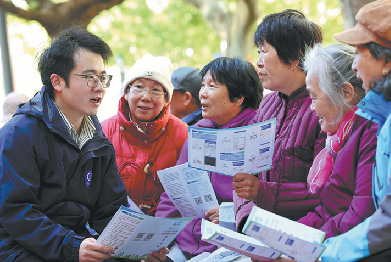
China has prioritized safeguarding the safety and well-being of its citizenry in recent years. The State Council Information Office said the 60-and-above population exceeded 310 million by end-2024, accounting for 22 percent of its citizenry. To address the expansion of the senior demographic, the recommendations for formulating the 15th Five-Year Plan (2026-30) — adopted at the fourth plenary session of the 20th Communist Party of China Central Committee — propose to “actively address population aging” and “develop the silver economy”.

 The silver economy carries great significance for the national economy. A report by the Institute on Aging at Fudan University estimates that by 2035, the size of the silver economy will reach 19 trillion yuan ($2.72 trillion), accounting for 28 percent of total consumption and nearly 10 percent of GDP. Better developing the silver economy can be realized through a series of practice approaches.

 Bolstering online learning

 Currently, a digital wave has influenced lifestyles among seniors. The 56th Statistical Report on China’s Internet Development said the number of internet users aged 60 and above had reached 161 million as of June 2025, accounting for 14.4 percent of all its internet users, and about half of seniors were using the internet. Enhancing the digital comfort level of seniors and helping them bridge the digital divide have gradually become key moves to achieve the goals of caring, supporting, entertaining and comforting them in the digital era.

 The Aging Lab at Beijing Normal University has conducted special research into online learning and the mental health of the silver-haired demographic. It showed that online learning can meet the basic psychological needs of older adults in three aspects: independent choice, competence improvement and social connections, helping them in improving their cognition, emotional and social health.

 Statistics show that by 2030, the market size of China’s senior education sector is expected to reach 1.2 trillion yuan. Internet platforms and various aspects of society need to continuously optimize aging-friendly design and learning support, and improve community interaction and emotional care mechanisms.

 Guiding senior consumption

 Seniors, especially retirees, once served in various posts with rich experiences, skills and untapped passion. Now most of them have more free time, and respectable spending power. Besides attending online studies, they can also engage in leisure travel. In addition to domestic tourism, expanding visa-free policies abroad also allow Chinese seniors to venture overseas. Data from the China National Committee on Aging show that the number of tourists aged 60 and above in China has accounted for over 20 percent of the total number of tourists, driving the silver tourism market to reach a scale of 1 trillion yuan.

 In addition, they are more economically free to buy goods and services. The China Internet Network Information Center said in its “Digital Consumption Development Report (2025)” that in the first half of 2025,China’s total digital consumption reached 9.37 trillion yuan. Data show that there are 117 million digital consumption users aged 60 and above, accounting for 12.2 percent of the total digital consumers. Rural digital consumers also reached 249 million, taking up 26 percent of the total.

 Guiding senior consumption habits is thus of immense significance in boosting the country’s economy. For example, Beijing Hongsong Online Technology Co Ltd has explored four core businesses — Hongsong APP, silver-haired interest learning, silver-haired culture and tourism, and silver-haired consumer products — to focus on older adult clients, and has drawn over 1 million paid users during the past few years.

 Enhance scitech innovation

 The recommendations for formulating the 15th Five-Year Plan propose to deepen the construction of a digital China and use artificial intelligence to lead the paradigm shift in scientific research. Using “AI+” and better science and technical innovations to promote internet learning and consumption can lead seniors’ total consumption to a higher level.

 With scitech advances in China, more tools such as robots can help relieve seniors from daily chores and healthcare related tasks, and give them more free time. The potential demand for smart-tech solutions for senior citizens in China is huge. The 11th Beijing International Aging Industry Expo, held between Oct 29 and 31, drew over 200 enterprises to showcase their solutions. A report from economic analyst CIC Consulting even estimated that China’s smart eldercare market hit some 11 trillion yuan by 2024.

 Meanwhile, better medications and advanced senior-adapted medical facilities should be advanced to aid older adults.

 Solving bottlenecks

 While most older adults can enjoy happy golden years, problems facing them are still lingering — such as burdens in caring the grandchildren and cooking, difficulties in obtaining medical treatment, and schemes meant to cheat seniors out of their cash savings. Moreover, as the aging demographic expands, the number of disabled and semi-disabled seniors is also rising, and how to tend to them has become a major challenge for older adults and their families.

 In developing the silver economy, bottlenecks facing seniors cannot be ignored, and need all-around solutions. This will involve the entirety of societal participation.

 Boosting older adults’ care services and industries can be bolstered through hardware (infrastructure and legal systems) and software (services).

 The Ministry of Civil Affairs said a senior-friendly social environment is improving nationwide in terms of social participation, safeguarding their legitimate rights and interests, and building an older-adults-friendly society. And during the 14th Five-year Plan (2021-25) period, the country had formed a comprehensive legal framework for older adults, covering such key areas as eldercare services and social security.

 For example, in Shanghai’s Pudong New Area, the area’s civil affairs bureau director Zhang Hong said the region is striving all out to develop its silver economy, and as of end-2024, its population aged 60 and above hit 1.13 million, with an aging rate of 33.47 percent. So it has established a comprehensive network involving institutions, communities and home-based eldercare services, with 182 eldercare institutions offering over 36,000 eldercare beds, and more than 2,000 community eldercare facilities, ranking first in Shanghai.

 In Guangdong province, the number of its permanent residents aged 60 and above hit 18.99 million by end-2024, with an aging rate of 14.86 percent. So the province has established a policy guarantee and social security system to ensure their sense of security, and promoted the coordinated development of industries in the public sector to support them.

 All these have helped to “actively address population aging” and “develop the silver economy”, and allow senior citizens to live longer, healthier and happier lives in China. By better developing the silver economy, the well-being and happiness of seniors in China can be largely enhanced.

 Peng Huamao is a professor at the Faculty of Psychology at Beijing Normal University; Xiao Junhua, a doctoral candidate at BNU Faculty of Psychology; and Wang Yang, a master’s candidate at BNU Faculty of Psychology.

 The views do not necessarily reflect those of China Daily.


Article inline ad