

BEIJING, April 27 (Xinhua) — Chinese stocks closed higher on Thursday, with the benchmark Shanghai Composite Index up 0.67 percent to 3,285.88 points.
The Shenzhen Component Index closed 0.28 percent higher at 11,217 points.
Article inline ad


BEIJING, April 27 (Xinhua) — The ChiNext Index, tracking China’s Nasdaq-style board of growth enterprises, gained 0.58 percent to close at 2,307.27 points Thursday.
The ChiNext Index, together with the Shenzhen Component Index and other indices, reflects the performance of stocks listed on the Shenzhen Stock Exchange.


Industrial firms with annual main business revenue of at least 20 million yuan (about 2.9 million U.S. dollars) saw their combined profits reach about 1.52 trillion yuan in the period, down 21.4 percent year on year, the NBS said.
In March alone, profits of major industrial firms declined 19.2 percent year on year, narrowing 3.7 percentage points from that in the first two months, said NBS statistician Sun Xiao.
The combined revenues of major industrial firms increased by 0.6 percent year on year, reversing a decline of 1.3 percent from January to February, as market demand recovered.
The equipment manufacturing sector witnessed a year-on-year increase of 5.4 percent in terms of revenue in March, while profit fell 7 percent, narrowing by 19.1 percentage points from that in the first two months.
Driven by rising production and sales, profits of automobile manufacturing firms climbed 9.1 percent in March, in sharp contrast to a decrease of 41.7 percent in the January-February period.
The power production and supply sector reported a profit increase of 41.9 percent in March from a year earlier, driven by the booming demand fueled by economic recovery.
Warming consumption helped consumer product firms achieve better profits. The profits of liquor, beverage and refined tea manufacturers surged by 39.9 percent year on year.
To accelerate the recovery of industrial profits, Sun urged efforts to expand market demand, perk up confidence and give enterprises reason to feel positive about the future.

BEIJING, April 27 (Xinhua) — Chinese stocks closed higher on Thursday, with the benchmark Shanghai Composite Index up 0.67 percent to 3,285.88 points.
The Shenzhen Component Index closed 0.28 percent higher at 11,217 points.
The combined turnover of stocks covered by the two indices stood at 1.04 trillion yuan (about 150.27 billion U.S. dollars), down from 1.12 trillion yuan on the previous trading day.
Shares in the Traditional Chinese Medicine and insurance sectors led the gains, while those related to Internet e-commerce and gaming saw heavy losses.
The ChiNext Index, tracking China’s Nasdaq-style board of growth enterprises, gained 0.58 percent to close at 2,307.27 points on Thursday.


Li Shulei, a member of the Political Bureau of the Communist Party of China (CPC) Central Committee and head of the Publicity Department of the CPC Central Committee, delivered a keynote speech at the opening ceremony.
Vice Chairman of the National Committee of the Chinese People’s Political Consultative Conference Leung Chun-ying also attended the event.
The two-day summit focuses on showcasing the latest achievements of the Digital China initiative, and on sharing experience in digital development.
Participants have the opportunity to witness remarkable progress in areas such as digital infrastructure, the digital economy and digital society at an exhibition dedicated to digital development.
A digital product expo, a digital innovation competition and a series of forums are also set be held during the event.
The summit is co-sponsored by the Cyberspace Administration of China, the National Development and Reform Commission, the Ministry of Science and Technology, the Ministry of Industry and Information Technology, the State-owned Assets Supervision and Administration Commission of the State Council, and the People’s Government of Fujian Province.


Public travel recovered significantly from January to March, with urban passenger traffic reaching 20.9 billion people, Su Jie, an official with the ministry, told a press conference.
“There are more and more cars on the road, and the flow of people has increased significantly,” Su said.
Freight volume reached 11.87 billion tonnes during the period, up 5 percent year on year. Cargo throughput of ports rose 6.2 percent from a year earlier to 3.85 billion tonnes, Su said.
Fixed-asset investment in the transport sector jumped 13.3 percent year on year to 720.5 billion yuan (about 104.11 billion U.S. dollars) in the first quarter.


The Kunming-Montreal Global Biodiversity Framework, aimed at reversing biodiversity loss and setting the world on a path of recovery, was adopted at the COP15, formally known as the 15th meeting of the Conference of the Parties to the UN Convention on Biological Diversity.
The framework has four long-term goals for 2050 and 23 action-oriented global targets over the decade to 2030. It seeks a harmonious coexistence between humans and nature by 2050.
To facilitate the implementation of the targets, China is formulating national biodiversity conservation strategies and action plans for the new era while optimizing policies related to biodiversity protection, Wang Zhibin, an official with the Ministry of Ecology and Environment, told a press conference.
The country is also working to establish a nature reserve system with national parks at its heart and build ex-situ conservation facilities such as zoos, botanical gardens, and ex-situ conservation centers, Wang said.
Efforts will be made to strengthen the investigation, monitoring, early warning, and control of invasive alien species in key areas and improve the management and control of invasive alien species, Wang noted.
The country will resolutely crack down on the illegal activities that damage the ecological environment and wildlife resources, said Wang, calling for public participation in biodiversity conservation.


The scale of China’s digital economy reached 50.2 trillion yuan (about 7.25 trillion U.S. dollars) in 2022, accounting for 41.5 percent of the GDP, said a report on digital China development released Thursday.
The report was issued by the Cyberspace Administration of China at the 6th Digital China Summit, which opened on Thursday in the city of Fuzhou in east China’s Fujian Province.
With the theme of “Accelerating the construction of digital China to promote Chinese modernization,” the two-day summit focuses on showcasing the latest achievements of the Digital China initiative, and on sharing experiences in digital development.
Participants have the opportunity to witness remarkable progress in areas such as digital infrastructure, the digital economy, and digital society at an exhibition dedicated to digital development. A digital product expo, a digital innovation competition, and a series of forums are also set to be held during the event.
The building of Digital China provides informational technology and resources to drive modernization, promote high-quality development, and will become an important engine for Chinese modernization in the digital era, said Wang Qinmin, head of the national experts panel on e-government affairs, at the opening ceremony of the summit.
As an important part of the Digital China Summit, the Digital Achievements Exhibition opened to the public at the same time in Fuzhou. This is the sixth consecutive time that the Chinese internet company Meitu participated in the exhibition. It presented an AI-generated content (AIGC) series of innovative products such as “AI painting”, “AI stick figures,” and “AI animation” in the exhibition.
As a new technology paradigm, AIGC has brought new enlightenment and broader creative space to the image digital industry.
Wu Xinhong, founder and CEO of Meitu Company, said that the company is continuously making efforts to improve its industrial service capability through the “AIGC +” mode, and will provide creative and efficient tools for practitioners engaging in animation design, game production, and shoes and clothing design.
According to public data, the penetration rate of AI painting in the field of image content generation will reach 10 to 30 percent in the next five years, and the market scale will exceed 60 billion yuan.
The deep integration of the digital economy and the real economy will enable the transformation and upgrading of traditional industries, create new industries and new business forms and models, and become a new engine for strengthening economic development, said Li Peigong, a professor with Shanghai Lixin University of Accounting and Finance.
Intelligent cutting machine, modern template machine, and jacking robot– Xin Hee Co., Ltd., located in China’s Xiamen city in Fujian and involved in the high-end women’s clothing market, actively embraces digitalization and promotes digital application and information reform.
In 2020, the company built an intelligent factory in Xiamen. By establishing an information and data collection and analysis system, the company can integrate, analyze and store terminal and market data, feedback to R&D and design, commodity planning, procurement, production, and other links.
Ye Daoren, manager of the technical department of the company, said that in order to meet the demand of the fast fashion and personalized market, the company introduced a new intelligent cutting bed for small orders last year.
“The intelligent cutting bed uses AR technology to present cutting information through electronic projection and has the functions of color separation and code separation, bar alignment, arbitrary positioning and cutting, automatic typesetting, and speed improvement. Compared with manual cutting, it can ensure accuracy, greatly improve production efficiency, and save cardboard, which is greener and more environment-friendly,” Ye Daoren said.
These figures and cases mirrored China’s constant efforts to promote economic digitalization.
China will accelerate the development of the digital economy and further integrate it with the real economy, according to the report to the 20th National Congress of the Communist Party of China.
In the past five years, the digital economy has consistently been mentioned in the Chinese government’s annual work reports. During this year’s “two sessions,” the country unveiled a momentous development that it will set up a national data bureau.
China has also rolled out a plan for the overall layout of the country’s digital development in February, vowing to make important progress in the construction of a digital China by 2025, with effective interconnectivity in digital infrastructure, a significantly improved digital economy, and major breakthroughs achieved in digital technology innovation.
By 2035, China will be at the global forefront in terms of digital development, and its digital progress in the economic, political, cultural, social, and ecological fields will be more coordinated and sufficient, according to the plan.
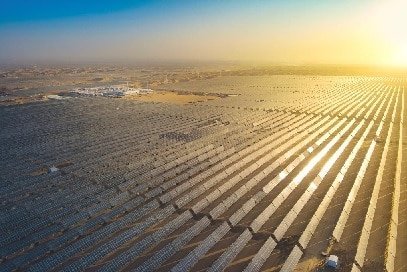
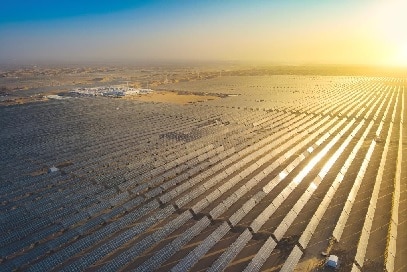 BEIJING, April 28 (Xinhua) — The first phase of a renewable power project in the Tengger Desert in northwest China’s Ningxia Hui Autonomous Region was connected to the grid and began generating power on Wednesday, according to the China Energy Investment Corporation (China Energy), the project’s operator.
The first phase of the China Energy project runs purely on photovoltaic power with an installed capacity of 1 million kilowatts, the company said.
It is expected to generate 1.8 billion kilowatt-hours of solar power each year, meeting the demand of 1.5 million households, according to the company.
It is the first one of China’s planned solar and wind power projects to be built in the Gobi Desert as well as other desert or arid areas in the country. The project was designed to run on wind and photovoltaic power, according to China Energy. It has a total installed capacity of 13 million kilowatts and an investment of over 85 billion yuan (about 12.28 billion U.S. dollars).
China plans to bring its combined wind and solar power capacity to 1.2 billion kilowatts by 2030, with power generated at large wind and photovoltaic power bases in the Gobi Desert as well as other desert or arid areas in the country totaling 455 million kilowatts.
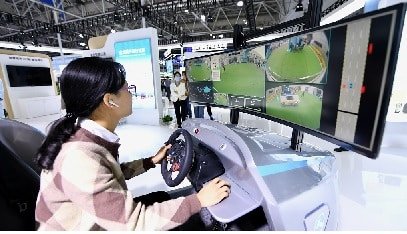

The share of the digital economy in the country’s GDP rose to 41.5 percent, according to the report on the development of China’s digital industry released at the ongoing 6th Digital China Summit.
By the end of 2022, China had put 2.31 million 5G base stations into operation, and the number of 5G users in the country had reached 561 million, accounting for more than 60 percent of the world’s total, the report said.
The 6th Digital China Summit opened on Thursday in the city of Fuzhou in east China’s Fujian Province. The two-day summit focuses on showcasing the latest achievements of the Digital China initiative, and on sharing experience in digital development.
The summit is co-sponsored by the Cyberspace Administration of China, the National Development and Reform Commission, the Ministry of Science and Technology, the Ministry of Industry and Information Technology, the State-owned Assets Supervision and Administration Commission of the State Council, and the People’s Government of Fujian Province.

Contact Us:
zhsailingaus@outlook.com
empireaus888@gmail.com
061 410 377 981

© copyright by Empire Business Pty Ltd