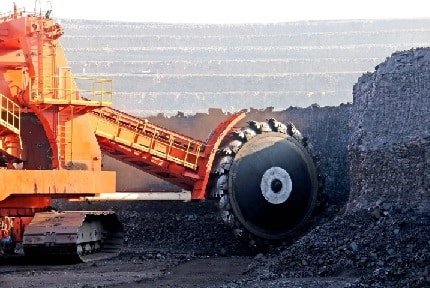
BEIJING, April 28 (Xinhua) — China’s energy consumption continued to rally in the first quarter of 2023, boosted by the country’s rising industrial power demand, a government official said Thursday.
Total electricity consumption increased 3.6 percent year on year in the first three months, Dong Wancheng, an official with the National Energy Administration, told a press conference.
Dong said that the electricity consumption for industrial use went up 4.4 percent from the same period in 2022, contributing 78 percent of the overall electricity consumption growth.
Coal consumption logged a steady increase driven by the rising industrial power demand in the first quarter, while the consumption of natural gas and refined oil had also reported an uptick since February, according to Dong.
To further meet domestic energy demand, China scaled up energy source imports. The imports of coal surged 96.1 percent year on year in the first quarter, Dong added.
BEIJING, April 28 (Xinhua) — Chinese stocks opened mixed on Friday, with the benchmark Shanghai Composite Index down 0.08 percent to open at 3,283.12 points.
The Shenzhen Component Index opened 0.1 percent higher at 11,228.46 points.
BEIJING, April 28 (Xinhua) — The ChiNext Index, tracking China’s Nasdaq-style board of growth enterprises, was up 0.09 percent to open at 2,309.35 points Friday.
The ChiNext Index, together with the Shenzhen Component Index and other indices, reflects the performance of stocks listed on the Shenzhen Stock Exchange.
BEIJING, April 28 (Xinhua) — The following are the central parity rates of the Chinese currency renminbi, or the yuan, against 24 major currencies announced on Friday by the China Foreign Exchange Trade System:
Currency Unit Central parity rate in yuan
U.S. dollar 100 692.40
Euro 100 763.61
Japanese yen 100 5.1723
Hong Kong dollar 100 88.206
British pound 100 865.04
Australian dollar 100 458.94
New Zealand dollar 100 425.54
Singapore dollar 100 518.62
Swiss franc 100 774.52
Canadian dollar 100 508.93
Malaysian ringgit 64.403 100
Ruble 1,180.31 100
Rand 264.29 100
Korean won 19,331 100
UAE dirham 53.039 100
Saudi riyal 54.171 100
Hungarian forint 4,886.92 100
Polish zloty 59.91 100
Danish krone 97.62 100
Swedish krona 148.63 100
Norwegian krone 153.33 100
Turkish lira 280.745 100
Mexican peso 260.55 100
Thai baht 492.80 100
The central parity rate of the yuan against the U.S. dollar is based on a weighted average of prices offered by market makers before the opening of the interbank market each business day.
The central parity rate of the yuan against the Hong Kong dollar is based on the central parity rate of the yuan against the U.S. dollar and the exchange rate of the Hong Kong dollar against the U.S. dollar at 9 a.m. in international foreign exchange markets on the same business day.
The central parity rates of the yuan against the other 22 currencies are based on the average prices offered by market makers before the opening of the interbank foreign exchange market.
BEIJING, April 28 (Xinhua) — The central parity rate of the Chinese currency renminbi, or the yuan, weakened 33 pips to 6.9240 against the U.S. dollar Friday, according to the China Foreign Exchange Trade System.
In China’s spot foreign exchange market, the yuan is allowed to rise or fall by 2 percent from the central parity rate each trading day.
The central parity rate of the yuan against the U.S. dollar is based on a weighted average of prices offered by market makers before the opening of the interbank market each business day.
BEIJING, April 28 (Xinhua) — China’s central bank continued to inject funds into the financial system through open market operations Friday.
The People’s Bank of China said it has conducted 165 billion yuan (about 23.83 billion U.S. dollars) of seven-day reverse repos at an interest rate of 2 percent.
The move aims to keep month-end liquidity in the banking system stable, according to the central bank.
A reverse repo is a process in which the central bank purchases securities from commercial banks through bidding, with an agreement to sell them back in the future.
BEIJING, April 28 (Xinhua) — China’s benchmark prices for spot interbank gold transactions were mixed Friday, according to the China Foreign Exchange Trade System.
The benchmark price for gold that is 99.95 percent pure or above stood at 445.64 yuan (about 64.36 U.S. dollars) per gram, down 0.04 yuan from the previous trading day, while the price for gold that is 99.99 percent pure or above went up 0.79 yuan to 446.72 yuan per gram.
Spot transaction prices on the interbank price inquiry market are allowed to rise or fall within 15 percent from the benchmark prices each trading day.
The interbank gold price inquiry business was introduced in 2012 to enhance market liquidity and enrich trading models.
BEIJING, April 28 (Xinhua) — China’s interbank treasury bond index in net price opened at 998.15 points Friday, higher than the previous close of 997.87 points, according to the China Foreign Exchange Trade System.
The index reflects real-time trading of treasury bonds in China’s interbank bond market.
The index opens at 9 a.m. on every workday and is updated every five minutes until closing at 5 p.m.
BEIJING, April 27 (Xinhua) — China’s remarkable progress in independent innovation has been characterized by the growing participation of women in the intellectual property (IP) industry. More Chinese women have utilized their innovative potential to target the science frontiers, serve the economy, and benefit people’s livelihoods.
Chinese women innovators have come under the spotlight as the theme of this year’s World IP Day, marked on April 26, focusing on “Women and Intellectual Property: Accelerating Innovation and Creativity.” Their stories are also a great interpretation of China’s rise in innovation around the globe.
FOR SCI-TECH SELF-RELIANCE
“Women prop up half the sky.” The famous Chairman Mao quote applies to modern China’s space exploration. Li Wenjing, at the China Aerospace Science and Industry Corporation, is one of the women scientists contributing wisdom to the country’s innovation.
The Long March-5 is a Chinese carrier rocket tasked with vital missions such as launching the Mars probe, lunar rover, and modules of the space station. In the developmental stages, one problem Li handled was a large amount of heat generated by engine gas pipelines that damaged interior electronic components. It necessitated scientists to figure out a method of preventing overheating conditions.
Li’s team came up with a high-efficiency heat-resistant material, but she found it very demanding. No previous studies applied for reference after reading a range of research papers at home and abroad.
“We had to make it from scratch,” Li said.
Thanks to their unremitting efforts, Li and her colleagues created a thermal insulation material and a preparation method to make it. The inventions won China’s gold patent award in 2018.
The success was repeated in creating materials for the Tianwen-1 Mars lander.
Like most career women, Li strives to balance family and work. She often regrets spending so little time with her children due to work. But responding to the country’s calls for tech self-reliance, the woman scientist is determined to contribute to developing more and more thinner and lighter materials for spacecraft.
FOR STRONG COMPETITION
Gree is a Chinese electric appliances giant with thousands of patent applications. Its chairwoman is Dong Mingzhu, who values and rewards innovation.
She said women are the backbone of the company’s innovative achievements, as female inventors accounted for more than 55 percent of Gree’s patent applications. She annually rewards employees for sci-tech contributions, and over 65 percent of winners are women.
Dong’s company has also actively joined the global competition through persistent R&D. Her company has filed nearly 5,000 patents in 35 countries and regions, such as Europe, the United States, and Japan, bringing a host of international accolades.
Dubbed “Iron Lady” in business circles, the 68-year-old entrepreneur is a national lawmaker, too. She has put forward many suggestions for IP protection, including stepping up efforts to crack down on patent trolls and malicious trademark filings.
“Stricter IP protection boosts Gree’s confidence in innovation. It is also an effective way to enhance the core competencies of Chinese manufacturers,” Dong said in an interview.
“We demand protection of proprietary technologies because it facilitates healthy competition in the industry and provides a solid foundation for iteration, upgrading, and breakthrough in technology. In other words, strict IP protection can encourage us to challenge ourselves to become more inventive and maintain our lead in technology R&D.”
She is always ready to accept new challenges. The entrepreneur jumped on the live-streaming bandwagon when the company’s offline sales were hampered by COVID-19. She promoted a range of product sales, including air purifiers and disinfectant generators, to help consumers keep their houses healthy.
FOR IMPROVING LIVELIHOODS
Like Dong, Liang Qianjuan is also an excellent live-streamer on E-commerce platforms. A farmer from Gansu Province, Liang is not a patent holder and did not make any significant inventions. But she has used IP to raise incomes of her own and others in her hometown.
Liang opened an online shop and promoted local agricultural products with geographical indications (GIs).
GI is a type of trademark to show a product has a specific geographical origin and possesses qualities or a reputation due to that origin. It is a quality guarantee, distinguishing them from their competitors.
Benefits of GIs include standardized processes, increased production, and more employment for locals.
Liang’s hometown is a remote village in Longnan with rich GI resources, such as green tea, olive oil, and apples.
Local government has spent efforts in obtaining GIs in recent years. More farmers are now involved in the production and marketing of GI products.
After a local olive oil was listed as a protected product of a national geographical trademark, the olive trees are now planted on over 34,000 hectares, benefiting over 210,000 local farmers. The output value reached 1.86 billion yuan (about 268.6 million U.S. dollars).
The GI also allows salespersons to share the brand benefits. The annual sales of Liang’s online shop have climbed from tens of thousands of yuan to more than 4 million yuan over the past ten years.
Due to the expansion of her online sales, she now has 300 local farmers supplying products. Her success has also encouraged others, and there are now thousands of live-streaming hosts selling local products online in her hometown.
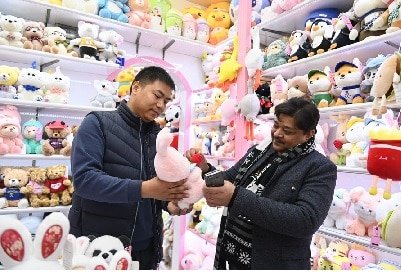
HANGZHOU, April 27 (Xinhua) — Yiwu, the world’s leading small commodities market in east China’s Zhejiang Province, saw both its imports and exports rise in the first quarter of this year.
The city’s total import and export value was 118.44 billion yuan (17.1 billion U.S. dollars) in the first three months of this year, a yearly rise of 11.4 percent, according to Yiwu Customs.
Exports increased 11 percent to 107.09 billion yuan during the period, and imports grew 15.6 percent to 11.35 billion yuan, the customs office said.
The average number of daily visits by foreign merchants have climbed 30.3 percent year on year, with local businesspeople saying the return of enthusiastic foreign buyers has contributed to the city’s export boom.
Cross-border e-commerce, the value of which jumped 111 percent on customs-monitored platforms in the first quarter, has also emerged as a key channel for local merchants to ink overseas deals.