Wednesday, November 25, 2026

Home Blog Page 109

China’s Central Bank To Conduct 1.1t Yuan Outright Reverse Repo Operation

0

Xinhua | Updated: 2026-01-08

BEIJING – The People’s Bank of China (PBOC), the country’s central bank, announced Wednesday that it will conduct a 1.1-trillion-yuan ($157 billion) outright reverse repo operation on Thursday to maintain ample liquidity in the banking system.

 The operation will be carried out with a fixed quantity through interest-rate bidding, with winning bids determined at multiple price levels and a maturity period of three months.

 As 1.1 trillion yuan of three-month outright reverse repos are set to mature in January, the latest move represents a rollover of the same amount.

 Wang Qing, chief macro analyst at Golden Credit Rating, believes that the move indicates a continuation of supportive monetary policy, which facilitates government bond issuance at the beginning of the year and helps financial institutions maintain the intensity of monetary and credit supply.

 Outright reverse repo operations – a tool the central bank introduced in October 2024 to manage liquidity in the national banking system – are carried out each month with a tenor of no more than one year.

 These operations have enriched the country’s monetary policy toolkit, complementing previous measures such as temporary repos, temporary reverse repos, and the buying and selling of treasury bonds.

Article inline ad

Private Pension Policy In Focus

0

Further refinement urged as way to boost wider participation, investments

By Jiang Xueqing | China Daily | Updated: 2026-01-08

Three years after its launch, China’s private pension system has made steady progress, with rising account participation, an increasingly diverse product lineup and broadly stable returns, but challenges remain in expanding public engagement, prompting experts to call for further policy refinement and improvements to the individual pension product framework.

 The private pension scheme was first launched on a pilot basis in 36 cities and regions, including Beijing and Shanghai, in November 2022. It was expanded to the entire country on Dec 15, 2024. Over the past three years, the system has undergone continuous upgrades, with the number of accounts surpassing 150 million and the number of products rising to 1,275.

 The private pension scheme is a supplementary pension program supported by government policies, joined on a voluntary basis by individuals, and operated in a market-oriented manner. It is based on individual accounts, with contributions fully borne by participants. The current annual contribution cap is 12,000 yuan ($1,717), and all workers covered by China’s basic pension insurance system are eligible to participate.

 Lou Feipeng, a researcher at the Postal Savings Bank of China, said the private pension scheme has encouraged residents to gradually shift from savings-based retirement planning to investment-based retirement planning, helping them accumulate personal pension assets and providing valuable experience for China in better preparing for population aging.

 Data from the national social insurance public service platform show that as of Wednesday, a total of 1,275 private pension products had been launched, including 466 savings products, 309 fund products, 463 insurance products and 37 wealth management products, either currently on sale or no longer available for purchase.

 Since the implementation of the private pension scheme, product types have become increasingly diverse, with steady growth in scale. However, feedback from investors indicates a mismatch between product supply and market demand. Lou noted that demand for low to medium-risk products is particularly strong, yet the number of wealth management products suitable for individual pension accounts remains limited, with pronounced product homogeneity.

 On Nov 21, the Ministry of Finance and the People’s Bank of China jointly issued a notice clarifying that starting in June 2026, savings treasury bonds (electronic) will be included in the scope of private pension products. Analysts said this expansion of the product pool will help establish a diversified supply structure covering savings, wealth management, insurance, funds and government bonds, enhancing the system’s coverage and attractiveness.

 BlackRock CCB Wealth Management and China Construction Bank jointly released a white paper on China’s pension finance on Oct 29. The white paper said the number of people who had opened private pension accounts exceeded 150 million as of June 15. However, among those account holders, the proportion of those who have actually made contributions and allocated funds to products remains relatively low, suggesting room to further enhance the system’s appeal.

 Dong Ximiao, chief researcher at Merchants Union Consumer Finance and deputy director of the Shanghai Institution for Finance & Development, urged fiscal, tax and financial authorities to roll out stronger support measures, including enhanced tax incentives and broader product access. He suggested that following the introduction of tax deferral policies for private pension products, the overall tax rate could be further lowered and investment caps on private pension accounts appropriately raised to attract more participants.

 Financial institutions, including commercial banks, insurance companies and fund managers, should also roll out more products tailored to investor needs, Dong said. In particular, banks should introduce more products from peer institutions and provide advisory services, giving investors a broader range of choices and encouraging greater willingness to invest after opening private pension accounts.

Article inline ad

Reits Signal Faster Shift In Realty Biz

0

By Zhou Lanxu | China Daily | Updated: 2026-01-08

China’s launch of a pilot program for commercial property real estate investment trusts (REITs) marks a substantive step toward building a new development model for the real estate sector, analysts said, as policymakers step up efforts to steer the industry away from debt-driven expansion and toward more sustainable, asset-light growth.

 Commercial property REITs are closed-end publicly offered securities investment funds that hold commercial real estate to generate stable cash flows and distribute returns to fundholders.

 On Dec 31, the China Securities Regulatory Commission released an announcement on rolling out a commercial property REIT pilot program, taking effect immediately, with the Shanghai and Shenzhen stock exchanges releasing supportive rules. Market participants can now submit applications for issuing commercial property REITs.

 Sources familiar with the matter said the initial phase of the pilot will proceed prudently, prioritizing quality over speed, and maintaining strict standards for issuance, compliance and risk management.

 Priority will be given to commercial complexes, retail properties, office buildings and hotels, while other property asset categories — such as long-term rental housing units — will not be excluded. Project reserves are considered relatively ample, with overall quality assessed as solid, the sources said.

 Analysts said the pilot launch marks more than the introduction of a new asset class — its deeper significance lies in reshaping the real estate sector’s business model, which has long relied on high debt, high leverage and rapid turnover.

 By providing financing for the operation of income-generating commercial properties, the analysts said REITs will encourage property companies to shift away from asset-heavy real estate development toward asset-light, operations-focused business models.

 Equally important, as equity-based instruments, REITs will enable developers to obtain funding without increasing debt, and thus lower their balance-sheet leverage, in addition to improving their liquidity condition and cash-flow stability by converting illiquid commercial properties into publicly traded financial products.

 Zhang Zheng, a professor and vice-dean at Peking University’s Guanghua School of Management, said the launch of commercial property REITs responds to longstanding market demand.

 “Commercial property needs to shift from extensive expansion to efficient investment and refined operations, and from an asset-heavy model toward a more balanced mix of light and heavy assets,” Zhang said. “That transition requires suitable financial instruments, and REITs are the most important.”

 The timing of the pilot also reflects deeper structural changes highlighted in a recent commentary in Qiushi Journal, a flagship magazine of the Communist Party of China Central Committee.

 The commentary underscored that while China’s real estate market is undergoing profound adjustments, the sector remains important to the national economy and a major source of household wealth.

 It called for an overhaul of the real estate development model, encouraging developers to accelerate the shift away from a model centered on new home sales toward holding income-producing properties and the provision of quality, diversified services.

 Taken together, the latest developments underscore China’s firm resolve to advance a new development model for the real estate sector, stabilize and improve market expectations for the sector, and guide the industry toward more resilient and sustainable path, analysts said.

 The launch of the pilot marks a new phase for China’s REIT market as well, with commercial property and infrastructure REITs developing in parallel. As of Dec 27, a total of 78 infrastructure REITs had been listed in China, with a combined market capitalization of 219.9 billion yuan ($31.5 billion), official data showed.

 Looking ahead, the CSRC said it will expand REIT-related indices, support fund managers in developing index-linked products, step up efforts to guide long-term institutional capital into the REIT market, and promote the inclusion of REITs in stock connect programs.

 Supportive rules specify that proceeds raised through commercial property REIT issuances should not be used to purchase land for commercial residential housing. They also introduce more market-oriented return requirements linked to the yield on 10-year government bonds.

 zhoulanxv@chinadaily.com.cn

Article inline ad

Jpmorgan Secures General Lead Underwriting License In China

0

By Jiang Xueqing | chinadaily.com.cn | Updated: 2026-01-07

JPMorgan Chase Bank (China) Company Limited announced on Wednesday that it has recently received the general lead underwriting license for non-financial enterprise debt financing instruments, granted by the National Association of Financial Market Institutional Investors. JPMorgan said the approval marks a new breakthrough in the development of its bond business in China.

 “Obtaining the general lead underwriting license will further broaden and deepen our services for both onshore and offshore issuers and investors,” said Celine Xiong, president of JPMorgan Chase Bank (China) Company Limited. “It will enable us to better leverage the dual strengths of our global resources and local expertise to serve clients, continue to help promote the internationalization and inclusiveness of China’s capital markets, and enhance the pricing influence and resource allocation efficiency of China’s capital markets within the global financial system.”

 In recent years, China’s bond market has continued to expand, achieving a dual leap in both scale and quality. As of the end of November 2025, foreign institutions held 3.61 trillion yuan ($516.24 billion) in bonds within the China interbank bond market, with 1,187 overseas institutions participating, underscoring the growing importance of China’s bond market as an important destination for global capital.

 JPMorgan noted that it is well positioned to serve as a connector between onshore and offshore markets. On one hand, the firm provides diversified and internationalized bond financing solutions for Chinese companies to support the real economy. On the other hand, it helps global investors to navigate and engage with China’s bond market, optimizing the investor structure and further raising the market’s internationalization.

Article inline ad

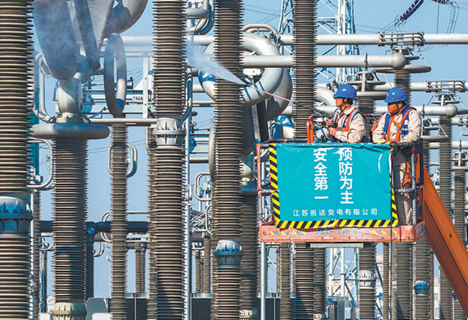
UHV Corridors Set To Scale Up Nation’s Power Transmission Capacity

0

By Zheng Xin | China Daily | Updated: 2026-01-07

China is set to significantly expand its cross-country power transmission capacity to 420 gigawatts by 2030, the National Energy Administration said, as the world’s second-largest economy advances the strategic modernization of its electrical grid to harness a massive influx of renewable energy.

 The ambitious target is part of a strategic roadmap to build a “new power system” that is clean, secure and efficient, it said.

 Before 2030, China aims to have non-fossil fuel sources account for roughly 30 percent of its total electricity generation, supported by a grid capable of integrating 900 GW of distributed solar and wind power.

 The NEA noted that China’s grid has already evolved into the world’s largest and most advanced network in terms of transmission capacity, voltage levels and renewable integration.

 West-to-east transmission capacity in China was 340 GW in 2025, meeting approximately 23 percent of the nation’s peak demand in 2025, it said.

 Beyond sheer scale, the 2030 plan emphasizes “inter-provincial mutual aid”, with an additional 40 GW of capacity dedicated to sharing power between provinces during peak loads or weather-driven shortages.

 The government also plans to support the rollout of over 40 million electric vehicle charging units, integrating the transport sector into the broader energy ecosystem.

 “The grid is evolving from a traditional one-way transmission network into a multi-directional, hybrid structure,” said Zhang Lin, director of planning and development at the China Electricity Council.

 Strengthening the interaction between the backbone grid, distribution networks and microgrids is essential for supporting new energy business models and ensuring they can participate equally in power markets, said Zhang.

 State Grid Corp of China, the nation’s primary utility, said its fixed-asset investment rose to a record high of around over 650 billion yuan ($93.08 billion) in 2025. This brings total investment during the 14th Five-Year Plan (2021–25) to more than 2.85 trillion yuan, it said.

 Industry experts believe ultrahigh voltage technology serves as the critical “super-highway” system that enables China to reconcile the massive geographical gap between its western energy bases and eastern demand centers.

 By scaling up transmission capacity by 2030, UHV corridors will act as the primary conduit for the country’s vast wind and solar resources, particularly those located in remote Gobi and desert regions, they say.

 Ye Xiaoning, a senior engineer at the new energy department of the State Grid Energy Research Institute, noted that China’s continuous commitment to grid modernization and transmission expansion has fundamentally enhanced the country’s ability to balance and optimize renewable energy assets on a national scale.

 China recently broke ground on an ultra-high voltage transmission project, a key green artery designed to transmit massive amounts of renewable energy from the western parts of the Inner Mongolia autonomous region to the industrial heartland of Beijing, Tianjin and Hebei province.

 The 17.2 billion yuan project, spanning 700 kilometers with a transmission capacity of 8 million kilowatts, is expected to be put into operation by 2027, said its operator, State Grid Corp of China.

 The national strategy is also yielding results in the southern parts of the country. China Southern Power Grid reported that its west-to-east transmission volume hit a record 261.5 billion kilowatt-hours in 2025, up 31 billion kWh from 2020.

 Over the past five years, CSG’s cross-regional channels delivered a cumulative 1.14 trillion kWh, effectively replacing 330 million metric tons of coal and preventing 860 million tons of carbon dioxide emissions.

 To safeguard energy security, utilities are moving toward market-oriented frameworks. This includes organizing flexible mid-to-long-term inter-provincial trading and routine power exchanges across different operating zones.

 The NEA added that it will continue to prioritize the construction of cross-provincial transmission corridors, optimize the structure of the main backbone grid, and develop intelligent microgrids tailored to local conditions.

 zhengxin@chinadaily.com.cn


Article inline ad

Real Estate Stabilization Key Objective

0

By Wang Keju | China Daily | Updated: 2026-01-07

China is likely to roll out more forceful measures to stabilize its real estate sector in order to reinforce market confidence and prevent a sustained decline in property values from further dampening consumption, analysts said.

 Their comments came after Qiushi Journal, a flagship magazine of the Communist Party of China Central Committee, published a commentary in its first issue of 2026, stressing that real estate policies must be introduced in “a decisive and comprehensive manner”, rather than employing a piecemeal “drip drip” rollout.

 The article, entitled “Improving and Stabilizing Real Estate Market Expectations”, reaffirms the property sector’s dual role as a “key component of household wealth” and a “cornerstone of the national economy”.

 “A sustained downturn in the property market extends beyond affecting developers and local government finances. It ripples through the household economics of millions,” said Robin Xing, chief China economist at Morgan Stanley.

 Xing said that residential real estate constitutes a substantial share of household wealth in China. When property values fall, homeowners perceive a palpable reduction in personal net worth, which undermines financial confidence, fueling precautionary saving and cooling consumption.

 By strengthening macro-regulation of the real estate market with more forceful and targeted measures, the Qiushi article said that China could improve and stabilize market expectations, shorten the adjustment period as much as possible and tamp down market fluctuations.

 Market watchers said that reducing housing inventory has become the most pressing priority for stabilizing China’s real estate market, requiring support from a broader and more diverse set of policy tools.

 Speaking at a national conference in late December, Minister of Housing and Urban-Rural Development Ni Hong said authorities will implement a targeted, city-by-city approach to manage new housing supply and reduce existing housing inventory.

 Shanghai-based E-House China R&D Institute said the time needed to unload existing new housing inventory in 100 major cities reached 27.4 months in November — nearly twice the 14-month period widely regarded as a healthy upper limit.

 Analysts expect supportive policies — such as further relaxation of home purchase restrictions, easing financial burdens on homebuyers and government-led purchases of existing properties for conversion into affordable housing — to be unveiled at a faster pace.

 Wang Qing, chief macro analyst at Golden Credit Rating International, suggested that further easing of homebuying restrictions in inner ring areas of Beijing and Shanghai could be considered.

 Wang expects that more sought-after property markets in these major cities serve as important national barometers. Their stabilization would likely create a positive ripple effect, helping to anchor expectations and guide sentiment in smaller cities facing greater market pressure.

 “More importantly, measures such as targeted cuts to existing mortgage rates and fiscal interest subsidies should be rolled out to ease the burden of housing loans for households,”Wang said. “That is crucial for stimulating demand and shifting market sentiment at this stage.”

 Ni, with the top housing regulator, said the government will “increase the supply of government-subsidized housing to create a safety net for eligible low-income urban families, while implementing city-specific policies to meet the basic housing needs of groups — including new urban residents and young people.”

 Yuan Haixia, dean of the research institute at China Chengxin International Credit Rating, said that with China’s urbanization rate still roughly 15 percentage points lower than the 80 percent level typical of advanced economies, ongoing rural-to-urban migration is expected to underpin long-term demand in the property sector.

 This shift, Yuan said, has created huge new urbanites — both migrants and recent city dwellers.

 “The scale of their housing needs is significant,” she said. “While it remains important to encourage homeownership through the commercial market, it is equally crucial to supply around 100 million units of government-subsidized housing to meet the needs of this key demographic.”

 wangkeju@chinadaily.com.cn

Article inline ad

Major East China Port Handles 1.4b Tons Of Cargo In 2025

0

Xinhua | Updated: 2026-01-06

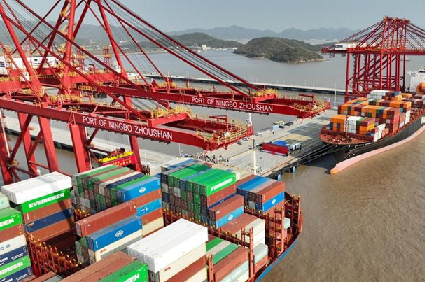
HANGZHOU – The Ningbo-Zhoushan Port in East China’s Zhejiang province saw its cargo throughput surpass 1.4 billion tons in 2025, ranking first globally in terms of annual cargo throughput for the 17th consecutive year, according to the port.

 The port’s capacity was significantly boosted by the robust performance of its two major container terminals and transfer terminal, the port said on Monday.

 Notably, the Tiaozhoumen Channel, the port’s second 300,000-ton deep-water channel, started operations in December 2025.

 As a key hub of the 21st Century Maritime Silk Road, the Ningbo-Zhoushan Port has continued to expand its global reach. By the end of 2025, the port had offered more than 300 container shipping routes linking over 700 ports in more than 200 countries and regions.

 Zhejiang, an economic powerhouse on China’s eastern coast, has in recent years rolled out an action plan to enhance the competitiveness and global influence of its Ningbo-Zhoushan Port.

Article inline ad

BOC Powers Global Expansion With Tailored Financial Support

0

By Yuan Shenggao | China Daily | Updated: 2026-01-06

From tea brands popular in Southeast Asia and new energy vehicles thriving in Europe, to infrastructure construction in Latin America and energy investments across Africa, the globalization of Chinese companies is reaching new levels.

 As a Chinese bank with strong globalization advantages and distinctive integrated capabilities, Bank of China, or BOC, provides all-around financial support for companies expanding overseas via platform services characterized by “global expertise accessible at any point of contact”. By combining “financing plus intelligence”, it has helped enterprises address many practical challenges, according to the bank.

 New paradigm

 On Oct 6, 2025, the Hong Kong Special Administrative Region government officially launched the GoGlobal Task Force initiative. The path for Chinese mainland enterprises to expand overseas through Hong Kong as a bridgehead has become much clearer, experts said. At the time, the corporate finance department at Bank of China (Hong Kong) was finalizing key procedures for a Guangdong province-based company to build a factory in Vietnam.

 Recently, a BOC (Hong Kong) executive shared financial solutions for supporting enterprises’ internationalization at the “Hong Kong — The Ideal Platform for Mainland Enterprises in Going Global” Promotion Conference, effectively assisting the Hong Kong government’s GoGlobal Task Force initiative in its first large-scale promotional event held on the Chinese mainland.

 This also reflects BOC’s continuous service upgrades in response to new demands from businesses expanding overseas, according to the bank.

 A white paper on serving enterprises going global, released by BOC, noted that optimizing global resource and element allocation, enhancing long-term local operational capabilities, and ensuring the safety of overseas assets and rights are currently the three core needs for companies expanding abroad.

 With a long history of international operations and a wide global service network, BOC has built a comprehensive service ecosystem covering the entire life cycle, supporting enterprises as they extend industry chains overseas and integrate more deeply with local markets through tools such as project financing, trade financing and global cash management.

 CMOC based in Henan province is a typical BOC client in terms of supporting enterprises going global. During a downturn in commodity prices, CMOC acquired Tenke Fungurume Mining and transformed itself into a copper-cobalt resource enterprise. Reflecting on the acquisition process, an executive from CMOC’s funds management department said that apart from the initial commercial feasibility study and geopolitical risk assessments, the project’s success relied heavily on financial services, including funding support, cross-border payments and foreign exchange management.

 “A crucial part of the acquisition was securing sufficient financial support. CMOC, which focuses on stable operational development, pays close attention to balance sheet management and cash flow control. Therefore, major overseas project investments require sound financial planning,” the executive said, adding that the company’s first overseas project was supported by a syndicated loan led by BOC.

 This is attributable to BOC’s strong capabilities and global service advantages, experts said. BOC is a highly globalized Chinese bank, with institutions covering 64 countries and regions, including 45 countries involved in the Belt and Road Initiative. It has achieved coverage of international financial centers, G20 member countries, 10 ASEAN countries and members of the Asia-Pacific Economic Cooperation, providing enterprises with services characterized by “global expertise accessible at any point of contact”.

 By the end of June 2025, BOC had followed more than 1,300 corporate credit projects in BRI-related countries, providing credit support exceeding $400 billion.

Full chain

 As the BRI advances and global industry chain layouts undergo deep adjustments, major cross-border projects have become an important strategic pillar for enterprises participating in international competition and cooperation, experts said. Such projects typically feature large investment scales, multiple participants, long construction periods and complex cross-border operations, placing high demands on project funding arrangements, risk management and sustainable operations.

 Government efforts to improve the institutional environment supporting enterprises going global are ongoing. From nationally overall planning to departmental collaboration, a series of intensively issued measures are constructing a multi-level, full-chain support system for companies expanding overseas.

 BOC understands these dynamics and provides high-quality full-chain services for enterprises developing abroad. It has implemented national strategies, supported centrally administered State-owned enterprises going global and collaborated with private businesses. According to the bank, regardless of the nature of the enterprise or the size of the project, every case it served demonstrates its platform advantages of “global expertise accessible at any point of contact”, its ability to break down information barriers and the effectiveness of facilitating cross-border financial flows.

 In Peru, the Chancay Port is a key project under China-Peru cooperation within the BRI and the first smart port in South America. To support joint BRI development, BOC has provided comprehensive financial services for the project.

 During the preparation phase, the bank overcame challenges including diverse stakeholders, tight timelines and complex transaction structures. As the lead bank, it organized a syndicated loan for project construction. During the construction phase, BOC continued to offer services such as financial consultation and cross-border settlement, ensuring timely completion. Ahead of the port’s operation, BOC assessed follow-up financial needs including working capital and settlement services, approved comprehensive credit limits, and signed a cooperation memorandum with the project company to support subsequent operations.

 A centrally administered nuclear power SOE has expanded its overseas energy business in recent years, aiming to become a globally competitive, world-class clean energy group. The company uses Hong Kong as its regional management and fund operation center, extending its reach to Southeast Asia and global markets.

 Through an integrated service mechanism, BOC (Hong Kong) and Southeast Asian institutions facilitated multiple syndicated loans, bridge loans and refinancing projects, and established a global cash management platform for the enterprise, significantly improving its fund utilization efficiency and risk management capabilities, according to BOC.

 A Zhejiang province-based appliance company encountered multiple challenges during its first expansion into Thailand. BOC’s Zhejiang branch, in collaboration with the Thailand subsidiary, provided the company with detailed information on Thailand’s economic development plans, investment policies, tax incentives, labor regulations, export systems and approval procedures. The bank also assisted with foreign exchange capital account opening and remittance services, delivering one-stop financial solutions.

Article inline ad

Simcere Eyes Growing Pharmaceutical Niche

0

By Zhong Nan | China Daily | Updated: 2026-01-06

Simcere Pharmaceutical Group Ltd, a Nanjing, Jiangsu province-headquartered drugmaker, plans to expand its global presence over the next five years, sharpening its focus on neuroscience, oncology and other core therapies to tackle major unmet medical needs, notably neurodegenerative diseases, said a senior executive.

 The company, with more than 6,500 employees globally, has identified central nervous system conditions — including strokes, insomnia, Alzheimer’s disease and Parkinson’s disease — as among the largest unmet medical needs in China, where patient demand remains substantial.

 Zhou Gaobo, Simcere’s chief investment officer, said while a number of innovative therapies are already available overseas, China still has relatively few homegrown innovations in this field, making the development of truly novel drugs both challenging and resource-intensive.

 As part of its strategy to introduce globally innovative medicines to the domestic market, Simcere partnered with pharmaceutical companies from Europe and the United States in recent years, bringing several therapies into China.

 The company secured approval in June from China’s National Medical Products Administration for Quviviq, a sleep medication owned by Swiss biotech firm Idorsia Ltd, for adult patients with insomnia characterized by difficulties with sleep onset or maintenance.

 Simcere also reached an agreement with Idorsia to update the terms of the licensing arrangement for Quviviq in China, further strengthening the partnership and supporting the drug’s commercial rollout in the domestic market.

 Julien Gander, executive vice-president and chief legal and corporate development officer at Idorsia, said China has always been a key market for the Swiss company, and its role is becoming increasingly critical.

 “Beyond being one of the world’s largest pharmaceutical markets, China has become an increasingly dynamic environment for scientific innovation,” said Gander, noting that the speed of clinical development, the quality of infrastructure and the capability of local teams are all critical factors that make the country a priority market.

 As 2025 marked the 75th anniversary of the establishment of diplomatic relations between China and Switzerland, he said that the partnership between Idorsia and Simcere illustrates how win-win cooperation can be achieved.

 Similar views were expressed by Martine Clozel, Idorsia’s executive vice-president and chief scientific officer. “We have long cooperated with Chinese partners across multiple stages of drug development — from sourcing building blocks and preparing for preclinical work to advancing into clinical trials,” Clozel said.

 “This is not new to us,” she said.” What is new is the acceleration of activity in China, which has now become truly significant. For instance, the production of Quviviq in China can have global implications — and that is something we greatly value.”

 Zhou from Simcere said that in addition to staying firmly committed to its dual-track strategy of strategic partnerships and in-house research and development, the company will continue to scout globally for high-quality assets — particularly late-stage candidates — and seek development and commercialization rights in China.

 Beyond running a raw material medicine base in Jiangsu, the company also manufactures preparation products in Hainan province.

 Zhou said the rollout of island-wide special customs operations at Hainan Free Trade Port in mid-December will unlock new opportunities for deepening economic and technical cooperation between Chinese firms and multinational companies, especially in the areas of healthcare, manufacturing and business services.

 Over the past five years, Simcere has consistently invested about 25 to 30 percent of its annual revenue in research and development, with total innovation spending approaching 9 billion yuan ($1.28 billion).

 The investment has covered both in-house innovation and significant expenditures related to the in-licensing of overseas products. It has also included early-stage research outlays abroad, such as the establishment of the company’s innovation center in Boston, the US, as part of its broader drive to strengthen global innovation capabilities.

 Between 2016 and 2020, the Chinese pharma firm launched one innovative drug, while seven were brought to market between 2021 and 2025, highlighting an acceleration in innovation and development output.

Article inline ad

Nation Accelerates Move Toward Low-Carbon Growth

0

By ZHONG NAN | China Daily | Updated: 2026-01-07

China will intensify efforts to advance green consumption and accelerate the transition toward low-carbon growth, while expanding the use of high-efficiency products, strengthening recycling systems and fostering new consumption drivers across key sectors, government officials said on Tuesday.

 They made the remarks after China released a nationwide action plan on Monday aimed at advancing green consumption by expediting the green transition of consumption and supporting high-quality growth.

 The plan, jointly issued by the Ministry of Commerce and eight other government departments, outlines 20 policy measures across seven key areas to strengthen incentives for green consumption, covering sectors such as agricultural products, home appliances and accommodation services. It also details financial and other supporting policies to improve the environment for green consumption.

 Speaking at a news conference in Beijing, Vice-Minister of Commerce Sheng Qiuping said the initiative will help expand the adoption of green consumption practices and accelerate the shift toward low-carbon production and lifestyles.

 “It places priority on improving the quality supply of essential goods and services, calling for greater availability of green agricultural products and broader use of energy-efficient home appliances,” said Sheng.

 From 2024 to 2025, consumers in China replaced 18.3 million vehicles under the country’s auto trade-in program, with new-energy vehicles accounting for nearly 60 percent of the total, statistics from the Ministry of Commerce show.

 Over the same period, a total of 192 million household appliances were upgraded through trade-ins. Altogether, the policy drove 3.92 trillion yuan ($561.34 billion) in consumer goods sales.

 Li Jialu, director of the department of circulation industry development at the Ministry of Commerce, said that in the next stage, the government will boost the development of greener, smarter and more specialized sorting centers and encourage local governments to provide policy support for their development and upgrading.

 He added that more recyclable resources will be guided to flow into these facilities, helping drive the high-quality development of the recycling industry.

 Under the action plan, the government will also facilitate the deeper integration of artificial intelligence with green consumption, fostering the development of smart products and new application scenarios.

 Eager to capture a bigger share of the green consumption market, Asia Vital Components (Dongguan) Co Ltd, a manufacturer of computer cases, servers and cooling fans in Dongguan, Guangdong province, will add new production lines to upgrade operations and expand into emerging areas such as advanced liquid-cooling solutions for cloud-based AI data centers this year, according to information from Huangpu Customs in Guangdong.

 Xiao Jinfeng, the company’s sales manager, said liquid-cooling systems can significantly improve heat-dissipation efficiency, reduce overall power consumption in data centers and enable high-density AI computing with a smaller environmental footprint.

 “Green consumption will reshape demand and create new opportunities,” said Xiao. “By upgrading toward energy-efficient, low-carbon products, we can strengthen our competitiveness both at home and abroad.”

 zhongnan@chinadaily.com.cn

Article inline ad