Wednesday, November 25, 2026

Home Blog Page 110

Decade-Plus High For Key A-Share Index

0

Run reflects continued investor interest in innovation-driven sectors

By SHI JING in Shanghai | China Daily | Updated: 2026-01-07

The recent gains in China’s A shares highlight the growing role of the country’s capital market in supporting high-tech and innovative companies, and fostering new quality productive forces, while the resulting wealth effect is expected to bolster investor and household confidence and stimulate domestic consumption, experts and market observers said.

 The benchmark Shanghai Composite Index extended its rally on Tuesday, touching the highest level since July 2015.

 The index rose 1.5 percent on Tuesday to close at 4,083.67 points. The Shenzhen Component Index gained 1.4 percent, while the tech-heavy ChiNext Index climbed 0.75 percent, reflecting continued investor interest in growth-oriented and innovation-driven sectors.

 Analysts said positive factors — including potential capital inflows from both domestic and foreign institutional investors, government efforts to stabilize the economy and support the private sector, as well as development of innovative technologies like artificial intelligence — would continue to support the upward momentum of the A-share market this year.

 Insurers, which are deemed as “flag bearers” of a bullish market, contributed the most to the Tuesday market gains by reporting the highest 4.22 percent increase on average. This was an encore performance to their average 6.72 percent surge the day prior.

 Lu Zhe, chief economist of Soochow Securities, said that more insurance capital is expected to flow into the A-share market as bullish performance continues. Together with the influx of mutual fund capital at the beginning of the year, market liquidity will be better supported, Lu said.

 More technologically advanced companies will enter the capital market by riding the current bullish tide, said Yang Delong, chief economist of First Seafront Fund. By acquiring enough financing, future tech industry leaders may be nurtured, bolstering the implementation of China’s AI Plus Initiative, Yang said.

 Experts from China Merchants Securities further explained that more semiconductor, AI, quantum computing, commercial spaceflight and biomedicine counters will float on the A-share market during the 15th Five-Year Plan (2026-30) period.

 Standard Chartered Wealth Solutions Chief Investment Office said they are overweight on Chinese stocks this year, partly because the country said in the 15th Five-Year Plan proposal it would speed up investment in advanced technologies to further elevate national self-reliance and productivity.

 An equity financing investment and financing system led by investment banking and rooted in the capital market should play a bigger role during the 15th Five-Year Plan period. It is not only conducive to advancing scitech innovation, but also helps increase people’s property-based incomes, said Liu Jipeng, a senior expert on the capital markets and a professor at the Business School of China University of Political Science and Law.

 Liu said the A-share market will eventually shift from a retail-dominated market to one led by institutional investors, allowing households to better build their wealth via institutional investors such as corporate annuities, the social security fund and mutual funds.

 Economist Ren Zeping said A-share market value expanded from less than 70 trillion yuan to over 100 trillion yuan last year. Such enhanced wealth will help tidy up household balance sheets. Consumption recovery can be anticipated amid such a wealth effect.

 Zhou Lanxu, Jiang Xueqing and Zheng Yiran contributed to this story.

 shijing@chinadaily.com.cn

Article inline ad

China Curbs Dual-Use Item Exports To Japan

0

By WANG KEJU | CHINA DAILY | Updated: 2026-01-07

China announced on Tuesday an immediate ban on exporting dual-use items to Japan, in response to Japanese Prime Minister Sanae Takaichi’s erroneous remarks hinting at the possibility of military intervention in the Taiwan Strait.

 These remarks “constitute gross interference in China’s internal affairs, seriously violate the one-China principle, and are extremely egregious in both nature and impact”, a spokesperson for the Ministry of Commerce said on Tuesday.

 In order to safeguard national security and interests, as well as fulfill international nonproliferation obligations, China decided to strengthen control over dual-use item exports to Japan, the ministry said in its first announcement of the year.

 Dual-use items refer to products, software and technologies that have legitimate civilian uses, but can also be adapted for military purposes, such as the development of weapons of mass destruction or the enhancement of conventional military capabilities. The list covers items from chemicals and drones to high-tech computers and software.

 The country prohibits the export of all dual-use items to Japanese military users, for Japan’s military use, and for any other end-users and end-use purposes that help enhance Japan’s military capabilities, according to the announcement.

 Stringent export controls and licensing requirements for dual-use items represent an established international norm.

 The United States’ Export Control Reform Act and the European Union’s Dual-Use Regulation, for instance, mandate that the export of sensitive technologies or materials, including those with potential military applications, must be subject to proper licensing and authorization procedures.

 China is also considering tightening export permit reviews for certain rare earth-related items to Japan, due to Takaichi’s recent erroneous remarks on Taiwan and her continued refusal to retract them, a source familiar with the matter told China Daily on Tuesday.

 On April 4 last year, the Ministry of Commerce, along with the General Administration of Customs, issued an announcement on export control measures for seven categories of medium and heavy rare earth-related items — samarium, gadolinium, terbium, dysprosium, lutetium, scandium and yttrium.

 According to Tokyo-headquartered Nomura Research Institute, heavy rare earths such as dysprosium and terbium, used for electric vehicle motors in Japan, are almost 100 percent sourced from China. Any restrictions on those supplies would pose significant challenges to the Japanese economy.

 The institute estimates that if China’s restrictions on rare earth exports to Japan were to last for three months, it would result in losses of about 660 billion yen ($4.2 billion), reducing nominal and real GDP by 0.11 percent annually. If the restrictions continued for a year, losses could reach about 2.6 trillion yen, leading to a 0.43 percent decline in both nominal and real GDP as noted by the institute.

 Beijing has sent Tokyo a clear message that it cannot expect to continue benefiting from China’s vast market and resources while challenging China’s core interests, said Chen Wenling, former chief economist at the China Center for International Economic Exchanges.

 “The one-China principle and noninterference in China’s internal affairs form an unbreachable prerequisite for China-Japan cooperation,”Chen said.

 Tetsuro Homma, executive vice-president of Panasonic, said that China is not only a consumer market or a manufacturing powerhouse, but also an innovation and engineering hub.

 “For Japanese companies, strengthening collaboration with Chinese supply chain partners is crucial. It enables us to deliver quality products to global consumers at more competitive prices,”Homma said.


Article inline ad

Asian Financial Forum To Debut Global Business Summit In Hong Kong

0

Xinhua | Updated: 2026-01-06

HONG KONG – The 19th Asian Financial Forum will be held on Jan 26 and 27 in Hong Kong, featuring the inaugural Global Business Summit that spotlights the deep integration of finance and the real economy, the Hong Kong Trade Development Council (HKTDC) said on Monday.

 Co-organized by China’s Hong Kong Special Administrative Region government and the HKTDC, the forum is expected to attract over 3,600 participants from around the world. Under the theme “Co-creating New Horizons Amid an Evolving Landscape,” the forum will bring together over 100 global business and political leaders and financial experts to analyze geopolitical shifts and macroeconomic trends.

 HKTDC Chairman Frederick Ma said that the Global Business Summit will expand the conversation beyond financial topics to the core of the real economy, aiming to unlock the potential of high-value industries and drive a wave of innovation for stronger economic growth.

 Maggie Ng, chairperson of the Asian Financial Forum Steering Committee and HSBC Hong Kong’s chief executive officer, said that participants of this year’s forum will engage directly with industry leaders driving transformation across technology, consumer, healthcare, and finance sectors, while exploring Hong Kong’s latest advancements in key areas.

 The forum will feature multiple discussion panels, keynote speeches, thematic luncheons, and breakfast sessions, exploring global economic trends, economic forecasts, and other hot topics across finance and industry.

Article inline ad

Export Measures Help With Sustainable Development

0

By Wang Keju | China Daily | Updated: 2026-01-06

China’s decision to improve export management of rare earth metals is not an impulsive move targeting any specific economies, but rather a long-anticipated step to ensure the sector’s sustainable development and proper utilization, experts said.

 Meanwhile, Beijing has been accelerating the review of rare earth-related export license applications to maintain the stability and security of global industrial and supply chains, they added.

 “To my knowledge, a number of applications for general licenses submitted by Chinese exporters have now been received and approved,” said He Yadong, a spokesman for the Ministry of Commerce, at a news conference in late December.

 Since the implementation of export controls on items related to rare earths, Chinese authorities have conducted policy briefings for domestic exporters. With the accumulation of relevant export and compliance experience, some Chinese exporters have initially met the basic requirements for applying for general licenses, said He.

 General licenses for rare earth exports are a new permit category that aims to speed up shipments of the vital elements.

 Earlier in December, He also said that “the Chinese government has consistently approved compliant export applications for civilian use in a timely manner.”

 In November, China announced a one-year suspension of export controls on rare earths, super-hard materials and other strategic resources.

 “Rare earth metals are vital to a wide range of high-tech industries and emerging technologies that are shaping the future of both the civilian and defense realms,” said Zhou Mi, a senior researcher at the Chinese Academy of International Trade and Economic Cooperation.

 “It is incumbent upon major producers like China to implement appropriate control measures to prevent the misuse or diversion of these strategic materials,” Zhou said.

 Zhou also noted that China’s rare earth export control policy falls squarely within the parameters of international norms and the regulatory frameworks adopted by major Western economies.

 The United States’ Export Control Reform Act and the European Union’s Dual-Use Regulation, for instance, mandate that the export of sensitive technologies or materials, including those with potential military applications, must be subject to proper licensing and authorization procedures.

 China’s move to raise the threshold for rare earth exports is not an attempt to blockade other economies, but rather a bid to ensure these critical materials are utilized responsibly within the confines of a transparent, rules-based management framework, said Dong Yu, executive vice-dean of the China Institute for Development Planning at Tsinghua University.

 China has made it clear through concrete actions that its rare earth export control measures will not impact normal business operations and trade of enterprises, nor disrupt the stability and security of the international rare earth industry supply chain, as long as they do not engage in activities that undermine China’s national sovereignty, Dong said.

 “The international community needs to take an objective view of the purpose and significance of China’s approach, actively strengthen communication and cooperation with China, and jointly promote the sound development of the global rare earth industrial chain,” Dong added

Article inline ad

A Shares Off To Roaring New Year Start

0

Insurers see strongest rally of 6.72% on first trading day, chips jump 4.18%

By Shi Jing in Shanghai | China Daily | Updated: 2026-01-06

As the benchmark Shanghai Composite Index finished above the 4,000-point level on the first trading day of 2026, the upward momentum is likely to continue in the A-share market throughout the year, which is backed by self-reliant technology advancement and continued recovery in economic fundamentals, said experts on Monday.

 Their comments came after the benchmark index closed 1.38 percent higher at 4,023.42 on Monday, while the Shenzhen Component Index gained 2.24 percent. The tech-heavy ChiNext board in Shenzhen jumped 2.85 percent. Combined trading value at the Shanghai and Shenzhen exchanges totaled 2.5 trillion yuan ($360 billion), up 500 billion yuan from the previous trading day.

 Insurance companies reported the strongest rally on Monday, surging 6.72 percent on average. The semiconductor sector also jumped 4.18 percent.

 Experts from China Galaxy Securities explained that the recent rally in the Hong Kong market, which occurred during the New Year holiday break of A shares, coupled with the recent strengthening of the renminbi in the foreign exchange market, has boosted investor confidence.

 Analysts from Founder Securities said that breakthroughs to be anticipated in emerging industries — such as commercial spaceflight, artificial intelligence, brain-computer interface and nuclear fusion — will further propel the A-share rally as 2026 plays out.

 Foreign institutions hold a positive outlook on the A-share performance this year.

 Goldman Sachs’ chief China equity strategist, Kinger Lau, and his team wrote in a report in late December that China’s major indexes still have room for 38 percent growth by the end of 2027, with companies’ improving profitability to be a major driver.

 Meng Lei, a China equity strategist of UBS Securities, said that profitability growth, which came at 6 percent in 2025, is likely to further rise to 8 percent this year.

 UBS Global Wealth Management Chief Investment Office wrote in a note at the end of 2025 that about 7 trillion yuan of Chinese household excess savings may flow into the stock market this year, sustaining the upward trend.

 JPMorgan said in a forecast that the CSI 300 Index, which monitors the 300 A-share heavyweights, may touch 5,200 points at the end of this year. Morgan Stanley sets a target of 4,840 points for the same index, which stood at 4,717.75 points on Monday.

 According to experts from Shenwan Hongyuan Securities, the readings of China’s purchasing managers’ index in December grew beyond seasonal improvements, which further trims the downward possibility of the A-share market this coming spring.

 The A-share market will prepare itself for an overall bull run this year. The RMB’s recent stronger-than-expected appreciation has strengthened the global market’s understanding of the competitiveness of the Chinese manufacturing sector, which may trigger the accelerated return of foreign capital into A shares, they said.

 Zhang Xia, chief strategy analyst at China Merchants Securities, said that the odds are high for the A-share market to stage a bullish performance this spring. The issuance of local government special bonds and central budgetary investments are likely to speed up.” Government expenditure and investment data are likely to improve, which will lead to marginal recovery in economic fundamentals,” Zhang said.

 Xia Fanjie, a strategist at CSC Financial Co Ltd, said that market liquidity and foreign exchange performance during this year’s New Year holiday were significantly better than during the previous two years. The amiable external market may lead to an A-share bull shortly after the holiday.

 The overall relaxed credit environment in China is conducive to extending the bullish performance for a longer period. Investor sentiment remains high. Opportunities may be churned out in industries with higher industry prospects, including nonferrous metals and AI, as well as hot market topics such as commercial spaceflight and nuclear power, Xia said.

 The Shanghai Composite Index jumped 18.3 percent in 2025, while the Shenzhen Component Index surged 30.62 percent. The ChiNext spiked 51.42 percent last year.

 Qiu Xiang, chief A-share market strategist of CITIC Securities, said a noticeable structural bull took shape in the A-share market last year.

 The market has reevaluated China’s self-reliant technology capabilities, the resilience of external demand amid a complicated global trade environment and the surging demand for AI reasoning. While upward momentum is a major theme, fluctuations may not be avoided in the A-share market as the new year begins, Qiu said.

Article inline ad

AI Has Finger On Pulse Of Healthcare Advances

0

Tech giants join race to provide sector, patients with new wave of innovation

By Fan Feifei | China Daily | Updated: 2026-01-05

Song Jiayi, a 32-year-old white-collar worker in Beijing, usually goes to the gym after work. She likes running on a treadmill for more than an hour and attending various fitness classes with a focus on personal health and weight management.

 Like most of her peers, Song keeps abreast of the latest development in artificial intelligence technology, and recently downloaded a health-related application on her smartphone.

 “I can record my health status through uploading images or inputting text and my voice to the app. The AI-powered health tool can provide real-time responses to medical questions and formulate customized health management plans, including daily exercise, diet and sleep for me,” she said.

 Song said the digital health assistant also functions as a friendly doctor, personal nutritionist and sports coach. Apart from personalized health management, the app offers online medical consultation services through a network of doctors nationwide.

 Song is one of tens of thousands of people turning to AI-driven apps that help them track and analyze their health and issue medication reminders.

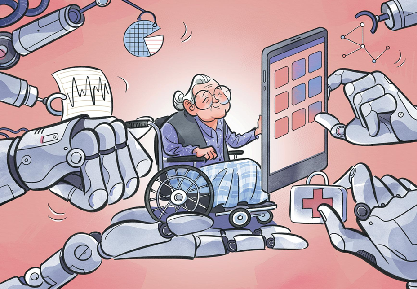
 Leading Chinese tech companies are racing to enter the AI healthcare sector to accelerate the commercial application of the cutting-edge technology and address the growing medical demands of a rapidly aging population.

 China’s elder care industry is expected to surpass 20 trillion yuan ($2.8 trillion) by 2030, according to a report by the Ministry of Industry and Information Technology.

 Ant Group has rebranded its AI health app AQ as Ant Afu, and released a new version of the app, upgrading its three major functions — health companionship, health Q&A and health services.

 The company said Ant Afu focuses on a “health plus” strategy, repositioning the product from an AI “tool” to an AI “friend” that provides healthcare services and helps users manage their own and family members’ health issues.

 The number of active monthly users has surpassed 15 million, making it China’s largest AI healthcare app. It answers more than 5 million health questions every day, with 55 percent of users coming from third-tier cities and below.

 Zhang Junjie, vice-president of Ant Group and president of the company’s health business unit, said the biggest change to the app is the addition of a health companion function, which aims to help users develop healthy daily habits.

 Users can record their health status and upload their information by taking photos and uploading images.

 The app can access smart devices from Apple, Huawei, Vivo and Omron to synchronize users’ daily health data and let them view their exercise levels, heart rate, blood pressure and sleep time.

 It can also create health records for family members, and set multiple goals such as exercise, diet and lifestyle habits. Afu acts as a “personal coach” to customize a tailored plan for users based on their goals.

 “The professionalism and usefulness of the answers are the foundation of an AI tool,” Zhang said, adding that a health app should be able to have a dialogue with users and provide a personalized solution for each individual.

 However, the company stressed Afu’s responses are not medical diagnoses and will never replace real doctors. For users with medical needs, Afu connects with 300,000 doctors nationwide to provide online consultation services.

 Meanwhile, Baidu Inc recently announced the official upgrade of its AI-powered health assistant.

 “We aim to provide every family with a one-stop service for disease prevention, knowledge acquisition, and health management through an intelligent, reliable and always-available AI partner,” said Yang Minglu, general manager of Baidu Health.

 The company’s aim is to integrate professional healthcare into every aspect of users’ daily lives, Yang said. The total order volume of its healthcare services has exceeded 47 million, which represents a shift from a health assistant to a 24/7 all-in-one family doctor.

 Lu Mei, head of Baidu Health’s AI app products, said the application covers a full range of services from light consultations to complex disease treatments and comprehensive health management. It can accurately process multiple input forms such as text, image, audio and video, with a recognition accuracy rate of over 95 percent.

 Baidu Health has opened up its vast resources — including 600 million pieces of professional health content, 360,000 doctor services and over 100 AI tools — to a wide range of partners. These partners include hospitals, pharmaceutical companies, insurance institutions, smart hardware manufacturers, and health app developers.

 “AI has become a key engine for improving efficiency and driving innovation in the health sector,” said Jiang Han, a senior analyst at market consultancy Pangoal.

 “The core competition among tech giants in the health industry has shifted from simple traffic acquisition to a contest centered on the building of comprehensive capacities covering data, application scenarios and the ecosystem.”

 Jiang said enterprises that can integrate health management, diagnosis, payment and pharmaceutical delivery and also create a user-centered service loop will gain a competitive upper hand. “This involves the ability to combine medical resources, ensure regulatory compliance, and foster cross-industry collaboration,” Jiang said.

 Chinese tech giants, with their massive user bases and data assets, are well-positioned to leverage their platform traffic to drive the development of the health business, he added.

AI Plus initiative

 The scale of China’s AI-powered healthcare industry reached 97.3 billion yuan in 2023, and the figure is expected to grow to 159.8 billion yuan by 2028, with an annual compound growth rate of 10.5 percent from 2022 to 2028, data from the Qianzhan Industry Research Institute showed.

 In August, the State Council, China’s Cabinet, issued a guideline on the deep implementation of the “AI Plus” initiative. The country will promote the use of AI in science and technology, industrial development, consumption, people’s well-being, governance capability and global cooperation, according to the guideline.

 Efforts should be made to explore and promote high-quality health assistant services accessible to everyone, and steadily advance the application of AI in areas such as auxiliary diagnosis and treatment, health management, and medical insurance services, significantly enhancing the capacity and efficiency of community-oriented healthcare, the guideline said.

 In November, the National Health Commission and four other authorities released a document on the broad application of AI in the health sector over the coming years.

 By 2030, intelligent diagnosis and treatment assistance will be universal in basic terms across China’s primary-level medical institutions, including community and village clinics, the document said.

 AI technologies such as intelligent medical imaging diagnosis and clinical decision-making supporting technologies will be widely adopted by hospitals at or above the second level in China’s three-tier hospital system.

 Efforts will also be made to encourage the development of new service formats such as intelligent health checkups, health consultations, and health management, and to boost vertical large-model applications in the healthcare industry, the document noted.

 Li Tongzeng, a physician in the infectious disease department at Beijing Youan Hospital, said, “AI has helped liberate doctors from repetitive tasks, allowing us to focus on core diagnostic and treatment processes.”

 AI agents can generate medical records in seconds and assist in issuing medical orders, which are both conducive to improving medical efficiency, Li said. An AI agent refers to a system or program that is capable of autonomously performing tasks on behalf of a user or another system by designing its workflow and utilizing available tools.

 AI agents are more advanced than chatbots because they not only provide suggestions and answers, but also autonomously execute complex actions across a multitude of industries that can deliver tangible results.

 Experts said AI health management apps can be viewed as auxiliary tools for health management and diagnosis, but they cannot replace certified healthcare professionals in conducting patient examinations and performing surgeries.

 “The competition in the AI health sector is heating up, with major internet and tech companies collaborating with hospitals to secure data flows to the online platforms of hospitals,” said Pan Helin, a member of the Expert Committee for Information and Communication Economy, which is part of the Ministry of Industry and Information Technology.

 The companies hope to transform patients’ low-frequency medical behaviors into health consultations and inquiries with high frequency, Pan said, adding that as more user consultation data is uploaded to health management platforms, AI models will be better trained.

 With the rapid advancement of AI technology, its applications in medical diagnosis and treatment are becoming increasingly widespread in China, Pan said.

 Although AI is proving its worth in specific scenarios, it can’t replace the professional diagnosis of a skilled physician, he said. “The prescription review and the final diagnosis decision remain in the hands of the human doctor,” Pan said.

 JD Health, a unit of tech giant JD, has unveiled an AI-powered system designed for online healthcare scenarios, built on the company’s specialized medical large language models.

 The system incorporates cutting-edge AI and big data analytics to provide doctors with more precise and comprehensive diagnostic support. It supports doctors in collecting, analyzing and processing research data, facilitating the production of medical papers and providing guidance.

 Its aim is to boost clinical research efficiency for doctors, and optimize hospital operations, while prioritizing the security of patient health records and safeguarding their privacy, said JD Health.

 The company has also launched the AI doctor digital twin, which offers a personalized “digital human” to relieve doctors of routine tasks, allowing them to focus on complex and nuanced aspects of patient care.

 This digital twin can learn from a doctor’s professional knowledge, thought processes, and communication habits, providing 24/7 patient support, disease education, treatment management, medication reminders, and other post-care services.

 It collects patient history in advance, offers personalized diagnostic plans and diagnosis suggestions while addressing patient queries in real time and making doctors’ clinical expertise available on demand.

 Looking ahead, the company said it will continue to enhance its offerings with medical expert services and video consultations, striving to provide convenient services to users, while giving healthcare professionals enhanced tools for practice.

 Zhu Keli, founding director of the China Institute of New Economy, is bullish on the prospects of AI in healthcare. “AI can provide scientific support across multiple links, such as disease prevention, precise diagnosis, personalized treatment, and new drug development,” Zhu said.

 Greater efforts should also be made to accumulate more complex and comprehensive data, allowing AI to evolve through learning and analysis, which will enable it to develop the ability to solve difficult and complicated problems.

 AI is becoming a crucial force driving the transformation and upgrading of the healthcare industry, Zhu said. He also called for ensuring the safety and effectiveness of AI technology to provide a better experience and high-quality medical services for patients.

 fanfeifei@chinadaily.com.cn

Article inline ad

Corporate Fundamentals, New Economy Lay Ground For A-Share Bull Market

0

By Wang Sheng | China Daily | Updated: 2026-01-05 09:29

China is assuming a more prominent role on the global stage, driven by its growing national strength and industrial vigor. Through the advancement of the Belt and Road Initiative, as well as the implementation of the Global Development Initiative, the Global Security Initiative and the Global Civilization Initiative, China is offering an increasing range of public goods, particularly in infrastructure and trade facilitation. This engagement, rather than being a one-way provision, follows a cooperative model built on consultation, joint contribution and shared benefits, creating a mutually reinforcing dynamic in which China supports global development and gains from global engagement in return. Strengthened economic resilience, rising industrial competitiveness and more robust financial risk-management capabilities have further bolstered China’s confidence in advancing high-standard opening-up.

 This growing confidence is expected to gradually feed into global investor sentiment, paving the way for a re-rating of China’s capital markets. At present, the equity risk premium in the US stock market, often measured by the S&P 500, frequently sits below 2 percent, supporting elevated price-to-earnings valuations. By contrast, the equity risk premium of the CSI 300 Index, which tracks 300 large-cap stocks listed on the Shanghai and Shenzhen exchanges, has remained above 5 percent for an extended period, suggesting ample room for an improvement in market sentiment. Narrowing the gap with the United States, however, will require more substantial improvements in China’s capital market fundamentals.

 First, China’s capital market needs to continue strengthening its resilience by containing volatility and improving its Sharpe ratio — a popular measure of reward per unit of risk. In April 2025, amid a surge in global uncertainty, Central Huijin Investment, a Chinese State-owned investment firm, stepped in to play a role similar to that of a market stabilization fund, helping to anchor market expectations and stabilize sentiment. This mechanism is gradually evolving into a healthy, self-reinforcing cycle. As market resilience continues to strengthen and the Sharpe ratio trends higher, China’s capital market is expected to attract growing attention from global investors in 2026.

 Second, the foundation of resilience in China’s capital markets lies in long-term strategic planning, as well as in the solid shareholder returns delivered through consistently high dividend payouts. Since the launch of the value re-rating of State-owned enterprises in 2022, increasing dividend distributions has become one of the core instruments for attracting medium and long-term capital. Looking ahead to next year, against the broader backdrop of anti-involution policies — and as capital expenditure requirements ease across many traditional industries — operating cash flows are likely to improve, creating favorable conditions for enterprises to sustain robust dividend policies.

 Third, further narrowing the equity risk premium in the mainland’s A-share and Hong Kong markets will require Chinese enterprises to convert the country’s growing national and cultural influence into durable pricing power, while fostering business ecosystems that offer fair returns instead of falling into reckless competition. Some investors contend that US equities merit a lower risk premium because their return on equity exceeds that of A-shares. We believe, however, that Chinese enterprises are well positioned to convert their supply-chain strengths into genuine pricing power. In 2024, China accounted for 32 percent of global manufacturing value added on a US dollar basis, establishing irreplaceable competitive advantages in key industries.

 China’s national and cultural influence has been gaining momentum, with successes such as Labubu and Black Myth: Wukong reflecting a broader and more sustained trend. A global repricing of Chinese products along supply chains would, in turn, accelerate market-oriented reforms in domestic factor markets and help restore healthier profitability across entire industry chains. Indeed, sustainable gains in consumption and domestic demand require factor prices to reflect economic fundamentals and industries to earn reasonable returns. Even with moderate nominal GDP growth, this rebalancing could materially improve corporate earnings and ROE, leading to a lasting compression in China’s equity risk premium.

 Fourth, China’s capital markets need to strengthen their ability to value future industries. As the country advances toward building a modern industrial system during the 15th Five-Year Plan period (2026-30), emerging and future-oriented sectors will each play distinct roles. Yet the market still lacks a clear, robust framework for pricing these industries. Developing valuation methodologies that accurately reflect the characteristics and growth profiles of future sectors will be essential to creating a more inclusive and forward-looking capital market. As this capability improves, equity risk premiums can be expected to decline accordingly.

 Going forward, the producer price index is set to be a key indicator. As fixed-asset investment growth among A-share listed companies is likely to bottom out around mid-2026 and supply-side expansion continues to slow, steady demand should be enough to support a natural rebound in producer prices. Together with price normalization driven by efforts to curb unbridled competition, the PPI could move back toward zero between mid and late 2026.

 Externally, political pressures surrounding the US midterm elections could tilt the Federal Reserve toward a more dovish stance in 2026, while the prospect of additional fiscal stimulus measures cannot be ruled out. Such a combination of accommodative fiscal and monetary policies across major economies would, at least in the near term, support a more constructive outlook for global fundamentals.

 If these conditions materialize and the PPI continues to recover, 2026 could mark two milestones not seen since 2021. It would represent the first meaningful earnings rebound in five years for A-share companies outside the financial and petrochemical sectors, as well as the first return to double-digit growth in net profit attributable to shareholders over the same period. As corporate fundamentals move into a cyclical upswing, momentum builds in new-economy sectors and China’s global influence continues to rise, these forces could together lay the groundwork for a broad-based A-share bull market.

 Against this backdrop, global investor confidence would strengthen, setting the stage for a renewed surge in foreign inflows. Marginal buyers could shift from domestic life insurers and high-net-worth individuals in 2025 to international investors in 2026.Such a transition would likely revive large-cap growth and quality factors, while narrowing the performance gap between value and growth. A range of traditional Chinese manufacturers, often overlooked but occupying critical positions in global supply chains with genuine pricing power, could also see their valuations reassessed. At the same time, the large-cap growth segment in the A-share and Hong Kong markets features leading internet, technology, and advanced manufacturing companies, underpinning a constructive outlook for tech-related equities in 2026.

 The writer is director of the Research Institute at Shenwan Hongyuan Securities. The article was originally published in Tsinghua Financial Review.

 The views do not necessarily reflect those of China Daily.


Article inline ad

Down Jacket Capital Turns Up Heat On Cool

0

China Daily | Updated: 2026-01-05 09:18

HANGZHOU — As the winter chill spreads across the Northern Hemisphere, demand for down jackets surges. Unknown to many consumers, the cozy coats they zip up likely trace their origins to Pinghu, a temperate county-level city in East China that experiences little snowfall.

 Situated in Zhejiang province, Pinghu is home to a modest population of just over 700,000, yet annually it produces more than 200 million down jackets. The city dominates China’s women’s down jacket market, accounting for 80 percent of the country’s production.

 With over 2,000 merchants and a supply chain that employs more than 100,000 people in production, design and logistics, Pinghu has evolved from a garment processing base into a thriving hub for the “down economy”.

 In the 1980s, leveraging its proximity to the economic powerhouses of Shanghai and Hangzhou, Pinghu became a hub for garment processing. For decades, it served domestic and international brands, earning a global reputation where “one in every 100 garments worldwide was made in Pinghu”.

 However, the traditional original equipment manufacturer model eventually hit a bottleneck. Rising labor costs and escalating raw material prices began to squeeze profit margins, leading to a noticeable decline in orders.

 The turning point arrived in 2014, when local merchants noticed that down jackets were outperforming other garment categories in both sales and profitability. Guided by local government support and market forces, over 1,000 manufacturers pivoted their operations. They integrated production lines and focused exclusively on the high-value down jacket segment, cementing a specialized industrial cluster.

 Today, logistics fees for the market alone exceed 1 billion yuan ($142.6 million) annually, underscoring the immense volume of goods flowing through the city.

 For years, Pinghu attracted buyers with “extreme cost-performance”. However, local entrepreneurs soon recognized that price wars were not a sustainable long-term strategy. To ascend the value chain, the city had to transition from pure “manufacturing” to fostering “creation”.

 “Original design directly affects market competitiveness,” said a local industry representative.

 To facilitate this transformation, Pinghu has made substantial investments in branding and design. The city has engaged over 1,400 designers to establish a high-end fashion ecosystem that protects intellectual property rights and encourages innovative styles, positioning design as a key growth driver.

 As the industry expanded rapidly, concerns emerged regarding product quality consistency. To safeguard the sector’s health and maintain consumer trust, Pinghu has pioneered a transparent quality control system.

 Collaborating with 17 organizations across seven provinces and municipalities, Pinghu has released a white paper on the quality grading of down jackets, classifying products based on five core indicators including down content and fluffiness.

 “We have filled the gap in national standards for fine grading,” said Hu Guohua, head of the city’s down jacket industry quality promotion center.

 Now, premium jackets feature tags with QR codes that enable consumers to verify the “invisible engineering” inside their coats.

 Looking ahead, Pinghu is intensifying its focus on the “Fashion Pinghu” regional brand initiative. By establishing intellectual property protection centers and launching industry revitalization plans, the city is committed to upgrading its pillar industry to ensure it remains a strong force in the global down jacket market.

 Xinhua

Article inline ad

Embodied Intelligence Industry Shows Big Leap Forward In 2025

0

Sector’s value set to surge by 50 percent annually to reach 100b yuan in 2030

By SHI JING in Shanghai | China Daily | Updated: 2026-01-05

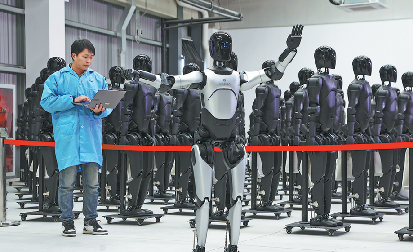
Embodied intelligence was one of the most widely discussed topics in China in 2025, starting from the 16 humanoid robots that took center stage at the annual Spring Festival Gala, to the world’s first-ever competition to test robots’ skills, which was held in Shanghai at the end of the year.

 In early December, Chinese industry leader Shanghai AgiBot Innovation Technology Co Ltd announced that its 5,000th general-purpose embodied robot had officially rolled off the production line. According to the company’s cofounder Peng Zhihui, this milestone has not only proven AgiBot’s capability for large-scale delivery, but more importantly, demonstrated to the entire industry the feasibility of mass production of general-purpose embodied robots.

 The National Development and Reform Commission, the country’s top economic regulator, said in November that China’s embodied intelligence industry is leaping forward, with its industrial value set to surge by 50 percent annually to reach 100 billion yuan ($14.2 billion) in 2030.

 In the second half of 2025, the total value of orders claimed by Chinese humanoid robot companies exceeded 2 billion yuan.

 Investments have also flowed into the sector.

 Data from venture capital database ITjuzi showed that the total primary market financing for the robot industry amounted to over 38.6 billion yuan in the first eight months of 2025, which was 1.8 times the whole-year figure in 2024.

 A number of industry leaders have filed their initial public offering applications or are making preparations for their stock market debut. Nearly 50 companies announced their IPO progress within 2025.

 Unitree Robotics, the maker of the 16 robots that performed at the Spring Festival Gala, completed its pre-listing tutoring in November. The company’s market value has already topped 12 billion yuan after it completed a Series C financing in May.

 Yang Ming, a professor at Shanghai Jiao Tong University and an expert in robotics, said that IPOs are vital to leading robot companies when the scale of private equity can no longer meet their capital demands for technology upgrading and the expansion of production capacity.

 Ever since early November, an increasing number of A-share companies have tapped into the robotics sector by setting up subsidiaries, equity financing and signing cooperation agreements, according to Yu Fenghui, a senior researcher at public policy think tank Pangoal Institution.

 This trend takes place when the industry maturity seamlessly matches the market demand, he said. The localization of key parts and lowered costs have provided the best time window to enter this emerging sector. Listed companies’ capital and industrialization strength will become important impetus for the development of the Chinese robot industry, he added.

 Asset managers have also eyed this emerging sector.

 According to market tracker Wind Info, mutual fund companies conducted more than 600 surveys in the fourth quarter of 2025, mostly focusing on artificial intelligence and robot companies. Sovereign wealth fund Abu Dhabi Investment Authority surveyed five A-share companies in the fourth quarter, four of which are robot-related.

 Cheng Xin, global partner at consulting firm Bain & Co, explained that the capital market is directing more attention to component suppliers and humanoid robot makers at present. In the meantime, companies in these two sectors are actively looking for financing, including those specializing in model algorithm, chipmaking as well as the production of key components such as gear reducers and motors.

 Investors eye several key indicators while looking for the right target. In the first place, investors should consider how extensively the technology or parts are used from a global perspective, rather than regionally. In other words, the technology or parts should have growth potential worldwide, said Cheng.

 A competitive robot company should have enough capability in lowering costs. Its technology or product should be applicable in different industries, as relying on only one core technology may entail higher risks, he said.

 “But it should be noted that the humanoid robot industry is at a turning point. With more technology breakthroughs and further reductions in cost, they will become the core production tool in industries, businesses and families. For investors, companies and clients aiming to use robots, this is the best time to make relative strategies so that they can take the upper hand in the upcoming competition,” said Cheng.

 Market research firm IDC estimates that China’s expenditure on humanoid robots would exceed $1.4 billion in 2025 and the number will surge to $77 billion in 2030.

 Driven by supportive government policies, an active capital market, and coordination within the robotics industry, China’s humanoid robot sector is making a major step forward from technological breakthrough to real-world value realization, said Li Junlan, a research manager for IDC.

Article inline ad

China’s Railway Mileage Tops 165,000 Km

0

Xinhua | Updated: 2026-01-04

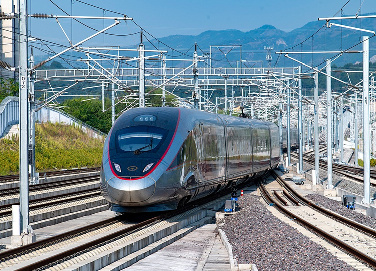
BEIJING — China’s national railway operator said Sunday that the country’s total operating railway mileage nationwide has increased from 146,300 km to 165,000 km during the 14th Five-Year Plan period (2021-25).

 The expansion represents a 12.8 percent increase during the five-year period, according to the China State Railway Group Co Ltd.

 During the 2021-25 period, China’s operating high-speed railway mileage increased by 32.98 percent from 37,900 km to 50,400 km, making the country home to the world’s largest high-speed rail network.

 In 2025 alone, China reported railway fixed asset investment of 901.5 billion yuan ($128.3 billion), and put into operation 3,109 km of new rail lines, including 2,862 km of high-speed rail lines.

 China will continue to advance the construction of the railway network during the 15th Five-Year Plan period (2026-30), the railway operator said, noting that the national railway operating mileage is expected to reach 180,000 km by 2030, including about 60,000 km of high-speed rail.


Article inline ad