Wednesday, November 25, 2026

Home Blog Page 111

China’s Low-Altitude Equipment Sector Grows Fast During 2021-25

0

Xinhua | Updated: 2026-01-04

BEIJING — China’s low-altitude equipment industry has continuously expanded, with the industry output value maintaining an average annual growth rate of over 10 percent during the 14th Five-Year Plan period (2021-25), official data showed Sunday.

 As of Dec 30, 2025, a total of 1,081 enterprises have completed registration in this sector, with 3,623 types of products filed and more than 5.29 million units registered, according to the Ministry of Industry and Information Technology (MIIT).

 MIIT officials said that during the 15th Five-Year Plan period (2026-30), China will further accelerate technological innovation in the low-altitude equipment industry, strengthen security foundations, continuously improve the industrial standard system, and promote innovative applications of low-altitude equipment in accordance with local conditions.

 The MIIT vowed efforts at a conference in December to develop new pillar industries, including low-altitude economy, integrated circuits, new display technologies, new materials, aerospace, and biomedicine.

 The Civil Aviation Administration of China forecasts the low-altitude economy’s market size to exceed 3.5 trillion yuan ($498 billion) by 2035.


Article inline ad

Sinovac Wins Exclusive Contract With Chile To Provide Flu Vaccines

0

By Li Jing | chinadaily.com.cn | Updated: 2026-01-04

Chile has selected China’s vaccine company, Sinovac Biotech, as the exclusive supplier of its influenza vaccines for 2026 — awarding the company a contract for more than 8 million doses, Sinovac said in a statement on Sunday.

 The first batch of vaccines is expected to arrive in Chile by the end of January 2026, ahead of the country’s upcoming flu season, the company said.

 The deal marks the second consecutive year that Sinovac has been chosen as Chile’s sole supplier of influenza vaccines, reflecting continued recognition by Chile’s public health system of the company’s product quality and ability to fulfill international supply contracts, according to the statement.

 The renewed contract builds on Sinovac’s performance in 2025, when influenza vaccines supplied exclusively by the company were administered to more than 8.3 million people in Chile, helping the country achieve an inoculation rate of about 80 percent among its target population.

 Sinovac said its cooperation with Chile has expanded beyond vaccine supply to include joint research and evidence generation. In August 2024, international journal Vaccines published results from a multinational clinical study of Sinovac’s quadrivalent influenza vaccine. Conducted with research partners in Chile and other countries, the vaccine showed favorable immunogenicity and safety. The study found antibody responses against four influenza strains were higher than those generated by a foreign comparator vaccine.

 More recently, a Phase III study in Chilean adults evaluating both humoral and cellular immune responses was published in Nature Communications, further supporting the vaccine’s immunogenicity and safety profile, the company said.

 Sinovac added that its influenza vaccines have now been approved or supplied in nearly 20 countries and regions worldwide, with cumulative deliveries exceeding 120 million doses.

Article inline ad

Corporate Fundamentals, New Economy Lay Ground For A-Share Bull Market

0

By Wang Sheng | China Daily | Updated: 2026-01-05

China is assuming a more prominent role on the global stage, driven by its growing national strength and industrial vigor. Through the advancement of the Belt and Road Initiative, as well as the implementation of the Global Development Initiative, the Global Security Initiative and the Global Civilization Initiative, China is offering an increasing range of public goods, particularly in infrastructure and trade facilitation. This engagement, rather than being a one-way provision, follows a cooperative model built on consultation, joint contribution and shared benefits, creating a mutually reinforcing dynamic in which China supports global development and gains from global engagement in return. Strengthened economic resilience, rising industrial competitiveness and more robust financial risk-management capabilities have further bolstered China’s confidence in advancing high-standard opening-up.

 This growing confidence is expected to gradually feed into global investor sentiment, paving the way for a re-rating of China’s capital markets. At present, the equity risk premium in the US stock market, often measured by the S&P 500, frequently sits below 2 percent, supporting elevated price-to-earnings valuations. By contrast, the equity risk premium of the CSI 300 Index, which tracks 300 large-cap stocks listed on the Shanghai and Shenzhen exchanges, has remained above 5 percent for an extended period, suggesting ample room for an improvement in market sentiment. Narrowing the gap with the United States, however, will require more substantial improvements in China’s capital market fundamentals.

 First, China’s capital market needs to continue strengthening its resilience by containing volatility and improving its Sharpe ratio — a popular measure of reward per unit of risk. In April 2025, amid a surge in global uncertainty, Central Huijin Investment, a Chinese State-owned investment firm, stepped in to play a role similar to that of a market stabilization fund, helping to anchor market expectations and stabilize sentiment. This mechanism is gradually evolving into a healthy, self-reinforcing cycle. As market resilience continues to strengthen and the Sharpe ratio trends higher, China’s capital market is expected to attract growing attention from global investors in 2026.

 Second, the foundation of resilience in China’s capital markets lies in long-term strategic planning, as well as in the solid shareholder returns delivered through consistently high dividend payouts. Since the launch of the value re-rating of State-owned enterprises in 2022, increasing dividend distributions has become one of the core instruments for attracting medium and long-term capital. Looking ahead to next year, against the broader backdrop of anti-involution policies — and as capital expenditure requirements ease across many traditional industries — operating cash flows are likely to improve, creating favorable conditions for enterprises to sustain robust dividend policies.

 Third, further narrowing the equity risk premium in the mainland’s A-share and Hong Kong markets will require Chinese enterprises to convert the country’s growing national and cultural influence into durable pricing power, while fostering business ecosystems that offer fair returns instead of falling into reckless competition. Some investors contend that US equities merit a lower risk premium because their return on equity exceeds that of A-shares. We believe, however, that Chinese enterprises are well positioned to convert their supply-chain strengths into genuine pricing power. In 2024, China accounted for 32 percent of global manufacturing value added on a US dollar basis, establishing irreplaceable competitive advantages in key industries.

 China’s national and cultural influence has been gaining momentum, with successes such as Labubu and Black Myth: Wukong reflecting a broader and more sustained trend. A global repricing of Chinese products along supply chains would, in turn, accelerate market-oriented reforms in domestic factor markets and help restore healthier profitability across entire industry chains. Indeed, sustainable gains in consumption and domestic demand require factor prices to reflect economic fundamentals and industries to earn reasonable returns. Even with moderate nominal GDP growth, this rebalancing could materially improve corporate earnings and ROE, leading to a lasting compression in China’s equity risk premium.

 Fourth, China’s capital markets need to strengthen their ability to value future industries. As the country advances toward building a modern industrial system during the 15th Five-Year Plan period (2026-30), emerging and future-oriented sectors will each play distinct roles. Yet the market still lacks a clear, robust framework for pricing these industries. Developing valuation methodologies that accurately reflect the characteristics and growth profiles of future sectors will be essential to creating a more inclusive and forward-looking capital market. As this capability improves, equity risk premiums can be expected to decline accordingly.

 Going forward, the producer price index is set to be a key indicator. As fixed-asset investment growth among A-share listed companies is likely to bottom out around mid-2026 and supply-side expansion continues to slow, steady demand should be enough to support a natural rebound in producer prices. Together with price normalization driven by efforts to curb unbridled competition, the PPI could move back toward zero between mid and late 2026.

 Externally, political pressures surrounding the US midterm elections could tilt the Federal Reserve toward a more dovish stance in 2026, while the prospect of additional fiscal stimulus measures cannot be ruled out. Such a combination of accommodative fiscal and monetary policies across major economies would, at least in the near term, support a more constructive outlook for global fundamentals.

 If these conditions materialize and the PPI continues to recover, 2026 could mark two milestones not seen since 2021. It would represent the first meaningful earnings rebound in five years for A-share companies outside the financial and petrochemical sectors, as well as the first return to double-digit growth in net profit attributable to shareholders over the same period. As corporate fundamentals move into a cyclical upswing, momentum builds in new-economy sectors and China’s global influence continues to rise, these forces could together lay the groundwork for a broad-based A-share bull market.

 Against this backdrop, global investor confidence would strengthen, setting the stage for a renewed surge in foreign inflows. Marginal buyers could shift from domestic life insurers and high-net-worth individuals in 2025 to international investors in 2026.Such a transition would likely revive large-cap growth and quality factors, while narrowing the performance gap between value and growth. A range of traditional Chinese manufacturers, often overlooked but occupying critical positions in global supply chains with genuine pricing power, could also see their valuations reassessed. At the same time, the large-cap growth segment in the A-share and Hong Kong markets features leading internet, technology, and advanced manufacturing companies, underpinning a constructive outlook for tech-related equities in 2026.

 The writer is director of the Research Institute at Shenwan Hongyuan Securities. The article was originally published in Tsinghua Financial Review.

 The views do not necessarily reflect those of China Daily.

Article inline ad

Coordinate Domestic Economic Work With Intl Challenges

0

By Guan Tao | China Daily | Updated: 2026-01-05  

MENG/CHINA DAILYThe recently held Central Economic Work Conference laid out major arrangements for economic work in 2026. As the opening year of the 15th Five-Year Plan (2026-30),2026 carries particular significance.

 The conference aligns closely with the Recommendations of the Central Committee of the Communist Party of China for Formulating the 15th Five-Year Plan for National Economic and Social Development, translating broad strategic vision into more concrete and actionable tasks — a shift from freehand brushwork to meticulous detail.

 In response to the adverse external environment, the Chinese government made timely assessments and contingency plans, listing the prevention and mitigation of external shocks as an overarching requirement for last year’s economic and government work at the 2024 Central Economic Work Conference and in the Government Work Report released earlier last year.

 Last year, the United States launched a wave of tariff actions worldwide. Against the backdrop of escalating Sino-US tariff frictions, the April meeting of the Political Bureau of the CPC Central Committee for the first time called for “coordinating domestic economic work with international economic and trade struggles”.

 As China’s economic resilience in the first half exceeded expectations and bilateral tariff tensions eased markedly, the July Political Bureau meeting removed this wording.

 However, the latest Central Economic Work Conference explicitly called for “better coordination of domestic economic work with international economic and trade struggles”, retaining the April formulation while adding the word “better”. This reflects the authorities’ judgment that international economic and trade frictions are long-term in nature, and underscores China’s more proactive and confident posture in addressing them.

 This assessment is consistent with the judgment in the proposal for the 15th Five-Year Plan regarding China’s development environment during the period. The proposal notes that major-country relations will shape the international landscape, and that changes in the global situation will have a profound impact on domestic development. China’s development will face both strategic opportunities and risks, with rising uncertainty and unpredictability.

 The change in conference wording stems from China’s demonstrated capacity for targeted countermeasures in response to external trade pressure, enabling it to gain strategic initiative in handling complex situations. Fundamentally, it reflects the marked enhancement of China’s overall national strength in recent years.

 The Central Economic Work Conference noted that the economy pressed ahead under pressure last year while advancing toward higher-quality growth.

 Amid extreme tariff pressure last year, China’s economy demonstrated strong resilience. Real GDP grew by 5.2 percent in the first three quarters, 0.4 percentage point higher than the same period in 2024. Recently, many international institutions have raised their forecasts for China’s economic growth in 2025.

 However, this has largely been driven by external demand, while the imbalance between strong supply and weak domestic demand remains pronounced, and risks in key areas persist.

 Against this backdrop, the conference largely continued the policy stance set at the end of 2024, reiterating the need to “implement more proactive and effective macro policies”, stressing the continuation of a more proactive fiscal policy and a moderately accommodative monetary policy, and maintaining the emphasis — first introduced at the April Political Bureau meeting — on stabilizing employment, businesses, markets and expectations.

 Several notable adjustments were made to the wording on macro policy orientation compared with 2024.

 References to policy “foresight” and “targetedness” were retained, while “effectiveness” was replaced with “coordination”. The phrase “seeking progress while maintaining stability, and promoting stability through progress” was revised to “seeking progress while maintaining stability, and improving quality and efficiency”.

 In addition, references to “cross-cyclical” regulations were added, indicating that while macro policy support will not be withdrawn prematurely, there will be no indiscriminate stimulus measures. Instead, policies will be more precise and leave room for adjustments.

 This is in line with the 15th Five-Year Plan proposal, which makes clear that during the period, China will strengthen countercyclical and cross-cyclical regulations, implement more proactive macro policies, and continue to stabilize growth, employment and expectations.

 Regarding fiscal policy, the conference replaced the previous year’s wording, which called for raising the deficit ratio, increasing spending intensity, expanding the issuance of ultra-long term special treasury bonds, and increasing the issuance and use of local government special bonds — with a call to “maintain necessary levels of fiscal deficit, total debt and overall spending”.

 The budget deficit ratio this year is expected to remain at around 4 percent, while newly added government debt — including deficits, special bonds and special treasury bonds — may exceed last year’s level of 11.86 trillion yuan.

 Regarding monetary policy, the conference emphasized making stable economic growth and a reasonable rebound in prices important considerations, and flexibly and effectively using tools such as reserve requirement ratio cuts and interest rate reductions.

 After the conference, head of the People’s Bank of China — the nation’s central bank — said in a media interview that the central bank will continue to properly implement a moderately accommodative monetary policy, carefully managing its intensity, pace and timing to create a sound monetary and financial environment for stable economic growth and financial market stability.

 This indicates that the supportive stance of monetary policy will remain unchanged, though expectations of aggressive easing are unrealistic. The focus will be on optimizing the use of structural monetary policy tools, strengthening coordination with fiscal policy and further smoothing policy transmission.

 The conference has, for the fourth consecutive year, emphasized maintaining the renminbi exchange rate at a “basically stable, reasonable and balanced level”, underscoring that preventing excessive exchange-rate fluctuations remains a top priority.

 Expanding domestic demand remains the top task for economic work this year, with the conference calling for “upholding domestic demand as the main driver and building a strong domestic market”.

 Since May, China and the US have held five rounds of economic and trade consultations. In October, the Kuala Lumpur trade talks resulted in a one-year truce extension, and together with positive factors such as a potential leaders’ meeting this year, the easing trend in bilateral economic and trade frictions may continue.

 Nevertheless, the complexity and severity of the international economic and trade environment should not be underestimated. The latest US National Security Strategy report positions economic security as “the foundation of national security” and redefines China from “the most significant geopolitical challenge” to “the primary economic competitor”, suggesting continued pressure on China through various economic means.

 The 15th Five-Year Plan proposal identifies a substantial increase in the level of self-reliance in science and technology as one of seven major goals, with tasks including strengthening original innovation and breakthroughs in core technologies, integrating technological and industrial innovation, advancing coordinated development of education, science and talent, and promoting the Digital China initiative.

 In line with this, the conference’s section on “adhering to innovation-driven development and accelerating the cultivation of new growth drivers” made arrangements covering education, science and talent development, international innovation hubs, the role of enterprises as innovation leaders and artificial intelligence.

 Compared with the previous year, the conference moved the task of defusing risks in key areas to a later position, making “safeguarding the bottom line and prudently resolving risks in key areas” the eighth priority task. This reflects phased progress in risk mitigation. Also, a notable adjustment was the removal of the phrase “stabilizing the property and stock markets”, consistent with the recovery and improvement seen in domestic capital markets last year.

 In sum, at this critical juncture marking the start of the 15th Five-Year Plan, the Central Economic Work Conference mapped out the main thread of economic policy. Going forward, all parties are expected to maintain a pragmatic and proactive approach, address concrete challenges, enhance the sense of gain among market entities, strengthen coordination between reform and policy, and promote sustained improvement in economic performance and market expectations — ensuring a solid and successful start to the 15th Five-Year Plan.

 The writer is global chief economist at BOCI China.

 The views do not necessarily reflect those of China Daily.

Article inline ad

Upward Trend Of Bourses Set To Solidify

0

Analysts say slow bull run taking shape in China’s A-share market, underpinned by tech advancements and institutional reforms

By SHI JING in Shanghai | China Daily | Updated: 2026-01-05

One of the buzz phrases to summarize the A-share market performance of 2025 would be, “10-year high”, as the benchmark Shanghai Composite Index rose consistently through the year, even breaching the 4,000-point level at one point.

 Market activity has remained high in the past year.

 As of end-November, the A-share market recorded four trading days with respective daily trading values exceeding 3 trillion yuan ($430 billion). There were 91 trading days when the daily trading value stood above 1.5 trillion yuan.

 The A-share market’s total trading value topped over 410 trillion yuan in 2025, up more than 60 percent from a year earlier and breaching the 400-trillion-yuan level for the first time. At least 528 companies saw their share prices double in 2025, while only 125 companies made the achievement one year earlier, according to market tracker Wind Info.

 Despite some short-term ups and downs, the consensus opinion among analysts is that a slow bull run is taking shape in the A-share market.

 Boosted by a surge in Chinese artificial intelligence companies, with DeepSeek serving as the best example, technology firms have undoubtedly been the major contributors to the upward trend.

 The STAR Market 50 Index, which monitors the fluctuations of the 50 heavyweights trading at the STAR Market on the Shanghai bourse, saw its maximum increase within 2025 topping 80 percent. Shares of Moore Threads, a Beijing-based graphics processing unit company often referred to as “China’s Nvidia”, soared by over 400 percent on its debut at the STAR Market.

 “These are the result of policy guidance, optimization of capital structure and industrial transformation,” said Chen Li, chief economist of Chuancai Securities.

 The good news is, the bullish trend is likely to carry on in the following months, underpinned by continued technology advancements and the ongoing institutional reform of the Chinese capital market.

 Equity strategists from JP Morgan wrote in a 2026 outlook that the CSI 300 index, which tracks the 300 A-share heavyweights, is likely to gain 12 percent in 2026. The MSCI China Index — which captures large — and mid-cap representation across onshore and offshore Chinese equities — may rise 18 percent by the end of 2026.

 Global growth and the pricing system will show increasingly noticeable nonlinear characteristics. The rhythm of economic cycles will become more uneven and policy changes will exert greater impact on asset prices at a faster pace, said Cheng Shi, chief economist at ICBC International Holdings Ltd.

 This means, asset allocation will become more complicated from a global perspective. But the silver lining is that emerging markets, especially China and India, may outperform developed markets in 2026 thanks to the former’s industrial adjustment and recovery in market valuation, Cheng said.

 Experts from asset manager Aberdeen Investments said that there may be more attractive investment opportunities in China in 2026, thanks to its valuation and various structural supportive factors.

 A few large US tech stocks have dominated the returns of the global stock market. Although this has resulted in robust returns, risks are also latent due to the rising market concentration and overvaluation, they said.

 Therefore, the diversification of source of returns has started. The transfer of capital from the US stock market to more valuable destinations may be one key investment theme in 2026, they added.

 Data from the Institute of International Finance show that up to $50.6 billion of capital flowed into the Chinese stock market in the first 10 months of 2025, while the whole-year figure was only $11.4 billion a year earlier.

 According to Shi Bin, head of China equities at UBS Asset Management, global investors, including long-term funds and hedge funds, are actively participating in cornerstone investments and secondary market trading in Chinese stocks. Most foreign investors are now tapping into the Chinese market via exchange-traded funds, which means that the A-share market is still at the “technical recovery” phase.

 “The valuation of Chinese stocks is far from ‘overheated’. Improving fundamentals and high-quality growth will be the major drivers of A-share market performance in the following months,” he said.

 Allen Lee, head of China business development at asset manager AllianceBernstein, explained that profitability growth will lead to the bullish performance of the A-share market in the long run. The central government’s emphasis on technology innovation and high-end manufacturing, which can be seen from the proposal for the 15th Five-Year Plan (2026-30) period, will be translated into positive impact on the A-share market in the long run.

 “Experiences from mature markets show that ‘disruptive innovation’ will nurture companies with highly efficient operational models and global competitiveness. We can thus infer from the proposal that supervision will continue to be relaxed over private companies, which are the major drivers of innovation. This means that private enterprises will benefit more from their investment in research, technology breakthroughs and innovation of business models. All these will be transformed into more stable profitability growth,” he said.

 “To shape a structurally upward equity market, companies’ steadily improving profitability is considered as the sufficient and necessary condition. The emphasis on companies’ efficiency and business models to be underlined during the 15th Five-Year Plan period has laid the groundwork for improving profitability,” Li added.

 Niamh Brodie-Machura, chief investment officer for equities at Fidelity International, said she believes that the Chinese stock market will demonstrate “great potential” in the coming years, with the leapfrog of AI and companies’ increasing deployment of this emerging technology leading to an overall inflection in profitability.

 “The performance gap between the best AI models coming from the United States and China is not increasing, but actually decreasing,” she said, noting that China’s capital expenditure on AI, which has been rising quickly, is only a fraction of the level in the United States.

 She cited a recent comment by Nvidia’s CEO Jensen Huang to the Financial Times, in which he said that China will win the AI race because of its lower energy costs and that the country is able to produce fantastic products at lower prices — the latter serving as a winning strategy.

 More importantly, there is an “amazing innovative pulse” in China, which Fidelity finds more broadly in the Chinese economy. Therefore, the asset management company “finds a lot to like in China”, she said.

 “As a matter of fact, Chinese entrepreneurs have never hibernated, even during the bitterly cold market conditions over the past five years both at home and abroad. This has been reflected in the surge of leading Chinese companies in the realms of AI, smart vehicles, humanoid robots and biomedicine, which is especially noticeable since the end of 2024,” said Robin Xing, chief China economist at Morgan Stanley.

 “Domestic asset managers, international investors, pension funds and sovereign wealth management funds have thus shown greater interest in Chinese equities,” he said.

 With three years of exponential growth, the AI sector will enter the phase of industrial application in 2026, said experts from China International Capital Corp Ltd. Computing power, optical modules and cloud computing companies may still churn out investment opportunities, but investors should direct more attention to those focusing on localization, they said.

 Innovative drugs, energy storage, and solid-state batteries are also seeing rising prosperity, they added.

 Boosting consumption will be one major mission for China in 2026, said Huang Wentao, chief economist of China Securities. Efforts will be made to further stimulate domestic demand, which is crucial to consolidate economic growth. Against that backdrop, the overall consumption scale and quality will increase, which can lead to bullish performance in the A-share consumption sector.

 Yu Xiangrong, chief China economist at Citi, expects more structural measures to be adopted in China in 2026. The trade-in program will retain its size at around 300 billion yuan, while applicable categories will be expanded and more rural areas will be included.

 Specifically, China’s ongoing K-shaped consumption recovery may continue to benefit the food and beverage as well as high-end luxury sectors, according to a report from JP Morgan.

 Experts from Industrial Securities said that leading consumer electronics companies may benefit from the recent AI boom, especially those making AI phones and AI glasses.

 Favorable policies will be extended to the service-based consumption sectors such as tourism, catering, healthcare and elderly care. Market entry in the service industry will be further relaxed and unreasonable limits on purchases will be removed. These will help to release once suppressed consumption potential, further advancing recovery in domestic demand, said Xue Hongyan, deputy director of Star Atlas Institute of Finance.

 However, he noted that the recovery in residents’ consumption willingness is largely dependent on the rebound in the job market and the stabilization of income expectations.

 Therefore, active fiscal policies and moderately relaxed monetary policies will continue in China in the next 12 months to address these challenges, he said.

 Such a relaxed monetary environment will lower companies’ financing costs and gradually elevate people’s consumption willingness. Chinese liquor and home appliances are expected to see a sales increase against that backdrop, said experts at JP Morgan.

 The A-share market performance will be further buoyed by the higher efficiency of the Chinese capital market, which is inseparable from the continued reforms, said Lee from AllianceBernstein.

 The nine measures introduced by the State Council in 2024 to facilitate the sustainable development of the Chinese capital market have encouraged companies to attach greater importance to return on capital. Therefore, companies with a more competitive edge will be entitled to higher valuations. Capital will be used with higher efficiency, he said.

 More importantly, the higher efficiency in utilizing capital is likely to address the problem of relatively low inflation in China, according to Lee.

 Low inflation, even deflation pressure felt in the Chinese market, has been largely derived from insufficient domestic demand and overcapacity, which is the result of growth models of the past. These have undermined companies’ pricing power and their profitability, impairing stock prices to some extent while lowering people’s consumption and investment willingness. But all these are likely to be solved by the central government’s dedication to improving efficiency, he added.

 In an op-ed piece released in People’s Daily in December, Wu Qing, chairman of the China Securities Regulatory Commission, wrote that continued efforts will be made to create a market environment for investors and companies to come, stay and seek sustainable growth.

 Direct financing methods such as equities and bonds should be further developed to nurture more public companies that reflect China’s high-quality economic development. The institutional environment should be more amenable to long-term investment amid more effective market supervision. All these are projected to extend the fruits of China’s development to more people, according to the article.

 According to Xing of Morgan Stanley, the potential of the Chinese stock market should not be overlooked.

 Institutional investors best represented by insurers and asset managers brought in about 1.5 trillion yuan of incremental capital into the A-share market in the first half of 2025. About 800 billion yuan of household savings have been directed to equity-focused wealth management products since June.

 China has, however, accumulated over 30 trillion yuan of excess savings over the past five years. The move toward equity assets in China has only just begun, according to Xing.

 “There is more possibility of diversified asset allocations,” he added.

Article inline ad

China Daily’s ‘Shopping In China’ Platform Appeals To Intl Audiences

0

By Zhong Nan, Li Xiang and Wang Yu in Shanghai | chinadaily.com.cn | Updated: 2026-01-03

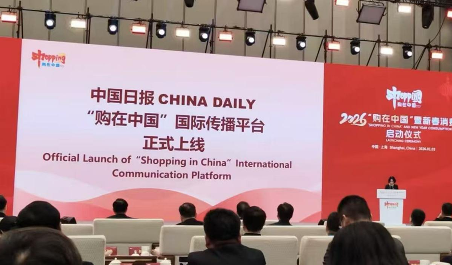
With the roll-out of new measures to boost consumption among both inbound visitors and local residents in China, China Daily officially launched an international communication platform in Shanghai on Saturday to further promote the “Shopping in China” initiative.

 Facilitated by the Ministry of Commerce, the platform adopts an integrated communication matrix of “one newspaper, one website, three social media accounts”, with content from the newspaper expected to further boost the initiative among overseas readers. The English-language website features six core sections, namely Policy Guide, What They Say, Shopping, Delicacy, Travel and Events.

 Social media accounts on Facebook, X (formerly Twitter) and TikTok are designed to share compelling stories about China’s consumer market through visually engaging photos and videos tailored to international audiences.

 Unveiled last year, the “Shopping in China” initiative aims to showcase the country’s consumption and hospitality landscape and its appeal — spanning premium shopping, dining, tourism and cultural experiences — to a global audience.

 China Daily’s new move was part of the launching ceremony of the 2026 “Shopping in China” and New Year Consumption Season in Shanghai on Saturday. Speaking at the ceremony, Commerce Minister Wang Wentao highlighted that the 2026 “Shopping in China” campaign will focus on three themes — goods consumption, services consumption and new consumption scenarios.

 Wang said the campaign will feature a series of nationwide events, including Premium Consumption Month and an International Consumption Season.

 “We will also support provinces in hosting their own locally tailored events and organizing dedicated city-level programs in 15 pilot cities to build internationalized consumption environments,” he said.

 To broaden the reach of the “Shopping in China” campaign, Liu Weiling, deputy editor-in-chief of China Daily, said the platform brings to life the dynamism of China’s consumer market with visually rich stories told through photos and videos designed for global audiences.

“The English-language website will highlight must-buy products, distinctive neighborhoods, time-honored brands, culinary specialties and cultural landmarks,” said Liu, adding that the platform will strengthen policy interpretation, particularly on topics of keen interest to overseas audiences, such as visa-free transit and tax refunds for departing travelers.

 The expansion of domestic demand is set to top China’s major economic priorities this year, according to the recent annual Central Economic Work Conference. The tone-setting meeting outlined special initiatives to boost consumption, and the supply of high-quality consumer goods and services is set to be expanded.

 In addition to Saturday’s event, government officials from Shanghai, Hangzhou, Zhejiang province, Wuhan, Hubei province and Shenzhen, Guangdong province, announced a series of local activities and consumer-friendly measures tailored for their cities and launched “Spring Festival Consumption Season” initiatives designed to benefit residents and stimulate spending.

 At the same time, major Chinese companies, including Trip.com Group, Bailian Group, China UnionPay, Bank of China and China Eastern Airlines, also unveiled supporting measures under the “Shopping in China” initiative in Shanghai. The companies have affirmed their commitment to introduce targeted promotions, improve payment systems and upgrade travel and shopping services for domestic and international consumers.

Article inline ad

Central China City Threading Up Success

0

By Li Jiaying | China Daily | Updated: 2026-01-03

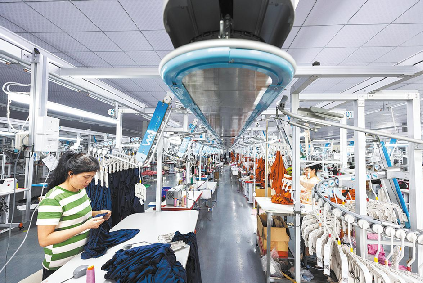
From an epoch when 300,000 garment workers left their hometowns in search of opportunities in South China, to today’s wave of skilled natives returning home to start businesses, Tianmen in Hubei province has rapidly risen as an unexpected contender in the apparel e-commerce industry.

 “Last year we fulfilled 100,000 online orders a day and generated 1.3 billion yuan ($180 million) in sales. With the launch of our new base this year, we are targeting 2 billion yuan,” said Xiong Feixiang, chairman of Hubei Laiyitiao Garment Co Ltd.

 Now a major industry leader, the company was only a small workshop reliant on contract manufacturing just a few years ago.

 “My parents moved to Guangzhou in Guangdong province in the 1990s to do OEM garment processing. Back then we were simply sewing clothes for others. Margins were thin, and orders were unstable,” Xiong recalled.

 After taking over the family business in 2016, Xiong began building his own brand and turning to online platforms for sales. Although orders grew quickly, high rental and logistics costs in coastal regions continued to constrain the company, he said.

 “I heard that my hometown Tianmen was strongly supporting apparel e-commerce, offering rentfree factories and solutions for logistics and labor. That triggered my idea of returning,” Xiong said. In 2019, he closed the Guangzhou facility and moved all warehousing, logistics and production to Tianmen, a move that reduced production costs by 30 percent and saved more than 10 million yuan in rent over the past several years.

 With lower costs, the company rapidly expanded. In April this year, Laiyitiao broke ground on a new cross-border e-commerce base featuring an intelligent manufacturing center and design facilities, pushing the company further up the value chain.

 Xiong’s experience reflects a broader trend of Tianmen natives returning home for opportunities in the fast growing apparel e-commerce sector. To date, the county-level-city has more than 7,000 textile and apparel-related businesses and over 13,000 e-commerce stores registered on major platforms, its commerce bureau data showed.

 “Tianmen’s garment industry dates back to the 1980s, when over 400,000 locals ventured elsewhere to work in the sector. Among residents aged 30 to 40, around 80 percent of women and 20 percent of men possessed garment-making skills at that time, giving rise to the reputation of its garment workers,” said Huang Caiting, director of the city’s apparel e-commerce industry development office.

 In recent years, the restructuring of coastal industries and Tianmen’s policy support for logistics, tax reductions, discounted entrepreneurship loans and rent support have encouraged a new generation of garment entrepreneurs to return.

 The influx has, in turn, driven the development of packaging, logistics, design and other related services. More than 50,000 jobs have been created, with over 4,000 returning-home market entities and 160,000 returning workers reshaping the local industry landscape — a phenomenon locals describe as “one in every three households engaged in the apparel sector”, the official said.

 Riding the rise of the digital economy, the city now positions apparel e-commerce as a breakthrough point for industrial transformation. Between 2021 and 2024, its apparel e-commerce transaction volume surged from 7 billion yuan to 50 billion yuan, with an average annual growth rate of 58 percent, and sales are expected to exceed 70 billion yuan this year, according to data from Tianmen’s commerce bureau.

 “By building a comprehensive industrial supply chain platform, Tianmen has formed a full-process ecosystem covering fabric production, accessories, garment processing, online marketing and cross-border logistics,” Huang said.

 “From fabrics to production and processing, then to livestreaming as well as smart factories and cloud warehouses, the entire apparel supply chain is integrated here, enabling one-stop services for design, manufacturing, sales, branding and talent development,” said Liu Jianyong, general manager of Tianmen Yuezi Clothing Co Ltd.

 With an annual output value of more than 500 million yuan, Yuezi is currently Tianmen’s largest cross-border apparel supply chain enterprise by output, with its products exported to the United States, Germany, Canada, Mexico and elsewhere.

 “Our success is largely due to the development model of ‘headquarters in the city, operations in the industrial park, and workshops in villages’,” Liu said, adding that the headquarters manages design, quality control and urgent orders, while most production is handled by satellite factories.

 “We adopt a ‘small-batch, quick-response’ model. Based on real-time livestreamed sales data, we can adjust production plans and use a digital order management system to break garments into standardized components — such as collars and cuffs — which are produced by specialized factories and home workshops before final assembly.”

 This has shortened the production cycle of their bestsellers by 40 percent and enables fast responses to global demand, Liu added.

Article inline ad

Winter Wanderlust Creates Snowball Effect For Economy

0

Popularity of tourism, sports spurs consumption momentum

By CHENG SI | CHINA DAILY | Updated: 2026-01-01

With the opening of the 27th Harbin Ice and Snow World on Dec 17 in Heilongjiang province in Northeast China, the nation’s winter tourism and sports entered their peak season.

 “As of Dec 18, the day after the opening of the Harbin Ice and Snow World, searches for ‘snow tours’ and ‘Harbin’ have surged on our platform,” said Qi Chunguang, vice-president of travel portal Tuniu.

 The area of the winter theme park has been expanded by 1.2 million square meters this year, with the total volume of ice and snow used reaching 400,000 cubic meters — a record high in the history of the annual event, China Central Television reported.

 Before the opening of the “winter fairyland” in Harbin, snow and ice enthusiasts had already been eagerly anticipating the event.

 LY.com (Tongcheng Travel) said that as of 9 am on Dec 15, searches for “Harbin Ice and Snow World” had skyrocketed fivefold compared with the same period the previous day. It added that Harbin has maintained the top spot among winter tourism destinations on its platform since December.

 “My daughter likes to pout prettily at me and ask me to take her to the Harbin Ice and Snow World. We went to the ‘snow fairyland’ about eight years ago when she was very young, and we plan a family trip to Harbin again during the New Year holiday,” said Wang Lin, 45, a Beijing resident.

 Qi, from the Tuniu portal, noted a growing trend in winter tourism this year. “Based on our data, people living in central, eastern and southern provinces, including Jiangsu, Guangdong and Hubei, show a stronger passion for winter tourism. So far, 70 percent of winter tour bookings on our platform have been made by tourists from these regions,” he said.

 “The most popular winter destinations in recent months include Zhangjiakou in Hebei province, northeastern provinces such as Jilin, and Altay in the Xinjiang Uygur autonomous region. About half of group tour participants in recent months have chosen Liaoning, Jilin and Heilongjiang as their destinations,” Qi added.

Growing ice and snow economy

 The popularity of Harbin and its “snow and ice fairyland” is emblematic of China’s burgeoning winter tourism and sports sector.

 “The growth of winter-related consumption is closely linked to economic development, the upgrading of tourism consumption, and government policies. When per capita GDP reaches $10,000 and people’s basic needs are met, they naturally pursue spiritual needs such as sports and tourism,” said Zhang Jinshan, a researcher at the Tourism Planning and Development Research Institute of Beijing Union University.

 “China has the world’s largest domestic tourism consumption market, and winter tourism is an important segment. The government has therefore taken active measures to expand winter-related consumption to boost domestic demand,” he said.

 Figures from the Harbin government show that the 26th Harbin Ice and Snow World, which ran from Dec 21, 2024, to Feb 26 this year, received about 3.56 million visits. Harbin received about 90.36 million tourist visits during the winter season from late 2024 to early 2025, generating about 137.2 billion yuan ($19.49 billion) in tourism revenue, marking year-on-year increases of 9.7 percent and 16.6 percent, respectively.

 Qi said winter tourism and sports have blossomed on all fronts. “Outdoor ski resorts in northern and northeastern provinces are becoming increasingly sophisticated, while indoor ski parks and winter theme parks in warmer regions such as Chongqing and Shenzhen have also grown in number. The winter tourism industry has not only met people’s demand for sports, sightseeing and snow-viewing experiences, but has also boosted consumption in accommodation, transportation and winter gear.”

 A recent report by Asiadg.com and Beijing Sport University showed that China’s winter-related consumption during the winter season from late 2024 to early 2025 totaled about 187.5 billion yuan. The nation’s winter-related industry expanded from 270 billion yuan in 2015 to 980 billion yuan in 2024, and the report estimates it will exceed 1 trillion yuan for the first time this year, predicting that it will reach 1.5 trillion yuan by 2030.

 The report also noted that consumption at ski resorts nationwide reached more than 78.6 billion yuan during the previous winter season.

 “My husband and I are big fans of winter sports. We initially simply loved winter and snow and visited many snow destinations at home and abroad between 2015 and 2018, such as Jilin province in Northeast China and Russia. Later, we began trying winter sports such as skiing and soon fell in love with them,” said Wang Tiantian, 32, who is now in Chengdu, Sichuan province.

 She said that she and her husband regularly visit the Xinjiang Uygur autonomous region in winter and usually stay for about a week skiing. “We sometimes go to indoor ski resorts in Chengdu during summer when we feel the itch to ski,” she said, adding that they value the quality of snow and services more than ticket prices.

Indoor as well as outdoor

 Ma Rui, marketing director of Wuhan Chengjian Bonski, an indoor ski park affiliated with Bonski — a company that operates ski domes and provides ski training and education — said she has noticed the rising popularity of winter sports such as skiing in recent years, with outdoor and indoor ski parks complementing each other and driving the growth of winter tourism and sports.

 “Indoor ski parks break the limits of time and space, offering people year-round access to winter sports and lowering the threshold for participation,” she said.

 Cheng Xiaoming, general manager of Wu Shang Bonski, said demand for high-quality and convenient winter tourism and sports experiences has strengthened this year.

 “We usually see large numbers of tourists on weekends and public holidays. Indoor ski parks are also popular in summer, when people seek out-of-season snow experiences during scorching weather,” he said, adding that domestic winter sports — especially skiing — have grown rapidly since the successful conclusion of the Beijing 2022 Winter Olympics. People’s consumption preferences have gradually shifted from “checking off a bucket list item” to “deeper learning”, with winter sports increasingly becoming a social activity.

 Discussing the development of China’s winter tourism and sports, Zhang Jinshan said that China has a long history of winter sports and tourism. “Altay in the Xinjiang Uygur autonomous region is recognized as the origin of winter sports,” he said.

 Zhang noted that winter sports and tourism experienced rapid growth after 2000, alongside improvements in the economy and people’s livelihoods, and that the Beijing 2022 Winter Olympics marked a milestone in the sector’s development.

Policy support

 Noting the growing desire and spending power for winter tourism and sports, as well as the sector’s vast potential, governments at various levels have taken steps to promote the industry’s development.

 This winter, several provinces have successively announced “snow vacations” for primary and secondary school students.

 Altay in the Xinjiang Uygur autonomous region announced its first “snow vacation” from Dec 1 to Dec 5 for students under compulsory education, while the regional capital Urumqi rolled out a nine-day snow vacation from Nov 29 to Dec 7.

 Students under compulsory education in Jilin province in Northeast China also enjoyed their first five-day “snow vacation” starting Dec 3.

 During the snow vacations, diversified entertainment and educational tour products were offered at discounted prices. In Jilin, for example, 171 A-rated winter scenic spots and 39 qualified ski resorts and skating venues were opened free of charge to primary and secondary school students, with discounted tickets available for their parents.

 The province also encouraged employees to take paid leave to accompany their children during the snow vacation, and required schools not to organize teaching activities or assign homework during the break.

 Figures from the Jilin provincial government show that the province’s first snow vacation benefited 1.63 million students from 2,379 schools and invigorated the local tourism market. Data from China UnionPay Merchant Services Payment Inc showed that during the five-day snow vacation, major ski resorts across the province saw tourist numbers surge, while the 171 A-rated scenic spots recorded year-on-year increases of 83 percent in visitor numbers and 53 percent in tourism revenue.

 In addition to regions with natural advantages for winter tourism and sports, several eastern provinces with milder climates have also stepped up efforts to tap into the winter economy.

 Zhejiang province issued a notice in May 2025 encouraging counties and cities such as Lin’an, Tonglu and Anji to develop into winter tourism destinations. The provincial government said it would provide strong support for eligible localities applying to become national-level skiing and leisure resorts, and encouraged the development of winter gear and apparel industries.

 In November 2024, the State Council, China’s Cabinet, issued guidelines on boosting the ice and snow economy, setting targets of 1.2 trillion yuan by 2027 and 1.5 trillion yuan by 2030.

 The guidelines outlined measures including encouraging children and youth participation in winter sports, improving infrastructure and services, fostering leading brands and enterprises, and deepening international cooperation in the winter economy.

 Zhang Jinshan said China’s winter industry still has significant growth potential given the country’s current economic scale and population. “The ice and snow industry is still in a rapid development stage and will continue to expand as more people participate in winter tourism and sports,” he said.

 chengsi@chinadaily.com.cn


Article inline ad

Tesla Overtaken By BYD In Global EV Sales In 2025

0

Xinhua | Updated: 2026-01-03

SAN FRANCISCO — US electric automaker Tesla said Friday that its global vehicle deliveries in 2025 fell by around 8.6 percent year on year, marking the first time the company has been overtaken in annual electric vehicle sales by China’s automaker BYD.

 Tesla produced 1.655 million electric vehicles in 2025 and delivered 1.636 million, lower than the 1.773 million vehicles produced and 1.789 million delivered in 2024, according to company data.

 The impact on sales became most pronounced after tax credits that had encouraged US consumers to purchase electric vehicles were eliminated in September 2025.

 In the fourth quarter of 2025, Tesla produced 434,358 vehicles and delivered 418,227, down from 459,445 produced and 495,570 delivered in the same period a year earlier. Fourth-quarter deliveries fell around 16 percent year on year.

 BYD said Thursday that its global electric vehicle sales reached 2.257 million in 2025, up 27.86 percent from a year earlier, with a growing share of sales coming from markets outside China, including Asia, Europe and Latin America.

 Tesla remains the largest electric vehicle manufacturer in the United States, accounting for about 45 percent of the domestic EV market. However, its declining sales suggest a broader slowdown in the US electric vehicle market.

 Data from automotive research firm Cox Automotive showed that US electric vehicle sales across all brands plunged by over 40 percent year on year in November 2025.

 Industry analysts expect overall US electric vehicle sales to remain weak in 2026.


Article inline ad

Artificial Intelligence Unlocks Silver Screen For People With Disabilities

0

By Li Jing | China Daily | Updated: 2026-01-03

The screening hall fell quiet as the film began. Soon, a steady narration described the gestures, expressions and moments that could not be seen by people with visual impairments. For them, cinema unfolded not through images, but through language.

 That calm, precise and unmistakably familiar voice belonged to Chinese actor Hu Ge, recreated through artificial intelligence.

 “I may not be able to go offline to tell stories in person to my blind friends,” Hu said in a recorded message. “But my voice is online. Whenever they want to watch a movie, they can come and listen to me tell it.”

 The project sits at the center of Youku’s accessible theater, an initiative that uses AI to transform mainstream film and television into formats accessible to visually impaired, hearing-impaired and elderly audiences. Behind it is Chen Yanling, head of public welfare at Alibaba Group’s Hujing Digital Media and Entertainment Group.

 “People used to think voice packs were only for navigation or commercial use,” Chen said. “I never imagined that one day blind people could watch movies through a voice pack — and that it would be Hu Ge telling them the story.”

 Chen, now in her 23rd year at Alibaba, did not begin with technology. She began as a volunteer.

 In 2022, Chen was providing live audio descriptions at offline accessible film screenings in Beijing. Because the events were held in person, many participants traveled long distances. Some were in their 60s, coming from remote districts such as Changping and Pinggu.

 “When I walked them to the subway, they told me that as long as there was accessible cinema, distance didn’t matter,” Chen recalled. “Even if they had to leave home at four or five in the morning, they would come.”

 The experience stayed with her.

 At the time, Chen had just transferred back to Youku, Alibaba’s video platform. She began asking whether technology could remove those physical barriers — and whether an online platform could make accessible cinema part of everyday life.

 “Technology focuses on efficiency and standards. Entertainment focuses on creativity and copyright,” she said. “But public welfare focuses on warmth and sustainability. The challenge was how to combine all three.”

 She began coordinating informally across teams — engineers, copyright specialists and operations staff — asking whether they could create an online space for accessible films. She also volunteered to narrate films herself, drawing on years of experience as an audio describer.

 Within a week, Youku launched its accessible theater with three films. The response exceeded expectations. “The viewership was even higher than some very popular movies at the time,” Chen said.

 But success quickly revealed limits. Manual narration was slow and labor-intensive, and copyright restrictions made free access unsustainable. This was where AI became essential.

 According to materials released by Youku, a two-hour film traditionally required at least three days to convert into an accessible version. With AI-assisted processing, that time can now be reduced to about two hours. The technology helps generate descriptive scripts, align narration precisely with visuals and speed up production without altering the original meaning of the content.

 “This efficiency is what made scale possible,” Chen said.

 From three films, the catalog expanded to 100, then 2,000, and today, more than 9,200 accessible titles. Rights holders agreed to participate on a trial basis. “They told us: if the original meaning changes, we stop,” Chen said. “So we were very careful.”

 AI also enabled expansion beyond visual impairment.

 In March, Youku opened identity authentication for hearing-impaired users, allowing free access to accessible content. Instead of relying on sign language, the platform uses AI-assisted subtitles that identify speakers and annotate background sounds — such as piano music, wind or tension-building effects — elements that are crucial to storytelling.

 “In many films, background sound is essential to emotion,” Chen said. “Even fear comes from sound.”

 An official from the China Disabled Persons’ Federation said technological progress was expanding the possibilities of inclusion. “With the rapid development of AI, equality, integration and sharing are becoming more achievable for people with disabilities,” the official said.

 Zhang Jiantong, a university student who is hearing-impaired and among the first certified users, said the platform has become part of her daily routine. “It feels very good,” she said. “I watch for more than an hour in the evenings. It gives me more topics to talk about with classmates and family.”

 AI has also been applied to Youku’s “Silver Hair Theater”, which adapts content for elderly viewers. Large-font subtitles, background noise reduction and specially developed “elder-friendly audio” help address common problems such as unclear dialogue and improper volume levels.

 Chen said the idea came from her own family. “My father is more than 70 and can’t hear clearly,” she said. “The TV volume was so loud I couldn’t even walk into the room.”

 For Chen, AI is not only about speed or efficiency. “You must embrace AI and accept the arrival of this era,” she said. “But technology is not just about efficiency and speed, it is also about ‘temperature’.”

 At the end of 2025, Chen experienced what she called a “life highlight” when she carried the torch at the Milano Cortina 2026 Winter Olympics. “This moment was not only a personal honor,” she later wrote in her WeChat moment. “It was recognition for insisting on doing the right and meaningful things.”

Article inline ad