Wednesday, November 25, 2026

Home Blog Page 112

China’s Largest Offshore Gas Field Produces 4.5-Mln-Ton Oil Equivalent In 2025

0

Xinhua | Updated: 2026-01-02

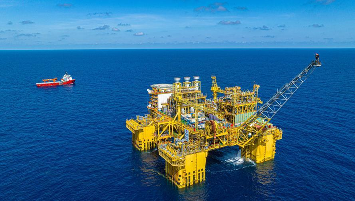
HAIKOU — China’s largest offshore gas field, named Deep Sea No 1, has recently completed its 100th shipment of crude oil since being put into production, announced the China National Offshore Oil Corporation (CNOOC) on Friday.

 The field’s total oil and gas output in 2025 exceeded 4.5 million tons of oil equivalent, comparable to that of a medium-sized onshore oilfield.

 The project was implemented in two phases, with production commencing in 2021 and 2025, respectively.

 The second phase of the project represents the country’s most challenging deepwater gas development to date, as it operates at the highest temperatures and pressures ever encountered in domestic offshore exploration. Additionally, it is China’s deepest gas development, functioning at water depths exceeding 1,500 meters.

 The Deep Sea No 1 gas field now boasts a daily output of 15 million cubic meters of natural gas and over 1,600 tons of condensate oil.

Article inline ad

Massive AI-Driven Energy Station Begins Operating In Inner Mongolia

0

By Zheng Xin | chinadaily.com.cn | Updated: 2025-12-31

Envision Energy has connected the world’s largest standalone battery energy storage station to the grid in Inner Mongolia autonomous region, as China accelerates its transition toward an AI-driven, renewable-heavy power system.

 The energy storage station, featuring a massive 4 GWh capacity, was commissioned on Tuesday.

 Fully equipped with Envision’s proprietary AI-driven energy storage systems, the company says the station pushes its total developed capacity in Inner Mongolia to over 14 GWh.

 The project, a new global benchmark for the scale and grid-connection speed of energy storage clusters, is designed to significantly boost the local grid’s capacity to absorb renewable energy while enhancing overall operational stability.

 The facility will play a significant role in the electricity spot market as China shifts towards more market-oriented power trading.

 According to Envision, the integration of artificial intelligence is expected to provide a significant financial edge.

 Based on operations data, the company’s AI storage systems have already demonstrated industry-leading accuracy in market trading forecasts at existing sites in Inner Mongolia. This precision is projected to boost total life-cycle returns by more than 20 percent.

 This kind of efficiency is becoming a “must-have” for energy developers facing the dual challenges of grid stabilization and profit maximization in high-penetration renewable scenarios.

 zhengxin@chinadaily.com.cn

Article inline ad

Women Seen At Forefront Of AI Adoption

0

Nationwide large-scale application elevates adaptability, empathy and communication, survey finds

By Li Jing | China Daily | Updated: 2026-01-03

For decades, the corporate world fostered a persistent stereotype: technology is a male-dominated domain, and women are slower to adopt the tools of the future. That assumption is now being challenged by data from China’s rapidly digitizing workplace.

 As generative artificial intelligence spreads through offices and factories alike, it is female professionals — not the traditional technological elite — who are showing higher adoption rates and steadier psychological responses, according to new research from Beijing-based Cheung Kong Graduate School of Business.

 The findings come from a report by Zhang Xiaomeng, an associate professor of organizational behavior at CKGSB.

 Based on a survey of nearly 11,814 respondents across diverse industries, the study shows that female professionals are not only adopting AI faster than their male counterparts, but also reporting lower levels of anxiety as they do so.

 Rather than widening gender gaps, the AI transition appears to be elevating capabilities such as adaptability, empathy and communication — areas where women, on average, are demonstrating relative strengths, the report found.

 The broader context is a surge in AI adoption nationwide. According to the China Internet Network Information Center, the number of generative AI users in the country reached 515 million as of June, representing a penetration rate of 36.5 percent.

 Within this wave of digitalization, the CKGSB study found that women — particularly those with higher levels of education and workplace experience — are utilizing these tools more frequently than men.

 The data also reveal a nuanced emotional divide.

 While concern about automation is widespread — 85 percent of respondents expressed fears of job replacement — male respondents reported slightly higher anxiety levels.

 About 73.5 percent of men said they were worried about AI’s impact on their work, compared with 70.8 percent of women. Specifically, older male executives showed the highest levels of anxiety regarding the speed of change.

 “The bigger risk is not job loss, but a sense of value erosion,” Zhang said.

 Her research points to what she described as a “usage paradox”: while fear is widespread, frequent use of AI tools significantly reduces anxiety. Because women tend to use the tools more readily, they are effectively protecting themselves from the psychological strain of the transition, she said.

 Zhang describes this pattern as the emergence of “resilience squared” — a combination of emotional resilience and cognitive resilience. One allows individuals to withstand pressure and the other helps them navigate uncertainty. Together, she said, they form a leadership profile well suited to periods of disruption.

 These findings are echoed in multinational companies, where human-centered skills are becoming commercially decisive.

 Poh-Yian Koh, president of FedEx China, argued that women’s flexibility and resilience are becoming core business strengths.

 “Women not only possess exceptional empathy and long-term strategic vision, but are also especially skilled at building bridges, serving as indispensable ‘interpreters’ who connect technology with humanity,” Koh said.

 Speaking at the Women in Leadership Forum hosted by CKGSB in December, Koh shared the journey of her company’s digital boot camp, an initiative designed to upskill couriers and customer service staff. The transition was far from smooth.

 Koh recalls a veteran employee telling her bluntly: “Boss, I’d rather drive a truck for 100 kilometers than sit in front of a screen for 10 minutes.”

 Instead of relying solely on performance metrics to filter out resistance, the company focused on patience and emotional support alongside technical training, Koh said, likening the process to nurturing growth rather than enforcing compliance.

 The payoff came during a critical period in February, when shifts in international trade policies and US tariff adjustments created a sudden need for complex declaration requirements. IT teams needed time to build new tools, but customers couldn’t wait.

 “It was those very frontline employees from the boot camp who stepped in,” Koh said. Combining their new low-code skills with their deep understanding of business pain points, they built a functional application themselves to handle the volume.

 “The tool wasn’t perfect, but it solved the urgent need,” Koh said with pride. “In that moment, the operators became the developers, and cogs in the machine became game-changers.”

 Koh emphasized that while male engineers often focus on the precision of an algorithm, female leaders tend to ask a different set of questions, such as “Will the user feel anxious?”

 “Technology can be replicated. Empathy cannot,” Koh emphasized. “In the age of intelligence, trust is the scarcest resource.”

 The rise of women’s participation in technology is not happening in a vacuum. It is being propelled by national policies aimed at mobilizing what is often called “She Power” in science and technology.

 Official data show that women now account for approximately 45.8 percent of the nation’s scientific and technological workforce.

 Since 2021, the All-China Women’s Federation, together with multiple ministries, have promoted the Women’s Action for Scientific and Technological Innovation, aimed at mobilizing female talent to support technological self-reliance.

 Such efforts align with the country’s push to develop new quality productive forces, ensuring that half the workforce is not left behind in digital transformation.

 Wang Chuqiao, charge d’affaires at UN Women China, framed equality as a measurable growth strategy.

 Wang cited UN Women research indicating that advancing gender equality could offer massive economic potential. He said the logic is reinforced by the “silver economy” — a sector projected to reach 30 trillion yuan ($4.1 trillion) by 2035.

 Women make around 75 percent of household purchasing decisions and tend to outlive men, Wang noted, adding that ignoring women’s perspectives in AI-driven product design would mean overlooking a core growth driver.

 “When women hold more board positions, companies perform better and manage volatility more effectively,” Wang said, pointing to consistent findings across Asia-Pacific markets linking diversity to stronger share prices and risk management.

 Despite the optimistic data on adoption, structural hurdles remain.

 Li Haitao, dean of CKGSB, noted that while the school has seen female MBA enrollment jump to 49 percent, up from 16 percent in 2003, education is just the starting line.

 Without deliberate safeguards, algorithmic bias could offset progress, Wang said, noting that AI systems trained on historical data often reproduce stereotypes, such as depicting doctors as men and nurses as women.

 Technology itself is neutral, experts said, but outcomes depend on who designs it, who deploys it and whose experiences are reflected in its logic.

 With women demonstrating higher adaptability and lower anxiety in AI adoption, the transition presents an opportunity — not a guarantee — for recalibration.

 As Koh put it: “Technology determines how fast we move. Humanity determines how far we go.”

 lijing2009@chinadaily.com.cn


Article inline ad

State-Owned Firms Register Stable Performance

0

By Ren Qi | China Daily | Updated: 2026-01-03

China’s State-owned and State-controlled enterprises demonstrated generally stable performance in the first 11 months of 2025, with revenues registering slight growth while profits experienced a modest year-on-year decline.

 According to official data released earlier this week, these enterprises collectively generated operating revenues totaling 75.63 trillion yuan ($10.8 trillion) during the January-November period, reflecting a 1 percent year-on-year increase, according to data from the Ministry of Finance. Total profits for the same period amounted to nearly 3.72 trillion yuan, marking a 3.1 percent year-on-year decrease.

 Meanwhile, taxes and fees payable by SOEs edged up 0.2 percent year-on-year to approximately 5.28 trillion yuan.

 Officials and experts noted that the data points to a pattern of low growth and weak profitability among SOEs. As an integral force in serving national strategies, SOEs play a vital role in stabilizing the economy, strengthening and supplementing industrial chains, and advancing scientific and technological self-reliance.

 In this context, they said that the high-quality development and transformation of SOEs should be assessed beyond short-term financial metrics. Zhang Yuzhuo, chairman of the State-owned Assets Supervision and Administration Commission of the State Council, said the new wave of technological revolution and industrial transformation is rapidly reshaping the global economic landscape, with innovation paradigms undergoing profound shifts and industrial iteration cycles significantly shortening — putting central SOEs at risk of marginalization or even gradual elimination unless they accelerate transformation.

 In an article on Monday in Study Times, a newspaper administered by the Party School of the Central Committee of the Communist Party of China, Zhang stressed the need to uphold reform and innovation, address deep-seated constraints on corporate development, and achieve transformations in quality, efficiency and growth drivers.

 He emphasized SOEs’ resolve to proactively plan and implement major projects and landmark initiatives to fully unlock the country’s economic growth potential.

 Despite a slight decrease in profits, the role of SOEs in strategic sectors tied to national security cannot be ignored, said Li Xuenan, a professor of finance and director of the China Industrial Policy Research Center at Cheung Kong Graduate School of Business.

 “Facing complex geopolitics, for key sectors vital to the national economy and people’s livelihood — such as core supply chains — where China remains at a disadvantage and lacks comparative advantages, relying on international trade or pure market selection would be tantamount to handing our lifeline to others,” she said.

 At the early stages of these industries, given technological backwardness and uncertain returns, private capital often hesitates to enter. In such circumstances, she added, State capital must act as patient capital, taking the lead through strategic investment to fill gaps and build a robust ecosystem.

 The 14th Five-Year Plan (2021-25) period witnessed a historic leap in the scale and strength of central State-owned enterprises and the sustained release of reform-driven momentum. Over the past five years, total assets of central SOEs grew from under 70 trillion yuan to over 90 trillion yuan, cumulative R&D investment exceeded 5 trillion yuan; while investment in emerging industries recorded an average annual growth rate of more than 20 percent; through strategic restructuring and new formations, their vitality and dynamism were further invigorated.

 According to Li Zheng, dean of the School of Economics at Liaoning University, during the past five years, SOEs strengthened their innovation capabilities, becoming trailblazers in tackling “bottleneck” technologies and key core technologies, leaders in green development, and guardians of both security and growth.

 Data from the SASAC showed that SOEs have actively undertaken major national science and technology missions in the past five years, taking the lead or participating in 22 national major S&T projects, and accounting for 60 percent of the R&D of landmark products under the action plan for high-quality development of key manufacturing industry chains.

 Meanwhile, they are also accelerating the establishment of sources of original technologies, having laid out 97 such hubs in fields including quantum computing and biotechnology, and have achieved a number of breakthroughs.

 SOEs still need to improve innovation incentive mechanisms and bolster original innovation, while promoting deep integration of scientific and technological innovation with industrial innovation, and of the digital economy with the real economy, Li added.

 renqi@chinadaily.com.cn

Article inline ad

Manufacturing Rebounds In December

0

By OUYANG SHIJIA and ZHANG CHENXU | China Daily | Updated: 2026-01-01

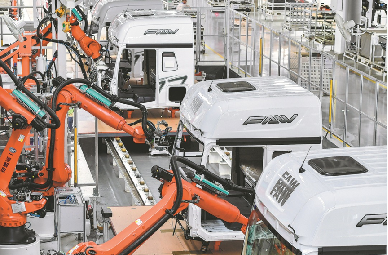
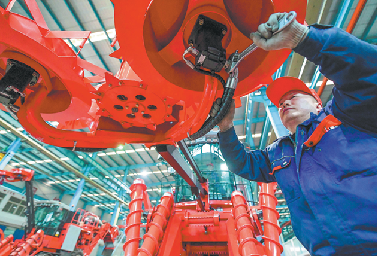
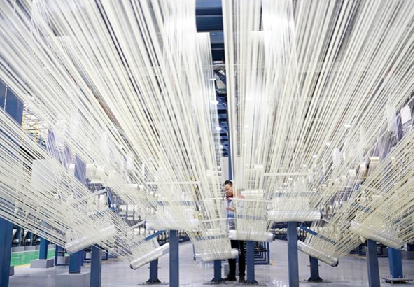
China’s manufacturing sector saw a notable rebound in December, with demand recovering and exports stabilizing, as the purchasing managers’ index climbed back above the 50-point mark for the first time since April.

 Data released by the National Bureau of Statistics on Wednesday showed that China’s official PMI rose to 50.1 in December from 49.2 in November, returning to expansion territory above the 50-point mark that separates expansion from contraction.

 The subindex for production stood at 51.7 in December, up from 50 in November, while the gauge for new orders came in at 50.8, up 1.6 percentage points from the previous month, the NBS reported.

 Experts said the sentiment in China’s manufacturing sector has improved, with both demand and supply picking up, buoyed by optimism following the recently concluded annual Central Economic Work Conference, which underscored that China will continue to pursue a more proactive fiscal policy in 2026.

 Lou Feipeng, a researcher at the Postal Savings Bank of China, attributed the rebound in manufacturing PMI to the emerging effects of pro-growth policies, including the rolling out of policy-based financial instruments and the accelerated issuance of special-purpose bonds, improved coordination between supply and demand, and significantly strengthened business confidence.

 Data from the NBS also showed that PMI readings across major industries have all improved from November. High-tech manufacturing, in particular, posted a PMI of 52.5, up 2.4 percentage points from the previous month.

 “The rapid growth of high-tech manufacturing has also contributed to an overall improvement in manufacturing activity, with the role of industrial upgrading and innovation-driven development becoming increasingly evident,” said Zhu Keli, founding director of the China Institute of New Economy.

 Wen Tao, an analyst at the China Logistics Information Center, said steadier export performance has also been a key factor underpinning the pickup in demand.

 “With China-US economic and trade consultations continuing to make progress, manufacturing exports remained stable in December, and the new export orders index rose 1.4 percentage points from the previous month to 49.” Wen added.

 Wang Qing, chief macroeconomic analyst at the Golden Credit Rating International, shared this optimism. “Looking ahead, pro-growth policies are expected to continue underpinning manufacturing activity, and the manufacturing PMI is likely to stay in expansion territory in January 2026,” Wang said.

 NBS data also showed that China’s non-manufacturing PMI, which includes subindexes for activity in the services and construction sectors, stood at 50.2 in December. The services PMI came in at 49.7, edging up 0.2 percentage points month-on-month but remaining below the 50-point threshold for a second consecutive month.

 Wang said the services PMI remaining in contraction territory might be related to adjustments in the real estate market in the fourth quarter, which also suggests that consumer demand remains relatively weak.

 Contact the writers at zhangchenxu@chinadaily.com.cn


Article inline ad

State Capital Key To Scitech Prowess

0

By Ren Qi | China Daily | Updated: 2025-12-30 09:02

China’s State asset and State enterprise reforms are a key plank of economic restructuring and should be advanced through a new round of deepening reforms to seize development opportunities and accelerate the building of more world-class companies, officials and experts said.

 China has taken a major step toward a foundational, comprehensive law on State-owned assets, with a draft submitted for first reading at a session of the Standing Committee of the National People’s Congress.

 Legal experts said the legislation would strengthen the framework for more efficient governance of State-owned assets.

 The draft comprises 62 articles across seven chapters. It seeks to standardize management and oversight, and aims to ensure lawful protection and efficient use of assets to promote high-quality development of the State sector.

 Authorities called for optimizing corporate management and operations, accelerating organizational and process reforms, pushing flatter and smarter structures, cutting management layers and shortening decisionmaking chains to sharpen sensitivity to market shifts and industry trends, as well as drive efficiency gains.

 State-owned enterprises play a significant role in consolidating and extending the economy’s steady improvement and must raise standards for their own operations, with a focus on value creation, said Zhang Yuzhuo, chairman of the State-owned Assets Supervision and Administration Commission under the State Council.

 Zhang said State-owned enterprises should keep expanding effective investment and move early to plan and roll out major projects and flagship programs in key areas such as infrastructure, energy and resource security, and carry out forward-looking industrial deployment.

 The emphasis is on large-scale equipment renewal, consumer-goods trade-in schemes, the implementation of major national strategies, and capacity building for security in critical sectors, he said.

 The first review of the draft State Assets Law marks a new stage in the rule-of-law framework for State asset management, guided by systemic planning to support high-quality development, said Shu Wenqi, deputy director of China City Development Academy.

 The draft focuses on planning and layout, and aligns with the 15th Five-Year Plan (2026-30) task of accelerating a new development paradigm. It is also a necessary step to improve the socialist market economy at a higher level, Shu said.

 Over the long term, using the law to optimize the allocation of State capital is a key institutional underpinning for high-quality growth and economic security, helping “national strategic assets” better serve the broader agenda of Chinese modernization, Shu added.

 Research and development spending by centrally administered State-owned enterprises has grown an average 6.5 percent annually, topping 1 trillion yuan ($140 billion) for three straight years and reaching 1.1 trillion yuan last year, SASAC said. Basic research accounted for 8.8 percent of the total — close to 100 billion yuan — for work in frontier fields.

 As a core component of the nation’s strategic science and technology strength, central SOEs have the responsibility, foundation and conditions to play a bigger role in building China into a scitech power, Zhang said.

 Furthermore, they should strengthen innovation, advance high-level self-reliance in science and technology, step up efforts in key core technologies, raise the share of basic research, build national key labs, deepen original-technology incubators and deliver a batch of original, leading breakthroughs, he said.

 Li Xuenan, professor of finance and director of the China Industrial Policy Research Center at Cheung Kong Graduate School of Business, agreed, calling State capital a “sower” in basic research.

 “Private firms often lack incentives to invest in basic research, so State capital can plant the seeds for long-term technological progress,”Li said.

 renqi@chinadaily.com.cn

Article inline ad

From Plateau To Hard Drives: Documentary Tests NAS Technology

0

By CHENG YU | chinadaily.com.cn | Updated: 2025-12-30

When editors began stitching together footage shot above 5,000 meters on the Qinghai-Tibet Plateau, the challenge was not only artistic but technical.

 Temperatures plunged, air pressure thinned and data volumes surged as crews filmed Beyond the Frozen Horizon, a feature-length documentary that premiered nationwide in China earlier this month.

 During filming, conventional storage devices failed repeatedly. What ultimately worked was a network-attached storage system from the Shenzhen-based Ugreen Group. The film’s post-production team ran Ugreen’s NAS continuously for more than 4,300 hours without a single failure, safeguarding terabytes of high-definition 8K in one of the harshest environments filmmakers are likely to encounter.

 Lion Chen, senior brand marketing director, said that the episode has become a defining case study, not just for a product line, but for China’s broader ambitions in core digital infrastructure.

 “If you lose data, you lose history,” Chen said.

 “What happened on the plateau shows that domestic technology can already meet, and in some cases exceed, the most demanding professional standards.”

 China’s NAS, or network-attached storage, market is still in an early growth phase, but momentum is building. Globally, the NAS private cloud market was worth about $5.4 billion in 2023 and is expected to more than double by 2030.

 That gap, Chen believes, represents opportunity.

 “Data volumes are exploding — photos, videos, work files, creative content,” he added.

 “People need a place where data can be stored centrally, securely and accessed anytime. NAS is essentially the data center for individuals, families and small studios.”

 Beyond the Frozen Horizon highlighted what Chen describes as “engineering for extremes”. At high altitude, storage systems must cope with low pressure, cold temperatures and unstable power conditions, all while handling large video files and supporting multi-user collaboration.

 Ugreen entered into the NAS business in 2018, expanding beyond its core charging and connectivity accessories. The company posted operating revenue of 3.86 billion yuan ($552 million) in the first half of the year, up 40.60 percent year-on-year, while net profit attributable to shareholders rose 32.74 percent to 275 million yuan.

 Notably, growth was led by its storage products business, which surged 125.13 percent from a year earlier, driven by the launch of new NAS products.

 The company’s push also aligns with China’s emphasis on data security and technological self-reliance. Chen said that NAS products have passed multiple security certifications, with encryption, access controls and real-time threat monitoring built into the system.

 One of the industry’s persistent challenges is perception. NAS devices are often seen as expensive, complex tools for specialists. Ugreen’s strategy has been to simplify both hardware installation and software operation.

 Chen called such a technology a “what you see is what you get” experience, closer to a smartphone interface than a traditional enterprise server. AI features help users search and classify photos and videos automatically, reducing manual effort.

 For Chen, the latest film is also about social value. By ensuring the safety of footage documenting life and landscapes on the plateau, Ugreen played a role in preserving minority culture and enabling its wider dissemination.

 “Technology should serve culture, not overshadow it. We provided tools, but the story belongs to the filmmakers,”he said.

 Looking ahead, the company sees NAS evolving into what it calls the “AI-NAS era”, where storage systems integrate greater computing power, artificial intelligence and collaboration tools.

 Ugreen plans to continue investing heavily in software development, with more than 800 technical staff already dedicated to its operating system.

 chengyu@chinadaily.com.cn


Article inline ad

NBS Data Shows Rebound In Manufacturing Activity

0

By Zhang Chenxu | chinadaily.com.cn | Updated: 2025-12-31

China’s factory activity saw a notable rebound in December, returning to expansion territory above the 50-point mark for the first time since April, according to official data released on Wednesday.

 Data from the National Bureau of Statistics showed that China’s official purchasing managers index (PMI) for the manufacturing sector stood at 50.1 in December, up from 49.2 in November.

 Huo Lihui, an NBS statistician, said the improvement was underpinned by a clear recovery in both supply and demand, with gauges for new orders rising above the critical threshold for the first time in the second half of the year.

 The sub-index for production stood at 51.7 in December, up from 50 in November, while the gauge for new orders came in at 50.8, up 1.6 percentage points from the previous month, the NBS reported.

 Meanwhile, the PMI readings for major industries all improved from November. High-tech manufacturing, for instance, recorded a PMI of 52.5, up 2.4 percentage points, pointing to a solid improvement in growth momentum.

 Market expectations strengthened further with a notable upward trend. The sub-index for production and operation activity expectations stood at 55.5, up 2.4 percentage points from November, reflecting rising confidence among manufacturing enterprises in market prospects.

 China’s non-manufacturing PMI, which includes sub-indexes for service sector activity and construction, came in at 50.2 in December, up 0.7 percentage points month-on-month. The services sector also saw a mild improvement, as the business activity index rose to 49.7, up 0.2 percentage points.

 The country’s official composite PMI, which encompasses both manufacturing and non-manufacturing activities, stood at 50.7 in December, up 1.0 percentage point from the previous month, NBS data showed.


Article inline ad

Resilient Chinese Economy Quells Volatility

0

Experts: Unpredictability of US policy, impact of tariffs pose major challenges

By XIN ZHIMING in Beijing, XING YI in London and PRIME SARMIENTO in Hong Kong | CHINA DAILY | Updated: 2025-12-31

The world economy faced strong headwinds in 2025, primarily as a result of escalating trade tensions thanks to the US’ “reciprocal tariffs”, causing substantial uncertainties in supply chains and the global economy.

 China, meanwhile, managed to maintain stable economic growth throughout the year, with a high possibility of achieving annual GDP growth of more than 5 percent, contributing about 30 percent of total global economic growth.

 Starting in February, the United States imposed high tariffs on China and other trade partners, which went against the principle of free trade and dealt a heavy blow to global supply chains. Although China initiated countermeasures to force Washington back to the negotiating table and ultimately lower the tariffs, the damage had already been done, experts said.

 “2025 was a challenging year for the world economy,” said Gerard Lyons, a British economist who holds senior positions in several financial institutions in London. “The unpredictability of US policy and the impact of tariffs were the major events.”

 Apart from trade tensions, the ongoing conflict in Ukraine also affected investor mood across the globe, with the European economy suffering the most. Rising inflation also posed a threat to much of the developed world in 2025.

 “The global economy has had to withstand a number of extraordinary body blows such as tariffs, continued conflict in Eastern Europe and a much more national interest focus for economies,” said Aly-Khan Satchu, a leading investment banker from Kenya.

 According to the International Monetary Fund, the global economy is adjusting to a landscape reshaped by new policy measures. Although some extremes of higher tariffs caused by US trade measures were tempered, the overall environment remains volatile, and temporary factors that supported activity in the first half of 2025, such as front-loading, are fading.

 In its October World Economic Outlook report, the IMF forecast the global economy would slow from 3.3 percent in 2024 to 3.2 percent in 2025.

 “The pattern in the global economy is clear and striking; the traditional economy is ex-growth or in recession while the innovation-driven economy is full steam ahead, and this great divergence explains economic growth across the globe,” said Joyce Zhou, CEO of Oakcean Capital, a London-based wealth management company.

Mixed performances

 In the United States, the world’s largest economy, the last round of tariffs came in as its economy started to show signs of a material slowdown, the IMF report said. Investment, for example, has slowed, despite a surge in spending on AI-related and other equipment, and intellectual property.

 Since July, jobs reports have been much weaker than expected, with a significant decline in the number of jobs added, the IMF said. The unemployment rate edged up to 4.3 percent in August.

 Inflation remains a headache for the US — partially originating from the country’s tariff policies — and it has taken measures, such as assistance packages for farmers, in an attempt to hold it down.

 “Those (prices) have gone up because a lot of those (goods) are imported and there are tariffs on those. Now, this is something which the US government would want to control as they go ahead,” said Amitendu Palit, senior research fellow and research lead (trade and economics) at the Institute of South Asian Studies at the National University of Singapore.

 The European Union economy expanded by 1.6 percent year-over-year in the third quarter of 2025, down from 1.7 percent in the previous period, according to Eurostat statistics.

 “(European) growth has been lackluster overall this year, primarily driven by the lack of a vibrant technology sector, and the de-industrialization risk in a few key sectors like auto and machinery,” said Zhou of Oakcean Capital.

 “The reality and bad news is it is unlikely that Europe is able to catch up with growth of the US, because slower growth in the EU is deeply rooted in two somewhat related reasons: over regulation and lack of (major) innovation and tech companies and sectors,” Zhou added.

 Asian economies saw a mixed performance in terms of GDP growth.

 China’s economy remained on track despite the US tariff hikes since the start of 2025. GDP growth in the first three quarters was 5.2 percent year-on-year, 0.4 percentage points higher than the same period of the previous year. Its trade surplus, in particular, exceeded $1 trillion to reach $1.08 trillion in the first 11 months of the year, the first time it has crossed the $1 trillion threshold.

 “China’s export sector has remained resilient despite the strong tariff headwinds from the US,” KPMG China said in a report. Another major contributor is the country’s industrial upgrading following breakthroughs in AI and the government’s support for the private sector and technological innovation, which have led to increased high-tech investments, it said.

 From 2015 to 2025, the global economy grew by 35 percent. China’s contribution to global GDP growth was 31.2 percent, according to research by London-based World Economics.

 However, Japan, another major Asian economic powerhouse, saw its GDP growth contract in the July-to-September period, for the first time in six quarters. Preliminary data showed the country’s GDP decreased by 0.4 percent in price-adjusted real terms from the previous quarter, marking an annualized contraction of 1.8 percent, according to a calculation based on Cabinet Office statistics.

The Association of Southeast Asian Nations economy, an increasingly important growth point for the world’s economy, mostly stayed flat in 2025. Research institutions projected its GDP to expand by about 5 percent as a whole.

 Vietnam was the fastest growing economy in the grouping, registering 8.2 percent year-on-year GDP growth in the third quarter of the year.

 “The ASEAN economy continues to grow at a moderate pace,” said Palit of the National University of Singapore.

 “It is not growing at a great rate, it is not growing at a very slow rate, it is growing at an average rate. And that average rate is something which has been with the ASEAN region for some time,” he added.

 The African economy, another promising growth engine, was projected to rise to 3.9 percent in 2025 from 3.3 percent in 2024, and reach 4 percent in 2026 despite mounting geopolitical uncertainties and trade tensions, according to a forecast by the African Development Bank Group.

 “Africa has enjoyed a significant tailwind from a weaker dollar, which has created a positive feedback loop of stronger domestic currencies and lower interest rates, all of which have meant a forward-looking and constructive Africa-wide GDP,” said investment banker Satchu.

 The US dollar has remained on a downward channel since the start of 2025. “One of the big stories in 2025 was the passive diversification away from the dollar, as investors globally placed less of their net new assets into dollars. This led to a gradual depreciation of the dollar,” said British economist Lyons.

AI a key driver

 Looking forward, many research and market institutions expect the world economy to improve moderately in 2026 as countries become better adapted to the fallout from trade tensions, and hopes rise that the Ukraine conflict will end.

 However, some are cautious on the outlook, citing potential challenges such as recurrent trade uncertainties, geopolitical tensions, climate change, and inflation.

 Global growth is projected to decelerate from 3.3 percent in 2024 to 3.2 percent in 2025 and 3.1 percent in 2026, the IMF forecast in its report.

 Consultancy EY-Parthenon forecast global growth will slow modestly in 2026, with real GDP rising 3.1 percent, compared with 3.3 percent in 2025 and 2024.

 “Looking to 2026, we think … AI and innovation will stay robust, (but) export growth is subject to geopolitical risks, and the secular deflation trend is tough to end and (will) likely remain a drag,” said Zhou of Oakcean Capital.

 AI will continue to be the key growth driver. At the same time, slower inflation and weak jobs data are expected to kick-start an easing monetary cycle, providing a boost to the non-AI economy and consumers, she added.

 The US economy will benefit from the AI innovation and investment boom in 2026. “This strong secular trend underpins the growth potential in the US,” Zhou said. “The non-AI economy is struggling to grow, and consumers are facing the uncertainty of a slower job market.”

 Jan Hatzius, chief economist and head of Goldman Sachs Research, said in the Macro Outlook 2026:Sturdy Growth, Stagnant Jobs, Stable Prices report: “The US is expected to substantially outperform consensus estimates because of tax cuts, easier financial conditions, and a reduced drag on the economy from tariffs.”

However, its tariff policy will continue to have an impact on the US economy, experts said.

 “The US economy demonstrated continued resilience and benefited from pro-business policies, but the impact of tariffs has yet to feed through fully and has led to both uncertainty and sticky inflation,” said British economist Lyons.

 Palit of the National University of Singapore said: “The next year is going to be very crucial for the US economy because it will show what is the impact of the various trade deals that the United States has signed with various economies and whether those deals actually succeed in increasing exports from the US, improve its external balance, and push the growth of the American economy upward.”

 The upcoming US midterm elections will also be a political test for the administration’s economic policies, he said.

 The European economy will benefit from any peace deal in Ukraine, which, if inked, would start a reconstruction boom in parts of Europe, said Zhou.

 “If we have a peace deal in 2026, that would lift the growth outlook for Europe,” she said.

 The EU’s efforts to deregulate could also help the European economy, although the effect remains to be seen, she said.

 The African economy, meanwhile, is set to register a high rate of growth in 2026, but the path ahead will be uneven, said an Economist Intelligence Unit report. While East and West Africa emerge as growth hot spots, debt distress, geopolitical tensions, and contested elections present ongoing risks, the report said.

 “The current set of circumstances is positive for the continent. The challenge for Africa is around creating a substantial uplift in per capita GDP and breaking down borders via the much heralded African Continental Free Trade Area,” said Satchu.

 Xn Iraki, an associate professor at the University of Nairobi’s Faculty of Business and Management Sciences, said the continent must solve problems such as chaotic politics and short-term strategies, to achieve sustained growth.

 “Bad politics that drive corruption, the foreign power stranglehold on Africa and self doubt slow Africa’s growth. Focusing on the citizens and their welfare, not the macros, could make all the difference. Like China, Africa should start playing the long game,” he said.

China’s role

 After China registered 5.2 percent year-on-year GDP growth in the first three quarters of 2025, market watchers became more confident about its growth prospects in 2026, although they said challenges remained.

 In October, President Xi Jinping met his US counterpart Donald Trump in Busan, South Korea, while they also had three phone calls throughout the year. The engagement of the top leadership led to de-escalation of trade tensions and created room for further improvement in bilateral economic relations in 2026, analysts said.

 China could also reduce the impact of Sino-US trade conflicts through trade diversification, said Xn Iraki.

 “China could weather the US tariffs by diversifying trade with East Asia and Africa and shifting to services and new tech, AI and electric cars,” he said.

 Palit said, “China’s growth will probably remain at a stable level, but it might face some challenges.”

 China needs to adapt to the US tariffs moving into 2026, when their exact impact on its economy — as well as regional production networks and supply chains — will become clear, he said. The country should also pursue internal economic transformation to improve the efficiency of the economy, he added.

 The annual Central Economic Work Conference was recently held to map priorities for economic policymaking in 2026, including measures to boost consumption, formulating and executing plans to raise incomes for urban and rural residents, and expanding the supply of high-quality goods and services.

 The meeting also vowed to promote innovation and further reform and opening-up.

 “We might not immediately see a very high rate of growth for the Chinese economy in line with the standards that the Chinese economy has been having,” said Palit. “But … China will still continue to be one of the largest contributors to global economic growth.”

 Wang Xiaodong and Edith Mutethya in Nairobi contributed to this story.

 Contact the writers at xinzhiming@chinadaily.com.cn


Article inline ad

Land-Sea Trade Corridor Marks Major Milestone

0

By ZHANG LI and SHI RUIPENG in Nanning | China Daily | Updated: 2025-12-31

South China’s Guangxi Zhuang autonomous region has largely fulfilled its goals in building the New International Land-Sea Trade Corridor, as the 10 millionth container was smoothly hoisted at Beibu Gulf Port in Qinzhou on Tuesday.

 This milestone marks a significant step in solidifying the region’s role as a key player in China’s national trade strategy.

 Bound for the Middle East, the container carried high-value-added exports, including automobiles and machinery equipment from China.

 It is also set to bring back energy products and agricultural goods from the Middle East to the region, highlighting the corridor’s growing importance in two-way trade.

 Bai Songtao, director of the Development and Reform Commission of Guangxi Zhuang autonomous region, said Guangxi has fulfilled all major goals and tasks outlined in the Master Plan for the New International Land-Sea Trade Corridor on schedule.

 The corridor so far has delivered a series of landmark and groundbreaking outcomes, further cementing its role as a vital trade artery.

 The corridor serves as a crucial link connecting the Silk Road Economic Belt in the north and the 21st Century Maritime Silk Road in the south, effectively bridging China’s vast western inland areas with ASEAN and global markets.

 The corridor features a multimodal transport network integrating railways, sea routes, highways and air freight.

 “The three planned major east, middle and west routes of the corridor — which connect western China to global markets via Guangxi’s Beibu Gulf Port — are taking shape at an accelerated pace,” said Bai.

 Pinglu Canal, set to be completed and open to navigation next year, will provide the shortest, most cost-effective and convenient sea route for inland Guangxi as well as China’s southwest and northwest regions.

 At present, railway-sea intermodal trains of Beibu Gulf Port cover 18 provinces, 75 cities, and 163 stations in central and western China, with an annual dispatch volume topping 500,000 twenty-foot equivalent units — a 3.5-fold increase from 2019.

 Cross-border trains between China and Vietnam via Pingxiang Railway Port have operated more than 2,900 services in total, with logistics volume maintaining rapid growth.

 “Beibu Gulf Port now operates 100 container routes, linking more than 200 ports in over 100 countries and regions,” Bai said.

 Beibu Gulf Port, a cluster comprising Qinzhou Port, Fangchenggang Port and Beihai Port, is considered a key infrastructure project of the corridor.

 Hu Huaping, chairman of Guangxi Beibu Gulf Port Group, said that in recent years, Guangxi has stepped up efforts to advance port infrastructure construction, completing a 300,000-ton oil terminal and a 200,000-ton automated container terminal in succession, while pushing forward a number of major projects, including a 300,000-ton bulk cargo terminal.

 Currently, Beibu Gulf Port boasts an annual cargo handling capacity of 600 million tons and an annual container handling capacity of 11 million TEUs, said Hu.

 On the same day, Beibu Gulf Port launched its 100th container route — a new service linking the port directly to Cambodia.

 The container vessel sailed for Cambodia loaded with plywood, PVC and other goods to mark the route’s inaugural voyage.

 Also, the 10,218th railway-sea intermodal train of the New International Land-Sea Trade Corridor departed Qinzhou Railway Container Center Station, as Beibu Gulf Port’s railway-sea intermodal container throughput topped 500,000 TEUs in 2025.

 Contact the writers at zhangli@chinadaily.com.cn


Article inline ad