Wednesday, November 25, 2026

Home Blog Page 113

Support For Private Sector To Ramp Up

0

By OUYANG SHIJIA and ZHANG CHENXU | China Daily | Updated: 2025-12-31

China’s top economic regulator is expected to ramp up support for the private sector, with greater emphasis on targeted, problem-oriented policymaking to address the real challenges of enterprises, thereby stabilizing policy expectations and bolstering confidence, experts said on Tuesday.

 They said that boosting confidence among private enterprises requires moving beyond short-term policy stimulus and putting in place more durable institutional frameworks to create a predictable, credible and reliable development environment.

 Their comments came after the National Development and Reform Commission held a symposium with private enterprises in Beijing recently to gather views and policy suggestions on economic work for the coming year.

 During the symposium, major private companies from a range of sectors — including home appliance and auto parts manufacturing, agricultural and livestock product processing, education informatization and biopharmaceutical research — shared views on the opportunities and challenges facing their sectors.

 They called for stronger support next year for private enterprises in innovation and financing, better implementation of equipment upgrade and consumer goods trade-in policies, tighter oversight of government special funds and faster resolution of overdue payments to enterprises.

 Zheng Shanjie, head of the NDRC, said enterprises are the core micro-level market entities, and macro policies should deliver tangible benefits to them, addressing practical difficulties and improving the overall development environment.

 Zhu Keli, founding director of the China Institute of New Economy, said Zheng’s remarks have sent a clear signal of a further shift in policymaking from broad macro guidance toward more tangible effects at the enterprise level, alongside increasingly precise and targeted problem-solving mechanisms.

 “The approach of tailoring responses to different concerns makes policy implementation more targeted and helps avoid the pitfalls of one-size-fits-all solutions or overly broad rhetoric,” Zhu added.

 A steady rollout of supportive government policies has eased pressure on market entities, improved the business environment for private enterprises, dispelled entrepreneurs’ concerns over policy uncertainty, and reinforced overall market confidence, said Qi Xiangdong, chairman of cybersecurity company Qi-Anxin Technology Group.

 The NDRC will prioritize expanding domestic demand, strengthening homegrown innovation, advancing reform and opening-up, and further institutionalizing regular communication between government and businesses to foster the sound development of the private economy, the regulator said in a statement released after the symposium.

 Lou Feipeng, a researcher at the Postal Savings Bank of China, said the country’s top economic regulator is expected to scale up investment and financing support in the year ahead, with policy tools such as the national venture capital guidance fund playing a larger role in backing strategic emerging industries and early and mid-stage technology enterprises.

 Bai Wenxi, vice-chairman of China Enterprise Capital Union, said policies supporting equipment upgrades and consumer goods trade-in programs may see further refinement next year, including adjustments to eligibility standards, subsidy mechanisms and exit arrangements, to improve targeting of support and shorten disbursement timelines.

 Li Jiaying contributed to this story.

 Contact the writers at ouyangshijia@chinadaily.com.cn

Article inline ad

Globalization Reconfigured, Not Abandoned

0

China moving up value chain while remaining pivotal node in production

By LIU ZHIHUA, WANG KEJU and OUYANG SHIJIA | China Daily | Updated: 2025-12-31

As geopolitical tensions, climate imperatives and digital disruptions reshape the worldwide economic landscape, many have argued that globalization is in retreat. Yet such a view misses the deeper transformation underway, a senior trade expert told China Daily in an exclusive interview.

 Zhao Zhongxiu, president of the University of International Business and Economics.

“Globalization is not collapsing; it is being reorganized. What we are witnessing is not deglobalization, but reconfiguration,” said Zhao Zhongxiu, president of the University of International Business and Economics.

 Moreover, China is moving up the value chain while remaining a pivotal node in global production, against the background of rising protectionism in some countries, Zhao said, citing key findings from the Global Value Chain Development Report 2025: The Re-wiring of Global Value Chains in a Changing Global Economy.

 The report was released by UIBE in collaboration with the Asian Development Bank, the Institute of Developing Economies — the Japan External Trade Organization, the World Economic Forum and the World Trade Organization earlier this month in Beijing, Geneva and Washington, DC.

 He explained that global value chains account for 46.3 percent of global trade, only slightly below their recent peak level of 48 percent in 2022, and are adapting to a new era defined not by efficiency alone, but by resilience, sustainability and strategic security.

 One of the most visible shifts is the geographic repositioning of production networks. While Asia, Europe and North America remain core hubs, Zhao called attention to a rise in “connector economies” such as Vietnam, Mexico, Poland and Turkiye.

 “These countries increasingly serve as intermediaries, enabling trade flows even between rival blocs,” he said.

 Simultaneously, global value chains are becoming more service-oriented and digitalized. Services now surpass goods in global value chain participation, with value-added services like design, logistics and digitalized services accounting for over one-third of content embedded in goods exports.

 “Modern competitiveness is driven more by services and digital functions than by physical assembly,” Zhao said, adding that environmental pressures are also rewiring supply chains.

 Moreover, he stressed the proliferation of “Targeted Trade Deals” (TTDs), as there were over 180 sector-specific agreements signed between 2021 and 2024, focusing on digital trade, data governance and critical minerals rather than broad tariff cuts.

 “These reflect pragmatic cooperation where comprehensive multilateral talks have become difficult,” Zhao said.

 Industrial policy, too, has returned with force globally. Zhao emphasized that in an interdependent global value chain world, such policies generate cross-border spillovers.

 “Well-designed policies can foster learning and upgrading, while poorly coordinated ones risk triggering subsidy races and trade tensions. “The solution lies not in rejecting industrial policy, but in governing it better through transparency and international dialogue, he added.

 As for China, Zhao said the country remains a central hub in global manufacturing and increasingly in services and digital trade, while it strengthens domestic value chains, invests in green technologies, and expands cooperation through regional and sectoral frameworks.

 “China’s experience shows that openness and domestic capability building are not contradictory,” he said.

 “By investing in infrastructure, skills, innovation and institutional reform, China has been able to integrate deeply into global value chains while upgrading its position. This offers valuable lessons for other developing economies.”

 For example, he said, in 2023, China produced nearly 77 percent of the world’s electric vehicles — a dramatic reversal from the internal combustion engine era dominated by the United States, Germany and Japan.

 This leadership stems from “strategic industrial policy, massive research and development investment, and strong government support for infrastructure,” Zhao said, highlighting that at the industry level, one of the critical drivers behind China’s leadership in EV production is its ability to scale quickly and integrate vertically across the supply chain, from battery production to vehicle manufacturing.

 Robert Koopman, former chief economist at the WTO and a professor at American University, also said China has made many important and long-lasting contributions to the global trading system.

 Such contributions include the country’s ability to upgrade production to meet demand from markets worldwide and to set an example to other countries by demonstrating how global trade can be leveraged to accelerate domestic economic development, Koopman said.

 One example comes from Ningbo Jingwei Systemtechnik Ltd in Zhejiang province. The IoT-enabled intelligent cutting machines it produces, dubbed “industrial tailors” by overseas clients, can help local textile manufacturers accelerate digital transformation.

 The equipment integrates nonstandard customized design with standard modular components. It automates the entire process from design import to finished product output, said Zheng Zhaoze, the company’s deputy general manager.

 “The system could improve production efficiency by 300 percent and increase material utilization to over 90 percent,” Zheng said, noting that the company now serves more than 30,000 clients worldwide, with export revenue in the first 11 months of this year reaching 120 million yuan ($17.17 million).

 In fact, a growing number of enterprises in China are turning to technological innovation and high-end manufacturing to strengthen their global competitiveness, as the country’s foreign trade continues to evolve toward higher value and greener output.

 Exports of mechanical and electrical products reached 14.89 trillion yuan during the January-November period, up 8.8 percent year-on-year and accounting for 60.9 percent of the nation’s total exports, said the General Administration of Customs.

 Looking ahead, Zhao urged pragmatic optimism to advance healthy development of global value chains.

 “The goal should be a globalization that is not only efficient, but also inclusive, resilient and sustainable,” he said, adding that this requires expanding access to finance and technology, diversifying supply networks, and aligning trade, industrial and climate policies.

 “Above all, we need dialogue and cooperation. A multipronged approach, encompassing improved infrastructure, robust institutional support and upgraded human capital, is fundamental to the healthy and orderly advancement of the global value chains.”

 Wang Yu contributed to this story.

 Contact the writers at liuzhihua@chinadaily.com.cn

Article inline ad

Xiaomi Sets Sights On High-End Market With New Phones

0

By Ma Si | chinadaily.com.cn | Updated: 2025-12-30

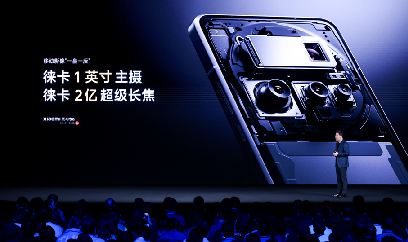
Xiaomi marked the grand finale of its 15th anniversary with a high-end product launch event, which introduced a series of new devices, including the Xiaomi 17 Ultra smartphone.

 Lu Weibing, president of Xiaomi, said the new phone “embodies a generational leap in mobile optical technology and showcases our top-tier scientific and engineering capabilities”.

 The launch follows Xiaomi’s announcement on Dec 18 of an upgraded global imaging strategic partnership with Leica. Moving beyond earlier co-development models, the two companies have now entered a “strategic co-creation phase”, integrating Leica’s professional optics, design aesthetics, and interactive philosophy directly into Xiaomi’s products.

 Behind Xiaomi’s persistent drive toward the premium market lies robust and continuous investment in core underlying technologies. In the first three quarters of this year alone, Xiaomi’s research and development spending reached 23.5 billion yuan ($3.35 billion), with full-year expenditure projected to hit 32–33 billion yuan.

 With its deepened collaboration with Leica and sustained R&D commitment, Xiaomi said it will continue to strengthen its foothold in the global high-end technology market, signaling a clear direction toward innovation-driven growth.


Article inline ad

China Begins Work On Ultra-High Voltage Transmission Project

0

By Zheng Xin | chinadaily.com.cn | Updated: 2025-12-30

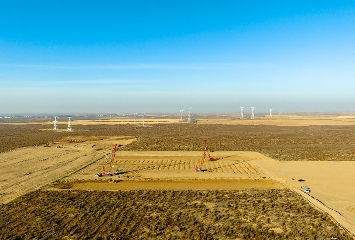
China broke ground on Tuesday on an ultra-high voltage transmission project, a critical green artery designed to funnel massive amounts of renewable energy from the western parts of Inner Mongolia autonomous region to the industrial heartland of Beijing, Tianjin, and Hebei province.

 The direct current line, spanning 700 kilometers with a transmission capacity of 8 million kilowatts, is expected to go into operation by 2027, said its operator State Grid Corp of China, the world’s largest power utility company.

 The 17.2 billion yuan ($2.4 billion) project is the first UHV line in the Inner Mongolia autonomous region specifically engineered to tap into the national strategy to build massive wind and solar bases in the country’s vast sand, Gobi, and desert regions, it said.

 UHV transmission lines refer to power transmission cables operating at voltages exceeding 800 kilovolts of direct current or 1,000 kV of alternating current.

 zhengxin@chinadaily.com.cn

Article inline ad

Yunnan Brewing Up Success With Coffee Exports

0

By LI YINGQING and YAN YUJIE in Kunming | China Daily | Updated: 2025-12-30

Southwest China’s Yunnan province is expected to be tops among domestic peers in coffee exports this year, buoyed by growing international interest in the region’s beans — a trend boosting widespread industry optimism about the outlook for Yunnan’s coffee sector.

 According to Kunming customs, exports of coffee and related products from Yunnan reached 840 million yuan ($120 million) in the first 11 months, making the province the largest coffee exporter nationwide.

 Gao Jie, general manager of Baoshan Gaolaozhuang Agricultural and Sideline Products Development Co, a coffee trader in Yunnan, said the company has exported 124 metric tons of coffee beans so far this year, covering Vietnam, South Korea, Malaysia and Singapore.

 Earlier this month, it exported 19.2 tons of Baoshan-grown coffee beans to Malaysia.

 According to local officials, small-grain coffee beans from Baoshan, western Yunnan, have gained international recognition for their distinctive flavor — often described as strong but not bitter, aromatic yet smooth, with a mild fruity acidity.

 Gao’s company has been exporting coffee beans since 2012, with international orders remaining stable throughout the years.

 Gao said the economic value of Yunnan coffee beans had been underestimated, but has gained recognition in recent years thanks to the development of foreign trade, the increasing number of companies going global and the growing global demand for coffee, leading to further improvements in quality and an increase in prices.

 Pu’er, the largest coffee-growing region in China, has witnessed the development of coffee exports in Yunnan.

 Gao Mei, deputy general manager of Yunnan Simao Beigui Coffee Co in Pu’er, said the company has been exporting arabica coffee beans since 2004, primarily to the European Union, with over 1,200 tons being shipped since the beginning of this year.

 With the diversification of market needs, coffee varieties have been improved, and the deep processing rate has significantly increased, she added.

 An increasing amount of Yunnan coffee, from beans to specialty products, is making its way into the international market, according to Kunming customs.

 Fan Ben, director of Yunnan Jinglan Tropical Crops Technology Co, said that previously the firm primarily exported coffee beans, and this year it has expanded its range to include coffee products such as cold-brew and freeze-dried varieties, with shipments reaching Russia, Jordan, Myanmar and Thailand.

 The company’s export value reached 17.56 million yuan, marking a 37 percent increase compared to the previous year, Fan said.

 Wang Xianwen, director of technology and industry research center at Baoshan Inspection and Testing Institute, said the export growth has been driven by Yunnan’s natural advantages as one of the world’s prime coffee-growing regions, benefiting from its unique climate, soil and altitude conditions.

 Meanwhile, joint efforts by multiple departments are driving the upgrade of the entire industry chain, including the collection of seed resources, the breeding of varieties, the upgrading of processing equipment and the improvement of field management techniques, Wang said.

 With the growth of the coffee market and favorable policies, the export prospects for Yunnan coffee are promising, Gao Mei said.

 “We should take advantage of the opportunity to improve the quality of the coffee and broaden its market reach,” Gao Jie said.

 Contact the writers at yanyj@chinadaily.com.cn

Article inline ad

Future Industries Top Priority In 2026

0

By MA SI | China Daily | Updated: 2025-12-30

 China’s top industry regulator said it will step up efforts to foster emerging and future industries while consolidating the steady advancement of its industrial economy for 2026.

 The year 2026 will be crucial for achieving a strong start to the country’s 15th Five-Year Plan (2026-30), said the Ministry of Industry and Information Technology at its annual national work conference that concluded in Beijing on Friday. Ten priority tasks were highlighted, with a sharp focus on cultivating new growth engines and upgrading the industrial ecosystem.

 Key sectors identified for strategic development include integrated circuits, new displays, advanced materials, aerospace, low-altitude economy and biomedicine — all designated as emerging pillar industries. The plan also reinforces support for breakthroughs in artificial intelligence and the orderly commercialization of new services such as satellite internet of things.

 To accelerate industrial innovation, China will launch its first batch of national demonstration bases for emerging industries and build a series of innovative industrial clusters. In future-oriented fields, top-talent programs will be promoted to tackle key challenges in segmented sectors, while policies for embodied AI and the metaverse will be refined. Additionally, research and development in 6G technology will be strengthened, according to the conference.

 Amid global economic uncertainties, China’s industrial sector has demonstrated notable resilience and vitality, achieving both qualitative progress and reasonable quantitative growth.

 An official from the ministry said,”In 2025, the industrial economy showed steady progress, with annual industrial output expected to increase by 5.9 percent year-on-year.”

 It is estimated that in 2025, China’s telecommunications services and software business revenue will grow by approximately 9 percent and 12 percent year-on-year, respectively, while revenue from digital industries is also set to rise by about 9 percent.

 Tang Wenkan, head of the Shanghai Municipal Commission of Economy and Informatization, said:”Shanghai will make every effort to advance breakthroughs across the entire integrated circuit industry chain, systematically plan for innovations and breakthroughs in biopharmaceuticals and medical devices, deeply implement the AI plus initiative, and accelerate the creation of world-class industrial clusters.”

 Meanwhile, the city will fully cultivate six emerging pillar industries, including high-end equipment and intelligent connected new energy vehicles, Tang said, adding that Shanghai will focus on attracting enterprises through fostering a favorable ecosystem.

 Zheng Yongnian, director of the School of Public Policy at The Chinese University of Hong Kong (Shenzhen), said it is vital that China continues to value the real economy. Such views stand in sharp contrast to some Western countries that are pursuing an excessive shift to services at the expense of manufacturing.

 “With a complete industrial system, China’s future competitiveness hinges on strategic industrial upgrading,” Zheng said.

 “Industrial upgrading can be broadly categorized into two types: One involves transitioning from producing textiles and footwear today to manufacturing electronics tomorrow; the other entails continuing to produce textiles and footwear while elevating their technological sophistication and added value,” he said.

 “Historical experience demonstrates that both forms of upgrading are critically important,” Zheng added.

 On Friday, China took a significant step toward shaping the future of its advanced robotics sector with the inaugural meeting of the humanoid robotics and embodied intelligence standardization technical committee in Beijing.

 The committee, operating under the Ministry of Industry and Information Technology, has been established as a key national body to formulate and revise industry standards in this cutting-edge field.

 masi@chinadaily.com.cn

Article inline ad

Structural Upgrading, Policy Support Fuel Long-Term Growth

0

Expanding domestic demand identified as key to high-quality development

China Daily | Updated: 2025-12-30

BEIJING — As China’s consumption sector expands amid structural upgrades, policies designed to stimulate spending are gaining momentum to reinforce this key pillar of the world’s second-largest economy.

 In its latest policy move, Chinese authorities — including the Ministry of Commerce and the People’s Bank of China — unveiled a circular on Dec 14, calling for coordinated fiscal, commercial and financial policies to channel credit into key consumption sectors and expand support for emerging consumption fields such as eldercare, culture, tourism, digital services and green industries.

 China will roll out plans to boost household incomes, advance high-quality full employment and raise basic pensions to enhance consumption capacity, an official from the Office of the Central Committee for Financial and Economic Affairs said, adding that quality products and services will be provided to meet new demand and unreasonable restrictions will be lifted to fully unlock consumption potential.

 Expanding domestic demand has been identified as the top priority task for China’s economic work in 2026, with a focus on promoting a better match between supply and demand. “This is not only crucial for stabilizing the economy in the short term, but also an inherent requirement for high-quality development in the medium and long term,” said Wang Wei, an expert with the Development Research Center of the State Council, at a recent forum.

 In recent years, the supply side of China’s consumption sector has made substantial headway, with new scenarios, business formats and models emerging to better align with evolving consumer demand and drive balanced supply-demand development, Wang said.

 Industry experts at the forum noted that industrial innovation and technological upgrading have been advanced to meet consumers’ new needs for quality and personalization, driving growth in the consumption sector. The National Bureau of Statistics said that in the first 10 months, high-tech and strategic emerging service industries maintained strong growth momentum.

 “The low-altitude economy is a vivid example of new scenarios catering to new consumer demand,” said Guo Liang, CEO and chief scientist at Aerofugia. Guo highlighted upgraded consumption scenarios provided by electric vertical take-off and landing aircraft, including cutting travel time for business commuters, enriching sightseeing experiences for tourists, and improving the efficiency of emergency rescue and medical services.

 Experts remain upbeat about the long-term potential of China’s consumer market. Wang predicts that during the 15th Five-Year Plan (2026-30) period, consumption’s share of China’s total economic output will exceed 60 percent, while services consumption will account for over 50 percent of household consumption, emerging as the consumer market’s primary driver.

 China is shifting from a goods-dominated consumption model to one balanced between goods and services, with demand for services such as culture, tourism, eldercare and childcare remaining robust, the official from the Office of the Central Committee for Financial and Economic Affairs said.

 China’s services-friendly consumption policies have continued to be optimized. In its campaign to boost consumption launched in March, China pledged support for living services, ice and snow economy, and cultural, sports and tourism industries to improve the quality of services consumption. NBS data show services retail sales rose 5.4 percent year-on-year in the first 11 months, outpacing goods retail sales growth.

 In the meantime, China’s services consumption sector is also opening wider to the world. The country has optimized visa and tax refund policies to facilitate inbound tourism, with the number of overseas visitors claiming China’s departure tax refund surging 285 percent year-on-year during the period, said the State Taxation Administration.

 According to a document released in September, China has pledged to advance high-level opening-up by promoting the orderly opening of the internet and cultural sectors, expanding the pilot programs for opening-up in fields such as telecommunications, healthcare and education, as well as supporting the inclusion of more services consumption sectors in the Catalogue of Encouraged Industries for Foreign Investment.

 “China will expand and share the benefits of opening-up and cooperation, and offer new global opportunities through new development momentum in the country,” said Commerce Minister Wang Wentao.

 Xinhua

Article inline ad

Consumption Top Driver In Five-Year Plan

0

Economy moving beyond simple volume to ‘structural optimization’

By LI JING | CHINA DAILY | Updated: 2025-12-30

China is accelerating its push toward a consumption-led economic model, with policymakers identifying the expansion of domestic demand as the key driver of GDP growth during the 15th Five-Year Plan period (2026-30), economists and officials said.

 Following the tone-setting Central Economic Work Conference, which prioritized domestic demand for 2026, experts noted a strategic transition: China is moving beyond simple volume growth toward “structural optimization”. This involves leveraging fiscal tools to boost household incomes and specifically targets the high-growth services sector to buffer against external uncertainties.

 An official from the Office of the Central Committee for Financial and Economic Affairs confirmed that Beijing will roll out concrete plans to boost household incomes and raise basic pensions while increasing the supply of high-quality products and services and also removing unreasonable restrictions to fully unlock consumption potential.

 Experts see this policy stance as a signal for significant growth in specific areas, and express optimism about the long-term potential of China’s consumer market.

 Wang Wei, a senior researcher at the Development Research Center of the State Council, said at a recent forum hosted by China News Service: “China’s consumption growth maintains strong momentum and ample potential. Emerging areas such as digital services, green technology and health-related demand are expected to become the primary engines of the consumer market.”

 Official data support this structural divergence. According to the National Bureau of Statistics, retail sales of services climbed 5.4 percent year-on-year in the first 11 months of 2025, outpacing the overall retail growth of 4 percent.

 Chen Lifen, a researcher at the DRC, described the current phase as a critical evolution from a goods-dominated model to one that balances goods and services, with a long-term trajectory toward a services-led structure.

 “As income levels rise, demand for services, which typically have high income elasticity, naturally increases its share of total wallet spending,” Chen said, adding that with basic needs largely met, the “quality upgrade” is driving capital toward personal development, leisure and smart home ecosystems.

 The shift is already reshaping corporate investment strategies as companies move to capture these high-quality demand pockets.

 Fang Xing, a vice-general manager at Ping An Property & Casualty Insurance, highlighted the surging “pet economy” — now valued at approximately 300 billion yuan ($42.81 billion). With veterinary costs often exceeding 10,000 yuan for major procedures, financial institutions are developing specialized insurance products to hedge these rising household costs.

 Similarly, in the manufacturing sector, the focus has shifted from scale to efficiency. Guo Yanhu, a director with Gree Electric Appliances, said consumer demand for green energy is driving research and development. He cited Gree’s investment in AI-driven energy systems — which has boosted efficiency by over 25 percent — as a direct response to both domestic eco-targets and demand from overseas markets.

 Economists emphasize that sustaining this momentum requires institutional reforms. Su Jian, a professor at the School of Economics at Peking University, said expanding “high-quality demand” requires a virtuous cycle where new products help cultivate new demand, while cost-reducing innovations allow new demand to scale.

 While fiscal and monetary policies are essential to expand demand, Su said expanding high-quality demand depends on developing new quality productive forces through product innovation and process innovation.

 Luo Zhiheng, chief economist at Yuekai Securities, added that boosting consumption during the 15th Five-Year Plan period is a strategic choice rather than a short-term policy response.

 “Key to raising the household consumption rate will be improving income distribution, strengthening social security and widening market access. These are the fundamental levers to converting potential demand into actual economic activity,” Luo said.

 lijing2009@chinadaily.com.cn

Article inline ad

China’s AI Objectives For Finance Outlined At Beijing Conference

0

By Jiang Xueqing | chinadaily.com.cn | Updated: 2025-12-29

China aims to advance the application of artificial intelligence in finance in a safe and orderly manner during the 15th Five-Year Plan period (2026-30), accelerating the establishment of a modern financial system that aligns with the development of the intelligent economy, a central bank official said on Sunday.

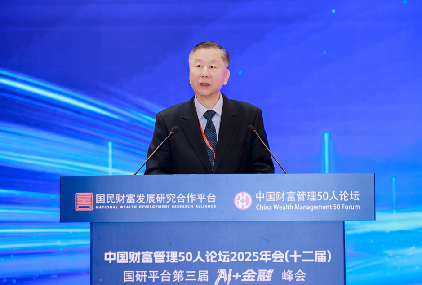
 Li Wei, head of the Technology Department of the People’s Bank of China, said at the annual conference of the China Wealth Management 50 Forum that the significance and capability boundaries of artificial intelligence must be fully recognized.

 Li said China intends to formulate a new-stage financial technology development plan, with a focus on deepening AI applications as a core aspect, during the 15th Five-Year Plan period.

 Policies for the prudent application of AI in finance will be developed, clearly defining the overall objectives, key tasks and main directions. Efforts will also be made to accelerate the construction of national AI industry application pilot bases in the financial sector, lowering the costs of industry model training and the barriers to application innovation, he said.

 Li added that the formulation of security norms for the financial application of large AI models will be explored, while the ethical governance model for AI technology in finance will be enhanced. There will also be an emphasis on categorizing and grading risks in AI applications and managing the admission of high-risk applications.

 Promoting the healthy development of “AI plus finance” requires balancing innovation and regulation, as well as efficiency and safety, said Shang Fulin, chairman of the China Wealth Management 50 Forum and formerly top regulator of China’s banking and securities sectors.

 On the one hand, financial institutions should be encouraged to actively explore AI application scenarios in compliance with laws and regulations, driving technology to better serve the real economy and technological innovation. On the other hand, the data governance system, internal control processes and risk prevention mechanisms should be improved simultaneously. The system constraints and capacity-building for key links must be strengthened to ensure that AI plays a role in a controllable, trustworthy and sustainable manner, effectively safeguarding financial security, Shang said.

 The application of AI in the financial sector still faces many issues that need to be addressed carefully, he added. AI is highly dependent on data and algorithms, and if the data sources are non-compliant or decision-making logic becomes a “black box”, it is easy to exacerbate information asymmetry and even create new risks.

 Shang also warned that attention must be paid to the structural divide caused by the digital divide. While encouraging leading financial institutions to take the lead, regulators must also address the digital divide that smaller institutions may face, balancing innovation with the inclusivity of the financial system.

 “AI technology is still accelerating and undergoing frequent iterations, and traditional regulatory and governance methods must continuously adapt to the new technological environment,” he said.

 “How to build an institutional framework and governance mechanism that aligns with digital productivity is a challenge that both regulators and market entities must jointly address.”

 The establishment of a Financial Investment Alliance was also announced during Sunday’s conference. The alliance is a joint initiative of the National Wealth Development Research Alliance, asset investment companies, insurance investment institutions, the National Integrated Circuit Industry Investment Fund, regional industrial guidance funds and leading equity investment funds, with the China Wealth Management 50 Forum to act as a guide. The alliance aims to build a bridge between finance and industry, exploring the best means for the long-term investment of capital in support of technological innovation and industrial development.

 jiangxueqing@chinadaily.com.cn

Article inline ad

Nearly 100 Fortune 500 Firms Set For Next CIFTIS

0

By YANG CHENG | chinadaily.com.cn | Updated: 2025-12-29

Nearly 100 Fortune 500 companies, including AstraZeneca, Eli Lilly, Siemens, and COSCO Shipping, have announced that they will join the next China International Fair for Trade in Services (CIFTIS), which is scheduled to run from Sept 9 to 13, the organizers said at a media briefing on Friday.

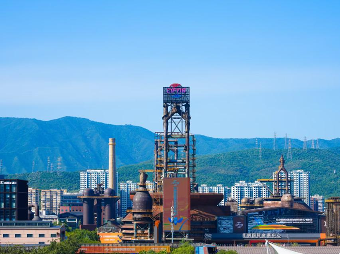
 The trade gala will take place in its permanent venue at the Shougang Park in Beijing. A global trade in services summit is planned to coincide with the event.

The summit will invite foreign dignitaries, heads of international organizations, and CEOs of multinational companies to attend and speak. Additionally, a series of forums and meetings will be held to foster dialogue, build consensus, and announce key outcomes in trade and investment.

 For the first time, the event will feature a dedicated zone for companies aiming to launch global strategies and an exhibition area reserved for small and medium-sized enterprises.

Another section will showcase examples and achievements of China’s international trade, particularly in service and technology exports.

 Professional institutions will be on-site to provide guidance on cross-border legal, tax, and intellectual property matters in areas such as policy interpretation and risk consultation services, the organizers noted.

Embassies in China and international business associations will establish service desks to facilitate connections between supply and demand and support companies in their international ventures.

 The fair will invite SMEs to participate, offering customized services and providing a platform for showcasing, promoting, and negotiating collaborations.

Article inline ad