Wednesday, November 25, 2026

Home Blog Page 114

DFS Group Moves To Elevate Hainan’s Retail Landscape

0

French luxury firm viewing island as pivotal gateway to net premium buyers

By MA SI in Haikou and ZHONG NAN in Beijing | China Daily | Updated: 2025-12-29

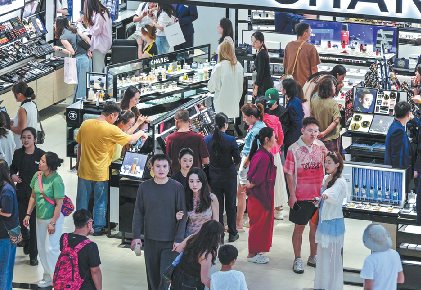
As Hainan Free Trade Port solidifies its status as a booming consumption hub, DFS Group, which is part of French multinational LVMH Group, is making a strategic push to elevate the island’s luxury retail landscape, viewing it as a pivotal gateway to China’s premium consumers.

 “DFS will utilize LVMH’s global resources to help the Hainan FTP attract more international luxury and premium retail brands, injecting new momentum into China’s consumption upgrade,” said Nancy Liu, president of DFS China.

 Sanya has already surpassed first-tier cities like Guangzhou, Guangdong province, to rank third in China’s core luxury consumption city rankings, right after Shanghai and Beijing, Liu said.

 This ascent underscores Hainan’s rapid transformation, fueled by robust domestic demand and its unique global connectivity, into one of the world’s fastest-growing luxury markets.

 However, this potential is tempered by challenges.

 DFS’s consumer research, surveying 2,500 visitors to Hainan, identified gaps compared to other international destinations, particularly in brand variety, pricing, service quality, retail environment, and dining/entertainment options.

Today’s Hainan visitors are sophisticated and globally savvy. They pinpoint brand assortment, service standards, and the shopping environment as key drivers for future spending, the research said.

 For Hainan to mature into a world-class retail and tourism center, it needs to first enhance the “supply-side” — the richness and quality of products and experiences on offer, the research added.

 To bridge this gap, DFS is leveraging the resources of its parent company, LVMH. Positioning DFS as a trusted operational partner, Liu said the company aims to synergize LVMH’s brand portfolio and advantages with its own retail expertise to upgrade Sanya’s luxury ecosystem.

 The cornerstone of this commitment is a massive joint venture project in Sanya’s Yalong Bay with Shanghai-based partner Shenya Group. This mega complex will house the world’s largest DFS beauty store and Yalong Bay’s largest indoor children’s playground. Scheduled for completion in 2026, the project is projected to attract 16-18 million visitors annually by 2030 and stimulate surrounding infrastructure and service industries.

 Beyond physical expansion, DFS plans to innovate the retail experience. The company intends to employ AI for deep data analysis to enable precision marketing and enhance “retail-entertainment” — creating immersive, entertaining shopping experiences that meet the rising demands of global and domestic tourists.

 Liu expressed optimism, citing resilient Chinese luxury consumers who spent $32.5 billion globally in 2024. “The Hainan FTP is a vivid microcosm of China’s high-standard opening-up, providing an unparalleled platform for the international luxury industry,” she said. “As a foreign enterprise, DFS deeply feels the resolve of China’s opening-up and will continue to deepen our roots in the Chinese market to share in the dividends of this development.”

 With the island-wide special customs operations further facilitating trade and linking Hainan more tightly to the colossal domestic market, Liu views the current policy signals as a significant opportunity.”DFS is firmly optimistic about the Chinese market and the future development of the Hainan FTP,” she said, signaling a long-term, integrated vision for growth alongside the province’s ambitious rise.

 “As the world’s second-largest consumption market, China has the largest middle-income group in the world, with stable growth in investment and consumption and enormous potential,” said Xu Man, a researcher at the Chinese Academy of International Trade and Economic Cooperation.

 The expansion of Hainan’s offshore duty-free shopping policy on Nov 1 further broadened the consumer appeal, extending the duty-free list to 47 product categories ranging from mini drones and portable musical instruments to handbags and premium tea, Xu said.

 Peng Jianzhen, president of the China Chain Store and Franchise Association, said: “China’s foreign firms have many products that sell well in developed countries. If they make some adjustments to cope with the demand of domestic consumers and domestic standards, there is room for further growth.”

 Contact the writers at masi@chinadaily.com.cn

Article inline ad

China To Usher In Digital Deposit Money Era For E-CNY

0

By Zhou Lanxu | chinadaily.com.cn | Updated: 2025-12-29

China has made a key breakthrough in the evolution of its central bank’s digital currency by positioning the e-CNY as “digital deposit money”, a move experts said is set to expand its use scenarios and strengthen the country’s leadership in global CBDC exploration.

 People’s Bank of China Vice-Governor Lu Lei said in the central bank-affiliated Financial News on Monday that the PBOC has released an action plan to further strengthen the management framework and financial infrastructure for the digital renminbi, or e-CNY.

 A new generation of measurement, management, operational and ecosystem frameworks for the e-CNY will take effect on Jan 1, 2026, Lu said, marking a structural shift for the digital renminbi from a digital cash model to a “digital deposit money” model.

 This means that the e-CNY will be an account-based digital payment and circulation instrument as the liability of commercial banks, while remaining under the central bank’s technical support and regulatory oversight, Lu said.

 It will be compatible with distributed ledger technologies and perform core monetary functions, including serving as a unit of account, store of value, and means of cross-border payment, Lu added.

 Liu Xiaochun, vice-president of the Shanghai Finance Institute, told China Daily that the change means the e-CNY can bear interest, expanding its monetary classification from M0, or cash in circulation, to M1, which includes both M0 and demand deposits.

 “This makes China the first economy to position its CBDC as an interest-bearing currency — that is, a deposit money — strengthening China’s leading role in CBDC development and digital financial innovation,” Liu said.

 The move, responding to long-standing market expectations, can boost adoption by businesses and enhance the e-CNY’s suitability for cross-border use, including in initiatives such as Project mBridge, according to Liu.

 “When the digital renminbi was positioned as cash, it could not be directly used for bank-to-bank cross-border payments and remittances but had to be converted from cash into deposits first, which involved additional costs and fees and constrained its use in cross-border payments,” Liu said. “By redefining the digital renminbi as deposit money, this constraint can be addressed.”

 The action plan said that digital renminbi wallet balances will be classified into corresponding monetary categories based on their liquidity. Digital renminbi held by bank-type operating institutions will be brought under the reserve requirement framework.

 If the reserve requirement ratio for digital renminbi is set at relatively low levels, commercial banks would also have stronger incentives to actively promote its use, said Xiang Haotian, an associate professor of finance at Peking University’s Guanghua School of Management.

 Xiang cautioned that how the digital renminbi interacts with existing deposits — whether as a substitute or a complement — will be crucial for policy design, noting that if existing bank deposits are simply converted into e-CNY, the overall macroeconomic impact may be limited.

 Xiang added that the digital renminbi is set to move from M0 to M1 under the new framework, while whether it may potentially extend to M2 — which includes M0, M1 and time deposits — has yet to be clarified in official statements.


Article inline ad

How China Will Optimize Existing Resources While Seeking New Growth

0

By Li Xunlei | China Daily | Updated: 2025-12-29

China’s economy has moved into a phase dominated by better managing existing resources. On the one hand, the sheer size of the nation’s economy means it can no longer operate out of the spotlight. Intensified international economic and trade competition has heightened requirements for optimizing existing resources while striving for new growth drivers. On the other hand, decades of rapid development have left a sizable debt burden, with new borrowing facing diminishing marginal returns and existing debt proving difficult to restructure.

 The recently convened Central Economic Work Conference acknowledged that the impact of changes in the external environment has deepened. Unlike last year’s meeting, which acknowledged the deepened adverse impacts, this year, there was no mention of such, signaling that China is now more confident in addressing external pressures such as tariffs and high-tech blockades. The country has the capability to turn these challenges into opportunities, actively maneuvering its international space and shaping favorable external conditions.

 The conference emphasized the necessity of responding to external challenges by strengthening internal capabilities. For next year’s work plan, it outlined the general principle of pursuing progress while ensuring stability and stressed the need for better coordination between domestic economic work and struggles in the international economic and trade arena — as well as ensuring both development and security.

 This conference further emphasized the focus of a meeting held by the Political Bureau of the Communist Party of China Central Committee on April 25 on “keeping employment, businesses, markets and expectations stable”. This calls for ensuring high-quality development to respond to the uncertainty of a rapidly changing external environment. It also involves reflecting on the struggles faced this year, understanding the ever-changing dynamics of great power competition, and seizing opportunities from crises.

 The recommendations for formulating the 15th Five-Year Plan (2026-30) state that relations between major countries have an important bearing on the international landscape, the dynamics of which will in turn exert a profound impact on the domestic development of every country. China is in a period of development where strategic opportunities exist alongside risks and challenges, while uncertainties and unforeseen factors are rising. Therefore, the country’s future economic work will also need to consider whether actions are conducive to struggles in the international economic and trade arena.

 Expanding domestic demand is a strategic measure to hedge against external shocks, ranking first among key tasks of next year’s economic work. The Central Economic Work Conference proposed advancing special initiatives to boost consumption and formulating plans for increasing incomes for both urban and rural households. This approach aims to stimulate consumption from the perspective of purchasing power, aligning with the recommendations for the 15th Five-Year Plan to raise the share of income for households in national income distribution and increase labor compensation in primary distribution.

 Expanding the supply of high-quality consumer goods and services is another means to release more potential for consumption growth. This will be achieved through new technologies, products and market scenarios, creating a virtuous cycle of supply and demand.

 In terms of investment, the conference has explicitly called for efforts to stabilize and revive investment. This includes increasing the scale of investment within the central government budget, which aligns with the major projects to be launched in the first year of the 15th Five-Year Plan period. Advancing urban renewal in a high-quality manner will also become one of the tools to counter downward pressure on property investment.

 China’s manufacturing value-added accounts for about 30 percent of the global total, while its population represents only 17.5 percent. In the short term, end-user demand in export markets still accounts for a significant share of China’s manufacturing capacity.

 Considering Washington’s efforts to block Chinese product transshipment — alongside potential trade protectionism in Europe and emerging economies — policy attention to the global layout of China’s manufacturing capacity is increasing.

 The conference proposed advancing the integration of trade and investment, as well as the coordinated development of domestic and foreign trade. This will help stabilize and enhance external demand resilience by facilitating the orderly cross-border layout of industrial and supply chains, boosting the export of intermediate and capital goods, and promoting the seamless integration of internal and external economic circulation.

 Next year’s economic work will place greater emphasis on the quality and efficiency of economic growth. Continued implementation of a more proactive fiscal policy and a moderately loose monetary policy will remain the policy impetus for the upcoming year.

 Regarding fiscal policy, it will be important to maintain necessary fiscal deficits, total debt levels and overall expenditure. It is expected that the fiscal deficit ratio, the scale of new local government special bonds and the scale of ultra-long-term special treasury bonds will remain broadly consistent with or slightly higher than this year’s figures.

 For 2026, as China embarks on the 15th Five-Year Plan, the GDP growth rate is expected to show a “low at the beginning and high toward the end” trend, resulting in a slight increase in the fiscal deficit ratio.

 The potential optimization directions for the implementation of major national strategies and security capability building projects in key areas include increasing innovation requirements, expanding investments in intangible assets and better combining investment in physical assets with investment in human capital, as well as increasing investment in public welfare initiatives.

 The optimization of fiscal expenditure structure may include increasing the proportion of public services spending in total fiscal expenditures and allocating more government funds to protect people’s livelihoods, as well as appropriately expanding the scale of central budgetary investment.

 In terms of monetary policy, the Central Economic Work Conference emphasized the possibility of deploying various monetary policy tools such as reserve requirement ratio cuts and interest rate reductions in a flexible and efficient manner to maintain ample liquidity. I expect a 25-50 basis point RRR cut and a 10-20 basis point interest rate reduction next year, with specific timing to be flexible and efficient.

 This year, the conference added a new requirement for monetary policy goals, making the reasonable recovery of prices an important consideration in China’s monetary policy. While last year’s conference also mentioned price recovery, this year’s focus seems to have shifted more toward the central bank’s responsibility in achieving this goal.

 Moreover, many previous policy effects have yet to be released. Coordinating existing policies and new ones will enhance their overall effectiveness. New policy-based financial tools were launched by the end of October, supporting over 2,300 projects with a focus on digital economy, artificial intelligence, consumer infrastructure and urban renewal. The total project investment is around 7 trillion yuan ($999 billion), which will support future investment growth.

 Local government debt management is also being addressed, with a 500 billion yuan allocation from the local government debt ceiling and an additional 200 billion yuan in special bond quotas for investment in some provinces. Subsidies for child-rearing and free preschool education have been elevated to systemic arrangements, with continuous annual funding. Consumption vouchers for the elderly with disabilities will be rolled out nationwide by end-2025, following pilot programs in certain regions, with the effects expected to last into 2026.

 The conference also highlighted the need to increase countercyclical and cross-cyclical adjustments. The proposal to enhance the effectiveness of macroeconomic governance aligns with the recommendations for formulating the 15th Five-Year Plan. Greater emphasis is placed on balancing the relationship between the government and the market, and leveraging the synergistic effects of policies.

 The second key task for next year’s economic work is to enhance innovation-driven development to accelerate the cultivation of new growth drivers. The importance of transitioning from old to new growth drivers is increasingly emphasized.

 The conference outlined plans to develop international technological innovation centers in Beijing (the Beijing-Tianjin-Hebei region), Shanghai (the Yangtze River Delta), and the Guangdong-Hong Kong-Macao Greater Bay Area, and to implement a new round of high-quality development initiatives for key industrial chains. These represent updated requirements and higher goals built upon existing development foundations.

 At the same time, the conference reiterated the need to intensify efforts to address involution, highlighting that the fight against involution is an essential part of developing a unified national market.

 The writer is chief economist at Zhongtai Financial International Limited. He Zhonghui of Zhongtai Securities’ research institute also contributed to this article.

 The views do not necessarily reflect those of China Daily.

Article inline ad

Hainan FTP’s Island-Wide Customs Lauded

0

By Yang Yiyong | China Daily | Updated: 2025-12-29

The launch of island-wide special customs operations at South China’s Hainan Free Trade Port represents a major strategic initiative by China to advance high-level opening-up in the new era. It carries profound historical significance and presents broad development opportunities. This strategy aims to build it into a prominent banner and a key gateway for China’s opening-up in the new era. Its objectives extend beyond economic growth, encompassing the broader mission of comprehensively deepening reform and opening-up and building a new system for an open economy.

 Historical significance

 First, it establishes a new benchmark for China’s high-level opening-up.

 Hainan FTP is China’s first free trade port aligned with the highest international standards of openness. It operates under a special regulatory framework featuring “liberalization at the first line, effective control at the second line and freedom within the island”. The island-wide special customs operations mark a qualitative leap in China’s openness across trade, investment, capital flows, personnel mobility, transportation and data flows. They serve as both a “testing ground” and a “stress test” for building a higher-standard open economic system.

 Second, it functions as a stress test for China’s move to deepen institutional opening-up. Institutional innovation lies at the core of Hainan FTP. Bold explorations are being conducted in areas such as cross-border data flows, cross-border finance, tax reforms (including low tax rates and a simplified tax regime), and the rule of law (such as the Hainan Free Trade Port Law). These efforts will generate experience for China to participate in and help shape international economic and trade rules, while providing replicable and scalable models for institutional opening-up nationwide.

 Third, it serves as a strategic pivot for the new “dual circulation” development pattern, in which domestic and overseas markets reinforce each other, with the domestic market as the mainstay. Located at the intersection of China and Southeast Asia, Hainan FTP will — after the recent launch of island-wide special customs operations — become a key hub linking the domestic and international markets. It will be better positioned to attract high-quality global factors of production while promoting domestic consumption upgrading and industrial transformation, thereby playing a unique role in supporting the domestic circulation and connecting domestic and international circulations.

 Finally, it contributes to exploring an FTP development path with Chinese characteristics. The development of the port is not a simple replication of foreign models. Instead, it integrates China’s national conditions and development stage to explore a new pathway toward building the world’s highest level of openness under a socialist system. While promoting economic growth, it also undertakes comprehensive missions including ecological civilization construction, rural revitalization and common prosperity.

 Development opportunities

 First, industrial opportunities in Hainan FTP are concentrated in three major areas. One is modern services, where sectors such as cross-border trade, international shipping, aviation hubs, modern finance, professional services (including legal, accounting and consulting), healthcare, education and culture are expected to experience rapid growth. The second is high-tech industries. Leveraging policies that enable secure and orderly data flows, it can develop frontier industries such as the digital economy, biomedicine, new energy and aerospace technology. The third is tourism and consumption. With the goal of becoming an international tourism and consumption center, sectors including duty-free shopping, medical tourism, exhibitions and sports events, cruise tourism and yachting services hold enormous potential.

 Second, opportunities for enterprises and individuals in Hainan are expanding. Local enterprises can benefit from highly competitive tax policies (such as corporate and personal income tax incentives), freer cross-border capital flows, more convenient cross-border trade arrangements and broader market access.

 Third, Hainan FTP creates new opportunities for regional and international cooperation. Hainan is set to become a key node linking China with members of the Regional Comprehensive Economic Partnership, particularly member states of the Association of Southeast Asian Nations. At the same time, it is expected to develop into an aviation and shipping hub facing both the Pacific and Indian Oceans, as well as a regional financial services center and an international trade center.

 Singapore ties key

 Comparisons between Hainan FTP and Singapore largely reflect expectations for Hainan FTP’s development vision and objectives, rather than a simple competitive relationship. The two can achieve a “flying side by side” symbiotic relationship mainly in the following aspects.

 First, it involves complementary positioning and differentiated development.

 Singapore is already a mature global financial, shipping and trading center, as well as a hub for multinational headquarters. Its core competitiveness lies in its highly developed rule of law, financial system, professional services and efficient governance. Hainan, by contrast, is an “emerging growth pole” and “China’s market gateway”. Its key advantage lies in its proximity to China’s vast domestic market, with enormous potential in consumption, domestic demand, application scenarios and institutional innovation experiments. Hainan places greater emphasis on becoming a new hub linking China with the world, particularly by exploring new rules in areas such as goods trade, data trade and the green economy.

 Second, there remains broad potential for cooperation. With a focus on aligning rules and standards, Hainan FTP can learn from Singapore’s advanced experience in financial opening-up, digital economy governance, intellectual property protection and dispute resolution mechanisms. In terms of industrial chain collaboration, Singapore’s multinational headquarters, financial institutions and professional service providers can support enterprises investing and operating in Hainan. The two sides also have significant cooperation potential in green finance, cross-border data flows, maritime services, aircraft maintenance and healthcare. In addition, they can jointly explore third-party markets, collaborate under the Belt and Road Initiative, and develop Southeast Asian and broader regional markets together.

 Third, this is not a “zero-sum contest”. The Asia-Pacific region is large enough to accommodate multiple successful economic hubs. Singapore’s success demonstrates the value of openness and the rule of law, while Hainan’s success will demonstrate the opportunities of the Chinese market and the vitality of institutional innovation. The two can form a positive interaction characterized by “experience sharing, market complementarity, rule-based dialogue and coordinated development”.

 In conclusion, the island-wide special customs operations at Hainan FTP mark a milestone in China’s reform and opening-up process. Its historical significance lies in “testing institutions for the nation and exploring new paths for opening-up”. The development opportunities it brings are comprehensive and profound. Its relationship with Singapore should be one of benchmarking and learning, complementary cooperation and shared development. If it can successfully integrate its market scale and policy advantages with the rules, capital and professional services of advanced international economies such as Singapore, it is fully possible for Hainan FTP to rise as a distinctive and dynamic new growth pole in the Asia-Pacific and even the global economic landscape — shining alongside Singapore and other international hubs in a spirit of shared prosperity.

 The writer is former director of the Market and Price Research Institute of the National Development and Reform Commission.

 The views do not necessarily reflect those of China Daily.

Article inline ad

Hainan FTP Becomes Hot Spot On Policy Breakthrough

0

Duty-free purchases, ‘Shopping in China’ initiative and free trade measures set to transform China’s southernmost island province into new global consumption landmark

By MA SI and CHEN BOWEN in Haikou | China Daily | Updated: 2025-12-29   

On the sun-drenched sands of Sanya’s Dadonghai Beach, the rhythm of the South China Sea waves mingles with animated conversations in Russian. A couple from Saint Petersburg, wrapped in towels, basks in the 27 C winter warmth.”It’s minus 10 back home,” the husband says with a smile. “Everything here is wonderful.”

 Meanwhile, more than 200 kilometers north in Haikou, capital of Hainan province, a different line forms — a winding one outside an Apple store at a duty-free shopping complex. Inside, staff members are busy explaining to customers: “The iPhone 17 Pro Max 2TB has a duty-free price of 16,859 yuan ($2,406). With the 1,000 yuan government consumption voucher, it’s 15,859 yuan — 2,140 yuan cheaper than the official website.”

 These are the contrasting yet interconnected scenes across Hainan, after it officially launched landmark island-wide special customs operations on Dec 18.

 Duty-free shopping policies, the “Shopping in China” initiative and freer trade management measures are transforming China’s southernmost island province into a new global consumption landmark and a strategic hot spot for multinational corporations, creating what analysts call a “Hainan model” in free trade zones.

 At the heart of this transformation lies a policy breakthrough.

 According to China’s Ministry of Finance, the special customs operations have expanded Hainan’s zero-tariff product coverage from 21 percent to 74 percent, with tariff-free items jumping from about 1,900 tariff lines to approximately 6,600.

 “These measures, combined with streamlined customs clearance procedures, solidify Hainan’s competitive edge as a low-cost, high-efficiency trade hub,” said Gao Ruifeng, head of Haikou customs. “It becomes a key gateway for global goods entering the Chinese market.”

 The policy impact has translated into remarkable statistics from day one. According to Haikou customs, on Dec 18, Hainan’s offshore duty-free sales skyrocketed to 161 million yuan, involving 24,800 shoppers and 118,000 purchased items. These figures represented staggering year-on-year increases of 61 percent, 53 percent and 25.5 percent, respectively.

 The epicenter of this commercial explosion was the China Duty Free Group’s Sanya International Duty Free Shopping Complex. Anchored in a deep integration of “duty-free shopping plus culture and tourism”, the mall launched a grand promotional campaign for the occasion, including giving away shopping vouchers. It also specially curated an exclusive VIP salon for international visitors, a strategic move designed to transform abstract policy dividends into tangible, experiential benefits and to craft a diversified, immersive new shopping scenario for foreign tourists.

 The result was a comprehensive eruption of market vitality. Data revealed that on Dec 18, customer traffic at the complex exceeded 36,000, a surge of over 60 percent year-on-year, while sales revenue soared by an impressive 85 percent. These standout figures served as a potent testament to the vigorous kinetic energy unleashed by Hainan FTP’s institutional innovations.

 Vika Karenina, a tourist from Russia, who entered visa-free, said:”This trip to Sanya has been wonderful for the sun and beach, and coinciding with the launch of special customs operations, the duty-free shopping was the most surprising part.”

 Assisted by a professional shopping guide to select perfumes and cosmetics, she said, “The payment options were diverse, no tax refund paperwork was needed, and the shopping process was as smooth as immigration clearance.”

 A spokesperson from the sales department of the duty-free city said, “To welcome this historic moment of island-wide special customs operations, we began planning and preparing three months in advance, increasing our inventory to create a high-quality shopping experience for domestic and international travelers.”

 According to statistics from the Sanya Municipal Bureau of Commerce, since the beginning of the year, cumulative duty-free sales in Sanya had surpassed 20 billion yuan by Dec 19.

 The market opportunities brought on by the policy have also attracted more international brands to accelerate their expansion in Hainan.

 On Dec 17, the international high-end cosmetics brand SUQQU entered the Sanya duty-free market, opening its first store in China’s duty-free channel in the city, further enriching the matrix of high-end consumer brands there.

 Travel platforms also recorded staggering booking increases. For the upcoming New Year holiday — the first short break after the special customs operations — flights to Sanya saw a 51 percent year-on-year surge in bookings, with Haikou experiencing a 19 percent increase, according to online travel platform Qunar.

International arrivals tell an even more compelling story. Data from Qunar show that international flight bookings to Haikou during the New Year period have increased over 40 percent. And for the 2026 Spring Festival period, international flight bookings to Haikou have more than doubled year-on-year, with Russian, Singaporean, Australian, Malaysian, South Korean and Thai travelers leading the surge.

 Dev Bagchi, an Indian businessman, said: “We came for business purposes, but later discovered Hainan is also a tourism destination. It’s fantastic. It’s a very good place. I will tell everybody in India to visit here, very nice people, very nice place. Weather is very good, just like Mumbai.

 “You know, people from India, they prefer to go to Europe for their holidays and I would like to tell them to come to China and especially come to this place, Hainan.”

 Hainan’s tourism is also expected to enter a new stage of golden development.

 Industry participants said the expected surge in cooperation is underpinned by Hainan’s entry policies, which include visa-free access for travelers from 86 countries, as well as expanded visa-waiver arrangements for cruise passengers and tour groups. Combined with the new customs operations, these measures are positioning the island as a platform for joint tourism ventures.

 “Everybody has to come to Hainan to visit this perfect island,” said Sandra Staber from Austria’s Tourism Office of Carinthia, pointing to the island’s rain forests and coastal attractions. Staber said easier entry procedures and duty-free shopping policies will strengthen Hainan’s appeal when developing premium island-based travel products.

 Thapanee Kiatphaibool, governor of the Tourism Authority of Thailand, said that “two-way tourism” would be central to future growth, suggesting that Hainan’s development could support more balanced tourist flows and shared destination marketing.

 “Hainan’s customs operations make it easier for us to engage directly with the Chinese market,” said Jan Vislocky of Slovakia’s Vislocky Travel.

 The expansion of the offshore duty-free shopping policy on Nov 1 further broadened the consumer appeal, extending the duty-free list to 47 product categories ranging from mini drones and portable musical instruments to handbags and premium tea.

 The efforts are yielding remarkable results. In the first month under the new policy, the average daily sales from departing international travelers at the Sanya International Duty Free Shopping Complex had skyrocketed to 19-fold the pre-policy level, solidifying the outbound tourism segment as a vast, potential-filled blue ocean market.

Beyond transient tourist spending, global corporations are making substantial long-term commitments, seeing Hainan not merely as a retail outlet, but as a strategic beachhead in the Asian market.

 US luxury group Tapestry Inc plans to add over 60 new stores in China over the next three years, with Hainan being a critical component. Sandeep Seth, chief growth officer and president of Tapestry International, said that many of these opportunities stem from China’s expanded island-departure duty-free policy in Hainan FTP, as well as the “Shopping in China” initiative — part of the country’s broader push to deepen market liberalization and spur inbound consumption — alongside young consumers’ rising appetite for self-expression.

 Tapestry said its Coach flagship store in Sanya has already seen stronger tourist traffic and broader purchasing demand under the upgraded policy.

 “With China’s strong consumption fundamentals and policy support, we are fully committed to long-term investment in Hainan FTP,” said Seth.

 Tesla, which established its presence in Hainan in 2020, reported nearly 30 percent year-on-year growth in vehicle deliveries in the province during the first half of 2025. “We firmly believe in the enormous potential of China’s consumer market,” a Tesla China representative said in a statement to China Daily. “As Hainan Free Trade Port develops and China opens further, this market will release even greater vitality.”

 “China is not only one of the world’s largest automotive markets, but also a global leader in the new-energy transition. Consumer acceptance of intelligent and green mobility is growing, while the demand for high-quality products and services continues to rise,” the Tesla China representative said.

 The logistics sector is equally optimistic. “We are confident that the island-wide special customs operations at Hainan FTP will lead to a higher benchmark of streamlined imports and exports, free and efficient flows of people, goods and capital, and deepened regional and global economic integration,” said Poh-Yian Koh, president of FedEx China. “These factors will further support our growth.” FedEx operates over 300 weekly international flights to and from China and plans to leverage Hainan’s new status to build smarter supply chains.

 The business confidence is materializing in concrete developments. In the core area of Sanya’s Haitang Bay National Coastal Recreation Park, Taikoo Li Sanya — a 213,700-square-meter resort-style premium retail complex — is taking shape as the third phase of the Sanya International Duty Free Shopping Complex. It is developed by UK company Swire Group in collaboration with China Tourism Group Duty Free. Scheduled for phased completion from 2026, it represents a bet on Hainan’s long-term luxury retail ascendancy.

 The tourism and hospitality industry is following suit. “We will further strengthen our sun-and-beach offerings with new projects in Sanya,” said Stephane Maquaire, president and CEO of Club Med, a Paris-based travel and lifestyle brand and a subsidiary of China’s Fosun International Ltd. He cited supportive policies and rising demand as key drivers for expanding and innovating resort offerings in China.

 Analysts observe that Hainan’s transformation transcends provincial development, representing a microcosm of China’s broader strategy to deepen market liberalization and stimulate inbound consumption through initiatives like “Shopping in China”.

 Bai Ming, a researcher at the Chinese Academy of International Trade and Economic Cooperation, said, “Hainan is evolving from a tourism island to a comprehensive consumption hub. For multinationals, it now serves as both a lucrative retail market and a testing ground for products and retail formats before a broader mainland rollout.”

 Despite the evident boom, challenges persist. Infrastructure must keep pace with surging visitor numbers, service industries require upskilling to meet international standards, and the ecosystem for high-value industries like biomedicine and technology — bolstered by initiatives like the newly launched Hainan International Technology Market — needs time to mature fully, experts added.

 Yet, the prevailing sentiment is overwhelmingly optimistic. As dusk falls on Sanya, the duty-free complexes remain brightly lit. Foreign tourists browse handbags while comparing prices on the latest drones.

 From the wait lines for electronics to the rush for tropical fruit from the multilingual chatter on beaches to the boardroom decisions in global headquarters, Hainan is showcasing, with unprecedented dynamism, a new chapter in China’s high-standard opening-up.

 As more policy dividends are released and infrastructure matures, this tropical island is accelerating its metamorphosis into a golden hub connecting the vast Chinese market with global opportunities — a place where the world comes to shop, play and build the future, experts added.

 Contact the writers at masi@chinadaily.com.cn

Article inline ad

Fiscal Policy For 2026 To Be More Proactive

0

Policy: Achievements in 2025 highlighted

By  LIU ZHIHUA and ZHANG CHENXU | chinadaily.com.cn | Updated: 2025-12-29

China will continue to pursue a more proactive fiscal policy next year with enhanced precision and effectiveness, to promote an effective improvement in the quality of the economy and a reasonable expansion in its scale, while maintaining social harmony and stability, said Finance Minister Lan Fo’an.

 He said on Saturday that the goal is to lay a strong foundation for a successful start to the 15th Five-Year Plan (2026-30) period, calling on fiscal authorities at all levels to focus on expanding domestic demand, upgrading the economic structure, strengthening growth drivers, and improving people’s livelihoods, while prioritizing the stabilization of employment, businesses, markets and expectations, and simultaneously advancing reforms, enhancing management, mitigating risks and boosting efficiency.

 He made the remarks at the national work conference for the fiscal system held in Beijing on Saturday and Sunday, during which he summarized the achievements of the fiscal system in 2025 and outlined its key tasks for 2026.

 “We will expand the scale of fiscal expenditure to ensure adequate funding for necessary spending, and optimize the mix of government bond instruments to enhance their effectiveness,” Lan said.

 “We will also improve the efficiency of transfer payments to strengthen local governments’ available and flexible fiscal resources,” he said.

 The authorities will also refine the expenditure structure to better support key priority areas, while strengthening coordination between fiscal and financial policies to amplify policy effectiveness, he added.

 Key tasks in the fiscal area for the next year include making domestic demand the main engine of growth and building a robust domestic market, while accelerating the integration of technological and industrial innovation to foster new growth drivers and advancing urban-rural integration and regional coordination to create more room for development.

 Other tasks include better safeguarding people’s livelihoods, promoting a comprehensive green transition in economic and social development, and strengthening international financial and economic cooperation to further advance high-standard opening-up, Lan said.

 Highlighting efforts to boost consumption, Lan said, “We will press ahead with the targeted initiative to spur consumption, actively expand effective investment, and step up input in key areas such as new quality productive forces and people-centered development.”

 “To accelerate the building of a unified national market, we will also standardize tax incentives and fiscal subsidy policies,” he said.

 The ministry will also ramp up fiscal support for science and technology, improve fund oversight and strengthen enterprises’ key role in innovation, Lan said.

 Efforts will be made to push ahead with high-quality development of key industrial chains, and a fresh round of pilot programs will be launched in selected cities for technology upgrades in the manufacturing sector, in order to accelerate the building of a modern industrial system, he added.

 Moreover, Lan noted that the ministry will continue efforts to advance rural vitalization, support people-centered urbanization, and promote more coordinated regional development.

 According to Lan, the ministry will further boost employment and incomes, improve people-centered education, enhance access to healthcare, and strengthen the social safety net, while unlocking new room for development by better meeting people’s livelihood needs.

 The senior official also highlighted advancing pollution control and ecosystem restoration, strengthening support for green and low-carbon development, and taking a coordinated approach to decarbonization, pollution reduction, ecological restoration and growth to energize green development.

 In addition, sustained efforts will focus on advancing reforms in global economic and financial governance, strengthening international trade and economic cooperation, and ensuring the effective implementation of goods-related tax policies for the island-wide special customs operations of the Hainan Free Trade Port, Lan said.

 He also emphasized the importance of comprehensively strengthening fiscal scientific management, deepening pilot programs in scientific fiscal management and firmly securing “three guarantees”: safeguarding basic living needs, ensuring salary payments, and maintaining grassroots operations.

 Risk resolution must go hand in hand with building long-term mechanisms and maintaining rigorous oversight of government debt, he said, adding that fiscal and tax system reforms should be deepened, with a balance between steady implementation and bold innovation.

 He said asset management must combine safeguarding and efficient utilization to improve the management system of State-owned assets, and precise problem identification with effective solutions is needed to strengthen financial and accounting supervision.

 The minister noted that 2025 has witnessed China’s fiscal system making new achievements, with substantial contributions to advancing toward socioeconomic development goals and targets.

 For instance, fiscal authorities have kept fiscal spending robust, increased support for key national priorities, broadened and intensified trade-in programs for equipment and consumer goods, and unlocked consumption potential on both the supply and demand sides, Lan said.

 “Focusing on high-quality development, we have substantially stepped up investment in basic research and launched city-level pilots for next-generation technology upgrades, alongside digital transformation pilots for small and medium-sized enterprises,” Lan said.

 As for people’s well-being, Lan said that fiscal authorities have strengthened policy tools to support stable employment, made steady progress toward free preschool education, raised national scholarship and student grant levels, and put in place a childcare subsidy program.

 “We have moved to contain risks in key areas, strengthened end-to-end oversight of the swap of local government hidden debt, and advanced the orderly wind-down and real transformation of local government financing platforms through a differentiated approach,” Lan said.

 Moreover, fiscal authorities have pushed zero-based budgeting reforms in local governments, fine-tuned policies such as value-added tax credit refunds, and upgraded the government procurement framework, Lan added.

 Zhu Yu, leading partner of financial services at Pan-China Certified Public Accountants, a major accounting service provider in China, said that a more proactive fiscal policy, implemented with greater precision and effectiveness, would provide more certainty for businesses seeking transformation and upgrades, deliver more tangible benefits to households, and further enhance the financial sustainability of local governments.

 “This will contribute to fostering a virtuous cycle, with market momentum recovering, employment and incomes improving, and domestic demand strengthening, laying a solid foundation for long-term economic growth,” Zhu added.

 An official from Sichuan province’s fiscal delegation at the work conference told China Daily that a package of measures featuring lighter burdens, broader support and stronger incentives has fueled a sustained rebound in the province’s consumption market this year.

 He noted that from January to November, Sichuan’s total retail sales of consumer goods reached 2.64 trillion yuan ($376.8 billion), growing 5.5 percent year-on-year — 1.5 percentage points more than the national average.

 “Looking ahead, we will keep expanding domestic demand as a key strategic focus, advance targeted measures to boost consumption, fine-tune the trade-in programs, encourage a stronger supply of quality goods and services, and further unleash consumption potential,” he added.

Contact the writers at liuzhihua@chinadaily.com.cn

Article inline ad

Revised Law To Spur High-Level Opening-Up

0

By WANG KEJU | chinadaily.com.cn | Updated: 2025-12-28

The revised Foreign Trade Law will strengthen China’s legal framework for high-level opening-up, promote high-quality trade growth, and enhance protection for businesses amid rising protectionism worldwide, experts and officials said.

 The updated provisions, which vow to further benchmark the law against international economic rules and safeguard the multilateral trading system, will also help foster a more enabling climate for mutually beneficial global cooperation and advance an open world economy, they added.

 The revised law, which was passed on Saturday at a session of the Standing Committee of the National People’s Congress, China’s top legislature, will take effect on March 1.

 The 11-chapter, 83-article law is formulated to advance high-standard opening-up, promote high-quality development of foreign trade, maintain foreign trade order, and protect the legitimate rights and interests of foreign trade dealers, as well as safeguard national sovereignty, security and development interests, according to the law’s general provisions.

 The Foreign Trade Law was enacted in 1994 and underwent its first major revision in 2004. It was further amended in 2016 and 2022. This year marks its second comprehensive revision.

 Wang Xuekun, head of the Chinese Academy of International Trade and Economic Cooperation, said the current update is a key step to ensure that the legal system both keeps pace with China’s domestic development needs and aligns with international economic and trade rules.

 “These provisions represent our institutional commitment to high-standard opening-up,” he said. “Our goal is a win-win outcome. A more open, rules-based Chinese trading system will contribute to a more open world economy, especially amid rising unilateralism and protectionism.”

 The revision includes provisions on advancing China’s efforts to actively align with high-standard international economic and trade rules, and to participate in the formulation of international economic and trade regulations.

 The revision also incorporates reform measures into the legal framework such as the negative list management system for cross-border trade in services, encouragement of digital trade, and accelerated development of a green trade system.

 At the annual Central Economic Work Conference held in mid-December, Chinese policymakers laid out economic priorities for 2026, emphasizing the need to “support service export” and “actively develop digital and green trade”.

 Minister of Commerce Wang Wentao noted that recent years have seen new developments and changes in the field of foreign trade, deepening reform of the foreign trade system, and the vigorous growth of new forms and models of foreign trade.

 “These reform, innovation and development outcomes need to be consolidated in a timely manner through the rule of law,” Wang said in September, when explaining the draft revision to lawmakers.

 Over the course of this year, the ministry has unveiled dedicated guidelines to boost services exports and expand green trade.

 Cui Fan, a professor of international trade at the University of International Business and Economics in Beijing, said that as multilateral frameworks come under strain and new digital and green standards emerge, China is institutionalizing its capacity to engage and adapt within a rules-based system.

 To further optimize the trade environment, the revised law emphasizes strengthening the protection of intellectual property rights concerning foreign trade and establishing a trade adjustment assistance system to stabilize industrial and supply chains.

 Additionally, the revision equips China with legal instruments to respond to external challenges and supplements and refines corresponding countermeasures.

Article inline ad

China To Pursue More Proactive Fiscal Policy, Finance Minister Says

0

By Liu Zhihua and Zhang Chenxu | chinadaily.com.cn | Updated: 2025-12-28

China will continue to pursue a more proactive fiscal policy next year with enhanced precision and effectiveness, to promote an effective improvement in the quality of the economy and a reasonable expansion in its scale while maintaining social harmony and stability, Finance Minister Lan Fo’an said on Saturday.

He said the goal is to lay a strong foundation for a successful start to the 15th Five-Year Plan (2026-30) period, calling on fiscal authorities at all levels to focus on expanding domestic demand, upgrading the economic structure, strengthening growth drivers, and improving people’s livelihoods — while prioritizing the stabilization of employment, businesses, markets, and expectations, and simultaneously advancing reforms, enhancing management, mitigating risks, and boosting efficiency.

He made the remarks at the national work conference for the fiscal system held in Beijing from Saturday to Sunday, during which he summarized the achievements of the fiscal system in 2025 and outlined its key tasks for 2026.

“We will expand the scale of fiscal expenditure to ensure adequate funding for necessary spending, and optimize the mix of government bond instruments to enhance their effectiveness,” Lan said.

“We will also improve the efficiency of transfer payments to strengthen local governments’ available and flexible fiscal resources,” he said.

The authorities will also refine the expenditure structure to better support key priority areas, while strengthening coordination between fiscal and financial policies to amplify policy effectiveness, he added.

Key tasks in the fiscal area for the next year include making domestic demand the main engine of growth and building a robust domestic market, while accelerating the integration of technological and industrial innovation to foster new growth drivers, and advancing urban-rural integration and regional coordination to create more room for development.

They also include better safeguarding people’s livelihoods, promoting a comprehensive green transition in economic and social development, and strengthening international financial and economic cooperation to further advance high-standard opening-up, Lan said.

Highlighting efforts to boost consumption, Lan said, “We will press ahead with the targeted initiative to spur consumption, actively expand effective investment, step up input in key areas such as new quality productive forces and people-centered development.”

“To accelerate the building of a unified national market, we will also standardize tax incentives and fiscal subsidy policies,” he added.

The ministry will also ramp up fiscal support for science and technology, improve fund oversight, strengthen enterprises’ key role in innovation, while pushing ahead with high-quality development of key industrial chains, launching a fresh round of pilot programs in selected cities for technology upgrades in the manufacturing sector, and accelerating the building of a modern industrial system.

Moreover, the ministry will continue efforts to advance rural revitalization, support people-centered urbanization, and promote more coordinated regional development.

According to Lan, the ministry will further boost employment and incomes, improve people-centered education, enhance access to healthcare, and strengthen the social safety net, while unlocking new room for development by better meeting people’s livelihood needs.

The senior official also highlighted advancing pollution control and ecosystem restoration, strengthening support for green and low-carbon development, and taking a coordinated approach to decarbonization, pollution reduction, ecological restoration and growth to energize green development.

Additionally, sustained efforts will focus on advancing reforms in global economic and financial governance, strengthening international trade and economic cooperation, and ensuring the effective implementation of goods-related tax policies for the island-wide independent customs operation of the Hainan Free Trade Port, Lan added.

He also emphasized the importance of comprehensively strengthening fiscal scientific management, deepening pilot programs in scientific fiscal management and firmly securing “three guarantees” — safeguarding basic living needs, ensuring salary payments, and maintaining grassroots operations.

Risk resolution must go hand-in-hand with building long-term mechanisms, maintaining rigorous oversight of government debt, he said, adding the fiscal and tax system reforms should be deepened with a balance between steady implementation with bold innovation.

He also said asset management must combine safeguarding and efficient utilization to improve the State-owned asset management system, and precise problem identification with effective solutions is needed to strengthen financial and accounting supervision.

The minister also noted the year of 2025 saw China’s fiscal system making new achievements, with substantial contributions for the country to advancing towards socioeconomic development goals and targets.

For instance, the fiscal authorities, Lan said, have kept fiscal spending robust, increased support for key national priorities, broadened and intensified trade-in programs for equipment and consumer goods, and unlocked consumption potential on both the supply and demand sides.

“Focusing on high-quality development, we have substantially stepped up investment in basic research and launched city-level pilots for next-generation technology upgrades, alongside digital transformation pilots for small and medium-sized enterprises,” Lan said.

As for people’s well-being, he said fiscal authorities have strengthened policy tools to support stable employment, made steady progress toward free preschool education, raised national scholarship and student grant levels, and put in place a childcare subsidy program.

“We have moved to contain risks in key areas, strengthened end-to-end oversight of the swap of local government hidden debt, and advanced the orderly wind-down and real transformation of local government financing platforms through a differentiated approach,” Lan said.

Moreover, fiscal authorities have pushed zero-based budgeting reforms in local governments, fine-tuned policies such as value-added tax credit refunds, and upgraded the government procurement framework, he added.

An official from Sichuan province’s fiscal delegation at the work conference told China Daily at a sideline interview that a package of measures combining lighter burdens, broader support and stronger incentives has fueled a sustained rebound in the province’s consumption market this year.

He noted that from January to November, Sichuan’s total retail sales of consumer goods reached 2.64 trillion yuan, growing 5.5 percent year-on-year — 1.5 percentage points faster than the national average.

“Looking ahead, we will keep expanding domestic demand as a key strategic focus, advance targeted measures to boost consumption, fine-tune the trade-in programs, encourage a stronger supply of quality goods and services, and further unleash consumption potential,” he added.


Article inline ad

Chinese Legislators Pass Foreign Trade Law Revision

0

By Wang Keju | chinadaily.com.cn | Updated: 2025-12-27

Chinese lawmakers adopted a revision to the Foreign Trade Law on Saturday, and the updated provisions will take effect on March 1.

 The decision was made at a session of the National People’s Congress Standing Committee on Saturday.

 The current legislative revision is a direct response to profound shifts in the global trade landscape and the accelerated restructuring of international rules, Xinhua News Agency reported.

 The latest 11-chapter, 83-article law has incorporated reform measures and established practices in the field of foreign trade into the legal framework.

 These include the negative list management system for cross-border trade in services, support for and promotion of new forms and models of foreign trade, encouragement of digital trade, and accelerated development of a green trade system.

 To further optimize the foreign trade environment, the revised law emphasizes strengthening the protection of intellectual property rights concerning foreign trade and establishing a trade adjustment assistance system to stabilize industrial and supply chains.

 Additionally, the newly revised law further equips China with legal instruments to respond to external challenges, refines corresponding countermeasures, and strengthens relevant legal liabilities.

 The Foreign Trade Law was enacted in 1994 and underwent its first major revision in 2004. The law was further amended in 2016 and 2022. This year marks its second comprehensive revision.

 wangkeju@chinadaily.com.cn

Article inline ad
Cross-Border Funds Program Expands

0

By ZHOU LANXU | CHINA DAILY | Updated: 2025-12-27

China has expanded its pilot program for multinational companies to operate integrated domestic and foreign currency capital pools into a nationwide policy, marking a significant stride in financial opening-up. The move aims to facilitate foreign business expansion in China and bolster Chinese companies’ global operations.

 The People’s Bank of China, the country’s central bank, and the State Administration of Foreign Exchange announced the nationwide implementation in a notice on Friday. The decision follows phased trials launched in 2021 which were expanded progressively to more regions.

 Under the policy, eligible multinationals can centrally manage both renminbi and foreign currency funds across borders, with companies encouraged to use the renminbi.

 This, the notice said, includes centralized handling of current-account receipts and payments through a domestic master account, net settlement — where multiple transactions of current-account receivables and payables are consolidated into a single transaction over a certain period — and concentrating funds to adjust liquidity surpluses and shortfalls within the group.

 Qualified multinationals can centrally handle foreign debt borrowing and intragroup funding to overseas affiliates within quotas linked to their net assets, allowing firms to deploy funds autonomously and efficiently within approved limits.

 According to the notice, qualified multinationals can raise external debt within 3.5 times their attributable owners’ equity and provide funding to overseas affiliates within 0.8 times that amount. Except for quota adjustments, related business can be handled directly through banks, helping reduce administrative costs for companies.

 Eligibility thresholds are set to ensure prudent implementation. Participating multinational groups must have combined annual cross-border receipts and payments of at least 7 billion yuan ($998.9 million) for all onshore members, combined onshore operating revenue of no less than 10 billion yuan, and combined offshore operating revenue of at least 2 billion yuan.

 Financial institutions, local government financing vehicles and real estate companies are excluded, except where finance companies act as the lead entity.

 By the end of September, 98 multinationals — spanning State-owned, private and foreign-funded enterprises — had joined the pilot, covering approximately 5,000 member companies. With approximately 300 multinationals estimated to meet the eligibility criteria nationwide, significant further uptake is anticipated, according to SAFE.

 “The nationwide rollout of the policy will help create a unified, transparent and predictable institutional environment, and enhance market entities’ confidence in China’s cross-border financial management policies,” a senior SAFE official told China Daily.

 The official said this policy would enhance multinationals’ cross-border fund management efficiency, reduce their operational costs and help strengthen their international competitiveness.

 A case in point is Wistron Info-Comm (Chongqing) Co Ltd, a major foreign-invested electronics manufacturer, which joined the pilot in March 2025. A spokesperson of the company said the integrated pool mechanism has streamlined fund transfers among 20 member firms, reduced settlement costs, and improved access to lower-cost overseas financing. It has also supported its Southeast Asian supply chain investments through intragroup funding to overseas affiliates.

 At the same time, authorities underscored the importance of risk control. The notice clarifies operational standards for both multinational companies and cooperating banks, and requires local branches of the central bank and SAFE to strengthen statistical monitoring and conduct off-site and on-site inspections to guard against cross-border capital flow risks.

 zhoulanxv@chinadaily.com.cn

Article inline ad