Wednesday, November 25, 2026

Home Blog Page 115

Government Capital To Steer Long-Term Investment Into Strategic Industries

0

By OUYANG SHIJIA | CHINA DAILY | Updated: 2025-12-27

China launched a State-backed venture capital guidance fund on Friday to steer long-term investment into strategic emerging and future industries, underscoring efforts by policymakers to cultivate new quality productive forces as a core driver of economic growth.

 The national venture capital guidance fund, jointly initiated by the National Development and Reform Commission and the Ministry of Finance, is designed to leverage central government capital to crowd in social and private investment, with a particular focus on early-stage, high-tech innovation.

 At the national level, the fund is capitalized with 100 billion yuan ($14 billion) from the central government, while regional and sub-fund layers are structured to attract participation from local governments, State-owned enterprises, financial institutions and private investors.

 “The development of venture capital investment has become an important engine for nurturing technological innovation and fostering new quality productive forces,” Huo Fupeng, director of the NDRC’s innovation-driven development center and chairman of the National Venture Capital Guidance Fund Co Ltd, said at a news conference held after the launch ceremony in Beijing on Friday.

 Three regional venture capital guidance funds covering the Beijing-Tianjin-Hebei region, the Yangtze River Delta region and the Guangdong-Hong Kong-Macao Greater Bay Area have already completed business registration, Huo said, adding that the three regional funds are expected to exceed 50 billion yuan in total size.

 “The regional funds are a key vehicle for translating national strategic intent into concrete investment,” he said, adding that they serve as the main platform for scaling up capital and ensuring efficient fund operations.

 At the launch ceremony, the three regional funds signed investment intents with 49 sub-funds and 27 direct investment projects, spanning sectors including integrated circuits, quantum technology, biomedicine, brain-computer interfaces and aerospace.

 Huo said a batch of investments is expected to be completed in the near term. Looking ahead, the fund aims to establish more than 600 sub-funds across the three regions to support emerging and future industries, he added.

 Emphasizing early-stage, long-term and “hard tech” investment, Huo said the national guidance fund is designed to address structural bottlenecks in China’s venture capital market, including fundraising and exit constraints, by providing patient capital and clearer policy signals.

 “By fully funding the guidance fund at the national level, the central government is making an important move to develop venture capital and stabilize market expectations,” he said.

 At the sub-fund level, no regional fund will act as the largest investor, reinforcing its policy-guidance role. Sub-funds will operate commercially, with at least 70 percent of their capital invested in seed-stage and early-stage companies, and an average fund size capped at 1 billion yuan to ensure a focus on smaller enterprises.

 According to the Recommendations of the Central Committee of the Communist Party of China for Formulating the 15th Five-Year Plan for National Economic and Social Development, China should develop venture capital investment, and establish mechanisms to increase funding and share risks in future industries.

 “The national guidance fund will bring together capital from local governments, centrally administered State-owned enterprises, financial institutions and private investors to form an investment ecosystem worth trillions of yuan,” said Bai Jingyu, director of the NDRC’s Department of Innovation and High-Tech Development.

 He added that the fund will support strategic emerging and future industries through investments in funds, companies and projects, which will help accelerate the development of new quality productive forces.

 Guo Fangming, director of the Ministry of Finance’s department of economic construction, said the fund represents a key tool for improving the efficiency of fiscal spending and strengthening support for innovation.

 ouyangshijia@chinadaily.com.cn
Article inline ad

Manufacturing In China Spurs Global Growth

0

Prominent presence underpinned by relentless innovation, capabilities

By MA SI | China Daily | Updated: 2025-12-27

Amid a backdrop of evolving global trade dynamics, China’s manufacturing sector remains a crucial pillar driving worldwide economic stability, technological progress and green transition, experts and corporate executives said.

 Highlighting that the strength of “Made in China” is the outcome of open competition, economies of scale and sustained investment in innovation, they said any attempts to frame this capacity as a threat overlook its fundamental role as a catalyst for shared development and a greener future for all.

 Luo Zhongwei, a researcher at the Chinese Academy of Social Sciences’ Institute of Industrial Economics, said that the prominent presence of Made in China worldwide is underpinned by relentless innovation and advanced production capabilities.

 Since 2000, China’s research and development spending has increased at an annual average growth rate of 14.2 percent, nearly twice that of South Korea and four times that of the United States, propelling its industries toward digital, intelligent and green development, Luo said.

 “Some foreign countries’ claims that China should cut its capacity are nothing but a pretext to curb its industries. The real intention is to deprive China of its competitive edge and impede its development, because what they really care about is not capacity, but their own market share,” he added.

 According to the Ministry of Industry and Information Technology, China has been the world’s largest manufacturing country in terms of output for 15 consecutive years, accounting for about 30 percent of global industrial output.

 The tangible impact of Made in China on consumers worldwide, particularly in developed economies, is significant. Market analysis has highlighted that reduced access to Chinese goods could raise inflation, as shown in mid-2025 when Washington threatened to impose high tariffs on Chinese exports, Luo said.

 Ripple effects

 Kyle Chan, a fellow at the Brookings Institution, said a defining characteristic of China’s industrial rise is the strong interconnection and mutual support among its sectors.

 Chan described China’s innovation landscape not as separate silos, but as interconnected, overlapping ecosystems that enrich one another. For instance, progress in fields like lithium-ion batteries creates positive ripple effects across related areas — including electric vehicles, consumer electronics and energy storage. Subsequently, demand from these downstream industries fosters economies of scale and spurs further innovation along the supply chain.

 Such close interdependence is built on China’s complete industrial system. China is the only country in the world to have all 41 industrial divisions and more than 700 subcategories as defined by the United Nations, said the Ministry of Industry and Information Technology.

 Huang Qifan, former mayor of Chongqing, said that such a sprawling presence enables Chinese and foreign companies alike to not just scale at a faster pace here, but also enjoy accelerated learning curves alongside lower costs and greater capacity to upgrade their products. That’s the unique contribution of Made in China to the world.

 A prime example is Tesla’s Shanghai Gigafactory, a landmark of China-foreign cooperation, which has become a cornerstone of the US EV firm’s global strategy.

 Producing nearly half of Tesla’s worldwide deliveries, the factory exemplifies efficiency with a new vehicle rolling off its line approximately every 30 seconds. Its success is symbiotic, built on a 95 percent localized supply chain that has nurtured a robust regional industrial cluster, demonstrating how foreign enterprises thrive within and contribute to China’s advanced manufacturing ecosystem.

 Tao Lin, vice-president of Tesla, said the company’s rapid growth in China cannot be separated from the country’s policy support and favorable business environment.

 Isabel Ge Mahe, vice-president and managing director of Apple Greater China, said, “Chinese suppliers are world-leading in their technologies.”

 Currently, more than 80 percent of Apple’s 200 major suppliers, including foreign and Chinese firms, have a manufacturing presence in China.

 Hong Qunlian, a researcher at the National Development and Reform Commission’s Chinese Academy of Macroeconomic Research, said Made in China lowers living costs for families worldwide, enables technological leaps for international partners and provides indispensable tools for planetary sustainability.

State VC fund primed to back future sectors

Article inline ad

Xinjiang Ramps Up Cotton, Textiles Biz

0

By MAO WEIHUA in Alaer and FANG AIQING in Urumqi | CHINA DAILY | Updated: 2025-12-27

Northwest China’s Xinjiang Uygur autonomous region is leveraging its strengths in cotton production, energy resources, strategic location, and supportive policies to restructure and upgrade its textile and apparel industry value chain.

 Efforts are focused on boosting local cotton processing, extending industrial chains and integrating cotton textile with petrochemical sectors.

 At a conference on industrial park supply chain development in Alaer city on Wednesday, Liang Yong, a national political adviser and director of Xinjiang’s cotton industry development leading group office, noted that the region has built a complete industrial chain covering chemical fibers, spinning, weaving, printing and dyeing, garments and industrial textiles.

 He reported that Xinjiang ranks second nationally in cotton yarn output, fourth in viscose and fifth in cotton fabric, with notable progress in items like towels and socks.

 Liang highlighted Xinjiang’s rapid expansion of printing and dyeing capacity and breakthroughs in large-scale polyester production. Woven filament yarn fabric output surged from 1.39 million meters in 2020 to 1.41 billion meters in 2024, and reached 1.63 billion meters in the first 11 months of this year, a 19 percent year-on-year increase.

 The total output value of Xinjiang’s textile and apparel industry rose to 97.39 billion yuan ($13.9 billion) from January to November, marking a 19.6 percent increase. Export value through Xinjiang’s ports reached 151.32 billion yuan in 2024, doubling from the 2020 figure.

 From 2021 to 2024, the sector employed about 236,000 people, with 82.8 percent in southern Xinjiang. From January to September, more than 32,000 new jobs were created, 72 percent of which were in southern Xinjiang.

 Liang outlined plans to raise the local cotton processing rate from 42 percent to 60 percent within five years, using around 4 million metric tons of cotton annually. He proposed closer collaboration with Central Asian countries to align standards and reduce trade barriers, while utilizing industrial parks to attract labor-intensive enterprises and expanding exports via China-Europe freight trains.

 The conference, attended by some 500 officials, industry insiders and scholars, also discussed topics including green transformation, Xinjiang’s chemical fiber and industrial textile development.

 Yan Yan, vice-president of the China National Textile and Apparel Council, emphasized the importance of supply chain restructuring for sustainable growth, citing Xinjiang’s progress with industrial parks as the core of supply chain development.

 Qi Xin, director of the institute for economic and trade cooperation under the Belt and Road Initiative at Beijing-based Chinese Academy of International Trade and Economic Cooperation, suggested adopting differentiated overseas strategies, enhancing research and development in high-performance fibers and digital printing, and establishing rapid response mechanisms to trade barriers.

 Alaer, the host city of the conference, is a key textile hub with Xinjiang’s largest and most integrated industry cluster. Chen Yufeng, the city’s deputy Party secretary, pledged full-cycle services for enterprises and the development of a full-chain ecosystem centered around cotton spinning, viscose and polyester clusters.

 One major enterprise, Xinjiang Yuxin New Materials Co, runs one of northwestern China’s largest polyester raw material bases in Alaer. The company’s executive deputy general manager Zhu Jianguo said the facility links petrochemical and textile industrial chains, creating 12,000 local jobs. All products are sold within the region.

 He added that the company plans to continue investing in Xinjiang, expand polyester filament production in Alaer and move further upstream in the value chain.

 The conference also marked the trial launch of Xinjiang Textile City, an integrated hub for fabric supply and processing, machinery and parts trading, product display, smart warehousing and logistics, and digital park management.

 Contact the writers at fangaiqing@chinadaily.com.cn


Article inline ad

Service Platform Launched For Low-Altitude Flights

0

By Qiu Quanlin in Guangzhou | China Daily | Updated: 2025-12-26

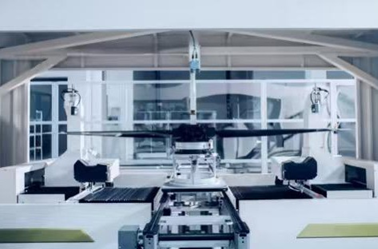
A comprehensive service platform to manage low-altitude flights was launched on Thursday in Guangzhou, capital of Guangdong province, providing crucial support for the development of the low-altitude economy across the province.

 The platform, launched during a conference on high-quality development of the low-altitude economy in the Guangdong-Hong Kong-Macao Greater Bay Area, serves as the sole link for integrating and implementing data and control measures from national-level platforms and military and civil aviation information systems.

 As the hub of the province’s low-altitude flight service support system, the platform features four main functions, including low-altitude air traffic management, joint supervision, safety compliance and control, and user services.

 The platform collaborates with various departments related to low-altitude operations for joint supervision, and coordinates low-altitude air traffic management and safety compliance across the province, providing cross-border, interprovincial and intercity low-altitude flight service support.

 The platform pioneers an integrated supervision service model for both manned and unmanned aerial vehicles, involving military and civilian sectors, achieving a breakthrough in coordinated low-altitude management.

 Guangdong, an economic powerhouse in South China, is home to over 30 percent of the enterprises engaging in the low-altitude sector in China, including household names such as DJI and EHang.

 With the number of low-altitude enterprises reaching 15,000 across the province, Guangdong produced 6.94 million units of civil drones in 2024, ranking first in the country, according to the conference’s organizers.

 The robust industrial development has resulted in a low-altitude industry landscape characterized by a tri-core city interaction among Guangzhou, Shenzhen and Zhuhai, with the industry scale exceeding 100 billion yuan ($14.27 billion).

 “We have made efforts in areas such as the low-altitude economy, technological innovation, infrastructure development and diversified application scenarios over the years, creating a favorable industrial ecosystem for the development of the low-altitude economy,” said Zhang Hu, executive vice-governor of Guangdong.

 During the platform launching event, a total of 64 projects were signed by companies, governments and industry associations from cities in the Greater Bay Area, with combined investment exceeding 20 billion yuan.

 The projects cover several key areas including infrastructure, complete machine manufacturing, operation services, technological research and development, and cross-sector integration.

 The Guangdong Office of the National Financial Regulatory Administration, in collaboration with several financial organizations, also introduced a series of financial measures during the conference, focusing on the financial needs of the low-altitude economic clusters.

 For many years, EHang, which mainly targets short to medium-distance air travel, has primarily focused on creating an entirely new and normalized mode of transportation — urban air mobility, according to Hu Huazhi, founder, chairman and CEO of the company.

 “We have done something quite interesting for the entire industry — as everyone knows, EHang has obtained the type certificate, airworthiness certificate, and production license, but this was an uncharted path,” said Hu.

 Over the years, the company, headquartered in Guangzhou, has not only focused on creating products, but also on developing a platform and completing the validation of its business model, Hu said.

 “In the near future, which I mean in the next one to two years, or two to three years, everyone will likely be able to take an air taxi for short to medium distances, especially for traveling within cities and between cities,” said Hu.

 In October, EHang unveiled its next-generation VT35 long-range autonomous passenger eVTOL, capable of serving intercity, cross-sea and mountainous transportation routes.

 The VT35 shares compatible takeoff and landing infrastructure with the well-known EH216-S, with an aim to form a seamless city-to-city product ecosystem.

 “I believe that in a very short time, people will see more products and demonstrations of urban air mobility from EHang,” Hu said.

 qiuquanlin@chinadaily.com.cn

Article inline ad

Steel Demand Seen Buoyed By Autos, Appliances In ’26

0

By Yin Mingyue | China Daily | Updated: 2025-12-26

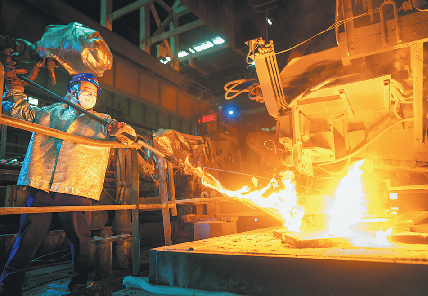
China’s steel demand is holding firm in key sectors such as new energy vehicles, automobiles and home appliances, reflecting a shift toward higher-quality industrial consumption, even as overall demand is projected to gradually decline over the next two years, according to a report.

 The report released by the China Metallurgical Industry Planning and Research Institute shows that China’s steel consumption is expected to reach 808 million metric tons in 2025, down 5.4 percent year-on-year, while steel demand in 2026 is forecast at 800 million tons, a 1 percent decline.

 Despite the overall downward trend, steel consumption in sectors such as automobiles, motorcycles, shipbuilding and home appliances is expected to continue rising in both 2025 and 2026.

 According to the report, steel consumption in the automotive sector will total 63.9 million tons in 2025, up 10.9 percent year-on-year.

 Taking into account output changes across different vehicle segments as well as the rising share of NEVs, steel demand from the automotive sector is projected to reach 66.7 million tons in 2026, representing 4.4 percent growth, the report said.

 The institute attributed the sector’s positive momentum to the steady operation of the broader economy, as well as the combined effect of promoting large-scale equipment upgrades, trade-in of consumer goods, and local replacement subsidy programs.

 “These factors have helped sustain healthy growth in the automotive industry, with the passenger vehicle market expanding steadily, the commercial vehicle market recovering, NEVs growing at a relatively fast pace, and foreign trade demonstrating strong resilience,” it said.

 Furthermore, even with a complex international trade environment, the home appliance industry showed notable resilience in 2025, maintaining steady growth supported by trade-in policies.

 According to the report, steel consumption in the home appliance sector is estimated at about 18.2 million tons in 2025, up 1.7 percent year-on-year, while demand is forecast to reach 18.9 million tons in 2026, representing 3.8 percent growth.

 Xiao Bangguo, president of the institute, said China’s steel industry should seize opportunities arising from adjustments in demand structure, but must first develop a correct understanding of product structure optimization, which should focus on high-quality development, targeting products that are both in demand and profitable, and avoiding blind pursuit of high-end positioning.

 Xiao said the product structure adjustment at steel enterprises should follow three principles — gaining a clear understanding of changes in demand for different products, aligning adjustments with each company’s development characteristics and surrounding market demand, and ensuring stable product quality.

 “Going forward, enterprises should deepen specialization and promote scale development on that basis, leveraging scale to achieve lower costs and enhance value creation and market competitiveness through strong brand building,”Xiao said.

 As the scope of industrial chain extension continues to expand, he also suggested that steel enterprises promote the development of collaboration-centered industrial ecosystems, making them a key lever for advancing intelligent, green and integrated development.

 Alongside structural and strategic adjustments, the institute also examined how steel companies are performing in terms of environmental, social and governance standards.

 The institute released ESG ratings for domestic steel enterprises in 2025, covering 108 companies, whose combined crude steel output accounted for about 82.8 percent of the national total.

 In 2025, ESG information disclosure and ratings in the steel industry showed a positive trend of both quantitative and qualitative improvement, the report said. The number of enterprises releasing ESG reports continued to grow, while leading companies achieved full ESG disclosure coverage and significantly improved the completeness of report content and data.

 However, the overall ESG performance of the industry still shows clear differentiation, with leading companies setting the pace, mid-tier firms catching up and lagging players needing improvement. “Going forward, stronger industry-wide ESG coordination mechanisms along the industrial chain are needed to raise the overall ESG level of the sector,” it said.

 yinmingyue@chinadaily.com.cn

Article inline ad

Pharma Innovations Gain Traction Abroad

0

By Li Jing | China Daily | Updated: 2025-12-26 09:51

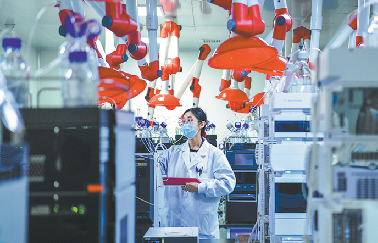
Chinese pharmaceutical innovations are gaining greater scientific visibility, as a growing number of high-quality clinical studies led by domestic researchers appear in leading international medical journals, experts and business insiders said.

 A recent example is a Phase III ovarian cancer study which was published in CA: A Cancer Journal for Clinicians, one of the highest-impact journals in oncology, marking a rare milestone for a Chinese researcher-led gynecological cancer trial in the journal.

 The study, known as FZOCUS-1, evaluated fuzuloparib, a PARP inhibitor developed by Jiangsu Hengrui Pharmaceuticals Co Ltd. It tested the drug, with or without apatinib, as a first-line maintenance therapy and provided stratified evidence to guide treatment based on patients’ genetic profiles, specifically their BRCA and HRD status.

 Conducted over six years at 54 hospitals across China, the study demonstrated that fuzuloparib-based maintenance therapy significantly delayed disease progression compared with a placebo.

 “The research, designed and completed by Chinese teams, provides solid evidence that can help improve treatment decisions in China and abroad,” said Wu Lingying, the study’s principal investigator from the Cancer Hospital of the Chinese Academy of Medical Sciences.

 Wang Quanren, vice-president of Hengrui Pharma, said the publication reflects the rising scientific credibility of China’s drug innovation.

 While China’s PARP inhibitor market has become increasingly competitive, Wang told China Daily that the FZOCUS-1 findings should be understood as a shift in treatment standards rather than a mere battle for market share.

 Industry analysts said such high-level evidence strengthens physicians’ confidence and influences clinical decisionmaking, and may translate into sustainable commercial value.

 The milestone reflects a wider maturation of China’s life sciences capabilities. According to the 2025 China Life Sciences and Biotechnology Development Report, China published 255,903 life sciences papers in 2024, representing a 10-year compound annual growth rate of 11.35 percent. China’s share of global life sciences publications rose to 28.67 percent in 2024, nearly doubling from 2015.

 China’s drug regulator has also accelerated approvals of domestically developed innovative products. The National Medical Products Administration reported that in the first half of 2025, 43 new innovative drugs were approved, including 40 developed domestically, marking a 59 percent increase year-on-year.

 Zhang Fangning, a partner at McKinsey & Company, told China Daily that China’s innovation system has proven highly effective in driving innovation in a fast and cost-effective manner, supported by “an innovation-conducive macro environment, a dense local ecosystem and a strong talent base”.

 However, she noted that first-in-class innovation requires deeper translational research, long-term investment and stronger academic-industry linkages — areas that are still evolving.

 “The key question is not how many papers are published,” one brokerage analyst wrote in a recent note, “but how many of these innovations ultimately translate into globally adopted therapies.”

 Hengrui Pharma is already moving to address this challenge. The company has initiated an international multicenter clinical trial of fuzuloparib for prostate cancer study in Europe, where patient enrollment has been completed and follow-up is ongoing.

 Wang said publication in a top-tier journal serves as a form of “scientific credibility endorsement” that can support overseas regulatory engagement and collaboration.

 “The publication demonstrates our ability to design, execute and publish clinical research at international standards,” Wang said, adding that it helps build trust with regulators, investigators and potential partners abroad.

 lijing2009@chinadaily.com.cn

Article inline ad

Chinese Exporters Learn To Adapt, Thrive

0

By Wang Keju | China Daily | Updated: 2025-12-26

Looking back at the trajectory of China’s foreign trade in 2025 is like tracing a line marked by pressures, adaptation and resilience. For a journalist who has observed all the twists and turns, it is more of a story about the ability of many businesses to transform adversity into opportunity.

 The year began under a familiar but intensifying shadow, as the United States announced new tariffs on Chinese imports, triggering uncertainty in boardrooms and on factory floors across China’s major export provinces.

The Chinese government’s firm and swift countermeasures sent a clear message to the other side of the Pacific that trade wars produce no winners, and if forced to fight, China will fight till the end. This principled stance provided the nation’s business community with something vital — confidence. It underscored that they were not navigating the headwinds alone, but were backed by a national commitment to safeguarding their rights and interests in a rules-based system.

 The subsequent easing of trade tensions with the US — although it still left tariffs at an elevated level — created a workable “dynamic stability” that businesses could begin to navigate.

 “The return of the US market is largely attributed to China’s hardline stance and resolute countermeasures since the very beginning of the tariff war,” Mu Longsheng, marketing director of an oral care products manufacturer in Jiangsu province, told me during an interview. “Standing firm has earned us the respect and the orders we deserve,” Mu added.

 In the sprawling markets in Yiwu, Zhejiang province, I also interviewed merchants who once relied heavily on US buyers and have now begun making products for Southeast Asian, African and Latin American markets.

 Yes, it has been a demanding year, marked by complexities that required constant adaptation. But to label it merely “difficult” would be missing the point, because it has also been a year of maturation.

 Many exporters across sectors taught me that resilience is not merely about surviving the storm; it is about learning to dance in the rain, as Nobel laureate Ernest Hemingway said.

 The road ahead remains uncertain. But having witnessed the transformation in 2025, I am confident that China’s exporters will continue adapting, innovating and thriving.

 They have discovered something profound — their greatest strength lies not in any single market, but in their ability to evolve, to create and to connect with customers across an increasingly multipolar world.

Article inline ad

Land-Sea Trade Corridor Key To Regional Progress

0

Connects 583 ports with more than 1,300 categories of goods transported

By ZHOU LANXU | China Daily | Updated: 2025-12-26

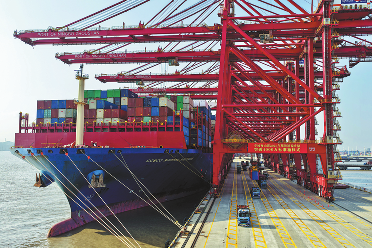
China has rolled out a package of financial measures to support the development of the New International Land-Sea Trade Corridor, officials said, underscoring the country’s commitment to advancing high-quality Belt and Road cooperation amid complex global geopolitical and economic conditions.

 The measures were unveiled on Wednesday in a guideline jointly issued by the People’s Bank of China — the nation’s central bank — and seven other government authorities.

 Covering 21 measures, the guideline aims to help build the corridor into a land-sea linkage connecting the Silk Road Economic Belt and the 21st Century Maritime Silk Road.

 They focus on strengthening infrastructure connectivity, bolstering financial linkages and facilitating cross-border investment, financing and trade settlement, including promoting wider cross-border use of digital renminbi to reduce settlement costs.

 Lu Lei, deputy governor of the PBOC, said on Thursday that the guideline demonstrates China’s determination to keep opening its door wider, carrying major and positive significance for promoting smoother domestic and international economic circulation against the backdrop of a complex international geopolitical and economic situation.

 Lu highlighted the need to accelerate high-level, two-way financial opening-up as China’s trade ties with members of the Association of Southeast Asian Nations continued to deepen.

 “We should seize the opportunity presented by the construction of the New International Land-Sea Trade Corridor to advance this work in a solid and innovative manner,” Lu said.

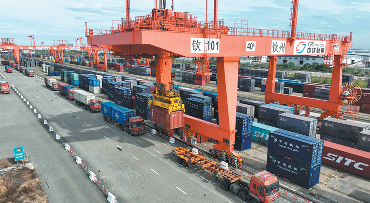
 To the south, the corridor connects with Beibu Gulf in the Guangxi Zhuang autonomous region and maritime routes across the Indian Ocean, while to the west, it links up with countries in Central Asia and extends to Europe, making it a key node of the Belt and Road Initiative. It currently connects 583 ports across 127 countries and regions, with more than 1,300 categories of goods transported.

 Adopted at the fourth plenary session of the 20th Central Committee of the Communist Party of China, the recommendations for formulating the 15th Five-Year Plan (2026-30) call for accelerating construction of the corridor as part of efforts to advance high-quality BRI cooperation.

 Chen Xinwu, executive vice-mayor of Chongqing, said the guideline provides strong safeguards for the development of infrastructure — such as railways and ports — which form the backbone of the corridor’s strategic role.

 Chen added that the planned dedicated fund in Chongqing is a key step to pool capital from both home and abroad, as well as State-owned and private sources, helping address financing challenges while driving innovation in cross-border finance and supply chain finance.

 The guideline said that a dedicated fund will be established in Chongqing to support infrastructure projects and industrial parks along the route, while sharpening focus on corridor infrastructure development via support from various financial institutions and diversified financing channels.

 It also proposed exploring and advancing pilot programs for cross-border digital renminbi payments between the Chinese mainland and Singapore, and called for studying expanding the use of digital renminbi in corridor-related payment and settlement, financing and tax refunds.

 “Building on the Project mBridge and the China-Singapore bilateral digital renminbi pilot, we will promote breakthroughs in using digital renminbi in cross-border settlement, enabling near-instant settlement for enterprises,” said Yao Li, head of the Chongqing Municipal Branch of the PBOC.

 zhoulanxv@chinadaily.com.cn

Article inline ad

Chinese Firm Completes Key Georgia Highway Section

0

By He Chun and Liu Boqian | chinadaily.com.cn | Updated: 2025-12-25

A newly completed section of Georgia’s E60 route opened recently, drawing praise from the country’s leadership.

 The six-kilometer stretch that opened on Dec 17 is part of the LOT3 project and was built by Hunan Road & Bridge Construction Group, a subsidiary of Hunan Construction Investment Group.

 According to Hunan Daily, the entire LOT3 segment, located in southwestern Georgia, is 12 kilometers long.

European route E60 is a major corridor linking Europe and China and is one of Georgia’s most important transport arteries.

 Georgian Prime Minister Irakli Kobakhidze said the road’s opening represents a concrete step toward the country’s modernization.

 The new route ends an era in which the old highway ran through towns, mixing pedestrians and vehicles and causing severe congestion. Built as a bypass, the route avoids level railway crossings and restores safety and efficiency for locals.

Article inline ad

Jacobio, Astrazeneca Ink Cancer Drug Deal

0

By Li Jing | China Daily | Updated: 2025-12-25

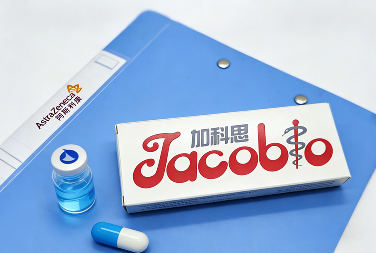
Chinese biotech innovator Jacobio Pharma has struck a global out-licensing deal with pharmaceutical giant AstraZeneca for a promising cancer drug, marking one of the largest cross-border transactions for a Chinese small-molecule oncology candidate currently in clinical trials.

 The deal, announced on Monday, centers on a potential $2 billion partnership to tackle KRAS-mutated cancers, long considered one of the most elusive targets in oncology.

 Under the terms of the agreement, Hong Kong-listed Jacobio will receive an upfront payment of $100 million. Depending on future development, regulatory, and commercial achievements, the company is eligible to receive up to $1.915 billion in milestone payments, alongside tiered royalties on net sales.

 AstraZeneca will obtain exclusive global rights to research, develop, and commercialize the pan-KRAS inhibitor, known as JAB-23E73, outside the Chinese mainland. In the mainland market, the two companies will conduct joint development and commercialization, sharing both costs and potential profits.

 The partnership comes as multinational pharmaceutical companies aggressively scout for next-generation assets.

 Matt Hellmann, vice-president of early oncology development at AstraZeneca, highlighted the significance of the target. “KRAS-mutated cancers represent one of the most challenging areas in oncology,” Hellmann said in a company statement, adding that advancing JAB-23E73 alongside AstraZeneca’s broader oncology portfolio could accelerate the development of improved patient outcomes.

 For Jacobio, the alliance is a strategic maneuver to secure a foothold in a fiercely competitive global market. During an online briefing on Monday, Wang Yinxiang, Jacobio chairman and co-CEO, emphasized that future competition in the pan-KRAS field will hinge on “global development capabilities and commercialization”.

 Wang said that Jacobio selected AstraZeneca over smaller US biotech firms specifically for its “global resources and investment scale”. He pointed out that the true commercial potential for pan-KRAS inhibitors lies in first-line treatment, the initial standard of care, rather than second-line therapies used after initial treatments fail. However, first-line application requires combination therapies with other drugs, such as antibody-drug conjugates or immuno-oncology agents.

 “We understand that this product needs to be partnered with a large pharmaceutical company that has a rich internal pipeline to conduct combination therapy studies,” Wang explained.

 AstraZeneca is a dominant player in oncology, with its cancer portfolio revenue growing 21 percent year-on-year in 2024, accounting for 41 percent of its total revenue.

 JAB-23E73 is designed to target KRAS mutations, which act as an “on-off switch” for cell growth. When mutated, the gene remains stuck in the “on” position, driving tumor growth. While the industry saw its first breakthrough with the US Food and Drug Administration approval of a specific KRAS G12C inhibitor in 2021, JAB-23E73 is a “pan-KRAS” inhibitor capable of targeting a broader range of mutations.

 The drug is currently undergoing Phase I clinical trials in China and the United States, where early signs of anti-tumor activity have been observed, according to both companies.

 KRAS mutations are among the most common cancer drivers. The companies estimate that KRAS mutations occur in about 23 percent of all cancer patients, with particularly high prevalence in pancreatic at 88 percent, colorectal at 50 percent, and lung cancers at 32 percent.

 In the race to develop pan-KRAS inhibitors, Jacobio faces competition from US-based Revolution Medicines, which utilizes a “molecular glue” technology.

 However, Wang expressed confidence in Jacobio’s small molecule approach. Citing disclosed data, he said that small molecule inhibitors appear to carry a lower incidence of skin toxicity and significantly reduced manufacturing costs, estimated at “one-twentieth” the cost of molecular glue production.

 Despite the deal’s magnitude, Jacobio’s shares faced pressure following the announcement, dropping more than 13 percent on Monday. Some market observers questioned whether the $100 million upfront payment met expectations.

 Wang defended the valuation, noting that upfront payments typically range from 3 to 8 percent of the total deal value. “Our 5 percent ratio is essentially in the upper-middle range,” he said.

 Regarding the stock volatility, Wang said the company remains focused on “technological progress” rather than short-term market swings.

 lijing2009@chinadaily.com.cn

Article inline ad