Wednesday, November 25, 2026

Home Blog Page 116

China Expands Cross-Border Integrated Fund Pool Nationwide To Boost Financial Opening-Up

0

By Zhou Lanxu | chinadaily.com.cn | Updated: 2025-12-26

China has expanded its pilot program for multinational companies to operate integrated domestic and foreign currency capital pools into a nationwide policy, marking a significant stride in financial opening-up. The move aims to facilitate foreign business expansion in China and bolster Chinese companies’ global operations.

 The People’s Bank of China, the country’s central bank, and the State Administration of Foreign Exchange announced the nationwide implementation in a notice on Friday. The decision follows phased trials launched in 2021, which were expanded progressively to more regions.

 Under the policy, eligible multinationals can centrally manage both renminbi and foreign currency funds across borders, with companies encouraged to use the renminbi.

 This, the notice said, includes centralized handling of current-account receipts and payments through a domestic master account, net settlement — where multiple transactions of current-account receivables and payables are consolidated into a single transaction over a certain period — and concentrating funds to adjust liquidity surpluses and shortfalls within the group.

 Qualified multinationals can centrally handle foreign debt borrowing and intragroup funding to overseas affiliates within quotas linked to their net assets, allowing firms to deploy funds autonomously and efficiently within approved limits.

 According to the notice, qualified multinationals can raise external debt within 3.5 times their attributable owners’ equity and provide funding to overseas affiliates within 0.8 times that amount. Except for quota adjustments, related business can be handled directly through banks, helping reduce administrative costs for companies.

 Eligibility thresholds are set to ensure prudent implementation. Participating multinational groups must have combined annual cross-border receipts and payments of at least 7 billion yuan ($999 million) for all onshore members, combined onshore operating revenue of no less than 10 billion yuan, and combined offshore operating revenue of at least 2 billion yuan.

 Financial institutions, local government financing vehicles and real estate companies are excluded, except where finance companies act as the lead entity.

 By the end of September, 98 multinationals — spanning State-owned, private and foreign-funded enterprises — had joined the pilot, covering approximately 5,000 member companies. With approximately 300 multinationals estimated to meet the eligibility criteria nationwide, significant further uptake is anticipated, according to SAFE.

 “The nationwide rollout of the policy will help create a unified, transparent and predictable institutional environment, and enhance market entities’ confidence in China’s cross-border financial management policies,” a relevant senior SAFE official told China Daily.

 The official said this policy would enhance multinationals’ cross-border fund management efficiency, reduce their operational costs and help strengthen their international competitiveness.

 A case in point is Wistron InfoComm (Chongqing) Co Ltd, a major foreign-invested electronics manufacturer, which joined the pilot in March 2025.

 A spokesperson of the company said the integrated pool mechanism has streamlined fund transfers among 20 member firms, reduced settlement costs, and improved access to lower-cost overseas financing. It has also supported its Southeast Asian supply chain investments through intragroup funding to overseas affiliates.

 At the same time, authorities underscored the importance of risk control. The notice clarifies operational standards for both multinational companies and cooperating banks, and requires local branches of the central bank and SAFE to strengthen statistical monitoring and conduct off-site and on-site inspections to guard against cross-border capital flow risks.

Article inline ad

Venture Capital Guidance Funds Projected To Empower Tech Innovation Firms Get Green Light

0

By ZHENG YIRAN in Shanghai | chinadaily.com.cn | Updated: 2025-12-26

The venture capital guidance funds from the Beijing-Tianjin-Hebei region, the Yangtze River Delta region, and the Guangdong-Hong Kong-Macao Greater Bay Area have completed business registration and meet the conditions for operation, the National Development and Reform Commission said.

 With a total value of over 50 billion yuan ($7.1 billion) each, the funds are expected to empower China’s technology innovation enterprises.

 Huo Fupeng, director of the Innovation-Driven Development Center of the NDRC and president of the National Venture Capital Guidance Fund Co Ltd, told Shanghai Observer that the three funds are regional funds in the three-tier structure of the national venture capital guidance fund, important carriers for implementing national strategic intentions, functional entities for amplifying national funds and conducting investment business, and key links for promoting the smooth and efficient operation of funds.

 The fund from the Beijing-Tianjin-Hebei region is managed by CICC Capital, a subsidiary of China Investment Corporation, and will fully mobilize the enthusiasm of central financial enterprises, do a good job in technology finance, and promote the key participation of banks, insurance, securities, and other institutions.

 The fund from the Yangtze River Delta region is managed by SDIC Unity Capital, a subsidiary of SDIC Group. It will serve as a driving force for high-quality regional development, gather various social capital, and empower the growth of regional science and technology innovation enterprises.

 The fund from the Guangdong-Hong Kong-Macao Greater Bay Area is managed by Shenzhen Capital Group Co Ltd, which will fully leverage the role of Shenzhen as a pioneer for reform and opening-up and a socialist demonstration zone, encourage various market entities to actively participate, and highlight the diversified characteristics of funds.

 Huo said that the three regional funds have signed investment intention agreements with 49 sub-funds and 27 projects. In the next step, 600 sub-funds will be established to serve emerging industries and future industry development.

 Management teams and entrepreneurial enterprises are welcome to actively connect with the three regional funds, to meet the financing and development needs of more entrepreneurial enterprises, he added.

Article inline ad

China’s Beef Industry Urges Immediate Safeguard Measure

0

By Zhong Nan | chinadaily.com.cn | Updated: 2025-12-26

On December 27, 2024, China’s Ministry of Commerce announced a safeguard investigation into beef imports following a petition by the China Animal Agriculture Association and nine provincial animal agriculture associations.

 The investigation covers fresh, chilled, and frozen beef products classified under specific harmonized tariff schedule codes, valued at $13.7 billion in 2024.

 China’s domestic beef industry is coming under growing strain, prompting breeders, industry groups and analysts to call on policymakers to introduce safeguard measures as soon as possible to steady market expectations and support local producers.

 Liu Qiangde, deputy secretary-general of the Beijing-based association, said that as China’s beef breeding industry has been making loss for an extended period, many breeders slaughter the breeding cattle to cut costs. The nation’s stock of breeding cattle declined by about 3 percent in 2024, a development that threatens future production capacity rather than only short-term output.

 Despite the ongoing safeguard investigation into imported beef, volumes continued to rise between January and October 2025, with inventories reaching about 1 million metric tons, according to the association.

 He said the entire supply chain — from feed and animal health products to downstream processing — is being squeezed, underscoring the need for safeguard measures.

 The association is urging policymakers to introduce safeguards such as import quotas by the end of 2025 and to put them into effect without delay, Liu added.

 According to the World Trade Organization, member economies may temporarily restrict imports under the Agreement on Safeguards when a surge in imports causes — or threatens to cause — serious injury to a domestic industry.

 On August 6, 2025, the ministry extended the deadline for the investigation to November 26, and on November 25 — citing the complexity of the case — it pushed the deadline back again to January 26, 2026.

 Industry analysts also warn that the pressures go beyond short-term market fluctuations and are now weighing on the sector’s long-term production base, raising concerns about the sustainability of domestic supply.

 Zhu Zengyong, a research fellow at the Chinese Academy of Agricultural Sciences in Beijing, said breeding cattle form the backbone of the sector. If their productivity falls, he warned, the entire beef industry could contract significantly.

 Unlike pigs or poultry, cattle require far longer cycles and higher upfront investment, Zhu said.

 A cow typically does not begin breeding until around 18 months of age. Gestation lasts about 10 months, followed by a further two-year rearing period. Any fall in breeding efficiency could therefore translate into at least four years of reduced domestic capacity and tighter supply.

 China’s beef sector also carries a significant social role. It supports tens of millions of rural households across the southwest, northwest and northeast regions, Zhu noted.

 “Cattle breeding has been an important pillar of rural revitalization and poverty alleviation,” he said, warning that persistent losses in the absence of safeguards or alternative income channels could push vulnerable families back into poverty — underscoring the industry’s importance to broader rural development.

Article inline ad

China Revises 2024 GDP Data

0

Xinhua | Updated: 2025-12-26

BEIJING — China’s 2024 gross domestic product (GDP) was revised to 134.8066 trillion yuan ($19.16 trillion), down 101.8 billion yuan from the preliminary figure, the National Bureau of Statistics said on Friday.

 The final verified GDP growth rate for 2024 remained at 5 percent, unchanged from the preliminary calculation, according to the NBS.

 China’s annual GDP goes through two stages of accounting: preliminary calculation and final verification. The final verification is conducted based on the annual statistical data, final fiscal accounts, and departmental administrative records.


Article inline ad

Consumption-Led Growth Eyed To Drive Expansion

0

Accelerating tech application by industries, strengthening economic ties with outside world, improving people’s well-being through increased public spending remain top priorities

By Jiang Xueqing | China Daily | Updated: 2025-12-26

China is set to press ahead with consumption-led and technology-driven expansion in 2026 as the economy undergoes a structural shift toward higher-quality growth, according to economists at major Chinese and international financial institutions.

 Xiong Yi, Deutsche Bank’s chief economist for China, said,”Our main takeaway from the Fourth Plenum is that Chinese leaders have become more confident in China’s technological capabilities and economic resilience, despite observing a more challenging external environment for the coming years.”

 The country’s three new policy priorities stand out for Deutsche Bank economists: accelerating technological application and commercialization by industries, strengthening economic ties with the outside world, and improving people’s well-being through increased public spending.

 “We think these policies will benefit innovative private firms in emerging industries and boost domestic consumption, especially in the services sector,” said Xiong.

 Chinese leaders have set key tasks for economic work in 2026, including pursuing innovation-driven development and accelerating the cultivation and expansion of new growth drivers.

 At the recently held Central Economic Work Conference, it was noted that the country must tap new space for demand growth to strengthen domestic circulation, and promote the deep integration of scientific and technological innovation with industrial innovation to develop new quality productive forces.

 Carol Liao, senior economist for China at Standard Chartered Bank (HK) Ltd, said: “China’s 15th Five-Year Plan (2026-30) continues to push for consumption-based and technology-driven growth, underlining the country’s structural transition …Patent-intensive industries have been expanding faster than the rest of the economy, indicating that a tech-driven growth model is taking shape.”

 Innovation and industrial upgrades should help China maintain a competitive edge in manufacturing — and therefore resilient exports — for the foreseeable future, Liao added.

 She emphasized that the long-awaited rebalancing from investment to consumption is likely to gather momentum, with policy priorities shifting toward supporting households. In addition to the goods trade-in program, which is likely to continue into 2026 and be expanded to the services sector, the government has also announced multiple measures to support childcare and eldercare.

 “The government might also improve the social safety net, moving toward a more unified and equitable social security system. This, together with efforts to stabilize the job market and asset prices, could help reduce the tendency for precautionary savings and boost household consumption,” she said.

 The 15th Five-Year Plan will usher in a critical period for China’s manufacturing to transition from scale to strength, said Yang Fan, chief macro and policy analyst at CITIC Securities.

 On the one hand, the consolidation and improvement of traditional industries will solidify the foundation of manufacturing. On the other, China will accelerate the industrialization of artificial intelligence technology, focusing on developing new pillar industries, such as new energy and aerospace, while also making forward-looking arrangements for future-oriented industries, such as embodied intelligence and sixth-generation mobile communication, Yang said.

 “We believe that policies aimed at building a modernized industrial system could achieve the effect of ‘setting everything right with one move’, with significant progress expected in technological innovation, industrial upgrading, and the comprehensive rectification of involution-style competition,” she said.

 Looking ahead to 2026, analysts at CITIC Securities expect the macro economy to show a mild recovery trend under structural divergence, with exports maintaining resilience, investment gradually warming up, and goods consumption facing short-term pressure.

 “During the 15th Five-Year Plan period, China’s economic growth rate may reach around 4.8 percent, while the policy focus will tilt more toward demand, with services consumption coming to the fore,” said Yang.

 The fourth plenary session of the 20th Central Committee of the Communist Party of China adopted recommendations for formulating the 15th Five-Year Plan, which essentially provides China’s economy with a new script, said Yu Xiangrong, Citi’s chief China economist.

 “The more important policy shift, in my opinion, is the pragmatic push to rebalance the economy,” said Yu.

 He noted that on the supply side, there is an emphasis on advancing the development of a unified national market and opposing involution-style competition; while on the demand side, there is a call for a notable increase in household consumption as a share of GDP and for more optimized and sustainable social security.

 “The key now is how well the policies are implemented, but recognizing the problems is half the solution,” he said.

 Acknowledging that rebalancing consumption takes time, Yu said the efforts to boost spending next year are likely to rely more on structural measures than cyclical policies.

 Next year marks the beginning of the 15th Five-Year Plan, with China expected to continue its transition toward high-quality growth under new strategic initiatives, said Liu Jing, chief China economist at HSBC Global Investment Research.

 Liu highlighted that domestic consumption will likely benefit from comprehensive policy support, including ongoing consumption subsidies and longer-term enhancements to social benefits aimed at bolstering consumer confidence.

 “We expect direct consumption stimulus measures to persist and likely expand beyond goods to include services. Support for services consumption — such as dining, tourism and entertainment — may be provided by both local as well as the central government,” said Liu.

 Over the longer term, she noted that government initiatives to strengthen the social safety net and improve access to public goods and services for rural migrant workers are set to boost disposable incomes, particularly among new urban residents.

 Zhang Wenlang, chief macro analyst at China International Capital Corporation, said CICC expects policy efforts to focus on expanding the supply of high-quality consumer goods and services.

 On the one hand, consumer potential may be unlocked from the supply side through measures such as easing market entry, optimizing administration, and streamlining regulation. On the other hand, supporting infrastructure in the consumption sector may also be strengthened, with fiscal, monetary and industrial policies used to promote the development of high-quality supply, said Zhang.

 “Effective investment is likely to tilt further toward consumption-related areas, increasing the share of government investment in people’s livelihoods and improving the layout of infrastructure and public-service facilities,” he said.

 This includes building supporting facilities for consumption — such as hospitals and clinics, schools and childcare centers, elderly friendly and barrier-free upgrades to public facilities, and amenities in tourist destinations — as well as infrastructure for durable-goods consumption, such as charging piles, private jet aprons and yacht berths.

 CICC analysts expect the government to use fiscal and monetary tools including interest-rate subsidies and relending facilities to support the development of high-quality consumer supply, especially in services-consumption areas such as eldercare, childcare, healthcare, and cultural and sports services.

 At the end of October, Goldman Sachs raised its real GDP growth forecast for China in 2026 from 4.3 percent to 4.8 percent, primarily due to stronger export growth assumptions.

 With the 15th Five-Year Plan calling for upgrades to traditional industries and growth in emerging industries, along with coordinated government support from logistics to financing, economists at Goldman Sachs believe Chinese exports will continue to grow briskly — at 5-6 percent per year — and gain market share in the coming years.

 They said the Fourth Plenum reiterated the goal of per capita GDP reaching the level of moderately developed countries by 2035.Based on realized growth from 2020 to 2025, this implies approximately 4.5 percent annual real GDP growth for 2026-30. By this logic, the government’s growth target for 2026 is likely to remain “around 5 percent”. Economic policies will need to be aligned to achieve these targets and goals.

 The Central Economic Work Conference emphasized the need to maintain a more proactive fiscal policy next year and reaffirmed that China’s monetary policy will remain moderately accommodative.

 Yu emphasized that fiscal policy will continue to play a leading role next year, with a certain degree of expansionary focus. Citi projects the broader fiscal deficit scale for stabilizing the Chinese economy in 2026 will reach around 11.8 trillion yuan ($1.7 trillion), or 7.9 percent of GDP, an increase of 1 trillion yuan compared to 2025.

 Deutsche Bank economists also foresee continued fiscal stimulus. “In addition to the recently announced 1 trillion yuan additional fiscal support through policy banks and local government bond quotas, we expect the government will keep the official budgetary deficit at 4 percent of GDP in 2026, and increase the special Chinese government bond quota to 1.5 trillion yuan from 1.3 trillion yuan this year,” said Xiong.

 He projects the aggregate fiscal deficit will remain high at 8.5 percent of GDP next year.

 Investment activity is anticipated to rebound, particularly in infrastructure and manufacturing. The 500 billion yuan policy financing tool, launched in September to assist local governments with project funding, was fully distributed within a month and is expected to mobilize 7 trillion yuan in total investments, said Liu at HSBC.

 Manufacturing investment will also be supported by reduced tariff uncertainty following the US-China trade truce and improved liquidity resulting from progress in settling local government arrears, Liu said.

 Yang of CITIC Securities projected that fiscal policy will continue its mild expansionary path, optimizing the allocation of fiscal funds and accelerating the transformation of local government financing vehicles, while monetary policy will maintain a moderately loose tone, focusing on structural adjustments.

 Looking ahead, Liao of Standard Chartered said: “We expect China’s macro policies to remain supportive to cushion growth, but policymakers may avoid ‘ultra-loose’ measures to safeguard financial stability and balance short-term economic relief with the long-term structural agenda.”

 Standard Chartered economists expect the People’s Bank of China, the country’s central bank, to maintain an accommodative monetary policy next year, but with measured easing to manage financial stability concerns.

 Liao and her colleagues expect the PBOC to inject sufficient liquidity to absorb the sizable government bond supply, including cutting the reserve requirement ratio by 25 basis points in the first quarter of 2026 and steadily purchasing central government bonds throughout next year.

 They also expect the PBOC to ease the policy rate, with a 10 basis point cut to the seven-day reverse repo rate in the second quarter, mainly with a signaling purpose, as room for further reductions is limited by banks’ shrinking net interest margins.

 jiangxueqing@chinadaily.com.cn

Article inline ad

Hainan On Faster Growth Track With New Customs Ops

0

Passenger traffic, consumption boom on latest opening-up move

By Ren Qi | China Daily | Updated: 2025-12-26

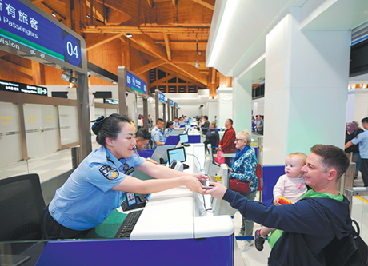
The rollout of the island-wide special customs operations on Dec 18 in Hainan Free Trade Port ushers in a new stage of Hainan province’s development, unlocking freer flows of goods, capital, personnel and data under zero tariffs, low tax rates and a simplified tax system, executives and experts said.

 They made the comments as the nation launched the major opening-up reform in the world’s largest FTP by area, designating the tropical island, with a land area of over 30,000 square kilometers, as a special customs supervision zone.

 Policy impact is already visible. At Haikou Meilan International Airport, Jia Green Chocolate Works (Hainan) Co, a joint venture chocolate producer based in the FTP, began shipping products to Beijing and Hanzhong, Shaanxi province, after completing customs clearance.

 “We have already benefited from the special customs operations of Hainan FTP,” said Wu Huijuan, general manager of the company’s marketing department.”For this batch of chocolate products, we have cut costs by about 10 percent.”

 The case underscores how streamlined procedures and duty policies are translating into lower logistics costs and faster market access via Hainan’s airport hubs — early wins that validate the FTP’s airport-led logistics pathways.

 Xiao Faxuan, president of Hainan Airport Group, said airports in Hainan will act as pioneers in building an open hub for the FTP and are striving to forge an aviation gateway facing the Pacific and Indian Oceans.

 “Leveraging the FTP as a fulcrum and aligning with the strategic goal of building a world-class airport enterprise, Hainan Airport Group will cultivate new quality productive forces by strengthening aircraft maintenance, expanding air logistics and exploring the low-altitude economy,” Xiao said, adding that the group will establish a pioneering zone for international cooperation in new quality productive forces and a near-zero-carbon, integrated port-industry-city demonstration area.

 “As the aerial gateway linking Hainan FTP with the rest of the world, all airports in the island will continue to enhance quality and efficiency, accelerate high-quality development, and build a world-class airport group that is professional, market-oriented and modern — growing in tandem with Hainan FTP,” Xiao added.

 Passenger traffic at Sanya Phoenix International Airport in Sanya, Hainan, has reached a new high this year. According to China Central Television, as of Saturday, the airport handled 133,599 take-offs and landings, up 7 percent year-on-year; passenger throughput reached 21.8 million, up 5.8 percent; and cargo throughput totaled 113,000 metric tons, up 16.3 percent.

 Within this overall growth, international passenger volume reached 895,000, surging 46.6 percent year-on-year — a standout performance that underscores Hainan FTP’s rising international appeal.

 Xiao said the group is fully advancing Phase III expansion projects at Sanya Phoenix International Airport and Qionghai Boao International Airport to meet an expected surge in passenger traffic, while intensifying domestic and international route networks and accelerating the creation of a two-ocean aviation gateway hub.

 He described FTP policies as an accelerator for the high-quality development of State-owned enterprises, citing liberalized air rights and duty-free treatment for value-added processing as “an exceptionally critical historical opportunity”.

 “In addition, we recognize the importance of deepening international cooperation,” Xiao said.”We will leverage air-rights liberalization to expand our international route network and, through professionalization, market-oriented reforms and digital upgrades enhance industrial-chain resilience and international competitiveness, thus laying a solid foundation for Hainan FTP’s industrial upgrading, capacity elevation and Chinese modernization.”

 Xiao stressed the group will also prioritize technological advances. On accelerating technological innovation and cultivating new quality productive forces, Hainan airports will align closely with the FTP’s overall plan and implement national strategies through technological empowerment.

 He outlined plans to focus on frontier-technology applications and strengthen smart-airport construction. The group will also adopt new products and technologies, optimize passenger experience and upgrade service quality.

 The company will deepen open collaboration by leveraging FTP policy advantages and strengthening ties with international hubs such as airports in Singapore and Hong Kong, introducing advanced technologies and management models.

 Next year marks the start of China’s 15th Five-Year Plan (2026-30).Xiao said Hainan Airport Group will continue to fully implement directives from the State-owned Assets Supervision and Administration Commission of the State Council on deepening SOE reform and developing new quality productive forces, and translate them into measurable gains in network connectivity, service efficiency and green operations.

 renqi@chinadaily.com.cn

Article inline ad

Ministry: US Section 301 Tariffs Will Evoke Firm Response

0

By Zhong Nan | China Daily | Updated: 2025-12-26

China strongly opposes the United States’ imposition of Section 301 tariffs on Chinese semiconductor products and will respond with necessary measures to safeguard its interests, said the Ministry of Commerce on Thursday.

 The Office of the United States Trade Representative announced earlier this week that the US will raise tariffs on Chinese semiconductor imports on June 23, 2027, with a rate to be announced not fewer than 30 days prior to that date. Until then, the tariff will remain at zero for an 18-month transition period.

 Speaking at a weekly news briefing, He Yongqian, a spokeswoman for the Ministry of Commerce, said China has noted the move and lodged stern representations with the US through their economic and trade consultation mechanism, saying China rejects the conclusions of the US Section 301 investigation.

 The commerce official said that the unilateral US tariffs violate World Trade Organization rules, undermine the international trading system and disrupt global supply chains, adding that they ultimately hurt US firms and consumers and should be revoked.

 “China is willing to address differences with the US through dialogue based on mutual respect, but it would take necessary measures to defend its interests if Washington persists with actions it views as damaging,” she added.

 Chen Jianwei, a researcher at the University of International Business and Economics’ Academy of China Open Economy Studies in Beijing, said while the US tariff plan signals growing policy uncertainty, both sides still have time and room to manage disputes through dialogue, given the high level of interdependence in the semiconductor supply chain.

 Negotiations remain the most practical way to address complex trade frictions, allowing both sides to design phased, workable arrangements that help stabilize expectations, he said.

 In response to a media query regarding reports that TikTok, a Chinese social media platform, has signed agreements with three investors to establish a new joint venture in the US to ensure its continued operations there, He, from the Ministry of Commerce, said the Chinese government hopes that the relevant parties can reach a solution that complies with Chinese laws and regulations while balancing the interests of all sides.

 The Chinese and US economic and trade teams previously reached a preliminary framework for properly addressing issues such as TikTok through cooperation, based on mutual respect and equal consultation, according to the Ministry of Commerce.

 The spokeswoman also called on the US to ensure a fair, open, transparent and nondiscriminatory business environment for Chinese companies operating there, stressing this would help support stable and sustainable economic and trade ties between the two countries.

 On being asked about reports in the media that China has continued to restrict exports of certain rare earth elements used in magnet production, and whether those controls would be relaxed for shipments to the US, He noted that China remains committed to safeguarding the security and stability of global supply chains and to promoting compliant, orderly trade.

 “I am not aware of that information,” she said. “Rare earth magnets are generally treated as ordinary import and export goods, and fluctuations in trade data are a normal market phenomenon.”

 zhongnan@chinadaily.com.cn

Article inline ad
Tech Firms Move Into AI-Powered Healthcare

0

By Fan Feifei | China Daily | Updated: 2025-12-24

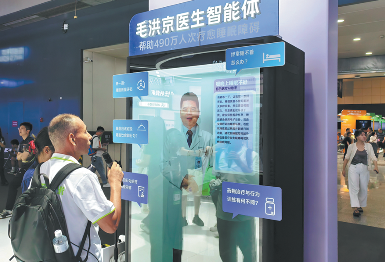
Chinese tech giants are doubling down on the fast-developing artificial intelligence-powered healthcare sector to accelerate the commercial application of AI and address the growing medical demands of a rapidly aging population.

 Ant Group recently announced that its AI health app AQ has been rebranded as “Ant Afu” and released a new version of the app, upgrading its three major functions — health companionship, health Q&A and health services.

 The company said “Ant Afu” focuses on the “health plus” strategy, positioning itself from an AI tool to an AI friend providing healthcare services and helping users manage their own as well as their families’ health problems.

 Currently, the number of its monthly active users has surpassed 15 million, becoming China’s largest AI healthcare app by users. It answers more than 5 million health questions from users every day, with 55 percent of users coming from third-tier cities and below.

 Zhang Junjie, vice-president of Ant Group and president of the company’s health business unit, said the biggest change in the new version is the addition of a health companion function, which aims to help users develop good health habits in their daily lives.

 Zhang said users can record their health status, upload their information by taking photos and uploading images, while the app can access smart devices such as Apple, Huawei, Vivo and Omron to synchronize users’ daily health data and let users view their exercise volume, heart rate and sleep time.

 Moreover, they can create health records for their family members, and set multiple health goals such as exercise, diet and living habits. Afu will act like a “personal coach” to customize a personalized plan for users based on their goals and provide daily reminders.

 “The professionalism and usefulness of the answers are the foundation of an AI tool,” Zhang said, adding that the health app should be able to have a real one-on-one dialogue with users and provide a personalized solution for each individual.

 However, Afu’s responses are not medical diagnoses and will never replace real doctors, the company said.

 According to a report by the Ministry of Industry and Information Technology, China’s elder care industry is expected to surpass 20 trillion yuan ($2.8 trillion) by 2030.

 “AI has become a key engine for improving efficiency and driving innovation in the health sector. The core competition among tech giants in the health industry has shifted from simple traffic acquisition to a contest centered on the building of comprehensive capacities covering data, application scenarios and ecosystem,” said Jiang Han, a senior analyst at market consultancy Pangoal.

 Jiang said the enterprises — which can integrate various links like health management, diagnosis, payment and pharmaceutical delivery and create a user-centered service loop — will gain an upper hand in the fierce competition. “This involves the ability to combine medical resources, ensure regulatory compliance, and foster cross-industry collaboration.”

 Baidu Inc recently announced the official upgrade of its AI-powered health assistant. Yang Minglu, general manager of Baidu Health, said,”We aim to provide every family with a one-stop service for disease prevention, knowledge acquisition, and health management through an intelligent, reliable and always-available AI partner.”

 Yang said the company’s vision is to integrate professional healthcare into every aspect of users’ daily lives.

 Currently, the total order volume of its healthcare services has exceeded 47 million, she added.

 Lu Mei, head of Baidu Health’s AI application products, said the app depends on a multi-agent human-machine collaboration system and covers a full range of services from light symptom consultations to complex disease planning and comprehensive health management. It can accurately process multiple input forms, with a recognition accuracy rate of over 95 percent.

 fanfeifei@chinadaily.com.cn

Article inline ad

Smart Glasses Sector Set For Rapid Growth

0

Shipments from Chinese AI-powered glass makers crossed 1m units in H1, accounting for 26.6% of global total

By Fan Feifei | China Daily | Updated: 2025-12-23

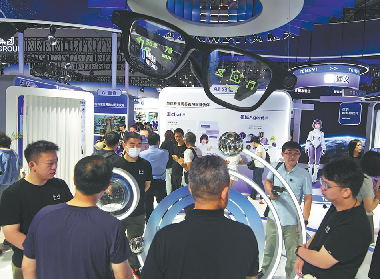
Artificial intelligence-powered glasses will experience rapid growth next year as the fast-evolving smart wearable devices become a key gateway for next-generation human-machine interaction and inject new vitality into the global consumer electronics market, experts said.

 Driven by the technological iteration and broad application of large language models, these intelligent and lightweight gadgets boast advanced features such as semantic understanding, voice interaction, image recognition and search functions, allowing users to access information more conveniently and interact with their surroundings in real time, they added.

 Data from market research company International Data Corp show that global smart glasses shipments will reach 12.8 million units in 2025, up 26 percent year-on-year. Shipments from the Chinese market alone are projected to exceed 2.75 million units, surging 107 percent year-on-year and ranking first worldwide.

 In the first half, shipments from Chinese smart glasses manufacturers surpassed 1 million units, accounting for 26.6 percent of the global total. The compound annual growth rate of China’s smart glasses shipments is estimated to reach 55.6 percent between 2024 and 2029, taking the top spot globally, according to IDC.

 Leading Chinese tech companies are racing to make smart glasses the next mass-market device after smartphones. Alibaba Group recently launched its new series of Quark AI glasses, which are equipped with the company’s AI model Qwen and its newly launched AI application Qwen App, to compete with United States-based tech company Meta’s smart glasses.

 This launch marks another significant step in Alibaba’s efforts to turn its advanced AI technologies into real-life applications in the consumer AI market, positioning Qwen as the intelligent core of its expanding consumer ecosystem.

 Powered by Qwen, the Quark AI glasses provide intelligent, hands-free assistance for everyday life by combining voice and vision recognition to enable real-time AI interactions. They boast an array of functions, such as instant price recognition, AI-powered Q&A, translation, navigation, AI-generated meeting notes, smart reminders and a live teleprompter.

 Users can utilize the gadget to take photos, record videos and listen to music. The glasses have also been deeply integrated with Alibaba’s ecosystem, including Alipay, Amap, Taobao, Fliggy, as well as leading music streaming platforms like QQ Music and NetEase Cloud Music.

 Wu Jia, vice-president of Alibaba Group, said the Quark AI glasses enable Qwen to connect more deeply with the physical world and that Qwen will be integrated into more intelligent terminal devices.

 “AI glasses are a uniquely powerful wearable as they consist of everything we envision for an AI assistant,” Wu said. “Looking ahead, AI glasses open the door to a revolutionary way of connecting and interacting with computers in the AI era.”

 Launched in 2016 as a Web browser incubated within Alibaba Group, Quark has become a leading AI-powered information services platform, with over 200 million users in China.

Baidu has rolled out its AI glasses Xiaodu Pro, which weigh just 39 grams and integrate a multimodal large model, supporting an array of AI functions, including translation, object recognition, photography, recording and conference memos. Xiaomi launched its AI glasses in June. Other players include Meizu and RayNeo.

 Chinese carmaker Li Auto has become the latest tech titan to join the AI smart glasses race with the rollout of its first wearable product called the Livis, which has a 36-gram lightweight frame.

 Its voice interaction function is powered by the company’s self-developed multimodal model. Users can use the glasses to control in-car functions such as air conditioners, lights and the horn, as well as the charging port, trunk and windows.

 Zhu Keli, founding director of the China Institute of New Economy, said that Chinese internet companies boast strong technological capacities in AI algorithms, natural language processing and computer visual recognition.

 “AI-enabled glasses, as the next-generation intelligent terminal, are well-positioned to meet users’ growing demands for interaction and real-time information acquisition,” he said.

 Emphasizing that smart wearables are emerging as a fresh growth driver in the consumer electronics sector, Zhu expressed optimism about the future of AI glasses.

 He predicts that they will function as personal digital assistants and become deeply integrated with smart homes, vehicle-mounted systems and healthcare services.

 Zhu also urged greater efforts to advance innovation in core technologies, including computing power and optical displays, to improve device performance, expand the content ecosystem and establish relevant industry standards.

 The AI-powered glasses market is on track to experience strong growth, with shipments expected to increase by 158 percent year-on-year, reaching 5.1 million units globally this year, according to market research company Omdia.

 By 2026, global shipments of AI glasses are expected to exceed 10 million units, driven by increased participation from leading consumer technology vendors. The figure is projected to reach 35 million units by 2030, representing a compound annual growth rate of 47 percent from 2025 to 2030.

 China is set to become the second-largest market for AI glasses after the United States, the consultancy said.

 It noted that China stands out for its distinct ecosystem, which features strong participation from major internet companies, smart device vendors and emerging players. The unique market environment and the rapid commercialization of AI technology will create a strong foundation for the growth of AI glasses in China.

 Rokid, a Hangzhou, Zhejiang province-based smart glasses manufacturer, has unveiled lightweight AI-powered eyewear in partnership with domestic eyewear brand Bolon.

 The new device integrates leading Chinese AI models, including Alibaba’s Qwen, DeepSeek and ByteDance’s Doubao, to offer a voice-activated digital assistant capable of recording videos, taking photos, playing music and providing navigation.

 Zhu Mingming, founder and CEO of Rokid, predicts that within the next three to five years, AI-enabled glasses will undergo dramatic changes, with more interactions shifting to smart glasses, while smartphones serve as terminal devices for communication, computing and storage.

 The company aims to sell more than 1 million units of AI glasses next year, with shipments expected to reach 2 to 3 million units by 2027, and surpass 10 million units by 2028, he said, adding, “AI glasses are approaching their iPhone moment.”

 In addition, the company plans to invest heavily in developing its own ecosystem, with third-party developers already designing accessories for its glasses.

 AI glasses witnessed explosive growth in sales during this year’s Singles Day shopping carnival.

 Data from e-commerce platform Tmall show that the turnover of smart glasses surged 2,500 percent year-on-year, while JD said the transaction volume of smart glasses surged 346 percent from a year earlier, making it the fastest-growing category among all digital products.

 Ye Qingqing, an analyst at IDC China, said the integration of AI models with lightweight hardware devices will give rise to a new human-machine interaction platform, adding that the AI glasses market is poised for robust growth in 2026.

 “Continuous breakthroughs in multimodal AI perception and semantic understanding technologies, coupled with customized AI services based on massive data from user behaviors, will accelerate the development of the smart glasses industry and the integration of such devices into people’s daily lives,” she said.

 Ye estimates that Chinese smart glasses shipments will exceed 4.9 million units next year, driven by technological advancements, improved user experience and a decline in prices.

 “Integrating intelligence into everyday glasses has the potential to transform the way we experience daily life,” said Jason Low, research director at Omdia.

 “Unlike wrist-worn wearable band devices, AI glasses encounter challenges such as privacy concerns from built-in cameras and microphones, as well as social resistance to all-day wear. These factors may hinder widespread adoption beyond early enthusiasts in the short term.”

 AI glasses vendors are increasingly seeking to keep users locked into their own ecosystems and AI platforms. “A truly platform and device-agnostic AI could transform AI glasses into an essential everyday tool. But to achieve this, AI must accompany users everywhere, a major business and technical challenge for vendors,” Low added.

 fanfeifei@chinadaily.com.cn


Article inline ad

Drones Deployed To Ensure High-Rise Safety In Jiangsu

0

By Han Jingyan | chinadaily.com.cn | Updated: 2025-12-24

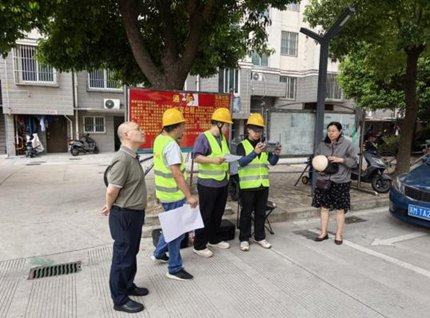
Taixing in East China’s Jiangsu province has introduced unmanned aerial vehicle (UAV) thermal imaging scanning technology to conduct safety hazard inspections on buildings in the city.

 By using technological means and systematic measures to build a strong defense line for building safety, the city has organized professional testing units to conduct UAV aerial inspections on the exterior walls of 330 high-rise residential buildings which are over a decade old in the urban area.

 Drones equipped with thermal imaging devices are like “smart eyes” for building safety, achieving comprehensive and accurate examination of the risk of hollowing and cracking in exterior wall tiles, plaster layers, insulation layers, as well as the stability of additional facilities such as sunshades and air conditioning racks, without any blind spot.

 According to Sun Xin, an engineer from Taixing’s municipal housing and construction department, the application of UAV thermal imaging and aerial photography technology provides a good solution to the “old and difficult” existing problems — When they review applications for special maintenance funds for residential buildings, there are such difficulties as defining the maintenance scope, measuring engineering quantities and quality supervision.

 Compared to traditional methods like manual climbing, drone technology can eliminate the risks of high-altitude operations to people, achieving a leap in efficiency and significant cost reduction, he said.

 The UAV’s precise recording of the location, scale and detailed data report of hidden dangers can provide scientific support for subsequent precise maintenance, helping to improve the accuracy and transparency of the use of the residential special maintenance fund, Sun added.

 After maintenance on a building is complete, the drone will be used to re-examine it for project acceptance, thus finishing a full closed-loop management mode of “precise investigation, scientific diagnosis, efficient maintenance and intelligent acceptance”.

 Please contact the writer at hanjingyan@chinadaily.com.cn

Article inline ad