Wednesday, November 25, 2026

Home Blog Page 117

AI’s Role Broadening Within Society

0

By Fan Feifei | China Daily | Updated: 2025-12-23

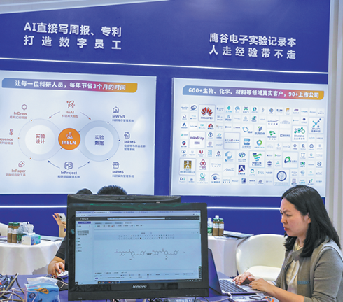
Chinese consumers have shown great enthusiasm toward artificial intelligence technology as the swift spread of AI is reshaping both lifestyles and relationships, largely by removing barriers to accessing information, according to a report from global consultancy Accenture.

 The surge of interest in DeepSeek since its founding in 2023 has marked a turning point for AI’s rapid integration into everyday life. The report said 77 percent of consumers use AI tools frequently -weekly or daily — and even among those born in the 1960s, usage is high at 57 percent.

 In the past, major decisions such as buying a car, purchasing insurance or planning a trip to an unfamiliar destination required hours of research and preparation. Now, AI tools allow consumers to rapidly build knowledge and form decisions, giving people the confidence to explore entirely new domains.

 When exploring new solutions or looking for ways to improve their lives, 57 percent of consumers now turn to AI tools — a share that already surpasses all video-sharing and e-commerce platforms, and far exceeds reliance on family and friends (35 percent), the report said.

 It noted that among users of AI tools, 65 percent of respondents view AI as an adviser and use AI to quickly understand unfamiliar topics or support decisionmaking, while 63 percent of those polled see AI as an assistant to improve work efficiency, and 46 percent regard it as a partner.

 Moreover, 36 percent of interviewees consider it a friend that helps them relieve emotional stress. This demonstrates that AI’s role is evolving from a purely informational aid into a companion that also provides emotional support.

 The research surveyed 5,000 consumers aged 18 to 65 nationwide between mid-August and early September.

 With the rapid spread of AI, the dynamics of brand-consumer interactions are being fundamentally reshaped. AI has become both a source of inspiration and a decisionmaking assistant for consumers, influencing how they perceive and prefer brands. In the future, AI may even act directly on behalf of consumers to facilitate purchasing behavior, the report said.

 For this reason, brands must prepare on two fronts: they need to deliver unique experiences and value in direct interactions with consumers, while also ensuring visibility and differentiation in AI-mediated interactions, where algorithms may serve as proxies for consumer decisionmaking.

 AI has already transformed the consumer landscape and will have profound implications in the years to come, while brands should harness AI for faster insights and deeper connections.

 Accenture said that to bridge the brand-consumer trust gap, brands need to adopt responsible AI practices and strengthen cybersecurity, while focusing on data protection and transparency around how AI-powered interactions are shaped.

 Internally, AI is injecting new efficiency and creativity into brand operations. Through AI enablement, brands can not only “see” consumers more clearly, but also provide services with greater speed, precision and personalization.

 “AI is deeply reshaping the decisionmaking process and operational efficiency in the retail field. Consumers can select products using AI-enabled search tools, while AI helps merchants lower costs and improve efficiency in terms of product design, marketing and customer services,” said Hong Yong, an associate research fellow at the Chinese Academy of International Trade and Economic Cooperation.

 Hong said China’s consumption market is gradually shifting toward an innovation-driven growth stage fueled by the accelerated application of AI-powered intelligent recommendations, customer services and virtual shopping guides.

 Nurturing an AI-driven new consumption model is pivotal to expanding domestic demand, boosting consumption and promoting high-quality economic growth, he said, adding that AI has the potential to change the way people shop by providing interactive consumer experiences and propelling the digital transformation of traditional retailers.

 Pan Helin, a member of the Expert Committee for Information and Communication Economy — which is part of the Ministry of Industry and Information Technology — said the rapid adoption of digital technologies represented by AI will inject fresh impetus into the country’s economic growth and speed up the digital and intelligent upgrade of traditional industries.

 Pan said AI technology is increasingly perceived as a key driver to build resilient supply chains, help companies adapt more quickly to sudden changes and take data-driven and real-time actions.

Article inline ad

Yunnan Topping Table For Chinese Coffee Exports

0

By Li Yingqing and Yan Yujie in Kunming | chinadaily.com.cn | Updated: 2025-12-24

The growth in coffee exports from the Chinese province of Yunnan has culminated in it leading the nation in shipments this year to date, customs data shows.

 The province exported coffee and related products worth 840 million yuan ($120 million) in the first 11 months of 2025, according to Kunming Customs, making it the country’s largest coffee-exporting region during the period surveyed.

 The growth has been driven by Yunnan’s natural advantages as one of the world’s prime coffee-growing regions, alongside efforts to upgrade the entire industry chain and increase product value.

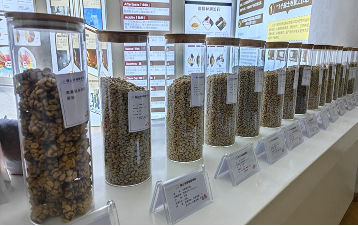
 According to local officials, small-grain coffee beans from Baoshan, a key producing area in western Yunnan, have gained international recognition for their distinctive flavor, often described as strong but not bitter, aromatic yet smooth, with a mild fruity acidity.

 Earlier this month, a shipment of 19.2 tons of Baoshan-grown coffee beans was exported to Malaysia. Gao Jie, general manager of Baoshan Gaolaozhuang Agricultural and Sideline Products Development Co, the provider, said the company has exported 124 tons of coffee beans this year to markets including Vietnam, South Korea, Malaysia and Singapore.

 Other producers are also expanding overseas. Fan Ben, director of Yunnan Jinglan Tropical Crops Technology Co, said the firm exported coffee products for the first time this year, with shipments reaching Russia, Jordan and Malaysia. The company has developed 17 coffee products, including cold-brew varieties.

 “The prospects for Yunnan small grain coffee beans are becoming more promising,” Gao added.

 “We should take advantage of this opportunity to improve the quality of the coffee and broaden the market reach.”

Article inline ad

Green Shoots Sprout In Fashion Landscape

0

Global brands’ confidence in nation’s luxury retail has strengthened on its large market scale and shifting consumption pattern of younger generation

By Wang Zhuoqiong | China Daily | Updated: 2025-12-24

Visitors to Taikoo Li Sanlitun, one of Beijing’s leading fashion and lifestyle destinations, can hardly miss the shift underway this winter.

 Three freshly opened stores — Dior, Tiffany & Co and Louis Vuitton — stand next to each other, creating a highlight for the Fashion Expo, which opened in December in the commercial complex.

 The three freestanding buildings with bold, sculptural facades have emerged as new retail landmarks. The clustering of these high-profile luxury stores is more than an architectural upgrade. It is being read by industry experts as a signal that China’s fashion and luxury market is recovering — and that global brands have strengthened their long-term confidence in the market.

 Andrew Wu, president of LVMH Greater China, regards these recent new openings and investments in China’s high-end retail sector as long-term commitments to the China market and confidence in its future growth.


 “Especially true for the successful international luxury brands, there is a strong belief in long-term cultivation,” he said.”Our group as well as our industry have taken decades to develop our China businesses and serve Chinese consumers, and that does not change.”

 In the renewed Taikoo Li Sanlitun North, where the retail mix has just evolved, an array of flagships from top-tier luxury houses — including Loro Piana and Rolex — is inviting contemporary fashion dialogues with the capital city’s ancient courtyard heritage.

 For example, the House of Dior is the work of famous French architect Christian de Portzamparc. The building houses the first “Monsieur Dior Restaurant” in China led by a Michelin three-star female chef.

 The Maison Louis Vuitton store combines retail with the first Le Cafe Louis Vuitton in the city — the brand’s third such cafe in China following ones in Chengdu, Sichuan province, and Shanghai.

Also close by is the Tiffany & Co flagship, Saint Laurent Rive Droite, Rolex, as well as Polene debuting its first store in China, and Lemaire making its first market entry in the northern China marketplace.

 Since October, more than 38 luxury brands have opened or renovated their stores across the Chinese market, including Chanel, Boucheron and Ralph Lauren, said LuxCo Intelligence.

 The top global brands’ new openings, backed by far-reaching extravagant marketing events, have brought worldwide attention to China.

 In the case of Louis Vuitton’s ship-shaped “The Louis”, which opened in Shanghai on June 25, that has become a social phenomenon with integration of brands, shops and restaurants, exciting the general public and reviving neighborhood retail. The destination has attracted domestic and international tourists alike, Wu said.

 He credited China’s rising influence in the international fashion industry to its large market scale and its youthful energy.

 “China’s younger generations since the turn of this century have been an enormous driving force to help in our industry expansion, from those born in the 1980s, to those born in the 1990s, and now to include those born after the year 2000 — each wave more fashion sophisticated than the previous,” said Wu.

 Young Chinese consumers are most sensitive to global trends and readily embrace new products, styles and aesthetics.

 “Fashion needs participation by young people always, and young Chinese people are active participants, adding to our never-wavering confidence in our future with China.” Wu said. “We grow together with China, also welcoming the China market to become more influential in the global industry.”

 That influence, many industry executives feel, is no longer just about purchasing power. As Chinese consumers mature, they become more discerning across both imported and domestic brands. Emotional value, cultural resonance and storytelling connection are all increasingly central to consumption.

According to a report by Bain & Company and Altagamma, the Italian luxury goods manufacturers’ industry association, the expected stability and resilience of overall luxury spending this year masks far-reaching and significant structural shifts under the surface of the luxury marketplace as consumers increasingly choose experiences over buying new luxury possessions.

 “After the shopping spree era, experiences and emotions have become the true engine of luxury growth,” said Claudia D’Arpizio, senior partner at Bain & Co.

 Domestic brands have also quickly gained popular appeal, such as leather goods brand Songmart, gold jewelry brand Laopu and collectibles toymaker Pop Mart. The impact of such a transformation on Chinese consumers has yet to be seen.

 Over the past decade, China’s retail sector has undergone a fundamental transformation. E-commerce platforms have pushed convenience to an extreme, reshaping consumer expectations around speed, price transparency and access.

 While that efficiency is for purely transactional shopping, Wu said, “So-called ‘new retail’ is not just online, but also offline, demanding re-imagination for improved physical retail and innovations to create an experiential and socially connecting environment.”

 Taikoo Li Sanlitun has positioned itself not only as a shopping destination, but also as an urban space that relates to the young urban community in terms of fashion, food and culture.

 This month, the complex unveiled a campaign “Fashion Expo”, featuring a pair of sculptures “Travel Angel” for the landmark, created by Spanish artist Jaime Hayon.

 The commercial complex has broadened its lifestyle offerings, including Feng Full, the first nationwide fusion-dining concept from heritage brand Lao Ding Feng. Emerging lifestyle brands such as Descente have also presented a trendy culture to attract more younger consumers.

 “Since opening in 2008, Taikoo Li Sanlitun has witnessed China’s evolution from a participant in global fashion to one of its key trendsetters,” said CT Ma, general manager of Taikoo Li Sanlitun. “We hope to use Fashion Expo to bring together cutting-edge global fashion and multicultural experiences to create a more refined, trend-inspired lifestyle destination.”

 wangzhuoqiong@chinadaily.com.cn

Article inline ad

China’s Annual A-Share Trading Turnover Hits Historic High

0

By Jiang Xueqing | chinadaily.com.cn | Updated: 2025-12-23

The year-to-date trading turnover of China’s A-share market exceeded 405 trillion yuan ($57.6 trillion) as of Monday, the first time that annual turnover has surpassed 400 trillion yuan.

 By Tuesday’s close, the Shanghai Composite Index finished at 3,919.98, up 0.07 percent, while the Shenzhen Component Index closed at 13,368.99, up 0.27 percent. The ChiNext Index, which tracks China’s Nasdaq-style growth enterprises, ended at 3,205.01, up 0.41 percent.

 The recently convened Central Economic Work Conference maintained an accommodative macro policy stance, with the policy focus shifting from the expansion of economic output toward balancing quality and sustainability, said Zhang Gang, an analyst at Central China Securities, in a report on Tuesday.

 The meeting highlighted a core theme of prioritizing technology and strengthening industry, while accelerating the development of a modern industrial system. Industries such as artificial intelligence, commercial spaceflight, quantum technology and 6G remain clearly defined medium- to long-term strategic directions, said Zhang.

 He added that, with the year coming to a close amid the interplay of liquidity fluctuations and the digestion of policy expectations, the Shanghai Composite Index is likely to consolidate around the 4,000-point level.

 China Merchants Bank Institute said on Monday that, looking ahead, ample liquidity remains the core driver of the A-share market. A moderately loose monetary policy and abundant liquidity conditions are expected to persist in China, while the United States Federal Reserve is also likely to remain in a rate-cutting cycle next year. Moreover, deeper efforts to curb “involution-style” competition are expected to support further improvement in China’s economic fundamentals over time.

 Goldman Sachs said in a report on Monday that the Chinese mainland’s A-share market and Hong Kong’s H-share market delivered returns of 16 percent and 29 percent, respectively, in 2025.

 The rally since the beginning of the year has been mainly driven by valuation recovery. By sector, materials, healthcare and communication services performed best, according to the global investment banking, securities, and asset and wealth management firm.

 Equity strategists at Goldman Sachs expect the bull market to continue, although at a slower pace. They forecast that Chinese equities will rise 38 percent by the end of 2027, supported by estimated earnings growth of 14 percent in 2026 and 12 percent in 2027, as well as an around 10 percent upside from estimated further valuation recovery.

 The release of Chinese tech startup DeepSeek’s R1 reasoning model in 2025 triggered a strong rebound in Chinese technology stocks, led by data and cloud services, semiconductors, artificial intelligence infrastructure and power-related sectors. Breakthroughs in artificial intelligence have reshaped the technology stock landscape. Goldman Sachs estimates that, over the next decade, the widespread adoption of AI could boost corporate profits by 3 percent annually through cost savings, productivity gains and new revenue opportunities.

 The report added that valuations of stocks in China’s AI technology ecosystem have recovered but remain relatively low compared with those in the United States. Technological competition between China and the US could give rise to structural winners along the value chain.

 The UBS Chief Investment Office recently said that AI innovation and related spending are expected to drive substantial profit growth in China’s technology sector in 2026. Favorable liquidity conditions and reasonable valuations are also expected to support further upside in Chinese equities.

 The year 2025 was a breakthrough one for innovation in China’s technology sector, with significant progress across all segments of the AI value chain. New Chinese AI models have demonstrated technological leadership, while policy support has strengthened the resilience of the ecosystem, said the UBS CIO.

 After this year’s strong performance, valuations of Chinese equities still remain below those of global peers and below historical highs, holding upside potential. UBS expects robust earnings growth in 2026 to drive Chinese technology stocks higher.

 Beyond technology shares, the overall outlook for China’s equity market has also improved. Enhanced domestic liquidity, solid earnings growth and retail investor inflows are providing momentum.

 The UBS CIO expects the upcoming 15th Five-Year Plan (2026-30) to increase support for manufacturing and technology.

 jiangxueqing@chinadaily.com.cn

Article inline ad

CNOOC Announces 100m-Ton Oilfield Discovery In Bohai Sea

0

By Zheng Xin | chinadaily.com.cn | Updated: 2025-12-24

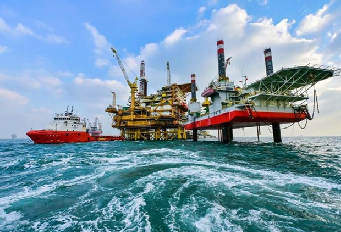
CNOOC Limited announced on Wednesday a major oilfield discovery at the Qinhuangdao 29-6 site, located in the shallow Neogene formations of the Bohai Sea, which adds over a hundred million tons of oil equivalent in-place.

 The discovery well, situated in the central Bohai Sea, was drilled to a depth of 1,688 meters, where it encountered 66.7 meters of oil pay zones. Tests showed a production rate of approximately 2,560 barrels of crude oil per day, it said.

 Ongoing exploration has confirmed that the proved in-place volume of the Qinhuangdao 29-6 oilfield has exceeded 100 million tons of oil equivalent, it added.

 “CNOOC Limited has made a significant discovery through enhanced research on hydrocarbon migration and accumulation models in shallow Neogene slope zones, coupled with technological innovation,” said Xu Changgui, chief geologist at the company.

 “This achievement challenges the conventional understanding that slope areas merely serve as pathways for hydrocarbons rather than sites for substantial accumulation. It further highlights the considerable exploration potential of uplifted peripheral slopes in settings influenced by intense extensional–strike-slip faulting.”

 The Qinhuangdao 29-6 oilfield is the second one-hundred-million-ton-class lithological oilfield discovered in the mature exploration area of the Shijiutuo Uplift, further highlighting the value of fine exploration and consolidating the resource base for increasing reserves and production for the company, it said.

 zhengxin@chinadaily.com.cn

Article inline ad

World’s First Methanol Dual-Fuel VLCC Delivered In Dalian

0

By Zhang Xiaomin in Dalian, Liaoning | chinadaily.com.cn | Updated: 2025-12-24

The world’s first methanol dual-fuel powered intelligent very large crude carrier (VLCC), dubbed New Explorer, was delivered on Monday in Dalian, Liaoning province, marking a green and intelligent transformation milestone for China’s shipbuilding industry.

 With a shallower full-load draft than conventional VLCC designs, it is ideal for navigating through the Strait of Malacca.

 China State Shipbuilding Corporation’s Dalian Shipbuilding Industry Company (DSIC) built the vessel for China Merchants Energy Shipping, delivering it four months ahead of schedule. It is DSIC’s eighth-generation self-developed VLCC design.

 With a domestically produced methanol dual-fuel host and methanol fuel supply system, the vessel reduces carbon dioxide emissions by up to 92 percent, sulfur oxide emissions by 99 percent, and particulate matter emissions by 90 percent, compared with the use of conventional fuel.

Article inline ad

South Korea’s Musinsa Expanding In China

0

By Wang Zhuoqiong | China Daily | Updated: 2025-12-24

The back-to-back opening of two stores by South Korea’s fast-rising fashion group Musinsa in Shanghai this month is more than an offline expansion in the Chinese market. It reflects a broader shift in how overseas fashion players are entering the market, betting on local partnerships, value-driven positioning and designer fashion trends.

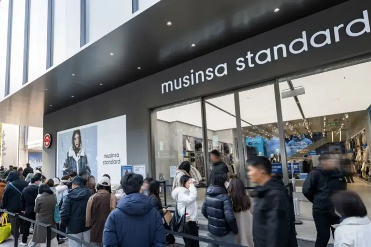
 Often dubbed the “South Korean version of Uniqlo”, Musinsa Standard, the group’s private-label basics brand, opened its first overseas flagship store on Shanghai’s Huaihai Road — located in one of the busiest commercial districts in the city.

 Spanning more than 1,400 square meters across two floors, the store aims to capture the Chinese market with a highly localized strategy. It plans to strengthen seasonal and regional product assortments and deliver marketing initiatives tailored to the preferences of young Chinese consumers, said the company.

 Five days later, on Dec 19, the company launched Musinsa Store, a multibrand concept shop, housed in a century-old standalone building on nearby Anfu Road.

 The opening of two “international first stores” within a single week sent a clear signal of the South Korean company’s long-term commitment to China. Musinsa said it plans to open more than 100 stores nationwide over the next five years and is targeting total China revenue of more than $712 million over the next five years.

 Founded as an online fashion platform, Musinsa operates South Korea’s largest digital marketplace for apparel, hosting over 10,000 brands. Musinsa Standard was created to deliver quality basics at affordable prices through streamlined distribution and efficient operations, catering to what the company calls an era of “value consumption”.

 At the Huaihai Road store, price points overlap with those of Uniqlo, with opening promotions offering discounts of up to 50 percent. By contrast, Musinsa Store adopts a more fashion-forward positioning. It carries more than 50 brands, including South Korean labels such as Osoi, Rockcake and Sculptor. Product categories range from apparel and footwear to bags and accessories.

 Even before its physical rollout, Musinsa had laid digital groundwork in China. The group operates flagship stores on Tmall and Douyin, where its Tmall store has attracted more than 70,000 followers and hosts close to 30 brands. Musinsa has also said it plans to introduce China-exclusive product lines tailored to regional tastes.

 Crucial to its expansion strategy is a partnership with Anta Sports, China’s largest sportswear group. Under the agreement, the two companies have jointly invested in a new venture, Musinsa China, to oversee both the online and offline expansion of Musinsa Standard and Musinsa Store. Musinsa holds a 60 percent stake while Anta owns the remaining 40 percent.

 For Anta, renowned for its multibrand portfolio spanning performance sportswear, athleisure and lifestyle segments, the joint venture offers exposure to South Korea’s influential fashion ecosystem and the fast-growing convergence of sportswear and street fashion, said the company.

 For Musinsa, Anta brings deep local expertise in retail execution, supply chains and consumer insights — assets widely viewed as critical in today’s fragmented Chinese apparel market, said the company.

 Still, Musinsa Standard is entering a crowded field dominated by global fast-fashion giants such as Zara and H&M, as well as local players like Urban Revivo. Meanwhile, a wave of South Korean brands — including emis, Rest & Recreation, Raive, Adererror and Satur — have accelerated their China expansion this year through flagship stores and pop-ups in top-tier shopping districts.

 Industry observers said the current influx reflects a broader strategic rethink.

 Cheng Weixiong, founder of Shanghai-based brand consultancy Liangqi, said:”The strong performance of South Korean-linked brands such as Kolon Sport in China in recent years — both backed by Anta Group — has encouraged more South Korean fashion labels to try their luck. Many of the newcomers are designer-driven brands whose emphasis on individuality aligns well with younger consumers’ preferences.”

 Experts caution, however, that success in China requires patience and deep localization. While cities like Beijing, Shanghai, and Guangdong province’s Shenzhen and Guangzhou, are highly internationalized and relatively easy entry points, the real test lies in expansion into smaller cities, Cheng said.

 He added that consumer behavior and channel dynamics differ markedly.

 “Turning short-term buzz into lasting brand equity will depend on product strength, supply-chain execution and sustained local investment.”

Article inline ad

Major CO2 Power Generator Starts Operations

0

By Zheng Xin | China Daily | Updated: 2025-12-23

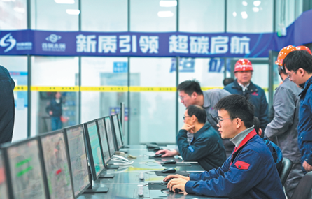
The world’s first commercial supercritical carbon dioxide power generator started operations in Southwest China’s Guizhou province recently, a significant milestone in the global transition toward high-efficiency waste heat recovery, said its operator China National Nuclear Corp (CNNC).

 Known as Chaotan One, the new generator, located at a plant in Guizhou’s Liupanshui city, uses carbon dioxide instead of steam to transfer heat. Each unit of the project boasts a power generation capacity of 15 megawatts, it said.

 It has been connected to the grid from a steel production plant in Guizhou to produce electricity from waste heat, addressing a long-standing technical bottleneck in the efficient utilization of small-to-medium scale thermal energy sources.

 Huang Yanping, CNNC chief scientist and chief designer of Chaotan One, said the commercial operation of this project represents the first transition of this innovative technology from laboratory to commercial implementation worldwide.

 The system, with simplified structural design and fewer components, makes it possible to operate and maintain more easily compared to conventional steam-cycle plants. It can generate over 70 million kilowatt-hours of electricity annually, adding about 30 million yuan ($4.26 million) in revenue.

 By utilizing supercritical CO2 power generation, the project implements an innovative power cycle that is more efficient, takes up less space, requires fewer auxiliary components and reacts faster than traditional systems, he said.

 According to Huang, when the working pressure of CO2 exceeds 73 atmospheres and the temperature exceeds 31 C, it enters a supercritical state, leading to increased density that approaches a liquid state, which enables it to store more energy.

 Meanwhile, its viscosity remains very low, close to that of a gas, resulting in smaller flow resistance.

 According to CNNC, the system offers a drastic performance leap over traditional sintering waste heat steam power technologies currently in use, with overall power generation efficiency up by more than 85 percent, net electricity generation improved by over 50 percent and required floor space reduced by 50 percent.

 Beyond being an innovative technology, supercritical CO2 power generation is poised to significantly contribute to the country’s dual-carbon goals by efficiently converting industrial waste heat into power, it said.

 Industry experts believe the innovative thermoelectric conversion technology comes at a critical juncture for China’s energy landscape, as the country’s electricity consumption is expected to reach a record high in 2025, with total power use projected to surpass 10 trillion kWh nationwide.

 Rising demand is driven in large part by high-tech and advanced manufacturing industries, according to the national energy work conference held recently in Beijing.

 Power use in sectors such as new energy vehicle manufacturing and wind power equipment manufacturing has jumped more than 20 percent and 30 percent year-on-year, respectively, from January to November. Electricity consumption in the internet and related services sector surged more than 30 percent, it said.

 Wang Hongzhi, head of the National Energy Administration, said at the conference that China is set to overfulfill its target of having nonfossil energy account for 20 percent of its total energy consumption in 2025.

 Thanks to robust green investment, the leapfrog development of the new energy sector, and the accelerated construction of major hydropower and nuclear power projects, the country’s green and low-carbon energy transition has accelerated this year, Wang said.

 The Nuclear Power Institute of China started research into the world’s cutting-edge supercritical CO2 power conversion technology as early as 2009. In 2023, construction commenced on its demonstration project in Liupanshui.

 In 2024, CNNC launched a demonstration project integrating molten-salt energy storage and supercritical CO2 power generation technologies, with scheduled demonstration operations set for 2028.

 Looking ahead, the supercritical CO2 power generation technology will be integrated with multiple heat sources to form power generation systems, said Huang.

 This will help expand its applications to solar thermal power, waste heat recovery, energy storage and other fields, he said.

 zhengxin@chinadaily.com.cn

Article inline ad

Policies Keep Nation’s Foreign Capital Appeal Buoyant

0

FDI: Inflows see notable rebound

By ZHONG NAN | chinadaily.com.cn | Updated: 2025-12-25

 China’s appeal as a destination for foreign capital is set to strengthen further as policymakers move to stabilize expectations, while the country’s vast market and accelerating industrial upgrading continue to reinforce its long-term attractiveness amid an uncertain global backdrop, said market observers and business executives.

 They noted that beyond major commitments to opening-up, a combination of resilient domestic demand, ongoing manufacturing transformation and more predictable policy support is increasingly translating into concrete advantages for multinational companies.

 The annual Central Economic Work Conference, held earlier this month in Beijing, emphasized the need to steadily advance institutional opening-up, expand self-initiated opening-up in the service sector in an orderly manner, and make solid progress in developing the Hainan Free Trade Port.

 China has also released the 2025 edition of its Catalogue of Encouraged Industries for Foreign Investment, which will take effect on Feb 1. The updated catalog contains 1,679 items, marking a net increase of 205 entries from the 2022 version, alongside revisions to 303 items, the Ministry of Commerce announced on Wednesday.

 A commerce ministry spokesperson said the changes aim to channel foreign investment into advanced manufacturing, modern services, high technology and green sectors, while encouraging inflows into central, western and northeastern regions.

 Senior executives of multinational companies expressed optimism over the investment prospects of the Chinese market, citing supportive government policies to boost domestic demand and the potential of the innovation-driven growth of the Chinese economy.

 Anna An, president of the China unit of Henkel, a German industrial and consumer goods group, said the priorities set out at the annual Central Economic Work Conference — including expanding domestic demand, boosting consumption, innovation-driven growth and the guiding role of the dual-carbon goals — clearly map out the path to high-quality development.

 “We continue to see the Chinese market demonstrating strong resilience and solid long-term growth potential,” An said, adding that the company has put several innovations and manufacturing facilities into operation across the country, especially in the Yangtze River Delta region, in 2025.

 As part of its continued commitment to the Chinese market, Milliken & Co, a United States specialty chemical and performance materials company, will strengthen its technical, supply chain and customer support capabilities in China, while advancing its “localization — China serving Asia” framework to enhance operational agility and service efficiency.

 “China is not only one of the world’s largest coatings markets but also one of the most dynamic hubs for green technology innovation,” said Simon Oram, vice-president of Milliken’s coating additives business, noting that the group will broaden its support beyond traditional industrial coatings to include adhesives, inks, composites and other emerging segments in the country.

 Through the expansion of its Shanghai technical service center, Oram said the US company aims to enhance formulation development and customer co-creation to tackle practical industry challenges.

 When China’s Hainan Free Trade Port launched its island-wide special customs operations last week, Germany’s Siemens Energy AG also established a new branch and broke ground on a gas turbine assembly base and service center in Danzhou, Hainan province.

 Aligned with vision

 Joern Schmuecker, Siemens Energy’s senior vice-president for gas service, said these moves align with the Hainan FTP’s vision of becoming a new hub for openness and international cooperation, and these facilities are expected to be operational in 2027.

 The corporate sentiment is in line with the latest data. Foreign direct investment inflows in China saw a notable rebound in November, surging 26.1 percent year-on-year, data from the Ministry of Commerce showed.

 Chen Jianwei, a researcher at the University of International Business and Economics’ Academy of China Open Economy Studies in Beijing, said China’s continued easing of market access and improvements to the business environment have helped strengthen policy and regulatory predictability for global businesses.

 Zhang Jianping, deputy director of the academic committee at the Beijing-based Chinese Academy of International Trade and Economic Cooperation, said, “As the US dollar enters an easing cycle, China-US economic and trade frictions are showing signs of easing, while a firmer renminbi is improving sentiment.”

 Zhang said these factors are helping to revive global capital flows and gradually bring China’s underlying appeal back into focus.

 China’s actual utilized foreign capital totaled 693.18 billion yuan ($98.45 billion) in the first 11 months of 2025, while high-tech industries utilized 221.26 billion yuan in foreign capital, with notable growth seen in sectors such as e-commerce services, medical equipment and instrument manufacturing, and aerospace equipment manufacturing, according to the Ministry of Commerce.

 zhongnan@chinadaily.com.cn

Article inline ad

China To Boost Financial Support For New Western Land-Sea Corridor

0

By Zhou Lanxu | chinadaily.com.cn | Updated: 2025-12-24

China has rolled out a guideline to strengthen financial support for a new western land-sea corridor, pledging to focus on corridor infrastructure development and facilitate cross-border investment, financing and trade settlement.

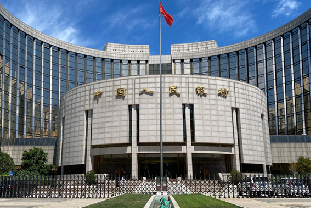
 Jointly released by eight government departments, including the People’s Bank of China, the country’s central bank, the guideline lays out 21 key measures to help build the new western land-sea corridor into a land-sea linkage connecting the Silk Road Economic Belt and the 21st Century Maritime Silk Road.

 The measures cover stronger coordination among financial institutions, a high-quality financing system, institutional innovation, digital financial service platforms, financial opening-up and enhanced cross-provincial and cross-border regulatory cooperation. They aim to better leverage financing and settlement — two core financial functions — to support high-quality development of the corridor.

 Concrete steps include focusing on infrastructure construction along the corridor and increasing support from various financial institutions and while making better use of diversified financing channels such as corporate credit bonds, real estate investment trusts and project loans. A dedicated fund will be established in Chongqing to support infrastructure projects and industrial parks along the route.

 The guideline also seeks to facilitate cross-border financing for eligible innovative firms, and strengthen bilateral currency cooperation with Southeast and Central Asian economies to support cross-border use of the renminbi.


Article inline ad