Wednesday, November 25, 2026

Home Blog Page 118

Guangxi Hailed As Key Cooperation Gateway

0

By ZHANG LI and SHI RUIPENG in Nanning | China Daily | Updated: 2025-12-24

Several ASEAN diplomats have emphasized the strategic position of the Guangxi Zhuang autonomous region as a frontier and gateway for China’s cooperation with Southeast Asia, expressing hope of expanding trade with China through multi-domain collaborations.

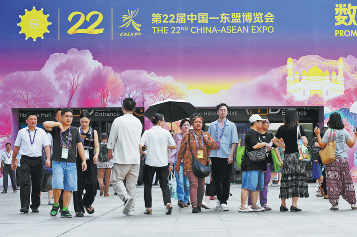
 The “Shopping in China (Guangxi Station)” event, along with the Guangxi Silk Road E-Commerce Carnival, was held last week in Nanning, Guangxi.

 The event aims to seize new opportunities arising from the official signing of the China-ASEAN Free Trade Area 3.0 Upgrade Protocol.

 Chen Gang, Party secretary of Guangxi, said the provincial-level region looks forward to collaborating with ASEAN countries, leveraging artificial intelligence as a driver to seize the opportunities brought on by the implementation of the CAFTA 3.0.

 He emphasized the goal of jointly building a new trade paradigm centered on “ASEAN production, Guangxi distribution and China sales”.

 Singapore’s Ambassador to China Tan Hai Chuan, who also attended the event, said that Guangxi is the only provincial-level region in western China with direct access to the sea, playing a crucial role in the New International Land-Sea Trade Corridor, a crucial initiative on strategic connectivity between Singapore and China.

 He added that the event has provided a broader platform for ASEAN countries to strengthen ties with Guangxi, and that Singapore will continue to deepen cooperation with the region to explore new trade and investment pathways.

 Pham Thanh Binh, Vietnam’s ambassador to China, addressed the opening ceremony via video.

 He pledged that Vietnam would further enhance cooperation with Guangxi across various fields, accelerate infrastructure connectivity, and expand the export of Vietnamese fruits and other agricultural products to China through Guangxi.

 “ASEAN production, Guangxi distribution, China sales”, Pham Thanh Binh emphasized, highlighting key initiatives such as advancing the construction of standard-gauge railways like the Lang Son-Hanoi and Mong Cai-Ha Long-Hai Phong lines, expediting the development of smart ports and cross-border economic zones, and improving mechanisms to support the sustainable growth of cross-border e-commerce.

 Benjamas Tanvetyanont, Royal Thai’s consul-general in Nanning, noted that “out of every three durians exported from Thailand to China, one passes through Guangxi.”

 She stressed the importance of strengthening cooperation in the digital and e-commerce economies.

 Guangxi has been actively developing “Silk Road E-Commerce” targeting ASEAN, organizing initiatives such as a fruit promotion campaign in June and the Guangxi New Silk Road New Year’s Eve E-commerce Festival.

 From January to November, Guangxi’s cross-border e-commerce imports and exports exceeded 45 billion yuan ($6.4 billion), with over 30 billion yuan attributed to trade with ASEAN countries, marking an 11.7 percent increase.

 Data show that the region has become a key gateway for ASEAN fruits like durians and jackfruits entering the Chinese market, accounting for over one-third of the country’s total imports of such products.

 Contact the writers at zhangli@chinadaily.com.cn

Article inline ad

AI To Play Key Role In Revving Up Industrial Upgrades

0

Application of high tech in various fields to accelerate next year, experts and execs say

By FAN FEIFEI | CHINA DAILY | Updated: 2025-12-22     

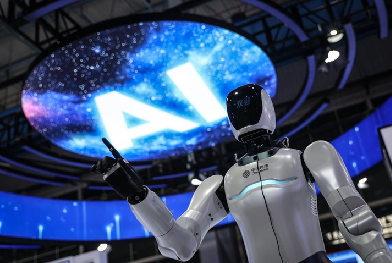
Fast-evolving artificial intelligence is poised to play a pivotal role in bolstering industrial upgrades, helping China build new growth drivers and injecting strong momentum into high-quality economic growth, experts and company executives said.

 The technology’s application across various fields will accelerate in 2026, the first year of the country’s 15th Five-Year Plan (2026-30) period, they predicted.

 AI serves as an essential tool in nurturing new quality productive forces and is spearheading a new round of scientific and technological revolution, they said. The country’s vast market, technological prowess and thriving innovation ecosystem underpin its capacity to move cutting-edge technology from research labs into the industrial arena.

 China is at the forefront of the development and application of AI technology, while the multimodal large language models, or LLMs, which possess the ability to process and generate content across multiple modalities, including text, images, audio and video — will lead the further development of the AI industry, they added.

 AI is forecast to contribute $19.9 trillion to the global economy through 2030, and drive 3.5 percent of global GDP in 2030, according to a report by global market research company International Data Corp.

 By automating routine tasks and unlocking new efficiencies, AI will have profound economic consequences reshaping industries, creating new markets and altering the competitive landscape, the report noted.

 Auspicious start

 In January, Chinese AI startup DeepSeek caused a global sensation and sent shock waves through the tech industry with its cost-effective and open-source LLM. Its performance is on par with leading models from US tech company OpenAI, but at only a fraction of the cost and computing power of its rival. This has been achieved amid tightened export controls on AI chips from the United States.

 Data from the China Academy of Information and Communications Technology showed that the nation has maintained its position as a global leader in AI innovation and released 1,509 AI models to date, ranking first among the 3,755 models launched globally.

 China holds the largest number of AI-related patents, accounting for 60 percent of the total, according to a Chinese Academy of Cyberspace Studies report.

 Leading Chinese tech heavyweights — including Alibaba Group, Baidu Inc and ByteDance – have stepped up efforts to roll out their own AI-powered LLMs to bolster technological advancements and commercial application of AI technology in a wide range of sectors such as manufacturing, healthcare, and finance.

 In September, Alibaba Cloud, the cloud computing unit of Alibaba, unveiled its most powerful AI model, Qwen3-Max, which boasts over 1 trillion parameters, and demonstrates strength in code generation and autonomous agent capabilities.

 Autonomous agent functionality means an AI system can make independent decisions and finish tasks independently with minimal human intervention. The advancement reinforces Alibaba’s ambition to compete directly with leading Western counterparts, while accelerating innovation in China’s sprawling AI ecosystem, market observers said.

 Wu Yongming, Alibaba Group CEO, said the company will further increase its 380 billion yuan ($53.4 billion) investment in AI and cloud infrastructure over the next three years. Wu said the speed of the AI industry’s development and the demand for infrastructure had far outpaced expectations.

 “In the future, large AI models will be deeply integrated into a wide range of devices, functioning like operating systems – equipped with persistent memory, seamless cloud-edge coordination and the ability to continuously evolve,” Wu said. “We remain committed to open-sourcing Qwen and shaping it into the ‘operating system of the AI era’, empowering developers around the world to build transformative AI applications.”

 Since the launch of the first generation of Qwen in 2023, Alibaba has open-sourced over 300 AI models built on its two foundation models. With over 600 million downloads and 170,000 derivative models, Alibaba’s AI models are among the most widely adopted open-source AI series globally.

 In November, Baidu released its latest LLM Ernie 5.0 model, which is capable of multimodal understanding and generation capacities, and can support input and output of text, images, audio and video.

 The model features a comprehensive upgrade in its core capabilities, excelling in multimodal understanding, instruction following, creative writing, and tool application. It also shows strong abilities in comprehension, logic, memory and persuasion.

 Robin Li, co-founder, chairman and CEO of Baidu, said LLM technology is evolving rapidly with the ability to self-learn, iterate and innovate. Li said his company will continue to invest in cutting-edge AI models to boost technological innovation.

 He is bullish on the prospects of AI-powered digital humans, which can be used in fields such as e-commerce, education, healthcare, customer service and sales.

 Competitive edge

 China has attached great importance to the development of AI, a strategic emerging field that major economies are scrambling to gain a competitive edge in.

AI is not only crucial for boosting productivity, but also driving the transformation and upgrading of traditional industries.

 The Recommendations of the Central Committee of the Communist Party of China for Formulating the 15th Five-Year Plan for National Economic and Social Development emphasized that China should achieve greater self-reliance and strength in science and technology and steer the development of new quality productive forces.

 The recommendations were adopted at the fourth plenary session of the 20th CPC Central Committee on Oct 23.

 Efforts will be made to advance the “AI Plus” initiative across the board, steer the transformation of scientific research paradigms with AI, apply AI tools in industrial development, cultural advancement, public well-being initiatives, and social governance, and strive to gain the edge in AI industrial applications.

 In August, the State Council, China’s Cabinet, issued a guideline on the deep implementation of the “AI Plus” initiative. The country will promote the use of AI in science and technology, industrial development, consumption, people’s well-being, governance capability and global cooperation, the guideline said.

 By 2027, China will make achievements in the extensive and deeper integration of AI in six key sectors, with the penetration rate of new-generation intelligent terminals and AI agents surpassing 70 percent. This figure will exceed 90 percent by 2030, the guideline said.

 Weng Xi, a professor at Peking University’s Guanghua School of Management, said the “AI Plus” initiative is vital for shifting growth drivers from old to new ones, as AI has become a new engine bolstering China’s economic development and industrial upgrading.

 “The in-depth industrial integration of AI will enhance production efficiency, optimize operational processes and lower energy consumption and costs, thereby promoting traditional industries, including steel, textile and equipment manufacturing, toward high-end, intelligent and green development,” Weng said.

 Sun Ke, deputy director of the China Academy of Information and Communications Technology’s Policy and Economic Research Institute, underscored the significant role of AI in cultivating new quality productive forces and reshaping new competitive advantages.

 Strong implementation of the “AI Plus” initiative is conducive to accelerating the deeper integration of AI with the real economy, giving rise to new industries and new business forms, such as intelligent robots, self-driving vehicles and smart home devices, and strengthening China’s core competitiveness on the global stage, Sun said.

 Great strides ahead

 According to market research company CCID Consulting, the market scale of China’s AI sector will reach 1.73 trillion yuan by 2035, accounting for 30.6 percent of the global total.

 Emphasizing the country’s large-scale manufacturing and vast consumer market of 1.4 billion people, Zhu Min, a former deputy managing director of the International Monetary Fund, said China will make great strides in the use of AI technology in the next 18 months to two years.

 Abundant industrial application scenarios present unique advantages for the development of AI, he added.

 China has surpassed the US in the number of academic papers on AI, taking top spot worldwide, Zhu said. These papers are increasingly focused on the specific industrial applications of AI, he said.

 China’s services sector, technology, and AI have huge growth potential, with future employment in these emerging fields, Zhu said. Strengthening job retraining and letting people know how best to use AI are vitally important, he added.

 It is clear that China is emerging as an innovation-driven economy, with breakthroughs in areas such as AI and robotics highlighting its growing capability in critical technologies that underpin long-term competitiveness, said Samantha Zhu, chairperson of Accenture Greater China.

 “The wave of AI innovation, led by open-sourced large language models, is so encouraging that companies are quickly mobilizing themselves to harness such technologies,” she said.

 Adopting a holistic approach to productivity, with generative AI acting as a multiplier, could boost productivity growth from 1.9 percent to 15.9 percent, the consultancy estimates. China has one of the most vibrant AI ecosystems in the world, driven by a mix of enterprise adoption, tech startups and public-private partnerships.

 Zhu said AI-driven transformation has strong momentum, with businesses quickly integrating AI into their decision-making, operations, and customer engagement.

 “Looking at the vibrant AI ecosystem, we can say that China is not just an AI market — it’s a proving ground for AI adoption by enterprises done at scale,” she said.

 Li Haitao, dean of the Cheung Kong Graduate School of Business in Beijing, said AI is profoundly reshaping the business landscape and is bound to transform various industries. China and the US have the greatest potential to lead the next round of the AI revolution, he said.

 China boasts a large number of well-educated engineering talents and AI professionals, improved digital infrastructure such as 5G and computing networks, massive amounts of data, and ever-increasing innovation capabilities, which provide a solid foundation for the training and adoption of AI models, according to Li.

 Zhou Yunjie, chairman and CEO of Chinese home appliance giant Haier Group, said AI will become the biggest technological revolution over the next 50 years. Currently, AI is mainly deployed by enterprises in manufacturing, research and development, sales, procurement, and services.

 Every industry will integrate AI, and any enterprise that does not embrace AI will eventually be weeded out, Zhou said, adding that his company has invested heavily in developing LLMs and is promoting the application of AI in various fields, such as household appliances and industrial internet.

 Li Dongsheng, founder and chairman of consumer electronics manufacturer TCL Technology Group Corp, said: “The application of AI in the high-tech manufacturing sector will bring about greater value than its use in terminal devices, as this cutting-edge digital technology will significantly improve the production efficiency and competitiveness of China’s high-tech manufacturing enterprises.”

 Li said AI is increasingly being embedded in terminal devices, intelligent production lines and product research and development, and will bolster the development of China’s high-tech manufacturing sector.

 China’s breakthroughs in LLMs, along with the meteoric rise of DeepSeek, have enabled it to rapidly catch up with the US in the AI domain, while surpassing most other developed economies in terms of AI applications.

 Cui Jingyi, vice-president of United Kingdom-based industrial software developer Aveva and general manager of Aveva China, said the country has the most extensive application of AI technologies, bringing new opportunities for many companies, including her own.

 She said Aveva will continue to increase investments in the country, leverage local strengths and drive industrial transformation through technological innovation.

 fanfeifei@chinadaily.com.cn


Article inline ad

Nation’s Self-Developed Technology Helps HSR

0

China Daily | Updated: 2025-12-22

BEIJING — China’s self-developed technology in high-speed railways is making significant progress in both technological innovation and operational capability.

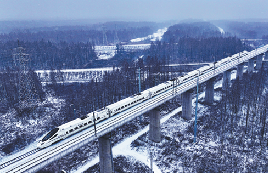
 The recent launch of the Shenyang-Baihe high-speed railway in northeastern China highlights these advances, featuring new trains and systems designed for extreme conditions and intelligent operation.

 The Fuxing CR400BF-GS Electric Multiple Unit, deployed on this new line, is specifically engineered for extremely cold regions.

 Meanwhile, construction of this railway has benefited from advances in intelligent manufacturing. Its “base-like” track slabs are key in allowing trains to run smoothly at high speeds. Notably, production of the Shenyang-Baihe high-speed railway track slabs, each measuring 5.6 meters in length and 2.5 meters in width, now takes only 10 minutes per unit, with height variations controlled to within the thickness of a human hair, greatly enhancing both precision and efficiency, said Yang Zhenhua, an official from China Railway No 9 Group Co Ltd.

 Further pushing the boundaries of speed, the world’s fastest bullet train, the CR450, has begun a battery of pre-service trials on a high-speed line in China, achieving a single-train speed of 453 kilometers per hour and a record relative passing speed of 896 kph.

 Exceeding 400 kph means China’s high-speed rail technology lacks mature reference as there is no commercial high-speed rail in the world operating at speeds higher than this, said Wang Lei, a designer from CRRC Changchun Railway Vehicles Co Ltd.

 A major challenge was to reduce the train’s running resistance. From 350 to 400 kph, the resistance increases by 30 percent, and 95 percent of this running resistance comes from the air.

 To solve such an aerodynamic drag, the CR450 features a longer, sleeker nose, a 20-centimeter lower roofline and 50-metric-ton weight reduction, thereby cutting aerodynamic drag by 22 percent.

 The excellence of China’s high-speed railway is demonstrated not only through its robust “steel framework”, but also by its advanced “intelligent brain”.

 The CTCS-3 ATP (Automatic Train Protection) and ATO (Automatic Train Operation) system, independently developed by the CRSC Research & Design Institute Group Co Ltd (CRSCD), has been implemented on the CR450 EMU.

 Jiang Ming from CRSCD noted that the system features full intellectual property ownership and supports key autonomous functions, including inter-station operation, overspeed protection and precise stopping, thus ensuring safety even in low-visibility weather, among other features.

 To support railway development in western China, a new generation train control system has also been designed to perform reliably in harsh environments.

 Integrated with the BeiDou Navigation Satellite System, this new train control system fuses multiple data sources, such as satellite positioning, electronic maps and speed sensors, which significantly enhances the precision and reliability of train positioning.

 China’s high-speed railway network is on track to surpass 50,000 km in total length by the end of 2025. Additionally, China is showing growing expertise in building a high-speed rail network that is not only extensive, but also intelligent, resilient and ready for the future.

 Xinhua

Article inline ad

Soes To Focus On Core Sectors, Real Economy

0

By REN QI | CHINA DAILY | Updated: 2025-12-23

Central State-owned enterprises will focus on core sectors and the real economy in the upcoming 15th Five-Year Plan (2026-30) period to move up the value chain and lead the push for a modern industrial system, said Zhang Yuzhuo, chairman of the State-owned Assets Supervision and Administration Commission of the State Council.

 SOEs are a key part of China’s national science and technology force, Zhang said. In recent years, they have put innovation first and leveraged system-wide coordination. Their R&D spending has topped 1 trillion yuan ($140 billion) for three straight years.

 “Breakthroughs were made in machine tools, industrial software and basic materials, and flagship projects such as the Chang’e-6 lunar mission and the Fendouzhe (Striver) deep-sea submersible were developed,” he said in an interview with Xinhua News Agency.

 Since the start of the 14th Five-Year Plan (2021-25), SOEs’ R&D spending rose an average of 6.5 percent a year. Annual investment exceeded 1 trillion yuan for three consecutive years and reached 1.1 trillion yuan in 2024. Basic research accounted for 8.8 percent of the total.

 Looking to the 15th Five-Year Plan, China will target major technology challenges that affect national security and long-term interests, Zhang said, adding that the focus is on original and homegrown innovation to support technological self-reliance and the goal of building a strong science and technology nation.

 A new wave of digital transformation is planned for SOEs.

 “AI+” initiatives will be expanded, with AI, big data, cloud computing, 5G and the Internet of Things integrated across traditional industries. Technical upgrades and large-scale equipment renewals will continue. SOEs will take the lead in carbon peaking plans for key sectors, alongside efficient resource recycling and faster product iteration, while strengthening the supply of high-end products. The aim is smarter, greener and more integrated growth, Zhang said.

 In recent years, SOEs have upgraded traditional industries while fostering new sectors. During the 14th Five-Year Plan period, investment in emerging industries grew more than 20 percent on average each year. World-class clusters have taken shape in next-generation information technology, new energy, new materials and high-end equipment manufacturing, helping key industries climb the value ladder.

 China will keep developing key sectors such as new energy, new-energy vehicles, new materials, aerospace and the low-altitude economy. It will also move early on frontier tracks including quantum technology, embodied intelligence, bio-manufacturing, green vessels and 6G, to drive a sustained shift in corporate growth engines, Zhang said.

 Zhang pledged that SASAC will make full use of SOE funds for strategic emerging industries and venture capital vehicles. It will study building a full-chain industry financing system covering seed, angel, growth and fund-of-funds stages.

 It will improve scientific, professional and efficient investment decision-making and build high-standard State capital operation platforms to support the creation of a modern industrial system, Zhang said.

 “World-class enterprises are a key marker of a nation’s economic strength, technological prowess and international competitiveness,” Zhang said. “Building a modern socialist country in all respects requires a group of world-class firms.”

 China will also improve resource allocation and integration among SOEs, innovate production models and industry organization, and deepen global engagement. High-quality cooperation under the framework of the Belt and Road Initiative will be a focus as China seeks broader and deeper access to global markets, Zhang added.

 renqi@chinadaily.com.cn

Article inline ad

Astrazeneca In Cancer Drug Deal With Chinese Biotech Firm

0

By Li Jing | chinadaily.com.cn | Updated: 2025-12-22

AstraZeneca has entered a global licensing agreement with Jacobio Pharmaceuticals, a Hong Kong-listed Chinese biotech company, to develop and commercialize a clinical-stage KRAS cancer drug candidate, the two companies announced on Monday.

 Under the agreement, the United Kingdom-based pharmaceutical company will obtain exclusive rights to develop and commercialize the pan-KRAS inhibitor JAB-23E73 outside the Chinese mainland. In the mainland market, the two companies will jointly develop and commercialize the drug when it is successfully approved.

 Jacobio will receive an upfront payment of $100 million and is eligible for up to $1.92 billion in development and commercial milestone payments, along with tiered royalties on net sales outside the Chinese mainland. AstraZeneca will be responsible for all clinical development, regulatory submissions and commercialization activities outside the Chinese mainland.

 KRAS mutations are among the most common cancer drivers, and are frequently found in pancreatic, colorectal and lung cancers, areas where effective treatment options remain limited. The companies estimate that KRAS mutations occur in about 23 percent of all cancer patients.

 “KRAS-mutated cancers represent one of the most challenging areas in oncology,” said Matt Hellmann, vice-president of early oncology development at AstraZeneca. He said advancing drugs such as JAB-23E73, together with AstraZeneca’s broader oncology portfolio, could help accelerate the development of treatments that may improve outcomes for patients.

 JAB-23E73 is a novel pan-KRAS inhibitor developed by Jacobio using its induced allosteric platform and is designed to target multiple KRAS mutation subtypes.

 The drug is currently undergoing Phase I clinical trials in both China and the United States, where early signs of anti-tumor activity have been observed.

 Wang Yinxiang, chairman and co-chief executive of Jacobio, said the partnership marks an important step in bringing the company’s research programs to the global stage.

Article inline ad

Chinese Shipbuilder Announces Doubling Of LNG Vessel Construction Capacity

0

By Wang Ying in Shanghai | chinadaily.com.cn | Updated: 2025-12-22

With the delivery of Ocean Oasis, a 174,000-cubic-meter LNG vessel, on Friday, Hudong-Zhonghua Shipbuilding (Group) Co, a unit of the world’s largest shipbuilder, China State Shipbuilding Corp, announced that it has doubled its LNG ship production capacity during the 14th Five-Year Plan (2021-25) period.

 Hudong-Zhonghua has completed the construction of 13 large liquid natural gas vessels and delivered 11 year-to-date. Taking Ocean Oasis as an example, the ship, measuring 295 meters in length and 45 meters in width, was constructed within 16 months, the shortest construction period for a ship of its kind, enabling naming and delivery three and-a-half months ahead of schedule, according to Hudong-Zhonghua.

 This stands in stark contrast to the construction of China’s first domestically built LNG carrier, Dapeng Sun. Delivered in April 2008, the vessel took 40 months to build, and the project spanned nearly a decade from inception to completion.

An LNG industrial chain covering materials, equipment, technology, techniques and standards has now taken shape as a result of a collaborative approach, with Hudong-Zhonghua playing a leading role. The shipbuilder has brought more than 130 domestic enterprises into the sector, creating a supporting ecosystem worth hundreds of billions of yuan, while a market with a scale of tens of billions of yuan is taking shape.

 Since the delivery of Dapeng Sun, Hudong-Zhonghua has delivered a total of 59 LNG carriers, capable of transporting more than 45 million tons of LNG clean energy to China annually, accounting for over one-third of the country’s natural gas imports.

 Currently, the shipbuilder’s delivery schedule is fully booked through 2030, with nearly 50 LNG ships planned for construction and delivery.

Article inline ad

CNOOC Launches 24 Block Development Project In Xijiang Oilfields

0

作者:郑鑫 | 中国日报网 | 更新日期:2025年12月22日

中海油有限公司周一宣布,西江油田24区块开发项目已开始投产。

 该项目位于珠江口盆地浅水区,利用邻近会溪油田的现有设施,并新建一座无人井口平台。计划共投产10口开发井。

 该项目预计在2026年达到日产约18000桶油当量的稳定产量。所产石油为轻质原油。

 新建的西江24-7平台是中国首个用于高温流体冷却和出口的无人海上平台。其温度控制系统可降低高温对海底管道的影响,从而确保稳定连续生产。

CNOOC Limited Holds 100 Percent Interest In The Project And Is The Operator.


Article inline ad

China’s Commercial Satellites Accelerate Global Connectivity

0

Spacesail-Airbus partnership aims to build robust, diversified ecosystem

China Daily | Updated: 2025-12-22

SHANGHAI — The latest partnership finalized between Airbus and Shanghai Spacesail Technologies Co Ltd marks another step in expanding the global operational scope of China’s commercial satellites, exemplified by Spacesail’s Qianfan Constellation.

 According to the market cooperation agreement between the two sides, Spacesail will integrate its Qianfan Constellation into Airbus’ HBCplus (High Bandwidth Connectivity Plus) in-flight connectivity solution. The move aims to provide airlines with high-speed, low-latency broadband services, improving the in-flight experience for passengers.

 Qianfan is China’s first giant low-orbit commercial satellite constellation to enter the formal networking phase. Since the launch of its first batch of 18 networking satellites in August 2024, the constellation has grown to 108 satellites in orbit after five more batches were launched with the latest in October this year.

 Tim Sommer, vice-president of Airbus, said that the partnership reinforces Airbus’ strategy to build a robust, diversified satellite ecosystem, adding that integrating Spacesail’s large low-Earth orbit constellation will offer customers greater flexibility to meet growing demand for high-quality global connectivity.

 Li Guotong, CTO of Spacesail, confirmed that Qianfan has undergone successful tests in Malaysia, Mongolia and Kazakhstan, demonstrating stable video streaming and video calls.

 The company has also reached relevant cooperation agreements with Brazil’s State-owned telecommunications company TELEBRAS and Thailand’s National Telecom Public Co Ltd, among others, according to Li.

 Yau Chyong Lim, chief operating officer of MEASAT in Malaysia, said that the cooperation with Spacesail involves multiple areas, including managing the operation of low-orbit constellations, research and development, and the development of new applications.

 Soraphong Siriphan, senior executive vice-president of Thailand’s National Telecom Public Co Ltd, stated that the cooperation with Spacesail will provide the company with core cloud infrastructure and network capabilities to deliver a low-latency satellite internet experience for users.

 Li Changhao, an industry expert, said: “With the accelerated development of China’s satellite internet industry, applications in emergency disaster relief, smart cities and ocean logistics are being further explored.”

 “The global satellite internet industry has transitioned from technological verification to large-scale application. The proliferation of satellite internet is paving a new path for global digital equity,” said Zhao Houlin, honorary chairman of the China Institute of Communications and former secretary-general of the International Telecommunication Union.

 He explained that China’s low-orbit satellite network plans will not only enhance efficiency in domestic emergency communications and “air-space-ground-sea” integration, but also provide reliable digital infrastructure for countries participating in the Belt and Road Initiative, helping to bridge the global digital divide.

 Xinhua

Article inline ad

PBOC Rolls Out One-Off Credit Repair Policy To Help Individuals Rebuild Credit

0

By Zhou Lanxu | chinadaily.com.cn | Updated: 2025-12-22

The People’s Bank of China, the country’s central bank, unveiled a one-off credit repair policy on Monday, aimed at helping individuals with impaired credit records but active repayments to rebuild their credit, thereby addressing the fallout of the COVID-19 pandemic and supporting a sustained economic recovery.

 A notice released by the PBOC said that eligible personal overdue credit information will be removed from the central bank’s credit reporting system after the debts are fully repaid. The policy applies to single overdue amounts of no more than 10,000 yuan ($1,420) generated between Jan 1, 2020, and Dec 31, 2025, provided the debts are fully repaid by March 31, 2026.

 If repayment is completed by Nov 30, 2025, the related overdue information will be removed starting Jan 1, 2026. For debts settled between Dec 1, 2025, and March 31, 2026, the information will be removed by the end of the following month.

 The central bank said eligible records will be automatically identified and processed by the credit reporting system, meaning individuals do not need to apply or submit any documents. Relevant entries in personal credit reports, including repayment status and overdue amount, will be adjusted accordingly.

 The PBOC stressed that the policy is free of charge and does not involve third-party agents, warning that any requests for payment or personal information in the name of the credit repair policy constitute fraud.


Article inline ad

China’s Loan Prime Rates Remain Unchanged

0

Xinhua | Updated: 2025-12-22 10:44

BEIJING — China’s one-year loan prime rate (LPR), a market-based benchmark lending rate, came in at 3 percent Monday, unchanged from the previous month.

 The over-five-year LPR, on which many lenders base their mortgage rates, also remained unchanged from the previous reading of 3.5 percent, according to the National Interbank Funding Center.

Article inline ad