Wednesday, November 25, 2026

Home Blog Page 119

Unified National Market Buildup Still Key Goal

0

By Zhang Ming | CHINA DAILY | Updated: 2025-12-22

China’s efforts to build a unified national market entered a new phase in early 2025, when the National Development and Reform Commission — the country’s top economic regulator — issued guidelines intended to accelerate regional integration and harmonize market rules. For many observers, it marks the beginning of a comprehensive advancement of China’s national market unification. A subsequent meeting of the Central Financial and Economic Affairs Commission in July further reinforced this agenda, signaling that the pace of unifying domestic markets is likely to increase in the near future.

 This policy shift is shaped by deeper changes in both global and domestic environments since the 2008 global financial crisis. Externally, the retreat of globalization, prolonged economic stagnation intensified by the COVID-19 pandemic, and increasingly strained international trade relations -notably Sino-US economic and trade frictions — have all weakened the ability of external demand to support China’s growth. Internally, China’s rapid economic expansion has made it harder to rely on net exports as a long-term growth engine. Simply put, a major economy of China’s scale cannot depend indefinitely on foreign markets to drive its domestic development.

 These realities form the backdrop for the “dual-circulation” development pattern introduced in 2020. The framework emphasizes domestic circulation — production, distribution and consumption within China — while encouraging mutual reinforcement between domestic and international markets. In other words, it signals a shift from a model where external demand pulls the domestic economy forward to one where a strong domestic market provides the foundation for China’s engagement with the world.

 Building up this domestic-centered development model rests on three pillars: expanding and upgrading consumption, advancing industrial upgrading and technological innovation, and building a unified national market. Each pillar enhances domestic circulation from a different aspect. Consumption speaks to demand, innovation strengthens supply, and market unification provides the institutional architecture that allows both sides to interact efficiently. Without a unified market, efforts to expand demand or upgrade supply will struggle to reinforce each other.

 The global experience is clear: Economies controlling major “final markets” tend to wield greater influence in trade, investment and finance. The prominence of the US dollar is closely tied to the United States’ position as the world’s largest unified consumer market. China, with a population of 1.4 billion and per-capita GDP surpassing $13,000, has the foundations for a large and powerful domestic market.

 However, China’s domestic market remains segmented, with obstacles hindering the flow of goods, capital, labor, technology and data across regions. These barriers weaken market-based price formation and reduce the efficiency of resource allocation.

 Building a unified national market is therefore fundamental to strengthening domestic circulation. When factors of production can move freely, overall economic efficiency rises and the “size of the economic pie” expands before questions of distribution emerge. A unified market also provides the scale required to stimulate technological innovation, supports firms in building complete supply chains, and sustains industrial upgrading and global expansion.

 China first laid out a comprehensive blueprint for market unification in 2022. That document called for eliminating local protectionism, harmonizing institutional rules, and removing bottlenecks that impeded the flow of goods and factors. It envisioned transforming China from a “large market” into a “strong market”, and outlined six major tasks ranging from rule harmonization to building unified markets for land, labor, capital, technology and data.

 The 2025 guidelines continue this structure but offer more detailed and practical guidance and direction. They explicitly bar local governments from using administrative or judicial tools to interfere in economic disputes, or to seize corporate assets without proper justification. They require government agencies to honor contracts with private and small businesses, to record breaches in official credit systems and to incorporate such records into performance evaluations. On infrastructure, the guidelines emphasize removing interprovincial bottlenecks in road and waterway networks and prohibit local standards that obstruct the movement of freight vehicles.

 Compared with the 2022 blueprint, the new guidelines sharpen protections for private and smaller firms and offer more detailed remedies for long-standing issues such as fragmented transport links and excessive regional competition for investment. They are, in effect, an operational extension of earlier principles.

 The July 2025 meeting further updated the framework, shifting from the earlier formulation of “five unifications and one standardization” to “five unifications and one opening-up”. The change is subtle but meaningful. Replacing “regulating improper intervention” with “unifying governance standards” reflects a heightened focus on aligning administrative behavior across regions, reducing harmful competition and allowing factors to move more freely. Replacing “integrating goods and services markets” with “continuous opening-up, both internal and external” underscores the need to align domestic and foreign trade practices and break down regional barriers that hinder unified participation in national and global markets. These refinements maintain continuity with earlier policy while highlighting the government’s evolving priorities.

 Despite steady policy progress, the biggest challenge lies not in the design of market rules, but in local incentives. China’s local officials are still evaluated primarily on region-specific metrics such as GDP growth, fiscal revenue, debt levels and environmental performance. Under such a system, local governments naturally seek to retain high-quality resources within their jurisdictions and resist the outward flow of talent, capital or large enterprises. This is why companies still encounter obstacles when attempting to relocate headquarters across provincial boundaries, and why financial institutions may face pressure if they allocate substantial resources beyond the local region. Without reforming the performance evaluation system, meaningful market unification will remain elusive.

 Rebalancing these incentives requires reducing the weight of strictly local indicators and significantly increasing the weight of metrics related to market-based factor allocation and cross-regional mobility. Only then will local governments have a genuine incentive to support integration rather than enable fragmentation.

 If market integration advances, factors of production will not be distributed evenly across the country. They will cluster in regions with strong comparative advantages, likely accelerating regional integration. Over the next decade or two, several major clusters — Guangdong–Hong Kong–Macao Greater Bay Area, Yangtze River Delta region, Beijing-Tianjin-Hebei region, and two emerging “triangles” in central and western China – are poised to become the fastest-growing regions. Together, they may form a new domestic “flying-geese” pattern. Combined with an international pattern involving China, Japan, South Korea, and economies in ASEAN and major emerging economies participating in the Belt and Road Initiative, they could evolve into a “dual flying-geese model” that supports China’s long-term growth and reinforces the interaction between domestic and international circulation.

 The writer is deputy director of the Institute of Finance and Banking at the Chinese Academy of Social Sciences and a senior researcher at the National Institution for Finance and Development.

 This article was originally published on Economic Affairs.

 The views do not necessarily reflect those of China Daily.

Article inline ad

Fundamental Trends Sustaining Long-Term Growth

0

By Yang Yiyong | China Daily | Updated: 2025-12-22

The much-anticipated Central Economic Work Conference was held from Dec 10 to 11 in Beijing. Based on a comprehensive assessment of the domestic and international economic landscape, the meeting clearly stated that the underlying conditions and fundamental trends sustaining China’s long-term economic growth remain unchanged, while stressing that it will adhere to the general principle of pursuing progress while ensuring stability, and better coordinate domestic economic work with struggles in the international economic and trade arena. That closely aligns with recent assessments by several international institutions.

 In the fourth quarter of 2025, a number of major international institutions raised their forecasts for China’s full-year economic growth. Among them, the International Monetary Fund, Goldman Sachs and Deutsche Bank have all revised their projections for China’s 2025 growth to 5 percent, broadly expressing optimism about China’s technological development and the continued expansion of exports.

 This is more than a routine update to economic forecasts. It places a critical judgment under the global spotlight. After undergoing multiple “stress tests” — including a deep adjustment in the real estate sector, volatility in external demand and persistent geopolitical tensions – China’s economy has once again seen its “notable resilience” affirmed by major international institutions. The upward revisions resemble a decisive rebound of a needle on a finely calibrated economic instrument, and their signaling value far exceeds the numbers themselves. They indicate that amid a complex and challenging internal and external environment, China’s vast economic system has not only remained stable in operation, but is also generating new internal balances and sources of momentum.

 This widely recognized “economic resilience” is no accident. It stems from a multilayered and systemic support framework that is being built and refined.

 First, the “stabilizer” role of macroeconomic policy has become more targeted and patient. Unlike past episodes of large-scale stimulus, the current policy framework places greater emphasis on “measured, drip-style support” and managed expectations. Monetary policy, while maintaining reasonably ample liquidity, has focused on the use of structural tools to guide financial resources toward technological innovation, green transition and small and micro businesses. Fiscal policy, meanwhile, seeks a difficult but necessary balance between supporting aggregate demand and preventing risks by improving spending efficiency, implementing targeted tax and fee reductions, and steadily advancing plans to defuse local government debt risks. This policy resolve — avoiding abrupt turns and refraining from adopting a deluge of strong stimulus policies — has provided markets with a predictable policy environment and prevented the economy from falling into a cycle of sharp “overheating followed by tightening” episodes, triggered by aggressive stimulus moves.

 Second, new engines of growth are accelerating and partially offsetting the slowdown in traditional drivers. “New quality productive forces” have rapidly moved from concept to tangible contributions to economic growth. In high-end manufacturing, exports of the “new trio” – new energy vehicles, lithium batteries and photovoltaic products – have been robust, not only securing key positions in global supply chains, but also driving comprehensive upgrading across related domestic industrial chains. Integration of the digital economy continues to deepen, with artificial intelligence, big data and the industrial internet reshaping every stage from production to consumption, and enhancing total factor productivity. Massive investment in the ongoing green transition has generated sustained demand in areas such as renewable energy, power grid upgrades, energy conservation and environmental protection. High growth in these emerging sectors has effectively cushioned the drag from declining real estate investment, enabling dynamic rebalancing of the economic structure.

 Finally, a supersized market provides unique buffering capacity and iterative scenarios. China’s market of more than 1.4 billion people, including over 400 million middle-income consumers, offers unparalleled depth. When external demand fluctuates, the domestic consumer market has demonstrated strong foundational support. Consumption upgrading and innovation in niche markets coexist, from quality-oriented “self-pleasing consumption” to value-for-money, rational consumption, both giving rise to new business models. Progress in building a unified national market aims to remove internal bottlenecks in circulation, allowing scale and network effects of this vast market to be more fully realized, and providing ample room for experimentation, innovation and growth for enterprises and industrial upgrading.

 While these upward revisions are based on rigorous, model-driven quantitative analysis, they reflect a subtle yet important shift in international institutions’ perceptions of China’s economy — gradually moving from a period of “concern-dominated” views toward “cautious optimism” or “wait-and-see confirmation”.

 This reassessment rests on several key observations.

 First, since the third quarter, high-frequency economic indicators have broadly stabilized or even shown modest improvement, with indicators such as industrial output and corporate profits performing better.

 Second, clearer roadmaps have emerged for addressing risks in key areas. In particular, with regard to real estate and local government debt, a series of gradual and market-oriented resolution measures are being implemented step-by-step, and the “firewalls” against systemic risks are increasingly viewed as more robust.

 Third, Sino-US relations have shown signs of temporary easing, with more high-level interactions in recent periods. Although structural frictions persist, marginal improvements have helped stabilize global business expectations and partially eased anxieties over supply chain relocation.

 The latest forecasts from these international institutions have undoubtedly benefited from a marginal reassessment of the effectiveness of China’s policy space and the economy’s endogenous capacity for self-repair. They convey a message to global markets that China’s economy may have passed the phase in this adjustment cycle marked by the most pessimistic expectations and the most concentrated release of downward pressures, and is now seeking to establish a new growth platform — one with slower but more sustainable growth.

 That being said, acknowledging resilience by no means implies ignoring the serious challenges that still lie ahead. IMF reports inevitably include warnings about these risks. The foundation of the current economic recovery and improvement still needs to be consolidated, and the “stress tests” facing the economy are far from over.

 First, the momentum of spontaneous expansion in domestic demand remains insufficient. While consumer confidence and corporate investment intentions have improved, they have yet to form a strong, self-reinforcing cycle. Pressures on youth employment and the ongoing repair of household balance sheets will take time, constraining a rapid rebound in consumption. The long-term confidence of private enterprises to “dare to invest, be willing to invest, and be able to invest” requires continued, substantive improvements in the institutional environment, including property rights protection, fair competition and stable expectations.

 Second, the transitional pains of the real estate market are far from over. The shift from the old model of “high debt, high leverage and high turnover” to a new development model will be long and painful. How to digest existing housing inventory, ensure project delivery, restructure the industry and reignite reasonable demand for upgraded housing -without triggering major financial risks — will be a prolonged test of policy wisdom and endurance.

 Third, the complexity and severity of the external environment continue to intensify. Geoeconomic strategies centered on “de-risking” or “decoupling” persist, and competition arising from the restructuring of global industrial chains is increasing. Uncertainty surrounding monetary policies in major economies could also generate new external shocks through capital flows and exchange rate channels.

 In sum, the decision by these international institutions to raise their forecasts for China’s 2025 economic growth is a symbolic economic event. It signifies that after a succession of stormlike shocks, the international community has recognized both the inherent strength of China’s economy — “a large ship capable of withstanding strong winds and waves” — and the policy efforts underway to “recalibrate the course” in complex waters. This closely aligns with the Central Economic Work Conference’s emphasis, and provides positive external validation for China’s economy to move steadily and sustainably along a path of high-quality development into 2026.

 The writer is former director of the Market and Price Research Institute of the National Development and Reform Commission.

 The views do not necessarily reflect those of China Daily.

Article inline ad

New Rules Aim For Platforms’ Healthy Growth

0

By FAN FEIFEI and OUYANG SHIJIA | chinadaily.com.cn | Updated: 2025-12-21

China’s latest comprehensive set of rules on regulating pricing practices of internet platforms marks a significant step toward fostering fair competition and promoting innovation and the sound development of the platform economy, while protecting the legitimate rights and interests of consumers, experts said.

 They added that the policy development signals the country’s firm determination to build a more rules-based and predictable regulatory framework, safeguard an orderly market environment and curb excessive competition.

 The rules, jointly released on Saturday by the National Development and Reform Commission, the State Administration for Market Regulation and the Cyberspace Administration of China, place great emphasis on regulating pricing behavior, enhancing transparency and strengthening coordination mechanisms to cultivate a robust platform ecosystem.

 The document, which comprises seven chapters and 29 articles, provides clearer guidance on acceptable pricing conduct.

 One key focus area is regulation of pricing competition. The guidelines refine regulatory requirements to promote a fair market characterized by “quality products at fair prices”.

 The rules strengthen protection of merchants’ independent pricing rights by explicitly prohibiting platform operators from imposing unreasonable restrictions or attaching unjustified conditions to the pricing decisions of merchants on the platforms.

 Furthermore, the rules reinforce transparent pricing requirements, mandate greater disclosure of dynamic and differentiated pricing mechanisms, and tighten oversight of services such as password-free payments, automatic renewals and automatic payments, in a bid to better safeguard consumers’ rights to information and choice.

 The rules will take effect on April 10. During the interim period, major platform operators are ordered to conduct self-inspections in line with each regulatory requirement to ensure compliance ahead of implementation.

 Hong Yong, an associate research fellow at the Chinese Academy of International Trade and Economic Cooperation, said the rules set out clear regulatory requirements for the pricing practices of platforms, limit the abuse of algorithms by platforms and protect merchants’ independent pricing rights.

 “The new rules will drive a shift from price-driven and ‘involution-style’ competition among platforms to a healthier development path focusing on service quality and differentiated products,” Hong said, adding that it will be conducive to safeguarding the rights and interests of consumers and greatly enhancing the transparency of consumption. Involution-style competition refers to a cycle of excessive competition for limited resources.

 The move is of great importance in providing a solid foundation for supervision by formulating executable, specific regulations, and effectively curbing issues such as false promotions and big data-based price discrimination, he said.

 Zhu Keli, founding director of the China Institute of New Economy, said the new rules explicitly prohibit platform operators from forcing merchants to lower prices by limiting data traffic, and require them to disclose fee-charging standards and promotional rules. This means that platforms need to reconstruct business models and transition toward a high-quality growth method centered on “optimizing supply chain efficiency and enhancing quality of services to gain profits”, he said.

 Zhu noted that consumers’ right to information will be strengthened, as platforms’ use of algorithms to implement differential pricing based on user characteristics will be strictly prohibited. The latest move is vital for curbing unfair competition, stimulating platforms to invest more resources in technological innovation and product upgrades, and boosting the healthy and regulated development of the platform economy, he added.

 Leading Chinese e-commerce and food delivery platforms, such as JD and Alibaba Group-backed Ele.me, have pledged to resist disorderly and vicious competition and foster a win-win ecosystem.

 Cao Lei, director of the Internet Economy Institute’s e-commerce research center, said the release of the document marks a clear transition in China’s platform regulation from “centralized rectification” to “rule-building”.

 “Regulation is shifting from after-the-fact enforcement to ex-ante (forecast-based) and ongoing guidance,” Cao said. “The rules draw both ‘red lines’ and ‘bottom lines’ for platform pricing behavior, aiming to steer the industry away from disorderly expansion and toward regulated innovation.”

 Contact the writers at fanfeifei@chinadaily.com.cn

Article inline ad

Hainan’s Special Customs Operations Start Strong As Trade And Sales Surge

0

By CHEN BOWEN | chinadaily.com.cn | Updated: 2025-12-21    

China’s island province of Hainan reported robust trade and soaring duty-free sales as it launched its island-wide special customs operations on Thursday.

On the import front, customs supervised 360 million yuan ($50.6 million) worth of “zero-tariff” goods entering through the first line linking Hainan with overseas markets. Key commodities included crude oil and aviation materials. Meanwhile, goods moving to China’s mainland processed in Hainan saw significant savings. For goods leaving the island via the second line, the customs boundary between Hainan and the mainland, 14.7 million yuan worth of processed goods — primarily medical devices, pharmaceuticals, and food — were sold domestically with 808,000 yuan in import tariffs waived.

 The most dramatic surge was in consumer spending. According to statistics from the Sanya Municipal Bureau of Commerce, on Thursday, the total duty-free sales in Sanya reached 118 million yuan. On Friday, single-day sales for duty-free stores in Sanya amounted to 105 million yuan, reflecting a year-on-year increase of 45.8 percent. Since the beginning of the year, cumulative duty-free sales in Sanya have surpassed 20 billion yuan by Friday.

On Thursday, China Duty Free Group’s Sanya International Duty Free City welcomed over 36,000 visitors, marking a year-on-year increase of more than 60 percent, while sales surged 85 percent compared to the previous year.

 “I specifically chose today to come to Hainan to experience the post-policy shopping,” said a tourist surnamed Wang from Beijing, who was selecting electronic products at the Sanya International Duty Free City. “Now, not only are there more product varieties, but the in-store promotions are also very impressive.” On the first day of the policy, many consumers like Wang flocked to the duty-free stores to shop.

 “To welcome this historic moment of island-wide special customs operations, we began planning and preparing three months in advance, increasing our inventory to create a high-quality shopping experience for domestic and international travelers,” a spokesperson from the sales department of the duty-free city said.

 The duty-free shopping policy for offshore island travelers is one of the most popular policies of the Hainan FTP. To ensure its smooth launch on the first day of island-wide special customs operations, Haikou Customs has implemented innovative measures, including a centralized and automated document review process, low-altitude drone deliveries, and tiered supervision. These steps are designed to ensure timely shelf stocking and efficient distribution of duty-free goods, fully safeguarding the consumer shopping experience, according to the Port Supervision Division at Haikou Customs.

The market opportunities brought by the policy have also attracted more international brands to accelerate their expansion in Hainan. On Wednesday, the international high-end cosmetics brand SUQQU entered the Sanya duty-free market, opening its first store in China’s duty-free channel at the Sanya Hainan Tourism Duty Free Shopping Complex, further enriching the matrix of high-end consumer brands in Sanya.

Article inline ad

City Innovation Boom Enhances Tech Prowess

0

By Shi Jing in Shanghai | China Daily | Updated: 2025-12-19

The rising scale and capacity of China’s leading cities have cemented the country’s position as a major global innovation powerhouse, according to a recent report.

 Twenty Chinese cities have landed spots on the world’s top 100 most innovative cities list this year, according to a report released by East China Normal University (ECNU) on Sunday — marking the fourth year in a row the university has published this annual innovative city ranking report.

 With improving capabilities in gathering innovation resources and the formation of a more innovation-supportive environment, Beijing has overtaken London this year to take the third position for the first time, only next to the San Francisco Bay Area and New York in the United States. Shanghai ranked in 10th place for the fourth consecutive year.

 Shenzhen, Guangdong province; Hangzhou, Zhejiang province; and the Hong Kong Special Administrative Region are among the top 30 cities with higher levels of innovation. Under closer scrutiny, Shenzhen ranked seventh as a global source of technology innovation, advancing one place from that of last year and overtaking Boston. This reflects Shenzhen’s strength in attracting industry leaders and generating outcomes in frontier technologies, according to the report.

 It should be noted that Beijing has dislodged all the other surveyed cities for the third consecutive year in terms of leadership in scientific research. Shanghai remained sixth for this gauge. This highlights the systematic improvement in China’s research capabilities, according to experts from ECNU.

 Meanwhile, Beijing ranked second worldwide, only next to the San Francisco Bay Area, as the home for innovative companies, which are the major contributors to the formation of innovation hubs. Beijing now accommodates 10 of the world’s top 100 companies in terms of research and development capabilities, doubling the number in 2024. Beyond that, it is home to five of the world’s most innovative companies including Xiaomi and ByteDance.

 Beijing-based technology companies will see their combined export value reaching 2.67 trillion euros ($3.13 trillion) this year, overtaking their peers in the rest of the world. The city is also home to 14 world-leading frontier technology companies specializing in artificial intelligence, quantum computing and bio-manufacturing, with their combined sales revenue expected to reach 395.5 billion euros in 2025.

 The US and China have over half of the world’s unicorn companies, with the respective numbers reaching 463 and 293 this year under ECNU’s calculation. It is worth noting that the Chinese cities of Beijing, Shanghai, Shenzhen, Hangzhou and Guangzhou have built competitive innovation clusters, while only two US cities have built such strength, according to the report.

 Du Debin, head of ECNU’s institute for global innovation studies, said technology breakthroughs have been achieved among emerging industrial clusters at a faster pace amid the rapidly changing global landscape. The construction of world-influential innovation centers is crucial for a country to take the initiative, secure industrial security and improve its global competitiveness, he said.

 “The competition between China and the US has been extended to basic research, the allocation of market resources, the cultivation of industry drivers and the construction of a friendly business environment. China has been showing greater competitive edge in terms of the scale of technology innovation and the upward momentum in catching up with industry leaders,” said Du.

 According to the recommendations for formulating the 15th Five-Year Plan (2026-30) released in late October, efforts should be made to complete the regional innovation mechanism. Regional technology innovation centers and industrial hubs should be established.

 shijing@chinadaily.com.cn


Article inline ad

Three Large Intl Vessels Registered At Yangpu Port, Proving Hainan’s Shipping Sector Growth

0

By CHEN BOWEN in Haikou | chinadaily.com.cn | Updated: 2025-12-19


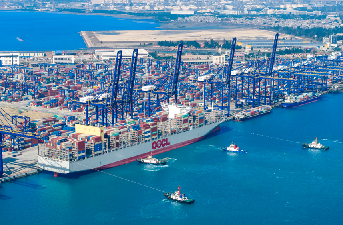
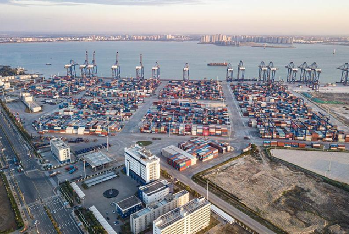
Three large international vessels were registered at Yangpu Port on Thursday, the day Hainan launched island-wide special customs operations, a move that local officials say underscores the policy’s role in accelerating the growth of the shipping sector.

 Cai Yinghong, head of the Hainan International Ship Registration Administration, noted that the registrations reflect the momentum brought by the new customs regime.

 “Their arrival demonstrates Yangpu’s growing appeal as a shipping hub,” he said, adding that the vessels are engaged in key areas, including cargo transport, engineering, and construction.

One of the ship operators, Li Min, cited lower costs and streamlined procedures as decisive factors.

 “Registering under the new policy significantly reduces our taxes and operational expenses,” Li said.

 “Hainan’s innovative registration system also improves service efficiency.”

 He added that the combination of the free trade port’s geographic advantages and the new policy will enable higher-quality services for the Belt and Road Initiative projects and other maritime initiatives.

 Cai outlined three pillars of Hainan’s strategy to bring its registration services in line with international standards: implementing world-class regulatory policies, enhancing administrative efficiency, and fostering integrated industrial chains.

Article inline ad

China’s Game Industry Reaches New Heights, While Overseas Expansion Gains Momentum

0

By HE QI in Shanghai | chinadaily.com.cn | Updated: 2025-12-19

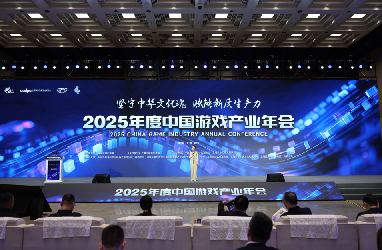
The sales revenue and user base of China’s domestic game market in 2025 reached historic highs, while the overseas market also showed strong performance, according to the 2025 China Game Industry Annual Report released on Friday in Shanghai during the 2025 China Game Industry Annual Conference.

 Co-hosted by the China Audio-video and Digital Publishing Association and the government of Xuhui district, the conference was held in West Bund from Dec 17 to 19, unveiling the latest industry achievements.

 The report highlighted that China’s domestic game market achieved sales revenue of 350.79 billion yuan ($49.8 billion) in 2025, marking a 7.68 percent increase from the previous year. The user base expanded to 683 million, up 1.35 percent year-on-year, with both metrics reaching historic highs.

 Domestically developed games generated 291.1 billion yuan in domestic sales, reflecting an 11.64 percent year-on-year growth. Mobile games dominated the market, contributing 257.08 billion yuan in sales, a 7.92 percent increase, and accounting for 73.29 percent of total revenue.

 Zhang Yijun, first vice-chairman of the association, highlighted the industry’s growth: “In 2025, China’s game industry demonstrated robust growth, innovation, and a shift from scale to quality.”

 Meanwhile, Chinese games excelled overseas, with sales reaching $20.46 billion, a 10.23 percent increase, surpassing 100 billion yuan for the sixth consecutive year. The US, Japan, and South Korea remained key markets, while expansion continued in emerging regions like Latin America and the Middle East.

 Sun Shoushan, chairman of the association, emphasized the cultural significance of games: “Games are a vital medium for sharing Chinese culture globally, serving as a cultural bridge.”

 “We must uphold our cultural roots and strengthen the dual drive of technology and culture, transforming games into a ‘modern classic’ that carries civilization, preserves culture, and empowers innovation,” Sun said.

 Ge Jianxiong, a senior professor at Fudan University, echoed Sun’s sentiments and noted that China’s rich history and culture are invaluable for game IPs, inspiring both domestic and foreign developers. Ge emphasized that the global expansion of Chinese games is a cultural exchange, integrating traditional Chinese culture with global influences to create new, globally recognized game IPs.

 Highlighting industry successes like Black Myth: Wukong, Pang Dazhi, vice-president of Guangzhou NetEase, cited Where Winds Meet as an example of a game that has captivated international players, especially in Europe and America, with its high-quality production and cultural depth, such as extraordinary architecture and cultural symbols.

 He said, “When the content is genuine and compelling, the world listens to China’s voice.”

The conference also released key reports, including the women-oriented game research report and the 2025 progress report on minor protection.

 Tang Jiajun, deputy secretary-general of the association, noted the rapid growth of women-oriented games, which have significant commercial potential and cultural impact. These games creatively incorporate traditional elements, appealing to younger audiences and promoting cultural heritage.

 The minor protection report revealed that by June 2025, 209 million Chinese internet users were aged 19 and below, highlighting the need for strengthened family education to address issues like excessive gaming among minors, Tang pointed out.

 Beyond minor protection, Sun noted other persistent industry challenges, such as rising development costs and intense global competition, urging industry collaboration for sustainable growth. He called for industry-wide collaboration to achieve sustainable development and emphasized the importance of cultivating young talent.

 This conference marked the first time it was held in Shanghai, reflecting the city’s burgeoning game industry.


Article inline ad

Province Building Aerospace Industrial Cluster

0

By MA SI and CHEN BOWEN in Haikou | China Daily | Updated: 2025-12-19

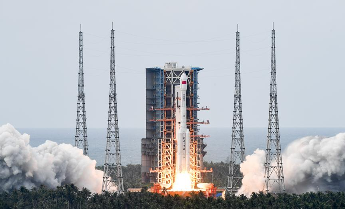
Hainan province is intensifying efforts to build a comprehensive aerospace industrial cluster at Wenchang International Aerospace City, focusing on satellite launches, satellite manufacturing and data chain development.

 Cao Shuyu, mayor of Wenchang, said the city will accelerate the development of a full commercial aerospace chain. Major projects, including a space-themed park, are being planned to position Wenchang as the “Capital of Aerospace Tourism”.

 In August, the Hainan provincial government issued a three-year plan (2025-27) to develop a modern industrial system with local characteristics and advantages. The plan highlights aerospace as a key sector, outlining measures to foster a full commercial aerospace industry chain and establish Wenchang as a major scientific innovation base for aerospace.

 To enhance launch capabilities, Hainan is upgrading its launch site for commercial aerospace and accelerating second-phase construction and supporting facilities. The second phase of the Hainan commercial aerospace launch site began construction in January this year.

 Hainan International Commercial Aerospace Launch Co said it plans to double its number of launch pads from two to four, and push forward rocket-recovery technology.

 Yang Tianliang, chairman of the company, said: “By end-2026, we will have launch pads No 3 and No 4, along with a new technical area and telemetry station. Once completed, the facility will be able to handle more than 60 launches annually, with each pad supporting launch missions every 10 days, or even weekly.”

 Wenchang in Hainan offers geographical and policy advantages, experts said. Its latitude boosts payload capacity by 10-15 percent, while its coastal location eases sea transport and provides safe landing zones for reusable rockets.

 Rocket recovery is seen as key to cost reductions. With first-stage manufacturing accounting for more than 70 percent of launch expense, Yang said the company is building a sea-recovery vessel soon to support a “launch-recover-reuse” model and enable recovery missions for domestic rocket makers.

 Minsheng Securities said 2026 will be a critical year for the debut and validation of new-generation reusable rockets, both from private and State-owned enterprises, potentially marking a true turning point for commercial rocket development.

 International cooperation is also expanding. Wenchang said it is partnering with the national deep space exploration lab on four new centers for payload integration, deep-space research, industrial coordination and international exchange.

 The city has also teamed up with Tsinghua University and other institutions on joint research and space-station support.

 On top of cultivating the aerospace industry, Hainan is also stepping up its push to build competitive future-oriented industries, such as seed production and deep-sea exploration. The island province is also scaling up and strengthening its tropical high-efficiency agriculture and cultivating a number of specialized industrial clusters such as tourism and modern service sectors, according to the Hainan provincial government’s three-year plan.

 Contact the writers at masi@chinadaily.com.cn

Article inline ad

Nation To Hit Oil Demand Peak By 2030

0

By Zheng Xin | China Daily | Updated: 2025-12-19

China, long the single biggest driver of global oil demand growth, is on track to hit its consumption peak during the country’s 15th Five-Year Plan period (2026-30), driven by the rapid proliferation of electric vehicles and new energy sources, industry experts said.

 The forecast, released by the China National Petroleum Corp Economics and Technology Research Institute, signals a structural shift in the world’s second-largest economy, even as the global outlook for oil demand proves more resilient than expected.

 China’s accelerating energy transition is ushering its oil and gas sector into a new phase of development, it said.

 As the long-time engine of demand growth, China reaching its peak signifies the fundamental success of its massive push for energy transition and domestic decarbonization, said Dai Jiaquan, chief economist at the institute.

 Wu Mouyuan, vice-president of the institute, attributed the global resilience to sustained growth in oil consumption in emerging economies and steady demand for chemical feedstocks and aviation fuels.

 The rapid penetration of EVs is among the most important factors driving the oil peak forward, with a swift substitution of gasoline and diesel demand in passenger transport, he said.

 In the road transport sector, particularly for light-duty vehicles, the shift to new energy vehicles is compressing the market for traditional fuels faster than originally modeled.

 While China’s peak consumption looms, the overall global picture suggests higher and later demand. The report raised its forecast for global oil demand to peak at around 4.8 billion metric tons, a 5.2 percent increase from its 2024 prediction.

 Crucially, the peak timing has been pushed back by a decade to 2040, it said.

 However, the domestic landscape for China is changing fast. The report predicts that China’s total primary energy demand will peak at around 2035 at 5.0 billion tons of standard oil. By 2060, while oil and gas will remain significant, the nation’s energy mix will be radically diversified.

 On the other hand, the Chinese oil market is shifting from primarily serving transportation fuel to becoming a key input for the chemical industry and new materials manufacturing.

 The report forecasts that oil demand for chemical use will peak at 290 million tons by 2050.

 Natural gas is expected to play a critical role in supplementing the phase-out of coal and supporting the new power system. Its consumption is projected to enter a plateau between 2035 and 2040, with demand ranging from 620 to 650 billion cubic meters.

 Meanwhile, the rise of artificial intelligence and new high-energy-demand sectors will significantly boost power requirements. China’s electricity demand is expected to double its 2025 level by 2060, surpassing 20 trillion kilowatt-hours, with the terminal electrification rate hitting 62 percent.

 zhengxin@chinadaily.com.cn

Article inline ad

World’s First Supercritical CO2 Power Generator Starts Operation In Guizhou

0

By Zheng Xin | chinadaily.com.cn | Updated: 2025-12-20

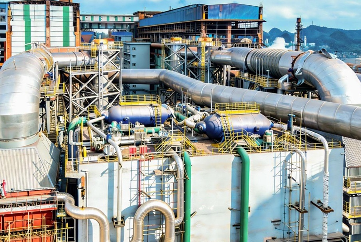
The world’s first commercial supercritical carbon dioxide power generator started operation in Southwest China’s Guizhou province on Saturday, marking a significant milestone in the global transition toward high-efficiency waste heat recovery, said its operator China National Nuclear Corporation (CNNC).

 Known as Chaotan One, the new generator uses carbon dioxide instead of steam to transfer heat. It has been connected to the grid from a steel production plant in Guizhou to producing electricity from waste heat, addressing a long-standing technical bottleneck in the efficient utilization of small-to-medium scale thermal energy sources, it said.

 According to CNNC, the system offers a drastic performance leap over traditional sintering waste heat steam power technologies currently in use, with overall power generation efficiency up by more than 85 percent and net electricity generation improved by over 50 percent.

 The system is also characterized by its simplified structural design with fewer components, leading to significantly easier operation and maintenance compared to conventional steam-cycle plants.

Article inline ad