Wednesday, November 25, 2026

Home Blog Page 120

Rio Tinto Optimistic About Biz Outlook

0

By ZHENG XIN | China Daily | Updated: 2025-12-20

Global mining giant Rio Tinto is highly optimistic about new business prospects in China, anticipating fresh opportunities arising from Beijing’s commitment to high-standard opening-up in key sectors in the coming year.

 Commenting on China’s crucial Central Economic Work Conference, Frank Xu, CEO of Rio Tinto China, emphasized that the country’s sustained growth and sweeping policy shifts are creating fertile ground for international businesses.

 “China remains the world’s largest consumer and producer of metals, and its pursuit of high-quality development supports long-term demand for our products,” said Xu.

 “The shift toward higher value-added manufacturing, together with the ongoing modernization of infrastructure, will continue to underpin demand for metals,” he said.

 China’s continued focus on sustainable development and its commitment to address climate change will further increase the need for copper, lithium, aluminum and high-quality iron ore, all essential for renewable energy systems and particularly for growth in the electric vehicle sector, Xu added.

 Industry experts believe the ongoing transformation and upgrading of China’s manufacturing sector provide significant global business opportunities for multinational corporations, moving beyond traditional supply chain models to embrace innovation and high-value collaboration.

 The consistent optimism expressed by multinational corporations regarding the transformation and upgrading of China’s manufacturing sector suggests a fundamental shift in the nature of foreign engagement with the Chinese economy, said Zhao Xiangbin, chief strategist at Beijing Gold and Forex Fortune Investment Management.

 This is no longer primarily about leveraging low-cost labor for export manufacturing, but more about co-evolving with China’s push for “high-quality development” and technological self-reliance, he said.

 Rio Tinto is actively tapping into China’s world-class engineering capabilities. The company has signed a Memorandums of Understanding with major Chinese engineering firms to integrate more design expertise from China into its global projects, demonstrating that China is now a source of capabilities and innovation for international operations.

 Furthermore, China’s leadership in decarbonization technology is becoming a valuable export.

 Rio Tinto and China’s State Power Investment Corp, for example, launched a trial of battery-swap electric haul truck technology at the Oyu Tolgoi copper mine in Mongolia, showcasing collaboration that drives low-carbon innovation beyond China’s borders.

 Battery swapping technology, already applied on haul trucks in mining operations across China, allows a battery-powered electric vehicle to have its discharged battery pack quickly exchanged for a fully charged one, instead of recharging the vehicle at a static charging station.

 Xu said the company remains confident in China’s sustained growth and long-term development, citing the country’s “solid” economic fundamentals and “remarkable resilience”.

 “As we move into the first year of the 15th Five-Year Plan (2026-30), we remain confident in its sustained growth and long-term development.”

 “Breakthroughs in AI, robotics and decarbonization highlight the strengthening role of new quality productive forces, which will create fresh opportunities for global businesses in the year ahead”.

Article inline ad

Consumption To Play Bigger Part In Growth

0

Experts stress need to ensure people have confidence, willingness to spend

By FAN FEIFEI | CHINA DAILY | Updated: 2025-12-20

China’s latest efforts to boost consumption and expand domestic demand will shore up consumer confidence and stimulate economic growth as the nation prioritizes the building of a robust domestic market to navigate rising external uncertainties, experts and company executives said.

 They noted that a series of pro-consumption policies will accelerate the country’s shift toward a consumption-driven growth model, while calling for an intensified push to improve the social security system and optimize the income distribution mechanism to further enhance residents’ willingness and ability to spend.

 Their comments came as the tone-setting Central Economic Work Conference, which concluded last week, stressed the need to boost the domestic market by implementing consumption enhancement campaigns and urban-rural income growth plans, removing unreasonable restrictions hindering consumption and stimulating service consumption potential.

 Su Jian, a professor of the School of Economics at Peking University, said that the key to boosting consumption lies in ensuring that “people not only have money and leisure time but also the confidence and willingness to spend”.

 Su emphasized the significance of expanding employment and guaranteeing stable incomes for low-income groups, saying that more supportive measures are needed to build a comprehensive and robust social security system, boost the development of culture, tourism and sports consumption, and nurture new types of consumption in the digital, green and intelligent fields.

 Citing consumption’s role as the primary economic driver, Xu Hongcai, deputy director of the economic policy committee of the China Association of Policy Science, stressed the necessity to raise people’s salaries, ease household burdens in areas like healthcare and old-age insurance, and expand property income channels.

 Xu suggested improving the social security level for low-income groups by transferring a portion of State-owned equity to social security funds to increase their disposable incomes, as well as providing direct consumption subsidies for rural residents when they purchase home appliances.

 Consumer spending has become the main driving force behind China’s economic growth. Final consumption expenditure contributed 53.5 percent to economic growth in the first three quarters of 2025, up 9 percentage points from the full-year figure of the previous year, said the National Bureau of Statistics.

 Alfred Yin, consumer products and retail assurance leader at EY Greater China, said that China’s emphasis on boosting consumption during the 15th Five-Year Plan (2026-30) period signals that consumption is no longer treated as a mere “short-term stimulus tool”, but has been elevated to “a long-term strategy”.

 He noted that consumption is playing a fundamental role in stabilizing economic growth, expanding employment and promoting high-quality development, highlighting its pivotal role in bolstering domestic demand and strengthening domestic circulation.

 Yin added China’s consumer market is expected to gain more momentum next year, with improvements in household income expectations and consumer confidence, while service consumption will serve as a key driver boosting domestic demand. He said that policy measures are expected to become more proactive in 2026, adding that the consumer goods trade-in program is likely to continue. “The trade-in program is far more than a short-term stimulus, but also an important lever for promoting structural economic reforms. It lowers the threshold for consumption and effectively stimulates residents’ willingness to purchase big-ticket categories, while driving consumption upgrading and technological iteration.”

 Yin said that the deep integration of green consumption with the circular economy will be further improved, while new consumption scenarios will be created through the use of digital technologies. AI-powered recommendations, virtual try-on, and intelligent customer service will see a broader application in the retail and service industry, to enhance personalized shopping experiences, he added.

 “Domestic consumption has been and always will be a key pillar of the Chinese economy. To adapt to the pace of change in the consumer sector, people’s longing for good lifestyles becomes an anchor point for future innovation in a time of rapid technological advances,” said Samantha Zhu, chairperson of Accenture Greater China.

 Retail sales, a significant indicator of consumption strength, rose 4.5 percent year-on-year to 36.59 trillion yuan ($5.2 trillion) in the first three quarters, according to the NBS.

 Cui Jingyi, vice-president of United Kingdom-based industrial software developer Aveva and general manager of Aveva China, said that boosting consumption is a key priority for China’s economic growth, and the company sees this as a tremendous opportunity. “As China continues to emphasize consumption-led development, we are actively adapting our strategies to align with evolving market dynamics and consumer expectations.”

 Cui said that Aveva is committed to bringing cutting-edge technologies and the latest products to the Chinese market, and accelerating the green and low-carbon transformation across industrial sectors and advancing intelligent manufacturing.

 Hideki Ozawa, president and CEO of Canon China, said the company fully supports China’s efforts to boost domestic consumption. “With a growing market and government support, we have seized many new opportunities. The imaging market is thriving. We’re very optimistic about the future and believe that a new golden age for the camera market is coming soon.”

Article inline ad

Vigilance Urged As Global Risks Evolve

0

By LI JING | China Daily | Updated: 2025-12-20

Global risks are evolving and converging at a pace that is outstripping corporate response capacity, posing growing challenges to employee safety and business continuity, according to the Risk Outlook 2026 report released by International SOS.

 The report, released for the 10th consecutive year, warns that geopolitical tensions, extreme weather, misinformation and mental health risks are no longer isolated threats. Instead, they increasingly overlap, forcing companies to prepare earlier and move faster.

 “Global uncertainty is reshaping how companies must think about preparedness,” said John Williams, managing director of International SOS China. “Risks today are interconnected, dynamic and constantly evolving.”

 Survey data cited in the report show that 57 percent of managers believe new risks are emerging faster than their organizations can respond, while 74 percent said the window for making critical decisions is shrinking. Yet only 35 percent said they are confident in their ability to mobilize teams and resources in a coordinated way, highlighting what the report describes as a widening preparedness gap.

 Geopolitical instability remains the most immediate concern for companies operating abroad. Zhang Yingyan, senior travel risk manager at International SOS China, said armed conflicts and violent incidents rose markedly in 2025 and are expected to remain elevated into 2026.

 She cited the Russia-Ukraine conflict, hostilities in the Middle East, and growing unrest in parts of Africa, Asia-Pacific and Latin America, noting that security risks are increasingly spilling into locations once considered relatively stable.

 “These developments have become one of the biggest safety concerns for Chinese companies overseas,” Zhang said, adding that geopolitical tensions are also disrupting trade relations, supply chains and talent mobility.

 The stakes are particularly high for Chinese enterprises going global. Data from China’s Ministry of Commerce show that by the end of 2024, China had about 52,000 overseas enterprises operating across 190 countries and regions, with outward foreign direct investment reaching $192.2 billion in 2024, accounting for roughly 12 percent of global flows.

 Zhang added Chinese companies can no longer rely solely on country-level risk ratings when making decisions. Instead, she urged firms to obtain hyper-local intelligence, down to the city or district level, to understand security dynamics and social sentiment.

 The report highlights misinformation and artificial intelligence as emerging risk multipliers. Zhang said the rapid spread of AI-generated content has made it increasingly difficult for companies to distinguish credible intelligence from noise.

 “About half of online information today is machine-generated,” she said, warning that false or misleading information is no longer just a challenge in crisis management but is becoming a catalyst for risk itself.

 International SOS advised companies to use AI and digital platforms as filters rather than decision-makers, combining automated monitoring with professional analysis to identify high-value risk signals from large volumes of online noise.

 The report also points to a significant gap in corporate attention to employee mental health, particularly for staff working overseas. Li Xia, medical director of assistance services at International SOS China, said while global data show that more than 1 billion people worldwide are affected by mental health conditions, only 17 percent of surveyed companies rank mental health among their top three concerns.

 “Burnout, anxiety and stress directly affect productivity, absenteeism and staff retention,” Li said, warning that psychological risks often intensify during periods of geopolitical tension and extreme weather.

 International SOS urged companies to move away from reactive crisis management toward early detection, scenario planning and regular drills, supported by technology and expert analysis.

 “Preparedness is not a document, but a capability that must be practiced,” Williams said, adding companies should treat investment in safety, health and intelligence systems as a strategic asset, not a cost.

 “In today’s environment,” he said, “waiting for the next crisis before acting is no longer an option.”


Article inline ad

Character, Phrase Of Year Underscore Tech Aspirations

0

By Zou Shuo | chinadaily.com.cn | Updated: 2025-12-19 

 “Resilience”, or ren (韧) in Chinese, has been chosen as China’s character of the year, while the homegrown AI model “DeepSeek” is the phrase of the year for 2025, highlighting the country’s persistent drive for technological self-reliance amid a complex global landscape.

 The annual Chinese language review also selected “tax” as the global character and “geopolitics” as the global phrase, reflecting heightened tensions and the widespread impact of protectionist tariff policies implemented by the United States.

 The results, unveiled on Friday, were based on public suggestions, data analysis and panel discussions. The event, jointly organized by the National Language Resources Monitoring and Research Center, the Commercial Press and Xinhuanet, is now in its 20th edition.

 Lu Xiangao, vice-president of the China Media Culture Promotion Association, said “resilience” reflects the robust responsiveness of China’s economic and social systems. This includes the recovery elasticity of industrial chains amid global economic headwinds, sufficient strategic resolve to navigate regional conflicts, and the efficient response of institutional mechanisms to technological disruptions, he said.

 Lu added that resilience is a national spirit, reflected in the persistent innovation of enterprises across economic cycles, and the developmental consensus and tacit coordination of the entire society amidst transformation. “In this era of uncertainty, ‘resilience’ offers us a form of certainty,” Lu said.

 Meanwhile, early this year, the domestic large language model DeepSeek made a dramatic entry, profoundly reshaping people’s lives, he said.

 Its selection as the hottest phrase of the year reflects the openness and inclusivity of this year’s review. Its significance extends far beyond a mere technological breakthrough — it symbolizes Chinese science and technology’s deep dive into building foundational driving forces and shifting from learning and catching up to the quest to independently define the rules, he said.

 Zhu Huaxin, executive council member of the China Society of Economic Reform, noted that the US has rolled out so-called “reciprocal tariffs”, intensifying geopolitical maneuvering, which dominated much of the 2025 international discourse. The post-World War II multilateral trading system risks systemic collapse, creating an international environment more severe than ever before, he said.

 Yet, rational and clear-thinking political voices worldwide believe that in the age of artificial intelligence, promoting multi-agent sharing, interconnection and collaboration should not mean reverting to the law of the jungle, nor a regressive return to a tribalized global society, Zhu said.

 At this critical juncture, China’s stance is best captured by remaining composed amid change and pursuing strategic goals with unwavering determination toward Chinese modernization, he said.

 These annual words and phrases are not mere symbols. They are deeply rooted in the life of every individual, each interpreting this resilience and practicing the spirit of deep exploration in their own way, Zhu added.

Article inline ad

Imported Durians Sell Out Fast In Hainan After Customs Shift

0

By CHEN BOWEN in Haikou | chinadaily.com.cn | Updated: 2025-12-19

Several hundred people lined up at a supermarket in Haikou, Hainan province, on Thursday to buy imported durians being sold at almost half their usual price, shortly after the launch of the island province’s special customs operations.

 A staff member at Wanghao Supermarket said the durians sold out within an hour of going on sale, The Nanguo Metropolis Daily reported. “Malaysian durian used to be expensive and difficult to buy fresh,” said a local surnamed Chen, who purchased some fruit. “Now it’s cheaper, fresher, and available right here.”

 According to Wang Chunyou, executive director of Haikou Huasi Network Technology, the shipment weighed 1.5 tons and was valued at about 200,000 yuan ($27,600). It included seven varieties, four of which were new to the Hainan market, according to the report.

 “Customs clearance took less than two hours. We really felt the efficiency and improved business environment,” Wang said. The company plans to import more high-quality, reasonably priced durians.

 Experts say the island-wide special customs operations mark a significant step in China’s investment and trade liberalization. The policy directly links Hainan with overseas markets, with the proportion of goods eligible for zero tariffs increasing from 21 percent to 74 percent. These goods include cosmetics, appliances, and health products.

 The policy is reducing costs by making imported goods more affordable and improving the shopping experience—benefits that also extend to visitors from other Chinese provinces and abroad.

 HNA Cargo, which transported the durians from Malaysia, is expanding its direct sourcing of produce and handling procurement, shipping, and customs clearance. The company aims to supply products to domestic consumers and support Hainan’s development as an international produce distribution hub.

Article inline ad

Shenzhen Mayor Outlines City’s Sci-Tech Progress During 14th Five-Year Plan Period

0

By Chen Hong and Zheng Caixiong in Shenzhen, Guangdong province | chinadaily.com.cn | Updated: 2025-12-19

A Shenzhen press conference on Thursday outlined the city’s progress in building a world-class scientific and technological innovation hub during the 14th Five-Year Plan period (2021–25), highlighting rapid growth in research investment, industrial upgrading, and emerging technologies.

 Mayor Qin Weizhong said that the city has focused on building an innovation-driven development model and strengthening its talent and research ecosystem. As a result, Shenzhen’s total R&D spending rose from 151.08 billion yuan ($21.5 billion) in 2020 to 245.31 billion yuan in 2024, with an average annual increase of 12.9 percent, ranking second nationwide in total volume.

 R&D intensity reached 6.67 percent, the highest among Chinese cities, with enterprises accounting for over 93 percent of total R&D investment. Shenzhen, home to technology giant Huawei, has long maintained a leading national position in the country in terms of total volume, Qin said.

 The city has ranked first among Chinese cities in the number of PCT international patent applications for 22 consecutive years. The full-time equivalent of research and experimental development personnel reached 474,000 person-years, also the highest nationwide.

 Qin said breakthroughs in core technologies are accelerating across multiple fields, including high-end chips, semiconductor equipment, precision instruments, industrial software, and advanced materials. At the same time, domestic operating systems and AI hardware-software ecosystems are developing rapidly, supporting the growth of new quality productive forces.

 Manufacturing remains the foundation of Shenzhen’s economy, Qin said, as the city works to build a more internationally competitive modern industrial system. Over the first four years of the 14th Five-Year Plan, the added value of Shenzhen’s strategic emerging industries grew by over 10 percent annually on average, making up 42.3 percent of its GDP.

 Eleven large industrial projects, each exceeding 10 billion yuan, have been completed and put into operation. Advanced manufacturing and high-tech manufacturing contributed 68.2 percent and 58.2 percent, respectively, to the added value of above-scale industries.

 Shenzhen now accounts for more than 10 percent of China’s total output in 39 categories of industrial products, including integrated circuits, industrial robots, and smartphones. Consumer drones, panoramic cameras, sports earphones, 3D printers, and electric-assist bicycles are now selling well worldwide, Qin said.

 Shenzhen’s GDP grew from 2.78 trillion yuan in 2020 to 3.68 trillion yuan in 2024, posting an average annual growth rate of 5.5 percent and leading China’s first-tier cities in growth pace.

Article inline ad

China Records Over 26% Jump In FDI

0

By Zhong Nan | chinadaily.com.cn | Updated: 2025-12-19

Foreign direct investment inflows in China saw a notable rebound in November, surging 26.1 percent year-on-year, data from the Ministry of Commerce showed on Friday.

 According to an online statement from the ministry, China’s actual utilized foreign capital totaled 693.18 billion yuan ($98.45 billion) in the first 11 months of 2025, falling 7.5 percent year-on-year.

 Between January and November, the manufacturing sector attracted 171.72 billion yuan in foreign capital, compared with 506.29 billion yuan for the services sector.

 In the meantime, high-tech industries utilized 221.26 billion yuan in foreign capital, with significant growth seen in sectors such as e-commerce services, medical equipment and instrument manufacturing, and aerospace equipment manufacturing.

 Switzerland, the United Arab Emirates and the United Kingdom recorded notable increases in their investment in China, with year-on-year growth rates of 67 percent, 47.6 percent and 19.3 percent, respectively.


Article inline ad

New Chip Module Slashes AI Data Center Energy Use

0

By Liu Kun in Wuhan and Chen Meiling | chinadaily.com.cn | Updated: 2025-12-18     

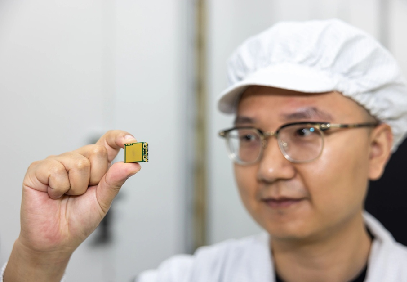
Researchers at Jiufengshan Lab in Hubei province have unveiled a new gallium nitride power module that promises to dramatically cut the energy consumption and cost of massive AI computing centers.

 The module, developed under the leadership of Li Sichao, was officially released on Dec 4. By replacing traditional silicon chips with chips made from gallium nitride — a superior, third-generation semiconductor — the technology reduces electrical power loss by 30 percent and shrinks module volume by an equivalent amount, all while halving production costs.

 The potential savings are staggering. Installing these modules in a single, massive 1-gigawatt AI data center could save nearly 300 million kilowatt-hours of electricity annually, cutting power bills by an estimated 240 million yuan ($34 million). This is critical as the AI boom fuels an unprecedented surge in energy use. A 1 GW data center alone can consume as much power as a large nuclear plant, with power conversion for processors accounting for 11 percent of its total load.

Faced with a processing technique involving thousands of nanometer-precision steps, a seven-doctor team at the lab conducted over a hundred tests to master the full production chain. Li confirmed the project has completed its proof-of-concept and is commencing pilot-scale validation, with mass manufacturing expected within three to five years to meet booming market demand.

The innovation, which recently won a national postdoctoral competition prize, has already attracted significant commercial interest. The team has secured over 10 million yuan in orders from domestic data center power suppliers and drawn attention from investment firms.

 Qi Zichen contributed to this story.


Article inline ad

Kunshan Setting Up World-Class Industrial Hubs

0

Development blueprint for next five years to focus on ‘coordinated cluster building’ across electronics, equipment manufacturing, new materials and future industries

By Cheng Yu | China Daily | Updated: 2025-12-18    

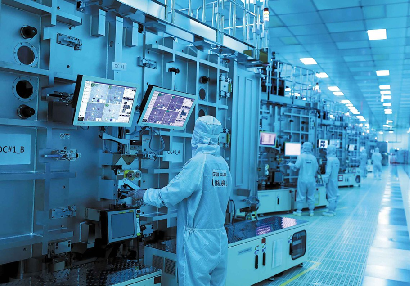
 On the production floor of Visionox, one of the world’s leading suppliers of advanced displays based in Kunshan, Jiangsu province, a line of technicians in cleanroom suits closely monitor a sheet of deep-purple glass the size of a door.

 A few kilometers away, the scene could not be more different: forklifts shuttle across the yard of KSHG, an auto wire-harness supplier whose customers range from domestic electric vehicle makers to German brands.

 At first glance, these companies share little in common except for a Kunshan address. Yet together they capture the twin pillars of a county-level economy that has quietly become one of China’s most competitive manufacturing bases.

 This is what Kunshan local officials and executives say will define the city’s next decade: a dense mesh of optoelectronics, precision components, automotive parts, advanced materials and artificial intelligence-ready electronics.

 And it is this mesh — diversified but deeply interlinked — that Chinese policymakers are watching closely as they start shaping the 15th Five-Year Plan (2026-30), a national development blueprint for the next half-decade.

The plan calls for accelerating breakthroughs in key technologies, like in semiconductors, advanced computing, optical communications and display technologies, as well as backing emerging sectors such as AI, quantum information, brain-computer interfaces and low-altitude aviation. The plan also emphasizes the need for cultivating world-class clusters in electronics and equipment manufacturing.

 Behind these broad ambitions is a simple calculation: China’s next growth cycle will depend on whether traditional manufacturing belts can absorb frontier technologies fast enough to produce globally competitive products at scale.

 The fourth plenary session of the 20th Central Committee of the Communist Party of China also reinforced this direction, calling for a modern industrial system anchored in advanced manufacturing, greener supply chains and upgraded infrastructure.

 But the message resonating most in places like Kunshan is less ideological and more operational: keep the real economy strong, scale up what works and bring emerging technologies out of the lab and onto factory floors.

Kunshan, a city of over 2 million near Shanghai, hosts two overlapping engines: a trillion-yuan ($141.6 billion) electronic information cluster led by display panels and optical devices, and a trillion-yuan auto-parts cluster that feeds both domestic and multinational original equipment manufacturers.

 Visionox, one of China’s leading AMOLED makers, illustrates the first engine. Its Kunshan base has become a strategic asset in China’s efforts to build an independent display ecosystem, from materials and equipment to panels and modules.

 Zhang Meng, head of innovation management at the innovation center of Visionox, said that the company’s work sits at the heart of the policy push for breakthroughs in optical sensing, artificial intelligence and high-end displays.

 “Kunshan helps us do two things fast: scale mass production and iterate new generations. Most cities can offer land. Kunshan can align suppliers, tooling partners, logistics and talent within months,” Zhang said.

 That velocity reflects the density of the cluster around it. The city hosts more than 200 supporting firms — from mask plate and polarizer makers to precision component providers — giving Visionox an ecosystem that shortens development cycles and buffers geopolitical shocks.

 The result is a supply chain nimble enough to push into emerging display types such as foldable, micro-OLED and automotive-grade panels, all areas aligned with national priorities for advanced materials and intelligent terminals.

 If Visionox represents frontier electronics, KSHG embodies the other half of Kunshan’s industrial equation: labor-intensive foundations that are quietly reinventing themselves.

 Founded decades ago, KSHG, a wire-harness assembler, now operates in an industry transformed by electrification, autonomous driving and the software-defined vehicle.

 Wire harnesses — once simple bundles of copper and connectors — have evolved into intelligent nervous systems carrying signals, data and power across increasingly complex EV architectures.

 Cheng Sanrong, chairman of KSHG, said high-voltage wiring, lightweight aluminum conductors, optical interconnects and multilayer sensor cabling are now standard.

 The company has poured resources into process automation, real-time quality traceability and digital production lines — the type of incremental, applied innovation policymakers say is essential for strengthening the high-end of industrial chains.

 A recent push involves collaborating with Kunshan’s AI and electronics startups to develop semi-automated harness design tools and predictive maintenance systems — an early example of the city’s push to integrate emerging digital capabilities with long-standing manufacturing strengths.

 “As vehicles become more electronic and more intelligent, wiring harness goes from being a cost item to a competitive advantage,” Cheng said. “We don’t need slogans. We need faster iteration and closer integration with display, sensor and computing suppliers — all industries Kunshan already has.”

 What differentiates Kunshan from many manufacturing cities is its combination of industrial depth and administrative agility. The city handles tens of thousands of tech-related business approvals each year, with executives consistently describing a process “closer to corporate project management than public administration”.

 That efficiency matters as the 15th Five-Year Plan emphasizes world-class industrial clusters. The policy language speaks of “coordinated cluster building” across electronics, equipment manufacturing, new materials and future industries.

Infrastructure upgrades are also accelerating. The city is expanding clean-energy capacity, upgrading cross-regional logistics, and piloting industrial data platforms aligned with the national computing-network strategy. For display makers, that means more stable power and cleaner water. For auto-parts suppliers, it means faster prototyping cycles with local electronics firms.

 Although Kunshan’s economic base is built on tangible goods, local officials know that the next wave of growth also requires a future-industry layer aligned with national priorities: AI engineering, advanced computing, optoelectronics, low-altitude aviation and next-generation communications.

 The city has started attracting companies working on optical sensors, AI-ready micromodules and lightweight aerospace composites — areas that link Visionox-style photonics with KSHG-style automotive systems. This bridging role positions Kunshan not merely as a manufacturing center, but as a sandbox where traditional industries blend with frontier technologies.

 Industry experts said that the city’s ambition is not to lead every frontier, but to turn promising technologies into manufacturable products faster than competitors. In other words: keep doing what Kunshan already does well, but with a higher-tech ceiling.

 For Kunshan, the path ahead is straightforward: refine the old, cultivate the new, and continue turning industrial ambition into factory-line reality.

 Yet Kunshan’s ambitions do not end with electronics and automotive hardware. On the city’s eastern edge, in the fast-growing district of Huaqiao, a different kind of industrial experiment is underway — one that hints at how Kunshan wants to broaden its industrial base beyond manufacturing in the narrow sense.

 Along Chenfeng Road stands the Huaqiao Chenfeng Fashion and Creative Industry Park, a project jointly developed by the local economic development zone and Chenfeng Group, together with national textile associations and leading fashion schools such as Donghua University.

 The park is deliberately unlike the cleanrooms and component workshops elsewhere in the city. Its studios and open labs blend textile heritage, digital culture, design education and new retail — an attempt to build a fashion ecosystem with both cultural depth and commercial scalability.

 Yin Jiajue, chairman of the board at Chenfeng Group, described it as “a supply-chain super platform for China’s emerging fashion designers”.

 She said that it houses talent training centers, independent designer ateliers, brand headquarters, livestreaming studios and factory-direct retail — all stitched together into a vertically integrated creative-production system. The local population calls it China’s “fashion dream factory”.

 The numbers suggest that the formula is working. Nearly 150 fashion firms and institutions have taken up space, including 47 brand headquarters and dozens of startups founded by designers trained at the park’s partner universities.

 More than 85 independent design teams, supported by almost 300 designers, use the park’s rapid-sample and small-batch production lines to launch new labels. Livestreaming studios on the upper floors — 38 at last count — feed a pipeline of digitally native brands into China’s enormous apparel market.

 The park has already produced several breakout names. Newly launched niche brands have found traction by mixing advanced fabrics with traditional techniques and handcrafted mulberry-silk work, giving heritage crafts a second commercial life.

 Recognition has followed. The park has been designated a demonstration zone for textile and apparel creative design by the Ministry of Industry and Information Technology, as well as a green supply-chain pilot.

 One thing seems certain: in China’s next growth cycle, the future of advanced manufacturing may not only be written in laboratories, but also in workshops where purple display glass meets copper wiring, and where emerging technologies finally define the next generation factory floor.

Article inline ad

Flagship Green Project By Energy China In Operation

0

By Cheng Yu | China Daily | Updated: 2025-12-18

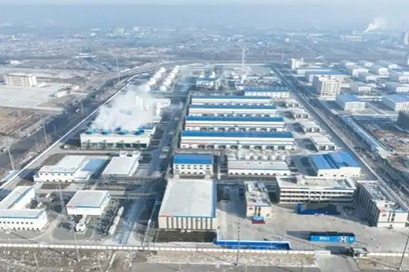
China Energy Engineering Group Co Ltd, or Energy China, has commenced operations of the world’s largest integrated green hydrogen, ammonia and methanol project, marking a milestone in China’s push to scale up clean fuels and cut the cost of renewable energy storage and transport.

 The first phase of the Songyuan hydrogen energy industrial park in Jilin province is designed to produce 45,000 metric tons of green hydrogen along with 200,000 tons of green ammonia and green methanol annually, the State-owned enterprise said on Monday.

 The first phase is expected to save around 600,000 tons of standard coal equivalent annually and cut carbon dioxide emissions by about 740,000 tons, Energy China said.

 The project integrates wind and solar power generation with energy storage, electrolysis and flexible chemical synthesis, tackling one of the biggest bottlenecks in renewable energy — the mismatch between intermittent power supply and the steady operating requirements of industrial chemical plants.

 Ni Zhen, Party secretary and chairman of Energy China, said: “Hydrogen represents the future of energy development. China has been accelerating strategic emerging industries, including hydrogen, as new drivers of economic growth.”

 The project also provides a viable pathway to drive down the cost of green hydrogen and expand global markets for green energy. It has overcome several world-class technical challenges, including the precise matching of wind, solar, storage and hydrogen-ammonia-methanol production systems.

 “It should be one of the best solutions to the problem of curtailment of wind and solar power,” said Li Jingguang, chairman of the hydrogen energy unit at Energy China. “It enables large-scale production of green hydrogen, ammonia and methanol, significantly improving the economics of renewable energy projects.”

 Energy China, one of the world’s largest energy and power infrastructure builders, said it will continue to expand its hydrogen portfolio.

 Looking ahead, the company said it will use the Songyuan project as a springboard to deepen technological innovation and digital integration, contributing to China’s broader transition to a new energy system and modern industrial structure.

 chengyu@chinadaily.com.cn

Article inline ad