Thursday, November 26, 2026

Home Blog Page 1187

China’s vegetable exports increase in 2022

0

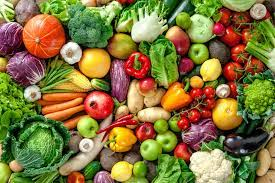
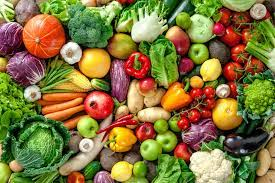
China’s vegetable exports increase in 2022-zhsailingChina’s vegetable exports saw stable growth in 2022, with the export volume up 6.5 percent year on year, data from the Ministry of Agriculture and Rural Affairs shows.

   Some 11.83 million tonnes of vegetables were exported last year, with a total value of 17.22 billion U.S. dollars, up 9.2 percent year on year, according to the ministry.

   China imported 337,000 tonnes of vegetables in the same period. The total value of these imports was 960 million U.S. dollars, down 19 percent from the previous year.

   The data also shows that the country’s vegetable trade surplus stood at 16.26 billion dollars in 2022, climbing 11.5 percent year on year.  

Article inline ad

Across China: NW China’s entrepreneurs eye growing opportunities

0

16776465076276As soon as the snow stopped falling in northwest China’s Gansu Province in mid-February, 44-year-old Geng Shengchen was impatient to fly to Zhejiang Province, one of the country’s main production areas for fresh tea leaves and a “battlefield” for Chinese milk tea merchants.

   “As the milk tea economy gradually recovers, there’s been a rush on the buying of tea leaves recently,” Geng said.

   Geng is the founder of Fundosa, a milk tea brand in the city of Lanzhou, capital of Gansu, that has been well received among locals and tourists alike for its global flavors.

   Geng noted that his milk tea products have special ingredients such as fermented glutinous rice and highland barley, which, he believes, represent the local traditional food culture. Other raw materials from all over the world can also be found in the company’s milk tea, showing the brand’s cultural fusion.

   To serve his consumers high-quality products, Geng used to travel to various food markets across the country to look for the best ingredients. However, his frequent journeys were interrupted by the COVID-19 pandemic, and his decreased orders cast a shadow over his career ambitions to promote a creative drink culture.

   As China has optimized its COVID-19 response in light of the evolving pandemic situation, Geng has not only regained confidence in his business, but he has seen more fierce competition in the sector.

   The sales volume of Fundosa milk tea has returned to the same level as seen in 2019, and more franchised outlets are in the works and are expected to open this year, Geng said.

   Chen Junzhang, 33, an entrepreneur from the Tianzhu Tibetan Autonomous County of Gansu Province, is also preparing for the upcoming peak season.

   Chen is nostalgic about his hometown. After graduating, he returned to Tianzhu determined to sell local agricultural specialties such as white yak meat and fungus on e-commerce platforms.

   “Something different happened this year,” Chen said. He used to have to make great efforts to persuade consumers to buy his products, but this year, merchants across the country have flocked to him seeking cooperation.

   Chen has received many cooperation proposals, but it is a project to develop white yak wool products that has most drawn his attention.

   “Some international suppliers have cast their eyes on the rare wool, and I want to seize the opportunity to expand the market,” Chen said.

   During the weeklong Spring Festival holiday this year, the sales revenue of China’s consumption-related sectors rose 12.2 percent from last year’s figure for the same holiday period, data from the State Taxation Administration shows.

   The vigorous consumption market is igniting the enthusiasm of more assertive entrepreneurs, including those who are still completing their education.

   In the student start-up center at Lanzhou University, 53 out of 105 entrepreneur teams have launched businesses in the field of science and technology.

   “Research teams at the university are transforming their academic achievements into practical uses, which will have promising prospects following the economic revival,” said Deng Yubo, the general manager of a services company at the start-up center. 


Article inline ad

China to further promote TCM development with new implementation plan

0

16776461235534

China has released an implementation plan designed to further support the development of traditional Chinese medicine (TCM) during the 14th Five-Year Plan period (2021-2025).

   The plan, released by the General Office of the State Council, aims to give full play to the advantages of TCM, enhance the ability of TCM to prevent and cure diseases, and promote its scientific research.

   Under the plan, major projects will be launched focusing on fields such as the high-quality development of TCM health services, talent training, culture promotion and its inheritance, innovation, and modernization.

   Guided by the plan, China will see TCM become a major pillar for building a healthy China by 2025, with improvement in TCM quality, international influence, and scientific and technological innovation capacity.

   The plan also emphasizes on establishing a sound and stable mechanism for diversified investment in TCM development and carrying out dynamic monitoring and evaluation of major projects.  

Article inline ad

CNPC’s 65-bln-yuan petrochemical project fully operational in Guangdong

0

16776458368110 A petrochemical project of China National Petroleum Corporation (CNPC), China’s leading oil and gas producer, has become fully operational in southern province of Guangdong this week.

   The project, with a total investment of 65.4 billion yuan (about 9.41 billion U.S. dollars), processes 20 million tonnes of crude oil per year, while producing 1.2 million tonnes of ethylene products and 2.6 million tonnes of paraxylene.

   As a key project to support the Guangdong-Hong Kong-Macao Greater Bay Area strategy, the Guangdong petrochemical project is a refining and chemical integration capable of producing a full range of petrochemical products, including more than 20 kinds of oil products and 200 kinds of chemical products.

   The project will significantly reduce the dependence of Guangdong’s industries, such as household appliances and electronics, on chemical materials from external sources, and will nurture middle and downstream industries worth about 560 billion yuan in the province. 

Article inline ad

Kenya to assemble 130 Chinese electric buses in 2023

0

16776456429779 Kenyan automotive firm, Associated Vehicle Assemblers (AVA), said Tuesday that it will assemble 130 electric buses manufactured by Chinese automotive firm BYD in 2023.

   Matt Lloyd, managing director of AVA, told Xinhua in the Kenyan capital of Nairobi that so far it has assembled 15 BYD electric buses for the local market that were imported as a collection of parts.

   “The advantage of BYD is that it is one of the world’s leaders in the manufacture of electric vehicles and the level of quality of the vehicles is very high,” Lloyd said on the sidelines of an electric vehicle forum.

   Lloyd observed that locally assembled BYD buses have high safety standards and will therefore enhance Kenya’s overall road safety. He revealed that his firm has gained modern automotive technology through the technical advice it has received from BYD. 

Article inline ad

100,000-tonne lithium salt project launches in southern Xinjiang

0

16776453137764 A 100,000-tonne lithium salt project commenced on Sunday in southern Xinjiang’s Hotan Prefecture, said the Xinjiang Nonferrous Metals Industry (Group) Co., Ltd.

   Output for the first phase project is expected to reach 75,000 tonnes per year, including 30,000 tonnes of lithium carbonate, 30,000 tonnes of lithium hydroxide and 15,000 tonnes of lithium chloride. The project is set to be completed by the end of this year, according to the state-owned assets supervision and administration commission of Xinjiang Uygur Autonomous Region.

   The lithium salt project is part of the 3-million-tonnes rare metal production project of Xinjiang Nonferrous Metals Industry (Group) Co., Ltd in Hotan. It is a key project of the autonomous region during the 14th Five-Year Plan period (2021-2025). After completion, the project is expected to produce 600,000 tonnes of high-quality lithium concentrate every year.

   The construction of the lithium salt project has important strategic significance in terms of consolidating Xinjiang’s role in the national lithium salt industry, said Zhang Guohua, chairman of Xinjiang Nonferrous Metals Industry (Group) Co., Ltd.  

Article inline ad

Feature: Pakistan’s oilseed industry to bloom under China-Pakistan agriculture cooperation

0

16776450833385On a sunny February morning, the air in a small village in Pakistan’s east Gujranwala district carried the sweet scent of the canola flowers, which were dancing gently in the breeze.

   Bees whirling on the profuse yellow blossom beaming with lush green pods were not only a view to behold, but also heralded the beginning of a new chapter in the lives of local businesspeople and farmers, who are shifting to a Chinese hybrid variety of canola seeds to reap higher yields and produce cooking oil at home.

   “We sowed the new variety on 100 acres of land because of their potential to produce higher yields and more oil as compared to other oilseeds including mustard and rape, which we previously used to cultivate,” Intisar Ahmad Chattha, the farm’s manager told Xinhua while carefully watching the pods.

   Pakistan’s annual consumption of cooking oil is around 5 million tons, but due to the low economic potential of oilseeds in the local market, they are not preferred by the farmers. The country has to import about 89 percent of oil to meet the demand, spending 3.6 billion U.S. dollars annually.

   To help the country meet its edible oil demand and support its foreign exchange reserves, Chinese company Wuhan Qingfa Hesheng and a Pakistani company Evyol group jointly provide high-quality hybrid seeds to Pakistani farmers.

   Ghazanfar Ali, head of marketing in Evyol group told Xinhua it took them 10 years to produce a variety that is compatible with the local climate, produces a good yield and is good for human health.

   The crop provides an increased profit for the farmers as its standard 2 kg pack is enough to cultivate 2 acres of land, and the farmer can get 1.5 tons of yield out of it, which is over 10 percent more than the yield from other varieties currently available in Pakistan, he said, when talking about the potential of the crop.

   Zhou Xusheng, director of the international business department of Wuhan Qingfa Hesheng Seed company, told Xinhua that his company is working on transferring technology to Pakistan to make it efficient in smart agriculture.

   “Through this project, we want to transfer the harvesting technology through which the farmers can use some attachments on the harvesters they already have and reduce the wastage,” he said.

   His company also wants to introduce processing units across the country, through which even in villages people can install them and produce processed oil for themselves and sell it to others, Zhou added.

   He said that the seed is suitable for the environment across Pakistan, and this year they sold 11 tons of seeds across the country, which will be cultivated on 20,000 acres, and their target for next year is 100 tons, which will bring a great change to Pakistan by helping the country become self-sufficient in edible oil production.

   The Chinese company will also buy back the canola harvest from some of the farmers and send it to the edible oil factories so that both farmer and the factory owners can realize the potential and health benefits of the oil, Zhou added.

   “When Pakistan imports oil, it spends a lot of money and receives only the finished product. But when oil is produced locally, it will generate job opportunities, build an industrial chain and utilize the cakes after oil extraction as power-packed canola meal for cattle,” he added.

   Talking about the demand for canola meal in Pakistan, Chattha said that they have over 800 cows in the dairy farms in the area and to provide them with good quality food they have to import canola meals, which is a big financial burden due to the devaluation of the local currency.

   “Besides getting and selling edible oil, our main purpose to sow canola was to produce the meal for cattle,” he said, adding that he observed swarms of bees on the flowers during its ongoing full bloom season, and that they are also planning to work on beekeeping next year.

   “The yellow flowers in the vast plain of Gujranwala symbolize the beauty of the Pakistan-China friendship, through which a revolution can be brought to Pakistan’s agriculture sector, and the edible oilseed production is a step forward in that direction,” Ali said, while standing near a promotional board educating people about the health benefits of the Chinese canola.  

China conducts central bank bills swap

   BEIJING, Feb. 28 (Xinhua) — The People’s Bank of China, or the central bank, conducted a central bank bills swap (CBS) operation on Tuesday to improve the liquidity of perpetual bonds.

   The CBS, valued at 5 billion yuan (about 719.2 million U.S. dollars), is open to primary dealers for bidding at a fixed rate of 0.1 percent, the central bank said in a statement.

   The swap will be due on May 28, 2023, according to the statement.

   The CBS scheme allows dealers to swap the perpetual bonds they hold for central bank bills, which will boost market demand for perpetual bonds but have a neutral impact on liquidity in the banking system.

   Perpetual bonds are fixed-income securities with no maturity date and are not redeemable but pay a steady stream of interest in perpetuity

Article inline ad

Chinese EV makers help transform Malaysian automotive industry

0

16776447326729 Mr. Lim, who lives near the city of Kuala Lumpur, was quite satisfied with his recently bought Ora Good Cat electric vehicle (EV).

   Ora Good Cat is an electric vehicle model under Great Wall Motor (GWM), China’s leading sport utility vehicle and pickup manufacturer. Mr. Lim first saw the model when he was on business in Thailand, took a picture of the car and sent it to his wife.

   Later they saw it in a car exhibition in Kuala Lumpur, and ordered it on the spot after checking out and test driving. During the Christmas holidays last year, the car was delivered to them. “My wife likes this car very much. It’s powerful and quiet, can accelerate fast,” he said.

   GWM set up its Malaysian subsidiary in July 2022. According to Cui Anqi, managing director of Great Wall Motor Sales Malaysia Sdn Bhd, the Malaysian market is very important among ASEAN countries. There are many automobile consumptions in Malaysia, but in terms of new energy vehicles, the market is still a “blue ocean” and has great potential for upgrading.

   Data from Malaysian Automotive Association showed that 2,631 EVs were sold in Malaysia in 2022, which represents an 860-percent increase from 274 in 2021.

   The skyrocketing increase is closely related with incentive packages adopted by Malaysian government.

   “The government is truly walking its policy talk for the EV industry through various measures. This includes offering full import, excise, and sales tax exemptions for locally assembled EVs until Dec. 31, 2025, and full import and excise duty exemptions for imported EVs until Dec. 31, 2023,” International Trade and Industry Minister Tengku Zafrul Tengku Abdul Aziz said recently at the launching of Malaysia’s Electric Vehicle Industry Conference 2023.

   These incentives may be adjusted in the future, however, industry insiders believe that EV is the inevitable trend.

   The minister also pointed out that Malaysia aims to achieve at least 15 percent of electrified vehicles including hybrid out of the total industry volume by 2030 and 38 percent by 2040 under the National Energy Policy (2022-2040).

   By 2025, the government aims to provide 10,000 public charging facilities, comprising 9,000 units of alternating current type and 1,000 units of direct current type.

   Chinese automaker BYD officially launched its electric car model of Atto 3 in Malaysia in December 2022. Tengku Zafrul said at the launching ceremony that participation of the Chinese brand will benefit the development of the EV ecosystem in Malaysia.

   “The trend of car consumption upgrading in Malaysia is becoming more and more obvious. We are confident that Malaysia’s new energy automobile industry will achieve rapid and high-quality development in the near future,” Cui Anqi said.  

Article inline ad

China’s Hainan heightens exchanges to enhance opening-up level

0

16776445168147The government of south China’s Hainan has recently wrapped up a promotional tour outside the province, part of a broader heightening of exchanges aimed at enhancing high-level opening-up.

   Since Feb. 15, Hainan authorities have hosted a series of promotional events in Southeast Asian countries and regions, including Indonesia, Vietnam and Thailand, as well as in Hong Kong, covering trade, investment and tourism.

   The provincial government delegation communicated with local officials, and paid visits to local enterprises to deepen commercial ties with Hainan. A slew of agreements were inked during the tour, the government said.

   Huang Chunguang, president of Hainan Chunguang Foodstuff Co., Ltd., said that the visit helped his company clinch new deals in Indonesia, as well as making new friends.

   “The promotional events truly allowed many companies in the ASEAN member states to get to know the Hainan Free Trade Port (FTP) better, and boosted the confidence of Hainan companies,” said an employee with Hainan Rubber Group.

   The exchanges are also part of the efforts to speed up the construction of the Hainan FTP.

   China released a master plan in June 2020 to build the island province into a globally influential and high-level FTP by the middle of the century. It aims to build Hainan into an international tourism and consumption center by 2025, and a globally influential tourism and consumption destination by 2035.

   Following China’s optimization of its COVID-19 response, Hainan is sparing no efforts on enhancing exchanges. For instance, the provincial capital Haikou has resumed its international passenger flight route with Bangkok, and opened a new air-cargo service connecting with Incheon in the Republic of Korea.  

Article inline ad

China’s int’l trade in services hits 459.5 bln yuan in January

0

16776442701952 China’s international trade in services stood at 459.5 billion yuan, or 67.6 billion U.S. dollars, in January, official data showed on Friday.

   Services exports totaled 177.4 billion yuan last month, and services imports were at 282.1 billion yuan, resulting in a trade deficit of 104.8 billion yuan, according to the State Administration of Foreign Exchange.

   Transport was the biggest services trade contributor, with a 143-billion-yuan trade volume, the data showed.

   International trade in travel services reached 109.1 billion yuan while trade in telecommunications, computers and information services amounted to 56.3 billion yuan, according to the data

Article inline ad