XIAMEN, Feb. 13 (Xinhua) — A new air cargo service linking southeast China’s coastal city of Xiamen with Sao Paulo in Brazil was launched on Friday.
At 10:40 a.m., an Ethiopian Airlines flight carrying 96.1 tonnes of cargo departed from Xiamen Gaoqi International Airport, bound for Sao Paulo, the largest city in South America. It was the first flight of Xiamen airport’s first all-cargo service to Brazil.
The cargo route will be operated by a Boeing B777F freighter, and has scheduled flights every Friday in February and every Monday and Friday from March.
The service exports are mainly cross-border e-commerce products, medical products, high-tech products and integrated circuits, and imports include seafood and fruits.
Tekle G/Yohannes, chief representative of Ethiopian Airlines Greater China & Mongolia, said the new freight transport route will promote the development of aviation logistics between the two BRICS countries.
Ethiopian Airlines hopes to cooperate more with the Xiamen airport in the future, and open more flight routes to facilitate trade and personnel exchanges, he said.
BRICS is the acronym for an emerging-market bloc that groups Brazil, Russia, India, China and South Africa. Xiamen, the host city of the 9th BRICS Summit in 2017, launched the BRICS Partnership on New Industrial Revolution Innovation Center in 2020.
BEIJING, Feb. 13 (Xinhua) -- China's outbound direct investment (ODI) grew steadily last year despite external headwinds, rising by 5.2 percent year on year to 985.37 billion yuan, the Ministry of Commerce said Thursday.
In U.S. dollar terms, the period's ODI rose 0.9 percent from a year ago to 146.5 billion dollars, according to the ministry.
In 2022, China's non-financial ODI reached 785.94 billion yuan, up 7.2 percent year on year.
The completed turnover of foreign contracted projects grew 4.3 percent year on year to 1.04 trillion yuan, while the contract value of newly signed overseas projects amounted to 1.7 trillion yuan, up 2.1 percent.
Non-financial investment into countries along the Belt and Road increased 3.3 percent year on year to 20.97 billion dollars in 2022, accounting for 17.9 percent of the total non-financial ODI in the period.
Outbound investment in multiple fields logged rapid growth. Investments into the wholesale and retail sector rose 19.5 percent from a year earlier, while the manufacturing sector, leasing, and business services also reported growth momentum.
BEIJING, Feb. 13 (Xinhua) -- China's new yuan-denominated loans totaled 4.9 trillion yuan (about 721.82 billion U.S. dollars) in January, central bank data showed Friday.
The figure increased by 922.7 billion yuan from the same period last year, according to the People's Bank of China.
The M2, a broad measure of money supply that covers cash in circulation and all deposits, increased 12.6 percent year on year to 273.81 trillion yuan at the end of last month.
The growth rate was 0.8 percentage points higher than the figure seen at the end of December 2022, and was 2.8 percentage points higher than that in the same period last year.
The M1, which covers cash in circulation plus demand deposits, stood at 65.52 trillion yuan at the end of January. It was up by 6.7 percent year on year.
The M0, the amount of cash in circulation, went up by 7.9 percent from a year ago to 11.46 trillion yuan at the end of last month.
In January, the central bank injected a total of 997.1 billion yuan of net cash into the market.
Newly added social financing, a measurement of funds that individuals and non-financial firms receive from the financial system, came in at 5.98 trillion yuan last month, representing a decrease of 195.9 billion yuan from the same period last year.
By the end of January, the total outstanding yuan deposits stood at 265.39 trillion yuan, up 12.4 percent year on year.
HASA, Feb. 13 (Xinhua) — Border policeman Aten finally finished another hard day of work after checking the documentation and cargo of the last outbound truck at Gyirong port, southwest China’s Tibet Autonomous Region, at around 2:00 a.m. on Monday.
Aten said that they have had to work late since the port reopened in late December and started seeing a steady flow of trucks carrying a diverse range of goods.
Gyirong port has played a significant role in the China-Nepal trade.
Known as the “the roof of the world”, Tibet borders countries including Nepal and India. It has long been an important gateway for exchanges between China and South Asian countries. Over the past few years, the plateau region has accelerated opening up, constructing ports and facilities, as well as improving the business environment. These efforts have injected vitality into the development of foreign trade in the region.
Gyirong port is among the five port projects completed last year, which are expected to become important passageways linking the inland region with South Asia.
The region saw robust growth in foreign trade last year, posting a rise of 14.6 percent to 4.6 billion yuan (about 677 million U.S. dollars). The figure was 6.9 percentage points higher than the country’s average growth rate for 2022.
The region’s exports reached 4.3 billion yuan, while its imports stood at 292 million yuan last year, according to Lhasa Customs.
Private enterprises were big contributors to the region’s foreign trade in 2022. Imports and exports by private firms stood at 4.49 billion yuan, accounting for 97.6 percent of the region’s total foreign trade last year.
Pangyenmedo Industrial & Trading Company Ltd., produces and exports traditional Tibetan blankets.
“We have more than 100 workers, and our products are all handmade, which are very popular among European customers, including those from Germany and France,” said Tseten, general manager of the company.
Tseten said the company also buys wool from local high-altitude areas and sells it to Nepal. Sales of the company reached nearly 40 million yuan last year.
Meanwhile, the region has optimized services for foreign trade enterprises and rolled out preferential policies to vigorously promote foreign trade.
Last year, Tibet traded with 95 countries and regions, an increase of 18 countries and regions compared with 2021. Its trade with Nepal reached 1.56 billion yuan, making Nepal its largest trading partner.
TOKYO, Feb. 13 (Xinhua) — While Japan’s unique business culture and strong emphasis on quality may have deterred some foreign firms seeking quick money to enter the country, an increasing number of Chinese companies, with their long-term commitment and solid steps, are starting to gain a foothold in the hard-to-crack market.
On Jan. 31, 2023, China’s leading electric vehicle (EV) manufacturer BYD started to sell its sports utility vehicle “ATTO 3” in Japan, with its first dealership opened in Yokohama.
The automaker is also planning to introduce two more models later in the year and to have more than 100 dealerships in Japan by the end of 2025.
In the auto powerhouse with a high level of customer loyalty to local brands and low EV penetration as hybrids remain the mainstay, BYD’s foray into the EV passenger car market marked a significant step forward as the company seeks to bring its business to the next level after more than 20 years of engagement in the country.
BYD first entered the Japanese market in 1999 with battery businesses. It then introduced electric buses in 2015, which now accounted for 70 percent of Japan’s electric bus market.
While Japan’s EV market share remained paltry, BYD’s move has attracted much media coverage in the country, with some seeing the company’s potential as a catalyst to electrify the mass market.
In the home appliance sector, Chinese company Hisense Group has gained increasing recognition. Hisense products ranging from television to refrigerators have found prominent places in stores that have long been monopolized by local established brands.
Hisense’s share in the Japanese TV market came in at 13.4 percent last year, ranking the fourth. If including the Regza TV brand that Hisense acquired, the market share amounted to more than 30 percent, according to Tokyo-based research firm BCN.
Li Wenli, general manager of Hisense Japan, attributed Hisense’s breakout in Japan to factors including cost advantage, cooperation with local partners and a clear target market strategy that centers on consumer demands from the 26 to 35 years olds.
To cater to the needs of demanding Japanese customers, both BYD and Hisense have adopted differentiated approach in the country.
nstead of using the more efficient and low-cost online sales model, BYD has decided to go for the brick-and-mortar dealership.
Liu Xueliang, general manager of BYD Asia-Pacific Auto Sales Division and president of BYD Japan, explained that the traditional dealership model would help foster a sense of trust among Japanese consumers while also creating more local jobs.
Hisense, in order to win Japanese customers, redesigned or redeveloped products in the market. The company has also set up research center in Japan to study consumer preference and technologies to upgrade products.
While more Chinese companies have survived the first stage of development in Japan, they also acknowledged challenges ahead, such as Japan’s aging population, fierce competition with local peers and unstable currency exchange rates.
Apart from the home appliance sector, Hisense is actively exploring opportunities in other areas including Internet of Things.
“We will invest into business-to-business areas to enhance the risk resistance of the company and accelerate the pace of development,” Li said.
BEIJING, Feb. 13 (Xinhua) -- China's courier sector registered expansion in January, a monthly industry index showed.
China's express delivery development index for January came in at 265, up 1.5 percent year on year, according to the State Post Bureau.
The sub-index for the development scale grew 19.4 percent from a year earlier, and China's express delivery industry handled about 410 million parcels during the recent Spring Festival holiday, approximately doubling the figure during the same holiday period in 2019.
The sub-index for development capacity picked up 0.9 percent year on year, as China ramped up efforts to accelerate the construction of intelligent infrastructure and improve cross-border delivery capacity.
Compiled on the basis of data from major logistics firms' operating delivery services, the development index reflects the overall business activities and trends in the country's courier sector.
BEIJING, Feb. 13 (Xinhua) -- China's e-commerce logistics activities registered a steady recovery in January as the country optimized its anti-virus response and consumption boomed during the week-long Spring Festival holiday, industry data showed.
The index tracking e-commerce logistics activities reached 104.6 points, up 1.8 points from the previous month, bucking the trend of contraction for three consecutive months, according to a survey jointly conducted by the China Federation of Logistics and Purchasing and e-commerce giant JD.com.
Eight out of the nine major sub-indices measuring e-commerce logistics activities in different fields recorded growth last month, with those for business volume and rural business up 2.1 points and 2.6 points, respectively, from a month ago.
The survey projects that the index will continue to rise in February 2023, given the obvious pick-up and sound prospect of the Chinese economy.
SHANGHAI, Feb. 13 (Xinhua) -- Researchers have developed a prototype of a quadrotor that can fly in the air and submerge underwater, making it suitable for a wide range of applications.
The quadrotor, TJ-FlyingFish, has been developed by scientists from the Shanghai Research Institute for Intelligent Autonomous Systems under the Tongji University and the Chinese University of Hong Kong.
It weighs 1.63 kg with a wheelbase of 380 mm and is capable of hovering in the air for six minutes or swimming underwater for about 40 minutes.
The operating range is switched for different mediums by the dual-speed propulsion unit and the thrust vectoring is realized by the rotation of the propulsion unit around the mount arm, enhancing its underwater maneuverability, according to the researchers.
The quadrotor has potential for application in resource exploration, search and rescue missions and engineering inspections, among other fields.
BEIJING, Feb. 13 (Xinhua) -- China's central bank continued to inject funds into the financial system through open market operations on Monday.
The People's Bank of China said on its website that it has conducted 46 billion yuan (about 6.7 billion U.S. dollars) of seven-day reverse repos at an interest rate of 2 percent.
The move is aimed at keeping liquidity reasonable and ample in the banking system, according to the central bank.
A reverse repo is a process in which the central bank purchases securities from commercial banks through bidding, with an agreement to sell them back in the future.
BEIJING, Feb. 13 (Xinhua) -- The overnight Shanghai Interbank Offered Rate (Shibor), which measures the borrowing cost of China's interbank market, decreased 45.3 basis points to 1.412 percent Monday.
The seven-day rate dropped 3.8 basis points to 1.923 percent, the one-month rate edged up 0.1 basis points to 2.199 percent, and the one-year rate stayed flat at 2.621 percent.
Shibor is a simple, no-guarantee, wholesale interest rate calculated by arithmetically averaging all the interbank RMB lending rates offered by the price quotation group of 18 commercial banks with a high credit rating, with the four highest and four lowest quotations excluded.


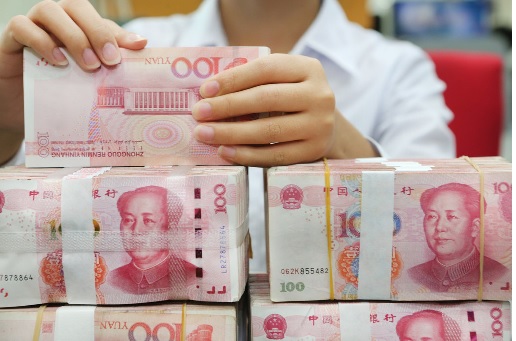 BEIJING, Feb. 13 (Xinhua) -- China's new yuan-denominated loans totaled 4.9 trillion yuan (about 721.82 billion U.S. dollars) in January, central bank data showed Friday.


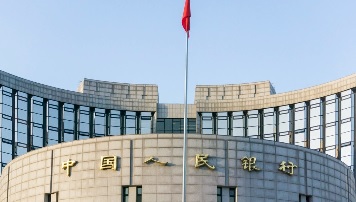 BEIJING, Feb. 13 (Xinhua) -- China's central bank continued to inject funds into the financial system through open market operations on Monday.

