BEIJING, Feb. 13 (Xinhua) -- China's auto import volume fell 6.5 percent year on year in 2022, with import value slightly down, data from the China Association of Automobile Manufacturers showed.
Last year, the number of sedans, SUVs, and minibuses imported into China all posted year-on-year declines. The three types of vehicles accounted for 93.5 percent of China's total auto imports.
In December, auto import volume fell 7.2 percent from November but grew 6.6 percent from a year ago. Import value dived 16.4 percent from November, and logged a 15.6 percent year-on-year decline.
In 2022, auto sales rose 2.1 percent year on year to 26.86 million units in China, the world's largest automobile market.
HOHHOT, Feb. 13 (Xinhua) -- North China's Inner Mongolia Autonomous Region, one of the country's major grain-producing regions, has so far developed 49.89 million mu (around 3.3 million hectares) of high-standard farmland, local authorities said.
The figure represents 29 percent of the total arable land area and supports more than two-thirds of the grain production capacity of the region, according to the regional agriculture and animal husbandry department.
Of the total high-standard farmland, the high-efficiency water-saving irrigation area in Inner Mongolia has reached 32.73 million mu, saving 3.3 billion cubic meters of water annually and achieving a win-win result between high grain yield and green ecological agriculture development.
Inner Mongolia is one of the four regions with over 100 million mu of cultivated land and also one of the 13 major grain-producing areas in China. The output of major crops such as corn, soybean, potato, millet, sorghum, and mung bean ranks among the top in the country.
BEIJING, Feb. 13 (Xinhua) -- The central parity rate of the Chinese currency renminbi, or the yuan, weakened 267 pips to 6.8151 against the U.S. dollar Monday, according to the China Foreign Exchange Trade System.
In China's spot foreign exchange market, the yuan is allowed to rise or fall by 2 percent from the central parity rate each trading day.
The central parity rate of the yuan against the U.S. dollar is based on a weighted average of prices offered by market makers before the opening of the interbank market each business day.
BEIJING, Feb. 13 (Xinhua) -- China's consumer inflation saw a mild uptick last month, driven by higher consumption demand during the Spring Festival holiday, while factory-gate prices continued to moderate, official data showed Friday.
The country's consumer price index (CPI), a main gauge of inflation, rose 2.1 percent year on year in January and edged up 0.8 percent from the previous month, the National Bureau of Statistics (NBS) said.
The CPI uptick in January can be partly attributed to the Spring Festival holiday boom and the optimized epidemic response, according to Dong Lijuan, a senior statistician with the NBS.
On a monthly basis, food prices rose 2.8 percent in January. The growth expanded by 2.3 percentage points month on month, and raised monthly consumer inflation by about 0.52 percentage points, according to the data.
Specifically, the price of pork, a staple meat in China, slumped 10.8 percent in January from the previous month, as the supply of pork continued to increase, Dong said.
However, pork prices still rose 11.8 percent year on year, narrowing by 10.4 percentage points from the previous month.
Non-food prices rose 1.2 percent year on year in January. The price of gasoline, diesel, and liquified petroleum gas went up by 5.5 percent, 5.9 percent, and 4.9 percent year on year,
On a monthly basis, the surge in demand for travel and entertainment after the adjustment of the country’s COVID-19 response buoyed the prices of plane tickets, movie and show tickets, and tours by 20.3 percent, 10.7 percent and 9.3 percent, respectively, according to Dong.
Although the impacts of seasonal factors are waning and pork prices remain at a low level, consumer inflation in the first quarter will sustain its mild growth due to more vigorous economic activities and a low-base effect, according to Zhou Maohua, an analyst with the China Everbright Bank.
Friday’s data also showed that China’s producer price index, which measures costs for goods at the factory gate, slid 0.8 percent year on year in January.
The decrease expanded by 0.1 percent from that registered in December. On a monthly basis, China’s PPI edged down 0.4 percent in January.
“Prices of industrial products continued to fall in January, weighed down by fluctuating international crude oil prices and sliding domestic coal prices,” Dong said.
The PPI in the first quarter is likely to continue shrinking compared to last year, according to Zhou.
Looking at 2023, Bruce Pang, the Greater China chief economist of real estate and investment management services firm JLL, anticipated that China’s inflation growth and overall price situations would remain tame and controllable. Pang expected that the average inflation level for the whole year would stay below policy targets.
BEIJING, Feb. 13 (Xinhua) -- Chinese financial authorities unveiled new measures Saturday to strengthen management over financial asset risks at commercial banks.
The document, jointly released by the China Banking and Insurance Regulatory Commission (CBIRC) and the People's Bank of China, specifies the definition of five risk levels and demands commercial banks classify the risks of all financial assets that bear credit risks instead of only loans.
It also clarifies rules concerning the number of days overdue and risk classification and asks commercial banks to improve their risk classification management structure.
The measures, which will become effective on July 1, will help the banking sector forestall credit risks and improve its capabilities in serving the real economy, according to the CBIRC.
BEIJING, Feb. 13 (Xinhua) -- China is willing to work with Japan to continue promoting cooperation in green development, a senior Chinese official said Saturday.
He Lifeng, head of the National Development and Reform Commission (NDRC), made the remarks in a keynote speech to the 16th China-Japan Comprehensive Forum on Energy Saving and Environmental Protection.
Collaborations in low-carbon industries and technologies will be furthered, while relevant policy dialogues and people-to-people exchanges will be strengthened, He said.
He said China would speed up the green transformation of its development, advance the prevention and treatment of pollution and ramp up energy conservation as it advances carbon peaking and carbon neutrality.
The forum, held online and offline in Beijing, is co-organized by the NDRC, the Ministry of Commerce, Japan's Ministry of Economy, Trade and Industry, and the Japan-China Economic Association.
SHENYANG, Feb. 13 (Xinhua) — Pet stores in northeast China are still busy after the Spring Festival holiday, during which many pet owners left their animals in the care of these businesses.
“During the holiday, our six chain stores provided boarding services for many pets, with our average turnover increasing by about 20 percent,” said Zhang Jiaqi, manager of a store in the city of Shenyang. “Currently, our pet snacks and toys still sell well and the pets waiting to get groomed have to queue.”
Data from major online delivery platform Meituan shows that search volumes for Spring Festival pet boarding and pet grooming services respectively increased by 82 percent and 255 percent from the same holiday in 2022. And these services are only the tip of the iceberg when it comes to pet industry consumption in China.
According to research firm iiMedia Research, the industry scale of China’s pet economy hit 493.6 billion yuan (about 72.71 billion U.S. dollars) in 2022, a year-on-year increase of 25.2 percent, and its market size is expected to reach 811.4 billion yuan by 2025.
The company noted that the pet economy is developing and expanding across the whole industrial chain, and its coverage is constantly expanding, leading to new businesses in areas such as pet livestreaming, pet boarding and pet training, which have strong growth prospects.
“Behind the booming pet economy is economic and social change,” said Zhang Sining, a researcher at the Liaoning Academy of Social Sciences. “The current social rhythm is fast, and young people are under great work pressure. Also, with the increase of elderly people living alone and the intensification of an aging society, raising pets meets the emotional needs of many people.”
Zhang also noted that pets are no longer just animals but are now like their owners’ children, and relationships between pets and their owners are becoming closer.
Liu Yu, a 25-year-old human resources manager who comes from Shenyang and works in Nanjing, capital of east China’s Jiangsu Province, said that her mood improves greatly when she arrives home from work and sees her cat waiting for her.
Industry insiders say that China’s pet economy has not been developed for a long time, its foundation is relatively weak and there are some regulatory challenges. The expansion of the country’s pet economy requires continuous follow-up regulatory policies, so that consumers and operators can benefit from the healthy development of the industry.
RIYADH, Feb. 10 (Xinhua) -- Chinese tech giant Huawei has announced an investment of 400 million U.S. dollars to establish a cloud region in Saudi Arabia.
The announcement was made on Thursday during LEAP 2023, Saudi Arabia's largest and most comprehensive Information and Communications Technology exhibition.
The investment aims to boost Saudi Arabia's digital economy and enable access to more advanced and secure cloud services for government, corporate and individuals, said the company.
Huawei Cloud advocates an everything-as-a-service vision to help customers migrate to the cloud smoothly and derive maximum value from it, said the company.
Huawei Cloud is currently providing services in more than 170 countries and regions, according to the company.
BEIJING, Feb. 13 (Xinhua) — China on Friday released a regulation on the registration and administration of Traditional Chinese Medicine (TCM), in an effort to strengthen the development of new drugs, according to the country’s top drug regulator.
The regulation, issued by the National Medical Products Administration, has further classified relevant requirements on research and development (R&D) of TCM, so as to better promote the inheritance and innovation of TCM.
Taking effect from July 1, the regulation noted that a review and approval system that emphasizes drug safety, efficacy, and quality while taking into account features of TCM will be established.
Researchers are encouraged to apply new science and technology to study the action mechanism of TCM, drawing upon advanced international concepts, said the regulation.
Applicants can start clinical trial research from Phase I, II, or III based on the safety and efficacy of the herbal medicine, which will largely stimulate R&D vitality, according to the regulation.
With a history of more than 2,000 years, TCM is seen by many as a national treasure in China for its unique theories and practices, and has thus received increasing attention and favorable policies from the government.
About 30 national TCM inheritance and innovation centers will be established by 2025. Such a move is to improve the country’s capability in the basic study of Chinese medicine and the R&D of new herbal drugs.
China will strengthen the quality management of TCM and speed up the review and approval of new varieties in 2023, said Zhao Junning, deputy head of the administration.
The country will also make full use of TCM in its COVID-19 prevention and control in the new phase, Zhao added.
Over the past five years, a number of new TCM varieties with accurate therapeutic positioning and high clinical value have been approved to come into the market, effectively meeting the public demand for clinical treatment, the administration noted.
TIANJIN, Feb. 13 (Xinhua) -- A new railway linking north China's Tianjin Municipality with Beijing will be operational in 2023, in an effort to boost the coordinated development of the Beijing-Tianjin-Hebei region.
The railway, with a total length of over 100 km, connects the Tianjin west railway station with the Beijing Daxing International Airport, said China Railway Beijing Group Co., Ltd., adding the track-laying work of the railway will be completed by the end of March.
The railway is one of the major infrastructure projects for the coordinated development of the Beijing-Tianjin-Hebei region, according to the Tianjin Municipal Transportation Commission.
The completion of the railway will optimize the railway network layout in the Beijing-Tianjin-Hebei region and facilitate the integrated development of transportation in the region, the commission added.





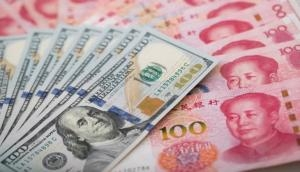 BEIJING, Feb. 13 (Xinhua) -- The central parity rate of the Chinese currency renminbi, or the yuan, weakened 267 pips to 6.8151 against the U.S. dollar Monday, according to the China Foreign Exchange Trade System.


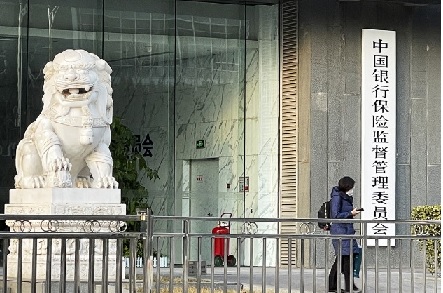 BEIJING, Feb. 13 (Xinhua) -- Chinese financial authorities unveiled new measures Saturday to strengthen management over financial asset risks at commercial banks.


