NEW YORK, Feb. 11 (Xinhua) — China’s adjustment of its COVID-19 pandemic response will not only speed up its own economic recovery, but also boost global economic growth, said a report issued by Goldman Sachs Research on Friday.
“Our economists now forecast China’s GDP (gross domestic product) to grow by 6.5 percent in 2023 on a Q4/Q4 basis,” up from the previous forecast of 5.5 percent made at the end of last November, according to the report.
On top of that, global GDP could be raised by 1 percent by the end of 2023 due to China’s adjustment, it said.
“The global growth backdrop has brightened,” Goldman economists Joseph Briggs and Devesh Kodnani were quoted as saying by the report. The two economists have viewed “the more rapid pace of China’s reopening along with a waning drag from global financial conditions and lower European gas prices” as good news for the world.
China’s adjustment will impact global growth through “three direct channels,” including increased domestic demand in China, and higher demand for international travel and commodities from China, said the report.
Domestic demand in China in 2023 is likely to increase by up to 5 percent, and the return in goods demand could provide a moderate boost of around 0.4 percent to GDP in most Asia-Pacific economies, it said, adding that a normalization in travel patterns should lead China’s travel trade deficit to increase and boost foreign GDP. The report also said China’s recovery will likely boost commodities demand and prices.
Briggs and Kodnani “anticipate the broader spillover effects from Chinese growth — including more favorable global financial conditions and increased trade with other countries — to be larger,” it added.
BEIJING, Feb. 13 (Xinhua) — China’s new yuan loans jumped more than expected in January, hitting a monthly record high as the country stepped up lending to support its rapidly recovering economy.
Chinese banks extended 4.9 trillion yuan (about 721.82 billion U.S. dollars) in new yuan-denominated loans in January, up 922.7 billion yuan from the same period last year, a report released by the People’s Bank of China (PBOC) showed on Friday.
OFF TO FLYING START
“The figure has beaten expectations,” said Dong Ximiao, chief researcher at Merchants Union Consumer Finance Company Limited, noting that new yuan loans in January in previous years usually stood between 2 trillion and 4 trillion yuan.
“We see an overall improvement of the country’s macro-economy, a faster recovery of business confidence and expectations, and strengthened financing needs,” Dong said.
Data from the National Bureau of Statistics shows the purchasing managers’ index for China’s manufacturing and non-manufacturing sectors came in at 50.1 and 54.4, respectively, in January. Both figures indicate an expansion in economic activities.
Chinese banks tend to front-load loans early in the year, which has also contributed to the strong start in credit supply.
The massive loan extension was mainly driven by an uptick in corporate borrowing. Businesses borrowed 4.68 trillion yuan in new loans in January. New medium and long-term lending provided to companies stood at 3.5 trillion yuan, according to the central bank.
Behind this substantial increase is continuous policy support for infrastructure and manufacturing investment, and the scale of the credit supply from commercial banks to housing enterprises has also expanded, analysts say.
For example, China’s Bank of Communications has strengthened its efforts to serve the real economy. In January, corporate yuan loans increased by more than 230 billion yuan, or 5.5 percent, from the beginning of the year, and both the increment and growth rate hit three-year highs.
Loans in key areas saw accelerated year-on-year growth, including those in the medium and long-term manufacturing and green credit industries, as well as those in strategic emerging industries.
The diminished impact of COVID-19 on economic activities, strong consumption during the Spring Festival holiday and the rapid rebound in consumer demand are conducive to the growth of household loans, which rose 257.2 billion yuan last month.
STRONG SUPPORT FOR ECONOMY
Since January, the PBOC and other financial regulators have repeatedly stressed the need to maintain credit support for the real economy.
At the end of 2022, China’s central bank cut the reserve requirement ratio for eligible financial institutions by 0.25 percentage points to keep liquidity reasonably ample and lower comprehensive financing costs.
In the past two months, the central bank has continued to increase the funds in the medium-term lending facility, to keep the medium and long-term liquidity of the banking system abundant.
In January, the central bank injected a total of 997.1 billion yuan of net cash into the market.
The M2, a broad measure of money supply that covers cash in circulation and all deposits, increased 12.6 percent year on year to 273.81 trillion yuan at the end of last month.
Newly added social financing, a measurement of funds that individuals and non-financial firms receive from the financial system, came in at 5.98 trillion yuan last month.
As measures have been rolled out to stabilize growth, local governments and companies will step up investments and consumption expectations may gradually recover, said Wen Bin, chief economist with China Minsheng Bank, adding that the country is expected to maintain its prudent monetary environment in the next stage to consolidate the stable and positive trend of the economy early in 2023.
Eyeing the growth prospects, international institutions have improved their predictions for China’s economic growth in 2023. The International Monetary Fund has raised its forecast for China’s economic growth this year to 5.2 percent, up from a previous prediction of 4.4 percent.
Investment banks, including Morgan Stanley and Goldman Sachs, have also made upward revisions of their growth forecasts for the world’s second-largest economy.
It was noted at the Central Economic Work Conference that China’s prudent monetary policy should be targeted and effective, and an overall improvement is expected in the country’s economic performance in 2023.
Looking forward, China’s monetary policy is expected to become more targeted and effective in serving the real economy, with structural monetary policy tools playing a greater role to channel funds to key areas and weak links, Dong said, adding that it is also expected to make continuous efforts to provide long-term, stable and low-cost funds for financial institutions.
BEIJING, Feb. 10 (Xinhua) -- The ChiNext Index, tracking China's Nasdaq-style board of growth enterprises, was down 0.1 percent to open at 2,567.09 points Friday.
The ChiNext Index, together with the Shenzhen Component Index and other indices, reflects the performance of stocks listed on the Shenzhen Stock Exchange
BEIJING, Feb. 10 (Xinhua) -- Chinese stocks opened lower on Friday, with the benchmark Shanghai Composite Index down 0.12 percent to open at 3,266.44 points.
The Shenzhen Component Index opened 0.14 percent lower at 12,031.72 points.
BEIJING, Feb. 10 (Xinhua) — The following are the central parity rates of the Chinese currency renminbi, or the yuan, against 24 major currencies announced on Friday by the China Foreign Exchange Trade System:
Currency Unit Central parity rate in yuan
U.S. dollar 100 678.84
Euro 100 728.86
Japanese yen 100 5.1636
Hong Kong dollar 100 86.479
British pound 100 822.63
Australian dollar 100 471.18
New Zealand dollar 100 429.52
Singapore dollar 100 512.15
Swiss franc 100 736.03
Canadian dollar 100 504.65
Malaysian ringgit 63.599 100
Ruble 1,074.56 100
Rand 261.68 100
Korean won 18,609 100
UAE dirham 54.105 100
Saudi riyal 55.285 100
Hungarian forint 5,318.73 100
Polish zloty 65.243 100
Danish krone 102.11 100
Swedish krona 152.45 100
Norwegian krone 149.95 100
Turkish lira 277.358 100
Mexican peso 276.65 100
Thai baht 494.65 100
The central parity rate of the yuan against the U.S. dollar is based on a weighted average of prices offered by market makers before the opening of the interbank market each business day.
The central parity rate of the yuan against the Hong Kong dollar is based on the central parity rate of the yuan against the U.S. dollar and the exchange rate of the Hong Kong dollar against the U.S. dollar at 9 a.m. in international foreign exchange markets on the same business day.
The central parity rates of the yuan against the other 22 currencies are based on the average prices offered by market makers before the opening of the interbank foreign exchange market.
BEIJING, Feb. 10 (Xinhua) -- The central parity rate of the Chinese currency renminbi, or the yuan, strengthened 21 pips to 6.7884 against the U.S. dollar Friday, according to the China Foreign Exchange Trade System.
In China's spot foreign exchange market, the yuan is allowed to rise or fall by 2 percent from the central parity rate each trading day.
The central parity rate of the yuan against the U.S. dollar is based on a weighted average of prices offered by market makers before the opening of the interbank market each business day.
BEIJING, Feb. 10 (Xinhua) -- China's consumer price index (CPI), a main gauge of inflation, rose 2.1 percent year on year in January, the National Bureau of Statistics said Friday.
BEIJING, Feb. 10 (Xinhua) -- China's interbank treasury bond index in net price opened at 994.89 points Friday, higher than the previous close of 994.82 points, according to the China Foreign Exchange Trade System.
The index reflects real-time trading of treasury bonds in China's interbank bond market.
The index opens at 9 a.m. on every workday and is updated every five minutes until closing at 5 p.m.
BEIJING, Feb. 10 (Xinhua) -- China's benchmark prices for spot interbank gold transactions were higher Friday, according to the China Foreign Exchange Trade System.
The benchmark price for gold that is 99.95 percent pure or above stood at 413.51 yuan (about 60.91 U.S. dollars) per gram, up 0.71 yuan from the previous trading day, while the price for gold that is 99.99 percent pure or above went up 1.09 yuan to 414.54 yuan per gram.
Spot transaction prices on the interbank price inquiry market are allowed to rise or fall within 15 percent from the benchmark prices each trading day.
The interbank gold price inquiry business was introduced in 2012 to enhance market liquidity and enrich trading models.
China's benchmark prices for spot interbank gold transactions were higher Friday, according to the China Foreign Exchange Trade System.
The benchmark price for gold that is 99.95 percent pure or above stood at 413.51 yuan (about 60.91 U.S. dollars) per gram, up 0.71 yuan from the previous trading day, while the price for gold that is 99.99 percent pure or above went up 1.09 yuan to 414.54 yuan per gram.
Spot transaction prices on the interbank price inquiry market are allowed to rise or fall within 15 percent from the benchmark prices each trading day.
The interbank gold price inquiry business was introduced in 2012 to enhance market liquidity and enrich trading models.


 BEIJING, Feb. 10 (Xinhua) — The following are the central parity rates of the Chinese currency renminbi, or the yuan, against 24 major currencies announced on Friday by the China Foreign Exchange Trade System:


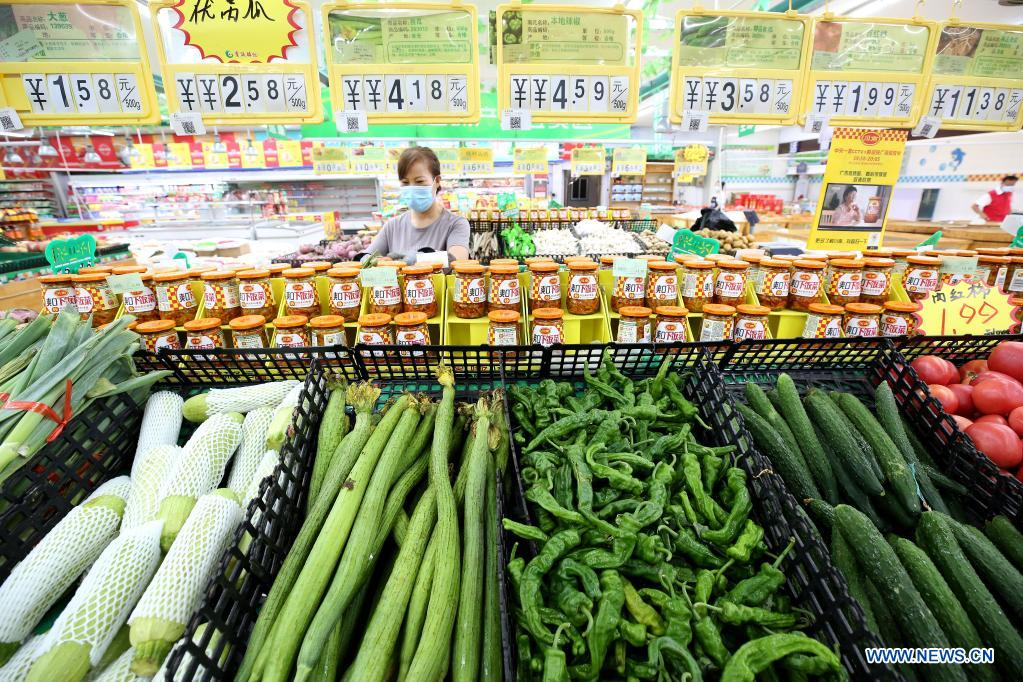 BEIJING, Feb. 10 (Xinhua) -- China's consumer price index (CPI), a main gauge of inflation, rose 2.1 percent year on year in January, the National Bureau of Statistics said Friday.

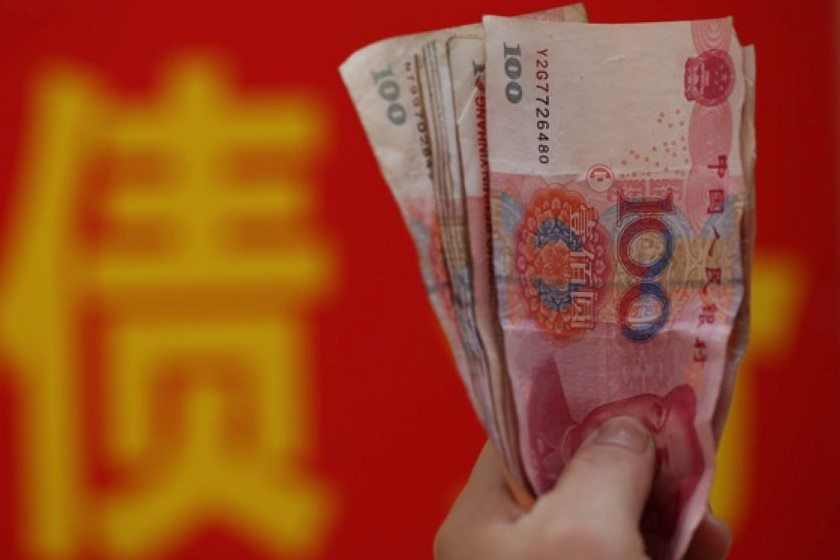 BEIJING, Feb. 10 (Xinhua) -- China's interbank treasury bond index in net price opened at 994.89 points Friday, higher than the previous close of 994.82 points, according to the China Foreign Exchange Trade System.

