China's producer price index (PPI), which measures the cost of goods at the factory gate, decreased by 0.8 percent year on year in January, the National Bureau of Statistics (NBS) said Friday.
The decrease expanded by 0.1 percentage point from that registered in December. On a monthly basis, China's PPI edged down 0.4 percent in January, according to the bureau.
"Prices of industrial products continued to fall in January, weighed down by fluctuating international crude oil prices and sliding domestic coal prices," said senior NBS statistician Dong Lijuan.
Friday’s data also showed that China’s consumer price index, a main gauge of inflation, rose 2.1 percent year on year in January.
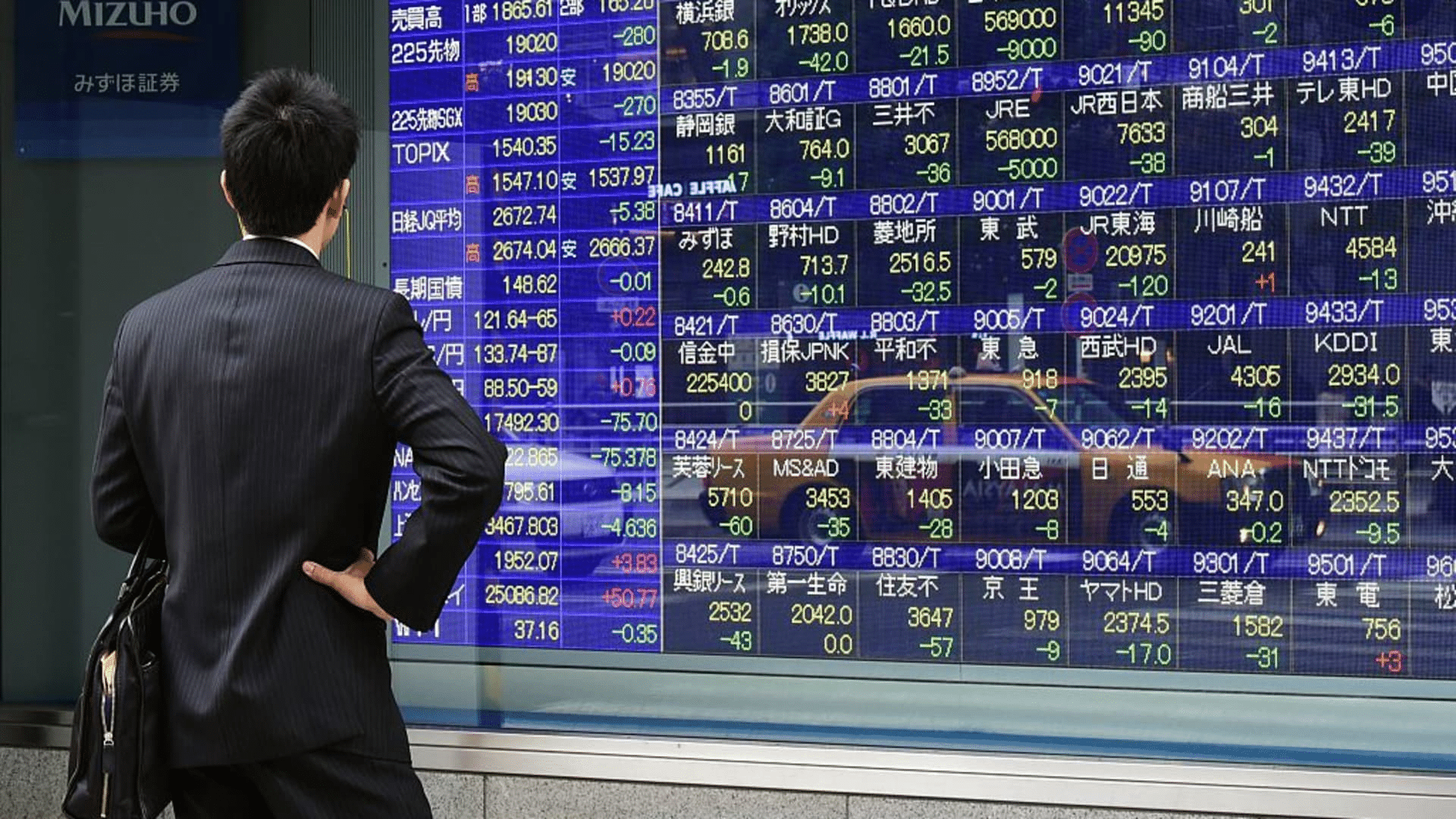
The ChiNext Index, tracking China's Nasdaq-style board of growth enterprises, lost 0.96 percent to close at 2,545.16 points Friday.
The ChiNext Index, together with the Shenzhen Component Index and other indices, reflects the performance of stocks listed on the Shenzhen Stock Exchange.
China’s consumption has been recovering quickly, with some sectors almost returning to their pre-pandemic levels.
The vigorous rebound has prompted central and local governments to introduce more policies, which experts believe will build on the growth momentum and unleash further consumption potential.
RECOVERY IN FULL SWING
Domestic tourism was one of the sectors that took the lead in staging a rebound. During China’s weeklong Spring Festival holiday that ended on Jan. 27, some 308 million domestic trips were made, up 23.1 percent from the Spring Festival holiday last year, according to the Ministry of Culture and Tourism.
The figure has recovered to 88.6 percent of the level in 2019.
Other industries such as retail and catering are also thriving. The combined revenues of major retail and catering businesses rose 6.8 percent from the last Spring Festival holiday, the Ministry of Commerce said.
China’s cinema box office during this year’s Spring Festival holiday reported its second-highest gross figures for the holiday to date, raking in a total revenue of nearly 6.76 billion yuan (about 1 billion U.S. dollars), according to data from the China Film Administration.
“During this year’s Spring Festival, we have seen a comeback of booming consumption activities, with spending in the trans-provincial tourism, catering and film sectors picking up rapidly,” said Wang Yun, a researcher at the Chinese Academy of Macroeconomic Research.
Such promising signs have ensured a good start to full-year economic growth, Wang added.
MORE POLICY SUPPORT
Promoting consumption is high on China’s policy agenda for this year, as the annual Central Economic Work Conference held in mid-December last year noted that the country would prioritize the recovery and expansion of consumption.
A State Council executive meeting held in late January also urged timely measures to promote an early recovery of consumption as the main economic driving force.
Boosted by this positive outlook, local governments have been moving to unveil an array of pro-consumption measures designed to fuel the growth of specific spheres.
Some parts of China’s Xinjiang Uygur Autonomous Region have introduced measures to subsidize purchases of new passenger vehicles priced within a certain range.
Shanghai, China’s financial hub, has announced that it will offer a 10 percent one-time subsidy of up to 1,000 yuan to consumers who purchase green and smart home appliances, while northwest China’s Shaanxi Province is set to nurture its sports, healthcare, elderly care and nursery sectors, as well as other growth spots.
The local policy incentives that have been put forward are conducive to releasing previously suppressed demand, exploring potential demand and creating new demand, said Chen Lifen, a researcher at the Development Research Center of the State Council.
Experts believe that the key to breeding new growth engines is providing a high-quality supply.
To this end, Ministry of Commerce official Xu Xingfeng said the ministry will roll out new policies spotlighting sectors such as automobiles and home furnishings, in accordance with their situations, to accelerate the recovery of consumption.
The construction works of the much-awaited Bangabandhu Sheikh Mujibur Rahman Tunnel, the first under-river tunnel in South Asia, is nearing completion.
The tunnel’s project director Md Harunur Rashid was quoted by Bangladesh’s official news agency BSS Thursday as saying that 96 percent of construction works have been completed on the tunnel under Karnaphuli River in the country’s seaport city Chattogram, some 242 km southeast of the capital Dhaka.
He said the mechanical installation work is still going on, and the approach road construction works have already been completed.
According to the official, the construction works of the cross passage and tunnel related to the toll plaza are also nearing completion.
Mechanical, electrical and civil works of the tunnel are ongoing and other related work is also at the final stage, Rashid said, adding that he hoped the construction works of the tunnel will be finished within the stipulated time.
The length of the tunnel will be 3.40 km with an approach road of 5.35 km alongside a 727-meter bridge linking the main city, port and the western side of the river with its eastern side.
Bangladeshi Prime Minister Sheikh Hasina inaugurated the construction work of the first tunnel tube on Feb. 24, 2019.
China Communications Construction Company Ltd. is working as the contractor for the project.
The tunnel will connect the proposed Asian Highway to Dhaka-Chattogram-Cox’s Bazar Highway and will reduce the distance from Chattogram to the southeastern seabeach town Cox’s Bazar by 40 km.
Vehicles in this tunnel will run at a speed of 80 km per hour, according to the project details.
The tunnel project is being implemented with joint funding from the governments of Bangladesh and China.
The tunnel has been built with preferential credit from the Export-Import Bank of China. The project has created more than 5,000 jobs so far, trained local people on infrastructure construction skills and promoted local economic development.
The tunnel will be the first under-river tunnel in South Asia. Extensive work is underway to complete the remaining 8 percent of the work.
The project is also the first large-diameter underwater shield tunnel undertaken by a Chinese company overseas.
Local and foreign engineers alongside workers are involved in the project.
The government led by Prime Minister Hasina took the initiative to build a tunnel under Karnaphuli River to connect parts of Chattogram to make the port city’s “One-City-Two-Towns” model similar to the Chinese city of Shanghai.
According to a survey, before the construction of the tunnel, 6.3 million vehicles will be able to move through the tunnel annually, meaning that about 17,260 vehicles can run in a day. By 2025, an average of 28,305 vehicles will travel through Bangabandhu Tunnel every day.
SAIC Motor, China's main carmaker, has set its 2023 sales target at 6 million vehicles, including 1.2 million units for overseas, the company said on Thursday.
Meeting fast-growing demand in overseas markets, the Shanghai-based carmaker shipped 21,600 vehicles overseas during the Chinese Lunar New Year holiday in January, setting a new weekly record.
The company said it also expects to sell 1.5 million new-energy vehicles this year. It sold over 1.07 million new-energy vehicles last year.
SAIC Motor sold over 5.3 million vehicles in 2022, ranking first in China for the 17th consecutive year.
Courier services in China have seen a surge in parcel handling in early 2023, hitting 10 billion parcels by Feb. 8, according to the State Post Bureau (SPB) on Thursday.
The country's courier companies hit the 10-billion-parcels mark within the first 39 days of 2023, which is 40 days quicker than in 2019, before the COVID-19 epidemic struck.
This year's performance demonstrates the vitality, resilience and growth potential of China's express delivery industry, the SPB said, adding that it shows that consumer confidence is increasing, and the economic recovery is picking up pace.
Data also shows that the average number of parcels handled daily has exceeded 330 million since February, a fact that has contributed to the recovery of the consumer market.
This year, the SPB will promote the construction of the rural logistics system, enhance the deep integration of postal services and advanced manufacturing, and help build modern international companies in the sector.
China's centrally administrated state-owned enterprises (SOEs) should expand effective investment and optimize investment layout in 2023, according to a recent circular from the country's top state-asset regulator.
While clarifying the direction of expanding effective investment, central SOEs should focus on critical areas such as major national projects, infrastructure, and strengthening and supplementing the industrial chains, said the State-owned Assets Supervision and Administration Commission of the State Council.
According to the circular, efforts should be made to promote central SOEs' investment in cultivating strategic emerging industries and upgrading traditional sectors while strengthening energy and resources security and achieving a virtuous cycle between scientific technology, industries, and financing.
The circular noted that central SOEs should increase risk management and control in critical areas while making investments and adhering to the bottom line against significant risks.
A relevant policy mix is in the pipeline, said the commission.
Beibu Gulf Port in south China's Guangxi Zhuang Autonomous Region saw its cargo throughput reach 370 million tonnes in 2022, up 3.7 percent year on year, the port's operator said Thursday.
The port handled 7.02 million twenty-foot equivalent units (TEUs) of containers last year, up 16.8 percent year on year, according to the Beibu Gulf Port Group.
In terms of cargo throughput and container throughput, the port ranked 10th and 9th, respectively, among all the ports in the country, the company said.
As a key window of opening up for southwest China, Beibu Gulf Port has become an important platform for cross-border logistics and trade between the western region and ASEAN countries, playing an active role in the stability of the regional industrial chain and supply chain.
The port currently has 75 shipping routes, connecting all major ports in the ASEAN member countries.
The port also serves as an important transit point in the New International Land-Sea Trade Corridor, a trade and logistics passage jointly built by western Chinese provincial regions and Singapore.
Between 2020 and 2022, net profits at China’s centrally administered state-owned enterprises (SOEs) rose 35.71 percent to 1.9 trillion yuan (about 279.8 billion U.S. dollars), official data showed.
Meanwhile, the operating revenues of China’s centrally administered SOEs increased 30.03 percent from 2020 to reach 39.4 trillion yuan in 2022, according to data from the country’s SOE regulator.
The net profits and revenues of centrally administered SOEs grew at a rather fast pace in the past three years as a whole, given that their net profits grew 5.5 percent year on year and revenues increased 8.3 percent year on year, respectively, in 2022.
China started to implement a three-year action plan for SOE reform in 2020 and issued a mobilization order to deepen this reform. Thanks to the 2020-2022 action plan, China’s SOEs balanced COVID-19 response with effective production and introduced a series of reforms.
The action plan has led to all-out efforts and numerous breakthroughs in key areas, including optimizing the modern enterprise system and the market-oriented operation mechanism.
Among these efforts, the State-owned Assets Supervision and Administration Commission of the State Council has selected 16 enterprises as “chain heads” in modern industrial chains in two batches, and made progress in stabilizing, supplementing and strengthening the chains.
Since 2020, the average annual investment growth rate of strategic emerging industries of central SOEs has exceeded 20 percent, and there has been more power in high-quality development.
In the new materials industry, China National Building Material Group initiated the establishment of a new materials industry fund with a scale of 15 billion yuan. Its capital is comprised of 70 percent social capital and 30 percent of the company’s own capital. It has invested 4.8 billion yuan in new materials and frontier directions.
The three-year action plan has improved the corporate governance of the SOEs. According to the office of the State Council leading group for SOE reform, about 13,000 subsidiary enterprises of the centrally administered SOEs and about 25,000 subsidiary enterprises of locally administered SOEs have established boards of directors. Building a standard board of directors is a key link in forging a modern corporate system for SOEs.
As a highlight of the reform push, the reform of the corporate system has been completed comprehensively, a historic breakthrough that further consolidated the legal basis for the SOEs to participate in competition as independent market players.
Meanwhile, the tenure and contractual management for managers has been promoted across the SOEs, covering over 80,000 enterprises and 220,000 people.
As a result, remarkable progress has been made in reforming China’s SOEs, with major tasks in a three-year action plan all now completed. The action plan, which builds on decades of efforts to transform SOEs into competitive, modern enterprises, is a major highlight in China’s efforts to deepen reform and opening up.
SOEs are active players on China’s strategically important and most acclaimed industrial fronts.
A total of 99 Chinese SOEs were included on the 2022 Fortune Global 500 List.