Tuesday, November 24, 2026

Home Blog Page 1239

China Focus: China To Launch Einstein Probe To Observe Changing Universe

0

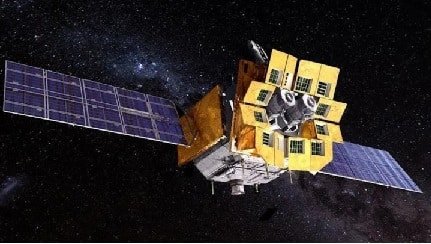
16793960053460 China plans to launch a new X-ray astronomical satellite, Einstein Probe (EP), at the end of this year, said Yuan Weimin, principal investigator of the satellite project.

   Yuan, who is also a researcher at the National Astronomical Observatories of the Chinese Academy of Sciences (NAOC), revealed the latest progress of the EP project at the recent 35th National Symposium on Space Exploration.

   “The satellite has entered the final stage of development,” he said.

   According to the scientist, the probe is expected to capture the first light from supernova explosions, help search for and pinpoint gravitational wave sources, and observe the mysterious transient phenomena in the universe.

   Scientists have found that there are many transient and explosive sources in the universe, most of which can radiate huge amounts of energy in a very short period of time and show complex brightness variations in the X-ray band, such as black holes that are devouring stars.

   “These fast transient sources are crucial to cosmology and galaxy studies, but are currently poorly understood by scientists,” said Yuan.

   Further research requires a new generation of detection equipment with extremely large fields of view, high sensitivity, high resolution, and fast response capabilities, he added.

   But the important question in this regard is how to make such equipment.

   Biologists discovered early on that the lobster’s eye is different from other animals. Lobster eyes are made up of numerous tiny square tubes, pointing to the same spherical center. This structure allows light from all directions to reflect in the tubes and converge on the retina, which gives the lobster a large field of view.

   Scientists then simulated the lobster eye to create a telescope to detect X-rays in space.

   Through cooperation with other organizations, the X-ray Imaging Laboratory of NAOC began the research and development work on lobster-eye X-ray imaging technology in 2010 and finally made a breakthrough.

   The team carried out the test validation of the technology on the telescope Lobster Eye Imager for Astronomy (LEIA) — a pathfinder of the EP instrument — which was launched in July 2022, and revealed the world’s first batch of large-field X-ray snapshots of the sky captured by the LEIA.

   “Thanks to the lobster-eye telescope technology, the Einstein Probe will be able to monitor the currently poorly known soft X-ray band with a large field of view and high sensitivity,” Yuan said.

   “This technology will revolutionize monitoring of the X-ray sky, and the test module shows the strong scientific potential of the Einstein Probe mission,” said Paul O’Brien, head of Astrophysics, School of Physics and Astronomy at the University of Leicester.

   According to Yuan, the EP will carry out systematic sky surveys to monitor high-energy transient objects in the universe.

   The mission is expected to discover cloaked black holes and map the distribution of black holes in the universe, and help us to study their formation and evolution. The probe will also be used to search for X-ray signals accompanying gravitational wave events and pinpoint them, Yuan said.

   The satellite program, part of a space science project of the Chinese Academy of Sciences, has attracted extensive attention worldwide, with the European Space Agency, the Max Planck Institute for Extraterrestrial Physics in Germany and the French space agency participating in it.  
Article inline ad

China Launches Polymer Material R&D Platform

0

16796497504204 A research team at East China University of Science and Technology recently launched a platform for polymer material research and development.

   The platform can greatly speed up the research and development of high-performance polymer materials by data mining the structural properties, and integrating functions such as machine learning performance prediction and structural design.

   With the development of new technologies such as artificial intelligence, the research and development of new materials is gradually stepping into the era of intelligent manufacturing, said Lin Jiaping at East China University of Science and Technology, leader of the platform development team.

   This new platform is a result of the integration and innovation of big data, artificial intelligence and polymer material research and development, Lin added.

   Based on a huge database, the team developed a machine learning prediction model for more than 10 kinds of polymer properties, which enables the platform to retrieve data, predict performance and optimize formulas for polymer materials.

   Using the platform, the research team has developed a series of advanced composite matrix resins.  

Article inline ad

Chinese Scientists Develop New Vaccine Strategy By Entrapping Live Virus Into Hydrogel

0

16799089808547 A new vaccine manufacturing strategy has been developed by Chinese scientists which involves wrapping the live virus in a protective hydrogel to activate the body’s immune response quickly, safely and effectively.

   The threat of new viral outbreaks has heightened the need for ready-to-use vaccines that are safe and effective. But the whole-virus vaccine strategies such as inactivation tend to have reduced immunity, safety concerns and time-consuming manufacturing processes, hampering extensive application.

   The researchers from Zhejiang University and Beijing Institute of Biotechnology demonstrated an experimental vaccine consisting of live wild-type Zika virus, a mosquito-borne single-stranded RNA virus.

   They entrapped the virus in a hydrogel with Chitosan scaffolds that can prevent the escape of the viral particles via electrostatic interactions but allow the passage of immune cells.

   The vaccine, injected under the skin in mice, is shown to enable the activation of innate immune responses, leading to effective humoral and cellular immunity and protecting the rodent against lethal Zika infection, according to the study published in the latest edition of Nature Biomedical Engineering.

   This proof-of-concept study suggested that virulent virus strains can be directly transformed into vaccines by engineering virus-entrapped microenvironments.

   It represented a promising strategy for protection against emerging infectious diseases, the researchers said.  

Article inline ad

Chinese Researchers Achieve Breakthrough In High-Pressure Magnetic Detection

0

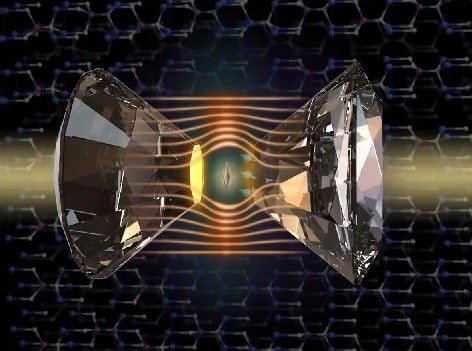
16799094257977 A team of Chinese researchers has made a significant breakthrough by developing a platform that has realized, for the first time in the world, high-pressure in-situ quantum magnetic detection based on silicon vacancy defects in silicon carbide.

   This technique may shed light on the mechanism behind the occurrence of superconducting, which is the ability of certain materials to conduct direct current electricity without any energy loss, under certain conditions, including those involving high pressure. It may also pave the way for exploring new quantum materials.

   The researchers, led by experts from the Hefei Institutes of Physical Science under the Chinese Academy of Sciences as well as the University of Science and Technology of China, used ion implantation to generate shallow silicon vacancy defects on the surface of a processed silicon carbide anvil cell to avoid the problem of temperature variations in high-pressure sensing.

   Using optically detected magnetic resonance technology, they observed the pressure-induced magnetic phase transition of a magnet at about seven gigapascals, according to the study published in the journal Nature Materials on Friday.

   The work is “quite interesting” and could “open the door to new studies of quantum materials,” said a peer reviewer of the paper. 

Article inline ad

China’s First Deep-Sea Floating Wind Power Platform Sets Sail

0

16799894916322 China’s first deep-sea floating wind power platform set sail from Zhuhai in south China’s Guangdong Province towards the waters of the southernmost Hainan Province on Sunday, according to the China National Offshore Oil Corporation (CNOOC).

   The platform, named CNOOC Guanlan, is China’s first offshore wind power project with a water depth of over 100 meters and an offshore distance of over 100 kilometers, said Yang Yun, the executive vice president of the CNOOC.

   “The platform lays a solid foundation for the development of China’s wind power from shallow sea to deep sea,” Yang added.

   Invested in and built by the CNOOC, the platform will be installed in an offshore oil field located 136 kilometers from Wenchang in Hainan Province.

   After the project is put into operation, the electricity generated by the turbine will be connected to the power grid of the offshore oilfield group for oil and gas production, with an annual power generation capacity of 22 million kilowatt hours — saving nearly 10 million cubic meters of natural gas and reducing carbon dioxide emissions by 22,000 tonnes per year. 

Article inline ad

China’s Space Telescopes Precisely Measure Brightest Gamma-Ray Burst

0

16802519966285 An international collaborative team using two China space telescopes achieved an unprecedentedly precise measurement for a gamma-ray burst (GRB) that released about eight times the total rest-mass energy of the Sun in all directions in one minute.

   The team, led by the Institute of High Energy Physics (IHEP) under the Chinese Academy of Sciences, Wednesday published the results that increased the brightness record of a gamma-ray burst by 50 times.

   The gamma-ray burst coded GRB 221009A is the brightest one ever detected since the discovery of this immensely energetic explosion in distant galaxies, the most energetic and luminous electromagnetic event since the Big Bang.

   In October 2022, it was detected by telescopes from Earth and space, including China’s Large High Altitude Air Shower Observatory (LHAASO) and China’s X-ray astronomy satellite Insight-HXMT (Hard X-ray Modulation Telescope).

   “The burst, produced at a place 2.4 billion light years away from the Earth, is a rarely seen astronomical event due to its brightness and relatively close vicinity,” said Zhang Shuangnan, Insight-HXMT’s chief scientist and a researcher in the IHEP.

   The GRBs with a longer duration (usually longer than two seconds) are generated by the collapse and explosion of stars with dozens of times the mass of the Sun. The short bursts are produced by the merger of two compact celestial bodies, such as black holes or neutron stars, which may also be accompanied by gravitational waves.

   “Explosions of those two kinds will result in an extremely compact celestial object that produces two jets at a near speed of light in opposite directions,” said Xiong Shaolin, the chief scientist of GECAM-C, the country’s other space telescope launched into space in July of 2022.

   “Therefore, we can only detect those radiations when one jet aims just right at the Earth,” said Xiong, also from the IHEP.

   Since 1967, nearly 10,000 gamma-ray bursts have been found. But an accurate measurement of the prompt emission properties of GRB 221009A is rather challenging owing to its exceptional brightness.

   COMBINED OBSERVATIONS

   In the new study, the Insight-HXMT and the GECAM-C or Gravitational Wave High-energy Electromagnetic Counterpart All-sky Monitor C, among other telescopes in the world, were employed to measure the transient radiations and early afterglow of this burst. The afterglow happened when burst jets were affected by the nearby interstellar medium.

   The GECAM-C, a telescope specially designed for observations of gamma-ray bursts and an electromagnetic counterpart of gravitational waves, can avoid brightness-caused instrumental problems like data saturation and loss, signal stacking, and excessive dead time.

   This telescope realized a complete and accurate probe of GRB 221009A’s main emission, which dominates the burst in flux, in a soft gamma-ray energy band, while the Insight-HXMT did its part in hard X-ray band to acquire high-quality data about the burst’s precursor radiation and early afterglow, said the researchers.

   GECAM series space probes, using the short message service of China’s BeiDou Navigation Satellite System to have realized satellite-to-Earth real-time communication, have detected a slew of high-energy explosions, including those from gamma-ray bursts, magnetic stars, fast radio bursts, solar flares, and terrestrial gamma-ray flashes.

   Insight-HXMT, China’s first X-ray astronomical satellite, sent into orbit in June of 2017, has made discoveries concerning black holes, neutron stars, and fast radio bursts over the past five years.

   LHAASO, a giant cosmic ray detector located 4.41 km above sea level in southwest China’s Sichuan Province, also contributed to the detection, and more findings will be published later, said the researchers.

   The new joint observations have revealed that the afterglow’s inflection point from the slow attenuation to a quick one appeared quite early, signifying that the burst-produced jet is very narrow, one of the narrowest gamma-ray bursts ever detected.

   The results suggested that this burst may have a central engine, which could launch and collimate a very narrowly beamed jet with an ordinary energy budget, thus leading to exceptionally luminous gamma-ray radiation per unit solid angle, said the researchers.

   “This work has opened a brand-new perspective for a deepened understanding of this extreme cosmic explosive event,” said Zhang. 

Article inline ad

China Launches Wheel-Like Constellation Of Remote-Sensing Satellites

0
  • 16803305585295 China launched a Long March-2D carrier rocket into space on Thursday evening carrying a wheel-like formation of four remote sensing satellites, the first formation of its kind in the world.
  •    The satellites of the PIESAT-1 constellation were launched at 6:50 p.m. (Beijing Time) from the Taiyuan Satellite Launch Center in northern China’s Shanxi Province, and then entered a preset orbit.
  •    WHEEL FORMATION
  •    The in-orbit constellation has formed a lineup like a vehicle wheel. It comprises a primary satellite running at the central “axle” and three supplementary satellites evenly placed in an elliptical “wheel hub” and orbiting the primary satellite. The supplementary trio is located just a few hundred meters from the primary satellite.
  •    The constellation is capable of maintaining its stability and space safety, thanks to precise orbital control supported by inter-satellite links and phase synchronization links.
  •    The four satellites are equipped with interferometric synthetic aperture radars (InSARs), which are effective tools to measure changes in land surface.
  •    The InSARs capture two images at different times by reflecting radar signals off a target area on Earth, and then have them interfere with each other to produce maps called interferograms, which reveal the ground-surface displacement between the two time periods.
  •    Unlike visible or infrared light, radar waves can penetrate most weather clouds and are equally effective in darkness.
  •    DISASTER PREVENTION
  •    Compared to traditional InSARs, a wheel formation can generate more interference baselines, thus increasing mapping efficiency.
  •    The constellation, mainly used to provide commercial remote-sensing data services, is capable of conducting rapid high-efficiency global land surveys.
  •    It can realize millimeter-level deformation monitoring to identify land subsidence, surface collapses and landslides, meaning it is an effective weapon for the early detection of major geological disasters.
  •    The constellation has the full-time, all-weather ability to take high-quality, submeter-scale, broad-width images of our planet.
  •    It was designed by the satellite maker Galaxy Space (Beijing) Network Technology, and it will be used by PIESAT, a satellite operation and application services provider in China.
  •    The Long March-2D carrier rocket is a two-stage launch vehicle with a take-off thrust of 300 tonnes, and it is capable of lifting 1.3-tonne payloads to the solar synchronous circular orbit 700 km above Earth.

   This mission was the 469th flight of the Long March carrier rockets.  

Article inline ad

China Launches New Remote-Sensing Satellites

0

16803321743885 China launched a Long March-2D carrier rocket on Thursday evening to place new remote-sensing satellites in space.

   The satellites of the PIESAT-1 constellation were lifted at 6:50 p.m. (Beijing Time) on Thursday from the Taiyuan Satellite Launch Center in northern China’s Shanxi Province, and then entered the preset orbit.

   They will mainly provide commercial remote-sensing data services.

   This mission was the 469th flight of the Long March carrier rockets.  

Article inline ad

China Launches New Carrier Rocket

0

16805963601317 A new carrier rocket made its maiden flight in China on Sunday, sending a satellite into its planned orbit.

   The rocket is known as TL-2 Y1 and blasted off at the Jiuquan Satellite Launch Center in northwest China at 4:48 p.m. (Beijing Time).

   The flight will verify the overall program of the rocket and the coordination between the systems and obtain the parameters of the flight environment.

   The satellite will be used in remote sensing imaging experiments and other technical verifications.

Article inline ad

Chinese, Greek Researchers Develop New Climate Datasets

0

16805966094587 Collaborating Chinese and Greek researchers have developed new climate datasets for the two countries dating back to 1960, according to the Institute of Atmospheric Physics (IAP) of the Chinese Academy of Sciences.

   An associated paper has been published in the journal Advances in Atmospheric Sciences.

   Using multiple methods, Chinese researchers from IAP cooperated with Greek researchers at the Laboratory of Atmospheric Physics, University of Patras, and Hellenic National Meteorological Service, resulting in new datasets that include homogenized monthly and daily temperature and precipitation series.

   According to the researchers, data homogenization involves adjusting biases in raw data caused by non-climatic factors such as station relocations and changes in observation protocols and instrumentation before subsequent application.

   The new data show that there has been a much stronger warming trend in China than in Greece since 1960. In addition, the annual total precipitation has increased in China but decreased in Greece during the past several decades.

   The new homogenized climate data present a more reasonable representation than the raw data of the large-scale pattern of climate changes in the two countries, the IAP said.

   Researchers believe that the new datasets provide a high-quality database for studying regional climate variation and change, especially when dealing with extreme weather and climate events in China, Greece, and adjacent regions in Asia and Europe.  

Article inline ad