Wednesday, November 25, 2026

Home Blog Page 127

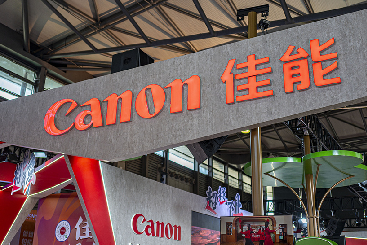
Canon Shutters Guangdong Printer Factory Amid Shrinking Demand

0

By Fan Feifei | China Daily | Updated: 2025-12-10

Japanese tech company Canon Inc has ceased production and operation of its printer factory in Zhongshan, Guangdong province due to declining local demand and increasingly stiff competition in the laser printer market.

 The company attributed the shutdown of the factory, effective Nov 21, to a shrinking global laser printer market, changes in people’s working styles, and the accelerated contraction of laser printer use in offices. A Canon statement provided to China Daily added that “it is unlikely to see any significant recovery in the long term”.

 “The laser printer market in China is also shrinking substantially, resulting in a sharp decline in orders for the company’s factory in Zhongshan, which has been the main production base for laser printers in the Chinese market,” the statement said.

 “We have made multiple efforts to sustain the operation of the factory, but the reasons mentioned above plunged the plant into operational difficulties where continued production was no longer possible.”

 The company noted that, over the past 24 years, the Zhongshan municipal government, industrial groups, suppliers, business partners, customers and local residents have provided it with tremendous help and support, for which it said it was deeply grateful.

 With regard to the workers who have lost their positions in the factory, Canon said it will comply with relevant laws and regulations, give maximum consideration to employees’ interests, and listen to the opinions of local government departments of human resources and social security, as well as the labor union.

 Canon said: “We will provide economic compensation and reemployment support.

 “In terms of employee reemployment, we have also received strong support from local government. We have proactively contacted companies in surrounding areas, and several companies have already offered job recruitment positions.”

 Established in 2001, Canon (Zhongshan) Office Equipment Co Ltd produces a wide range of laser printers and is one of Canon’s major laser printer manufacturing bases. As of April 2022, it had produced a total of 110 million laser printers. In 2022, its total industrial output reached nearly 3.2 billion yuan ($452.5 million), and the industrial facilities it leased covered an area of 125,000 square meters.

 “Canon and HP used to dominate China’s printer market, but their market share has been heavily eroded by competitors in recent years, putting severe pressure on Canon,” said Zhang Yi, CEO and chief analyst at consultancy iiMedia Research.

 “Furthermore, the demand for printing has been declining as paperless office solutions grow rapidly,” Zhang said, adding that with the widespread adoption of third-party office software platforms such as DingTalk and Feishu, most companies tend to keep approval documents on these platforms, and paperless contracts have also become very common, all of which pose challenges to the printer market.

 Zhang noted that as Canon’s printers lose their advantages amid fierce market competition, the company may shift parts of production capacity to some emerging markets such as Vietnam. “The adoption rate of paperless offices is relatively low in these markets, so the demand for printed documents in daily workflows remains high, and there are no strong local competitors.”

 Canon emphasized that its other production bases in China continue to operate normally. “China is one of Canon’s most important markets with enormous growth potential. We believe that China’s business environment will continue to improve in the long run, and we are confident in the Chinese market’s development potential and possibilities.”

 Therefore, the company will continue to deepen its presence in the Chinese market, striving for long-term development and sustainable growth and contributing to China’s development, it added.

 Market observers said the closure of the Zhongshan plant is mainly due to the sharply increasing competition in the laser printer market. Some of the orders have been redirected to Southeast Asian countries, such as Vietnam and Thailand, while Canon has shifted its strategic focus to higher-margin businesses such as medical imaging and semiconductor equipment.

 Data from market consultancy IDC showed that Canon’s market share in China’s laser printer market fell from 7.7 percent in 2018 to 3.9 percent in the first three quarters of 2025, while domestic brands’ market share has risen to 41.5 percent.

 In the first half of the year, shipments of A4 laser printing devices in China reached 3.177 million units, down 5 percent year-on-year, while shipments of A3 laser printing devices were 272,000 units, a decline of 10 percent year-on-year.

Article inline ad

Electronics And Consumer Goods Bolster Guangdong’s Import Growth

0

By Zheng Caixiong in Guangzhou | chinadaily.com.cn | Updated: 2025-12-11

Guangdong showed steady import growth this year that pushed the province’s overall trade to new heights heading into December, according to data released by Guangdong Customs on Wednesday.

 From January to November, the province bought 1.17 trillion yuan ($165.7 billion) worth of integrated circuits, an increase of 15.6 percent that made up more than a third of its total import volume. Guangdong’s spending on computers and related components reached 313.51 billion yuan, up 20.3 percent, while semiconductor manufacturing equipment surged even higher, increasing 43.8 percent to 67.18 billion yuan.

 Driven by domestic consumer demand, Guangdong’s imports of consumer goods also saw solid momentum. Imports of grain grew 18.6 percent, dairy products 19.7 percent, aquatic products 31.5 percent, and edible oil 55.1 percent.

 Thanks to those gains, Guangdong recorded 8.61 trillion yuan in total foreign trade in the first eleven months of the year, up 4.2 percent year-on-year — a new high for the period, outpacing the national growth rate of 3.6 percent. The province accounted for 20.9 percent of China’s total trade and contributed nearly a quarter of the nation’s growth.

 Exports rose 2.1 percent to 5.5 trillion yuan, while imports expanded at a faster clip, reaching 3.11 trillion yuan with an eight percent increase. In November alone, Guangdong delivered 813.24 billion yuan in trade, an 8.9 percent jump that beat October’s pace and outperformed national figures, as well as major trading peers Jiangsu and Zhejiang.

 ASEAN, Hong Kong, and the European Union remained Guangdong’s largest partners, each exceeding one trillion yuan in trade. Activity in emerging markets stood out too, with shipments to the Middle East, Africa, and the five Central Asian countries growing by 7.8 percent, 10.4 percent, and 26 percent, respectively. Trade volume with countries involved in the Belt and Road Initiative reached 3.32 trillion yuan, a 4.9 percent rise that accounted for 38.5 percent of the province’s total.

Article inline ad

China To Focus On Stimulating Consumption Next Year

0

By Wang Keju, Zhou Lanxu and Ouyang Shijia | chinadaily.com.cn | Updated: 2025-12-11

Facing external uncertainties and a persistent slump in the property sector, China is expected to roll out more robust initiatives to stimulate consumption in 2026, in an effort to lay a solid foundation for the start of its 15th Five-Year Plan (2026-30), analysts said.

 To achieve the goal of becoming a “mid-level developed country” by 2035, a status loosely defined by a per capita GDP benchmark, China’s economy should grow at an average annual rate of about 4.2 percent from 2026 to 2035, covering the 15th and 16th Five-Year Plan periods, Zhang Chaoyue, senior analyst at the Northeast Securities, said.

 “In particular, 2026, as the opening chapter of China’s next five-year plan, is likely to see its growth target set at around five percent, unchanged from this year,” Zhang said.

 However, analysts cautioned that achieving this growth will require navigating a complex landscape as the traditional engine of real estate remains a persistent drag, while external demand is clouded by geopolitical tensions and protectionism.

 The government will need to muster a package of consumption-boosting initiatives with targeted fiscal support in place, they added.

 The Political Bureau of the Communist Party of China Central Committee held a meeting on Monday to analyze and study the economic work of 2026 — making it clear that the country will continue to exercise a “more proactive” fiscal policy.

 Financial institutions, including CITIC Securities, have projected the deficit-to-GDP ratio to remain at around four percent in 2026.

 Chinese policymakers have also set explicit targets to “achieve a notable increase in household consumption as a share of GDP” when formulating recommendations for its next five-year blueprint.

 The trade-in program, according to a report by Guosheng Securities, is likely to continue next year, with its fiscal funding maintained at no less than this year’s level of 300 billion yuan ($42.4 billion) in 2026.

 Ming Ming, chief economist of CITIC Securities, said that the trade-in programs — alongside broader efforts to boost spending — has unlocked domestic demand and provided a much-needed jolt to the consumer sector in 2025.

 However, due to the front-loading of the consumer subsidies in the first half of the year and the natural tapering of initial enthusiasm for the programs, the stimulative effect of these policies appears to be waning, Ming added.

 In October, the total retail sales of consumer goods grew by 2.9 percent year-on-year, marking the fifth consecutive month of deceleration, data from the National Bureau of Statistics showed.

 Looking ahead to next year, Xu Dongsheng, vice-chairman of the China Household Electrical Appliances Association, suggested that policymakers could introduce differentiated subsidy rates based on a product’s price range and technological sophistication.

 In late November, in its latest move to provide sustained momentum for consumer spending, China unveiled a plan to improve the alignment of the supply and demand of consumer goods. The plan highlighted the application of AI across all sectors and processes of the consumer goods industry, boding well for AI-powered consumption.

 “According to our research, 85 percent of Chinese consumers, for instance, consider AI features highly influential in their next smartphone purchase decision,” Liu Yixuan, head of mobile phone industry research at the global technology research and advisory firm Omdia, said.

 At the same time, 33 percent of Chinese consumers are currently paying for AI tools, a rate higher than the global average of 20 percent across sampled countries, Liu added.

 “As AI capabilities advance and consumer awareness grows, Chinese users are increasingly valuing the AI experience of their devices and show a clear willingness to pay for enhanced AI features,” Liu said.

 Moreover, Shen Jianguang, chief economist at Chinese e-commerce platform JD, said policymakers should also consider enhancing fiscal support for service consumption, for instance, by rolling out consumption vouchers or other incentive programs.

Article inline ad

China To Roll Over 750b Yuan Of Special Treasury Bonds

0

Xinhua | Updated: 2025-12-11

BEIJING – China will roll over 750 billion yuan ($106 billion) in special treasury bonds that will mature on Friday, the Ministry of Finance said Wednesday.

 As the 750 billion yuan of treasury bonds issued in 2007 will mature on Dec 12, the ministry will issue an equivalent amount to designated banks on the interbank market. They include 400 billion yuan with a 10-year term and 350 billion yuan with a 15-year term, according to a statement on its website.

 The funds raised will be used to repay the maturing principal. The ministry emphasized that this rollover is an equal replacement that will not increase the fiscal deficit.

 In 2007, the ministry issued 1.55 trillion yuan in special treasury bonds as a source of capital for China Investment Corporation. These bonds primarily had terms of 10 and 15 years and have been maturing since 2017.

 China has implemented a more proactive fiscal policy throughout the year to underpin economic and social development. The economy grew 5.2 percent year-on-year in the first three quarters, exceeding the annual target of around 5 percent.

Article inline ad

Banks Gear Up Financial Services For High-Tech Firms

0

By Jiang Xueqing | China Daily | Updated: 2025-12-11

China’s banking sector is ramping up its technology finance capabilities as it pushes toward high-quality development, with experts urging lenders to adopt a portfolio-based approach to sci-tech lending and assess whether overall returns can offset aggregate risks amid the rapid rise of innovative enterprises.

 HSBC Bank (China) Co Ltd recently launched a new financial services brand in the Chinese mainland aimed at supporting tech-innovation enterprises, committing $1.5 billion in credit to help fuel the sector’s growth.

 As technological innovation becomes an increasingly important driver of China’s high-quality development, and as more Chinese tech firms expand overseas, HSBC’s dedicated tech-finance team will target companies in technology, life sciences and healthcare, particularly startups and fast-growing firms backed by venture capital or private equity.

 Acknowledging the light-asset structures and novel business models common in the sector, HSBC said it will evaluate companies based on multiple factors, including core technologies, patent strength and market outlook. Alongside the $1.5 billion in credit, the bank will also provide working capital, capital expenditure financing, treasury management and broader funding solutions, offering full-lifecycle support for firms at different stages of growth.

 “China’s vibrant innovation ecosystem has given rise to a group of global leaders in emerging industries. As technological innovation in China enters the next five years of accelerated development, Chinese companies’ innovation capabilities will further improve,” said Wang Yunfeng, president and CEO of HSBC Bank (China) Co Ltd.

 “By scaling up in tech finance, foreign banks can leverage cross-border resources to serve more ‘little giant’ firms, unicorns and industry leaders, helping more Chinese innovations and intelligent manufacturing go global,” Wang said.

 China CITIC Financial Asset Management’s Anhui branch recently used an equity investment-driven rescue package to ease the financial strain at Jinzhai Guoxuan New Energy, a subsidiary of Gotion High-Tech that specializes in energy-storage systems.

 The company had taken on heavy debt amid rapid technology upgrades and production-line expansion, leaving its leverage well above the industry average and limiting its ability to secure new financing.

 To address the pressures, China CITIC Financial Asset Management designed a combined “debt-to-equity conversion plus debt restructuring “plan aimed at improving the firm’s zero-carbon asset management and enabling it to capitalize on carbon-reduction revenues.

 Following the program’s rollout, Jinzhai Guoxuan New Energy’s asset-liability ratio dropped from 70 percent to below 60 percent, restoring its capacity to raise funds independently. The move also unlocked its full annual cell output potential of 25 gigawatt-hours, lifting capacity utilization from 55 percent to more than 80 percent.

 In a recent commentary in the Beijing-based Financial News, Yin Jianfeng, chief economist at China Zheshang Bank, argued that tech finance increasingly resembles equity investment, with banks needing to view sci-tech lending as a portfolio and judge success by whether aggregate returns outweigh aggregate risks.

 Yin said this shift requires dedicated evaluation mechanisms, longer assessment cycles of two to three years, and reasonably raised ceilings for nonperforming loan ratios.

 Yin said many high-quality tech firms are pursuing breakthroughs along a “second growth curve”, and banks that take a dynamic view of these companies can capture strategic opportunities before that next growth phase accelerates.

 That, he said, means moving beyond static financial-statement analysis and focusing instead on firms’ growth trajectories and long-term potential.

 As China’s banking sector builds a diversified, full-lifecycle technology finance system, Yin emphasized the importance of identifying enterprise value through multidimensional information channels. A range of innovative products has emerged, including unsecured loans linked to the national innovation-scoring system, which evaluate firms based on patents, R&D spending, technology-contract transactions, and sustained revenue growth, and investment-loan linkage products developed in partnership with venture capital firms to leverage their due-diligence strengths.

 These products form an integrated service network covering the entire corporate lifecycle, enabling banks to flexibly combine financial instruments based on companies’ development stages and deliver more targeted, precise support, Yin said.

 According to the People’s Bank of China, China’s outstanding sci-tech loans were up 11.8 percent year-on-year as of end-September, outpacing total loan growth.

 New sci-tech loans accounted for 30.5 percent of all new loans. Renminbi and foreign-currency loan balances for tech-based small and medium-sized enterprises reached 3.6 trillion yuan ($509.3 billion), up 22.3 percent year-on-year — 15.8 percentage points higher than total loan growth.

Article inline ad

China Seen As Reliable Growth Engine For World

0

Diversified export markets, proactive fiscal policy underlined for stability

By Wang Keju | China Daily | Updated: 2025-12-11

Even though an increasingly challenging external environment clouds global economic prospects, China will continue to serve as a reliable engine of growth and a pillar of stability for the world, experts said.

 “Global growth will decelerate to 2.6 percent in 2025, down from 2.9 percent in 2024,” said Anastasia Nesvetailova, director of the Macroeconomic and Development Policies Branch of the UN Trade and Development, at a news conference in Beijing on Wednesday.

 In China, however, a rapid diversification of export markets, coupled with a more proactive fiscal policy featuring consumer incentives, transfers to households, infrastructure investment and an accommodative monetary stance, collectively fueled the expansion of economic activity, according to the Trade and Development Report 2025 released by UNCTAD.

 In particular, the “dynamic stability” forged between China and the United States late in October indicated that there is a willingness from both nations to “engage in dialogue and assure new rules, new certainties and new conditions of trading with each other”, she said.

 This extends far beyond their bilateral relations. This critical development injects a vital dose of certainty into the global economy as well, she said.

 Nesvetailova also cautioned that the slowdown expected in the aftermath of front-loaded imports will spill into 2026, weighing on growth. Despite potential gains from new technologies like artificial intelligence, global growth is projected to remain subdued in 2026, at 2.6 percent.

 The International Monetary Fund also revised China’s GDP forecast upward to 5 percent for 2025 on Wednesday, a 0.2 percentage point increase from October, while the Asian Development Bank lifted the Chinese mainland’s 2025 growth forecast to 4.8 percent, compared with 4.7 percent in the September edition.

 China’s GDP grew 5.2 percent year-on-year in the first three quarters of this year, data from the National Bureau of Statistics showed in October.

 Wang Xuekun, head of the Chinese Academy of International Trade and Economic Cooperation, part of the Ministry of Commerce, noted that China’s foreign trade, a key engine of the economy, has demonstrated great resilience this year despite external challenges.

 China’s total goods imports and exports, according to data from the General Administration of Customs, rose to 41.21 trillion yuan ($5.82 trillion) in the first 11 months of this year, up 3.6 percent year-on-year.

 Wang said that the core competitiveness of Chinese exports continues to intensify. This is not solely based on price advantages but is increasingly fueled by innovation, supply chain resilience and a strategic push into higher value-added sectors.

 Meanwhile, China has also been taking proactive steps to open its massive domestic market and expand high-quality imports through initiatives like “Export to China” to balance import and export growth, Wang added.

 Liao Fan, director of the Chinese Academy of Social Sciences’ Institute of World Economics and Politics, said that China, as a major trading nation, has been steadfast in its efforts to foster inclusive development, not only advancing its own growth but also sharing its super-sized market with the Global South to capitalize on development opportunities.


Article inline ad

November CPI Highest In Almost Two Years

0

Statistics reinforcing signs of a gradual recovery in domestic demand

By Ouyang Shijia | China Daily | Updated: 2025-12-11

China’s consumer inflation accelerated to its highest level in nearly two years in November, official data showed on Wednesday, reinforcing signs of a gradual recovery in domestic demand as policy support continued to filter through the broader economy.

 The country’s consumer price index, the main gauge of inflation, rose 0.7 percent year-on-year in November, following a 0.2 percent rise in October, marking the highest level since February last year, said the National Bureau of Statistics.

 Feng Lin, executive director of the research and development department at Golden Credit Rating International, said November’s pickup in headline CPI was basically in line with market expectations, driven mainly by higher food prices and stronger industrial consumer goods prices.

 “Vegetable prices continued to rise sharply beyond seasonal norms in November after rainy weather in October affected supply, pushing food CPI from a decline to growth and becoming the main reason for the CPI expansion,” Feng said. “Meanwhile, international gold prices surged, accelerating price growth for industrial consumer goods, which also explains the growth in the core CPI.”

 The core CPI, which excludes volatile food and energy prices and is deemed a better gauge of supply-demand conditions, rose by 1.2 percent year-on-year in November, unchanged from October, NBS data showed.

 Feng noted the current price level has “basically bottomed out”, but room for further increases remains limited. “That leaves ample space for further growth-stabilizing policies, including a possible rate cut by the central bank.”

 Looking ahead, Feng expects last year’s low base to push vegetable inflation higher again in December, though the impact of gold prices is likely to ease and consumption-stimulus policies may provide weaker support for auto and home appliance prices.

 “December’s CPI growth is likely to remain around 0.7 percent,” she added. “The probability of a significant price surge is very small, suggesting low inflation will persist and policymakers do not need to worry prematurely about demand-stimulus policies triggering high inflation.”

 Wen Bin, chief economist at China Minsheng Bank, said price levels “further stabilized” in November as both existing and new incremental measures to boost demand took effect and authorities advanced efforts to curb “involution-style” competition.

 “On the one hand, the year-on-year increase in CPI hit the highest level in nearly two years, and core CPI has remained above 1 percent for three consecutive months. On the other hand, the PPI (producer price index) rose month-on-month for the second straight month, with some sectors showing positive price changes,” he said.

 On a month-on-month basis, China’s PPI — which measures factory-gate prices — increased by 0.1 percent in November, the same figure in October. Year-on-year, the PPI fell 2.2 percent in November, widening from a 2.1 percent drop in October, according to the NBS.

 “The PPI rose month-on-month in November mainly due to improved supply-demand structure in some domestic industries and international bulk commodity prices, while the deeper year-on-year decline was mainly related to a higher comparison base in the same period last year,” Wen said.

 Looking ahead to 2026, Wen expects prices to rise mildly from a low level as policies aimed at boosting domestic demand gradually take effect, the modern industrial system develops more rapidly and key industries continue to reduce excess capacity.

 “CPI growth will likely approach around 0.8 percent in 2026 with core CPI edging up steadily, supported by improvements in the supply-demand structure and stronger service consumption in sectors such as dining, hospitality, home services, eldercare and childcare services, culture and tourism, and healthcare,” he added.

 “The PPI may fall about 0.5 percent in 2026, with the decline narrowing as ‘anti-involution’ measures curb disorderly low-price competition, excess capacity is addressed in key sectors and emerging industries expand,” Wen said.

 Feng from Golden Credit Rating International noted that until the property market achieves a trend-level stabilization and household consumption confidence recovers, PPI will remain under downward pressure, and “anti-involution” measures alone are “unlikely to fundamentally reverse the trend”.

Article inline ad

IMF: China’s Resilience Will Be Sustained

0

Expanding consumption highlighted as ‘overarching policy priority’ for economy

By Zhou Lanxu, Wang Keju and Ouyang Shijia | chinadaily.com.cn | Updated: 2025-12-10

China’s economy is poised for resilient growth in 2026 and beyond, supported by a pro-growth macroeconomic policy combination and a stronger push to prioritize the shift toward a consumption-driven growth model, leading international and domestic economists said.

 They underscored the need to take more forceful measures with greater urgency to bolster household spending — from even more expansionary macroeconomic policies to targeted housing assistance for young people — arguing that a firmer demand foundation will be essential for sustaining medium-term growth.

 “Despite sizable shocks, China’s economy has shown remarkable resilience,” Kristalina Georgieva, managing director of the International Monetary Fund, said on Wednesday in Beijing as the fund completed its annual assessment of the Chinese economy, officially known as the China Article IV consultation mission.

 The IMF raised its forecast for China’s economic growth to 5 percent in 2025 and 4.5 percent in 2026 — upgrades of 0.2 and 0.3 percentage point, respectively, from its October outlook — driven by strong exports and fiscal stimulus, Georgieva said.

 “In other words, the resilience that China has demonstrated this year will be sustained in 2026,” she said, adding that China is projected to continue to contribute around 30 percent to global growth in the coming couple of years.

 Also on Wednesday, the Asian Development Bank revised China’s 2025 growth forecast upward to 4.8 percent, citing stronger-than-expected GDP growth in the first three quarters and new policy support.

 The remarks came as markets await the annual Central Economic Work Conference to offer key clues to China’s 2026 economic agenda as the country seeks a solid start to the 15th Five-Year Plan (2026-30) period.

 According to Northeast Securities, China’s economy should grow at an average annual rate of about 4.2 percent from 2026 to 2035 to achieve the goal of its per capita GDP being on par with that of a mid-level developed country, making a growth target of around 5 percent necessary for 2026.

 Analysts cautioned that achieving this growth will require navigating a complex landscape as the traditional engine of real estate remains a persistent drag, while external demand is clouded by geopolitical tensions and protectionism, underscoring the importance of mustering a package of consumption-boosting initiatives.

 “China has the opportunity to reach a new stage of development, in which its growth engine switches from investment and exports to domestic consumption, and its economy reorients from goods to services,” Georgieva said.

 Boosting consumption is the “overarching policy priority for China”, she said. This would, along with the potential of China’s vast domestic market, result in smaller internal and external imbalances and a more durable source of growth.

 China’s consumer inflation recovered to 0.7 percent year-on-year in November, official data showed on Wednesday, as policies to boost domestic demand continued to take effect, driving up the prices of home appliances, clothing, air tickets, household service and dining.

 The IMF recommends even more expansionary macroeconomic policies to support demand and consumption, fiscal policy that prioritizes strengthening the social security system, and scaled-down industrial policies to use fiscal capacity in stimulating consumption and resolving the property sector problem.

 Georgieva said the protracted property sector slowdown has been a significant drag on consumer confidence, and she suggested that China take “more determined, more decisive” measures to address this, including letting unviable developers exit the market and completing unfinished housing.

 The Political Bureau of the Communist Party of China Central Committee held a meeting on Monday to analyze and study the economic work of 2026, stressing the importance of maintaining the leading role of domestic demand.

 Wang Wei, senior researcher and former director of the Institute of Market Economy at the Development Research Center of the State Council, said that China’s priority on boosting consumption will inject new growth impetus, projecting that the country’s final consumption expenditure may exceed 90 trillion yuan ($12.7 trillion) during the 15th Five-Year Plan period, accounting for around 60 percent of GDP.

 “Service consumption such as education, healthcare, culture, sports, entertainment and elderly care will have very large room for growth as people’s living standards rise. With the impact of technological innovation, many new forms of innovative consumption are also entering daily life, all forming new drivers of growth,” the researcher said.

 Fiscal support for consumption is likely to be strengthened in 2026, she said, adding that the national consumer-goods trade-in program is expected to continue and young people’s housing needs should be better met through housing subsidies covering housing, decoration and renovations, while additional measures could include expanding public holidays and strengthening the implementation of paid leave.

 Financial institutions including CITIC Securities have projected China’s deficit-to-GDP ratio to remain around 4 percent in 2026 to ensure that more proactive fiscal policy supports demand.

 Xu Dongsheng, vice-chairman of the China Household Electrical Appliances Association, suggested that policymakers could introduce differentiated subsidy rates based on a product’s price range and technological sophistication.

 Jiang Xueqing contributed to this story.

 Contact the writers at zhoulanxv@chinadaily.com.cn

Article inline ad

ADB Revises Up China 2025 Growth Forecast

0

By Jiang Xueqing | chinadaily.com.cn | Updated: 2025-12-10

The Asian Development Bank revised up the Chinese mainland’s 2025 growth forecast, citing stronger-than-expected GDP growth in the first three quarters and new policy support, according to the December edition of the bank’s flagship economic report released on Wednesday.

 ADB raised the Chinese mainland’s 2025 growth forecast from 4.7 percent in the September edition of the report, to 4.8 percent. The upward revision reflects a stronger-than-expected GDP growth of 5.2 percent in the first three quarters and supportive government policies, the report said.

 Net exports contributed 1.5 percentage points to growth in the first three quarters — 0.4 points higher than last year — exceeding expectations. During the same period, exports rose 6.1 percent in US dollar terms and 8.3 percent in volume, driven mainly by non-US markets, according to the development bank.

 The recent easing of US–China trade tensions, export market diversification strategies, and the country’s strength in high-tech and new-energy products is expected to support export resilience in the fourth quarter despite a high base.

 Additionally, the recently announced policy support of 1 trillion yuan ($141.6 billion) for investment and local governments — along with stronger net export performance — likely outweigh domestic weaknesses, supporting a slight upward revision to the 2025 growth forecast, according to the latest ADB report.

 The bank’s 2026 projection of the Chinese mainland’s GDP growth remains unchanged at 4.3 percent.

 ADB also lifted its growth outlook for developing Asia and the Pacific, citing stronger-than-expected exports and reduced trade uncertainty following the conclusion of several trade agreements with the United States.

 The development bank now projects regional growth of 5.1 percent in 2025 and 4.6 percent in 2026, up 0.3 and 0.1 percentage points, respectively, from its September forecast.

 Economic growth in developing Asia remains resilient, underpinned by solid consumption and continued export strength, the report said.

 Resilient consumption supported domestic demand even as investment weakened, weighed down by inventory destocking and persistent, albeit moderating, trade uncertainty.

 Exports remained robust, bolstered by strong demand for electronics, semiconductors, and export market diversification, which helped to mitigate the impact of higher US tariffs.

 Export strength, underpinned by the upturn in the AI and electronics cycle, will help to sustain economic activity, alongside lower trade uncertainty after several governments concluded trade agreements with the US, the report said.

 “Asia and the Pacific’s solid economic fundamentals are underpinning robust export performance and steady growth, despite a global trade environment clouded by historic levels of uncertainty over the past year,” ADB Chief Economist Albert Park said. “Trade agreements have partly eased that uncertainty, but external and other challenges could still weigh on the outlook. Governments in the region should continue to foster open trade and investment to sustain resilience and growth.”

Article inline ad

AI Reshaping How Patients Are Diagnosed, Treated

0

Nation accelerates integration of frontier technology into healthcare

By Li Jing | China Daily | Updated: 2025-12-09

China is accelerating the integration of artificial intelligence into healthcare, driven by targeted policy incentives and rapid product rollouts from major domestic tech giants. Analysts say regulatory support and commercial innovation are now pushing AI tools from pilot projects into real clinical use, reshaping how patients are diagnosed, treated and managed.

 AI technologies are spreading across nearly every link of the medical chain, from early drug discovery to triage, personalized treatment planning and surgical assistance. Analysts at the China International Capital Corporation expect AI-powered healthcare to be one of the sector’s strongest growth drivers through 2026, as algorithm and computing advances speed up industry-wide adoption.

 Beijing and Shanghai are leading the regulatory efforts to support this shift. On Nov 24, Beijing unveiled a set of measures, including financial support to encourage medical device makers to work more closely with AI developers on industry-specific large models. Companies producing top domestic or globally competitive models can receive up to 30 million yuan ($4.24 million) in subsidies tied to their computing costs.

 The measures also call for stronger, more reliable health-sector datasets and clearer rules for secure data sharing. Companies in Beijing’s data infrastructure pilot zones are being encouraged to build data governance platforms, which will receive support once their service capabilities are validated.

 Shanghai announced a similar push. Its new policy package aims to deepen drug and medical device regulatory reforms, speed up review processes and strengthen coordination between healthcare, medical insurance and pharma sectors. Greater use and sharing of medical and insurance data will help accelerate the adoption of innovative drugs and devices.

 Zhang Qi, associate dean of the School of Artificial Intelligence and Data Science at the University of International Business and Economics, said Beijing’s direct funding “will significantly lower research and development costs for medical devices and pharmaceuticals, pushing AI companies and manufacturers from loose collaboration to deeper integration”.

 But rapid progress must be matched with robust oversight. “Clear rules on safety validation, ethics reviews and post-market re-evaluation are essential to ensure clinical reliability,” Zhang said.

 Data governance remains one of the biggest challenges. Zhang highlighted three persistent gaps — the lack of unified standards, hospitals’ privacy concerns that limit data sharing, and the high cost of data labeling and storage. Some embodied data — such as smell or taste — also remain difficult to capture.

 She expects China to adopt a “hybrid architecture” with foundational AI models and specialized vertical AI models running in parallel. “General models will offer broad capabilities, while industry-specific models, such as those developed by Ant Group for insurance and health, will add compliance and domain expertise.”

 Chinese tech companies are moving quickly to commercialize these capabilities. Ant Group is among the most active players. Its AI health app AQ, launched in June, surpassed 10 million monthly active users within four months and now connects patients with more than 5,000 hospitals.

 The company is also scaling clinical deployments. An insomnia-focused AI twin co-developed with Hangzhou Seventh People’s Hospital has already handled 6.5 million cases, far beyond offline capacity, and is part of more than 300 “famous doctor AI twins” created with major hospitals.

 In November, Ant Group signed a strategic partnership with West China Hospital of Sichuan University in Chengdu, Sichuan province, to advance respiratory disease tools, payment innovation and model standardization. “We aim to break the ‘last mile’ between AI research and clinical adoption,” said Ant Group CEO Han Xinyi.

 The hospital’s AI-powered lung cancer diagnosis system has increased early detection rates from 14.6 percent to 65.6 percent.

 “A lung nodule that used to take a long time to detect on a CT scan can now be identified in seconds,” said Luo Fengming, the hospital’s president, adding that doctors retain the final decision-making power.

 DingTalk, Alibaba’s workplace messaging app, is also entering the clinical arena, launching an AI assistant for obstetricians and gynecologists in late November, capable of synthesizing 40 million medical publications in under a minute to support evidence-based decision-making.

 The momentum is drawing global pharmaceutical companies as well. Japan’s Takeda Pharmaceutical Co opened an innovation center in Chengdu in November, focusing on digital tools for screening, diagnosis and chronic disease management.

 “China is one of the world’s most active hubs for digital healthcare,” said Gabriele Ricci, Takeda’s chief data and technology officer. “The center will strengthen our innovation capability and collaboration with the local ecosystem.”

 Experts say AI could meaningfully expand access to quality healthcare over the next three to five years. Zhang expects the emergence of “nationwide, AI-supported telemedicine platforms” that allow grassroots clinics to access top diagnostic capabilities and share specialists across regions through interoperable medical insurance credentials.

 Such systems, she said, could allow rural patients to benefit from big-city expertise without long-distance travel.

 The global AI healthcare market exceeded $34.9 billion in 2023 and is projected to surpass $4.5 trillion by the end of 2036, according to data from Research Nester, a market research and consulting firm. International Data Corporation predicts China’s medical AI market will reach $13.4 billion by 2026, with annual growth exceeding 40 percent.

 lijing2009@chinadaily.com.cn

Article inline ad