Wednesday, November 25, 2026

Home Blog Page 126

Report: China A ‘Reliable Partner’

0

By XIN XIN in Sydney | chinadaily.com.cn | Updated: 2025-12-11

China is successfully positioning itself as a reliable partner amid uncertainty, while the United States administration’s policies have had a net negative effect for US power and influence in Asia, according to the Lowy Institute.

 China is also well-placed to withstand the coercive US economic policies, according to the key findings in a report by the Australia-based think tank.

 The 2025 edition of the Asia Power Index, a major publication of the institute that tracks the changing distribution of power in Asia, ranked 27 countries and territories in terms of their capacity to shape their external environment.

 Its analysis covered seven years of data and used 131 indicators in fields ranging from economic capability and relationships to diplomatic and cultural influence.

 The index again ranked the United States highest in terms of “comprehensive power”, with China in second place and India a distant third. However, the index gap between the US and China has narrowed.

 While the US is “seeking to harness its latent economic power more directly, notably through the imposition of large tariffs on many countries, this has so far had a negative effect on US diplomatic influence in Asia”, according to the report.

 “We also found that other policies like, for example, cuts to US development assistance to the region, cuts to the US agency for global media, as well as policies that make it harder for people traveling from Asia to access the US, whether for travel or education, are all a net negative for US standing in the region,” said Susannah Patton, project lead for the Asia Power Index, at the launch of the findings on Tuesday in Melbourne.

 The report said that China “appears well prepared and confident in its responses to US economic coercive policies”. It noted that Beijing “also successfully positioned itself to regional countries as a reliable partner opposing protectionism and unilateralism”.

 “The index reflects that China and the US … particularly in Asia are really peer powers these days,” said Richard McGregor, a senior fellow for East Asia at the Lowy Institute.

 China’s ability to access multiple global markets beyond the US for its exports may also have contributed to its “robust and confident response to the imposition of US tariffs”, according to the report.

 Bec Strating, director of the La Trobe Centre for Global Security and a professor of international relations at La Trobe University in Melbourne, said the US’ decline in standing in the region means opportunities for Australia.

 “Australia and some other countries like Japan, New Zealand and the Philippines might be concerned about what the US’ decline more generally might mean for some of the rules that uphold a regional order,” Strating said.

 Notably, the findings also highlighted how China has “nearly returned to pre-pandemic scores for its people exchanges and connectivity” with countries covered by the index.

 “China’s score for these sub-measures fell precipitously when travel to and from China was heavily restricted (due to the COVID-19 pandemic) between 2020 and 2022,” according to the report.

 However, this year the country “made strong gains in every indicator for people exchanges, including as a destination for tourism from Asia, a trend that will likely continue with the recent announcement of new visa-free pathways for travel from several countries in Asia, including Indonesia”.

 The index put Australia in sixth place for comprehensive power, with key findings pointing to the country’s decline in economic and other resources relative to other countries, “meaning it will need to work harder with what it has to maintain influence in Asia”.

 xinxin@chinadaily.com.cn

Article inline ad

Security Woes May Loom Over H200 In China

0

Voices of concern, local competition cast shadow on Nvidia AI chip sales

By Ma Si | China Daily | Updated: 2025-12-10

Despite the United States green-lighting exports of Nvidia’s H200 artificial intelligence chips to select Chinese buyers, industry experts cautioned on Tuesday that demand in China may fall short of expectations, citing persistent cybersecurity concerns.

 The comments came after US President Donald Trump said the US will allow Nvidia to ship its H200 products to approved customers in China.

 Nvidia said in a statement to China Daily earlier on Tuesday that, “Offering H200 chips to commercial customers is a welcome approach.”

 The chips, although one generation behind Nvidia’s latest Blackwell chips, are considered among the most advanced and high-powered AI chips.

 Tu Xinquan, director of the China Institute for World Trade Organization Studies at the University of International Business and Economics, viewed the latest move as a positive step.

 “However, whether Chinese companies will actually purchase Nvidia’s H200 chips will depend on the specific circumstances. AI is a highly sensitive field, and certain security risks remain,” Tu said.

 In late July, the Cyberspace Administration of China summoned Nvidia over alleged security risks concerning its H20 AI chips sold to the country.

 Tu said such security concerns are not baseless. “Therefore, adoption will likely vary by the type of institution — some enterprises may proceed with purchases, while others will remain cautious.”

 He Hui, semiconductor research director at the United Kingdom-based tech research firm Omdia, emphasized China’s critical role in the global AI landscape.

 “At present, only the US and China are true competitors at the AI forefront. Without the Chinese market, Nvidia’s growth narrative in AI cannot fully expand,” she said.

 She pointed out that Nvidia CEO Jensen Huang has repeatedly highlighted the rapid progress of Chinese competitors — a message she interprets as a signal to the US government that strict chip restrictions could further accelerate China’s independent innovation.

 “There is certainly no visible ceiling for AI computing power yet. But China is actively building its own ecosystem. Various domestic vertical application sectors are being vigorously promoted, and the country does not need to rely solely on Nvidia’s CUDA ecosystem for its AI development.”

 CUDA, or compute unified device architecture, is Nvidia’s proprietary parallel computing platform and programming model.

 Wang Yu, Lei Xiaoxun and Liu Zhihua contributed to this story.

 masi@chinadaily.com.cn

Article inline ad

Eco-Friendly Advancements Unveiled At Science Showcase

0

By Yang Feiyue | chinadaily.com.cn | Updated: 2025-12-11

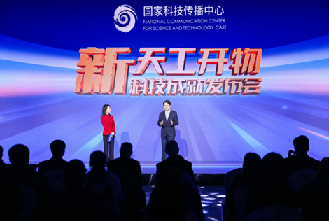
China unveiled significant advancements in eco-friendly technology at a science showcase held at the National Communication Center for Science and Technology in Beijing on Dec 9.

 The event highlighted groundbreaking achievements, including Zhejiang University of Technology’s new water treatment solutions and Beijing Shougang Lanza Tech’s innovative process for converting industrial gases into valuable products, such as ethanol and protein.

 Zhejiang University of Technology’s breakthroughs are significant competition for foreign dominance in water treatment, offering more efficient, energy-saving solutions for sectors such as chemicals and energy, experts say.

 According to Professor Zhang Lin from Zhejiang University, the team tackled key challenges, such as membrane permeability and selectivity, and created new materials that enhance efficiency and reduce contamination. These innovations have the potential to reshape the global market and support China’s push for environmental sustainability.

 Beijing Shougang Lanza’s method captures carbon emissions from industrial processes and transforms them into useful resources.

 Jin Yong, professor of Tsinghua University’s Department of Chemical Engineering, praised the technology as a key step in China’s dual carbon strategy, which aims to reduce emissions while boosting industrial sustainability.

 “This method revolutionizes how we treat industrial exhaust, turning waste into valuable products like ethanol and microbial protein, providing a new pathway for green transformation,” he said.

 These innovations underscore China’s commitment to sustainable development, driving eco-friendly solutions across multiple industries while addressing environmental challenges, experts concur.


Article inline ad

Mind-Machine Tech Leaps From Lab To Life, Powering Up Future Industry

0

Xinhua | Updated: 2025-12-11

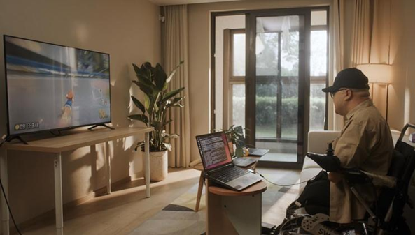
SHANGHAI – In a quiet ward at Shanghai’s Huashan Hospital, a 28-year-old who has been paralyzed for eight years was playing Mario Kart using only his mind. Thanks to a robotic glove, he has gained precise, independent control over each finger.

 Made possible by a home-grown brain-computer interface (BCI), this accomplishment underscores China’s fast-growing capabilities in a technology that melds neuroscience, AI and advanced engineering, and holds promise to deliver life-changing benefits to patients worldwide.

 The patient, who received the implant in late October, was able to control a computer cursor just five days after starting initial training. By day 17, his performance had matched Neuralink’s benchmark in tests, having extended that control to smart-home systems and humanoid robots.

 At a recent BCI forum, neurosurgeon Mao Ying from Huashan shared this landmark clinical update: “We implanted China’s first fully implanted, wireless, battery-powered BCI system,” a gadget designed by Shanghai-based startup NeuroXess.

 CLINICAL BREAKTHROUGHS

 China’s BCI clinical pipeline is expanding at a remarkable pace, exploring multiple technological pathways.

 In March, the collaborative team from Huashan Hospital and the Chinese Academy of Sciences kicked off the nation’s first invasive BCI trial.

 The system’s coin-shaped implants, equipped with ultra-flexible electrodes, are inserted into a precisely thinned recess in the skull above the brain’s motor cortex via a minimally invasive procedure. External wireless power and signal receivers are integrated into a wearable cap, making it easy to use in daily life.

 Nine months later, the man who lost all four limbs in an accident, using a system with electrodes implanted directly into the brain’s motor cortex, can perform digital tasks like messaging and gaming.

 This work has positioned China as the second country, following the United States, to advance invasive BCI technology to the clinical trial stage. The BCI device is projected to gain regulatory approval by 2028, offering improved quality of life for patients with complete spinal cord injury or amyotrophic lateral sclerosis (ALS).

 China is systematically validating BCI’s potential. Over the past year, Chinese brain-tech firms have launched clinical trials of multiple BCI products in hospitals across Beijing, Shanghai, and other cities.

 A semi-invasive, epidural BCI trial, which is considered safer, is also underway. After Beijing’s Xuanwu Hospital performed the first implantation in October 2023, 32 cervical spinal cord injury patients have now received the device in a multi-center trial launched this May.

 All participants have successfully performed brain-controlled home rehabilitation, with over 4,951 cumulative safe-implantation days, supporting the safety and long-term viability of this approach.

 They averaged more points on hand grasp tests, and even without the device, their manual function improved, hinting that the technology may enable neural remodeling.

 “We hypothesize that the formation of a ‘top-down feedback loop’ between brain signals and the glove’s response may have reactivated neural pathways below the site of spinal cord injury,” explained Zhao Guoguang from Xuanwu Hospital.

 The trial represents a “zero-to-one” pioneering milestone for China in the BCI field, added Zhao.

 MED-TECH ECOSYSTEM

 China is building a new innovation ecosystem to accelerate this emerging sector — a model that integrates fundamental research, engineering and clinical adoption, creating a streamlined pathway from lab breakthroughs to real-world solutions.

 The total number of BCI enterprises in China has already surpassed 200, according to data from the China Academy of Information and Communications Technology.

 Shanghai, which has designated mind-machine technology as a key industry of focus, has launched a BCI technology incubator within walking distance of Huashan Hospital.

 Over the past year, Huashan Hospital has partnered with nearly ten leading Chinese BCI firms, performing dozens of clinical-trial surgeries. Its self-developed brain-mapping navigation system can reduce the time to locate implant sites from hours to just three minutes.

 All partner companies in the network can train their models using a shared cross-hospital EEG dataset called iBrain.

 INSIDE is one of the partners in this med-tech ecosystem. The Shanghai-based startup collaborated with Huashan Hospital to develop a ChatGPT-like model for EEG data. The model achieved over 83 percent accuracy in recognizing Mandarin phonemes, a significant challenge considering that Mandarin has more than 400 phonemes, compared to about 50 in English.

 “The large EEG model will show exceptional capabilities across language decoding, image interpretation, motion analysis and smart-device integration,” said Mao from Huashan Hospital.

 In the central Chinese city of Wuhan, BCI company Neuracom has co-established a laboratory with Union Hospital of Tongji Medical College, one of the region’s top medical centers, to ensure their products precisely address clinical needs from the earliest stages of development.

 Recognizing that the field is still constrained by a limited understanding of the brain, China launched its national project for brain research in 2021, positioning BCI and brain-inspired intelligence as two pivotal research directions to build a stronger foundational knowledge base.

 This July, multiple Chinese authorities have jointly issued a set of guidelines aimed at promoting the innovative development of the BCI industry, seeking to achieve key technological breakthroughs in the industry by 2027.

 MARKET MOMENTUM

 An industry report projects that the global BCI market will surpass $10 billion by 2030. Beyond therapeutic applications, a variety of non-invasive BCI technology are expanding into China’s consumer market, signaling vast growth potential ahead.

 “Put on this earpiece, and AI can detect your emotional shifts,” said Yi Haoxiang, founder of EnterTech, holding a 3 gram BCI device in his office in Hangzhou, a tech hub in eastern China. “It captures EEG signals from the skin to assess your mental stress.”

 With China’s growing elderly population and the nationwide promotion of the silver economy, the BCI industry is facing significant unmet demand.

 The country plans to turn next-generation industries, including brain-computer interfaces into new engines of economic growth in the coming five years.

 During a roundtable discussion, Han Bicheng, founder of Hangzhou-based brain tech firm BrainCo, shared that his team once visited over a hundred households of individuals with physical disabilities to map their daily lives.

 “In the end, we only charted 100 stationary points, because their world rarely extends beyond their front door,” said Han. In the future, technologies like BCIs, exoskeletons and robotic hands can expand mobility for these disadvantaged individuals, thus broadening their social horizons and unlocking new possibilities for consumption.

 “The next generation of BCI technology not only promises to help groups like those with obesity, insomnia or autism,” Han envisioned, “but may also allow the blind to see in darkness or even see ten kilometers away.”

Article inline ad

Pipeline Safety Breakthrough A Milestone For China’s Energy Transition

0

By Zheng Xin | chinadaily.com.cn | Updated: 2025-12-11

China has achieved a major technological breakthrough in high-pressure hydrogen pipeline safety on Wednesday, following a successful full-scale physical venting test.

 The test, organized and implemented by China Oil and Gas Pipeline Network Corp, involved the country’s first 10-megapascal (MPa) high-pressure hydrogen pipeline, utilizing a DN250mm riser size.

 The success of the test signals a significant technical advancement in the field of safe high-pressure hydrogen pipeline venting in China, the company said.

 Hydrogen, a clean energy source characterized by its zero-carbon properties and high energy density, is a key component of China’s energy transition strategy. Long-distance hydrogen transmission pipelines are considered the most optimal route for future large-scale green hydrogen storage and cross-regional transport.

 Safe venting is a crucial step in ensuring facility safety during pipeline transportation, storage, and maintenance operations.

 The trial provides critical data support and engineering basis for the safe design of newly constructed pure hydrogen pipelines and the conversion of existing natural gas pipelines for hydrogen transport in China, it said.

 Furthermore, the successful experiment lays a crucial foundation for establishing China’s own technical standards for hydrogen pipeline venting, helping to improve the country’s hydrogen energy storage and transportation standards system and promote coordinated development of the industry chain.

Article inline ad

Guizhou Plans Pledge Loans To Stimulate Baijiu Market

0

By Yang Jun and Liu Boqian in Guiyang | chinadaily.com.cn | Updated: 2025-12-11

Southwest China’s Guizhou province is preparing to explore pledge loans for baijiu brands as part of a new push to boost its spirits market, the provincial commerce department said in a Tuesday announcement. A policy draft has been released for public comment.

 A pledge loan allows a company to use movable assets or legal rights as collateral when borrowing from a financial institution. The lender supervises the pledged assets during the loan term, and the borrower reclaims them after repaying the loan.

 In this case, baijiu brands will be able to use base liquor or finished bottles as collateral, according to an investment manager surnamed Liu. He explained that a third-party agency would appraise the stock by vintage, aroma, and storage conditions. A financial institution would then lend against that evaluation.

 Liu is confident the policy will succeed, saying it would ease funding pressure created by long production cycles, expand investment products, and give investors more choices.

 Baijiu is a pillar of Guizhou’s economy. The province is home to famous brands such as Kweichow Moutai. The new policy is the latest effort to support the industry, which has come under growing pressure.

 Citing third-party data, CNR News reported that in the first three quarters of 2025, the combined operating revenue of 20 A-share baijiu companies was nearly 320 billion yuan ($45 billion), a year-on-year decline of 5.9 percent. Demand for festival-season baijiu fell by 20 to 30 percent in some cases.

 In June 2024, the province implemented a plan to shift from selling liquor to selling a lifestyle. On Dec 5 this year, local authorities began issuing baijiu consumption subsidies of up to 500 yuan.

 This year’s draft measures also propose tougher action against counterfeiting, market infringement, and false advertising in the baijiu market. It encourages synergizing the industry with tourism by allowing tourists to use tickets for planes, high-speed rails, and scenic spots for discounts on the spirit.

 Baijiu is a clear grain liquor that ranges from 40 to 60 percent alcohol by volume. It is commonly consumed at formal events, like weddings and holiday gatherings.

Article inline ad

China Taps High-Altitude Wind Energy Niche

0

By Zheng Xin | China Daily | Updated: 2025-12-11

China has successfully deployed the world’s largest high-altitude wind energy collector, a giant 5,000-square-meter kite or “wind-catching sail”, marking a crucial step in the nation’s cutting-edge exploration of renewable energy from high-altitude winds.

 The successful trial, conducted last month at an experimental field in the Inner Mongolia autonomous region, validates a core component of China’s first national key research and development plan for high-altitude wind energy, said its operator China Energy Engineering Co Ltd.

 The breakthrough is set to open a completely new domain for new energy development in China, CEEC said.

 According to the company, the colossal device works by harnessing the powerful, stable and high-velocity winds found at altitudes above 300 meters.

 During the test, a helium balloon, 17 meters in diameter, slowly ascended, towing the enormous 5,000-square-meter sail into the sky where it unfurled. Once airborne, the sail captures the kinetic energy of the wind, transmitting a powerful pulling force down a tether cable to a specialized ground-based generator, which converts the motion into electricity.

 The project provides the scientific basis for finalizing the design of the kite-ladder system. Every data set is the cornerstone for the future full set of equipment and standards, it said.

 The experiment also successfully tested the deployment and retrieval of smaller, dual 1,200-square-meter work sails, further demonstrating the system’s operational flexibility, it added.

 Industry experts believe high-altitude wind energy represents a major, yet largely untapped, frontier in renewable power generation.

 High-altitude wind energy is considered an untapped frontier in renewables that holds significant potential to supplement traditional wind power, known for its consistency, high wind speed and immense energy density, said Lin Boqiang, head of the China Institute for Studies in Energy Policy at Xiamen University.

 This resource holds significant potential to supplement traditional power sources and grid operations, providing a more stable and predictable clean energy input, he said.

 Furthermore, by utilizing lightweight materials for the harvesting units and requiring minimal use of heavy components like steel and concrete, the cost of these airborne systems can be kept low, dramatically reducing the levelized cost of energy compared to conventional wind farms, he added.

 According to studies published in 2009 and 2012 by researchers with the Washington-based Carnegie Institution for Science, the theoretical potential of wind energy found at high altitudes is immense.

 Current global research is focused on two main technological routes: airborne systems, where lightweight turbines fly to generate power in the air, and the ground-based approach tested here. The ground-based system uses the airborne sails to capture wind and generate power via a system on the ground.

 Huo Shaolei, a senior technical expert at CEEC, highlighted the validation of the technology’s scalability.

 The successful deployment of the ultra-large work sail proves the feasibility of the kite-ladder-type ground-based high-altitude wind power generation technology to achieve large capacity and high-power output, he said.

 According to the company, the sail deployed, at 5,000 square meters, is roughly the size of 12 standard basketball courts. The system is designed to operate at capture heights of up to 5,000 meters or even 10,000 meters — a massive vertical range equivalent to stacking dozens of conventional wind turbines.

 The technology boasts significant economic and environmental advantages over traditional onshore wind farms, as high-altitude wind power systems are expected to save 95 percent of land use and reduce steel consumption by 90 percent, leading to a potential 30 percent reduction in the cost of electricity per kilowatt-hour.

 Just a single 10-megawatt high-altitude wind energy system is estimated to generate 20 million kWh annually, enough to power 10,000 homes for a year, it said.

 CEEC has announced plans to move forward with multi-kite flight testing and aims to enter the full power generation experiment phase by the end of next year.

Article inline ad

Civil Drone Standards To Bolster Industry

0

By Li Jiaying | China Daily | Updated: 2025-12-11

In a bid to further promote the healthy and orderly development of the drone industry, China’s top market regulator has intensified efforts to advance the registration, activation and operational identification management of civil unmanned aerial vehicles.

 The State Administration for Market Regulation (SAMR) recently approved and released two compulsory national standards: one for the real-name registration and activation of civil UAVs and the other for the operational identification of relevant systems, both of which will take effect from May 1, 2026.

 “The introduction of these two new standards will provide technical solutions to the key questions of ‘who is allowed to fly’ and ‘who is currently flying’,” an official from SAMR’s standards technical management department said.

 According to the document, the real-name registration and activation standard clarifies requirements for registrants, registration management, information inquiry, de-registration, data exchange interfaces and graded protection. It has also made clear that drones must not be capable of flight before activation or after deactivation.

 The operational identification standard, on the other hand, requires drones to automatically transmit their identity, location, speed and status information to regulators upon startup and throughout the entire flight process, enabling real-time management of flight activities.

 The new standards were formulated in response to the country’s rapidly expanding drone usage, the SAMR official said.

 Data from the China Air Transport Association showed that by the end of 2024, a total of 2.213 million drones had been registered under real names nationwide, up 74.7 percent year-on-year, with that number having already reached 2.726 million by the end of June this year. In addition, civil drones also logged a cumulative 24.47 million flight hours from January to June, a year-on-year growth of 149 percent.

 “The two standards will also help further support the effective implementation of the current Interim Regulations for Managing UAV Flight, providing an important safeguard for the safe and orderly development of the drone industry,” the official added.

 The interim regulations, which took effect on Jan 1, 2024, are China’s first administrative rules dedicated to unmanned aircraft management. By establishing a full-chain governance system covering production and manufacturing, sales and operations, operator qualifications, airspace use, flight activities, supervision and emergency response, they are believed to have filled a longstanding regulatory gap in China’s drone sector.

Article inline ad

Shanghai Tech Firms Ready For Intl Embodied Intelligence Competition

0

chinadaily.com.cn | Updated: 2025-12-11

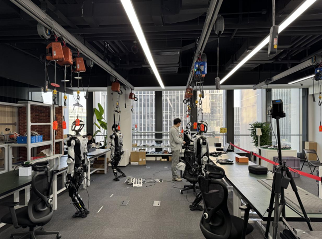
Leading robotics companies offered a preview of their advanced technologies for upcoming international events during a media briefing in Shanghai’s Zhangjiang area on Dec 8.

 The spotlight is on the International Embodied Intelligence Competition, which commences on Dec 12 at the Zhangjiang Science Hall, running alongside the Global Developer Pioneers Summit 2025.

 Domestic innovators are set to showcase significant progress in making robots more dexterous, adaptable, and practical for real-world applications.

 OYMotion, a Shanghai-based innovation-driven enterprise, will present 30 high-performance dexterous hands at the competition. The company views the summit as a vital platform for nurturing the future of the industry.

Chen Yao, chief operating officer of OYMotion, highlighted the company’s AP002 tactile force-controlled dexterous hand, which integrates hybrid tactile perception and achieves closed-loop control from perception to force control.

 “In the past, robots might crush an egg when grasping it, but now they can adjust the force in real time through tactile feedback,” Chen said, emphasizing this as a crucial step toward practical embodied intelligence.

 Humanoid Robot (Shanghai) Co Ltd, a novel research institution established by State-owned enterprises and leading industry players, is participating in the home service track.

 “The track requires robots to perform tasks such as folding clothes and organizing tableware in complex home environments, which demands strong model generalization and robustness,” Zhang Haoran, an algorithm engineer of the company, said.

 Zhang added that — since it is the first time that embodied intelligence development is promoted through competitive events instead of mere exhibitions — the competition offers a valuable testing ground that can effectively promote technological progress.

Kepler, focused on developing “blue-collar humanoid robots” for applications in intelligent manufacturing and warehousing, aims to showcase its capabilities in the industrial-grade embodied intelligence handling track.

 Zhu Binbin, senior product manager of Kepler, said that the company hopes to demonstrate that robots are not limited to performance or entertainment scenarios and can be effectively applied in real production environments.

 Kepler’s K2 “Bumblebee” robot, which has been tested at factories such as SAIC General Motors, boasts an eight-hour continuous working time and a 30-kilogram dual-arm payload.

 “The competition, with its focus on autonomous and flexible solutions, can help solve core pain points in manufacturing, such as adapting to dynamic environments and ensuring precise heavy-load handling,” Zhu said.

 According to Zhang Ye, assistant chief referee of the competition, this year’s competition features a significant innovation, as the organizers hope to accelerate the industrialization of embodied intelligence in Shanghai.

 “The competition uses scenarios as the basis for competition and introduces human skills masters to score, because the real landing of embodied intelligence needs to be compared with humans,” Zhang said.

Article inline ad

Shanghai Forest Cabin Cosmetics Files For IPO In Hong Kong

0

By Wang Zhuoqiong | China Daily | Updated: 2025-12-10

Shanghai Forest Cabin Cosmetics Group, or Lin Qingxuan, a leading brand in China’s domestic skincare market, has filed its IPO prospectus and plans to go public in Hong Kong, amid fierce competition in the skincare oil market.

 On Dec 2, the Hong Kong stock exchange disclosed updated IPO application documents from Forest Cabin, marking its first attempt to go public. In its filings, the company positions itself as “China’s first high-end domestic skincare stock”, a bold claim in a market long dominated by global players such as L’Oreal and Estee Lauder.

 Behind that ambition sits a highly concentrated business model. Forest Cabin’s signature Camellia Essence Oil accounted for nearly 40 percent of total revenue in 2024 and 45.5 percent in the first half of 2025, underscoring the brand’s dependence on a single star product to drive growth and profitability.

 The company has also quietly adjusted its corporate identity to better match that focus. Earlier this year, it changed its registered name from Shanghai Forest Cabin Biotechnology Co Ltd to Shanghai Forest Cabin Cosmetics Group Co Ltd. The move signals a clearer positioning as a consumer beauty company rather than a technology-driven biotech firm.

 Founded in 2003, Forest Cabin spent nearly a decade without clear momentum. Its turning point came in 2012, when management pivoted toward camellia-based skincare and introduced the concept of “skincare through oils”, a niche segment that was still underdeveloped in China at the time.

 The launch of Camellia Essential Oil in 2014 proved decisive. The product has since ranked first in China’s facial oil retail sales for 11 consecutive years, according to the company.

 That early-mover advantage has translated into a rare foothold in China’s premium skincare segment for a domestic brand.

 Data from consultancy CIC show that, based on 2024 retail sales, Forest Cabin ranked first among high-end domestic skincare brands in China and was the only local label to enter the country’s top 15 high-end skincare brands overall, a list otherwise populated by international names.

 Financially, the company’s recent trajectory is striking. Revenue climbed from 691 million yuan ($97.75 million) in 2022 to 1.21 billion yuan in 2024, a compound annual growth rate of 32.3 percent. In the first half of 2025 alone, sales reached 1.05 billion yuan, nearly double that from a year earlier.

 Profitability has improved even faster. Forest Cabin swung from a net loss of 5.93 million yuan in 2022 to a net profit of 187 million yuan in 2024.Net income for the first half rose to 182 million yuan, almost matching the prior full-year result.

 Much of that profit is underpinned by unusually high margins. Camellia Essential Oil’s gross margin rose from 81.7 percent in 2022 to 86.2 percent in the first half of 2025, pushing the company’s overall gross margin above 82 percent. Such figures stand out in a sector where global competitors have increasingly faced margin pressure.

 Yet the same model raises questions. Forest Cabin’s heavy reliance on marketing relative to research and development has drawn scrutiny as it approaches investors. Sales and distribution expenses surged 100.2 percent year-on-year to 580.6 million yuan in the first half of 2025, accounting for 55.2 percent of revenue, up sharply from 40.1 percent for full-year 2024.

 An investment platform under the French beauty group L’Oreal acquired about 2.75 percent of Forest Cabin in May through a fund, according to the prospectus. The stake is widely seen as an endorsement of domestic brands’ growth potential, but it also highlights intensifying competition.

 Recently, L’Oreal announced a minority investment in another Chinese skincare brand, Lan, which also emphasizes oil-based skincare and is Forest Cabin’s closest rival in facial oil sales. Lan has quickly become a leader in the facial oil segment, ranking first in national facial oil sales for two consecutive years (2023 and 2024), according to consultancy Frost & Sullivan. During this year’s Nov 11 shopping festival period, Lan remained the top-selling brand in the facial oil category, selling over 400,000 bottles across all channels.

 The parallel investments suggest a portfolio-style strategy by the global giant, hedging its bets across competing local champions.

 The timing may be favorable. Consumer demand for high-end anti-wrinkle and firming skincare products is accelerating, Forest Cabin pointed out in its prospectus. CIC estimates the high-end anti-aging skincare market will expand from 59.4 billion yuan in 2024 to 155.5 billion yuan by 2029, with oil-based skincare emerging as one of the fastest-growing subcategories.

Article inline ad