Wednesday, November 25, 2026

Home Blog Page 125

Google And Xreal Reveal Details Of Joint AI Eyewear Project

0

By Wang Ying | chinadaily.com.cn | Updated: 2025-12-12

Key details of Project Aura, a new pair of smart glasses, were jointly unveiled by Google and Xreal, an AR startup based in Shanghai’s Pudong New Area, at the Android Show in California on December 8, according to Xreal.

 Project Aura, Google’s latest Android XR eyewear, is a collaboration between Google and Xreal, highlighting the leading role of Chinese companies in AI hardware innovation.

 “A truly powerful AI must establish a connection with the real world. Glasses are the natural carrier for the next generation of smart devices,” Xu Chi, founder and CEO of Xreal, said.

 It is worth noting that almost all the core hardware of Project Aura was developed by Chinese teams, indicating that Chinese manufacturing is becoming a key force in developing next-generation computing platforms.

 With a complete supply chain rooted in the Yangtze River Delta region, Xreal has built Shanghai into its global research and development center and a future innovation hub for AI-powered devices.

 Project Aura is expected to be officially launched in 2026, according to public information.

Article inline ad

Travel Demand To Hainan Spikes Ahead Of Special Customs Operation

0

By Li Jing | chinadaily.com.cn | Updated: 2025-12-12

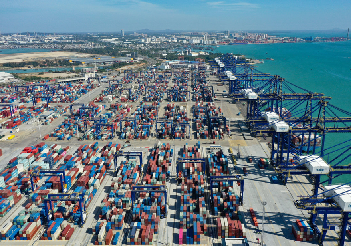
Hainan Free Trade Port is seeing a surge in travel demand ahead of the port’s island-wide special Customs operations on Dec 18.

 Data from Tongcheng Travel shows that hotel bookings for the first weekend of Dec 20 and 21, after the policy takes effect, have tightened rapidly in cities including Sanya and Haikou, with popular room types — like family-oriented rooms and sea-view suites — already sold out.

 Starting on Dec 18, the special Customs operations will lift the share of zero-tariff products in Hainan FTP from 21 percent to 74 percent and further open the port’s tourism, modern services, and high-tech industries.

 The policy is expected to boost the island’s appeal for winter sun-seekers and shopping-driven travelers. Searches for New Year holiday hotels in Sanya have jumped more than 200 percent year-on-year as of Wednesday, Tongcheng said. For flights during the period, Beijing, Chengdu, and Shanghai are projected to be the top three departure cities heading to Santa Phoenix International Airport in Haikou.

 Easier entry procedures are also expected to draw more international travelers. Seoul, Bangkok, Singapore, Melbourne, and Moscow are forecast to be the five largest inbound source markets for trips into Hainan FTP via Sanya airport between Dec 18 and Dec 31.

 China announced in 2018 that it would develop Hainan into a pilot free trade zone while gradually exploring and steadily promoting the establishment of an FTP with Chinese characteristics. In 2020, a master plan was unveiled to build the island into a globally influential and high-standard FTP by the middle of the century.

Article inline ad

China’s Next-Gen Factories Set To Redefine Manufacturing Landscape

0

AI, robotics deep integration pillar of country’s future plant transformation

China Daily | Updated: 2025-12-12

BEIJING — In the heart of Guangdong province’s Shenzhen — the southern engine room of China’s tech boom — a spotless lab behind glass lacks the typical sounds of lathes whirring or conveyor belts moving.

 Instead, a handful of technicians in white coats are quietly overseeing small-batch production of core components for photonic quantum computers, devices that most nations still keep locked in simulation labs.

 This lab-factory hybrid, launched last month, is emerging as the country’s latest bid to marry frontier breakthroughs with assembly-line scale, forging what engineers tout as a “future factory”.

 The 5,000-square-meter facility — China’s first dedicated photonic quantum computing plant — fuses research, fabrication and testing under one roof. Designed to complete 200-plus ultra-precise manufacturing steps, it’s aiming to fast-track quantum tech into drug discovery, artificial intelligence and beyond.

 “The factory floor goes beyond a production line. It is a ‘bridge’ linking fundamental science to industrial deployment,” said Jia Jinfeng, executive director of the Guangdong-Hong Kong-Macao Greater Bay Area Quantum Science Center.

 Intelligent systems

 China’s manufacturing sector, a 15-year global leader, was once renowned for its systemic capacity to scale. The ongoing shift, however, is not merely about output volume, but begins with flexible manufacturing systems that can accommodate diverse, customized demands along the production line.

 Inside Ipason’s smart factory in Wuhan, Hubei province, flexible production lines assemble high-performance PCs to order. Simply place an online order, and your customized computer will be shipped within 24 hours, bringing mass personalization to a same-day reality.

 Another pillar of China’s future factory transformation is AI and robotics integration. Across the country, an increasing number of factories are deploying intelligent systems that can think, adapt and optimize in real-time.

 In August, Chinese authorities released a guideline on deepening the “AI Plus” initiative, outlining a comprehensive roadmap for the deep integration of AI with the real economy. This policy aims to achieve a penetration rate exceeding 70 percent for next-generation applications, such as intelligent terminals and AI agents, by 2027.

 In Taizhou, Zhejiang province, the satellite superfactory of automaker Geely looks more like an automotive assembly line than a traditional aerospace plant. Automated guided vehicle robots glide between workstations, carrying satellite modules in a quiet, fluid process, an approach that has slashed the manufacturing cycle to just 28 days.

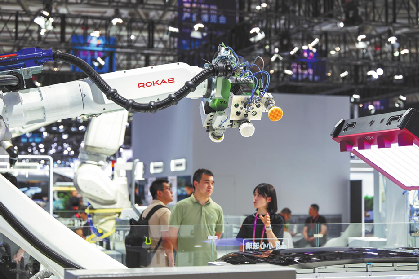
 At Rokae Industrial Park in Shandong province, collaborative robots equipped with force and vision sensors have been endowed with human-like tactile and visual perception, allowing them to dynamically adjust angles and pressure levels to complete high-precision tasks — such as assembling a computer USB port — with micron-level accuracy.

 China has implemented a tiered cultivation system for smart factories, categorizing them into four levels: basic, advanced, excellence and pioneer.

 Latest data show the country now operates 35,000 basic-level, 7,000 advanced-level, over 230 excellence-level and at least 15 flagship smart factories. On average, these facilities have shortened research and development cycles by 29 percent, raised production efficiency by 22 percent and lowered carbon emissions by 20 percent.

Closing the loop

 In recent weeks, a video of UBTECH humanoid robots marching in unison out of a Chinese warehouse has gone viral online. The scene not only provides a glimpse of the future, but also signals the robot manufacturer’s push to integrate machines into real factory floors.

 UBTECH’s smart plant in Liuzhou, Guangxi Zhuang autonomous region, sits not far from automaker Dongfeng’s assembly plants — one of the first places its robots clock in. Clustering suppliers and customers is stitching the country’s new tech chain into a tight loop.

 Shanghai has established a brain-computer interface technology incubator within walking distance of Huashan Hospital, one of China’s top neurological clinics, turning scientists, entrepreneurs and neurologists into next-door neighbors.

 Performing approximately 20,000 neurosurgical procedures annually, the hospital provides critical clinical support to accelerate the translation of BCI devices from the lab to real world medical applications.

 “Shanghai’s BCI ecosystem brings the full supply chain together. It’s the ideal ground to scale fast,” said Peng Lei, founder of Gestalt Life Technology, explaining why his ultrasound-based BCI startup chose to set up shop in the industrial park.

 At an aerospace park in Wenchang, Hainan province, another satellite superfactory is being built on a “satellite out, launch ready” model.

 The facility, which is designed to produce 1,000 satellites annually, is part of a comprehensive ecosystem that includes rocket development, satellite manufacturing and launch control — all within the same industrial cluster.

 Wenchang is home to China’s first commercial aerospace launch site and has drawn over 20 enterprises across the industry chain — ranging from rocket development and satellite manufacturing to launch monitoring and control — to establish operations in its industrial park.

 These factories taking shape are more than production facilities, but also ecosystems that allow for rapid prototyping and scaling, bridging the gap between lab breakthroughs and commercial products faster than competitors.

 China has already launched over 60 provincial-level future industry pilot zones and plans to add more frontier-tech clusters in the next five years — building not just factories, but whole new industrial chains.

Article inline ad

Shandong Firms Back Innovation In Pet Economy

0

China Daily | Updated: 2025-12-12

JINAN — With China’s pet market value surging toward a projected 1.15 trillion yuan ($162.5 billion) by 2028, businesses in East China’s Shandong province are gearing up to seize growth opportunities through holistic innovation.

 From high-tech pet food to fashion-forward accessories, local Shandong enterprises are leveraging “supply-demand adaptation” and “pet-friendly” strategies to capture both the hearts and wallets of pet owners. This provincial transformation reflects a broader shift in China where pets are increasingly treated as family members, fueling demand for quality and experiential products.

 At Taichong Pet Food Co Ltd, based in the city of Tai’an, a new product line that churns out steamed fresh food boasting a 98 percent nutrient retention rate exemplifies how innovation can meet health-conscious demand.

 “Our sales surpassed 100 (metric) tons within the first month of launch,” said Li Qing, executive director and general manager of the company.

 The journey leading to such success began a while ago when the company underwent a challenging R&D transformation to develop baked kibble, aimed at meeting demand for low-oil, high-fresh-meat formulas. This process involved testing hundreds of tons of trial products.

 Currently, the company has evolved to a point where it is able to offer a complete matrix of product lines, including extruded, baked, crispy-textured and fresh-steamed options.

 Now, Taichong Pet Food, which holds over 60 patents, is moving even faster to precisely respond to market demand via continuous innovation.

 China’s pet economy is gaining unprecedented momentum, fueled by a national policy push to enhance supply-demand alignment in consumer goods.

 On Nov 26, six central departments, including the Ministry of Industry and Information Technology, jointly issued a plan that prioritizes consumption upgrading in a quest to further unleash domestic demand potential.

 Shandong is moving swiftly in response to a trend in pet ownership, which is seeing evolution beyond mere functionality into emotional fulfillment.

 At Shandong Kaigao International Trade Co Ltd, designer Zhao Shuimiao fine-tuned a cat climbing frame after first observing hundreds of cats.

 “This height is their favorite climbing point. The soft bed atop provides ultimate security,” she said. The product, blending ethology and aesthetics, became an instant hit, reflecting a portfolio of over 30 series and more than 2,000 products tailored to spaces ranging from studios to multi-pet homes.

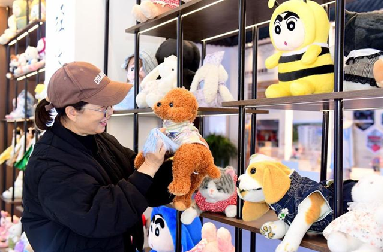
 In Caoxian county in Shandong, brand TAORAE founder Cheng Zhanying merges traditional hanfu embroidery with pet fashion. “We create culturally rich apparel, letting fur kids express unique personalities,” he remarked, while showcasing garments that transform pets into emblems of identity.

 “Dressing her up beautifully brings the same joy as dressing my own child,” said pet owner Wang Cuina when referring to her pet. Notably, this sentiment extends to urban infrastructure, with shopping malls in Jinan, the provincial capital, now offering pet strollers and pet-friendly elevators, while restaurants have designed pet-friendly zones to foster community culture.

 Xinhua — China Daily

Article inline ad

China Gives Go Ahead For New Tumor-Targeting Drug

0

By Li Jing | chinadaily.com.cn | Updated: 2025-12-12

InnoCare Pharma Ltd, a Hong Kong-listed Chinese mainland biotech company, said on Thursday that its cancer drug Zurletrectinib has won approval from the National Medical Products Administration to treat adults and adolescents aged 12 and older with solid tumors carrying NTRK gene fusions.

 The therapy, also known as ICP-723, is a next-generation TRK inhibitor designed to block abnormal TRK proteins that drive tumor growth. InnoCare said results from a registrational trial showed the drug produced an objective response rate of 89.1 percent and a disease control rate of 96.4 percent in patients with NTRK fusion-positive solid tumors. The 24-month progression-free survival and overall survival rates were 77.4 percent and 90.8 percent respectively.

 The company said Zurletrectinib showed stronger efficacy than first-generation TRK inhibitors, delivered durable tumor shrinkage, demonstrated “strong” brain penetration and was able to overcome resistance that hindered the effectiveness of earlier drugs.

 Zhang Yizhuo, a professor at Sun Yat-Sen University Cancer Center, said, “NTRK fusion-positive tumors often progress rapidly and have limited treatment options.

 “Zurletrectinib has demonstrated remarkable efficacy, particularly in achieving an ORR of 100 percent in adolescent patients. Clinically, Zurletrectinib responds faster than traditional chemotherapy, with many patients showing substantial tumor shrinkage within one or two treatment cycles, providing a critical therapeutic window for patients in critical conditions.

 “Moreover, Zurletrectinib demonstrated a long duration of response — the longest observed in our clinical practice has exceeded 36 months – offering hope of extended survival in patients with solid tumors,” Zhang added.

 Jasmine Cui, co-founder, chairwoman and CEO of InnoCare, said Zurletrectinib is the company’s first solid-tumor drug to reach the market.

 “It is of significant clinical importance for patients with NTRK fusion-positive solid tumors,” Cui said, adding that regulatory support enabled patients to gain access earlier.

 The drug has been included in the “SPARK Program” by the National Medical Products Administration, a pilot initiative to encourage the development of pediatric anti-tumor drugs.

 InnoCare said it plans to submit a separate application for Zurletrectinib to treat children aged 2 to 12.

 NTRK gene fusions occur across more than two dozen tumor types, with an estimated 6,500 new cases annually in China, according to InnoCare. The company said low rates of next-generation sequencing testing mean diagnosis is often delayed, leaving substantial unmet treatment needs.

Article inline ad

SABIC Bullish On Prospects In China

0

By Zheng Xin | China Daily | Updated: 2025-12-12

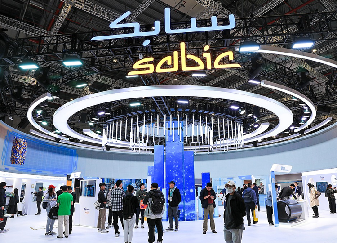
Saudi Arabia-based SABIC, one of the world’s largest petrochemical firms, plans to deepen its investment and collaborative partnerships in China, as it has been leveraging the country’s continuously optimized business environment and long-standing mutual trust to enhance its presence in the fast-growing Asian market.

 Confident in the trajectory of China’s economic development, SABIC CEO Abdulrahman Al-Fageeh said he always views the transformation of China’s manufacturing sector as a significant global opportunity for the chemical industry and the broader economy.

 China’s clear focus on sustainable and high-quality development provides excellent direction for multinational chemical companies. This development model is guiding industrial transformation, offering new avenues for growth for innovation-driven companies like SABIC.

 China’s vigorous cultivation of new quality productive forces and transformation toward innovation-driven growth aligned closely with SABIC’s core philosophy. SABIC is privileged to witness and participate in China’s innovation-driven development journey, Al-Fageeh said.

 SABIC’s four-decade-long relationship with China has matured into a “collaboration” and “partnership” that transcends simple trade, marking the market as a strategic priority for joint innovation and technology deployment, Al-Fageeh said.

 “The company is enhancing its investments in China, specifically through joint ventures and technological collaboration built on mutual benefits and shared visions,” he said, referring to the 44.8 billion yuan ($6.4 billion) world-scale petrochemical complex SABIC is building in Fujian province in tandem with Fujian Energy Petrochemical Group Co Ltd.

 The high-end chemical products to be produced at the complex, another centerpiece of SABIC’s growing investment footprint in China, are expected to support a wide range of applications that drive economic growth in China.

 The company, based in Riyadh, Saudi Arabia, also plans a fourth plant in China, demonstrating the petrochemical giant’s commitment to further expand its presence in the country’s petrochemical sector.

 SABIC is also actively using its Shanghai technology center to create customized solutions specifically for the changing needs of the Chinese market, focusing on rapidly expanding sectors like electric vehicles and renewable energy.

 Al-Fageeh emphasized that this continued investment and efforts such as developing high-quality and tailored solutions using advanced technologies are fundamentally driven by the need to satisfy increasing customer needs within China.

 “As one of the first global companies to have entered the market, SABIC, initially as product distributors for many years, has been evolving into a provider of technological solutions to the challenges that the industry is facing in China,” he said.

 Industry experts believe that the continued outlook for China’s petrochemical sector is strong, largely underpinned by the country’s ongoing efforts to open its markets and provide enhanced policy support for foreign investment.

 The China Petroleum and Chemical Industry Federation forecasts that the sector is set to achieve increased profits this year, marking a significant recovery after a challenging period.

 Fu Xiangsheng, vice-president of the CPCIF, said the industry stabilized last year and is now on a recovery trajectory, driven by factors such as rebounding global oil prices, growing domestic consumption and solid government support.

 Al-Fageeh attributed China’s continuing appeal as a priority market to its strong growth and evolving policies that support foreign businesses.

 He described Asia as one of the fastest-growing regions globally, particularly for petrochemical products, and acknowledged the positive steps China has taken to create a supportive economic climate.

 “We have seen that a lot of policies in China have been evolving and improving in the last decade,” he said, adding that the continuously optimized business environment “will give us an opportunity for partnership, the partnership between Asian countries”.

 He reiterated that the company’s investment is heavily weighted toward the Middle East and Asia due to its rapid expansion.

 “We found that Asia is one of the largest growth regions that we need to have a focus on. So now we focus on Asia, because it is one of the fastest growing economies. It is one of the fastest-growing regions, and especially for the petrochemical products we are producing.”

Article inline ad

ALIBABA APPS TO INTEGRATE WITH QWEN

0

Tech giant develops its chatbot into real-life tools for consumer AI edge

By Fan Feifei | China Daily | Updated: 2025-12-12

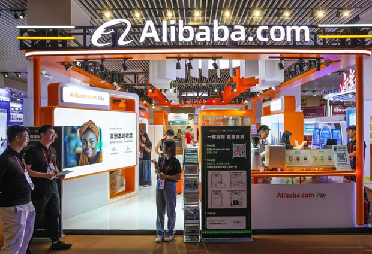
Chinese tech heavyweight Alibaba Group is doubling down on artificial intelligence focused on both enterprises and consumers, and will integrate its e-commerce, map navigation and local services businesses into its newly launched Qwen App.

 The company’s Qwen App surpassed 10 million downloads within the first week of its public beta launch on Nov 17, becoming one of the fastest-growing AI applications to date and surpassing ChatGPT, Sora and DeepSeek. It has rapidly captured market attention, quickly climbing into the top three of Apple’s App Store free apps chart in China.

 It is Alibaba’s latest consumer-facing AI application powered by its most advanced Qwen3 AI model. The move marks Alibaba’s most significant step yet into the consumer AI market, aiming to transform its cutting-edge foundational AI model capabilities into real-life applications and tools.

 Wu Yongming, CEO of Alibaba, said in a recent earnings call with investors that the launch of the Qwen App marks Alibaba’s commitment to both AI-for-enterprises and AI-for-consumers.

 “In enterprise-focused AI, our goal is to build a world-leading full-stack AI provider serving businesses across all industries. For consumers, we aim to build native AI-first applications by leveraging our best-in-class models and Alibaba’s extensive ecosystem.”

 Positioned as a “smart personal assistant that not only chats but gets things done”, the Qwen App is built to become the AI-powered gateway to daily life. It goes beyond conversational AI to deliver advanced capabilities in deep research, AI-assisted coding, AI-powered camera functions and voice calls.

 The app demonstrates remarkable task execution capabilities. For instance, with a single command, it can generate a full research report and automatically produce a polished, multislide PowerPoint presentation in seconds.

 Earlier this year, Alibaba announced plans to invest at least 380 billion yuan ($53.2 billion) in three core areas of its AI strategy over the next three years: infrastructure for AI and cloud computing, development of foundational models and AI-native applications, and AI integration across existing businesses.

 Moving forward, the company plans to deeply integrate core lifestyle and productivity services, including digital maps, food delivery, travel booking, office tools, e-commerce, education and health guidance directly into the Qwen App.

 Pan Helin, a member of the Expert Committee for Information and Communication Economy, which is part of the Ministry of Industry and Information Technology, said Alibaba’s strategic layout in AI is centered on Qwen, which is designed to rival ChatGPT in both capabilities and performance while leveraging Alibaba’s strength in massive Chinese language data.

 “The company will attract more users through the launch of the Qwen App and then channel them into its e-commerce platforms including Taobao and Tmall,” Pan said.

 The AI model, he added, can be integrated into the platforms’ core search, recommendation engines and customer service system to improve shopping experience and increase sales of products.

 At present, consumer-facing AI models have not entered the stage of monetization, while participants in the Taobao and Tmall ecosystem can build scenario-based applications based on Alibaba’s current AI models, said Cui Lili, a professor of digital economy at Shanghai University of Finance and Economics.

 “A large number of accumulated data and a wide range of vertical business scenarios will undoubtedly help enhance Alibaba’s AI capabilities in some industry-specific domains,” she said.

 Alibaba has also announced that its LLM Qwen and its newly launched AI application Qwen App are embedded in Quark’s newly revamped AI browser desktop version. Launched in 2016 as a web browser incubated within Alibaba, Quark has become a leading AI-powered information services platform, with over 200 million users in China.

 This deep integration brings instant, always-on AI assistance to more than 100 million Quark desktop users, marking another major step in Alibaba’s consumer AI strategy and solidifying Qwen as the central intelligence engine across its consumer ecosystem.

 The company aims to transform the Quark AI browser into an intelligent companion for desktop users for everyday digital life and productivity.

Article inline ad

Boosting Imports Seen Balancing Trade

0

‘Export to China’ drive to boost entry of quality goods, services to nation

By Wang Keju | China Daily | Updated: 2025-12-12

China will ramp up efforts in import-boosting initiatives and advancing its strategy for helping balance import and export growth, a move poised to fuel high-quality development in the country while contributing to global economic stability, officials and experts said.

 “Currently, uncertainties and instabilities in the global trade and economic landscapes have increased significantly, with industrial and supply chains undergoing profound transformation. This represents a common challenge faced by all nations, including China,” said Ministry of Commerce spokesman He Yadong, at a news conference on Thursday.

 “China will promote balanced import-export growth by effectively implementing initiatives like ‘Export to China’,” said He.

 Earlier this week, Commerce Minister Wang Wentao said that the “Export to China” campaign aims to facilitate exports of quality goods and services to China, in particular from developing countries, when meeting with Rebeca Grynspan, secretary-general of the United Nations Conference on Trade and Development, in Beijing.

 China hopes that UNCTAD will give its full support, so as to help Global South countries enhance trade capacities and share in the opportunities of China’s huge market, Wang said, adding that China in October adopted the recommendations for the 15th Five-Year Plan (2026-30), which explicitly called for upholding the multilateral trading system and sent a strong signal of China’s commitment to sharing opportunities and pursuing common development with others around the world.

 China firmly supports multilateralism and the UN-centered international system, and stands ready to work with UNCTAD and other parties to foster and preserve a fair, just, open, inclusive and win-win international economic order, he said.

 Grynspan said current high-tariff policies are undermining the stability and social progress of vulnerable economies worldwide.

 Against such a backdrop, she spoke highly of China’s implementation of zero-tariff treatment on 100 percent of tariff lines for the least-developed countries having diplomatic ties with China, including those in Africa.

 It has been over one year since the zero-tariff policy for LDCs entered into force on Dec 1, 2024. Over the past year, imports from these countries have increased by a cumulative total of over 55 billion yuan ($7.8 billion), said the General Administration of Customs.

 Grynspan expressed readiness to deepen practical cooperation with China in areas such as green minerals, trade in services and trade capacity building, jointly supporting developing countries in accelerating the implementation of the 2030 Agenda for Sustainable Development.

 World Trade Organization Deputy Director-General Zhang Xiangchen told China Daily that China now contributes about 30 percent of global economic growth. Looking ahead, as China continues to advance technologically and deepen its cooperation with other economies, its share of global growth contribution may rise further.

 In the latest step to further open up the world’s second-largest economy despite rising protectionism worldwide, Hainan Free Trade Port will soon launch special Customs operations in the island province.

 Starting on Dec 18, the special Customs operations will increase the proportion of zero-tariff products in Hainan FTP from 21 percent to 74 percent, while further opening-up local tourism, modern services and high-tech.

 Ministry spokesman He said that China will leverage the launch of island-wide independent Customs operations in Hainan as an opportunity to vigorously advance institutional opening-up.

 Going forward, Hainan FTP will proactively align with international economic and trade rules, expand market access with a focus on services and refine the negative list management system for cross-border trade in services, He added.

 The greater openness and the policy clarity — particularly regarding tariffs, market access and tax incentives — strengthen Hainan FTP’s appeal as both an investment destination and a strategic gateway into the broader Chinese market, said Zhou Mi, a senior researcher at the Chinese Academy of International Trade and Economic Cooperation.

Article inline ad

‘Golden Name Cards’ Help China, EU Forge Market Bonds

0

Geographical indication agreement boosts sales, ensures quality and authenticity

By JI HAISHENG in Qingtian | CHINA DAILY | Updated: 2025-12-12   

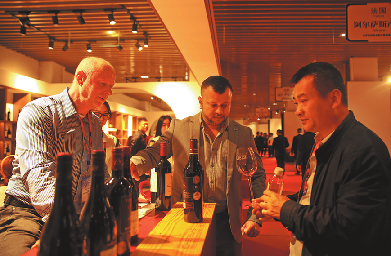
At the Qingtian Imported Wine Fair in Zhejiang province in November, the scent of oak and grapes mingled with growing business optimism. As visitors sampled wines amid the clinking of glasses, wine importer Wu Jiaxuan was presenting his selections from accredited European chateaus with the aplomb of a connoisseur.

 “We source from established chateaus with the European Union’s geographical indication certification,” explained Wu, who has been in the wine business for four years. “This guarantees a stable supply and, more importantly, ensures consistent quality and authenticity of origin.”

 A geographical indication, or GI, is a designation used on products originating from a specific region, where the quality, reputation or other characteristics are linked to its geographic origin. Examples include Champagne, tied to the terroir of France’s Champagne region, and Jingdezhen porcelain, renowned for local materials and centuries of craftsmanship.

 Dong Huijuan, a professor at the Intellectual Property Research Institute of Xiamen University in Fujian province, said collective ownership and an intrinsic link to their place of origin are two defining features of a GI.

 “They belong to all qualified producers within a specific region not owned by any single entity, and their unique value stems entirely from their place of origin, its natural conditions or traditional know-how,” Dong said.

 Coinciding with the wine fair, an international conference focused on China-EU GI cooperation was jointly hosted by the Chinese People’s Association for Friendship with Foreign Countries and the China-EU Association in Qingtian.

 More than 200 guests, including officials, business leaders, experts and foreign guests, gathered to discuss the important role of GIs in boosting bilateral cooperation.

 “China has an extraordinary wealth of food, agricultural and artisanal crops. Pu’er tea, Shaoxing wine, Shanxi vinegar, Jinhua ham, so many products that tell the soul of the Chinese regions,” said Gilles Pargneaux, a former vice-chair of the European Parliament’s Committee on the Environment, Public Health and Food Safety. “In the same way, French vineyards, Greek feta, Spanish olive oil or Italian cheeses are unique expressions of our European lands.”

 Pargneaux believes that a GI is not only a sign of quality. “It is the taste of a terroir, a climate, a history. Behind every protected product, there are families, landscapes, and living traditions,” he said.

Striking agreement

 In 2011, China and the EU started negotiations to promote the trade of GI products. However, the process was initially slow due to the different legal systems and regulatory standards.

 Despite the challenges, on Sept 14, 2020, the two sides signed the landmark China-EU agreement on GIs.

 The deal — covering 550 GI products such as alcoholic beverages, tea, agricultural products and food items — entered into force on March 1, 2021, marking the first large-scale mutual recognition of GIs between China and the EU. It ensures high-level protection for the listed GIs and allows them to use each other’s official labels.

 When the agreement took effect, the first group of 100 products from each side received immediate protection, with the remaining 175 GIs from each side later given protection.

 “This was a real innovation — a model of mutual recognition of systems — made possible only because of the confidence developed between our teams through visits and exchanges on both sides,” said Dacian Ciolos, a former EU agriculture commissioner.

 Ciolos visited China four times as European agriculture commissioner to better understand China’s specific needs and interests during the negotiations.

 Similarly, trips were organized for Chinese representatives to visit EU member states to see local producers protected by GIs, he added.

 Peng Gang, a former director of the Ministry of Commerce’s Department of Asian Affairs, highlighted the extensive efforts behind the China-EU GI agreement, which was signed after eight years of arduous work.

 The process involved 22 rounds of formal negotiations and numerous informal consultations. Key Chinese agencies involved included the Commerce Ministry, the National Intellectual Property Administration, the Ministry of Agriculture and Rural Affairs, and the State Administration for Market Regulation, he said.

 Peng arrived in Brussels in April 2021 to serve as the minister of the Chinese Mission to the EU. Over the past four years, he has worked to promote China-EU cooperation, including collaboration on GIs.

 He said the agreement’s implementation rests on four key elements: the 550 GI products, unified standards, a stringent crackdown on counterfeiting, and a joint committee overseeing the implementation and functioning of the agreement.

Mutual benefits

 The trade value of GI products between China and the EU exceeded 19 billion euros ($22 billion) in 2024, an increase of approximately one-third on the period before the agreement took effect, according to Peng.

 He said GI cooperation acts as both a stabilizer and a catalyst for advancing pragmatic cooperation between China and the EU, particularly amid the current complex global environment.

 Liu Qibao, president of the China-EU Association, said GIs serve as a “passport” for quality products, are a “golden name card” of civilizations, and a “bridge” for cooperation. He added that GI cooperation exemplifies the mutual benefits of the China-EU partnership.

 Mutual recognition of GIs has accelerated bilateral trade cooperation by simplifying market entry, boosting exports, and strengthening bilateral trade.

 During the China International Import Expo in Shanghai in November, Kuaijishan Shaoxing Rice Wine Company reached a deal with the French Champagne house, Cattier. Both Shaoxing rice wine and French Champagne are protected by the GI agreement.

 Under the deal, each party will distribute 10 million yuan ($1.40 million) worth of the other’s products through their respective domestic channels over the next three years.

 “Our previous attempts mainly targeted overseas Chinese consumers familiar with our rice wine,” said Fu Zukang, vice-president of Kuaijishan. “Now, through a local partner, we’ve placed our main product lines into mainstream retail channels such as Carrefour.

 “The collaboration reflects growing business trust between Chinese and European producers,” Fu said.

 Previously, it was a lengthy and complex process for Chinese producers to obtain GI protection status in the EU, sometimes taking up to six years.

 This process has been streamlined. Producer groups that have already obtained GI protection within China can apply directly to the EU for recognition. The GI agreement has established a direct pathway that grants automatic and immediate protection to listed Chinese products in the EU market.

Strong protection

 Jing Yunchuan, director of Gaopeng Law Firm and vice-president of the Beijing Intellectual Property Research Association, said the agreement has a robust legal framework that enhances mutual protection of distinctive agricultural products.

 The list of GI items serves as a checklist for enforcement. This allows customs and judicial authorities in China and the EU to protect listed products directly without the need for years of scrutiny and case-by-case reviews, Jing said.

 An example of the streamlined enforcement took place in August 2023, when market regulators in Yingshang county, Anhui province, investigated a local brewery for the unauthorized use of “Munich Beer” on its labels — a name protected as an EU GI.

 The brewery was found to have used the Chinese characters for “Munich Beer” alongside a trademark, a practice deemed potentially misleading to consumers regarding the product’s origin. The case was ruled a violation of China’s Trademark Law, and the brewery was ordered to rectify the issue and faced penalties.

 Yan Wenjun, a professor at the University of Chinese Academy of Sciences’ School of Intellectual Property, said it is essential to strengthen cross-border law enforcement and raise consumer awareness of GI products to transform GIs from legal labels into genuine market value.

 Yan said future efforts could focus on expanding the list of protected products and aligning China’s premium agricultural products with EU origin standards. In addition, he proposed including intangible cultural heritages, such as Jingdezhen porcelain, Xuan paper and Suzhou embroidery, to grant them strong commercial protection in Europe.

 jihaisheng@chinadaily.com.cn

Article inline ad

Role Of Global Value Chains Highlighted

0

Experts call for solid policies to keep production networks open, sustainable

By LI JING, WANG KEJU and LIU ZHIHUA | chinadaily.com.cn | Updated: 2025-12-11

Global value chains are not retreating but are becoming more digital, more regional, and increasingly shaped by security concerns amid geopolitical tensions, climate pressures and rapid technological change, experts from home and abroad said on Thursday.

 This has made global value chains more resilient and indispensable to the functioning of the world economy, they said, calling for more coordinated policies and deeper international cooperation to keep global production networks open and sustainable.

 They made the remarks at a forum in Beijing on global value chains hosted by the University of International Business and Economics, which was held both online and offline. The event reviewed shifting global production patterns and released the latest Global Value Chain Development Report.

 Speaking via video, Ngozi Okonjo-Iweala, director-general of the World Trade Organization, said, “Global value chains have not unraveled — they have adapted.”

 Okonjo-Iweala noted that the value chains have become more digital and responsive to security and sustainability needs, while the agility of firms and “creative policy responses” have helped keep trade growth resilient.

 “Contrary to talks of de-globalization, global value chain-related trade slipped only slightly from the peak of 48 percent in 2022 to 46.3 percent in 2024,” she said, adding that regions such as Latin America and Africa stand to benefit from new technologies, the green transition and supply-chain diversification.

 Robert Koopman, former chief economist of the WTO and editor-in-chief of the newly released report, said that globalization “is not retreating — it is being reshaped”. There are growing opportunities in Asia and Latin America, alongside new pathways created by climate-related shifts in supply chains, he said in the report.

 New phase

 UIBE president Zhao Zhongxiu said globalization has entered a new phase — what the WTO calls “re-globalization” — in which businesses and governments are not retreating inward but actively reshaping global integration around four core objectives: resilience, sustainability, digital transformation and security.

 Justin Yifu Lin, former chief economist of the World Bank and dean of the Institute of New Structural Economics at Peking University, said that economies that aligned policies with their strengths were able to export competitively, grow rapidly and create millions of jobs.

 “Global value chains are essential for organizing production according to comparative advantage,” Lin said, adding that following such strengths while staying connected through global value chains can support a more inclusive and greener global economy.

 Speaking to China Daily on the sidelines of the event, Zhang Xiangchen, deputy director-general of the WTO, said Chinese enterprises expanding abroad are exporting not just products and capital but also technology and innovation, helping accelerate industrialization in developing economies and supporting their climb up the global value chains.

 With China contributing about 30 percent of global economic growth, its rising technological strength could lift its global contribution even further, Zhang said.

 However, experts have also highlighted some challenges undermining the resilience and inclusiveness of global value chains.

 Citing from the report, Koopman noted that industrial policies and trade arrangements are increasingly flexible and issue-specific, making broader access to finance and technology, greater transparency, and more coherent trade policies essential to building a resilient and inclusive global economy. He also emphasized that effective climate action hinges on well-functioning markets and consistent green policies.

 Okonjo-Iweala warned of growing policy-driven uncertainty and called for “more innovative approaches” to drive diversification and strengthen systemic resilience.

 In light of that, she said the report arrives “at a critical moment for the future of value chains and the global economy”.

 The Global Value Chain Development Report 2025: The Re-wiring of GVCs in a Changing Global Economy was jointly published by the Asian Development Bank, the Research Institute for Global Value Chains at UIBE, the Institute of Developing Economies — Japan External Trade Organization, the WTO and the World Economic Forum.

 Ouyang Shijia and Zhang Chenxu contributed to this story.

 Contact the writers at lijing2009@chinadaily.com.cn

Article inline ad