Wednesday, November 25, 2026

Home Blog Page 124

CSRC To Launch New Governance Campaign As Capital Market Reforms Deepen

0

By Zhou Lanxu | chinadaily.com.cn | Updated: 2025-12-15

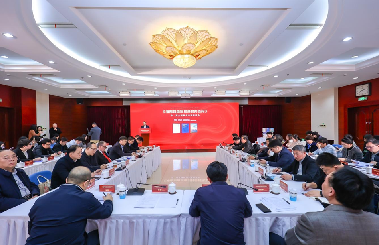
China’s top securities regulator will initiate a new round of special actions to strengthen the governance of listed companies, marking a new step in advancing comprehensive reforms in capital market investment and financing, said a meeting chaired by Wu Qing, chairman of the China Securities Regulatory Commission.

 At the meeting to deliver the messages from the Central Economic Work Conference, the CSRC decided that the upcoming campaign will foster high-quality listed firms and guide strong performers to increase dividend payouts and share buybacks.

 The previous governance campaign, launched in December 2020, was a two-year effort involving company self-inspection, on-site reviews and rectification to raise governance standards across listed companies.

 The CSRC meeting also pledged to fully implement long-cycle performance assessments for institutional investors, improve long-term market stabilization mechanisms, deepen ChiNext reforms, expedite the launch of pilots for commercial real estate investment trusts and study new futures products.

 The commission will also accelerate efforts to foster world-class investment banks and institutions, enhance the efficiency of the overseas-listing filing mechanism and introduce a new regulation on listed company supervision.

Article inline ad

Hainan’s Island-Wide Special Customs Operations Explained In New Guidebook

0

By Wang Songsong | chinadaily.com.cn | Updated: 2025-12-15

A State-owned publisher in Hainan recently released Chinese and English editions of Special Customs Operations in Hainan Free Trade Port: 100 Q&A, which was the subject of a symposium in Beijing on Saturday.

 The publication arrives as the island-wide special customs operations are set to commence on Dec 18. With a collaboration of domestic and international presses, the guidebook serves as a practical handbook and international outreach for Hainan’s new phase of integrated customs management.

 The book’s Q&A structure clarifies the policies and operational frameworks to create what organizers call a “window of understanding” for global observers and stakeholders.

Wu Bin, board chairman of the book’s publisher, Hainan Publishing & Distribution Group, said the group strives to present stories of the FTP with publications that decode the essence of the island-wide customs closure and promote opening-up through cultural empowerment.

 He added that the book reflects Hainan’s efforts to build a more influential international communication system and enhance the effectiveness of global outreach.

After the operations take effect, the group plans to promote “innovation-driven planning, digital-powered growth, and ocean-oriented development” to produce more quality works that explain policies, communicate ideas, and showcase the appeal of the FTP, Wu said.

 David Ferguson, honorary chief English editor of Foreign Languages Press, which polished the English translation, said the Hainan FTP is a cornerstone of China’s high-level opening-up strategy, and this publication is a timely and authoritative guide to the customs closure operation.

 Qi Zichen contributed to this story.

Article inline ad

‘Mild Expansionary Path’ Likely In 2026 Fiscal Plan

0

By Yang Fan | China Daily | Updated: 2025-12-15

From a global perspective, we anticipate that China-US relations will remain in a state of balance in 2026. Over the long term, the Trump administration’s acceleration of the “destructive restructuring” of US hegemony could speed up the internationalization of the renminbi and the overseas expansion of Chinese enterprises.

 Domestically, the fourth plenary session of the 20th Central Committee of the Communist Party of China has unveiled a top-level design for the country’s economic and social development over the next five years. During the 15th Five-Year Plan period (2026-30), China’s economic growth rate may reach around 4.8 percent, thereby strengthening the foundation while boosting emerging industries.

 We believe that policies aimed at building a modernized industrial system could achieve the effect of “setting everything right with one move”, with significant progress expected in technological innovation, industrial upgrading, and the comprehensive rectification of involution-style competition.

 Furthermore, policy focus will tilt toward demand to stimulate domestic consumption, with services consumption coming to the fore. Looking ahead to 2026, we expect the macroeconomy to show a mild recovery trend under structural divergence, with economic growth potentially being lower in the first half and higher in the second, exports maintaining resilience, investment gradually warming up and goods consumption facing short-term pressure.

 Moving forward, the international situation presents both challenges and opportunities, while domestic policies will promote both economic expansion and reform. During the 15th Five-Year Plan period, the Chinese economy may embark on a journey with “clear skies that stretch for thousands of miles”.

 In the short term, we expect China-US relations to maintain a state of “conflict without breakdown” in 2026. The China-US rivalry may continue, but its intensity will be manageable, with the response of financial markets likely to be relatively “dull”.

 Affected by the election cycle, we anticipate that there might still be phases of disturbances to China-US relations during the first quarter and fourth quarter of 2026, while the second and third quarters will see the Trump administration focus on the midterm elections, potentially leading to a more tranquil external environment.

 In the long term, the Trump administration is accelerating the “destructive restructuring” of US hegemony. Countries around the world are experiencing common shifts in industrial policy, trade policy, economic governance policy and social diplomacy policy, exacerbating the fragmentation and reconstruction of the global industrial and financial order.

 Against this backdrop, we believe that the going-global process of Chinese enterprises and the internationalization of the renminbi will continue to accelerate. At the real economy level, with the rapid enhancement of China’s industrial competitiveness, the export of technologies, brands and business models is particularly promising.

 In the financial sector, as Chinese enterprises expand globally, coupled with deep-seated concerns about the dollar system, the internationalization of the RMB also faces strategic opportunities. The opening-up of the capital account and the construction of the RMB cross-border payment system could be crucial tools.

 During the 15th Five-Year Plan period, industrial policies may focus on reshaping the profit growth of manufacturing through “anti-involution” while promoting the convergence of various factors toward manufacturing to foster the development of emerging pillar industries.

 Overall, building a modernized industrial system with advanced manufacturing as its backbone requires first addressing the involution-style competition issue, ensuring a virtuous cycle from technological innovation to profit growth for enterprises, and forming a positive demonstration effect for industrial transformation and upgrading.

 From a structural perspective, the 15th Five-Year Plan period will usher in a critical period for China’s manufacturing to transition from scale to strength.

 On the one hand, the consolidation and improvement of traditional industries will solidify the foundation of manufacturing. On the other hand, China will accelerate the industrialization of artificial intelligence technology, focusing on developing new pillar industries, such as new energy and aerospace, while also making forward-looking arrangements for future-oriented industries, such as embodied intelligence and sixth-generation mobile communication, promoting both reasonable quantitative growth and effective qualitative improvements in manufacturing.

 In terms of supportive measures, the first is to adhere to the principle of “three concentrations” for State-owned capital, namely, pushing State-owned capital to concentrate on important industries and key areas related to national security and the lifeline of the national economy, toward public services, emergency capabilities, and public welfare areas related to the national economy and people’s livelihood, and toward forward-looking strategic emerging industries, thereby reinforcing the leading role of central State-owned enterprises in technological innovation.

 The second is to seize the opportunity of promoting mass entrepreneurship and innovation, enhancing the capital market’s support for new quality productive forces; and the third is to lead with the carbon peaking goal, driving the green and low-carbon transformation of energy and industrial structures.

 During the 15th Five-Year Plan period, China’s economic growth rate may reach around 4.8 percent, while the policy focus will tilt more toward demand, with services consumption coming to the fore.

 At the aggregate level, to achieve the goal of doubling the economic volume or per capita income by 2035, we estimate that the desirable economic growth rate during the 15th Five-Year Plan period should be around 4.8 percent.

 We believe that the policy focus will gradually shift from the previous emphasis on the supply side to a more balanced approach with a tilt toward the demand side. Under the impetus of new drivers, such as services consumption and investment in emerging industries, the contribution of domestic demand to GDP is likely to steadily increase.

 Regarding the framework of consumption policies, the four core directions for improving household consumption are: adjusting the income distribution structure to enhance households’ consumption capacity, reforming the social security system to boost people’s willingness to consume, supporting the repair of household balance sheets with the recovery of the capital market through wealth effects, and increasing fiscal efforts in “investing in people” to improve the supply system of service consumption.

 Looking ahead to next year, we expect the demand side to exhibit the following structural pattern: external demand will be stronger than domestic demand, subsidized goods will outperform non-subsidized goods, demand for new industries will surpass that for old industries, and lower-tier cities will perform better than higher-tier cities.

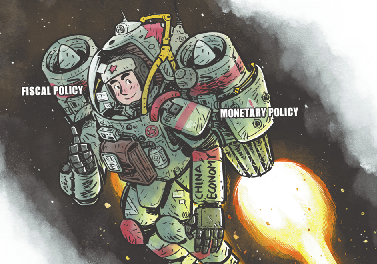
 China will step up fiscal and monetary policy as required in 2026, leading to a mild macroeconomic recovery amid structural divergence.

 In our view, fiscal policy will continue its mild expansionary path, optimizing the allocation of fiscal funds and accelerating the transformation of local government financing vehicles. Monetary policy will maintain a moderately loose tone, focusing on structural adjustments.

 On the investment side, we expect infrastructure investment to slightly rebound, underpinned by a strong start and a more balanced tilt toward local fiscal risk prevention. Manufacturing investment, while constrained by “anti-involution” policies, will benefit from accelerated capacity reduction, which will promote the supply-demand equilibrium, with high-tech sectors emerging as a focal point.

 The real estate sector is on track to see a narrowing decline due to supply contraction, easing pressure on housing prices, and supportive policies. On the consumption side, goods consumption is likely to remain weak, affected by some demand being pulled forward by subsidies and the lag in household balance sheet recovery.

 However, wealth effects from financial assets will continue to unfold, and services consumption, driven by the policy orientation of “investing in people”, will form a structural highlight.

 On the export side, strong demand from non-US regions, capacity relocation and enhanced industrial competitiveness, combined with a moderate economic recovery in the US, will ensure that export growth remains resilient.

 On the price front, the producer price index and the consumer price index will benefit from improved supply-demand dynamics under the “anti-involution” campaign and support from core commodity prices, leading to a mild recovery.

 There are still risks as global geopolitical tensions may unexpectedly worsen. Other potential risks include the economic performance of developed economies declining more than expected, domestic macro policies falling short of expectations and reform progress disappointing.

 The writer is chief macro and policy analyst at CITIC Securities.

 The views do not necessarily reflect those of China Daily.

Article inline ad

China-India Ties Remain Resilient Despite Challenges

0

By Zhang Muchun | China Daily | Updated: 2025-12-15

China-India economic and trade cooperation saw fresh progress in 2025, with several Chinese enterprises reaching cooperation agreements with Indian partners, injecting new momentum into the two countries’ evolving economic and financial ties.

 In recent months, LONGi Green Energy Technology (Hong Kong), a Chinese solar technology company, reached a cooperation agreement with Indian solar manufacturer Inox Solar on the localization of 5 gigawatts of photovoltaic technology.

 Another major cooperation came from CALB Group, a Chinese lithium battery producer, which signed a 20-year strategic partnership with Ashok Leyland, India’s second-largest commercial vehicles manufacturer.

 In the infrastructure sector, China Railway Engineering Group also inked a strategic cooperation agreement with Indian mining company Ashapura Minechem. Meanwhile, China Eastern Airlines resumed its Shanghai-Delhi route, further strengthening connectivity between the two countries.

 Amid a slowing global economy and rising unilateralism and protectionism, China-India economic and trade cooperation has evolved beyond the bilateral level to become an important factor shaping the stability of Asian industrial chains and the broader landscape of global economic governance.

 As the world’s two most populous developing countries and leading voices of the Global South, China and India together account for 20 percent of the world’s economic output. The sound development of bilateral economic and trade ties not only provides strong momentum for both countries to advance modernization, but also serves as a crucial pillar supporting coordinated development among the Global South.

 India is currently undergoing rapid industrialization, while China has built strong advantages in high-end manufacturing and technological innovation. Such stage-specific complementarity provides a natural impetus for deepening bilateral economic and trade cooperation, a trend reflected in China-India trade reaching $138.478 billion in 2024, with China remaining India’s largest trading partner and India becoming China’s largest trading partner in South Asia.

 Yet the bilateral economic relationship is not without challenges. With global value chains undergoing restructuring, how effectively China’s manufacturing strengths can be aligned with India’s market potential will play a decisive role in shaping Asia’s influence in the global economic system.

 A major obstacle to China-India trade lies in the structural imbalance of bilateral flows. India posted a $64 billion trade deficit with China from April to October 2025, according to data released by China’s Ministry of Commerce. The gap highlights sharp differences in value-chain positioning: China mainly supplies technology-intensive goods, while India’s exports, dominated by iron ore and cotton, have high value-added products accounting for less than 15 percent.

 Moreover, China-India investment cooperation has remained lackluster. India’s tough market-access rules and frequent compliance reviews have dented Chinese investors’ confidence, contributing to a 24.6 percent drop in China’s direct investment value in India in 2024.

 Political factors have added further strain. India’s bans, for instance, on Chinese apps, sector-specific investment limits, and restricted cross-border mobility have raised operating costs, delaying some Chinese-funded projects by more than six months.

 Furthermore, China-India economic and trade cooperation needs to stay alert to the cumulative impact of several potential risks. These include market-substitution risks, supply-chain restructuring risks, and the increasing entrenchment of India’s institutional barriers to foreign investment.

 Third-party interference is another factor that requires attention. The United States used the Indo-Pacific Economic Framework to draw India into supply-chain arrangements that exclude China, which could leave China-India economic ties vulnerable to disruptions driven by geopolitical competition.

 Despite these challenges and constraints, the resilience of China-India economic and trade cooperation remains evident. India’s exports to China have shown a steady recovery, rising for seven consecutive months from April to October 2025. In October alone, exports jumped 42 percent year-on-year, bringing total shipments during the period to $10.03 billion. China has also consistently remained India’s fourth-largest export destination. The upward trend underscores the strong industrial complementarity between the two economies and reflects the natural momentum of their deepening economic ties.

 Meanwhile, Chinese demand for India’s pharmaceutical intermediates and high-quality agricultural products has stayed robust. Between January and October 2025, India shipped 265,000 metric tons of rice to China, more than 4.4 times the volume for the whole of 2024. China, for its part, continues to play a pivotal role in supporting India’s electronics manufacturing sector. More than 60 percent of India’s imports of electronic components — including printed circuit boards — originate from China.

 Additionally, cooperation in the digital economy and green energy has emerged as a new growth engine for China-India economic ties.

 Software enterprises in Bengaluru have begun technical collaborations with Chinese cloud-computing service providers, while bilateral trade in areas such as photovoltaic modules and battery materials for new-energy vehicles surpassed $10 billion in 2024, underscoring the substantial potential for further cooperation.

 Addressing the challenges in China-India economic and trade relations calls for an integrated approach that brings together government leadership, market-driven dynamics and effective institutional safeguards.

 First and foremost, a stronger strategic direction at the top level is essential. Building on the China-India Joint Economic Group, the two sides could establish a fast-track mechanism for managing trade frictions. To help ease India’s trade deficit, China may step up imports of competitive Indian products such as pharmaceuticals and textiles.

 Second, the two countries should work to upgrade cooperation. In the digital sphere, both sides could work toward a shared framework for cross-border data security, while in green energy, joint research and development in photovoltaic technologies would deepen collaboration. Such measures would help shift the relationship beyond basic goods trade toward a more substantive technological partnership.

 Third, institutional barriers to investment need to be eased. India may explore establishing “China-India cooperation demonstration zones” in industrial corridors such as Gujarat, accompanied by policies that lower compliance costs for Chinese enterprises.

 Finally, the two sides are expected to explore broader opportunities in third-country markets. By combining China’s strengths in engineering and construction with India’s capabilities in software and IT services, the two countries could jointly participate in infrastructure projects in Africa and generate synergies that are greater than the sum of their parts.

 Against the backdrop of once-in-a-century changes unfolding at an accelerating pace, China and India can advance their economic ties only by moving beyond zero-sum thinking and strengthening institutional cooperation to offset geopolitical risks. Such efforts would place their trade relationship on a more sustainable footing, deliver broader benefits to both peoples, and inject greater certainty and positive momentum into the global economy.

 The writer is an assistant researcher at the Institute of Contemporary China Studies, the Chinese Academy of Social Sciences.


Article inline ad

Demographics Seen Boosting Medical Device Sector

0

By ZHENG YIRAN | CHINA DAILY | Updated: 2025-12-13 08:44

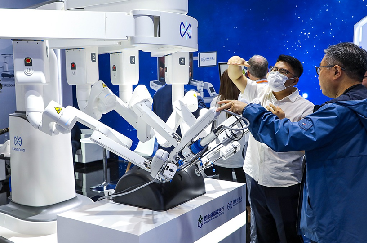
Facing a vast population base, extended life expectancy and people’s rising living standards, China’s medical device sector is embracing a promising future, industry experts said.

 Wang Binbin, director and general manager of the Beijing Medical Robotics Industry Innovation Center, said: “China is the world’s second-largest medical device market, and the growth of the market exceeds the average growth rate of developed countries. There are 1.4 billion people in China, and the increase in life expectancy per capita and people’s pursuit of a better life raise the demand for innovative medical devices, promoting the development of the industry.”

 “The next five years will witness artificial intelligence and robotics empowering the medical device sector. There will be numerous integral solutions coming out. New industrial clusters will emerge,” she said.

 Speaking of Chinese medical device companies, she said that with 10 years of development, many of them moved into the top 100 medical device companies in the world, and their rankings were moving forward every year, demonstrating great improvement potential.

 Data from the Medical Device Supply Chain Association of the China Federation of Logistics and Purchasing (CFLP) showed that in 2025, China’s medical device market was estimated to total 1.22 trillion yuan ($172.9 billion). By the end of 2024, there were over 33,000 medical device manufacturing enterprises, 27.8 percent more than in 2020.

 The Beijing Medical Robotics Industry Innovation Center, as a Contract Development and Manufacturing Organization platform for high-end medical equipment and a public service platform for medical robots, has provided nearly 500 CDMO services to clients and has cultivated over 50 projects from abroad.

 In eight years, it has incubated and cultivated one unicorn, four quasi unicorns, 19 national high-tech enterprises, enabling 11 products to enter the innovation channel, 11 products to obtain National Medical Products Administration’s Class III registration certificate, and 12 products to obtain NMPA’s Class II registration certificate, forming an industrial innovation cluster.

 On Dec 9, a non-invasive neuromodulation smart patch developed by Beijing InnoStim Technology Co Ltd obtained the NMPA’s Class II registration certificate. The compact smart patch is applied to the patient’s ankle and helps relieve overactive bladder — a disease that affects nearly 100 million patients in China.

 Kong Lingjie, founder and CEO of Beijing InnoStim Technology Co Ltd, said: “Under the context of the silver economy, there are a lot of unmet needs. More than 80 percent of those aged over 70 suffer from frequent urination, urgency and waking up at night. In late 2024 we founded the company. With the help of the Beijing Medical Robotics Industry Innovation Center, we turned a laboratory idea into a product in one year. The product is estimated to be launched to the market next year.”

 “Furthermore, we plan to go global, bringing the products to ASEAN member states, the United States, Japan and Australia,” he added.

 Other medical devices cultivated by the center have also been welcomed by the market, including a pelvic restoration robot that uses a minimally invasive method to restore pelvic health, filling the gap in the global market, and an automated dental pulp treatment robot that cuts the treatment frequency from four per tooth to one per tooth, greatly enhancing the patient treatment experience.

 Ma Zengrong, deputy chairman and secretary-general of the CFLP, said: “During the 14th Five-Year Plan period (2021-25), China’s medical device industry has been accelerating from ‘following’ to ‘running parallel and leading’, providing solid support for the Healthy China 2030 strategy.”

 zhengyiran@chinadaily.com.cn


Article inline ad

Billionaire Offers ‘Common-Sense’ Advice

0

Grocery magnate John Catsimatidis reflects on his route to success, and the current state of China-US relations

By Belinda Robinson in New York | chinadaily.com.cn | Updated: 2025-12-13

Supermarket billionaire John Catsimatidis has been a giant in the New York City business world for over 50 years, starting with the purchase of grocery stores and branching out to an airline, oil and gas, real estate, media investments and other projects.

 But as the 77-year-old, known as the “common-sense billionaire”, looks back on his incredible journey from humble beginnings to having a net worth estimated to be over $4.8 billion, he reveals he has a slew of new projects in the works.

 Among them are shoring up relations between the United States and China, bringing Chinese pandas to New York City, broadcasting “real” news, helping to give back to those in need and inspiring a new generation of young people to dream big.

 In an exclusive, wide-ranging interview with China Daily in New York City, the chairman and CEO of the Red Apple Group, a $7 billion conglomerate real estate and aviation company with holdings in New York, Florida and Pennsylvania, reveals the secrets to his success.

 “Honesty and integrity is very important,” he told China Daily candidly. “If the people you’re doing business with trust you, they will work harder for you.”

 Born in 1948 on the Greek island of Nisyros in the Aegean sea, he immigrated to the United States at just six months old with his parents Andreas and Despina.

 “I grew up on West 135th street. My father was a busboy.”

 Despina was a stay-at-home mom.

 “My grandfathers came to America in 1913. But they left my father in the old country to take care of his three sisters and his mom.”

 Catsimatidis’ childhood in West Harlem was pivotal in his life. There, he rubbed shoulders with children from other cultures and learned to work in harmony with anyone. He attended public school, Greek school and Brooklyn Technical High School, a boys’ school.

 He enrolled at New York University to study electrical engineering. He would go to school during the day and work in a small grocery store at nights and weekends to help his parents pay the bills. He dropped out of NYU to work in the grocery business full time, eight credits short of his degree.

His approach to business was innovative, sometimes staying open for customers until 1 am, opening on Sundays, cashing checks and accepting food stamps. This made him stand out from his competitors.

 By his 25th birthday, his 10 Red Apple Supermarkets along Broadway on Manhattan’s Upper Westside were making him $1 million a year. He says with pride that some of his employees have loyally worked for him for over 30 years.

 Today, the businessman is owner, chairman and CEO of the Red Apple Group and its subsidiaries Red Apple Media and the United Refining Company. He owns over 30 Gristedes supermarkets and over 10 D’Agostino supermarkets in Manhattan.

 But no matter how high he climbs, he still feels it’s his duty to take care of people in need.

 He has supported the Police Athletic League for nearly 30 years and regularly holds fundraising drives and gives away turkeys to families before Thanksgiving.

 “I came from the poor side of town. I believe those kids need mentors,” he added. “And when I go there and I say to them, ‘I made it out of 135th Street. If you work hard, you can do it too.’ I try to give them inspiration.”

 The savvy businessman, who has been a Democrat and Republican in his lifetime, knows high-profile Democrats such as the Clintons.

 He is also a close friend of President Donald Trump, to whom he reportedly donated $2.4 million last year, The Washington Post reported.

 “We met in 1980. We worked together on a charity board. That’s how we met. He’s a businessman, very successful. A tough businessman, and he’s working very hard.”

 Catsimatidis is clear about the importance of international relations, especially between the US and China, the world’s two largest economies, and also in exchanging cultures.

 “I believe the Chinese people are one of the wisest cultures we have. We should work together for what’s good for the world.”

 He does his part in bridging the gap between the two countries with cultural exchanges in New York City.

 “I love our city. It’s the cultural capital of the world. And I love the Chinese people. The Chinese people and the American people are the two most powerful nations in the world. And I believe in bringing our cultures closer together,” he said.

He recently attended a concert at Carnegie Hall on Nov 23 that featured three Chinese musicians — pianist Li Jian, violinist Siqing Lu and cello player Hai-Ye Ni — and presented a cultural excellence award.

 “It was beautiful music,” he said about the concert. “It’s a change of culture, beautiful change.”

 The well-known New Yorker is a familiar face on TV, news and film. He has an acting role in Marty Supreme, a movie with Timothee Chalamet, which will be released on Dec 25.

 He is also a regular pundit on his radio station 77WABC in New York, which he purchased for $12.5 million. There, he hosts The Cats Roundtable and the Cats at Night show.

 “I bought WABC five years ago as a hobby and I’m enjoying it,” he admits. “Of all the companies I run, I enjoy running WABC, which is our smallest company, because we go out and tell the truth.

 “Twenty years ago, 30 years ago, 92 percent of the American people believed Walter Cronkite,” he said. In the 1960s and 1970s, the venerable CBS news broadcaster was dubbed the ‘most trusted man in America’. “Now, nobody believes anybody,” Catsimatidis quipped.

 His talk show guests have ranged from Senator Ron Johnson to former New York Governor Andrew Cuomo, Trump and more.

 The father of two has been married to his second wife Margo Vondersaar Catsimatidis since 1988. They have two children together: Andrea and John Jr.

 Margo hails from Indianapolis, Indiana and danced with Russia’s legendary Bolshoi Ballet at just 12 years old. She first worked as his administrative assistant in the 1970s.

 The businessman recognizes the power of his family’s support in the trajectory of his life. He is proud that his children have his business acumen and work alongside him.

“No matter how bad of a day I had,” he said, looking directly across at his wife Margo with pride, “she would always smile and try to make my day better. That’s the whole idea.”

 The multi-faceted businessman has not shied away from dipping his toe into the political arena. He ran in the Republican primary for mayor in 2013 but was beaten by Joe Lhota.

 He may consider running for governor of New York, he said, but has not made any concrete plans yet.

 “I ran for mayor in 2013. Maybe I should have run again. But there’s always the governor’s office open, that’s opening in November 2027. You just never know!”

 He admits that he was, at first, skeptical of some of the policies proposed by Mayor-elect Zohran Mamdani related to the police, but is now urging New York conservatives to work alongside him to ensure the safety and prosperity of the Big Apple — the city that he loves.

 “The most important thing is the quality of life for your people,” he said.

 Book cover of How Far Do You Want To Go? Lessons from a Common-Sense Billionaire.

His book, aptly titled How Far Do You Want To Go? Lessons from a Common-Sense Billionaire, was released in February 2023. He reveals that he is in the process of writing a new book, but has not yet got a title.

 He said he likes to write books to ensure that his story is told correctly and to honor his family’s legacy.

 “I did well because of my father, the dedication he had to his family, honesty and integrity, and working hard versus hoping for a free lunch,” he said.

 “I want my kids and grandkids to know where we came from. A lot of grandmothers, grandfathers write a book to give to their grandkids or fathers and mothers as inspiration to succeed.”

 Ultimately, he puts his incredible rise from one of the city’s poorest neighborhoods to a place on America’s billionaire list — of which there are only 902 in the entire country, according to Forbes in 2025 — down to his instinct, vision and hard work.

 “Right now, we all need a lot more inspiration. In my book, it shows you that I had about 10 mentors because somebody has to be a mentor with a little bit of gray hair to teach you right from wrong,” he says.


Article inline ad

Chinese, UAE Partners Work To Tap Middle East Market

0

By Han Jingyan | chinadaily.com.cn | Updated: 2025-12-12

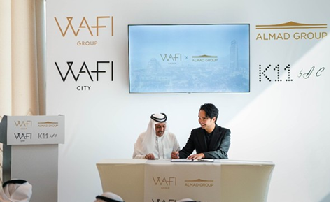
A Hong Kong-based Chinese conglomerate and a Dubai-based real estate giant signed a strategic partnership to expand their cultural and commercial footprints in the Middle East market.

 Almad Group and Wafi Group entered into the agreement on Dec 11 in Hong Kong to create a cross-cultural business hub and usher in an epoch-making collaboration paradigm.

 Dr Adrian Cheng, founder and executive chairman of K11 by AC of Almad Group, said,”This collaboration at Wafi City sets a new benchmark for cross-regional retail cooperation, as we connect the consumers and rich cultural industries of the Middle East and Chinese-speaking markets.”

 “We are confident that the Chinese consumer brands, top-tier IP innovations, and the Gentry Club experience we bring will serve the rapidly growing retail market and young demographics well,” said Cheng, who graduated from Harvard University in 2003.

 It has been learned that Almad Group incorporates K11 by AC and oversees Victoria Dockside, a $2.6 billion art and cultural district in Hong Kong featuring K11 Musea. In addition, its anime IP business, Experience 11, has grown in the Chinese mainland and the Middle East, while the Gentry Club, a private members’ concept centered on artisanal lifestyle, is being scaled.

 Meanwhile, for over five decades, the Wafi Group has served as a cornerstone in the commercial landscape of the United Arab Emirates, with operations spanning real estate, hotel services, retail, transportation, and industry. Its flagship project, Wafi City, Dubai’s earliest integrated lifestyle shopping destination, opened in 1991. The Wafi City Mall is one of the oldest and largest shopping malls in Dubai, boasting over 1.1 million square feet of gross leasable area and 1.6 million square feet of gross floor area.

 Sheikh Mana bin Khalifa Al Maktoum, founder and chairman of Wafi Group, said, “The joint collaborations with Almad Group and K11 by AC reflect our continued commitment to shaping the future of retail and lifestyle in the region. Together, we aim to introduce experiences and brands that will not only elevate Wafi City but also strengthen the cultural and commercial bridge between the Middle East and China.”

 It has been learned that this collaboration comes at a crucial time when the friendly relations between the UAE and China are increasing.

 According to data from the Dubai department of economy and tourism, Dubai received around 824,000 Chinese tourists in 2024, an increase of about 31 percent compared to the previous year, indicating that Chinese visitors continue to drive strong growth in the leisure and business markets.

This strategic cooperation will encompass multiple elements, including the establishment of a new business entity, Wafi Anime 11, to seize the growing development opportunities in the animation retail and entertainment industry globally and locally in the UAE; creating rich cultural and entertainment projects and IP-exclusive activities for locals and tourists; and establishing leasing cooperation for Hong Kong and the Chinese mainland brands.

 Both parties will also launch tourism incentive strategies for Hong Kong and the Chinese mainland tourists, guiding them to stay at world-class hotels such as Sofitel Dubai The Obelisk and Raffles Dubai, while deeply exploring the comprehensive and exciting experiences in Wafi City. In addition, Gentry Club will be included in this cooperation expansion to the Middle East and North Africa.

 “Our team has been studying the Middle East market since 2024 and is well aware of its immense development potential,” said Richard Cheung, Group CEO of K11 by AC, noting that “In the first phase of cooperation, our group will introduce several top brands representing the essence of Chinese culture to settle in by 2026.”

 It has been learned that following the signing ceremony, the joint venture business entity will enter into the formal preparation stage.


Article inline ad

HK IPO Mkt To Sustain Momentum

0

Tech, biotech firms opting to list in city, drawn by supportive policies

By OSWALD CHAN in Hong Kong | CHINA DAILY | Updated: 2025-12-13

The Hong Kong initial public offerings market is expected to sustain its robust fundraising activity next year, supported by a strong IPO pipeline, A+H listings and the attractive valuation of the Hong Kong equity market, according to financial and accounting specialists.

 Global auditing advisory firm KPMG said Hong Kong has reclaimed the top spot in global IPO market rankings in 2025, a first since 2019.

 “We are witnessing a steady influx of technology and biotech firms opting to list in Hong Kong, drawn by the city’s supportive policies and stable regulatory environment,” said Louis Lau, a partner and the head of Hong Kong Capital Markets Group at KPMG China. “As policies continue to promote innovation and new economy sectors, we expect 2026 to be a pivotal year for high-tech listings, further solidifying Hong Kong’s position as a global capital markets leader.”

 As of November, the Hong Kong IPO market raised HK$259 billion ($33.2 billion), surging 228 percent year-on-year, supported by 93 new company listings this year, according to data released by the Hong Kong Special Administrative Region government.

 The IPO market bonanza has been attributed to several megasized A+H listings, which accounted for half of the total IPO funds raised. Among these, mainland-based Contemporary Amperex Technology Co — the world’s largest EV battery manufacturer — raised HK$41 billion through A+H listings, making it the largest IPO globally so far this year.

 The IPO pipeline is also promising, with over 300 companies preparing to list — the highest on record — of which more than 40 percent are from the technology sector. Beyond IPOs, Hong Kong is also ranked among the top three exchanges globally for follow-on issuances, raising over $85 billion as of November.

 Since 2018, the SAR has made numerous reforms in its listing rules to attract new economy and technology enterprises to list their shares in Hong Kong. The government said it is currently reviewing the listing regime, covering requirements for primary, secondary, and dual listings, as well as post-listing obligations.

 Billy Mak, an associate professor at Hong Kong Baptist University’s department of accountancy, economics and finance, said mainland companies from the artificial intelligence, electric car and biotech sectors are expected to be the major A +H listing candidates next year.

 “These companies rely on overseas markets for international expansion. As an international fundraising platform, listings in Hong Kong enable these mainland companies to obtain capital, and these funds can be converted into other currencies without restriction, helping companies to make overseas direct investments,” Mak said.

 CPA Australia — a global professional accounting body — expects the Hong Kong IPO market to raise as much as HK$300 billion in 2026, boosted by the low valuation level of the equity market and the issuance size increase due to the falling trend of US interest rates.

 “Attracting more global family offices into Hong Kong to increase market liquidity, and strengthening collaboration with the Chinese mainland and other overseas markets to streamline the company listing process in Hong Kong, are also welcome,” CPA Australia’s Kelvin Leung said.

 oswald@chinadailyhk.com

Article inline ad

Strengthened Resilience Key For Economy

0

Boosting domestic demand top priority as nation gears up for 15th Five-Year Plan

By Zhou Lanxu, Wang Keju and Liu Zhihua | chinadaily.com.cn | Updated: 2025-12-13

China’s sharpened emphasis on building a strong domestic market underscores the country’s long-term resolve to bolster economic resilience and development security amid external challenges as it gears up for the 15th Five-Year Plan (2026-30), economists and policy advisers said.

 The Central Economic Work Conference, they said, has signaled potential new measures to strengthen domestic demand in the year ahead — including heightening emphasis on stabilizing the economic trajectory, markedly raising investment in people-centered sectors such as education and healthcare, as well as making greater use of capital market reforms and State-owned assets to boost household incomes.

 The tone-setting conference concluded on Thursday, at which Xi Jinping, general secretary of the Communist Party of China Central Committee, delivered an important speech. The conference stressed that domestic demand will remain as a focus in building a robust domestic market.

 This year’s focus on domestic demand builds on the consistent guidance laid out by Xi. At last year’s Central Economic Work Conference, Xi pointed out that expanding domestic demand is crucial for not only economic stability but also economic security — it’s not a temporary measure, but a strategic move.

 Xi called for accelerating efforts to address weaknesses in domestic demand, especially consumption, to make domestic demand the main driving force and stabilizing anchor for economic growth.

 Experts said the consistent emphasis on domestic demand reflects the top leadership’s accelerated push to shift toward a consumption-led growth model that is reliable and durable as China’s economic size expands, while external trade conditions become increasingly challenging.

 Justin Yifu Lin, dean of the Institute of New Structural Economics at Peking University, told China Daily that he expects the central government to tackle local protectionism and enhance factor mobility to accelerate the establishment of a unified national market in 2026, while furthering targeted support for culture, tourism, education and sports-related spending — all to bolster consumption and expand demand.

 “These efforts will help address short-term challenges and lay the groundwork for long-term development,” Lin said.

 He added that the current weakness in consumer confidence remains largely a short-term difficulty shaped by the global economic slowdown, excess capacity in certain sectors and limited support from the stock market for household wealth.

 The country’s leadership, at the Central Economic Work Conference, has stressed responding to external challenges by strengthening internal capabilities, recognizing that the impact of changes in the external environment has deepened.

 Finance Minister Lan Fo’an said the continuation of a “more proactive” fiscal stance in 2026, set by the conference, represents a major decision to address external shocks as well as internal risks and challenges.

 Pointing to the challenges of lukewarm consumer demand and investment momentum, the total retail sales of consumer goods grew 2.9 percent year-on-year in October, marking the fifth consecutive month of deceleration, while the country’s fixed-asset investment dropped by 1.7 percent in the first 10 months, data from the National Bureau of Statistics showed.

 Vowing to maintain policy strength and consistency, Lan told Xinhua News Agency that efforts must be made by combining investments in physical infrastructure and human capital.

 Luo Zhiheng, chief economist at Yuekai Securities, said China’s fiscal resources are likely to shift toward a more balanced structure — “from prioritizing investment to giving equal weight to investment and consumption, from prioritizing supply to giving equal weight to supply and demand, and from prioritizing enterprises to giving equal weight to enterprises and households”.

 Reforms in income distribution and the social security system may also be accelerated, Luo said, as the conference called for formulating and implementing urban-rural income growth plans.

 Zhang Xiangchen, deputy director-general of the World Trade Organization, said China, as the world’s second-largest economy, is not only opening its door even wider but also leveraging its own vast domestic market as a new engine for shared global prosperity.

 “The ‘Shopping in China’ initiative — aimed at boosting inbound consumption and enhancing China’s appeal as a world-class consumption and lifestyle hub — reflects the growing global appeal of Chinese products and attractions, and the maturity of its consumer market,” said Jeroen Sterel, director of the Asia-Pacific region at German heating system manufacturer Vaillant Group.

 Ouyang Shijia contributed to this story.

 Contact the writers at zhoulanxv@chinadaily.com.cn

Article inline ad

Insurance Policy For Humanoid Robots

0

By CHEN MEILING in Beijing and LIU KUN in Wuhan | China Daily | Updated: 2025-12-12

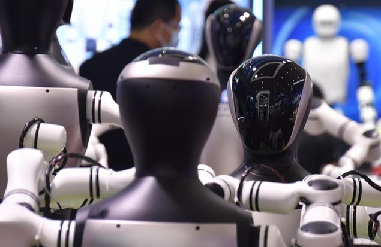
As humanoid robots go from laboratories to factory floors, hospitals, shopping malls and homes, a key question emerges: what if they are damaged or damage others?

 In November, Huazhong University of Science and Technology Business Incubator purchased insurance for two 60-kilogram humanoid robots, at a premium of about 5,000 yuan ($707) per robot. If damage occurs within one year, the business incubator will receive a maximum compensation of 500,000 yuan.

 This was the first insurance policy for embodied intelligent robots in Hubei province.

 The robots will be open for use among university and small and medium-sized enterprises, so frequent testing will raise the risk of falls and collisions, leading to possible damage to the robots and others, according to Zheng Jun, chairman and general manager of Huazhong University of Science and Technology Business Incubator.

 “SMEs often cannot afford a robot, and companies who own one may hesitate to use such an expensive machine. Insurance gives developers confidence and can significantly increase usage rates,” he said.

 The policy covers both physical damage insurance and third-party liability insurance for embodied robots. The former mainly provides coverage for equipment damage caused by natural disasters, fire and explosion, accidental collision, overturning and falling, electrical failures, cybersecurity incidents, abnormal operations and other reasons, according to PICC Property and Casualty Co Ltd’s local branch.

 The latter offers compensation and dispute resolution services for personal injury or property damage that the robot may cause to third parties during its operation, the company said.

 Humanoid robots, like humans, can fall, get injured or even break down. However, the cost of onetime maintenance can range from 30,000 yuan to as much as 300,000 yuan. So the company customized this insurance plan based on research into the needs of enterprises, said She Zhilong, its client manager. “It’s just as important as buying medical insurance for humans,” he said.

 He added many robotics companies have learned about this insurance and are actively in negotiations with the company. “Coverage may be expanded to more application scenarios by expanding insurance liability and liability limits,” he said.

 Since September, leading insurance companies such as PICC Property and Casualty Co Ltd and China Pacific Property Insurance Co Ltd have put forward related products.

 For example, China Pacific Property Insurance released China’s first dedicated insurance for the commercial application of humanoid robots in September that covers the whole chain of production, sales, leasing and usage. Ping An Property and Casualty Insurance Co of China rolled out a comprehensive financial solution in November that integrates insurance with credit and IPO services.

 “Humanoid robot insurance is not just a risk-transfer tool. It is a ‘catalyst’ for industrial innovation and a ‘stabilizer’ for widespread adoption,” said Zhou Hua, dean of the School of Insurance at the Central University of Finance and Economics.

 Whether manufacturers use insurance as a trust endorsement to enhance market competitiveness or end-users rely on it to resolve concerns over “who is responsible for injuries caused by million-yuan equipment”, insurance has become a critical link in overcoming the “last mile” of market adoption, he said.

 The risks posed by humanoid robots are complex, including hacking attacks and data breaches, and even ethical liability (algorithmic discrimination). “As robots become deeply integrated into human society, traditional insurance clauses struggle to cover the emerging risks arising from their autonomous decisionmaking capabilities. Therefore, insuring humanoid robots means far more than covering damages to a single machine. It is about building the foundational risk infrastructure for an imminent intelligent society where humans and robots coexist,” he said.

 However, currently public awareness is limited, and market penetration remains low, as users still question whether the coverage scope is compatible with their needs, and lack the basis for judging the rationality of premium rates, he said.

 Wang Guojun, a professor at the School of Insurance and Economics of the University of International Business and Economics, said that a key challenge in developing humanoid robot insurance lies in pricing due to a lack of critical information, such as accident frequency, loss distribution and repair cost schedules. He anticipates that with the establishment of data-sharing platforms and dynamic pricing mechanisms, the insurance market will expand rapidly.

 Liu Xueru contributed to this story.

Article inline ad