Wednesday, November 25, 2026

Home Blog Page 123

Long-Term Prospects Underlined For A Shares

0

Positive outlook backed by tech advance, resilient economy

By SHI JING in Shanghai | China Daily | Updated: 2025-12-17

Short-term corrections in the Chinese stock market will not impair the positive outlook for A shares, which is supported by the country’s continued technology upgrades and economic recovery, experts said.

 Their comments were made on Tuesday, when the A-share market dipped. The benchmark Shanghai Composite Index shed 1.11 percent and the Shenzhen Component Index was down by 1.51 percent. The tech-heavy ChiNext in Shenzhen closed 2.1 percent lower.

 The slump in overseas markets has exerted downward pressure on the A-share market, as explained by bourse watchers. The S&P 500 dipped 0.16 percent on Monday while the Nasdaq declined 0.59 percent. This could be largely attributable to the plunge of artificial intelligence infrastructure companies trading on US bourses. AI cloud computing company Core-Weave plunged 8 percent while semiconductor giant Broadcom dropped over 5 percent.

 As a result, Asian markets were generally dragged down on Tuesday. Hong Kong’s Hang Seng Index dropped 1.56 percent while South Korea’s KOSPI was down 2.24 percent and Japan’s Nikkei 225 contracted 1.56 percent. Market expectations of Japan’s central bank to raise interest rates and sell its exchange-traded fund (ETF) holdings have also weighed on Asian stock markets, according to industry mavens.

 Investors should not be distracted or discouraged by the short-term fluctuations, as opportunities are lying in the long-term slow bull run taking shape in the A-share market, which is driven by China’s economic transformation, said Yang Delong, chief economist of First Seafront Fund.

 According to a recent meeting of the China Securities Regulatory Commission, efforts should be made to enhance the market’s inherent stability while improving its inclusiveness and attractiveness. Apart from better interpreting policies and guiding market expectations, efforts should also be made to promptly address market concerns and help institutions and listed companies better manage their reputation, according to the regulator’s meeting.

 Semiconductors, computing, algorithms, humanoid robots and new energy vehicles have shown notable growth this year, showing that high-end manufacturing and tech innovation have become important engines of economic growth, as well as capital market performance, said Yang.

 The recommendations for formulating the 15th Five-Year Plan (2026-30) released in October have stressed that emerging industries and future-oriented sectors will mark a major development trajectory in China in the coming years. These areas are likely to nurture new growth engines of profit, pointing to investment opportunities, added Yang.

 The soaring price of Chinese graphics processing unit maker Moore Threads may serve as a good example. Debuting on the STAR Market in Shanghai on Dec 5 with an issue price of 114.28 yuan ($16.23) per share, the company quickly saw its price peak at 941.08 yuan on Dec 11.

 With the listing of another Chinese GPU company MetaX scheduled for Wednesday, China’s GPU sector will seek industrialization more rapidly, said experts from Kaiyuan Securities. This is conducive to the security and self-control of China’s high-end chips and AI computing power, they said.

 Robert Li, multi-asset strategist at investment firm Barings’ macroeconomic and thematic research team, said that the rising appeal of China assets is the result of the institutional breakthroughs made within various industries in China. The surge of DeepSeek has demonstrated China’s competitiveness in cost control and inclusiveness. Barings has thus increased its exposure to Chinese tech stocks within its global portfolios.

 As long as China sticks to long-term investment and advances reforms steadily, the investment value of Chinese assets will be especially noticeable, Li said.

 Ming Ming, chief economist of CITIC Securities, said that the trend of a weaker US dollar and a stronger renminbi will continue in 2026. As China’s economic growth stabilizes, foreign investors are showing increasing inclination toward Chinese assets.

 Regarding concerns over “overheating” in emerging tech sectors such as AI, experts from Industrial Securities said it is still too early to draw such conclusions. Strong fundamentals have supported the performance of these sectors. But investors should keep an eye on whether these technologies can successfully seek commercialization, they said.

 shijing@chinadaily.com.cn

Article inline ad

Workforce Rides AI Wave As New Roles Emerge

0

Fast-moving technology pushes employees toward more creative, high-value jobs

By Hou Chenchen | China Daily | Updated: 2025-12-16    

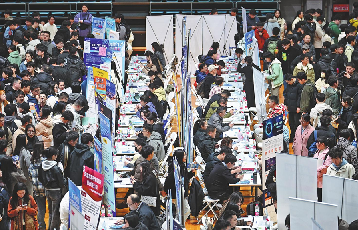
Hua Yilian, a 28-year-old based in Beijing, witnessed the full force of technology’s impact on the employment market after securing a job in the AI industry in 2024.

 As a business developer at a large model company, she had overseen the launch of an artificial intelligence translation system. But the celebration ended almost instantly. A language expert who had worked beside her day after day to train the system was laid off the moment it went live.

 “I understand it will happen that AI will take over many jobs. But it’s a shock when you experience it yourself. You see a dedicated and meticulous colleague you’ve spent every day with suddenly become a victim of the very project they helped to succeed,” Hua said.

 Her experience reflects the sharp edges of China’s shifting AI job market — tremendous opportunity on one side, and the rapid erosion of traditional roles on the other. Many workers are anxious to find their place in the changing job landscape, yet what is emerging holds both promise and uncertainty.

 According to a report by consulting firm McKinsey&Company, China will need up to 6 million AI professionals by 2030, but the domestic talent pool is projected to fill only about a third of those roles — leaving a shortfall of roughly 4 million workers.

 Data from the Chinese recruitment platform Zhaopin highlights this growing demand. During the first three quarters of 2025, AI job postings on the site rose 3 percent year-on-year, while applicant numbers surged 39 percent.

 Globally, the transformation is even more sweeping.

 The International Labour Organization warned in May that a quarter of the world’s jobs could be affected by generative AI. Meanwhile, the World Economic Forum’s Future of Jobs Report 2025 estimates that 22 percent of roles will be reshaped — with 170 million new positions created and 92 million eliminated, resulting in a net gain of 78 million jobs.

Peking University researchers found jobs such as accountants, editors and junior programmers faced higher exposure to automation, while many blue-collar jobs were less affected. “AI excels at repetitive, rules-based tasks,” researcher Zhang Dandan said. “Mid-skill jobs are most vulnerable.”

 As the AI wave accelerates, many young people are asking the question: if AI is rewriting the future, how do I position myself to thrive?

 Lin Xiao, a social sciences graduate from Tsinghua University, represents another case in point. After two career shifts — from the civil service to international education — she joined an AI startup in March. Like Hua, her decisions were straightforward, aimed at ensuring she was positioned for the next wave of opportunity.

 While still a student, Lin interned at an autonomous driving company where she enjoyed the tech-focused marketing work. After leaving her position at the end of 2024, she entered the AI recruitment boom now underway in China. “I wanted a dynamic role where I could keep learning and connect with more people,” Lin said.

 At her new company, she manages everything from social media, content, and community operations to key opinion leader, or KOL, collaborations, while also coordinating with product teams on strategy and improvements.

 For Lin, technology represents “the core force changing the world in this era”. Working in AI keeps her at the forefront of that change — a continuous learning experience that is shaping both her career and her outlook.

 Neither Hua nor Lin comes from a STEM (science, technology, engineering and mathematics) background, yet both have carved out critical roles in China’s fast-moving AI landscape.

 Hua said sales and marketing teams serve as the “front line” of AI, translating complex technical capabilities into tangible value for customers. She spends her days explaining AI solutions to enterprises, while Lin identifies early adopters for her startup’s products across global markets.

 Their hybrid skill sets — combining technical literacy, product insight, market strategy and cross-team communication — are increasingly prized as AI moves from research labs into real-world applications, industry insiders said.

Every applied AI scenario — from medical imaging to personalized learning systems — depends on turning “technical potential” into commercially viable products, according to Zhaopin. Among these front-line roles, AI product managers are among the most sought-after, with an average of 68 applicants for each opening.

 Wan Wan, an HR manager at a Chengdu-based AI startup in Sichuan province who asked for anonymity, said the company prioritizes hands-on experience. “We don’t work on the programming of the model, but on model applications,” she said. “We look for candidates with experience in prompt engineering and intelligent agents, especially if they’ve used them in projects or coursework.”

 Her company receives roughly 800 resumes for each position, with about 80 percent from experienced backgrounds and 20 percent from campuses or interns.

 In contrast, the “second-line” roles — algorithm engineers and model researchers — form the technical backbone of the industry. According to a report from Wise Talent Information Technology, 47 percent of such postings require a master’s degree or above.

 Chen Xiaobao, a large-model algorithm engineer at a leading tech firm, describes hiring as intensely selective. Candidates must fit the team’s research direction, and more than half of his colleagues hold doctorates. Minimum qualifications often include a master’s degree from top institutions such as the University of Chinese Academy of Sciences.

 As AI undergraduate programs were only introduced in 2019, most professionals in these roles come from related fields, including computer science, software engineering, electronics and mechanical engineering.

 “Employers focus on relevant technical ability,” the report noted. “Algorithms are central, involving mathematics, statistics and computer science. Deep learning demands expertise in neural networks and programming skills.”

 As product and engineering teams build the AI tools of tomorrow, another vital workforce is teaching them how to think. Often called AI trainers or data labelers, their task is not to code, but to educate — turning raw data into algorithmic understanding.

Just five years ago, much of this labeling work was outsourced to teams in smaller cities or rural areas, where workers tagged basic elements in vast image datasets such as cars, traffic lights, and street signs, which required less experience. But as AI models have grown more capable, they can now generate and refine some of their own data, reducing the need for humans to do the routine tasks.

 “The competition is no longer about who has the most data, but who has the best data,” explained Chen. “The real advantage now lies in high-quality, domain-specific information.”

 As a result, companies are shifting their focus. “More firms are now hiring trainers with professional expertise,” Chen said. “Only carefully curated, expertly labeled data can make AI truly reliable in specialized fields — like medicine, law, or finance.”

 Cui Xian, 23, a finance graduate based in Shenzhen, Guangdong province, now works as an “AI data annotation specialist” at a major tech company. His role is to train AI to reason like a subject matter expert.

 “I present it with complex questions it can’t yet answer, then evaluate and guide its responses,” he said.

 “In a way, I’m not just feeding it data — I’m teaching it how to think through problems, understand concepts, and arrive at better solutions.”

 Yet Cui sees this work as a starting point, not a career. “The day the AI ‘graduates’ from your training could be the day your job disappears,” he said. “The real skill isn’t just teaching AI — it’s learning how to use AI to elevate your own work.”

 He has since left the role to pursue a graduate degree, aiming to move into AI product management.

 “Training AI taught me how the industry thinks,” Cui said. “The true value isn’t in teaching the machine — it’s in learning to work alongside it.”

 As more workers engage with AI, many are discovering its potential not just as a tool but as a catalyst for personal growth — unlocking possibilities that once felt out of reach. Yan Qing, a 40-year-old Android developer, now runs his own AI-generated-content social media account, fueled by that same sense of possibility.

 He recalls generating his first AI image in 2022 — a lighthouse by the sea. The rendering took more than 20 minutes. Yet the slow pace revealed something profound: a glimpse of a technology capable of reshaping creativity and efficiency. “It felt like witnessing a technological leap in history,” he said.

 As the technology matured, image-generation times shrank from minutes to seconds, producing crisp, high-quality results — a shift that helped Yan build and grow his platform.

 Today, he sees himself as a “functional node” in an increasingly digitized world, curating and sharing new tools and techniques with a growing community of creators.

 With AI agents spreading across industries, the idea of a “one-person unicorn” is edging closer to reality.

 Zeng Ming, former chief strategy officer of Alibaba Group, has predicted that intelligent organizations — no more than 100 core employees with their abilities magnified by AI — could become mainstream within a decade. Management in such firms, he said, will shift from “people managing people” to “founders managing AI agents”.

 With AI support, small teams or even individuals can now carry out complex projects, said Lin, the marketer. “One developer plus several AI agents can handle product design, content creation and promotion — closing the loop from idea to execution,” she said. That allows people to focus on exploration rather than repetition.

 For Lin, an individual’s mindset is what matters most. She suggested always asking how AI can help, whether in building mini-apps, making videos or even everyday tasks like cooking. Such habits can prepare people not only for entrepreneurship but for an era of greater personal freedom, she said.

 Yan said: “There’s no escaping this wave. Only by diving in can you learn its limits and potential. Even without a formal job, you can build experience through projects — laying the groundwork for what’s next.”

 Chen, the algorithm engineer, sees AI as a foundational productivity tool — much like the steam engine. “AI is not only a job taker but also a job creator,” Chen said.

 Short-term disruption is inevitable, he said, but history shows that technological leaps ultimately create more jobs and more specialized forms of work. The real question, he added, is whether society can respond with openness and initiative.

 China’s education system is already adjusting. In 2024 alone, more than a dozen major institutions — including Tsinghua University, Harbin Institute of Technology, the University of Science and Technology of China and Wuhan University — have created or restructured AI schools.

 More than 70 universities nationwide now host dedicated AI colleges, highlighting the rapid expansion of China’s AI education landscape.

 Yan believes AI will take over vast amounts of repetitive labor, pushing humans toward tasks once considered out of reach. “Low-quality work goes to AI. Humans must think more,” he said. “Ultimately, AI is pushing work toward creativity and higher value.”

 Zhao Ruichun contributed to this story

Article inline ad

AI Toys Offer Emotional Support To Consumers

0

By LI JIAYING | CHINA DAILY | Updated: 2025-12-15

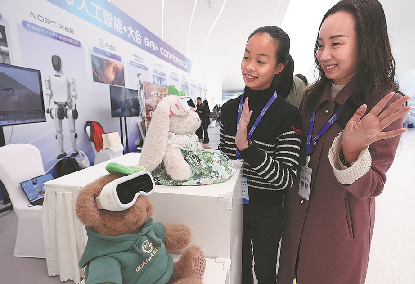
Eager to tap into a huge potential customer base, industry players are accelerating their push into the artificial intelligence-driven toys market, hoping to unlock new growth as supportive policies inject fresh momentum into the sector.

 Experts and business leaders noted that AI toys, created to provide emotional support and companionship, are well-positioned to spark the next wave of consumer trends by using advanced technologies to foster emotional connections with consumers.

 “Young consumers are increasingly paying for emotional value, and AI companionship is emerging as a key early-use case,” said Sun Zhaozhi, founder and CEO of Shanghai-based AI-driven toy startup Robopoet.

 “This is attracting more companies, including major firms, into the field,” Sun said.

 According to data from the Ministry of Industry and Information Technology, China’s AI toy market was valued at 24.6 billion yuan ($3.49 billion) in 2024, and is expected to be worth 29 billion yuan this year.

 The growth momentum is backed by an action plan released by the Ministry of Industry and Information Technology, the National Development and Reform Commission, the Ministry of Commerce, the Ministry of Culture and Tourism, the People’s Bank of China and the State Administration for Market Regulation last month, where collectible toys were listed as a priority support consumption category for the first time, making it one of 10 consumer segments targeted to exceed the 100 billion yuan mark by 2027.

 “The deep integration of AI with traditional toy manufacturing is reshaping product forms and value chains, making AI toys a new engine for high-quality industrial development,” said He Yaqiong, head of the consumer products industry department at the Ministry of Industry and Information Technology.

 Priced at 399 yuan, Robopoet’s flagship AI plush toy Fuzozo, which talks to and makes eye contact with users, sold over 1,000 units in the first 10 minutes of the “618” shopping festival presale and ranked No 1 in AI toy sales on both JD and Tmall during this year’s Double 11 shopping festival, Sun said.

 The senior executive added that the product has sold about 100,000 units so far this year and targets 1 million next year, aiming for 400-500 million yuan in gross merchandise value.

 As consumer demand grows more diverse, more companies are shifting their focus toward AI-powered pet companions.

 “Unlike typical robots designed to serve humans, our product simulates a live pet that needs care. The process of caring offers users a sense of healing, helping them to cope with anxiety and loneliness,” said He Jiabin, co-founder and CEO of AI robot pet manufacturer Ropet.

 He added that AI-powered robot pets better suit the lifestyles of young people today, as challenges such as allergies, time constraints and a training process are not present.

 Supported by an emotional large language model and behavioral learning, Ropet can continuously adapt to users’ habits and gradually develop distinctive traits, allowing it to interact more like a personalized pet, the executive said.

 Following its domestic debut on JD in late October, the AI pet product quickly made its way into the platform’s top three ranking in the robot category by sales volume during the Double 11 shopping festival.

 “Our business logic is straightforward: first create an appealing hardware product, then use high usage rates to accumulate behavioral data, and finally leverage this data to deliver true intelligence,” He said.

 As domestic momentum builds, Chinese AI toys are also finding strong traction abroad.

 In 2024, China’s domestic toy retail market was worth 97.85 billion yuan, up 25.5 percent from 2020, while toy exports totaled $39.87 billion, rising 19.1 percent from 2020, Ministry of Industry and Information Technology said.

 “Consumers in the United States and Europe have shown high acceptance of AI robots with visual understanding and personalized interaction. Many describe our products as ‘little desktop creatures’, ‘AI pets’ or an ’emotional charging station’,” said Yi Qi, marketing manager at Shenzhen-based AI hardware company TangibleFuture.

 The company’s LOOI Robot, priced at around $150, differs from typical companion robots with its phone-dock form factor. Once a smartphone is placed on it, the device activates intelligent interaction and obstacle detection functions.

 Since mass production began in November 2024, more than 10,000 units have been shipped, with 90 percent sold overseas. The product even received a social media endorsement from Tesla CEO Elon Musk.

 “Boasting the world’s most complete toy industry chain, strong manufacturing capabilities and a highly skilled labor force, China is now able to offer more high-quality and well-priced toys to global consumers,” said He Yaqiong, from the Ministry of Industry and Information Technology.


Article inline ad

HVAC Design Contest Highlights Low-Carbon Innovation In China

0

By Zhang Chenxu | China Daily | Updated: 2025-12-16

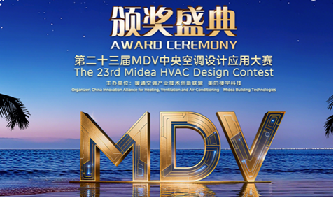
Amid the global push for greener, low-carbon development, the 23rd Midea International Heating, Ventilation and Air Conditioning (HVAC) Design Contest recently concluded in Hainan, serving as a platform for promoting new technologies and products in central air-conditioning systems.

The contest, which aims to foster industry-wide progress, was co-organized by the China Innovation Alliance for Heating, Ventilation and Air-Conditioning (CAHVAC) and Midea Building Technologies (MBT), a business unit of Chinese home appliance maker Midea Group.

Xu Wei, a chief expert at the China Academy of Building Research (CABR), said building operations account for about 22 percent of China’s total carbon emissions, while HVAC systems consume roughly 60 percent of that energy, making HVAC systems a key focus for carbon reduction.

“The contest has significantly improved the energy efficiency of chiller plants, and the results have been incorporated into standards and technical guidelines for high-efficiency equipment rooms,” he said.

Meanwhile, this year’s contest saw a broader range of project types, with entries expanding beyond traditional commercial buildings to include data centers, rail transit, biopharmaceuticals and precision manufacturing, said Zhao Xuyuan, marketing director of MBT’s Sales Company in China.

“The industry is moving beyond creating comfortable environments to supporting industrial precision and digital infrastructure, which requires deeper integration with the real economy,” Zhao said.

Additionally, this year’s contest introduced the “Overseas Expansion Award” for the first time. Industry insiders said the move signals a broader shift in China’s HVAC industry from exporting standalone products to offering integrated design and system solutions in overseas markets.

However, the shift also brings new challenges alongside opportunities. Li Xianting, a professor at at Tsinghua University’s School of Architecture, said the core challenge lies in standards, as most overseas projects adhere to European or US standards, with Chinese standards seldom applied.

“Going global is not just about technology. It also calls for strong cross-cultural communication and familiarity with international standards. Companies should seek internationally recognized certifications and develop climate-adaptive solutions that integrate renewable energy more effectively,” Li added.

Article inline ad

Innovation To Give Edge In Frontier Sectors

0

Experts say new policies will strengthen fundamental research

By Fan Feifei | China Daily | Updated: 2025-12-16

China’s resolve to promote innovation-driven development to accelerate the cultivation of new growth drivers is expected to help the country gain an edge in strategic emerging fields and tech frontiers, and boost the nation’s long-term competitiveness globally amid external uncertainties, said experts, economists and company executives.

 Highlighting the pivotal role of sci-tech innovation in driving industrial upgrades and nurturing new quality productive forces, they said future policies will attach greater importance to strengthening fundamental research, achieving breakthroughs in core technologies in key fields and promoting industrial application of innovative achievements.

 Their comments came as the Central Economic Work Conference, which concluded on Thursday, stressed the need to enhance innovation-driven development to cultivate fresh growth drivers. Major international technological innovation centers will be established in Beijing, Shanghai and the Guangdong-Hong Kong-Macao Greater Bay Area.

 The country will work to improve systems of intellectual property protection in emerging areas, and launch the new round of a campaign to bolster the high-quality development of the industrial chain in key sectors, according to the conference. Efforts will also be made to advance the “AI Plus” initiative and improve artificial intelligence governance.

 The innovation-driven development strategy is the core engine for the construction of a modern economic system, while a series of policy measures outlined at the tone-setting meeting will bolster the deeper integration of technological innovation and industrial innovation and inject strong momentum into high-quality economic growth, said Li Yiming, deputy head of future industry research at the China Center for information industry Development.

 Li said the conference places an emphasis on “reinforcing the dominant position of enterprises in innovation”, which is conducive to strengthening original innovation capacities and speeding up the commercialization of technological achievements, as well as enhancing the overall efficiency of the national innovation system.

 Zhu Keli, founding director of the China institute of new Economy, said China has sent a clear signal that it gives more priority to the adoption of technologies in a wide range of sectors through concrete policy tools in 2026 to facilitate a shift from old growth drivers to new ones.

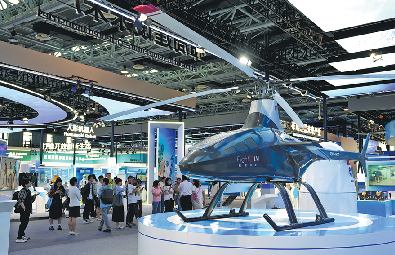
 Zhu cited the low-altitude economy as an example, saying that more focus will be put on the commercial applications of drones in logistics, urban transportation and tourism next year. “Moreover, the deep integration of AI and manufacturing not only improves productivity, but also gives rise to new models such as smart factories and flexible manufacturing,” Zhu said.

 “Technological innovation is becoming a key driving force in boosting productivity, improving supply capacity and unlocking economic growth potential,” said Wang Qing, chief macroeconomic analyst at Golden Credit Rating international.

 Wang said fiscal and financial resources will be further concentrated on technological innovation and the transformation and upgrading of the manufacturing sector.

 “Fiscal spending on science and technology, medium and long-term loans for manufacturing, and the issuance of sci-tech innovation bonds will maintain rapid growth next year, and these will also be major areas of focus for expanding effective investment,” Wang added.

 The country’s strength in sci-tech innovation has taken a major leap in recent years. China has risen to the 10th position in the global innovation ranking for 2025, up one spot from the previous year, marking its first entry into the top 10, according to the World intellectual Property Organization.

 Zhang Jun, chief economist at China Galaxy Securities, said it is vital to accelerate the building of a modern industrial system and the cultivation of new growth drivers during the 15th Five-year Plan (2026-30) period.

 Zhang also called for efforts to develop strategic emerging industries such as new energy, new materials, aerospace and the low-altitude economy.

 Zhou Hongyi, founder of Chinese tech enterprise 360 Security Group, said the just-concluded high-profile conference has boosted the company’s confidence, highlighting that the development of new quality productive forces hinges on technological innovation.

 Zhou noted that the conference’s emphasis on advancing the “AI Plus” initiative signifies that AI shouldn’t be confined to research labs, and it must be applied in industrial scenarios. “Currently, AI is moving from a phase of technological breakthroughs to a critical stage of deployment,” he said, adding security risks appear when people embrace the opportunities brought by AI.

Article inline ad

Restructured, Diversified Framework Spurs Trade

0

Jan-Nov exports increase 6.2 percent to $3.47 trillion, bringing surplus to $1.08 trillion

By Zhong Nan | China Daily | Updated: 2025-12-16

China’s $1.08 trillion record foreign trade surplus in the first 11 months underscores its integral role in global production networks, a contribution that market watchers and business executives said has consistently lowered worldwide manufacturing costs and cushioned inflationary pressures across many economies.

 While some foreign media outlets have raised concerns over trade imbalances amid China’s substantial surplus, trade scholars emphasized that the figure stems from global supply-chain specialization and poses no threat to the world economy.

 China’s exports rose 6.2 percent year-on-year to 24.46 trillion yuan ($3.47 trillion) between January and November, while imports grew by just 0.2 percent to 16.75 trillion yuan, said the General Administration of Customs.

 Wan Zhe, a professor specializing in regional economic development at Beijing Normal University, said this is not a zero-sum game. The surplus reflects the inherent structure of today’s globalized production, a system that reduces costs for consumers worldwide while delivering consistent price stability.

 “The idea that buying something means losing out doesn’t hold up in any market,” said Wan, adding that the essence of trade lies in mutual benefit and win-win outcomes — an effective market cannot operate otherwise.

 Similar views were shared by Zhang Monan, a researcher at the China Center for International Economic Exchanges in Beijing.

 “After navigating years of global trade protectionism and friction, China has actively restructured its trade framework and pursued diversification,” Zhang said.

 Emerging markets have become key drivers of incremental growth and vital engines of expansion, such as China’s notable trade growth with the Association of Southeast Asian Nations and the European Union. This has effectively bolstered the overall resilience of the country’s foreign trade, said Zhang.

 Lili Yan Ing, secretary-general of the Paris-based International Economic Association, said that the trillion-dollar surplus is the outcome of a structural transformation in global manufacturing shaped by green technologies, advanced industrial systems and digital infrastructure. China’s rise shows that global integration remains a powerful engine of growth.

 Highlighting a structural shift up the value chain, China’s exports of mechanical and electrical products — including energy storage equipment, smartphones and semiconductors — reached 14.89 trillion yuan during the January-November period, up 8.8 percent year-on-year and accounting for 60.9 percent of the nation’s total exports.

 For many emerging economies, China’s export expansion brings both opportunities and important adjustments. Chinese electric vehicles, photovoltaic and digital manufacturing equipment offer a pathway to accelerate industrial upgrading, meet climate commitments and boost productivity, she added.

 One concrete example of this trend is Zhejiang Zhonghuan Sunter PV Technology Co Ltd. The Ningbo-based manufacturer of solar modules will add new production lines in 2026 as the global energy transition accelerates.

 Cen Tingchao, the company’s foreign trade director, said that rapid industrialization and rising energy needs in emerging markets are driving strong solar power demand, making them key to the company’s future growth.

 The firm’s export value amounted to 921 million yuan in the first 11 months, surging 44.36 percent year-on-year, said Ningbo Customs.

 As foreign enterprises with a presence in China deepen their reliance on China’s manufacturing ecosystem, the total import and export value of such companies rose 2.9 percent year-on-year to 10.91 trillion yuan in the first 10 months, accounting for 29.3 percent of the national total, according to the latest Customs data.

 In the meantime, exports of foreign-funded businesses in China rose 4 percent on a yearly basis to 5.99 trillion yuan, indicating they are also active contributors to China’s trade surplus given their deep integration into the country’s industrial chains.

 Salvatore Ruggiero, vice-president for marketing and communication at German specialty materials manufacturer Schott AG, said these facts have further highlighted the symbiotic relationship between sustained foreign investment and China’s role as a central node in global manufacturing networks.

 Schott plans to invest more than 60 million yuan to expand production capacity at its manufacturing base in Suzhou, Jiangsu province, in the coming months.

 “Currently, about 90 percent of Schott’s products made in the country are sold domestically, but the new investment will enable exports to Southeast Asia, South Korea and Japan,” said Ruggiero.


Article inline ad

Demand-Led Growth At Top Of 2026 Agenda

0

By Ren Qi | China Daily | Updated: 2025-12-16

China’s key economic meeting put “demand-led growth and building a strong domestic market” at the top of next year’s agenda, and it also called for “reasonable” growth and a solid start to the 15th Five-Year Plan (2026-30) period.

 Experts said the annual Central Economic Work Conference last week showed that there is room to cut the reserve requirement ratio and interest rates next year, with policy rates potentially lowered by 10-20 basis points, and guidance likely to stress on efficiency and proactiveness.

 Han Wenxiu, executive deputy director of the Office of the Central Committee for Financial and Economic Affairs, said that since the meeting held by the Political Bureau of the Communist Party of China Central Committee in September 2024, China has successively introduced and implemented a series of policies and measures.

 “China will in 2026 introduce and implement incremental policies in response to unfolding circumstances,” Han said.

 Li Xunlei, chief economist at Zhongtai International Finance Co, said that alongside launching major projects under the 15th Five-Year Plan, the government will step up investment in human capital.

 Furthermore, he expected more public funds for social welfare and a higher share of fiscal spending on public services.

 Ming Ming, chief economist at CITIC Securities, said policy decisions next year may place less weight on short-term stimulus and focus more on long-term planning for the 15th Five-Year Plan period. He underscored both new measures and thorough implementation of existing ones, with emphasis on coordination and delivery.

 Fiscal policy will be more proactive. The fiscal deficit ratio in 2026 may stay at around 4 percent, implying a deficit of about 6 trillion yuan ($845 billion), Ming said.

 He added that the government will “carry out special actions to boost consumption and implement urban-rural income growth programs”, signaling a demand-side push to lift households’ spending power and willingness to spend.

 He suggested that the push will come from the demand side. It aims to lift households’ spending power and willingness to spend. Supportive measures on jobs and incomes are already in place.

 Data from the Ministry of Human Resources and Social Security showed temporary cuts to unemployment insurance contributions reduced firms’ labor costs by 138.4 billion yuan, while job retention rebates totaled 19.6 billion yuan, and 16.6 billion yuan supported training and other employment measures.

 The nationwide surveyed urban jobless rate continued to fall in October. Employment among key groups such as migrant workers remained stable. The overall stability in jobs has not changed, creating favorable conditions for people’s well-being and social stability, said Fu Linghui, spokesperson for the National Bureau of Statistics.

 Singapore’s Lianhe Zaobao newspaper said in a report that China is refining its policy toolkit, while measures to stabilize jobs and the economy are highly targeted and help steady overall employment.

 This view echoes domestic policy signals and market expectations. The initial fiscal budget to be announced at the two sessions in March may be similar in size to 2025, according to Morgan Stanley’s chief China economist Xing Ziqiang.

 “Next year, the focus will include infrastructure, technological self-reliance, underground pipelines, the green transition, and AI computing centers,” Xing said.

Article inline ad

Hainan FTP Launches Intl Services Portal

0

By CHEN BOWEN in Haikou | chinadaily.com.cn | Updated: 2025-12-15

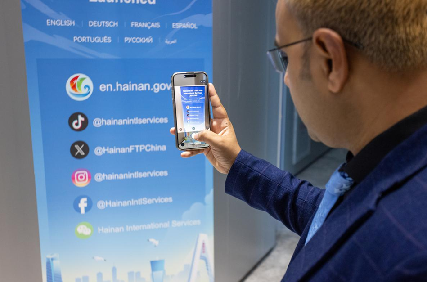
 Zeeshan Qasim Khan, a Pakistani entrepreneur, takes photos of a board listing an array of official social media accounts of the Hainan Free Trade Port International Services portal at its launch event on Monday in Haikou, Hainan province. Fu Shihong / For China Daily

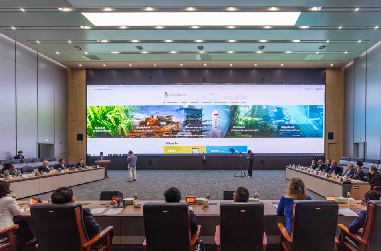
The Hainan Free Trade Port launched an international services portal on Monday, three days before the launch of its landmark island-wide special customs operations. The portal, en.hainan.gov.cn, centralizes information and streamlines services for expatriates and foreign-invested enterprises.

 The timing coincides with the island province’s push to increase accessibility as it reaches a key juncture in its development. The island-wide special customs operations, set to begin on Thursday, mark a significant phase in China’s wider opening-up policy.

 For the international community in Hainan, the portal addresses a long-standing need for consolidated, reliable information.

 “I believe it represents the culmination of the many efforts to make Hainan more accessible for foreign nationals,” said David Adrian Janke, an entrepreneur and translator from the United Kingdom. “I am glad that there is now a reliable platform that puts the breadth and depth of various aspects of living, working and doing business in Hainan at users’ fingertips.”

 The multilingual portal features seven primary sections, including Dynamic Hainan, an introduction to the island province; Do Business, serving the FTP’s goal of building a market-oriented, law-based and internationalized business environment; and Online Services. It offers 44 high-demand service categories and 95 specific international service items, each with bilingual Chinese-English guides. Services accessible through a single login range from accommodation registration, work permits and medical appointments to visa-free policy details and driving services.

 The portal was initially launched in English, German, French, Spanish, Portuguese, Russian and Arabic. It integrates 29 provincial foreign-related business systems and links directly with Hainan’s main e-governance platform, Haiyiban.

 The portal’s practical value quickly gained recognition among businesspeople. Jan Kerekes, a Slovak-Canadian working in international trade, noted a dramatic improvement in convenience. “Now, all procedures are centralized on the portal, and frequently used services such as enterprise registration and consular authentication can be completed through the portal,” he said.

 Kerekes added that easy access to updated policies and industrial park information saves a substantial amount of time and strengthens confidence for foreign investors.

 Other international users pointed to its potential for deepening business engagement. South African entrepreneur Lara Netherlands, founder of an economic consulting firm, said she hopes to use the portal to gain detailed policy insights and “facilitate clients with tailored business plans and a soft landing in the Hainan FTP”. She also anticipates efficient feedback from the portal’s online email channels.

 Zeeshan Qasim Khan, a Pakistani businessman, praised the portal. “This platform is of significant importance and is useful in our daily life. … It’s an exciting step forward in our shared vision for a more connected, responsive and inclusive future,” he said.

 The Hainan Provincial Department of Business Environment Development developed the portal in coordination with multiple provincial departments and China Daily.

 At its launch event in Haikou, Liu Weiling, deputy editor-in-chief of China Daily, said that China Daily will commit to supporting the portal’s development to set “a new benchmark for foreign-related services”.

 Local officials said the portal demonstrates China’s commitment to wider economic openness. They said it will continue to be enhanced with a user-centered approach to attract more global talent and resources to the FTP.

 chenbowen@chinadaily.com.cn

Article inline ad

A New Gateway & Media Hub For The Hainan FTP Is Coming

0

chinadaily.com.cn | Updated: 2025-12-15    

Hey! A new gateway & media hub for the Hainan FTP is coming! Stay tuned for Hainan Free Trade Port International Services!

 Now live in 7 languages, on 5 social media platforms.

 The only thing missing? You hitting FOLLOW!

 Website: en.hainan.gov.cn

 Facebook: @HainanIntlServices

 X: @HainanFTPChina

 Instagram: @hainanintlservices

 TikTok: @hainanintlservices

 WeChat official account: Hainan International Services


Article inline ad

New Portal Streamlines Services For Expatriates In Hainan

0

By CHEN BOWEN in Haikou | chinadaily.com.cn | Updated: 2025-12-15

The Hainan Free Trade Port initiated an international services portal on Monday, three days before the launch of its landmark, island-wide special customs operations. The portal, en.hainan.gov.cn, centralizes information and streamlines services for expatriates and foreign-invested enterprises.

 The timing lines up with the island province’s push to increase accessibility as it reaches a key juncture in its development. The island-wide special customs operations, set to begin on Dec 18, mark a significant phase in China’s wider opening-up policy.

For the international community in Hainan, the portal addresses a longstanding need for consolidated, reliable information. “I believe it represents the culmination of the many efforts to make Hainan more accessible for foreign nationals,” said David Adrian Janke, an entrepreneur and translator from the UK. “I am glad that there is now a reliable platform that puts the breadth and depth of various aspects of living, working, and doing business in Hainan at users’ fingertips.”

 The multilingual portal features seven primary sections, including Dynamic Hainan, an introduction to the island province, Do Business, serving the FTP’s goal of building a market-oriented, law-based, and internationalized business environment, and Online Services. It offers 44 high-demand service categories and 95 specific international service items, each with bilingual Chinese-English guides. Services accessible through a single login range from accommodation registration, work permits, and medical appointments to visa-free policy details and driving services.

The portal initially launched in English, German, French, Spanish, Portuguese, Russian, and Arabic. It integrates 29 provincial foreign-related business systems and links directly with Hainan’s main e-governance platform, Haiyiban.

 The portal’s practical value quickly gained recognition from businesspeople. Jan Kerekes, a Slovak-Canadian working in international trade, noted a dramatic improvement in convenience. “Now, all procedures are centralized on the portal, and frequently used services such as enterprise registration and consular authentication can be completed through the portal,” he said.

 Kerekes added that easy access to updated policies and industrial park information saves substantial time and strengthens confidence for foreign investors.

 Other international users pointed to its potential for deepening business engagement. South African entrepreneur Lara Netherlands, founder of an economic consulting firm, said she hopes to use the portal to gain detailed policy insights and “facilitate clients with tailored business plans and a soft landing in the Hainan FTP”. She also anticipates efficient feedback from the portal’s online email channels.

Zeeshan Qasim Khan, a Pakistani businessman, praised the launch: “This app marks a significant importance and is useful in our daily life … It’s an exciting step forward in our shared vision for a more connected, responsive, and inclusive future.”

 The Hainan Provincial Department of Business Environment Development created the portal in coordination with multiple provincial departments and China Daily.

 At its launch event in Haikou, Liu Weiling, deputy editor-in-chief of China Daily, committed to supporting the portal’s development as “a new benchmark for foreign-related services”.

 Local officials stated the portal demonstrates China’s commitment to wider economic openness. They said it will continue to be enhanced with a user-centered approach to attract more global talent and resources to the FTP.

Article inline ad