Wednesday, November 25, 2026

Home Blog Page 122

Special Customs Operations To Help Propel Free Trade

0

By MA SI and CHEN BOWEN in Haikou | China Daily | Updated: 2025-12-18

The Hainan Free Trade Port begins its much-anticipated island-wide special customs operations on Thursday, marking a landmark move by China in expanding high-standard opening-up and promoting the development of a more open global economy.

 The special customs operations, marked by significant tariff incentives and measures promoting free trade, will play a vital role in reinforcing economic globalization and strengthening China’s ties with the major markets of the Regional Comprehensive Economic Partnership, international organizations, company executives and experts said.

 Feng Fei, Party secretary of Hainan, said the province is working to build the Hainan FTP into a key gateway driving China’s opening-up in the new era.

 “Choosing Hainan means choosing opportunities. Investing in Hainan means investing in the future,” Feng said.

 Mohammed Al Zarooni, chairman of the World Free Zones Organization, said, “Hainan province’s remarkable journey as China’s flagship free trade port offers a real-time case study in innovation, institutional reform and global connectivity.”

 Hainan’s pioneering role as a high-level free trade port and a dynamic hub for trade, sustainability and innovation, highlights China’s growing leadership in global trade reform, sustainability and digital transformation, Zarooni added.

 Starting from Thursday, all of Hainan Island operates as a special customs supervision zone.

The scope of zero-tariff goods expands to some 6,600 tariff lines, covering about 74 percent of all tariff lines — an increase of nearly 53 percentage points compared with the level before the policy’s implementation, according to the Ministry of Finance.

 These goods can circulate freely among eligible entities within Hainan. If a minimum of 30 percent value-added processing takes place in Hainan, they will be exempt from tariffs when entering China’s mainland.

 Li Daokui, dean of the Institute for Chinese Economic Practice and Thinking at Tsinghua University, said, “The import tariff exemption policy for products processed in Hainan is crucial, as it significantly boosts Hainan’s appeal to companies as a key manufacturing or processing hub for foreign goods to enter China’s mainland.”

 Fang Aiqing, president of the China Council for International Investment Promotion, said the special customs operations feature more favorable zero-tariff policies for goods, relaxed trade management measures, convenient travel arrangements, and a more efficient and precise regulatory model.

 “This is not only a Hainan model for China’s special economic zones, but also a valuable contribution to global free trade port development,” Fang said.

 Chi Fulin, president of the China Institute for Reform and Development, said Hainan is located at the center of the region covering the countries involved in the RCEP, the largest free trade agreement in the world, and serves as China’s representative to the Association of Southeast Asian Nations.

 “Hainan can serve as a strategic conduit connecting China’s vast domestic market with the large markets of the RCEP, with a particular focus on ASEAN,” Chi said.

 Jochen Knecht, CEO of the International Free Zone Authority in Dubai, which runs one of the largest free trade zones in the United Arab Emirates, said the Hainan FTP is a gateway to Southeast Asian markets in two aspects.

 “It is an opportunity for Chinese companies to find other places to extend their reach, to explore new markets, but also for companies from all over the world to come to Hainan, using Hainan as a gateway into China,” Knecht said.

 Seeing the big opportunities ahead, foreign and Chinese companies are scrambling to invest in Hainan. DFS Group, a part of French multinational LVMH Group, and Shanghai-based Shenya Group will jointly build a mega luxury retail complex in Sanya, Hainan. The project is scheduled for completion next year.

 Nan Cunhui, chairman of Chint Group, said: “Hainan is an ideal place for investment. We have established our overseas investment headquarters in the province and invested in clean energy projects, including photovoltaic and wind power stations in Haikou, Sanya and Danzhou.

 “The exponential growth in clean power demand, driven by artificial intelligence and computing technologies, aligns with Hainan’s low-carbon development goals,” Nan said, pledging further investments in green hydrogen storage, zero-carbon industrial parks and smart city initiatives.

 Contact the writers at masi@chinadaily.com.cn
 

Article inline ad

Policy Spreads Duty-Free Benefits To More Buyers

0

By WANG KEJU | China Daily | Updated: 2025-12-18

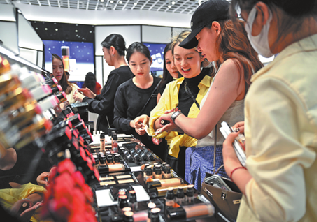
As the Hainan Free Trade Port’s island-wide special customs operations get underway, the optimization of the offshore duty-free policy, a key step in its opening-up drive, will help turn the island into a consumption hub that offers greater opportunities for both domestic and foreign players, experts said.

 Recent updates have expanded product categories, extended the eligibility to more tourists and allowed unlimited purchases for qualified residents, making it easier for residents and tourists to shop, they added.

 Hainan’s offshore duty-free policy is a tax incentive that allows eligible travelers and residents to buy goods exempt from import duties, value-added tax and consumption tax when departing the island.

 Under the updated policy, effective from Nov 1, the range of duty-free goods available offshore has expanded to 47 categories. New additions include pet supplies, portable musical instruments, mini drones and small home appliances.

 Domestic products such as apparel, footwear and headwear, ceramics, scarves, coffee and tea may be sold in offshore duty-free shops and qualify for exemptions and refunds of value-added tax and consumption tax, according to a notice issued by the Ministry of Finance, the General Administration of Customs and the State Taxation Administration in October.

 “The island’s duty-free appeal traditionally relied almost entirely on offering travelers access to sought-after international brands at lower prices,” said Zhu Keli, founding director of the China Institute of New Economy.

 “Now, the updated policy integrates domestic brands into the duty-free system — a move that aligns with the rise of guochao, or China-chic, which has been gaining traction and influence among both Chinese and overseas consumers,” he added.

 Zhu said that Hainan’s refined duty-free policy is becoming a practical catalyst for China’s consumption upgrade and going global efforts by turning the island into a curated gateway where “Made in China” engages with the world.

 The new duty-free policy also extends to outbound travelers. Purchases made by passengers departing Hainan for destinations abroad will count toward entirely on offering travelers access to sought-after international brands at lower prices,” said Zhu Keli, founding director of the China Institute of New Economy.

 “Now, the updated policy integrates domestic brands into the duty-free system — a move that aligns with the rise of guochao, or China-chic, which has been gaining traction and influence among both Chinese and overseas consumers,” he added.

 Zhu said that Hainan’s refined duty-free policy is becoming a practical catalyst for China’s consumption upgrade and going global efforts by turning the island into a curated gateway where “Made in China” engages with the world.

 The new duty-free policy also extends to outbound travelers. Purchases made by passengers departing Hainan for destinations abroad will count toward their annual offshore duty-free shopping quota of 100,000 yuan ($14,200), with no restriction on the number of transactions.

 Hainan has recorded nearly 2.55 million inbound and outbound trips this year through Dec 16, marking a 25.9 percent increase from the same period last year, according to local authorities.

 In particular, the inbound and outbound trips made by foreign visitors surpassed 1.38 million, a jump of 44.1 percent year-on-year, showing the island’s rising appeal as an international destination.

 “To meet the growing consumption demand from outbound travelers, this policy adjustment extends benefits to departing passengers, significantly enhancing the attractiveness and convenience of shopping in Hainan, especially for international visitors,” said Zhou Zheng, deputy director of Hainan’s provincial finance department.

 For Hainan residents who have departed the island within a calendar year, they can make unlimited purchases of offshore duty-free goods during that year.

 For local residents like Weng Huayu, a mother of two living in Haikou, provincial capital of Hainan, the latest tweaks to Hainan’s duty-free shopping policy are less about high-end luxury and more about practical household savings.

 “As an island resident, the policy optimization has made daily shopping so much more convenient,” Weng said. “Things like imported infant formula and diapers for my kids — I can now buy them anytime with immediate purchase and pick-up, as long as I have a record of having left the island. The prices are better, and it’s a real quality-of-life benefit.”

 According to Haikou Customs, the upgraded offshore duty-free policy recorded 2.38 billion yuan in sales during its first month of implementation in November, marking a year-on-year increase of 27.1 percent. The policy drew in 329,000 shoppers, who purchased more than 1.9 million items.

 For international brands, Hainan offers a high-traffic, tariff-advantaged gateway into one of the world’s most robust consumer markets, said Zhou Mi, a senior researcher at the Chinese Academy of International Trade and Economic Cooperation.

 Meanwhile, for Chinese manufacturers, it provides an important platform to test, showcase and elevate their products alongside global peers in front of a broader audience, Zhou added.

 wangkeju@chinadaily.com.cn

Article inline ad

China Launches Island-Wide Special Customs Operations In Hainan FTP

0

Xinhua | Updated: 2025-12-18

HAIKOU – China on Thursday launched island-wide special customs operations in the Hainan Free Trade Port (FTP), the world’s largest FTP by area, allowing freer entry of overseas goods, expanding zero-tariff coverage and more business-friendly measures.

 The move is widely seen as a landmark in China’s efforts to promote free trade and expand high-standard opening-up amid rising protectionism worldwide.

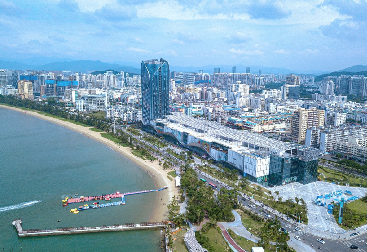
 Under the new arrangements, the tropical island of more than 30,000 square km has been designated as a special customs supervision zone, marking a new stage in the development of the Hainan FTP.

 There, foreign companies can benefit from a business environment more closely aligned with international standards, lower tax and production costs, broader access to service sectors like healthcare and education, and use Hainan as a platform to tap into the vast Chinese mainland market.

 Officials describe the special customs system as “freer access at the first line,” referring to freer trade between Hainan and areas outside China’s customs borders, and “regulated access at the second line,” which involves applying standard customs controls for goods moving from Hainan to the mainland.

 The share of zero-tariff products in the Hainan FTP has been raised from 21 to 74 percent, expanding the list of related items from 1,900 to over 6,600.

 Zero-tariff goods processed in Hainan may be sold to the mainland duty-free if their local processing generated an added value of 30 percent or more.

 Chi Fulin, president of the China Institute for Reform and Development, said this move demonstrates China’s push to expand institutional opening-up.

 Once an underdeveloped frontier outpost, Hainan became China’s largest special economic zone in 1988. A master plan released in 2020 set the goal of developing the island into a globally influential, high-level FTP by the middle of the century.

 Official data shows that since 2020, more than 9,600 foreign-invested enterprises have been established in Hainan.

 The island-wide special customs operations echo the Communist Party of China (CPC) Central Committee’s recommendations for formulating the 15th Five-Year Plan (2026-2030), which called for broader opening-up to the world.

 The move will inject new momentum into China’s pursuit of high-quality development and its goal of basically achieving socialist modernization by 2035, said Xu Deshun, a researcher at the Chinese Academy of International Trade and Economic Cooperation under the Ministry of Commerce.

 Chinese economist Huang Hanquan said the move also underscores the world’s second-largest economy’s opposition to protectionism.

 The launch date, Dec. 18, coincides with the anniversary of a landmark CPC meeting in 1978, widely considered the start of the country’s reform and opening-up era.

 Over recent decades, China has established 22 pilot free trade zones, eliminated foreign investment restrictions in manufacturing, and expanded market access in sectors including telecommunication, healthcare and education.

Article inline ad

Hainan Evolves As Gateway To Global Markets

0

FTP hits new milestone with launch of island-wide special customs operations

By MO JINGXI and CHEN BOWEN | CHINA DAILY | Updated: 2025-12-18

On April 13, 2018, when President Xi Jinping announced that China would support Hainan, a tropical island about the size of Taiwan province off China’s southern coast, in exploring the creation of a free trade port with Chinese characteristics, the message traveled far beyond China’s southern shores.

 It reached Atyrau, a city on Kazakhstan’s Caspian coast, where Ruslan Tulenov, then working at a local chemical company after spending more than a decade studying and living in China, followed the news closely.

 The moment Xi’s announcement was broadcast, Tulenov knew it was the right time for him to return to Hainan, where he had completed his undergraduate studies.

 “I was constantly observing this country — how it developed and where it was heading,” Tulenov recalled. “I wanted to find my own career chance in that process.”

 Speaking that day at the celebration of the 30th anniversary of the founding of Hainan province and the Hainan Special Economic Zone, Xi highlighted Hainan’s special advantages, including its status as China’s biggest SEZ, its unique geographic location and the best ecological environment in the country, as reasons to make it a test ground for reform and opening-up.

 The decision to build a pilot free trade zone and eventually a free trade port was, Xi stressed, a major move by the Communist Party of China Central Committee to signal China’s resolution of further opening up and promoting economic globalization.

 On Thursday, the Hainan FTP will officially launch island-wide special customs operations — a move that Xi has described as a landmark step by China to unwaveringly expand high-standard opening-up and promote the development of an open world economy.

 China’s plan for the island’s future also opened the door for young talent like Tulenov. When the Hainan International Economic Development Bureau, established in 2019, launched a global talent recruitment campaign, he applied right away.

 The bureau is the first government agency of its kind at the provincial level dedicated to attracting global investment for the Hainan Free Trade Port.

 After rounds of tests and interviews, the multilingual Kazakh became the bureau’s first foreign employee, reflecting Hainan’s growing international orientation.

 As policies for the Hainan Free Trade Port continued to take shape, China released a master plan in June 2020 to build Hainan into a globally influential, high-level free trade port by the middle of the century.

 The document said that supporting Hainan’s construction of a free trade port system with Chinese characteristics is a significant move designed, arranged and promoted by Xi.

 Two years later, in 2022, Tulenov found himself standing in the audience at the Yangpu Economic Development Zone in Hainan, listening as Xi spoke about Hainan’s development path.

 The province, Xi said, had spent decades debating its industrial positioning. Now, the priorities were clear: tourism, modern services, high-tech industries, and tropical high-efficiency agriculture, he said.

 As China’s only tropical province and a major maritime region, Hainan had natural advantages in developing these four industries. The four sectors already accounted for 67 percent of Hainan’s GDP in 2024.

 During that trip, Xi also raised expectations: Hainan would become a paradigm of reform and opening-up in the new era, he said.

 At the China International Import Expo, the Boao Forum for Asia Annual Conference and the G20 Leaders’ Summit, the Chinese president has, on many international occasions, highlighted China’s efforts to develop the Hainan Free Trade Port and develop new systems for a higher-standard open economy. Xi said that all are welcome to share in the vast opportunities of the Chinese market.

 In December last year and again this November, Xi returned to the province to hear detailed work reports from local officials — trips that highlighted the central leadership’s close attention to the FTP’s progress.

 This focus is especially significant as the Hainan FTP will officially launch island-wide special customs operations on Thursday.

 The shift will raise the share of zero-tariff goods in the Hainan FTP from 21 percent to 74 percent, while further opening sectors such as tourism, modern services and high-tech industries.

 “The launch of island-wide special customs operations will provide Hainan with the foundational conditions to advance opening-up across a broader scope and at a deeper level,” Xi said during his trip to Hainan last month, stressing the need to free minds, advance reform and explore new ground, and promote reform and opening-up across various sectors more proactively.

 For Tulenov, each of Xi’s visits carries a personal meaning. “Every time President Xi comes, we feel encouraged,” he said.

 As the International Economic Development Bureau’s global press officer, Tulenov has traveled extensively, promoting Hainan’s advantages to companies and investors across the world.

 “I always tell them that Shenzhen was where China first opened to the world. Now Hainan is the next chapter,” he said. “Personally, I benchmarked the FTP against Hong Kong and Singapore. I firmly believe Hainan will become a port like those — it just takes time and steady steps.”

 Thursday also marks the 47th anniversary of the third plenary session of the 11th CPC Central Committee — the milestone meeting that launched China’s reform and opening-up. Observers said the latest move represents another significant step in the opening-up of the world’s second-largest economy, even as unilateralism and protectionism intensify globally.

 “The Hainan Free Trade Port occupies a uniquely prominent place in China’s reform agenda,” said Matteo Giovannini, an Asia-Global Fellow at the University of Hong Kong. It is one of the national strategies reaffirmed by President Xi, underscoring its role as a test ground for the next stage of high-level opening-up, he said.

 Hainan’s performance is likely to become a key reference for how China balances deeper openness with economic security amid global uncertainty, Giovannini said.

 “Lessons from Hainan may inform reforms in areas such as cross-border capital flows, data governance, services trade and green finance, offering models that could be scaled up elsewhere,” he said. “In this sense, Hainan is not just a regional experiment, but a signal of how China sees reform evolving under more complex external conditions.”

 Wang Ying, a researcher at the Academy of China Open Economy Studies at the University of International Business and Economics in Beijing, said that the strategic emphasis placed on the Hainan FTP reflects China’s confidence in its development path and commitment to globalization.

 She said that the FTP, which serves as a platform for engagement with frameworks such as the Regional Comprehensive Economic Partnership, the Comprehensive and Progressive Agreement for Trans-Pacific Partnership, and the Digital Economy Partnership Agreement, also signals China’s determination to align with top-tier international trade rules.

 By taking a pioneering approach, Hainan is positioned to contribute Chinese solutions to the evolution of international economic rules and help guide the development of global standards, Wang added.

 Giovannini noted that Hainan is well positioned, both geographically and strategically, to become a connective node between China and Southeast Asia, with its focus on services trade, logistics, tourism, and digital and green industries closely matching ASEAN’s growth priorities.

 “If regulatory credibility and policy consistency are maintained, the FTP could evolve into a meaningful gateway for two-way flows of capital, talent and services, connecting China more deeply with ASEAN and other emerging markets,” he said.

 Contact the writers at mojingxi@chinadaily.com.cn


Article inline ad

Pharma Innovation Efforts Bear Fruit

0

By Li Jing | China Daily | Updated: 2025-12-17

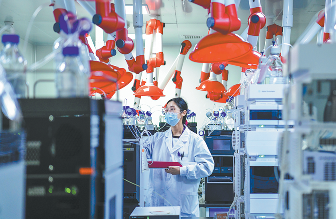
China’s pharmaceutical sector is playing an increasingly important role on the global stage, with cross-border licensing and partnership deals expected to exceed $100 billion by the end of 2025.

 China-linked pharmaceutical business development transactions accounted for nearly half of global pharmaceutical deal value in the first half of 2025, according to data from SAI MedPartners, a global consultancy.

 “By the end of this year, the transaction value of China’s innovative drug business development is expected to surpass $100 billion,” said Deng Xianpeng, president of SAI MedPartners in Asia.

 Deng said Chinese drugmakers are increasingly partnering with foreign companies on a more equal footing, moving beyond simple licensing toward complex co-development and co-commercialization models.

 The dealmaking boom is fueled by a critical supply-and-demand dynamic. A report by Founder Securities highlights that multinational pharmaceutical giants are facing a looming “patent cliff”, with blockbuster drugs generating around $200 billion in annual revenue set to lose market exclusivity by 2030. To replenish their pipelines, these multinationals are turning to China’s efficient and robust research and development ecosystem.

 According to the securities firm, antibody technologies dominated this year’s major deals, accounting for 40 percent of the total, followed by small molecules at 20 percent. While oncology remains the top target with 15 major transactions, interest is diversifying with rare diseases, immunology, and metabolic disorders each recording seven deals.

 Analysts expect this scope to widen further into autoimmune and cardiovascular diseases starting in 2026.

 Backing this global interest is China’s status as the world’s second-largest pharmaceutical industry, now accounting for about 30 percent of innovative drugs in the global research pipeline.

 The pace of domestic approval is accelerating. As of Dec 1, regulators had approved 66 first-class innovative drugs in 2025, a nearly fivefold increase compared to 2018.

 Since the start of the 14th Five-Year Plan (2021–25), China has approved 204 innovative drugs, Yang Sheng, deputy head of the National Medical Products Administration, said at a news conference in August.

 Despite China’s growing prowess in global dealmaking, industry insiders caution that sustainable growth depends on improving returns within the domestic market.

 Innovative drugs account for just 8.6 percent of pharmaceutical spending in China, compared with 81.8 percent in the United States, said Song Ruilin, senior chairman of the China Pharmaceutical Innovation and Research Development Association.

 “Reasonable returns are the foundation of market development,” Song said, adding that lower domestic pricing could constrain the profits needed to reinvest into research and development.

 To address the imbalance, policymakers are accelerating the construction of a multilayered payment system by reducing reliance on basic medical insurance while expanding the role of commercial health insurance.

 Progress is already visible in the 2025 National Reimbursement Drug List, which added 114 medicines, including 50 innovative drugs, significantly improving patient access. Authorities have also released the country’s first commercial health insurance catalogue for innovative drugs, strengthening coordination between public and private payers.

 Global players are seeing the benefits. Novartis AG saw two new products and four new indications included in the latest list.

 Leo Lee, president and managing director of Novartis China, said the Swiss pharmaceutical giant’s development timeline in China is now “100 percent synchronous” with its global schedule. “I am very pleased to see more Novartis innovative drugs included,” Lee said, emphasizing the company’s commitment to accessibility for Chinese patients.

 Song said these policy shifts are critical. “Closing the loop from R&D investment to reimbursement support and market returns is key to the high-quality development of China’s pharmaceutical innovation,” he said.

 lijing2009@chinadaily.com.cn

Article inline ad

Unmanned Logistics Sector Takes Wing

0

By REN QI | China Daily | Updated: 2025-12-17

China is accelerating the development of its low-altitude economy, as heavy-lift cargo drones made back-to-back maiden flights within 24 hours, underscoring momentum in unmanned logistics.

 The Jiutian large unmanned aerial vehicle made its inaugural flight in Northwest China’s Shaanxi province last Thursday. Designed by the Aviation Industry Corp of China (AVIC), the fixed-wing aircraft has a 25-meter wingspan, a maximum take-off weight of 16 metric tons and a payload capacity of 6,000 kilograms. It can operate for up to 12 hours and has a ferry range of 7,000 kilometers.

 The global cargo-drone market could reach about $5 billion by 2031, growing at a 35.8 percent compound annual rate, according to Chinese consultancy QYResearch.

 Policy support has intensified. At last week’s Central Economic Work Conference, Beijing called for faster progress in strategic emerging industries — including drones, eVTOL aircraft and related infrastructure — alongside new energy, new materials and aerospace.

 The meeting set priorities for the coming year focused on advancing high-quality growth and using scientific and technological innovation to drive industrial upgrades, with officials highlighting the role of disruptive and frontier technologies in creating new industries, business models and new quality productive forces.

 Private sector executives say the signals are clear.

 “China’s large domestic market provides a broad stage for enterprises. The top leadership has consistently emphasized support for the healthy development of the private economy. The conference laid out multiple measures to energize private firms, and we are confident about future prospects,” said Guo Liang, chief executive of Aerofugia, which focuses on drones and flying vehicles.

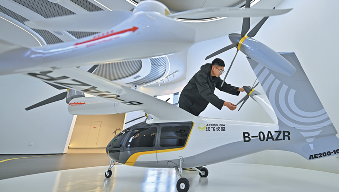
 Aerofugia’s first AE200100 passenger prototype has rolled off the line, marking entry into preproduction ahead of mass manufacturing. The company said it is pushing to secure airworthiness certification and begin commercial operations as soon as possible.

 Regulatory framing has also widened. In November, the State Council’s General Office issued a guidance naming the low-altitude economy as a key growth area within a full-domain unmanned system, calling for a prudent, orderly rollout of application scenarios. A separate document in the same month set out 13 targeted measures, including directing private capital to participate in infrastructure building for the sector.

 Industry experts expect market space to expand as rules are refined and use cases grow. “Aviation is an industry with extremely stringent safety supervision — safety first is a red line,” said Xie Jia, vice-president of Shanghai-based AutoFlight.”Starting with cargo flights is intended to accumulate large-scale operational data and safety records, allowing regulators to fully gauge technological maturity and providing a basis for subsequent rulemaking.

 “Profit models in drones are already relatively mature. As policy and scenarios gradually open up, commercial potential will be further unlocked.”

 renqi@chinadaily.com.cn

Article inline ad

Construction Starts Of New Unit At Nuclear Power Plant In Fujian

0

By Zheng Xin | chinadaily.com.cn | Updated: 2025-12-16

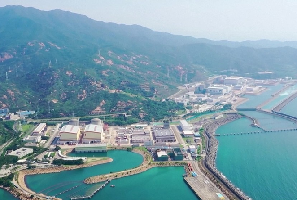
China General Nuclear Power Group, the country’s largest nuclear power plant operator by installed capacity, announced on Tuesday that it has started the main construction phase of Unit 6 at the Ningde Nuclear Power Plant in Fujian province, following the successful pouring of the nuclear island’s first concrete.

 The Ningde Nuclear Power Project is planned to eventually host six megawatt-class nuclear power units. It is the first nuclear power station to commence construction and achieve commercial operation in Fujian province.

 With Unit 6 now officially underway, the Ningde Nuclear Power Plant is positioned to continuously inject clean energy into Fujian province’s economic and social development, aiding the region’s efforts to optimize its energy mix and transition towards green, low-carbon power generation.

 The expansion is also expected to provide significant momentum for the group as it strives to achieve its high-quality development goals outlined in the country’s “14th Five-Year Plan” and build a world-class, distinguished brand in clean energy.

Article inline ad

Liuhua Oilfield Phase 2 Commissioned

0

By Zheng Xin | China Daily | Updated: 2025-12-17

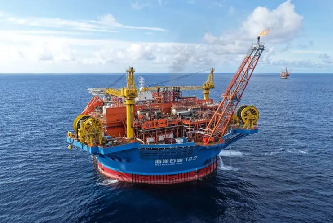
China’s first deepwater oilfield saw its secondary development project fully commissioned recently, marking a major technological leap for the country in the challenging field of deepwater complex reservoir development and bolstering national energy security, said industry experts.

 China National Offshore Oil Corp announced the full commissioning of the phase two redevelopment project of Liuhua oilfield over the weekend, with the activation of the final well on the Haiji-2 platform, Asia’s largest deepwater jacket platform.

 Located in the Pearl River Mouth Basin, Liuhua oilfield is China’s largest offshore reef limestone oilfield in terms of proven geological reserves. Since its initial commissioning in 1996, the oilfield has produced over 20 million metric tons of crude oil, said CNOOC.

 The milestone marks a major breakthrough in China’s ability to develop complex deepwater oil and gas reservoirs, enabling the nation to exploit challenging deepwater resources and strengthen its domestic energy supply, said Lin Boqiang, head of the China Institute for Studies in Energy Policy at Xiamen University.

 The successful full commissioning of Liuhua’s secondary phase serves as a vital blueprint. It validates the technical and economic viability of the deepwater jacket platform plus cylindrical floating production storage and off-loading (FPSO) model, paving the way for the scaled development of similar deepwater assets off China’s coast, he said.

 “This project effectively de-risks future investment in our challenging deepwater oil and gas portfolio, proving our domestic technology can meet world-class engineering requirements.”

 Driven by technological advancements reshaping global energy demand, deep-sea resources are now viewed as a critical growth engine for the ocean economy, according to a research institute of CNOOC.

 The institute highlighted a recent acceleration in marine oil and gas exploration worldwide, establishing deep and ultra-deep-sea areas as strategic reserves for global energy supply.

 According to the National Energy Administration, oceans have become high grounds for global energy supply. It is estimated that over 30 percent of oil and 37 percent of natural gas will come from the ocean.

 During China’s 14th Five-Year Plan period (2021-25), the nation generated 105 million tons of new crude oil production capacity. Offshore output has been the primary growth engine, consistently contributing more than 60 percent of China’s total new petroleum production for the past five years, it said.

 China’s oil and gas industry is entering a new stage of quantitative and efficiency increases alongside green transitioning, securing a more secure and resilient modern oil and gas system while providing a solid guarantee for national energy security alongside stable economic and social development, said Hu Jianwu, deputy director of the NEA’s petroleum and natural gas department.

 Despite the rapid expansion of clean power, which is increasingly becoming the dominant source of terminal energy, fossil fuels remain essential, serving as the “ballast stone”, ensuring energy accessibility and overall system stability, said the administration.

 Substantial reserves estimated at 140 million tons remain in the seabed strata, necessitating secondary development to tap into the potential, said CNOOC.

 Jiang Junda, general manager of the Liuhua oilfield under CNOOC Shenzhen Branch, said that the current operational success of the project validates the stability and reliability of the technology used for stable oil production and water control in offshore carbonate reef oilfields.

 He emphasized that the development model, combining a deepwater jacket platform with a cylindrical FPSO, has proved to be economically effective, providing a viable solution for the scaled, profitable development of similar deepwater oil and gas resources during China’s upcoming 15th Five-Year Plan period (2026-30) and contributing to the nation’s maritime power strategy.

 The secondary development project comprises two oilfields, Liuhua 11-1 and Liuhua 4-1, situated in an area with an average water depth of approximately 305 meters. The project involves 32 production wells.

 Since the first batch of wells began operation in September 2024, daily crude oil output has climbed to a record high of 3,900 tons, said CNOOC.

 zhengxin@chinadaily.com.cn

Article inline ad

CNOOC’s Wenchang ORC Power Unit Generates Over 10m Kwh Of Electricity

0

By Zheng Xin | chinadaily.com.cn | Updated: 2025-12-16

The world’s first 5-megawatt (MW) class offshore high-temperature exhaust gas waste heat Organic Rankine Cycle (ORC) power generation unit has surpassed 10 million kilowatt-hours (kWh) in cumulative power generation at the Wenchang 9-7 oilfield on Tuesday, said its operator.

 Spearheaded by the research institute of China National Offshore Oil Corporation (CNOOC), the project marks the system’s transition to stable and highly efficient operation, utilizing previously wasted exhaust gas heat to generate clean electricity.

 It represents a major technological breakthrough in offshore waste heat recovery for the country, it said.

 Offshore platforms, which traditionally rely on power stations fueled by burning oil and natural gas, emit large amounts of high-temperature exhaust gas. The ORC unit intercepts this waste heat and uses it as a thermal source.

 Since its installation, the system has successfully boosted the platform’s power supply capacity by 20 percent and enhanced fuel utilization efficiency by 8 percent, significantly improving overall energy efficiency.

 To date, the Wenchang 9-7 platform ORC power generation unit has generated over 10 million kWh of electricity, cumulatively saving approximately 6 million cubic meters of natural gas, enough to supply the annual domestic gas needs of 20,000 households.

 zhengxin@chinadaily.com.cn

Article inline ad

China Signals Policy Push To Stabilize, Revive Investment

0

Conference highlights measures such as optimizing implementation of major national projects

China Daily | Updated: 2025-12-17

BEIJING — China has sent clear signals to stabilize and revive investment through strengthened policy support, including appropriately increasing the scale of central budget investment and continuing to leverage new policy-based financial instruments, economists said.

 The tone was set at the annual Central Economic Work Conference held from Dec 10 to 11, which emphasized the need to halt the decline in investment, promote recovery and effectively stimulate private investment vitality, amid a complex external environment and declining investment returns.

 China’s fixed-asset investment fell 2.6 percent year-on-year in the first 11 months, said the National Bureau of Statistics on Monday.

 To bolster investment, the conference also highlighted measures such as optimizing the implementation of major national projects and the management of local government special bond usage.

 “These steps will amplify the leveraging effect of government investment, further stimulate private investment and unlock domestic demand potential,” said Jin Li, vice-president of the Southern University of Science and Technology.

 Over the past year, China has rolled out a series of targeted policies, including an 800-billion-yuan ($113 billion) list of key projects to implement major national strategies and enhance security capacity in key areas, and 500 billion yuan in new policy-based financial tools to supplement project capital. These efforts aim to reinforce the role of government investment in driving social investment.


Article inline ad