Wednesday, November 25, 2026

Home Blog Page 130

Over 5b Yuan Unpaid Taxes Recovered From Fuel Stations, ‘Dual-High’ Individuals

0

By Cheng Yu | chinadaily.com.cn | Updated: 2025-12-08

China’s top tax authority have strengthened efforts to enforce tax compliance among high-risk fuel stations and high-income individuals this year, recovering billions of yuan in unpaid taxes, a senior official said on Monday.

 Dai Shiyou, head of policy and regulation at the State Taxation Administration, said at a regular news briefing that tax officials handled 3,904 high-risk gas stations in the first 11 months of 2025, collecting 4.16 billion yuan ($589 million) in unpaid taxes.

 Authorities also investigated 1,818 “dual-high” individuals – a term that covers high-income and high-net-worth taxpayers, including celebrities and online influencers – recovering an additional 1.523 billion yuan in unpaid taxes.

 Dai said the measures are part of ongoing efforts to curb tax evasion, enhance compliance and safeguard government’s revenue base as China navigates a complex economic environment.

 The administration is also expanding efforts to encourage taxpayers to voluntarily correct past violations. This year, 1,168 entities listed as major tax defaulters took corrective measures, qualifying them for early removal from the national blacklist, a year-on-year increase of 40 percent, he said.

 In addition, more than 1,300 whistleblower-reported cases were reviewed, with no tax violations found upon verification. In these cases, local tax bureaus issued formal clearance conclusions in accordance with the law.

 Dai said these outcomes reflect improvements in the integrity system and the credibility of tax enforcement, adding that the agency will continue to strengthen oversight while improving services for compliant taxpayers.

 chengyu@chinadaily.com.cn

Article inline ad

Greater Policy Emphasis On Growth Anticipated

0

By Shen Jianguang | China Daily | Updated: 2025-12-08

The upcoming annual Central Economic Work Conference is garnering close attention because it sets the direction for next year’s economic policy. With last year’s high base in the fourth quarter and fading policy stimulus effects, the economy faces downward pressure in the final quarter of this year, which adds uncertainty to whether 2026 can begin with a strong start.

 I expect the upcoming conference to place heavier emphasis on economic growth and roll out targeted measures in areas such as sustained fiscal support, boosting consumption, stabilizing the property market and addressing excessive competition.

 Thanks to two major shifts in macro policy — namely stronger fiscal support and a shift in policy focus toward consumption, combined with better-than-expected exports — the economy grew solidly in the first half, showing strong resilience.

 However, since the third quarter, growth momentum has weakened. The latest data show a broad slowdown in October in retail sales, investment and industrial output, revealing a clear softening of domestic demand. Given the high base in the fourth quarter of last year and the reduced effect of earlier policies, the economy faces significant downward pressure in the current quarter.

 Seen from the fourth plenary session of the 20th Central Committee of the Communist Party of China, the authorities fully recognize the current downward pressure and are paying close attention to aligning long term development goals with the urgent need to stabilize growth.

 Against this backdrop, and given that 2026 is the opening year of the 15th Five-Year Plan (2026-30), I expect the Central Economic Work Conference to give economic growth a higher priority and introduce targeted measures in the following areas.

 First, fiscal policy will continue to play a strong role. Since the start of this year, fiscal policy has expanded in scale and moved quickly. This active fiscal stance has played a key role in supporting growth and reducing risks.

 Looking ahead to next year, with monetary policy constrained by weak credit demand and shrinking bank margins, fiscal policy will remain the primary tool for supporting growth.

 The deficit ratio in 2026 is expected to remain around 4 percent, with possible increases in the issuance of ultra-long-term special treasury bonds and local government special bonds.

 Second, fiscal spending will be further optimized. Since the second half of this year, local governments have rolled out policies such as childcare subsidies, gradual expansion of free preschool education, and eldercare consumption subsidies for seniors with disabilities.

 These moves show greater fiscal attention being paid to social well-being, with more resources invested directly in the citizenry.

 Third, the authorities will continue to guard against local debt risks. Given the still heavy local debt burden, preventing and mitigating such risks will remain a major priority next year.

 Thanks to policies such as trade-in programs for durable goods and special consumption promotion activities, household spending improved significantly from last year’s fourth quarter to the first half of this year.

 But as the base rose and the impact of trade in programs weakened, consumption momentum slowed in the third quarter. In October, retail sales growth eased to 2.9 percent year-on-year, and retail growth fell to 2.8 percent, marking the fifth straight month of decline.

 With the high base, shifting subsidy policies and the impact of earlier demand, consumption growth is likely to slow further. In the first half of next year, consumption will continue to face considerable downward pressure.

 Given the high priority placed on expanding domestic demand and boosting consumption in the 15th Five-Year Plan, policymakers may introduce more short-term measures that complement longer-term reforms and social spending.

 Possible steps include expanding subsidy programs to cover categories such as maternity products and health-related goods, increasing fiscal support for services consumption, rolling out nationwide service vouchers or consumption subsidies, reducing unreasonable restrictions on consumption, and encouraging new areas such as leisure boat purchases.

 Also, it is necessary to stabilize the property market as soon as possible. In recent months, the property market has weakened at a faster pace, with both sales volumes and prices declining.

 As last September’s property easing package created a high base, new home sales and sales value in October fell 19 percent and 24.2 percent year-on-year, respectively. Data showed that in the first 16 days of November, new home sales in 30 major cities dropped 37.6 percent year-on-year.

 If the downturn persists, it will continue to weigh heavily on investment, consumption, local fiscal revenue and prices. It is, therefore, urgent for macro policy to halt the decline.

 One approach would be to fully remove purchase restrictions in the biggest cities and further lower homebuying costs, including mortgage rates, down payment ratios and transaction taxes.

 Another option is to consider creating a central government-funded stabilization facility that acquires land and unsold housing in major cities for public housing, easing inventory pressure and improving liquidity for developers while addressing public needs.

 Structural reforms are also critical. A former finance minister said the most important structural reform for real estate transformation lies in reforming the household registration and land systems.

 As the 15th Five-Year Plan places more emphasis on strengthening domestic circulation, building a unified national market becomes essential.

 The plan’s recommendations call for comprehensive action to curb excessive competition and establish a market environment characterized by quality, fair pricing and healthy competition.

 They also call for regulating local government intervention, dismantling local protectionism and eliminating market fragmentation.

 This marks a shift from the 2015-18 supply-side structural reforms, which focused mainly on upstream industries and administrative capacity cuts.

 The current efforts target more downstream emerging industries such as solar power and new energy vehicles, with a policy focus on regulating the behavior of local governments and companies rather than administrative capacity cuts.

 From my point of view, the root cause of excessive competition among local governments and enterprises lies in the fiscal system and performance evaluation mechanisms.

 If this round of reforms can reduce excess capacity while strengthening a unified fiscal system, improving statistical and credit systems, and revising evaluation systems for high quality development and government performance, it would help reduce dependence on supply side measures and fundamentally curb excessive competition.

 The writer is chief economist at Chinese e-commerce giant JD. This article was originally published on www.ftchinese.com.

 The views do not necessarily reflect those of China Daily.

Article inline ad

China’s Massive, AI-Empowered Consumer Sectors In The Making

0

Government-backed goods trade-in program helping stabilize economy

China Daily | Updated: 2025-12-05

BEIJING — A Beijing resident who provided Zhang as his surname recently took delight in the purchase of a new refrigerator model that came with two helpful intelligent functions — auto-adjusting food preservation modes based on the freshness of items and notifications sent via his phone suggesting groceries that need to be stocked up in the fridge.

 Zhang said the fridge is good value for the money because he bought it during the “Double 11” shopping festival, a popular Chinese online sales promotion period when steep discounts are typically offered. Other than that, Zhang also benefited from subsidies via the government-backed consumer goods trade-in program, which helped him replace the old refrigerator he had used for more than a decade.

 The product Zhang purchased was recently brought up by a government official during a news briefing about the latest measures aimed at aligning production and consumer demand, so as to maximize impact in boosting consumption.

 These measures, aimed at the formation of multitrillion-yuan consumption sectors in the coming years, were outlined in a detailed action plan unveiled by the Ministry of Industry and Information Technology and five other government departments on Nov 26.

 He Yaqiong, an official from the MIIT, said at a news briefing on Nov 27 that AI-empowered products, such as smart refrigerators that can recommend shopping lists and AI glasses that can respond to various commands such as providing navigation services, have shown that AI is part of everyday life, catalyzing consumption spending and reshaping consumption in the world’s second-largest economy.

 Under the plan, China seeks to form three massive consumption sectors, namely eldercare products, intelligent connected vehicles and consumer electronics, with them reaching a market scale worth trillions of yuan by 2027. Additionally, ten 100-billion-yuan ($14.2 billion) hot spot consumer goods categories will be fostered, including goods for children and infants, smart wearables, cosmetics, fitness equipment, and pet food and products.

 By coordinating the expansion of domestic demand and the deepening of supply-side structural reforms, China will ensure that supply and demand reinforce each other in a virtuous cycle and that consumption plays a steadily rising role in driving economic growth through 2030, according to the plan.

 These measures closely followed the fourth plenary session of the 20th Central Committee of the Communist Party of China held in October, which adopted recommendations for formulating the 15th Five-Year Plan (2026-30).

 According to the recommendations, the country will stick to the strategy of expanding domestic demand and make efforts to ensure that new demand drives new supply; that new supply helps create fresh demand; and that positive interactions are fostered between consumption and investment and between supply and demand.

 Speaking about the relationship between supply and demand and their impact on the economy, MIIT Vice-Minister Xie Yuansheng said that the action plan was specifically aimed at addressing a mismatch between supply and demand in some sectors.

 The core concept of the plan is to push a transition from quantity to quality in both production and consumption, enabling enterprises to shift from producing more to producing more accurately and better, in an effort to address a situation in which consumers’ personalized needs are unmet while products on the market can’t reach their target buyers, Xie said.

 The action plan encourages enterprises to explore and produce what consumers want and prefer, so that consumers can purchase satisfactory products while enterprises’ products become more marketable due to higher quality and reasonable prices, he said.

 “Promoting the general alignment of supply to demand can maximize the consumption potential and facilitate smooth economic circulation,” Xie said, adding that measures will be taken on five fronts to address the mismatch between supply and demand.

 These include speeding up the adoption of new technologies, expanding the supply of specialty and new products, catering to the diverse needs of different population groups, nurturing new scenarios and forms of consumption, and fostering an environment conducive to boosting consumption through strengthened policy support and crackdowns on market malpractices.

 Analysts hail the action plan as “targeted and thoughtful” for its focus on the needs of specific groups of people. “From senior-friendly home modifications to health products for teenagers, we can see this approach is consumer needs-oriented and more targeted, which will help unleash the consumption potential across different demographics,” said Wu Yin, a professor at the Southwestern University of Finance and Economics.

 Wu was optimistic that the plan, by outlining a clear transformation path for businesses’ production and encouraging the supply of higher-quality products to consumers, was set to stimulate the consumer market and inject sustained momentum for high-quality economic growth.

 According to Fu Yifu, a researcher at Jiangsu Su Merchants Bank, improving the alignment between consumer goods supply and demand is a strategic deployment by the country during the critical period of consumption upgrading and industrial transformation.

 Fu said key sectors — including intelligent connected new energy vehicles, smart homes, consumer electronics and green building materials — are poised for expansion. Meanwhile, the fitness equipment and outdoor gear industries, as well as health-focused products such as dietary supplements and foods for special medical purposes, are also expected to see rising consumption demand.

Article inline ad

Global Ties Urged For Intelligent, Interconnected Digital Economy

0

By Ouyang Shijia | China Daily | Updated: 2025-12-05

Governments and enterprises worldwide should deepen cooperation in building an intelligent and interconnected digital economy, as the world is entering a historic transition driven by the internet of things, artificial intelligence and data-driven technologies, said participants attending a recent meeting in Beijing.

 Amandeep Singh Gill, the United Nations’ under-secretary-general and secretary-general’s special envoy for digital and emerging technologies, said digital technology is reshaping the world economy, adding that the digital future people seek is an inclusive, open, sustainable, fair, safe and secure one.

 Gill called for coordinated global action, saying digital cooperation is inherently multi-stakeholder and should fully leverage the unique contributions of governments, the private sector, civil society, the technical community and academia.

 He stressed that the digital economy will become an important engine that accelerates economic growth and improves social wellbeing, urging countries to strengthen joint innovation.

 Gill made the remarks at the opening of the World Internet of Things Convention 2025 last week in Beijing. The gathering, themed “Intelligently Interconnected New Economy, Smart Society in the New Era”, drew government officials, ambassadors, executives and experts from more than 80 countries.

 He Xuming, chairman of the World Internet of Things Convention Executive Committee, said the rapid upgrade driven by next-generation IoT and AI is “reshaping a brand-new world”.

 He projected that the global digital economy, driven by IoT-enabled intelligent technology, is growing rapidly at 8 percent annually and could exceed $40 trillion this year. Global IoT connections are expected to rise more than 10 percent to exceed 30 billion, while China leads infrastructure deployment and innovation in the digital economy globally with nearly 4.8 million 5G base stations and device connections expected to surpass 3.5 billion.

 Notably, China’s digital economy, he said, is projected to reach an annual output value of 80 trillion yuan ($11.3 trillion), supported by more than 1.2 million enterprises engaged in the intelligently interconnected digital economy.

 Looking ahead, he urged nations worldwide to jointly build “a global broadband IoT based on 5G, 6G, satellite and quantum communication technologies”, enabling global intelligent interconnection of all things and supporting the world’s digital economy markets.

 Despite geopolitical and economic challenges, he said the world can overcome obstacles through cooperation. “As long as we can raise our understanding, form strategic consensus, establish confidence in sustainable development and strengthen international cooperation, we will be able to overcome all difficulties and create this great smart world.

 “We hope that countries will adhere to globalized innovation and development, unite and cooperate, jointly build the global markets of the intelligent-connectivity digital economy and share the development dividends,” he added.

 The convention released the “Declaration of the Global Intelligently Interconnected Advanced Digital Economy and Social Development”, which states that the traditional digital economy will shift toward an intelligently interconnected digital economy, with IoT intelligent technologies serving as the operating system for the global digital economy society.

 The declaration proposes that countries should jointly build an intelligently interconnected digital economy society and calls for building a fair, just, scientific and orderly smart world.

 Sung Hwan Cho, president of the International Organization for Standardization, said global reliance on digital technology is rising fast.

 “According to the World Bank, the digital economy accounts for about 15 percent of global GDP, and one important driving force is the IoT,” he said.

 He said data-driven technologies are transforming industries and social systems and emphasized the importance of global rules.

 “International standards based on consensus for AI, quantum technology and bio-digital convergence help ensure that these emerging technologies develop in a safe, responsible and inclusive manner,” he said. Such standards, he added, will promote innovation and enhance user trust.

 Looking ahead, he said IoT and digital technologies will continue to reshape economies and societies.

 “With international standards as the foundation, we can ensure this transformation is safe, inclusive and sustainable. Through cooperation and innovation, we can unlock the enormous potential of a connected world and jointly create a better future,” he added.

Article inline ad

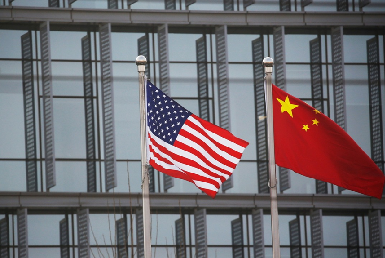
China, US bolster semi-conductor cooperation in high-level talks

0

By Zhong Nan | chinadaily.com.cn | Updated: 2025-12-04

Ren Hongbin, chairman of the China Council for the Promotion of International Trade (CCPIT), led a Chinese business delegation in a meeting with executives of the Semiconductor Industry Association (SIA) in the United States on Wednesday, where both sides exchanged views on advancing cooperation in the semiconductor sector.

 According to a statement released by the Beijing-based CCPIT on Thursday, Ren held in-depth discussions with John Neuffer, president and CEO of the Washington-based SIA, covering topics including strengthening China–US collaboration, enhancing multilateral cooperation and safeguarding the stability and smooth functioning of global industrial and supply chains.

 Representatives from SIA’s member companies, such as Qualcomm Inc and GlobalFoundries Inc, also attended the meeting.

 In a separate meeting with executives and member companies of the US-China Business Council in Washington on Wednesday, Ren reaffirmed that CCPIT will continue defending the stability and smooth operation of global industrial and supply chains, making new and greater contributions to advancing exchanges and cooperation between the business communities of the two countries.

 Sean Stein, president of the US-China Business Council, said the US business community remains a firm advocate for sustained engagement and dialogue between the US and China. As China prepares to host the Asia-Pacific Economic Cooperation (APEC) Economic Leaders’ Meeting in 2026, new opportunities are emerging for the two sides to advance deeper cooperation.

 Stein added that US companies are eager to participate in a constructive and pragmatic manner.

 “Whether through policy exchanges, business dialogues or technical discussions in specific sectors, they intend to be actively involved and to play a positive role throughout the process,” he added.

 More than 80 representatives from both sides attended the event, including business leaders from FedEx, Thermo Fisher Scientific, ExxonMobil, Industrial and Commercial Bank of China, Air China and Pop Mart, said CCPIT in another statement.

Article inline ad

Zootopia 2 Fueling IP Shopping Bonanza

0

By Wang Zhuoqiong | China Daily | Updated: 2025-12-05

Disney’s Zootopia 2 has become a major box-office performer in China, setting off a wave of intellectual property (IP)-driven consumer spending across e-commerce platforms.

 Since its release on Nov 26, the movie has topped the box-office charts in the country and is now the highest-grossing foreign animated feature film in Chinese cinema history.

 As of 14:50 on Thursday, Zootopia 2 had generated more than 2.2 billion yuan ($311.2 million) in ticket sales in China, said Lighthouse Professional Edition.

 The film’s momentum is spilling into retail. On Dewu app, searches for “Zootopia” surged 60 percent on opening day, with blind boxes, premium co-branded collectibles and household goods ranking among the most popular categories.

 Collectible toy producer Pop Mart has emerged as one of the biggest beneficiaries. Its co-branded lineup — including blind box figurines, action figures and keychains — has seen strong demand. The hidden edition “Finnick Fox with a Cart” from the MOLLY x Zootopia 2 series has been trading at 234 yuan, more than three times its 69-yuan retail price.

 On Taobao and Tmall, search volumes for “Zootopia” jumped more than 1,000 percent after the film’s debut. Blind boxes, gold jewelry and trendy collectibles topped sales rankings.

 According to Dewu, Chow Tai Fook’s premium gold series has become the most expensive Zootopia 2 collaboration to date. A carrot-shaped gold pendant inspired by character Judy Hopps retails for 3,275 yuan, while Nick-and-Judy-themed lucky beads sell for 2,075 yuan, setting a new price benchmark for IP-linked jewelry.

 The movie has a large fan base in the country, evidenced by Zootopia Land at Shanghai Disneyland. “Zootopia 2 isn’t just a film — it’s a nostalgia-driven consumption moment for a fan base, which is now entering peak spending power,” said a trend-toy executive at Dewu, who declined to be named. “Emotional value products have become one of the fastest-growing categories among young consumers.”

 The film’s protagonists, Judy Hopps and Nick Wilde, have quickly returned as major attractions among Gen Z consumers, sparking a wide range of co-branded launches. According to Dewu, Disney’s Zootopia-themed thermoses sold 26,000 units and garnered 55,000″want” marks and a pet cross-body bag sparked strong demand among pet owners. Blind boxes from Miniso, 52Toys, Toptoy, and trading cards from Jika Club have seen sold out merchandise in many markets.

 To date, Zootopia-related IP has partnered with 98 brands to release more than 14,000 co-branded products across toys, fashion, household goods, electronics, foods and beverages, and pet supplies — covering nearly every aspect of young consumers’ lifestyles, said Dewu.


Article inline ad

China Approves Compliant Rare Earth Exports For Civilian Use

0

By Wang Keju | chinadaily.com.cn | Updated: 2025-12-04

China has been approving all compliant rare earth export applications for civilian use without delay, the Ministry of Commerce said on Thursday.

 The ministry made the remarks in response to a survey released on Monday by the European Union Chamber of Commerce in China, showing that a majority of respondents had already been or expected to be impacted by China’s rare earth export control measures.

 “To the best of my knowledge, the Chinese government has consistently approved compliant export applications for civilian use in a timely manner,” said He Yadong, the ministry’s spokesman, at a news conference.

 China has also implemented measures such as general licenses to facilitate compliant trade in dual-use items, thereby effectively safeguarding the security and stability of global industrial and supply chains, He added.

 wangkeju@chinadaily.com.cn

Article inline ad

As A-Share Stocks Rise, Future Valuation Looks Promising, Experts Say

0

By Shi Jing in Shanghai | chinadaily.com.cn | Updated: 2025-12-04

Buoyed by the price rally of A-share electrical machinery, robot actuator, and commercial aviation companies, all three major benchmark indexes reported gains during the morning trading session on Thursday, with the technology-focused ChiNext in Shenzhen rebounding strongly by 0.76 percent.

 Shanghai Composite Index rose by 0.04 percent, while Shenzhen Component was up by 0.35 percent. Market activity remained strong, with the combined trading value at the Shanghai and Shenzhen exchanges topping 1.03 trillion yuan ($150 billion) during the morning hours.

 Experts from Everbright Securities explained that strategic emerging industrial clusters, such as commercial aviation, will speed up their development during the 15th Five-Year Plan (2026-30) period as the country rolls out more detailed plans. Companies along the industrial chain will benefit from the high-quality development of the commercial aviation sector, they said.

 While world leading technology companies such as Tesla have set clearer goals to develop humanoid robots, Chinese companies will play an increasingly important role in the global robot boom, thanks to their manufacturing strength and their competitiveness in cost control, experts from CITIC Securities said.

 Meng Lei, a China equity strategist from UBS Securities, said that the average profit growth rate of A-share companies is likely to reach 8 percent in 2026, up from 6 percent this year.

 Combined with incremental macroeconomic supportive policies, lower risk-free interest rates, more household savings being invested in the stock market, the continued net inflow of long-term capital, and the advancement of public companies’ market valuation management, the A-share market valuation is likely to move up further, he said.

 Allen Lee, head of China business development at asset manager AllianceBernstein, said that more Chinese companies with higher operation efficiency and international competitiveness will be nurtured in the upcoming years as “disruptive innovation” will be a major theme of China’s economic development.

 Data from market tracker Wind Info showed that A-share companies specializing in technology innovation and high-end manufacturing have attracted the most surveys from foreign institutional investors this year.


Article inline ad

China’s Central Bank To Conduct 1-Trillion-Yuan Outright Reverse Repo Operation

0

Xinhua | Updated: 2025-12-05

BEIJING – The People’s Bank of China (PBOC), the country’s central bank, on Thursday said that it will conduct a 1-trillion-yuan ($141.4 billion) outright reverse repo operation on Friday to maintain ample liquidity in the banking system.

 The operation will be carried out with a fixed quantity through interest-rate bidding, with winning bids determined at multiple price levels. It will have a tenor of three months, or 91 days, according to the central bank.

 Outright reverse repo operations – a tool the central bank introduced in October 2024 to manage liquidity in the national banking system – are carried out each month with a tenor of no more than one year.

 These operations have enriched the country’s monetary policy toolkit, complementing previous measures such as temporary repos, temporary reverse repos, and the buying and selling of treasury bonds.


Article inline ad

Lens On Stablecoins To Prevent Fraud, Capital Flight, Consumer Harm

0

By Zhou Lanxu | China Daily | Updated: 2025-12-05

Chinese mainland regulators’ latest move to bring stablecoins under further scrutiny signals a sharper focus on preventing fraud, capital flight and consumer harm, experts said.

 This is also expected to clarify the regulatory boundaries in order to help cool irrational expectations around stablecoins and digital assets, they said.

 The strengthened stance — announced at an interagency meeting led by the People’s Bank of China, the country’s central bank, last week — marks the clearest statement to date that stablecoins fall within the mainland’s long-standing prohibition on virtual currency activities.

 Stablecoins are cryptocurrencies that are designed to maintain a stable value by being pegged to fiat currencies or other real-world assets.

 Liu Xiaochun, vice-president of the Shanghai Finance Institute, said the core policy message is to safeguard financial security and protect consumers from deceptive investment products. “Some people or institutions have engaged in misleading promotion, treating stablecoins or other virtual currencies as investment products and luring mainland residents to buy them.

 “Some cases have involved illegally transferring funds overseas or outright fraud. The crackdown is aimed at stopping exactly this,” Liu said.

 The interagency meeting has stressed that virtual currency-related activities are deemed illegal. According to the meeting, stablecoins, as a form of virtual currency, currently fail to meet requirements for customer identification and anti-money laundering safeguards, and could be used for fraud, money laundering and illicit cross-border fund transfers.

 Liu said that such phrasing draws a clearer line for the market — stablecoins cannot be issued, underwritten, traded or used for payments on the mainland — ruling out the possibility of the issuance of onshore renminbi-backed stablecoins.

 Xiang Haotian, an associate professor of finance at Peking University’s Guanghua School of Management, said the clearer regulatory boundaries have demonstrated policymakers’ priority — to cool speculation and prevent the public from being drawn into bubbles.

 The latest move will prevent people with lower financial literacy from being misled and falling victim to scams, Xiang said. “Stablecoins still lack clear application scenarios, and their market scale is unknown. The public should avoid hype and return to rationality.

 “The bad side is clearer than the good side, making tightening oversight in the short run beneficial for maintaining financial stability,” Xiang said.

 The fact that Hong Kong pilots a licensed stablecoin regime while the mainland maintains strict controls mirrors China’s well-tested use of pilot areas to balance security with future opportunities, Xiang added.

 In a written response to China Daily, a spokesperson of the Hong Kong Monetary Authority said the authority is currently reviewing the applications for stablecoin issuer licenses and aims to announce the first batch of licenses early next year.

 “Considering the novelty and potential risks of stablecoin, the need for user protection, market capacity and long-term development, we expect to set a high bar for licensing. Only a handful of licenses will be granted initially,” the spokesperson said.

 The HKMA spokesperson added that where cross-border activities are involved, applicants should ensure that “they and their business partners have the necessary regulatory approvals and will comply with applicable regulations in Hong Kong and other relevant jurisdictions”.

 Experts pointed out that key issues requiring further clarification include whether mainland-owned companies registered in Hong Kong may legally engage in stablecoin operations locally, and whether the issuance of offshore renminbi-backed stablecoins would be permitted.

 For example, Xiang said questions remain over whether a Hong Kong subsidiary of a mainland firm could use stablecoins to settle with foreign trade partners and then settle internally with its onshore parent through traditional, compliant channels.

 If participation is allowed, he added, mainland and Hong Kong authorities will need new coordination mechanisms, especially in technology and monitoring, to prevent capital flight and money laundering through Hong Kong’s stablecoin infrastructure.

 Despite tightened controls, Liu from Shanghai Finance Institute said the mainland’s stance would not hinder China’s broader participation in global financial governance nor its push for renminbi internationalization in the digital era, as stablecoins are unlikely to become mainstream payment methods.

Article inline ad