Wednesday, November 25, 2026

Home Blog Page 131

Wider Market Access To Woo More Investment

0

Experts, execs spot opportunities from nation’s fresh opening-up drive

By Zhong Nan | China Daily | Updated: 2025-12-05

China’s latest steps to spur domestic demand will draw more foreign enterprises to increase investment in the country, as the strength of its super-large-scale market offers renewed impetus for corporate growth and the broader global economic recovery, said leading economists and business executives.

 Speaking ahead of China’s annual Central Economic Work Conference, they said these new measures will come at a time when foreign businesses are reassessing investment plans amid persistent external headwinds.

 Usually convened in December to set the policy tone for the following year, the high-level gathering is being closely watched by the international business community as it will outline the country’s macroeconomic priorities and major reform tasks.

 Wei Jianguo, former vice-minister of commerce, said that China is no longer relying on preferential policies to attract foreign investment, but advancing deep, self-driven institutional reforms to build a rules-based and high-standard business environment.

 This shift from flow-based openness to institutional openness reflects China’s move from a “global factory “to a “global market”, said Wei.

 Echoing that view, Mei Xinyu, a research fellow at the Chinese Academy of International Trade and Economic Cooperation, said that in terms of spending potential and market size, China is already the world’s largest single-country market across many key categories of goods and services, making entry and deep engagement in China a top strategic priority for any foreign firm with global ambitions.

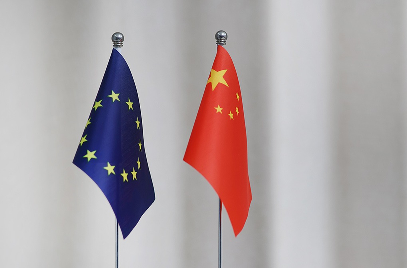
 This aligns with a communique issued in late October after the conclusion of the fourth plenary session of the 20th Central Committee of the Communist Party of China, saying the country should take the initiative to open wider to the outside world, promote the innovative development of trade and create greater space for two-way investment cooperation.

 “China’s advanced industrial ecosystem, consumption upgrades and rapidly expanding service sectors — together with the government’s implementation of large-scale equipment upgrades and consumer goods trade-in programs — will provide a scale advantage difficult to replicate elsewhere,” said Mei.

 The latest official data reinforce that assessment. The actual use of foreign direct investment in China’s high-tech sectors totaled 192.52 billion yuan ($27.26 billion) in the first 10 months of 2025, with FDI in the e-commerce services, medical instrument manufacturing and aerospace equipment manufacturing sectors surging 173.1 percent, 41.4 percent and 40.6 percent, respectively, said the Ministry of Commerce.

 Wang Jiayu, regional representative for China at German industrial conglomerate Freudenberg Group, said that China serves as a lucrative market, a crucial innovation hub and a stable manufacturing base for the group’s global operations.

 Running 27 factories across China, Freudenberg is expanding into strategic new sectors aligned with China’s industrial upgrade, particularly in humanoid robotics. Together with local partners, the company will build a humanoid cocreation center in Shanghai.

 “Rather than just a production site, China represents an essential component of our global innovation network and supply chain resilience,” said Wang.

 As consumption-driven growth gains momentum, He Yongqian, a spokeswoman for the Ministry of Commerce, said last week that China will continue to expand product availability, upgrade services and diversify consumption scenarios under the “Shopping in China” initiative to better reflect the dynamism of the country’s modern consumer economy.

 Driven by these moves, as well as the expanded island-departure duty-free policy in the Hainan Free Trade Port, Tapestry Inc, a United States-based luxury goods company, will add over 60 new stores in China over the next three years, growing its footprint from over 400 stores in 90 cities to more than 100 cities across top tier to county-level markets.

 Sandeep Seth, the group’s chief growth officer, said China is already Tapestry’s largest market outside the US and is expected to contribute the biggest share of the group’s global expansion in the years ahead.

 After seeing its sales in China rise 5 percent year-on-year in its 2025 fiscal year, the US firm experienced a 19 percent increase on a yearly basis in the first quarter of its 2026 fiscal year — a strong indication of renewed momentum in the Chinese market.

 Believing that China will continue to raise the added value of its industries and drive premiumization, Denis Depoux, global managing director of management consultancy Roland Berger, said for the global business community, this translates into the “in China for China” and “in China for global” strategies. Foreign companies can leverage Chinese technology, innovation and products elsewhere in the world.

 “We read these goals as a continuation of China’s commitment to creating a stable and prosperous market amid rising complexity and uncertainty in the global economy,” Depoux said.

Article inline ad

Ministry: Rare Earth Export Applications Approved

0

By Wang Keju | China Daily | Updated: 2025-12-05

China has been approving all compliant rare earth export applications for civilian use without delay, the Ministry of Commerce said on Thursday.

 This comes after a survey claimed that several European businesses were already, or expecting to be, affected by China’s export controls.

 “To the best of my knowledge, the Chinese government has consistently approved compliant export applications for civilian use in a timely manner,” said He Yadong, a ministry spokesman, at a news conference.

 China has also actively implemented facilitating measures such as general licenses to promote compliant trade in dual-use items, thereby effectively safeguarding the security and stability of global industrial and supply chains, He added.

 Dual-use items mean goods, technologies and services that may be used either for civil or military purposes, or to contribute to an increase in military potential, especially to design, develop, produce or use weapons of mass destruction and their means of delivery.

 Early last month, China announced a one-year suspension of export controls on rare earths, super-hard materials and other strategic resources, with the suspension set to remain in place until Nov 10 next year.

 On Monday, a survey released by the European Union Chamber of Commerce in China showed that once all of China’s announced rare earth export control measures have been implemented, 60 percent of respondents expect “moderate” or “significant” disruptions to their supply chains. An additional 13 percent expect to face production stoppages or slowdowns.

 Although 43 percent of respondents have yet to take a decision on how to respond to China’s export controls, 36 percent intend to work with suppliers to develop more capacity outside of the country, the survey showed.

 “Rare earth elements are vital to a wide range of high-tech industries and emerging technologies that are shaping the future of both the civilian and defense sectors,” said Zhou Mi, a senior researcher at the Chinese Academy of International Trade and Economic Cooperation.

 “It is incumbent upon major producers like China to implement appropriate control measures to prevent the misuse or diversion of these strategic materials,” Zhou said. “China’s decision to implement export controls on rare earths does not target any specific economies.”

 Meanwhile, China has been promptly approving rare earth-related export license applications for civilian end-use, to maintain the stability of global industrial and supply chains, he added.

 In October, Commerce Minister Wang Wentao said that China has consistently provided facilitation for EU companies in the approval process during a video call with European Commissioner for Trade and Economic Security Maros Sefcovic.

Article inline ad

China Welcomes EU’s Move To Terminate Trade Dispute At WTO

0

By Zhong Nan | chinadaily.com.cn | Updated: 2025-12-04

The European Union’s recent decision to terminate its trade dispute against China in the DS610 case at the World Trade Organization is “the right choice”, said the head of department of treaty and law at the Ministry of Commerce on Thursday.

 China has consistently held the view that the EU lacked a factual basis for initiating the case, said the official in a statement.

 The official reiterated that China has always strictly abided by WTO rules and will continue to take concrete actions to firmly uphold the rules-based multilateral trading system.

Article inline ad

China Approves Compliant Rare Earth Exports For Civilian Use

0

By Wang Keju | chinadaily.com.cn | Updated: 2025-12-04

China has been approving all compliant rare earth export applications for civilian use without delay, the Ministry of Commerce said on Thursday.

 The ministry made the remarks in response to a survey released on Monday by the European Union Chamber of Commerce in China, showing that a majority of respondents had already been or expected to be impacted by China’s rare earth export control measures.

 “To the best of my knowledge, the Chinese government has consistently approved compliant export applications for civilian use in a timely manner,” said He Yadong, the ministry’s spokesman, at a news conference.

 China has also implemented measures such as general licenses to facilitate compliant trade in dual-use items, thereby effectively safeguarding the security and stability of global industrial and supply chains, He added.

 wangkeju@chinadaily.com.cn

Article inline ad

As A-Share Stocks Rise, Future Valuation Looks Promising, Experts Say

0

By Shi Jing in Shanghai | chinadaily.com.cn | Updated: 2025-12-04

Buoyed by the price rally of A-share electrical machinery, robot actuator, and commercial aviation companies, all three major benchmark indexes reported gains during the morning trading session on Thursday, with the technology-focused ChiNext in Shenzhen rebounding strongly by 0.76 percent.

 Shanghai Composite Index rose by 0.04 percent, while Shenzhen Component was up by 0.35 percent. Market activity remained strong, with the combined trading value at the Shanghai and Shenzhen exchanges topping 1.03 trillion yuan ($150 billion) during the morning hours.

 Experts from Everbright Securities explained that strategic emerging industrial clusters, such as commercial aviation, will speed up their development during the 15th Five-Year Plan (2026-30) period as the country rolls out more detailed plans. Companies along the industrial chain will benefit from the high-quality development of the commercial aviation sector, they said.

 While world leading technology companies such as Tesla have set clearer goals to develop humanoid robots, Chinese companies will play an increasingly important role in the global robot boom, thanks to their manufacturing strength and their competitiveness in cost control, experts from CITIC Securities said.

 Meng Lei, a China equity strategist from UBS Securities, said that the average profit growth rate of A-share companies is likely to reach 8 percent in 2026, up from 6 percent this year.

 Combined with incremental macroeconomic supportive policies, lower risk-free interest rates, more household savings being invested in the stock market, the continued net inflow of long-term capital, and the advancement of public companies’ market valuation management, the A-share market valuation is likely to move up further, he said.

 Allen Lee, head of China business development at asset manager AllianceBernstein, said that more Chinese companies with higher operation efficiency and international competitiveness will be nurtured in the upcoming years as “disruptive innovation” will be a major theme of China’s economic development.

 Data from market tracker Wind Info showed that A-share companies specializing in technology innovation and high-end manufacturing have attracted the most surveys from foreign institutional investors this year.

Article inline ad

Smart Tech Serves New Niche In Eateries

0

China Daily | Updated: 2025-12-04

BEIJING — From robotic chefs to AI-powered ingredient tracking and smart reservation systems, intelligent technologies are reinvigorating China’s catering industry, elevating consumer experiences while tackling longstanding operational challenges.

 At a lively Haidilao hotpot outlet in Beijing, Yang Lin, a regular customer, recently discovered a new digital helper. “Xiaolaolao”, the AI assistant, seamlessly handled everything from booking a table to confirming group size and arrival time.

 “It’s convenient to just speak to it. I’ve never seen anything like this before,” Yang said.

 According to Haidilao, “Xiaolaolao” goes beyond bookings, offering tailored suggestions like low-fat options for health-conscious diners or children’s meals for families. Yang tried its smart bill-analysis feature, which helps optimize coupon usage and alerts customers to unused membership benefits, adding yet another layer of convenience.

 Smart tools such as Haidilao’s AI assistant are becoming bright spots for an industry seeking fresh momentum.

 While data from the National Bureau of Statistics show a modest 3.3 percent year-on-year rise in catering revenue to 4.62 trillion yuan ($653.7 billion) from January to October, data from Meituan show rising store closures and volatile new openings, signaling increasingly fierce competition.

 Traditional restaurants in China are grappling with challenges such as product homogeneity, high operating costs, low efficiency and limited service scenarios, according to an industry report published by Hongcan, a catering research institute.

 Experts believe that overcoming these constraints and achieving sustainable growth will require embracing new technologies to carve out a new development path.

 Heytea, a renowned Chinese beverage brand, has equipped its stores with self-developed devices, including smart tea brewers, scales and tea-making assistants, enhancing operations at multiple stages. For instance, manually peeling a basket of green grapes takes 15 minutes, while an automatic peeler completes the task in just one minute.

 Meanwhile, JD.com’s 7Fresh Kitchen in Beijing, which specializes in stir fries, snacks, fried rice and noodles, has introduced cooking robots.

 Similarly, at Juneyao Air’s cafeteria, where thousands dine each day, cooking robots have greatly improved the cooking process, while AI-powered recognition and calculation systems have helped curb food waste.

 “Smart tools and technologies, like AI and automated cooking equipment, help restaurants reduce repetitive labor and optimize operations for leaner management,” said Tang Xin, a researcher at Hongcan.

 This tech shift is in line with broader national goals. The government has issued guidelines to accelerate the application of new technologies in various consumption scenarios.

 He Qing, an industry expert with over a decade of experience in catering intelligence, said that the national push for scenario-based technology adoption suits the catering sector, where AI can improve food safety and healthy eating.

 Looking ahead, catering intelligence is evolving from isolated tasks like cooking and coffee-making toward fully integrated digital systems.

 Shanghai recently released the country’s first provincial-level action plan for intelligent development in catering scenarios. The plan promotes a “smart restaurant” ecosystem, covering central kitchens, food traceability and marketing, and calls for “building pilot projects of leading smart catering integrated scenarios and promoting the application of large models in catering scenarios”.

 By the end of 2028, the city aims to boost the full-chain intelligentization rate in group catering, fast-food, and beverage enterprises to over 70 percent, the intelligentization rate in key processes of full-service restaurants to over 50 percent, and supply chain intelligent management coverage to over 60 percent.

 Experts believe that smart technologies are illuminating the future development path of the industry. “As a rapidly maturing industrial chain drives down costs and boosts efficiency, catering intelligence will see broader adoption, fostering a safer, more efficient industry landscape,” said He Qing.

 Xinhua

Article inline ad

Equal Access To Intelligent Driving Foreseen

0

By Li Jiaying | China Daily | Updated: 2025-12-04

Large-scale applications and stable, mass production of advanced driver-assistance systems (ADAS) are key to accelerating the democratization of high-level driving technologies and benefiting a broader range of consumers, said Zhang Lin, chairman and CEO of domestic ADAS tech company Freetech.

 “With the accelerated mass rollout of Level-2 assisted driving products, more advanced functions will gradually reach mid and lower-end models, further promoting equal access to intelligent driving,” Zhang said.

 For example, its city Navigate on Autopilot (NOA) solution entered mass production in July and is now installed in nearly eight vehicle models, he added.

 “Technology inclusiveness is further reinforced through scaled mass production, supported by high delivery efficiency and cost performance, forming a virtuous cycle of research and development input, complete product portfolio, mass delivery, and economies of scale,” Zhang said.

 Zhang’s remarks came after the company’s 5 millionth ADAS product — an urban environment NOA controller — rolled off the line last week.

 “From the launch of our intelligent manufacturing base in 2022, to surpassing 1 million units in 2023, and now reaching 5 million units, we expect total production to exceed 10 million units in the future,” said Zhang.

 The senior executive attributed this large-scale delivery and effective cost control to the company’s self-developed integrated software-hardware platform, ODIN 3.0.

 “The core of this approach is to transform capabilities traditionally improved only through hardware iteration into software modules that can continuously evolve on a unified platform,” Zhang said.

 For example, although the evolution of millimeter-wave radar appears to be a hardware upgrade, at the platform level, it becomes a modular building block, with new AI algorithms, higher resolution, enhanced detection range and signal-to-noise ratio ultimately abstracted into software capabilities that feed back into system upgrades, enabling mass production data to more efficiently support product iteration, he explained.

 “This means hardware is no longer an isolated device, but part of an integrated platform that evolves together with perception, decision-making and cloud services,” Zhang said.

 In addition, R&D methods may also fundamentally change under this architecture, he added.

 “Instead of restarting from scratch, the system evolves along a stable backbone. When one module requires an upgrade, only that module needs to be updated, avoiding unnecessary disruption to proven components,” Zhang said.

 As the platform matures and scales up, these advantages extend from development to commercialization.

 “On the software side, modular reuse reduces labor and time costs; on the hardware side, mass manufacturing improves procurement and production efficiency — once the production process is established, it can be rapidly replicated across lines,” Zhang said.

 “As volume expands, cooperation willingness and bargaining power among upstream and downstream suppliers also increase, further reducing hardware costs and thereby broadening its applicability,” he added.

 lijiaying@chinadaily.com.cn

Article inline ad

‘World’s Supermarket’ Sees Record Trade Of Over 700b Yuan In Jan-Oct

0

Xinhua | Updated: 2025-12-04

HANGZHOU – The city of Yiwu, known as “the world’s supermarket,” in East China’s Zhejiang province, posted a record import and export value of 701.19 billion yuan ($99.1 billion) in the first 10 months of this year, surpassing the 700-billion-yuan threshold for the first time.

 The value has already exceeded the city’s full-year total in 2024, with its market diversification strategy increasingly prominent, according to the Yiwu Customs.

 From January to October, Yiwu saw trade with 230 countries and regions globally. Among them, 164 saw growth rates exceeding double digits, an increase of 32 compared to the same period last year. Notably, exports to ASEAN markets surged by 51 percent year-on-year.

 Yiwu Customs issued 130,000 China-ASEAN Certificates of Origin during the period, with a total value of $2.87 billion, representing year-on-year increases of 26.52 percent and 26.15 percent, respectively, helping enterprises save approximately 1 billion yuan in tariffs in importing countries.

 “For example, thermal cups exported from Yiwu can enjoy zero-tariff treatment in Indonesia with such a certificate,” said Cai Sisi, a customs officer.

 Data shows that the city exported 5,096 categories of goods in the first 10 months, an 11.2 percent increase year-on-year. Exports of cultural goods amounted to 58.18 billion yuan, up 19.5 percent year-on-year.

 “Yiwu’s cultural products are gaining popularity in overseas markets. Items that provide emotional value are particularly favored by foreign consumers,” said Huang Changchao, president of the city’s cultural products industry association.


Article inline ad

Property Market Bracing For Big Overhaul

0

Sector seen upgrading from housing availability to improved quality

By Wang Keju | China Daily | Updated: 2025-12-04

China’s real estate sector, a key engine of the world’s second-largest economy for decades, will be transformed significantly in the next five years, from being positioned as a growth pillar to one that prioritizes comprehensive living standards, analysts said.

 The sector will now be reoriented around the core needs of residents going forward, marking an upgrade from simply ensuring housing availability to improving housing quality and livability, they added.

 Their comments came after China in October adopted recommendations for its next five-year blueprint, in which policymakers have set a clear tone, of “promoting high-quality real estate development”, and listed the task within the framework of “social welfare and public livelihood”.

 In 2024, the real estate and construction sectors together accounted for a combined 13 percent of China’s GDP, Minister of Housing and Urban-Rural Development Ni Hong said in article published just after the release of the recommendations for formulating the 15th Five-Year Plan (2026-30).

 Looking ahead, Ni stressed that China’s real estate market still holds significant potential and room for development.

 “Today, public demand for housing has shifted from basic access to quality living. Moreover, with an aging population, declining birth rates, regional population shifts, and evolving lifestyles, housing needs have become more personalized and diversified,” Ni said.

 He stressed the need to adapt to these new trends and accelerate the establishment of a new real estate development model.

 Zhang Bo, head of the 58 Anjuke Research Institute, said: “The era of a sheer nationwide housing shortage is largely over, but it has been replaced by a more complex and deeply entrenched structural problem.”

 While overall housing supply may be adequate, the specific needs of young people and new urban migrants in major cities remain unfulfilled, Zhang said.

 “The era of building first and hoping people will come is over,” Zhang said. “You must first understand the composition of the population — how many recent graduates, how many skilled technicians a city is bringing in — before you pour the foundation.”

 The application of this data-driven strategy is most acute in the nation’s high-growth hubs. Cities with a persistent net inflow of people should focus their efforts specifically on expanding the supply of government-subsidized housing, Zhang added.

 According to data from the Ministry of Housing and Urban-Rural Development, during the 14th Five-Year Plan period (2021-25), China constructed more than 11 million units of affordable housing and resettlement housing, benefiting over 30 million people.

 Apart from affordable housing, “improved housing” and “quality homes” are seen as the key to meeting people’s needs for better living conditions and reversing the current subdued market sentiment, analysts said.

 According to data from the China Index Academy, in the first three quarters of 2025, the proportion of 120-144 square meter units in 30 key cities increased to 30 percent. Large unit types have become the mainstream of the new housing market, with the share of units over 120 square meters rising across cities.

 Localities should seize this opportunity to ensure adequate product supply. The supply of improved housing should be treated as a key lever for unleashing housing demand and a primary driving force for the next cycle of positive development in the real estate market, said Yan Yuejin, deputy head of Shanghai-based E-House China R&D Institute.

 Beyond targeted supply in the housing market, policymakers are likely to roll back purchase restrictions that have suppressed consumer activity.

 Major core cities like Beijing and Shanghai still possess room to further optimize their purchase restriction policies during the coming year, said Chen Wenjing, director of policy research at the China Index Academy.

 Chen noted that this process is likely to continue gradually, avoiding any sudden, market-shocking moves.

 Luo Zhiheng, chief economist and president of the Research Institute at Yuekai Securities, said that it’s viable to continue to lower the five-year loan prime rate, on which many lenders base their mortgage rates.

Property Market Bracing For Big Overhaul-zhsailingMeanwhile, policymakers could also slash various tax and fee burdens across the home purchase process to ease the financial load on buyers, Luo added.


Article inline ad

Appetite For Imported Goods Boosts Consumption

0

By Fan Feifei | China Daily | Updated: 2025-12-04

Chinese consumers are displaying vibrant purchasing power for imported products and foreign brands, and this has become a key driver for consumption upgrade fueled by enhanced logistic efficiencies, preferential policies such as lower tariffs, and an expanded list of permitted imported goods.

 Experts noted that those living in first-tier cities remain the primary purchasers of imported goods, while shoppers in lower-tier cities and townships are also showing keen interest in buying such commodities.

 JD Cross-Border, the cross-border import e-commerce arm of JD, teamed up with global retailers such as Amazon and Walmart during the just-concluded Black Friday global shopping festival.

 This allowed Chinese consumers to select from a wide array of foreign goods across key categories such as electronics, beauty and skin care, apparel, luxuries, food and beverage, and local specialties via cross-broader online marketplaces, JD said.

 An increasing number of Chinese consumers participated in the global shopping carnival this year. Black Friday, which marks the start of the Christmas shopping season in the West, is characterized by shopping frenzy in packed retail outlets offering big discounts. Falling on Nov 28 this year, it has evolved into a bonanza for brick-and-mortar retailers, e-commerce players and consumers alike from around the world.

 Li Yanchuan, head of Amazon Global Store Asia-Pacific and Amazon Singapore e-commerce, said the cross-border shopping behavior of Chinese consumers has undergone significant changes.

 They are no longer simply purchasing commodities with low prices, but are paying more attention to online shopping search experiences, the process of customs clearance, logistics and after-sales service, Li said.

 Amazon Global Store kicked off its Black Friday shopping spree with the promise of steep discounts on more than 3 million foreign products, covering approximately 30,000 international brands across 35 categories.

 Li said niche and personalized products that match Chinese buyers’ interests and specific usage scenarios are gaining increasing popularity, with outdoor sports apparel, cycling gear and rock-climbing equipment seeing robust growth in sales.

 Yang Wenfang, a 35-year-old high school teacher in Beijing, scrolled through websites and apps to buy some foreign-branded products to celebrate the upcoming New Year’s Day holiday.

 “I find cross-border online shopping very convenient and discounts are often available. Chilean cherries, Norwegian salmon, milk from New Zealand, and French red wine arrive at my door in just a few days after I place an order online,” Yang said.

 According to a report from JD’s Consumption and Industry Development Research Institute, smartphones, personal care products, cosmetics, watches, eyeglasses, infant and maternal goods, nutrition and healthcare products are the categories most favored by Chinese consumers among all imported merchandise.

 People in the 26 to 35 age group are the main consumers of imported products, accounting for nearly 50 percent of all buyers. The 46 to 55 age group is now the fastest growing segment among buyers of imported products, the report said.

 China has introduced preferential policies, such as lowering import taxes and expanding the range of goods allowed to be imported, along with the expansion of domestic demand and advancements in emerging retail technologies.

 “Chinese consumers have demonstrated increasing demand for diversified, personalized and niche overseas products that represent new lifestyles, with an emphasis on the value of the products they buy,” said Zhang Zhouping, a senior analyst of business-to-business and cross-border activities at the Internet Economy Institute, a domestic consultancy.

 Zhang said that cross-border e-commerce has played a significant role in enriching product supply, bolstering the development of new business models and promoting the recovery of consumption, while calling for greater efforts to further optimize the list of imported retail goods for cross-border online purchases.

 Market consultancy iiMedia Research said that with China’s further opening-up and gradual improvement in logistics and deliveries, the demand for imported goods will continue to increase and provide a big boost to consumption upgrade.

 Hong Yong, an associate research fellow at the Chinese Academy of International Trade and Economic Cooperation, said that “cross-border e-commerce platforms that can offer products at competitive prices, fast delivery and good shopping experience will gain an upper hand amid the fierce market competition”.


Article inline ad