Wednesday, November 25, 2026

Home Blog Page 132

CATL’s Hungary Battery Plant Ready To Launch, Capacity Fully Booked

0

Xinhua | Updated: 2025-12-04

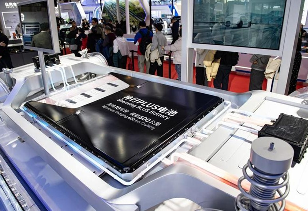
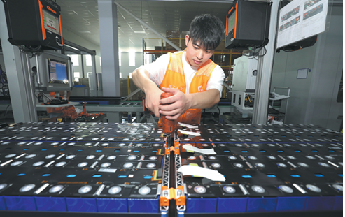
BUDAPEST – China’s Contemporary Amperex Technology Co Limited (CATL) said on Wednesday its battery cell factory in Debrecen, Hungary, is prepared for launch and will be central to the company’s strategy to deepen its long-term European operations.

 The plant, with an initial annual capacity of 40 gigawatt hours (GWh), is already fully booked by clients, CATL said. Cell production is scheduled to start in early 2026 after construction and installation of Industry 4.0 equipment is completed. The company is expanding its local workforce and expects to employ 1,500 people by the first quarter of 2026.

 “Our Debrecen investment is a major step towards strengthening CATL’s European presence,” said Matt Shen, managing director of CATL Germany and Hungary. “We are planning for the long term, bringing our most advanced and sustainable manufacturing technologies to Hungary.”

 Shen added that European partners had been “eagerly awaiting” the project’s completion.

 CATL said the plant was designed to meet strict European environmental standards, with recent permit adjustments cutting projected energy use by nearly 30 percent and reducing potable water demand to about a third of earlier estimates. The company aims to achieve carbon-neutral certification for the facility within two years of launch.

 The Debrecen site’s workforce has already exceeded 1,000, with two-thirds of new hires coming from the local community, the company said.

 Recruitment head Alexandra Kitta said the company aims to create a “local company with international know-how and opportunities.”


Article inline ad

Walmart’s Business In China Outperforming Global Average Sales

0

By Wang Zhuoqiong | China Daily | Updated: 2025-12-04

Walmart Inc reported a quarter of strong performance in China, with net sales in the country surging 21.8 percent to $6.1 billion on the back of Sam’s Club’s rapid expansion and accelerating online demand.

 The US retail giant on Nov 20 posted global revenue of $179.5 billion for the fiscal third quarter, up 6 percent in constant currency, while adjusted operating income rose 8 percent to $7.2 billion. E-commerce continued to be a major driver, growing 27 percent worldwide.

 Its business in China again outperformed Walmart’s global averages. The company’s net sales reached $6.1 billion, up 21.8 percent and comparable sales in the market climbed 13.8 percent, while e-commerce sales jumped 32 percent and accounted for more than half of Walmart China’s total sales.

 Gross margin slipped amid changes in business mix, but stronger sales, a favorable shift in channels and higher operational efficiency helped lower the cost ratio and lift operating profits, the company said.

 Much of the momentum continued to come from Sam’s Club, Walmart’s membership warehouse chain, which is emerging as one of the company’s strongest growth engines globally.

 CFO John David Rainey said in the earnings call that sales in China rose 22 percent in the quarter, reflecting “ongoing strength at Sam’s Club” and e-commerce growth of “more than 30 percent”.

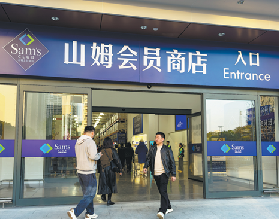
 Sam’s recorded double-digit transaction growth during the quarter and added eight new clubs in the past 12 months, including one opening in the third quarter.

 On Nov 21, Sam’s Club China opened a new store in Beijing’s Changping district — the city’s fifth and the company’s 61st nationwide. The retailer is preparing two more openings in December in Shanghai and Guangzhou, Guangdong province. Each of the stores in Jiaxing of Zhejiang province, Hefei of Anhui province, Zhongshan of Guangdong province and Yangzhou of Jiangsu province is the first entry in each city.

 Walmart China said 2025 will be Sam’s Club’s busiest expansion year in China, with 10 new stores planned — the most it has ever opened in a single year. The chain expects to maintain a rapid expansion pace beyond 2025 as its high-income, high-frequency membership model gains traction.

 Douglas McMillon, president, CEO & director of Walmart Inc, said during the Q3 earnings call: “The team in China is delivering orders fast. Nearly 80 percent of digital orders arrive in under an hour. In digital retail, China is more advanced than any other market we operate in.”

 He said: “In October, I got to visit three Chinese cities. In Hefei, a city of about 10 million people, we visited a relatively new Sam’s Club that was outstanding. We now have a healthy pipeline of new clubs coming.”

 However, the retailer has recently faced consumer backlash over product selection and presentations. The retailer’s app redesign, which altered product images from real photos to retouched “art shots” earlier this year, sparked backlash from consumers.

 Earlier this summer, online users on social media platforms criticized the inclusion of mass-market snacks such as Orion pies, Weilong Konjac treats and Panpan walnut puffs — items widely available in regular supermarkets. Many consumers questioned whether these products aligned with Sam’s Club’s premium brand image and stringent quality standards.

 The controversy highlights the growing tension between Sam’s Club’s high-end positioning and evolving consumer expectations in China’s rapidly changing retail landscape.

 Walmart’s performance comes as China’s retail sector undergoes rapid transformation. The rise of instant delivery, the emergence of new community retail ecosystems, and a reshaping of online-offline models have intensified competition, prompting global players to localize more deeply.

 Sam’s warehouse network — offering high repeat purchase rates, high basket sizes and low operating costs — has become a key differentiator. The infrastructure enables profitable online fulfillment, broadens geographic reach and boosts membership renewal and engagement by increasing purchase frequency.

 Walmart has identified urban middle-income households and single consumers as its core customer groups in China. Its strategy centers on three pillars: high-quality fresh and packaged foods; curated fast moving consumer goods and non-food essentials; and stable everyday low prices and omnichannel convenience.

 To get closer to consumers, Walmart is scaling its community store format — smaller, curated and neighborhood-focused outlets. Its fourth community store opened in Bao’an district in Shenzhen, Guangdong province, on Sept 13, following multiple rounds of testing and refinement. The format is now entering scaled rollout in the city.

 Walmart is also elevating its private labels. On Nov 17, its Marketside brand unveiled a full brand refresh, releasing nearly 1,000 new or upgraded products.

Article inline ad

German Firms Keen On Expanding In China

0

75% of surveyed companies identify influence from bilateral diplomatic ties

By Zhong Nan | China Daily | Updated: 2025-12-04

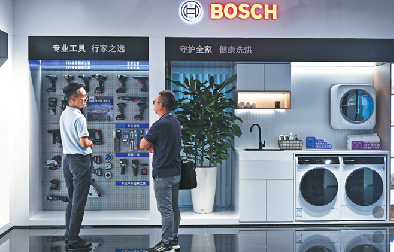
About 56 percent of German companies are considering more engagement with Chinese partners, with the primary motivations being business expansion in China and the need to adapt to “China Speed”, the German Chamber of Commerce in China said in a survey released early this week.

 According to the chamber’s 2025-2026 business confidence survey, around 75 percent of German companies said that China-European Union and China-Germany relations influence their businesses in China, with 34 percent reporting the relations provide a solid foundation for operations.

 Meanwhile, 64 percent of those surveyed identified improving the China picture in Germany as their leading expectation for the German government.

 The study was conducted between Sept 1 and Oct 6, with responses from 627 member companies of the chamber, including Bayer, Covestro, DHL, Mercedes-Benz and Siemens. The chamber has more than 2,000 members.

 “Sophisticated partnerships with Chinese companies, together with a third wave of localization that focuses on research and development and its speed of industrialization, have become key response mechanisms for German companies in China to strengthen their market position and drive not only local but also global top innovations,” said Martin Hofmann, chairperson of the German Chamber of Commerce in China (North China).

 When German companies rate business opportunities, the global expansion of Chinese firms ranks first, with 36 percent of firms citing it as the main opportunity — up 4.7 percentage points from 2024, said the study.

 Additionally, about 68 percent of participants are already engaged with Chinese companies going abroad, with 44 percent doing so mainly by providing products and services.

 Wan Zhe, a professor specializing in regional economic development at Beijing Normal University, said that many countries’ surging demand for infrastructure upgrades — from modern manufacturing facilities to digital infrastructure and green mobility projects — will create opportunities for both German and Chinese banks, project design firms and contractors, as well as material and equipment manufacturers.

 “China’s proposal to explore third-party market cooperation can bring benefits to both Western nations and developing countries participating in the Belt and Road Initiative, without causing a clash of interests,” she said.

 Zeiss Group, a German manufacturer of optical systems and optoelectronics, will expand its presence in the Yangtze River Delta region and the Guangdong-Hong Kong-Macao Greater Bay Area during China’s 15th Five-Year Plan (2026-30) period.


“Beyond advancing localized R&D and manufacturing for premium products, we will broaden collaboration across the industrial chain to better serve customers in China and overseas,” said Martin Fischer, president and CEO of Zeiss China.

 German specialty materials manufacturer Schott AG also plans to invest more than 60 million yuan ($8.4 million) in Suzhou, Jiangsu province, in the coming months.

 Upon full completion and ramp-up, the project aims to generate an annual output value of more than 1 billion yuan in China by 2030, covering new manufacturing capacity and innovation, said Salvatore Ruggiero, Schott’s vice-president for marketing and communication.

 Describing the investment plan as both “strategic” and “inevitable”, Ruggiero said the decision is fueled by China’s vast market size, strong innovation momentum, rapid emergence of new industries and growing potential for exports.

 Currently, about 90 percent of Schott’s products made in the country are sold domestically, but the new investment will enable exports to Southeast Asia, South Korea and Japan.

 Zheng Chunrong, deputy secretary-general of the Chinese Association for European Studies in Beijing, said that a stable framework of China-EU and China-Germany ties will help companies from both sides mitigate protectionist pressures, cultivate new growth drivers and deepen cooperation in emerging sectors, reinforcing the resilience and competitiveness of bilateral supply chains.

 Thanks to their complementary industrial structure, China-Germany trade grew by 4.4 percent year-on-year to 1.24 trillion yuan in the first 10 months of 2025, data from China’s General Administration of Customs showed.

Article inline ad

Expert: Next Year’s Fiscal Moves To Resemble 2025

0

By OUYANG SHIJIA and ZHOU LANXU | China Daily | Updated: 2025-12-04

China may stick to its “around 5 percent” annual growth target for 2026, while fiscal stimulus measures should mirror 2025 in scale and composition, with rebalancing proceeding gradually, said a renowned economist.

 As the market is eagerly awaiting clues for next year’s economic priorities from the upcoming annual Central Economic Work Conference, Robin Xing, chief China economist at Morgan Stanley, said policymakers are likely to aim for a growth target of “around 5 percent “next year to revive confidence among investors and consumers.

 Looking ahead, Xing warned of pressures from still-weak domestic demand amid the ongoing correction in the property market. “As real estate is still in the process of adjustment, housing prices and new construction will most likely remain in decline next year. And consumption growth may see a slight slowdown next year.”

 Exports, by contrast, are expected to be resilient thanks to solid global demand — particularly from the United States, he added.

 “Exports and external demand are relatively strong. US demand will remain fairly steady next year, particularly with investments in the booming artificial intelligence sector. That will not be bad news for the world and for China, and will support part of China’s exports.”

 Xing noted that China’s strong industrial competitiveness and its trade negotiations with the US have stabilized export performance. “Export growth may be slightly weaker than this year, but there won’t be a steep decline.”

 Robin Xing

Given those conditions, supply-centric initiatives — particularly infrastructure investment — are expected to remain a key policy tool to support growth in 2026, the first year of China’s 15th Five-Year Plan (2026-30) period. “If the government sets an annual growth target of around 5 percent for next year, infrastructure investment is still the most feasible lever,” he said.

 Adopted at the fourth plenary session of the 20th Central Committee of the Communist Party of China, the recommendations for formulating the 15th Five-Year Plan said that China would work hard to see that by the year 2035 its per capita GDP will be on par with that of a mid-level developed country.

 Sharing similar views with Xing, a Goldman Sachs report said this phrasing implies approximately 4.5 percent annual real GDP growth for the period from 2026 to 2030 and suggests a likely 2026 growth target of “around 5 percent”.

 Xing said next year’s two sessions will likely continue to emphasize infrastructure and front-load some local and central government bonds.

 “New investment directions are worth watching, such as underground pipelines, where there is huge room for upgrading. Green transition spending will also continue, so green power, energy storage and smart grids still have great potential,” he added. “AI is also another priority, which means computing power centers and related infrastructure will be a main focus for investment next year.”

 Despite challenges ahead, Xing highlighted improving confidence driven by three major shifts over the past year. “People feel reassured — policymakers care about the economy. China’s industrial strength and technological innovation have also bolstered sentiment. Confidence in corporate competitiveness and technological innovation has risen. Entrepreneurs never lie flat — they have kept improving.”

 Meanwhile, he emphasized progress in AI, saying China is among tops globally with a complete ecosystem in AI, from upstream computing power to midstream infrastructure and downstream applications, which is drawing more capital. “Capital is becoming more active. Overseas investors are showing stronger interest in China, and domestic institutions are also increasing their participation.”

 Xing said he believed more forceful fiscal support could follow if deflationary risks persist into 2026. “Fiscal policy may start relatively moderately, similar to 2025 as a ratio of GDP, but if the economy remains stuck amid deflationary pressures in the first half, there could be an expansion in the third quarter.”

 When it comes to intensified fiscal support, Xing suggested expanding the scope of trade-in deals for consumer goods to cover more types of services consumption. “Services like entertainment and tourism can be consumed repeatedly and support employment.”

 Looking ahead, Xing said central government support for housing is possible, but implementation challenges remain. On the monetary policy front, Xing said his team expects 10 to 20 basis point policy rate cuts and 25 to 50 basis point reserve requirement ratio reductions next year to accommodate fiscal policy.

 Contact the writers at ouyangshijia@chinadaily.com.cn

Article inline ad

Finance For Smaller Companies Boosted

0

China Daily | Updated: 2025-12-04

China has continuously strengthened its inclusive finance support for small and micro firms during the 14th Five-Year Plan period (2021-25), with the average annual growth rate of inclusive loans to these entities exceeding 20 percent during the period.

 Since China officially proposed the development of inclusive finance in 2013, continuous efforts have significantly enhanced the accessibility of inclusive financing for small and micro enterprises.

 Official data show that the balance of inclusive loans to small and micro firms had reached 35.77 trillion yuan ($5.06 trillion) by the end of October this year.

 In addition, China has further lowered the costs of inclusive finance as such loans primarily serve small and micro enterprises, individual businesses and farmers. Such entities usually face difficulties in obtaining financing due to a lack of collateral and limited risk-bearing capacity.

 In June, the interest rate for newly issued inclusive loans to small and micro firms stood at 3.48 percent — roughly 2 percentage points lower than the level recorded at the end of the 13th Five-Year Plan period (2016-20).

 In the next five-year plan period, China will continue to step up efforts to develop inclusive finance, according to the Communist Party of China Central Committee’s recommendations for formulating the 15th Five-Year Plan (2026-30), which were unveiled in October.

 Xinhua – China Daily

Article inline ad

UAV Services Made Available On Tap Of A Button

0

By HE CHUN in Changsha and ZHANG XIAOMIN | China Daily | Updated: 2025-12-03

Residents in Changsha, Hunan province, are now using a WeChat mini-program called “Kongzhong Kuaidi” to book unmanned aerial vehicle (UAV) services ranging from aerial photography to emergency rescue, high-rise window cleaning and even to sow seeds.

 Launched on Aug 18, it is the country’s first mobile internet service platform dedicated to the low-altitude economy, according to Wen Hongcheng, founder of the platform and general manager of Changsha-based Hunan Kongzhong Kuaidi Intelligent Technology Co.

 “It has gathered over 500 certified operators, attracted 5,300 registered users, completed more than 500 orders in total, achieved revenue exceeding 2 million yuan ($282,816), and the daily visit volume of the platform has reached 26,000,” he said. “The platform has innovatively built a digital service system connecting users with professional drone pilots.

 “Pilots register on the platform with qualifications, and users place orders with one click. The system then intelligently matches them with certified operators,” Wen said.

 The company plans to gradually expand its services across Hunan and aims to enter the national market by the end of the year.

 Xindahui Technology Engineering Co, a professional UAV service provider specializing in glass-cleaning UAVs with branches in Guangdong province’s Guangzhou and Shenzhen; Changsha, and Wuhan in Hubei province, has been among the first enterprises to join the platform.

 “The platform is transparent and efficient. We’ve already received some orders,” said Hu Yi, general manager of Xindahui.

 “It significantly shortens the distance between potential customers and us, and reduces marketing costs compared to traditional channels,” he said.

 Similar to ride-hailing platform Didi, Kongzhong Kuaidi automatically assigns orders, handles payments, and allows users to rate services after each flight.

 It also offers pilot training, certification, and drone leasing and sales, building a full chain of talent, equipment and technology.

 Established in January in the Changsha High-tech Industrial Development Zone, the company had spent more than a year conducting research on the low-altitude economy across more than 100 cities before its founding.

 Wen noted that the company’s research team includes a chief scientist from a key State laboratory in Wuhan University, along with core members from leading domestic tech firms.

 In terms of hardware, the company has independently developed a high-reliability AIoT (artificial intelligence of things) terminal — “black box” — for UAVs.

 According to Wen, Kongzhong Kuaidi is set to build Hunan’s first intelligent drone production line to ensure product quality and supply chain independence, further improving operational safety and reliability.

 The company’s rapid growth is closely tied to the strong industrial advantages of the city and the province.

 “Changsha’s well-developed industrial chain acts like a powerful magnet, gathering resources efficiently and enabling precise matching among R&D, manufacturing, and market applications,” Wen said.

 Hunan was approved in September 2020 as the country’s first province-wide pilot reform zone for low-altitude airspace management.

 Since then, the province has built an industrial ecosystem integrating satellite infrastructure, aerial equipment and ground applications.

 In Changsha, drones now deliver packages steadily to customers; in Zhuzhou, Hunan, shared e-bikes equipped with Beidou high-precision positioning allow users to park with centimeter-level accuracy; in Hunan’s Yueyang, drones monitor rice growth, nutrient status, and pests, enabling farmers to understand crop conditions via smartphones.

 In December 2024, a drone in Zhuzhou’s Tianyuan district carried medical specimens from Sanmen town’s health center to Zhuzhou Central Hospital 30 kilometers away, marking the launch of Hunan’s first “medical consortium drone route”.

 Statistics show that in 2024, the total output of Hunan’s aerospace and Beidou navigation industry reached 121.25 billion yuan, a year-on-year increase of 17.9 percent.

 Companies across the industrial chain are benefiting from broader development opportunities and a better business environment.

 Zhu Youfang contributed to this story.


Article inline ad

Deepseek Launches New AI Models With Top Efficiency And Performance

0

Xinhua | Updated: 2025-12-03

HANGZHOU – Chinese AI tech firm DeepSeek officially released two new models on Monday evening – DeepSeek-V3.2 and its high-compute variant, DeepSeek-V3.2-Speciale.

 By implementing a robust reinforcement learning protocol and scaling post-training computation, DeepSeek-V3.2 performs comparably to GPT-5, according to the company. The AI model balances high computational efficiency while maintaining superior reasoning and agent performance.

 Competition among leading global tech companies in the AI model arena is intensifying. In August, OpenAI launched its flagship model, GPT-5, describing it as its smartest and fastest model to date. And in November, Google released its latest AI system, Gemini-3.0-Pro.

 The high-compute DeepSeek-V3.2-Speciale surpasses GPT-5 and exhibits reasoning proficiency comparable to Gemini-3.0-Pro, according to an essay that was released by the company. The variant achieved gold-medal performance in both the 2025 International Mathematical Olympiad and the International Olympiad in Informatics.

 A key technical breakthrough behind is the DeepSeek Sparse Attention mechanism, which substantially reduces computational complexity while preserving model performance in long-context scenarios.

 Founded in July 2023, DeepSeek focuses on the research and development of large language models and multimodal AI technologies.

Article inline ad

World Models New Driver For Auto Autonomy

0

Cutting-edge tech to improve vehicle reactions in complex environments

By Li Jiaying | China Daily | Updated: 2025-12-03

World models — neural networks designed to understand and simulate the dynamics of the real world, including physical properties and spatial relationships — are emerging as the next strategic frontier for artificial intelligence-powered assisted driving, with automakers and tech heavyweights doubling down on the sector to improve how vehicles perceive, predict and act in complex environments, said industry experts.

 “A world model understands what is happening in the physical world at this moment and predicts what comes next, including planning capabilities,” said Arnold Gao, vice-president analyst at research firm Gartner.

 As one of the core approaches in physical AI, world models have attracted attention in tech industries. Gartner has listed physical AI as one of the Top 10 strategic technology trends for 2026, given its ability to interact with the real world and its most representative applications in autonomous vehicle and robotics industries.

 Unlike large language models, which lack direct simulation and predictive capabilities for physical environments, world models learn representations from sensory data and forecast dynamics such as motion, force and spatial relationships.

 For instance, when a vehicle encounters a potential anomaly ahead, the world model continuously generates multiple possibilities for the next second — whether to brake, change lanes or take other preventive measures, Gao said.

 “It is this predictive simulation that allows autonomous systems to make more reliable, humanlike decisions,” he said, adding that many advanced driver assistance systems currently on the road already follow the world model approach.

 According to a white paper released by Frost & Sullivan covering China’s world model sector, more than 80 percent of autonomous driving algorithms now use world models for auxiliary training. By automatically generating self-labeled images and video data, and creating multimodal, cross-temporal scenarios without heavy manual design, world models can reduce costs by nearly 50 percent and improve efficiency by around 70 percent, it said.

 Against this backdrop, Chinese automakers are accelerating the development and in-vehicle deployment of world models.

 In September, Huawei’s Qiankun ADS 4.0 began appearing in its vehicles. Powered by the company’s self-developed WEWA architecture, it includes a cloud-based world engine for large-scale data training and scenario generation, and vehicle world behavior architecture for real-time environmental reasoning and humanlike decision-making.

 Nio also announced plans to introduce the Nio World Model (NWM) 2.0 across multiple platforms from late this year through the first quarter of next year. The first version of NWM, deployed since May, can simulate 216 potential scenarios within 100 milliseconds, select an optimal path through algorithmic filtering and emulate human spatial-temporal reasoning with instinct-like predictive capabilities.

 As the rapid adoption of world models in autonomous driving calls for further advances in relevant technologies, global tech giants such as Nvidia, Google and Tesla are also ramping up efforts in this promising new field.

 In January, Nvidia introduced Cosmos, a generative world foundation model platform that can produce vast amounts of realistic, physics-based data for training and evaluating autonomous vehicles, robots and other physical AI systems.

 The move was followed by Google DeepMind, which launched Genie 3 in August — a new-generation world model that enables real-time interaction for the first time. With a text prompt, Genie 3 can generate dynamic worlds navigable at 24 frames per second, maintaining scene consistency for several minutes at 720p resolution.

 “The application of world models in autonomous driving will resolve many current bottlenecks,” said Wei Dong, an engineer at the microelectronics technology laboratory of Xi’an Technological University.

 “For example, world models can generate realistic driving scene videos that are used to train robots and autonomous vehicles, enabling developers to conduct training and testing in a virtual environment,” Wei said.

 Beyond generating virtual training environments for robots and self-driving vehicles, Wei said world model-produced realistic videos are far more cost-effective than traditional data collection, and also enable closed-loop data processing, improving efficiency and accuracy while accelerating system iteration and optimization.

 “With world models, end-to-end systems gain more reliable safeguards and greater potential for improvement,” Wei added.

 lijiaying@chinadaily.com.cn

Article inline ad

More Sino-EU Cooperation To Boost Trade

0

Brussels encouraged to adopt flexible approach to stabilize relations

By WANG KEJU | China Daily | Updated: 2025-12-03

The European Union’s unilateral and protectionist trade measures against China are fragmenting supply chains, raising costs and creating significant uncertainty for multinational corporations, particularly those within the bloc, experts and executives said.

 Brussels should adopt a more cooperative approach with Beijing to help stabilize bilateral trade relations, they said, warning that rising protectionism would risk further escalating trade tensions and ultimately harm the EU’s own interests.

 A survey released on Monday by the European Union Chamber of Commerce in China showed that a majority of respondents had already been — or expected to be — impacted by China’s export control measures.

 “China’s export controls have increased the uncertainty felt by European businesses operating in the country, with companies facing risks of production slowdowns or even stoppages,” said Jens Eskelund, president of the European Union Chamber of Commerce in China.

 Once all of China’s announced export control measures have been implemented, 60 percent of respondents expect “moderate” or “significant” disruptions to their supply chains. An additional 13 percent expect to face production stoppages or slowdowns, according to the survey.

 The countermeasures adopted by Beijing are a response to the bloc’s resorting to unilateral trade instruments in a more aggressive way toward China, including hefty tariffs on Chinese-made electric vehicles and steel, and restrictions on Chinese medical devices in its public procurement market.

 “Global industries, from automobiles to semiconductors, are deeply intertwined. Disrupting that web doesn’t just hurt China — it impacts production, innovation and inflation for Europe as well,” said Cui Fan, a professor of international trade at the University of International Business and Economics in Beijing.

 Although 43 percent of respondents have yet to decide how to respond to China’s export controls, 36 percent intend to work with suppliers to develop more capacity outside of the country, the survey showed.

 “Further escalation between China and the EU would only destabilize the ties that support consumer markets and corporate growth within the bloc,” said Zhou Mi, senior researcher at the Chinese Academy of International Trade and Economic Cooperation.

 Zhou noted that the EU’s strengths in advanced technology and high-end manufacturing find one of their most significant applications and scaling opportunities within China. Meanwhile, China’s industrial ecosystem and market scale provide European companies with supply chain resilience and growth potential.

 The ability of businesses to thrive depends on the overall stability and predictability of the economic environment, which could be enhanced through closer China-EU cooperation rather than trade barriers and restrictive measures, Zhou added.

 Yin Zheng, executive vice-president of China and East Asia operations at Schneider Electric, said that China serves as a vital engine for global economic growth, supported by a robust industrial foundation and a resilient supply chain.

 In particular, the advancement of new quality productive forces — which emphasizes digital and green factors as core components of production — provides a broader development platform for foreign tech firms.

 “Investing more in China means investing in the future,” Yin said, adding that China has become the French company’s second-largest market worldwide, and one of its four major global research and development hubs.

 wangkeju@chinadaily.com.cn

Article inline ad

Sinopec, LG Chem To Jointly Develop Key Materials For Sodium-Ion Batteries

0

By Zheng Xin | China Daily | Updated: 2025-12-03

China Petroleum and Chemical Corp (Sinopec) recently signed a strategic agreement with South Korean petrochemical giant LG Chem to jointly develop key materials for sodium-ion batteries, a move that signals the State-owned oil major’s accelerating pivot away from fossil fuels toward the renewable energy supply chain.

 The collaboration will see the two industrial heavyweights co-develop cathode and anode materials specifically for the burgeoning sodium-ion sector.

 The partnership initially targets the energy storage system and low-speed electric vehicle markets, segments where cost sensitivity often outweighs the need for the extreme energy density provided by traditional lithium-ion cells, said Sinopec.

 Under the terms of the deal, Sinopec and LG Chem will also explore new business models to commercialize the technology and have pledged to expand their cooperation into broader “new energy” and high-value material sectors in the future.

 The deal comes as the global battery industry seeks viable alternatives to lithium, a metal plagued by price volatility and geopolitical supply chain risks.

 Wan Gang, president of the China Association for Science and Technology, said earlier that China’s power battery exports topped 129 gigawatt-hours in the first three quarters, up 32.7 percent year-on-year.

 The robust development of the country’s power battery industry has underpinned the growth of its new energy vehicle sector. Sales of the country’s NEVs in the first half reached 6.937 million units, a year-on-year increase of 40.3 percent, Wan said.

 Emerging artificial intelligence technologies, coupled with the new model of vehicle-battery separation, have brought brand-new opportunities for innovation in the industry while raising the bar for its development, Wan said.

 He called for strengthening diversified technological innovation and developing intelligent management technologies to enhance battery safety, reliability and environmental adaptability.

 The advancement of the innovative development in new application models and formats for power batteries is necessary in enhancing the industry’s sustainable development capacity, he said.

 Amid the backdrop, sodium-ion batteries are gaining significant attention as a viable alternative to lithium-ion counterparts and, according to Sinopec, offer distinct advantages in terms of resource availability and cost-effectiveness.

 They have also been lauded by Sinopec and other market players for enhanced safety, faster charging capabilities and superior performance in low-temperature environments compared to lithium iron phosphate batteries, with less capacity decay.

 China’s power battery industry has maintained rapid growth in recent years, with major breakthroughs in core technologies.

 The latest battery cells in the country currently reach energy densities exceeding 300 watt-hours per kilogram, enable 15-minute fast charging and deliver an average driving range of over 500 kilometers, according to the Ministry of Industry and Information Technology.

 China will come up with a plan to provide strategic guidance for the development of NEVs and advanced battery industries during the next planning cycle, it said.

 The ministry also pledged to promote innovation in battery swapping models, expand application scenarios and advance vehicle-to-grid interaction pilot programs.

 For Sinopec, the world’s largest oil refiner by capacity, the deal represents a critical step in diversifying its portfolio against the backdrop of a slowing long-term outlook for refined oil products.

 The company has aggressively positioned itself as a burgeoning leader in China’s green transition, having already rolled out a massive network of hydrogen refueling stations and EV charging infrastructure across the Chinese mainland.

 The market outlook for sodiumion batteries is robust, particularly in China. Research institutions project the Chinese sodium-ion battery market to surge from an estimated 10 GWh this year to 292 GWh by 2034, representing an impressive compound annual growth rate of approximately 45 percent. By 2030, China is expected to account for over 90 percent of global sodiumion battery manufacturing volume.

 “This joint development of sodium-ion battery materials will help both parties further enhance their technical strength and market competitiveness, promoting energy transition and sustainable development,” said Hou Qijun, chairman of Sinopec.


Article inline ad