Wednesday, November 25, 2026

Home Blog Page 133

Mncs Explore Green Cooperation In Chinese Market

0

China Daily | Updated: 2025-12-03

NANCHANG — A robot named “Pasini” drew crowds at the 2025 World Green Development Investment and Trade Expo and China Green Food Expo, as it moved its mechanical arms which are fitted with nearly 2,000 tactile sensors.

 Indian blogger Amit Kumar raised his phone to livestream the scene to his followers overseas, enthusiastically explaining the advanced technology on display.

 “This expo is amazing! It showcases cutting-edge green technologies while offering a chance to sample eco-friendly cuisine from around the world,” Kumar said.

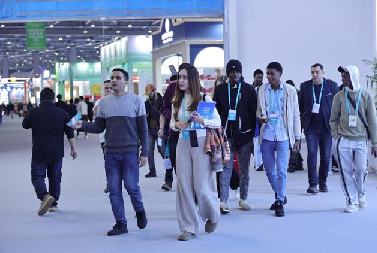
 The event, held from Nov 27 to 30 in Nanchang, capital of East China’s Jiangxi province, brought together more than 2,500 exhibitors from over 60 countries and regions.

 The event showcased the latest green technologies across various industries such as new energy, artificial intelligence, embodied intelligence and the low-altitude economy, as well as green food products from around the world. According to organizers, more than 60 projects worth 45 billion yuan ($6.36 billion) were signed.

 In recent years, China has actively advanced green energy transition through concrete actions, establishing the world’s largest clean energy supply system.

 “China is actively seeking deeper cooperation in the global green industry and working toward its carbon peaking and carbon neutrality goals,” said Jia Kang, a researcher at the Chinese Academy of Fiscal Sciences.

 Seah Shoo Chin, Malaysian State Executive Councillor for Malacca, welcomed Chinese enterprises to explore green industry cooperation in Malaysia.

 Malacca is advancing green projects such as waste-to-energy initiatives while offering industrial parks for investment and high-quality halal food certification. “We hope to deepen China-Malaysia cooperation in green manufacturing, clean energy and the circular economy, creating both inclusive and replicable projects,” Seah said.

 The exhibition also attracted buyers from across the globe, many of whom were impressed with the innovative products on display. Souley Flhadji Adamou from the Republic of Niger, who has been engaged in China-Africa trade for a decade, was seen testing a rideable electric suitcase.

 Mutale Nalumango, vice-president of Zambia, stated at the opening ceremony of the expo that Zambia aspires to build a sustainable and resilient green economy, as climate change has led to prolonged droughts and erratic rainfall patterns, placing pressure on key sectors such as hydropower and agriculture.

 “We are deeply grateful to Chinese enterprises and people for coming to Africa, especially for investing and establishing businesses in Zambia, including the development of industrial parks,” Nalumango said. “We look forward to further deepening cooperation in areas such as green food and clean energy in the future.”

 Xinhua – China Daily


Article inline ad

China’s Central Bank Injects Liquidity Through Multiple Tools In Nov

0

Xinhua | Updated: 2025-12-03

BEIJING – The People’s Bank of China (PBOC), the country’s central bank, injected liquidity into the market using multiple tools in November, it said in a statement on Tuesday.

 The PBOC injected 1 trillion yuan ($141.2 billion) through its medium-term lending facility (MLF) over the last month and withdrew 900 billion yuan, resulting in a net injection of 100 billion yuan, the bank said.

 In addition to the MLF operations, it also reported that its open market trading of treasury bonds had yielded a net injection of 50 billion yuan, and that central treasury cash management operations contributed a net injection of 80 billion yuan.

 Through seven-day reverse repo operations, the central bank injected 4.8 trillion yuan through these agreements but withdrew 5.36 trillion yuan, resulting in a net withdrawal of about 556 billion yuan.


Article inline ad

Chinese Modernization Offers New Choice For Global South

0

Xinhua | Updated: 2025-12-03

GUANGZHOU – Many participants of the 2025 Understanding China Conference have said that China’s development practices offer the world – countries in the Global South, in particular – an alternative type of modernization distinct from established Western models, adding stability and momentum to global development.

 Themed “New Plan, New Development, New Choices – Chinese Modernization and New Vision for Global Governance,” the conference took place from Sunday to Tuesday in Guangzhou, the capital of South China’s Guangdong province. It attracted a record 800 participants from home and abroad, about 70 percent of whom come from countries in the Global South.

 Discussions centered on the Communist Party of China Central Committee’s recommendations for formulating the 15th Five-Year Plan (2026-2030) for China’s economic and social development, as well as its global significance.

 “The Chinese path to modernization offers a new choice to the developing countries, particularly to African countries, as well as to the Global South at large, by presenting an alternative model to the traditionally conceived perception of Western-style development,” Mulatu Teshome, former Ethiopian president, said at the opening ceremony. He said China has made great contributions to global economic growth, poverty reduction, environmental protection and global governance.

 “From the experience of Chinese modernization, we can vividly see that countries can achieve progress based on their own national conditions and historical backgrounds by challenging the notion that equals modernization with Westernization,” Teshome said.

 His view was shared by other participants, including Andrei Bystritsky, chairman of the board of the Foundation for Development and Support of Russian think tank Valdai Discussion Club, who said that China’s development proves there is more than one path to national prosperity.

 China has transformed and modernized itself rapidly, and radically changed the way of life for a huge number of people, reshaping its role on the global stage, Bystritsky said.

 China’s pragmatic actions in international cooperation also drew significant attention at the conference. Erastus Mwencha, former vice chairman of the African Union Commission, hailed China’s remarkable contributions to multilateralism.

 Through the Belt and Road Initiative, China has made significant investments and promoted trade, Mwencha said. Tariff reductions have helped open the Chinese consumer market to Africa while enabling African buyers to access a wide range of China-made products, he said.

 Ong Tee Keat, former Malaysian transport minister, noted that multilateral development banks such as the Asian Infrastructure Investment Bank and the New Development Bank can help bridge infrastructure gaps and support growth needs across the Global South.

 According to the China International Development Cooperation Agency, China has increased its Global Development and South-South Cooperation Fund to $4 billion under the Global Development Initiative. It has mobilized over $23 billion to support the development and invigoration of the Global South, and launched more than 1,800 cooperation projects.

 China has also long been providing medical assistance to developing countries. According to the National Health Commission, China has dispatched nearly 30,000 medical workers to 77 countries or regions and established partnerships with 48 hospitals in 43 countries since 1963.

 International guests also emphasized that China’s development is closely linked to the future of the Global South.

 China’s Global Governance Initiative reflects the aspirations of the Global South and represents the pursuit of justice and equality, said Essam Sharaf, former prime minister of Egypt.

 Sharaf added that the reasonable, timely initiative does not seek to replace existing systems but rather to promote a more balanced and stable world order.

 Participants also hailed China’s green development. The severe impacts of global climate change demand joint action, and China’s green transition offers new opportunities, said Rishan de Silva, executive director of the Geopolitical Cartographer in Sri Lanka.

 The China-ASEAN Free Trade Area charts a clear course for strengthened trade ties, Ong said. In the coming years, Malaysia will enhance its green industry cooperation with China and strengthen supply-chain resilience, he added.

Article inline ad

Forum Spurs China’s Business Ties With Central Asia

0

By FANG AIQING and MAO WEIHUA in Urumqi | China Daily | Updated: 2025-12-03

The importance of leveraging regional development through enhanced investment and connectivity infrastructure was highlighted at the inaugural Tianshan Forum for Central Asia Economic Cooperation, which kicked off on Tuesday in Urumqi, Xinjiang Uygur autonomous region.

 Themed “Unlocking Connectivity and Investment in Central Asia”, the two-day event brought together around 380 participants, including academics, government officials and representatives from international organizations and the private sector.

 The attendees came from member countries of the Central Asia Regional Economic Cooperation (CAREC) Program, a partnership of 11 countries initiated by the Asian Development Bank.

 Discussions at the forum addressed opportunities and challenges, the business environment and innovative investment tools to advance regional connectivity and promote investment.

 During the opening ceremony, Chinese Finance Minister Lan Fo’an highlighted Central Asia’s growing significance on the international stage, underpinned by strengthened economic cooperation.

 Lan stressed the need to expand the scope and scale of collaboration and expressed hope that the forum’s organizer — the CAREC Institute — would continue to base its efforts on regional realities and contribute to further development.

 Headquartered in Urumqi, the institute is an intergovernmental organization dedicated to promoting regional economic cooperation and development through research, capacity building, knowledge sharing and partnership development.

 The institute serves as a knowledge support arm of the CAREC Program.

 Pakistan’s Federal Minister for Planning, Development and Special Initiatives Ahsan Iqbal said improved infrastructure and transport connectivity between Pakistan and China has paved the way for cooperation extending beyond trade into knowledge exchange, with a shared emphasis on youth development.

 He said he had productive meetings with counterparts from China and other countries during the forum, focusing on expanding cooperation in industrial development, agricultural modernization, technology and people-to-people exchanges.

 “This forum has provided a very good opportunity to exchange ideas between different countries about how they are tackling their problems and what new initiatives they are taking,” he added.

 Fabrizio Hochschild, former under-secretary-general of the United Nations, said the Central Asian region was historically an important trade hub between East and West, while the Belt and Road Initiative and other connectivity projects have demonstrated the region’s growing importance from both trade and political perspectives.

 Suriyan Vichitlekarn, executive director of the Mekong Institute, emphasized the necessity for Central Asian countries to collaborate in promoting infrastructure, energy and transport connectivity.

 He pointed out that the Mekong Institute and the CAREC Institute, sharing similar roles, goals and challenges, have been deepening dialogue and working to establish cooperative mechanisms.

Article inline ad

Summit To Link Buyers And Suppliers

0

By Ren Qi | China Daily | Updated: 2025-12-03

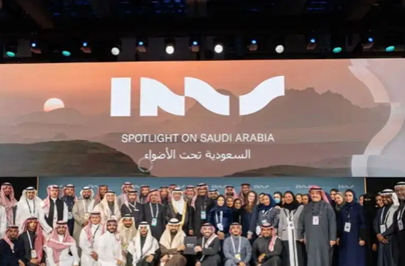
The China MICE Summit in Riyadh, Saudi Arabia, in 2026, will set out a specialist platform to link top-tier Chinese MICE decision-makers with tourism and hospitality suppliers from Saudi Arabia and the wider Middle East, companies said.

 MICE is an acronym for the meetings, incentives, conferences and exhibitions sector.

 The initiative aligns with Saudi Arabia’s Vision 2030 and aims to bolster the kingdom’s position in global business events and tourism while meeting growing demand for structured, high-quality B2B engagement between China and the Middle East.

 China Travel Online and Taiba Investments signed a memorandum of understanding at World Travel Market London in November to jointly host next year’s China MICE Summit in Riyadh, marking the first dedicated China-focused MICE B2B event in the Middle East.

 Marcus Lee, CEO of China Travel Online and producer of the China MICE Summit, said the partnership marks a milestone by establishing the region’s first dedicated China-focused MICE B2B event.

 “Chinese MICE and corporate travel segments deliver higher yields and long-term strategic value, but remain among the most challenging markets to access,” Lee told China Daily.

 He said the summit is designed to maximize business opportunities from China to international destinations, with Saudi Arabia as the latest strategic expansion of the platform, and is positioned to provide a professional, highly curated environment for building long-term partnerships between buyers and suppliers.

 The Global Business Travel Association’s annual Global Business Travel Index estimates China’s business travel spending reached $372.5 billion in 2024, accounting for 25 percent of global expenditure.

 Taiba Investments will serve as the summit’s strategic industry partner. The company, one of Saudi Arabia’s leading hospitality and real estate firms, has strengthened its portfolio following the acquisition of Dur Hospitality.

 “We are dedicated to meeting every need of Chinese visitors — from language and cuisine to cultural immersion — ensuring their visit to the kingdom is truly memorable,” said Hassan Ahdab, chief hospitality operations officer at Taiba. “This collaboration will drive increased Chinese tourism and further position Saudi Arabia as a leading global tourism destination.”

 In contrast to large-scale, mass-market trade exhibitions, the China MICE Summit will adopt a quality-driven, highly targeted model. The 2026 Riyadh edition will host more than 50 carefully selected Chinese MICE buyers, including incentive travel specialists, MICE operators, conference organizers, corporate travel planners, business travel agencies and exhibition companies.

 As part of the summit program, Chinese buyers will be invited to join city and regional tours, hotel and attraction inspections, and visits to MICE venues, and take part in engagements with local Saudi authorities and companies to deepen understanding of the destination’s infrastructure, capabilities and partnership opportunities.

 “The launch of China MICE Summit Saudi Arabia reflects the rising importance of the Middle East as a fast-growing and competitive MICE destination, while reinforcing Saudi Arabia’s position as a key hub for international business events,” Lee said.

Article inline ad

Yuan poised for stronger global role

0

Supporting Chinese companies’ overseas expansion a growing strategic priority

By Zhou Lanxu, Wang Keju and Ouyang Shijia | China Daily | Updated: 2025-12-03

The Chinese yuan is approaching a strategic window to accelerate its ascent as an international reserve currency, as the US dollar’s role is increasingly questioned, and support for domestic companies in going global is set to become a higher priority for China, economists and policy advisers said.

 To translate this opportunity into tangible progress, it is seen as integral to broaden global investors’ access to China’s capital markets through a more integrated framework, and to significantly raise the capital account liberalization level in a gradual manner to ensure openness as well as stability.

 “Rising geopolitical uncertainties and growing doubts over the United States’ fiscal and trade policies create a rare window of opportunity for the renminbi and other currencies like the euro and the yen to gain greater favor among global investors,” said Betty Wang, head of Northeast Asia research at Oxford Economics.

 Markets have priced in a stronger yuan as investors adjust their allocations amid weakening confidence in the dollar and US interest rate cuts. The onshore renminbi rose to 7.0644 per dollar on Monday, its strongest level since October 2024. Goldman Sachs forecasts that the currency could appreciate to around 6.6 per dollar by 2027.

 Also accelerating the renminbi’s international rise would be the global expansion of Chinese manufacturers, which increases the demand for cross-border renminbi financing and settlement, analysts said.

 Guo Kai, executive president of the CF40 Institute, said that supporting Chinese companies’ overseas expansion has taken on growing strategic importance, as it offers a sustainable and mutually beneficial way for China to manage its trade surplus with the rest of the world.

 The country’s leadership has signaled a more assertive, proactive stance toward renminbi internationalization.

 Adopted at the fourth plenary session of the 20th Central Committee of the Communist Party of China, the recommendations for formulating the 15th Five-Year Plan (2026-30) called for advancing the internationalization — a fine-tuning from “steadily and prudently” advancing its internationalization set at last year’s third plenary session.

 Pan Gongsheng, governor of the People’s Bank of China, the country’s central bank, said in October that China will comprehensively enhance the international currency functions of the renminbi, including pricing, payment, investment, financing and reserve.

 Guan Tao, global chief economist at BOCI China, said that China’s pursuit of a currency whose international standing matches its economic influence is “a natural choice”, serving the real economy by supporting Belt and Road cooperation and the global expansion of Chinese enterprises.

 “The renminbi also offers other economies and investors an alternative when the dollar-dominated system is showing rising fragility, helping reduce overreliance on one single currency and bolstering global financial resilience,” said Guan.

 The renminbi is now China’s largest cross-border settlement currency and the world’s second-most used in trade finance, ranking third in the International Monetary Fund’s Special Drawing Rights basket.

 Despite the progress, overseas investors currently hold only around 3 to 4 percent of onshore stocks and bonds by market value, official data showed. As of the second quarter, the renminbi accounted for 2.12 percent of allocated foreign exchange reserves, far below China’s economic weight, according to the IMF.

 Noting that the acceptance of the currency remains constrained as it is not yet fully convertible under the capital account, which tracks cross-border capital flows, Guan suggested lifting the combined share of items classified as “basically convertible” and “convertible” to more than 80 percent of all capital account transactions by 2030, up from about 60 percent at present.

 Guan, who served at the State Administration of Foreign Exchange, said that future opening-up steps are likely to maintain a prudent and gradual approach, as capital account liberalization could amplify asset price swings and market distortions if domestic reforms fail to keep pace.

 Howard Davies, chair of the International Advisory Council of the China Securities Regulatory Commission, said that some degree of risk-taking and letting the renminbi be more convertible would be inevitable if China aims to build a truly international currency.

 Thomas Helbling, deputy director of the IMF’s Asia and Pacific Department, said, “For the greater internationalization of the renminbi, China would need to further open its financial markets and allow easier access for foreign participants to invest in liquid renminbi assets that could serve as reserves for central banks.”

Article inline ad

New Engine Powers Cargo Drone Expansion

0

By ZHAO LEI in Zhuhai, Guangdong | chinadaily.com.cn | Updated: 2025-12-01

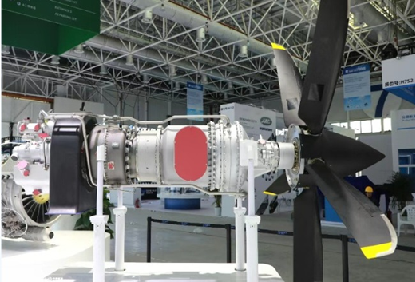
As China’s low-altitude economy continues to expand, the demand for general-purpose aircraft and drones is rising. To tap into this burgeoning market, Aero Engine Corp of China, the country’s dominant aircraft engine supplier, has developed a broad portfolio of products, which it is also actively promoting.

 The latest model the State-owned aviation conglomerate is offering is the ATP120, a 1,200-kilowatt turboprop engine developed by Harbin Dongan Civil Aviation Engine Co, a subsidiary of AECC based in Harbin, Heilongjiang province.

 According to the company, the ATP120 can power general-aviation aircraft, trainer planes and reconnaissance drones. It can also be adapted for hybrid propulsion or hydrogen-fueled systems.

 The engine features a modular design, long service life and strong environmental adaptability, including the ability to operate in high-altitude regions, the company said, adding that it promises low operating and maintenance costs, reduced fuel consumption, high safety standards and reliable performance.

 “The ATP120 has been developed to meet the demand for suitable engines created by the rapid development of China’s low-altitude economy in recent years, with its primary target users being large cargo drones,” said Chen Yuying, the engine’s chief designer at Harbin Dongan.

 China’s civil turboprop engine sector has long experienced slow development and limited product types, largely due to the sluggish growth of the domestic general-aviation industry in the past, she told China Daily on Friday during the 2025 Asia General Aviation Exhibition in Zhuhai, Guangdong province.

 Favorable government policies are now spurring both State-owned and private companies to expand into aviation fields, Chen noted.

 “One of their major focuses is unmanned cargo planes that can deliver goods in sparsely populated areas, such as western regions and southern islands,” she said. “Previously, cargo transportation relied mainly on manned aircraft, which incurred relatively higher costs. Such errands can now be run by drones, powered by engines like the ATP120, which will tremendously reduce operating costs.”

 A single ATP120 can propel an aircraft with a maximum takeoff weight of 8 metric tons, while two engines can support a 16-ton plane, she added.

 Two private enterprises have already signed cooperation agreements with AECC to procure the new engine for their large cargo drones, according to the chief designer.

 “Next year, one company’s unmanned aircraft will be equipped with two ATP120 engines to power the maiden flight of both the drone and the engine,” Chen said, adding that once put into use, the ATP120 will end the absence of a domestically developed 1,200-kilowatt turboprop engine in the Chinese market.

 Yin Zeyong, an academician at the Chinese Academy of Engineering and a senior aero-engine expert, noted that in 2024, general-aviation aircraft in China recorded 1.34 million flight hours.

 By the end of 2045, the nation will boast 13,000 general-aviation aircraft, generating demand for nearly 10,000 engines, he said.

Article inline ad

Manufacturing PMI Rises In November

0

By Ouyang Shijia | chinadaily.com.cn | Updated: 2025-12-01

China’s factory activity improved slightly in November, but remained below the 50-point mark that separates contraction from expansion, reinforcing analysts’ calls for further targeted measures to shore up growth momentum as the year-end approaches.

 With the market eagerly awaiting signs of major economic strategies for the next year from the upcoming annual Central Economic Work Conference, analysts said the country will likely adopt a more proactive fiscal policy and a moderately accommodative monetary policy, with the key focus being further expanding domestic demand and boosting consumption.

 Their comments came as data from the National Bureau of Statistics showed on Sunday that China’s official purchasing managers’ index for the manufacturing sector stood at 49.2 in November, up from 49 in October.

 Wang Qing, chief macroeconomic analyst at Golden Credit Rating International, said that China’s manufacturing activity improved marginally as growth-stabilizing policies took effect, external uncertainties eased and seasonal disruptions faded.

 “Improved confidence supported by recent growth-stabilizing measures and progress in China-US economic and trade talks pushed the subindex for production and operation activity expectation up 0.3 percentage points from October to 53.1 in November, a relatively high level,” he said. “High-tech manufacturing continues to lead in growth and shows strong capacity to withstand shocks.”

 According to the NBS, the PMI for high-tech manufacturing stood at 50.1 in November, remaining in expansion territory for the 10th consecutive month.

 Wang warned that the impact of high tariffs imposed by the United States on global trade and China’s exports may become more pronounced toward year-end, while persistent adjustment in the real estate sector could further weigh on demand.

 He projected the December manufacturing PMI would ease to around 49.1, saying additional policy support could once again lift sentiment.

 “Given the need to stabilize the economy heading into the next year, we do not rule out the possibility of new growth-stabilizing measures,” Wang said, citing stronger fiscal support for consumption and a potential new round of reserve requirement ratio and interest rate cuts. “Ultimately, year-end economic momentum will depend on the strength and pace of those policies.”

 NBS data showed China’s nonmanufacturing PMI, which includes subindexes for service sector activity and construction, came in at 49.5 in November, down from 50.1 in October. The country’s official composite PMI, which encompasses both manufacturing and nonmanufacturing activities, declined from 50 in October to 49.7 in November.

 A report released by CITIC Securities said the nonmanufacturing PMI weakened marginally due to the fading of the holiday effect.

 “The effectiveness of the ‘anti-involution’ policy is continuing to emerge, and with the addition of new policy-based financial instruments, it is expected to provide sustained support for industrial production, and the pattern of moderate fundamental recovery is expected to continue,” the report said.

 Liu Xiaoguang, deputy dean of Renmin University of China’s National Academy of Development and Strategy told the China Macroeconomy Forum held in Beijing on Sunday that despite headwinds from tariff pressures and shifting external conditions, China is still on track to achieve its annual growth target of around 5 percent this year, supported by proactive fiscal policy, accommodative monetary policy, strong resilience in the industrial and services sectors and stronger-than-expected export performance.

 On policy priorities for the next year, Liu called for a stronger push to expand domestic demand and stabilize the growth outlook.

 He recommended widening fiscal space with a more proactive stance, proposing that the budget deficit ratio be raised to 5 percent in 2026 to create room for greater public expenditure and intensify countercyclical adjustment of fiscal policy. On the monetary policy front, he said the country should maintain a moderately accommodative stance, including further RRR cuts to pave the way for interest rate reductions and more effective deployment of policy-based financial instruments.

 Liu emphasized promoting consumption to strengthen the domestic demand foundation, expanding effective investment to support the real economy, stabilizing foreign trade and nurturing new advantages in opening-up.


Article inline ad

Apestry Expanding Its Footprint To More Cities

0

United States-based company to add 60 new stores over the next three years

By Zhong Nan | CHINA DAILY | Updated: 2025-12-01

Buoyed by China’s resilient consumer demand, Tapestry Inc, a United States-based luxury goods company, plans to add over 60 new stores in China over the next three years, expanding its footprint from over 400 stores in 90 cities to more than 100 cities across top-tier to county-level markets, said a senior executive of the company.

 Many of these opportunities stem from China’s new “Shopping in China” initiative — part of the country’s broader push to deepen opening-up and spur inbound consumption — alongside young consumers’ rising appetite for self-expression and the expanded island-departure duty-free policy in the Hainan Free Trade Port.

 Sandeep Seth, chief growth officer and president of Tapestry International, said the group’s business in China grew 5 percent year-on-year in its 2025 fiscal year, and saw 19 percent increase on a yearly basis in the first quarter of its 2026 fiscal year — a strong indication of renewed momentum in the market.

 China is already Tapestry’s largest market outside the US and is expected to contribute the biggest share of the group’s global expansion in the years ahead, he said.

 Seth said Tapestry, the parent group of Coach and Kate Spade, sees “tremendous headroom” in China, driven by a rapidly expanding middle-income group and a sizeable cohort of young consumers entering university each year — a key stage when many female consumers purchase their first handbag.

 “Around 5 million young Chinese women will turn 18 next year,” he said. Yet Coach’s penetration within this demographic is currently only about 0.2 percent, highlighting what he described as “massive room for category growth”.

 To seize these opportunities, the US company is sharply increasing investment in China. Its marketing spending in the country has risen more than fourfold over the past three to four years, and the company is adopting a “city-by-city” development strategy, replacing the traditional one-size-fits-all approach.

 Since the beginning of this year, the Ministry of Commerce, together with other government organs, has organized the “Shopping in China” initiative as a signature campaign to promote consumption.

 To date, many themed activities have been rolled out this year, including the international consumption season, the premium products launch season and the services consumption season.

 The “Shopping in China” campaign is resonating well beyond the domestic market, emerging as a preferred experience for many international visitors, said Seth.

 The strong policy push is reflected in China’s improving retail indicators. China’s retail sales of consumer goods grew by 4.3 percent year-on-year to 41.2 trillion yuan ($5.8 trillion) in the first 10 months of 2025, data from the National Bureau of Statistics show.

 Eager to seize more market share, Tapestry is currently running deep-investment pilots in six Chinese cities, including Wuhan in Hubei province and Hefei in Anhui province — to test how increased spending can lift brand awareness and accelerate engagement with younger consumers.

 The group is also evaluating opportunities across 200 Chinese cities, with plans to expand in both major cities and dynamic lower-tier markets.

 As digital innovation has become a key factor for global businesses in China, Seth said Tapestry is working closely with Chinese technology companies to apply artificial intelligence-powered tools in consumer segmentation, content creation and media planning. The company is also scaling up the use of AI in demand forecasting and supply-chain management to improve efficiency and responsiveness in China’s fast-moving market.

 With Hainan FTP expanding its island-departure duty-free shopping policy on Nov 1 — bringing the offshore duty-free list to 47 product categories ranging from mini drones and portable musical instruments to handbags and tea — Tapestry said its Coach flagship store in Sanya has already seen stronger tourist traffic and broader purchasing demand under the upgraded policy.

 “With China’s strong consumption fundamentals and policy support, we are fully committed to long-term investment here,” said Seth, adding China will remain one of the biggest growth engines for Tapestry globally.

 John Quelch, executive vice-chancellor and a professor of social science at Duke Kunshan University, said that China has an opportunity to redefine what modern consumption means.

 zhongnan@chinadaily.com.cn

Article inline ad

Accelerating Green Transition Of ‘Made In China’

0

Promoting sustainable global development

By LI LECHENG | China Daily | Updated: 2025-12-01

As global climate efforts intensify and the energy transition accelerates, the international community is converging on the imperative need to transform manufacturing along green and low-carbon pathways. President Xi Jinping has put forward the concept that “lucid waters and lush mountains are invaluable assets”. Embracing this concept, China has undergone a fundamental shift in its economic development paradigm. As a responsible manufacturing powerhouse, China is advancing new industrialization as a key task, with green and low-carbon development as its ecological foundation. By reducing carbon emissions, curbing pollution, expanding green initiatives and fostering economic growth, China contributes its wisdom and solutions to global sustainability.

 Strengthening green vision guidance

 Ideas guide actions, and the deep impetus for the green transition of China’s sprawling manufacturing sector stems from President Xi’s ecological civilization concept. The belief that “lucid waters and lush mountains are invaluable assets” transcends the traditional industrial paradigm, setting China on a path of high-quality growth coupled with high-level environmental protection. Guided by this vision, China has established a “1+N” policy framework for carbon peak and carbon neutrality, translating these ambitious goals into actionable and measurable steps. Through tools like setting green standards, promoting green finance and building carbon trading markets, China has created a stable and predictable market environment for green transition.

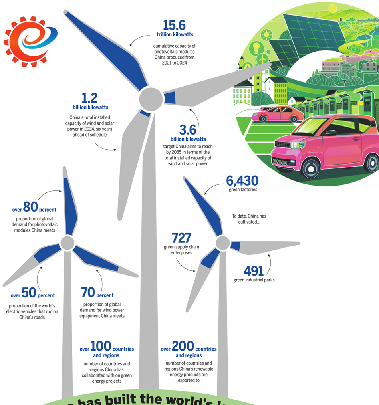
 In recent years, China’s economic growth has been relying less on energy consumption. From 2021 to 2024, China recorded an average annual industrial growth rate of over 5 percent with only around 3 percent annual growth in energy consumption. This green transition has unleashed robust new economic momentum: China has built the world’s largest new energy industry chain. In 2024, China’s total installed capacity of wind and solar power exceeded 1.2 billion kilowatts, achieving the 2030 installation target in Nationally Determined Contributions six years ahead of schedule. Today, over half of the world’s electric vehicles run on Chinese roadways.

 Deepening green tech innovation

 Technological innovation is the core driver of the green transition in manufacturing. China has integrated green technology innovation into its national innovation system, achieving remarkable results through strategic government support, economies of scale and industrial synergy. According to the 2024 China Patent Survey Report by the China National Intellectual Property Administration, nearly half of Chinese enterprises have engaged in, or plan to pursue, green technology innovation.

 Over the past decade, China has contributed to a cumulative reduction of over 60 percent and 80 percent, respectively, in the global average levelized cost of electricity for wind power and solar photovoltaic technologies.

 Breakthroughs have also been made in making traditional industries greener. For instance, Chinese companies have built hydrogen-based metallurgy production lines with an annual production capacity of one million metric tons and green ammonia synthesis production lines with an annual capacity of 300,000 tons, achieving full-process mastery of complex technologies that support these factories. Meanwhile, one-million-ton carbon capture, utilization and storage projects have been completed and put into operation. These advancements lay the groundwork for larger-scale and deeper green transitions of manufacturing.

 Popularizing green manufacturing models

 Green manufacturing is a modernized production mode characterized by low consumption, low emissions, high efficiency and high returns. China has built a green manufacturing system encompassing green factories, industrial parks, supply chains and products, embedding environmentally friendly development into entire industrial processes. To date, China has cultivated 6,430 green factories, 491 green industrial parks and 727 green supply chain enterprises, while promoting over 40,000 types of green products. Among these, the output value of green factories now accounts for 20 percent of China’s total manufacturing output, up from 9 percent in 2020. The energy and water consumption per unit of industrial output in green industrial parks is only two-thirds and one-fourth of the national average, respectively, with their average solid waste utilization rate exceeding 95 percent.

 An increasing number of Chinese companies are incorporating green design and procurement into supply chain management, driving upstream and downstream partners to adopt green upgrades. Meanwhile, some industry leaders are pioneering carbon footprint management across product life cycles.

 Contributing green transition solutions

 By providing high-quality green technologies and products, Chinese manufacturing offers practical pathways for the global green transition. The nation’s renewable energy products are exported to over 200 countries and regions, meeting more than 80 percent of global demand for photovoltaic modules and 70 percent for wind power equipment. This helps nations around the world, especially developing countries, access clean, reliable and affordable energy.

 For instance, from 2021 to 2024, China produced approximately 15.6 trillion kW of photovoltaic modules, helping the world generate about 3.2 trillion kilowatt-hours of green electricity and reduce carbon dioxide emissions by roughly 2.54 billion tons. China has also collaborated with more than 100 countries and regions on green energy projects, delivering high-quality equipment and affordable green power. These initiatives demonstrate the tangible impact of Chinese solutions in helping other developing nations address climate change while fostering economic growth.

 Systematic advancement of green transition

 At a time when global climate governance is encountering setbacks and some nations are backsliding on their commitments, China’s decision to embark on a green and low-carbon transition for its manufacturing sector serves as a powerful demonstration of its drive to foster new quality productive forces and pursue high-quality development. This choice also stands as a solemn pledge to global climate governance.

 In his video speech at the United Nations Climate Summit 2025 in September, President Xi announced China’s new NDC targets. China will, by 2035, reduce economy-wide net greenhouse gas emissions by 7 percent to 10 percent from peak levels, striving to do better; increase the share of non-fossil fuels in total energy consumption to over 30 percent; expand the installed capacity of wind and solar power to over six times 2020 levels, striving to bring the total to 3.6 billion kW; scale up the total forest stock volume to over 24 billion cubic meters; make new energy vehicles the mainstream in the sales of new vehicles; expand the National Carbon Emissions Trading Market to cover major high-emission sectors; and basically establish a climate adaptive society.

 China’s new NDC targets demonstrate a pragmatic and actionable ambition for emission reductions. With manufacturing spearheading the green transformation of our economy and society, China’s industrial strategy is now honing in on a systematic transition. Moving forward, efforts will focus on three key fronts — modernizing the industrial system, developing green supply chains and deepening international collaboration.

 Building a green industrial system

 Traditional industries remain a crucial pillar of Chinese manufacturing. Their transformation and upgrading require systematic adjustments to product mixes, energy consumption patterns and raw material structures, along with the re-engineering of industrial processes. Particular emphasis will be placed on scaling-up the application of innovative technologies in sectors such as steel, building materials and chemicals.

 Industries will capitalize on the vast market opportunities created by the green and low-carbon transition. Efforts will be made to vigorously develop green and low-carbon sectors, increasing the share of industries like environmental protection, new energy equipment and NEVs.

 Simultaneously, to meet the demands of the energy revolution and industrial transformation under the “dual carbon” goals, China will strategically plan and deploy future-oriented energy and manufacturing industries, including hydrogen energy, energy storage, bio-manufacturing and carbon capture, utilization and storage.

 Building a green supply chain

 China is committed to embedding green development principles throughout the entire manufacturing chain — from raw material procurement to production, sales and recycling. China will drive large enterprises to implement green and low-carbon supply chain enhancement initiatives, leveraging green procurement as a guiding force. Through activities such as green audits and supply chain financing, the initiative will support upstream and downstream suppliers in adopting green upgrades and managing carbon footprints.

 The country will also promote the cultivation of green factories, steadily increase the procurement share from green factory suppliers and strengthen international cooperation in building green supply chains. Furthermore, China will advance circular economy models, facilitate the development of reverse logistics networks that manage the flow of goods from their final destination back to the point of origin for purposes like recycling, and encourage businesses to establish recycling systems for key products such as batteries.

 Enhancing international cooperation

 Adhering to the principle of extensive consultations and joint contributions, China will leverage bilateral and multilateral cooperation mechanisms to deepen collaboration in green technologies, equipment, trade and standards.

 The country will encourage competitive Chinese enterprises in photovoltaics, wind power, lithium batteries and new energy vehicles to expand globally and to invest in and develop green energy projects in countries and regions involved in the Belt and Road Initiative and beyond, while promoting green infrastructure and transportation solutions. China will also actively participate in shaping international green and low-carbon regulations and strengthen its capacity to implement international conventions.

 An ancient Chinese proverb reads: “Those who persevere in action will achieve their goals; those who steadfastly journey will reach their destination,” which echoes the universal spirit of the Western adage: “Actions speak louder than words.”

 History rewards those who take concrete actions. No matter how the international landscape shifts, “Made in China” remains committed to honoring its pledge of building a community with a shared future for mankind through tangible green initiatives. China will champion the exchange of green technologies, promote the global alignment of green standards, facilitate the supply of green products and share opportunities in the green market. By forming the world’s greatest joint force for green development, the country can collectively advance toward a future that is greener, more inclusive and sustainable.

 The writer is minister of industry and information technology.


Article inline ad