Wednesday, November 25, 2026

Home Blog Page 134

Deep Layers Truly Define Nation’s Market Advantage

0

By Zhong Nan | China Daily | Updated: 2025-12-01

As global economic headwinds reshape supply chains and consumer behavior, scale has emerged as one of the rarest and most consequential metrics in the world economy.

 Few places offer it with the depth, resilience and speed of China, where a vast and fast-upgrading consumer base continues to anchor long-term business cooperation between businesses from China and the United States.

 When market watchers speak of China’s “super-large-scale market”, they often begin with the headline figure of 1.4 billion people. But population size is only the surface. What truly defines China’s market advantage is its profound internal layering — its breadth of demand, diversity of consumer groups, rapid product iteration and the structural sophistication behind shifting consumer behavior.

 During my interviews with executives of multinational corporations, quite a few described China’s economy as a deep and resilient market ecosystem, shaped by rising incomes, rapid urbanization, advanced industrial capabilities and a digital backbone unmatched in scale. One of the clearest examples of this depth is China’s expanding middle-income group, now the world’s largest.

 This group not only consumes more, but consumes better, driving sustained upgrading across numerous sectors including education, healthcare, tourism, food, household appliances, automobiles and wellness.

 At the same time, China’s younger generation — digital-savvy, brand-conscious and highly receptive to innovation — is accelerating product cycles and creating entirely new consumption scenarios, from smart mobility to immersive entertainment. People of this generation are not simply buying more goods; they are reshaping industries through greater demands on quality, sustainability and personalization.

 The implication is clear. The growth room remains vast, and the consumption curve is far from reaching its ceiling. This structural strength has made China an increasingly attractive market for multinational corporations — not only as a destination for products, but also as a source of innovation, supply chain resilience and global growth.

 In sectors such as new energy vehicles, life sciences, industrial automation, food and agriculture, consumer electronics and advanced materials, US companies such as ADM, Tesla, Honeywell and Nike are continuously expanding local operations, upgrading manufacturing capacity and deepening their engagement with Chinese partners.

 Cooperation opportunities between Chinese and US businesses are visible across major trade events. At the 138th Canton Fair, known officially as the China Import and Export Fair, US buyers continued to seek high-quality Chinese consumer goods, smart appliances and industrial equipment.

 At the eighth China International Import Expo, many US exhibitors — from agricultural suppliers and healthcare innovators to industrial technology leaders — brought their latest products and announced expanded commitments to the China market. These platforms have repeatedly demonstrated that commercial cooperation remains not only viable but vibrant, driven by real demand on both sides.

 For Chinese companies, the US remains one of the world’s most important consumer markets and a critical arena for technological cooperation and brand building. Whether exporting electronics, machinery, home appliances, textiles, agricultural goods or green technologies, Chinese firms continue to view the US market as one that needs reliability, innovation and long-term engagement.

 Even in a period of trade frictions, pragmatic cooperation between Chinese manufacturers and US distributors, retailers and industrial customers has proved resilient.

 For US companies, China offers a level of supply chain completeness, manufacturing efficiency and consumer responsiveness that is difficult to replicate elsewhere. Many US firms have expanded their China operations not only to serve local consumers but also as a base for supplying Asia-Pacific and global markets.

 Beyond production, many US businesses are also investing in research centers, test facilities and innovation hubs in China, where feedback loops are faster and end users are more willing to try new concepts. This allows companies to iterate products quickly and improve competitiveness globally.

 China’s rapidly growing demand for green, intelligent and high-value-added products is also reshaping cooperation opportunities in areas such as sustainable materials, biomanufacturing, logistics, agricultural technology and digital transformation — all sectors where China and the US share substantial complementary advantages.


Article inline ad

Stable Trade Ties Benefit China, US

0

Outcome of Sino-US consultations in Malaysia demonstrates both sides’ commitment to stabilizing key economic ties, sets business relations on firmer, more predictable footing

By ZHONG NAN | China Daily | Updated: 2025-12-01

For Xiong Xujia, the wait started alongside the China-US trade talks in Geneva, which later shifted to London, Stockholm and Madrid, resulting in a monthslong spiral of uncertainty.

 For Xiong, a foreign trade manager at Ningbo Tianxiang Electrical Appliances Co Ltd, a cookware manufacturer based in Ningbo, Zhejiang province, as well as her bosses and the company’s clients in the United States, the May-September period turned into a season of uneasy waiting.

 Each development in the economic and trade consultations hinted at possible shifts in prices, orders and an already-delicate business outlook.

 With each round of talks, they were glued to the television screens, refreshing news alerts on their mobile phones, searching for even the faintest sign that tensions might ease.

 That moment finally arrived when China released the outcomes of the Kuala Lumpur talks in late October, where both sides reached a consensus on tariff adjustments and export controls — a breakthrough that temporarily defused the risk of renewed escalation and offered Chinese manufacturers, US retailers and consumers a badly needed reprieve.

 According to information from China’s Ministry of Commerce, the US will cancel the 10 percent so-called “fentanyl tariffs”, while also extending the suspension of the 24 percent reciprocal tariffs on Chinese goods for an additional year.

 China will make corresponding adjustments to its countermeasures against the aforementioned US tariffs, and both sides agreed to extend certain tariff exclusion measures.

 “With the latest round of China-US economic and trade talks producing a series of substantive outcomes and areas of consensus, we are more convinced that openness and cooperation are the path to shared success,” said Xiong.

 She said the company will continue to meet clients’ expectations with high-standard products and reliable services, broaden its engagement with the US market, and pursue higher-quality growth through deeper, mutually beneficial cooperation.

 Ningbo Tianxiang exported 172 million yuan ($24.17 million) worth of products, including toasters, sandwich makers and waffle makers, to the US in the first 10 months of this year, up 14.8 percent year-on-year, according to Ningbo Customs.

 Despite a decline in bilateral trade, economic ties between the two countries remain substantial.

 The US is still China’s third-largest trading partner, with bilateral trade reaching 3.38 trillion yuan from January to October — down 15.9 percent year-on-year — and accounting for 9 percent of China’s total foreign trade, according to the General Administration of Customs.

 Market watchers said the outcome of the China-US economic and trade talks in Malaysia demonstrated both sides’ commitment to stabilizing one of the world’s most important economic relationships, setting the two countries’ business ties on a firmer, more predictable footing.

 This suggests not only a mutual willingness, but also a tangible ability, to steer the relationship back onto a more stable trajectory, said Liu Ying, a researcher at Renmin University of China’s Chongyang Institute for Financial Studies.

 Peng Bo, a researcher at the Chinese Academy of International Trade and Economic Cooperation in Beijing, said that genuine, long-term normalization will require both sides to follow through on their commitments and keep communication channels open and functioning.

 He added that it is both necessary and feasible for the two countries to build a workable framework for peaceful coexistence — one that can manage strategic rivalry and fundamental system-level differences without allowing them to escalate into confrontation.

 During his meeting with David Perdue, US ambassador to China, on Nov 20, Chinese Commerce Minister Wang Wentao said China is willing to work with the US to implement important consensuses reached by the two heads of state, and said the two countries should foster a correct perception that China and the US can coexist and achieve win-win outcomes.

 Wang stressed that it is essential to maintain the bilateral economic and trade consultation mechanisms and address sources of instability in economic and trade relations.

 Industry voices have also echoed this view.

 Liu Siqiang, vice-president of Winhere Auto-Part Manufacturing Co Ltd, a manufacturer of brake discs, brake drums and brake pads for automobiles in Yantai, Shandong province, said, “We believe that a healthy and stable China-US economic relationship serves as a common aspiration and crucial foundation for business development in the two countries.”

 The Chinese company exported 1.82 billion yuan worth of goods to the US market between January and October, up 17 percent year-on-year, statistics from Qingdao Customs showed.

 Through concerted efforts on both sides, Liu said, China and the US can not only unlock greater opportunities for their businesses, but also inject fresh impetus into global economic stability and prosperity.

 US business leaders also said that the emerging signs of stabilization — from policy adjustments to business sentiment — point to a cautiously improving outlook for China-US economic ties, with businesses on both sides standing to benefit from renewed momentum.

 Jim Sutter, CEO of US Soybean Export Council, said that by combining open communication, flexible logistics and a problem-solving mindset, the organization strives to provide Chinese customers with stable and predictable deliveries of US soybeans, no matter what external challenges arise. He added that the council hopes to resume soybean exports to China as soon as possible.

 “Beyond traditional food and feed uses, soy is now being applied in cutting-edge industrial sectors, including bio-based plastics, adhesives, lubricants, tires, shoes, coatings, fire retardants and even sustainable construction materials,” said Sutter.

 These innovative applications align closely with China’s goals for green manufacturing and circular economy development, offering new dimensions for China-US soy collaboration rooted in technology and environmental stewardship, he added.

 Sean Stein, president of the US-China Business Council, said that most US companies remain deeply committed to the Chinese market. “We’ve seen over the last nine or 10 months that there has not been a significant increase in US companies leaving China.”

 Instead, he noted that several US firms are “increasing their reliance on China as a production base for the Chinese market and other global markets, because they know what they get — a stable investment climate”.

 One such company is US industrial conglomerate 3M. It launched an expansion project for its tape production line at a manufacturing site in Shanghai in August, marking a significant boost to its local capacity and innovation capabilities.

 Completed within 12 months, the project has increased production capacity by 50 percent, enabling the company to better meet the surging demand for low-pollution, lightweight and high-strength materials in China’s fast-growing consumer electronics and automotive electrification industries, said Henry Ding, president for China at 3M.

 Ingersoll Rand Inc, another US-based industrial products and solutions provider, noted that over 95 percent of its products sold in China are now locally manufactured, and that the company’s research and innovation center in Shanghai is driving innovation tailor-made for the Chinese market.

 “Our growth plan during the 15th Five-Year Plan (2026-30) period is not merely to expand our presence, but to evolve into an indispensable partner in China’s high-quality development journey,” said Arnold Li, the group’s senior vice-president.

 “We will continue to expand our local footprint by investing where our customers are growing, particularly in new industrial clusters,” Li said. “Our research and development capabilities will be further enhanced with a focus on deepening these digital and green technologies, ensuring our innovations remain at the forefront of China’s evolving industrial landscape.”

 Beyond the manufacturing sector, FedEx Corp, the US-based express transportation service provider, introduced nonstop cargo flights connecting its Asia-Pacific hub at Guangzhou Baiyun International Airport in Guangzhou, Guangdong province, with Penang International Airport in Malaysia in mid-November.

 Operating five times a week, the new service is designed to enhance its intra-Asia network to meet growing trade demand between China and Southeast Asia, increasing connectivity, capacity and agility for Chinese businesses.

 “The growing trade dynamics between China and the Association of Southeast Asian Nations is driving greater demand for efficient logistics services,” said Poh-Yian Koh, president of FedEx China.

 To address this trend, FedEx will continue to enhance its intra-Asia network and service capabilities, strengthening connectivity between Chinese businesses and Southeast Asian markets, she said.

 zhongnan@chinadaily.com.cn

Article inline ad

Ski Suits In Office As Staff Ready For Slopes

0

By Zheng Yiran | China Daily | Updated: 2025-11-29

As winter temperatures get gradually colder, warm, wind-resistant ski suits with nice designs have become “workday outfits” for some office workers.

 Yang Hua, a 35-year-old office worker in Beijing, chooses to commute in a pink ski suit. “Facing the dilemma between ‘asking for a day off to go skiing’ and ‘commuting in a black down jacket’, I choose to commute in a ski suit to trick myself into work. Ski suits, which are often light-colored, plus leggings and sneakers, perfectly match the scenario of both driving a car and taking a metro to work.”

 On lifestyle-sharing platform Xiaohongshu, a lot of netizens are sharing pictures and videos of their ski suits as “commuting OOTD (outfit of the day)”.

 Although office workers on duty cannot rush to the Chongli Ski Resort in Zhangjiakou, Hebei province, to experience powder snow, they can enjoy themselves in ski suits in the office, as if they were already at the ski resort. Wearing ski suits and drinking Americano coffees, office workers are offering themselves emotional value. When it is Friday, they can wear ski suits to the office and rush off to ski resorts right after work, effectively extending their weekends, according to Jiuxing Travel, a market information platform on WeChat.

 Wang Peng, an associate research fellow at the Beijing Academy of Social Sciences, said: “Office workers wearing ski suits to work is a demonstration of consumption concepts combined with pragmatism. It is a reconstruction of lifestyle among young people. Ski suits have functions such as being windproof and waterproof, suitable for winter commuting. Their fashionable designs meet urban aesthetics and have become a symbol of ‘spiritual off-duty’, relieving work pressure through scene simulation.”

 “In addition, extending the scenario of wearing ski suits from low-frequency sports scenes to high-frequency daily scenes has expanded the life-cycle of individual products, reflecting the rational consumption trend of ‘one thing for multiple uses’, and is an exploration of efficient resource utilization,” he added.

 Zhang Changyue, a post-95 beginner ski enthusiast, said that this winter she plans to rush to the ski resort right after work on Fridays. Her ski equipment, including ski suit, helmet, goggles, gloves, kneecaps and hip pad, cost approximately 1,500 yuan ($212), while a training coach costs around 1,500 yuan per day, and ski tickets and accommodation cost her 400 yuan per day.

 Jin Ning, a post-85 intermediate ski enthusiast, said that his ski suit and snow board alone cost him around 20,000 yuan.

 With the arrival of the ski season, merchants around the nation are launching promotional activities for ski equipment. An outdoor equipment store in Urumqi has launched promotional activities such as a discount of 800 yuan for ski suit orders over 3,000 yuan, and is offering to exchange old ski boards for new ones. Since Nov 14, Xinjiang Uygur autonomous region issued 10,000 ice consumption coupons, further boosting ski tourism and related spending.

 According to Liu Mingxin, owner of a ski equipment store in Chongli, product demand for the new snow season far exceeds expectations, with professional snow clothing that combines warmth and fashion as well as lightweight high-performance snow boards being the most popular. In addition to the hot sales in offline stores, convenient services such as online bookings and local deliveries have become new sales growth points. Since the new snow season started, sales of core ski equipment grew over 30 percent on a yearly basis, and that of accessories was even higher.

 Yu Fenghui, an independent financial commentator, said: “Under the context of boosting consumption, the key of promoting domestic demand is to raise residents’ consumption power and consumption willingness. First, by raising the income level of medium to low-income groups, the income distribution structure should be continuously optimized. Second, support to the service industry, especially newly emerged business modes such as ice sports and cultural tourism, should be enhanced.”

 zhengyiran@chinadaily.com.cn


Article inline ad

Private Firms Make Beeline To Hainan FTP

0

By MA SI and CHEN BOWEN in Haikou | China Daily | Updated: 2025-11-29

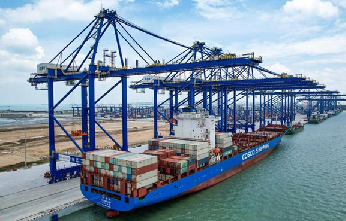
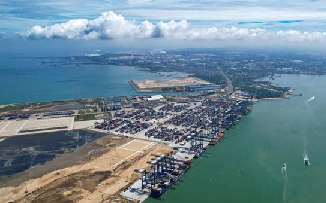
As Hainan Free Trade Port approaches its island-wide special Customs operations next month, private enterprises are increasingly aligning their strategies with the province’s development vision, attracted by its unique policy advantages and growth potential.

 Gao Yunlong, chairman of the All-China Federation of Industry and Commerce, said at a meeting held in Haikou on Friday that the Hainan FTP is vital for China and the global economy. He urged private enterprises to shoulder more responsibilities and contribute to establishing Hainan as a new hub for high-standard opening-up and development.

 Feng Fei, Party secretary of Hainan, outlined key incentives for businesses, emphasizing the Hainan FTP’s preferential policies, modern industrial system, open cooperation networks, and optimized business environment.

 “Choosing Hainan means choosing opportunities; investing in Hainan means investing in the future,” Feng said, noting that Hainan will commence island-wide special Customs operations on Dec 18.

 Corporate leaders echoed this optimism.

 Nan Cunhui, chairman of CHINT Group, said that since signing a strategic cooperation agreement with the Hainan provincial government in 2023, the company has established its overseas investment headquarters in the province and invested in clean energy projects, including photovoltaic and wind power stations in Haikou, Sanya, and Danzhou.

 “The exponential growth in clean power demand, driven by artificial intelligence and computing technologies, aligns with Hainan’s low-carbon development goals,” Nan said, pledging further investments in green hydrogen storage, zero-carbon industrial parks, and smart city initiatives.

 Zhu Jianmin, chairman of Oxiranchem Group, highlighted the efficiency of Hainan’s business environment. Despite challenges, the company completed and put into operation its Yangpu-based project by the end of 2023. “The Hainan FTP’s tax policies, unique geographical location and logistics advantages have enabled us to source raw materials globally and target ASEAN markets effectively,” Zhu said.

 Zhong Lizhao, chairman of Yongdao Group, announced a planned total investment of 3.3 billion yuan ($467 million) in Hainan, covering projects such as an international settlement center, eco-friendly equipment manufacturing, and blue carbon research. “Hainan’s policies and regional advantages resonate with our development strategy,” he said, adding that the firstphase projects are already underway.

 Li Shufu, chairman of automaker Geely, said: “Launching island-wide special Customs operations is a signature project of the Hainan Free Trade Port, and will provide a rare development opportunity for the growth of the private economy.”

 Hainan is poised to become a gateway for private enterprises seeking global expansion, innovation-driven growth, and sustainable development, experts said.

 Fang Aiqing, president of the China Council for International Investment Promotion, said the special Customs operations will see the implementation of more favorable zero-tariff policies for goods, relaxed trade management measures, convenient travel arrangements, and a more efficient and precise regulatory model.

 “This is not only a Hainan model for China’s special economic zones, but also a valuable contribution to global free trade port development,” Fang said.

 Contact the writers at masi@chinadaily.com.cn

Article inline ad

China Maintains Crackdown On Illegal Virtual Currency-Related Financial Activities

0

Xinhua | Updated: 2025-11-30

BEIJING — The People’s Bank of China, China’s central bank, stated that the country will maintain prohibitive policies regarding virtual currency trading and will continue to crack down on related illegal financial activities in an effort to safeguard the security of people’s property.

 The bank sent this message at a recent meeting on virtual currency speculation crackdown. The meeting warned of a resurgence of speculative trading and criminal activities linked to virtual currencies, as well as the new challenges this poses to financial risk prevention.

 The meeting reiterated that virtual currencies do not possess the same legal status as fiat currency, lack legal tender status, and must not be circulated or used in the market as currency. It noted that all virtual currency-related business activities are considered illegal financial operations.

 Regarding stablecoins, the meeting emphasized that stablecoins currently fail to meet requirements for customer identification and anti-money laundering controls. As a result, they carry risks of being used in money laundering, fundraising fraud, illegal cross-border fund transfers, and other illicit activities.

 The meeting has called for enhanced inter-agency coordination, improved regulatory policies and legal frameworks, and strengthened monitoring of information and capital flows.

 It also urged efforts to increase information sharing and improve surveillance capabilities so as to maintain the order and stability of the economic and financial system.

Article inline ad

Unified Market Set To Spur Development

0

Domestic demand to benefit global supply chains, investments

By LI JING and LIU ZHIHUA | CHINA DAILY | Updated: 2025-11-29

China’s next stage of development will rely on building a more unified national market, expanding domestic demand and deepening high-standard opening-up, even as protectionism continues to rise globally, a leading trade expert said.

In an exclusive interview with China Daily, Zhou Mi, senior researcher at the Chinese Academy of International Trade and Economic Cooperation, said China is shifting its development focus “from speed to efficiency and quality”, and its “super-sized” domestic market will increasingly influence global supply chains, investment patterns and business strategies.

 Zhou’s comments come as national policymakers reinforce efforts to accelerate the building of a unified national market.

 At a meeting of the Central Commission for Financial and Economic Affairs in July, the leadership underscored market unification as a cornerstone for creating a new development pattern and driving high-quality growth. Recommendations for the upcoming 15th Five-Year Plan (2026-30) also highlight the need to remove institutional barriers that fragment the domestic market.

 A unified market, Zhou explained, aims to allocate resources more efficiently and provide companies with a more predictable business environment. This requires consistent standards and qualifications nationwide and smoother flows of goods, people and capital across regions. Several provincial governments, he noted, have already begun consultations and roll-out work.

 But unification does not mean uniformity, he stressed. “Regions can still develop based on their strengths. The key is reducing hidden barriers and lowering transaction costs so that resources move freely,” he said. A more integrated market, he added, will serve as a strong foundation for China’s development strategy over the next five years.

 Zhou highlighted consumption as a crucial driver as China evolves into the world’s largest consumer market. The challenge lies in boosting both consumers’ purchasing power and their willingness to spend, an effort closely tied to stable incomes, better public services and a stronger social safety net.

 Recent policies, such as consumption vouchers, the expansion of “15-minute living circles”, and measures to support rural e-commerce, have helped rebuild confidence. More important, Zhou said, China’s supply system is becoming more sophisticated. “Even traditional industries like textiles are upgrading materials for different climates and specialized uses,” he said. “Across sectors, companies are integrating better technology and responding more quickly to local and global needs.”

 High-quality supply and high-quality demand reinforce each other, he added, fostering more resilient long-term growth.

 Despite rising global protectionism, China remains committed to opening its market wider. Measures such as expanded unilateral visa-free entry, the new K visa, and the Ministry of Commerce’s “Shopping in China” and “Export to China” initiatives aim to make travel, investment and trade easier for foreign businesses and consumers, Zhou said.

 The China International Import Expo, he said, illustrates how China is increasingly becoming a destination market rather than solely an exporter. “When other economies raise tariffs and impose restrictive policies, China’s large and diverse market becomes even more valuable for global companies,” he said, citing the country’s push to expand service-sector opening-up and develop new forms of service consumption.

 On concerns that China’s export strength depends partially on relocated industries, Zhou offered a more balanced view. Industrial migration, he said, is a natural part of global economic cycles. Some industries will relocate due to costs or market considerations, just as China once benefited from earlier waves of industrial transfer. But many Chinese companies are now multinationals and can adjust their global footprints flexibly.

 Responding to commentary abroad that China prioritizes technological self-reliance over consumption, Zhou said such claims overlook the everyday nature of consumer spending. “Innovation projects are visible, but consumption is silent — it happens in millions of households,” he said. “Consumption forms the foundation of diversified and sustainable development, while innovation is the engine. The two reinforce each other.”

 Looking ahead, Zhou cautioned that the midterm elections in the United States could intensify political rhetoric on China and heighten trade frictions. Global supply chains are already adjusting due to tariffs and geopolitical tensions, adding uncertainty for businesses worldwide.

 China’s approach, he said, remains steady: ensuring policy stability and transparency while expanding high-standard opening-up. He pointed to the nation’s white paper, released in April, on China-US economic and trade relations as an example of Beijing’s consistent support for multilateralism and WTO rules. “Our position is clear. We respond to unfair treatment, but our principles do not change,” he said.

 China will continue to broaden opening-up, make fuller use of trade agreements such as the upgraded Version 3.0 China-ASEAN Free Trade Area, strengthen dispute-resolution services for companies and remain committed to global economic integration.

 As China moves into a new phase of development, Zhou said, market unification, stronger consumption, openness and innovation will form the interconnected pillars shaping China’s domestic economic transformation and its engagement with the world.


Article inline ad

BCG: Chinese Companies Leading APAC Region In AI Application

0

By Fan Feifei | China Daily | Updated: 2025-11-27

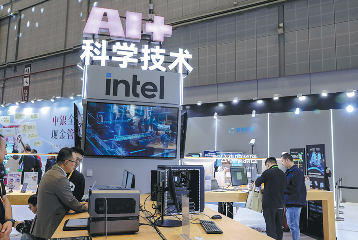
Chinese companies are at the global forefront in adopting artificial intelligence at work and are optimistic about its potential thanks to the widespread enthusiasm for AI driven by digitally skilled and ambitious young employees, according to a report from Boston Consulting Group.

The report noted that the Asia-Pacific region takes the lead in exploring and adopting AI globally, and China stands out among the front-runners, with 87 percent of respondents reporting frequent use of AI tools, surpassing the global average of 72 percent.

The strong adoption trend spans all job levels covering frontline employees, middle-level managers and senior executives, reflecting a bottom-up culture of exploration and a high degree of openness and adaptability to new technologies, it noted.

The report found that 78 percent of overall respondents in the APAC region use AI at work at least weekly, compared to 72 percent worldwide. Only 51 percent of global frontline workers use AI regularly, but the rate jumps to 70 percent in the APAC region.

The region’s higher AI usage is accompanied by greater enthusiasm, with 60 percent of APAC respondents feeling optimistic about AI’s potential, compared to 52 percent globally.

However, there is an inherent tension to AI usage as greater adoption of AI leads to greater fear of future job loss. Even as employees in APAC adopt AI at a faster pace than those in other regions, more employees fear losing their jobs, with 52 percent of respondents expressing that concern, compared to 41 percent globally.

The report surveyed more than 4,500 employees engaged in various industries across nine countries in the APAC region.

Jeff Walters, managing director and senior partner of BCG, said the speed at which Chinese employees are embracing AI is remarkable, highlighting that this bottom-up wave of enthusiasm, driven by frontline workers, is becoming a unique advantage for China’s AI innovation.

The report said with China’s high AI adoption rate, the concerns over its use are more obvious. Only 18 percent of frontline employees in China said they have received clear guidance from leadership on how to use AI, signifying that the strategic vision of company executives needs to catch up with employees’ practices.

In addition, most Chinese companies remain at the stage of AI tool deployment, with only a small number beginning to redesign workflows or adjust job roles, indicating that a vast amount of productivity potential remains to be unlocked.

“Competitiveness in the AI era doesn’t lie in the widespread adoption of tools, but in their systematic and strategic application,” said Jeffrey Wu, managing director and partner of BCG, adding that relatively few frontline employees feel they receive clear guidance from company executives.

The report said that as businesses in APAC continue to lead the world in AI adoption and innovation, they should respond to their employees’ growing acceptance of AI and the innovation promised by AI agents, redesigning their workflows to accommodate the transition.

Moreover, CEOs should drive the change both from the top down — through such approaches as reskilling at scale, continuously evaluating and upgrading AI tools, formalizing governance and setting a clear AI vision — and from the bottom up, empowering digitally native frontline workers while closing skills gaps for middle managers.

Pan Helin, a member of the Expert Committee for Information and Communication Economy, which is part of the Ministry of Industry and Information Technology, said the rapid adoption of digital technologies represented by AI will inject fresh impetus into the country’s economic growth and speed up digital and intelligent upgrades in enterprises.

China boasts a large number of well-educated engineering talent and AI professionals, improved digital infrastructure such as 5G and computing networks, massive amounts of data and ever-increasing innovation capabilities, which provide a solid foundation for the training and adoption of AI models, he added.

fanfeifei@chinadaily.com.cn

.

Article inline ad

Shenzhen Pioneers Brain Science Tech To Shape Future Industries

0

chinadaily.com.cn | Updated: 2025-11-27

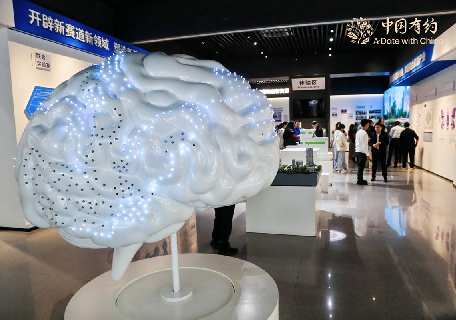
The Shenzhen Industrial Innovation Center for Brain Science and Technology, with a floor area of nearly 10,000 square meters, began operations in 2022.

 Its core mission is to build a high-caliber incubation platform for future industries, spearheaded by startup services, backed by shared technology and patient capital, and distinguished by resource integration and demonstration.

 To date, the center has hosted over 50 companies, successfully incubated five graduate companies and facilitated capital infusion of more than 300 million yuan ($42.37 million) into its incubates, with overall funding surpassing 1 billion yuan.


Article inline ad

Alibaba Launches New Quark AI Glasses Series

0

By Fan Feifei | chinadaily.com.cn | Updated: 2025-11-28

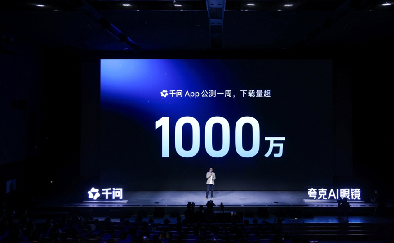
Chinese tech giant Alibaba Group launched its new Quark artificial intelligence-powered glasses series on Thursday, which are equipped with the company’s AI model, Qwen, and its newly launched AI application, Qwen App.

 This launch marks another significant step in Alibaba’s efforts to turn its advanced AI technologies into real-life applications in the consumer AI market, positioning Qwen as the intelligent core of its expanding consumer ecosystem.

 Powered by Qwen, the Quark AI glasses provide intelligent, hands-free assistance for everyday life by combining voice and vision recognition to enable real-time AI interactions. It boasts an array of functions, such as instant price recognition, AI-powered Q&A, translation, navigation, AI-generated meeting notes, smart reminders, and live teleprompter.

 Users can utilize the gadget to take photos, record videos, and listen to music. The glasses have also been deeply integrated with Alibaba’s ecosystem, including Alipay, Amap, Taobao, Fliggy, as well as leading music streaming platforms like QQ Music and NetEase Cloud Music.

 Wu Jia, vice-president of Alibaba Group, said the Quark AI glasses enable Qwen to connect more deeply with the physical world and that Qwen will be integrated into more intelligent terminal devices.

 “AI glasses are a uniquely powerful wearable as they consist of everything we envision for an AI assistant,” Wu said.

 Recently, Alibaba launched its latest consumer-facing AI application, Qwen App, which surpassed 10 million downloads within the first week of public beta launch, becoming one of the fastest-growing AI applications to date. The company also announced the deep integration of Qwen into its revamped Quark AI browser, further accelerating its push into the consumer AI market.

 Launched in 2016 as a web browser incubated within Alibaba Group, Quark has become a leading AI-powered information services platform, with over 200 million users in China.

 fanfeifei@chinadaily.com.cn

Article inline ad

Huawei Unveils Latest Line Of Smartphones

0

By Cheng Yu | chinadaily.com.cn | Updated: 2025-11-27

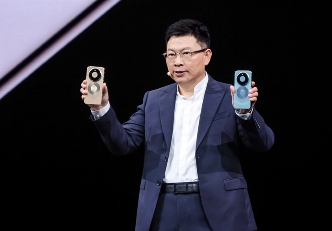
Huawei unveiled its Mate 80 series smartphones and the new, foldable Mate X7, featuring its latest Kirin 9030 processors and updated HarmonyOS 6 operating system, in a move analysts say underscored the company’s ambitions to gain a bigger share in China’s premium handset market.

 The company’s Mate series has long been Huawei’s flagship for showcasing high-end technology. The new Mate 80 series features a high clarity display, an outdoor expedition mode, offline emergency communication, and a more advanced imaging system.

 But the market’s focus has been centered on the Kirin processor upgrade and the evolution of HarmonyOS.

 Richard Yu, Huawei’s executive director and head of its consumer business, said that the new models benefit from vertically integrated hardware, software, and chip design. He cited performance gains of more than 40 percent for the Mate 80 Pro Max, Mate 80 RS, and the Mate X7 compared with last year’s versions.

 Beyond hardware, Huawei’s sales recovery hinges on the expansion of HarmonyOS, its fully self-developed operating system. Huawei and its partners have created about 300,000 apps and services over the past year.

 Yu said more than 27 million devices now run HarmonyOS 5 or 6, with the installed base expanding by about 100,000 units each day.

 chengyu@chindaily.com.cn

Article inline ad