Wednesday, November 25, 2026

Home Blog Page 135

Optics Valley Emerging As Nation’s High-Tech Hub

0

By Liu Kun in Wuhan | China Daily | Updated: 2025-11-27

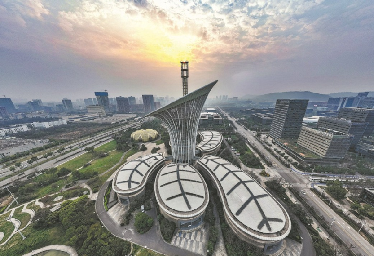
Optics Valley has emerged as a high-tech hub where not only is a wave of tech breakthroughs taking root, but where the deeper integration of scientific and industrial innovation is also advancing, reflecting China’s efforts to move forward with high-level scientific and technological self-reliance.

 Humanoid robots, advanced chips and 6G-related technologies are now taking shape at scale in the East Lake High-Tech Development Zone in Wuhan, capital of Central China’s Hubei province. The zone is widely known as China’s Optics Valley.

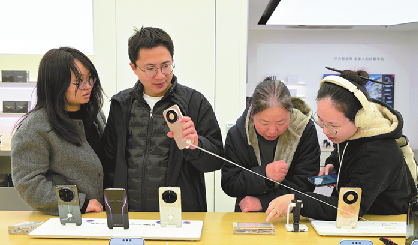
 A new humanoid robot store opened earlier this month in Optics Valley, bringing cutting-edge technology closer to everyday life. The zone has also recently seen the debut of the “Kuafu” humanoid robot, the first HarmonyOS-powered model designed for smart-home scenarios.

 Data show that Optics Valley now hosts more than 70 percent of Hubei’s enterprises capable of supplying humanoid-robot products, further strengthening the zone’s rapidly growing robotics ecosystem.

 Apart from the developments in humanoid robotics, Optics Valley is placing strong emphasis on the chip industry as well.

 This year, an advanced silicon carbide wafer facility operated by Yangtze Optical Fibre and Cable (YOFC) began production in Optics Valley. The plant can turn out 360,000 wafers annually, enough to supply chips for roughly 1.44 million new energy vehicles.

 More than 300 chip enterprises have now clustered in Optics Valley, forming a complete industrial chain that spans chip design, testing, manufacturing and packaging. The cluster is on track to exceed 100 billion yuan ($14.12 billion) in output value this year.

 “When the semiconductor industry feels unsure about where to head next, it should come to Optics Valley for inspiration,” said Chen Nanxiang, chairman of the China Semiconductor Industry Association.

 Meanwhile, Optics Valley is advancing preparations for 6G’s projected commercial rollout around 2030. A new local base nearing full operation is further strengthening the years of research and development carried out by CICT Mobile Communication Technology Co Ltd, and is expected to support the next stage of “air-space-ground” 6G development.

 These technological advances align with China’s plan to intensify efforts to achieve high-level sci-tech self-reliance and foster new quality productive forces during the 15th Five-Year Plan (2026-30), according to the recently unveiled Recommendations of the Central Committee of the Communist Party of China for Formulating the 15th Five-Year Plan for National Economic and Social Development.

 Moreover, an increasing number of domestic tech and biopharmaceutical companies are ramping up their investment in Optics Valley to deepen scientific and industrial innovation.

 United Imaging Healthcare, for instance, has committed to building a global hub in Optics Valley for advanced medical equipment, including surgical robots and intelligent medical systems. The move represents a significant reinvestment in the area, 12 years after the company first set up operations there.

 “United Imaging’s rapid growth owes much to Hubei’s strong support for cross-disciplinary medical and engineering innovation,” said Xue Min, chairman of United Imaging Group.

 Xiaomi Corp, a Chinese tech company, has also been expanding its presence in Optics Valley. In October, the first phase of the company’s smart home appliance plant went into production.

 “Optics Valley has been a lucky place for Xiaomi,” said Lei Jun, founder and CEO of Xiaomi. Since 2017, Xiaomi and Kingsoft have continued to expand their presence in Wuhan, and Xiaomi expects its local R&D team to reach 10,000 by year-end, said Lei.

 Zhang Chenxu contributed to this story.

 liukun@chinadaily.com.cn

Article inline ad

Winter School Holidays Fuel Surge In Domestic, Outbound Travel

0

By Li Jing | chinadaily.com.cn | Updated: 2025-11-28

China’s upcoming winter school holiday, including a newly introduced “snow break” in some regions, is fueling a surge in domestic and outbound travel, according to data from Qunar, a Beijing-based online travel agency.

 Urumqi and Altay prefecture in the Xinjiang Uygur autonomous region will give students up to nine consecutive days off from Nov 29 to Dec 7. Flight bookings from Urumqi during the holiday’s time frame rose 45 percent from Nov 15 to 23, while those from Altay increased 48 percent. Warm-weather destinations led demand, with bookings from Urumqi to Sanya, Guangzhou, Beijing, and Xishuangbanna more than doubling year-on-year. Ticket reservations at Xinjiang scenic spots also rose by 16 percent.

 Nationwide, many provinces have announced winter breaks, with some lasting up to 45 days. Families are choosing to travel before the Chinese New Year holiday peak, while domestic airfares average 30 percent lower. Bookings for children aged 0–12 rose 60.7 percent year-on-year, and those for teenagers grew by 57.8 percent. Shanghai, Beijing, Sanya in Hainan, and Guangzhou in Guangzhou rank among the top domestic destinations, while warm southern cities such as Zhuhai, Sanya, Jieyang, and Xishuangbanna saw the fastest growth, according to Qunar.

 Ice-and-snow destinations are rolling out subsidies to attract tourists. Jilin province has unveiled 100 million yuan worth of winter vouchers and free ski passes for university students, while Inner Mongolia and the Xinjiang Uygur autonomous regions are also expanding incentives.

 As a result, winter tourism across the northeast and Xinjiang continues to heat up. Between November and late January, hotel bookings in the Bortala Mongolian autonomous prefecture in Xinjiang rose more than 80 percent year-on-year, while bookings in Dandong in Liaoning, Liaoyuan in Jilin, and Yichun in Heilongjiang climbed around 30 percent.

 Outbound travel is also accelerating. Thailand has returned to the top spot among Chinese travelers during the winter vacation. Air ticket bookings to Thailand from mid-January to the Chinese New Year rose 21 percent year-on-year.

 Russia, which is preparing to implement visa-free entry for Chinese visitors according to Russian media outlets, recorded the fastest outbound growth, with ticket bookings rising nearly 1.5 times from a year earlier. Malaysia, South Korea, Singapore, Australia, China’s Hong Kong Special Administrative Region, the United States, Egypt, and Indonesia also ranked among the top 10 destinations.

Article inline ad

China-Built Projects Completed In Belarus

0

By REN QI | CHINA DAILY | Updated: 2025-11-28

Chinese-built swimming and soccer facilities in Belarus have been completed and opened to the public, officials from both countries said, describing them as model Belt and Road projects that underscore deep ties and strategic trust between Beijing and Minsk.

 The National Football Stadium was finished in June this year and an international standard Swimming Center in October last year. Both projects were designed and constructed by Chinese companies, and received commendations from Belarusian President Alexander Lukashenko, who has cast them as emblematic of cooperation under the Belt and Road Initiative.

 Vladimir Pertsov, first deputy head of the administration of Belarusian president, said the two facilities were delivered under the personal attention and promotion of the heads of state of China and Belarus.

 Pertsov praised participating Chinese entities for overcoming severe disruptions linked to the COVID-19 pandemic and regional conflicts, saying they demonstrated responsibility and professional standards that “fully showcased the strength and caliber of Chinese enterprises”.

 He made the remarks at a commendation ceremony in November at the Embassy of Belarus in Beijing. As the projects continue operating, he said, Chinese companies’ advanced engineering concepts and high construction standards have helped establish iconic architectural landmarks in Belarus, boosted the country’s profile in international sports and provided solid support for the development of Belarusian athletics.

 The swimming facility is located in Minsk, with the Beijing Institute of Architectural Design responsible for engineering design and full-process project management. The project was built under World Aquatics rules, while accommodating Belarusian engineering practices and specific local requirements.

 Pertsov said it is now Belarus’s largest, highest-standard and best-equipped natatorium, capable of hosting top-tier international competitions and supporting high-level training for professional athletes, significantly lifting the country’s aquatic sports infrastructure.

 The National Football Stadium, another flagship Belt and Road project, sits in Minsk’s industrial district.

 The roof incorporates decorative materials in 1,860 specifications displaying elements of the Belarusian national flag. The pitch is equipped with automatic drainage, pitch heating, ventilation and intelligent irrigation systems designed to provide optimal conditions for players.

 At the stadium’s inauguration ceremony in June, Lukashenko said the China-assisted venue blends national traditions with advanced engineering technology.

 He described it as the Eastern European country’s largest and most modern football stadium, meeting “the world’s highest standards”, a new landmark for Minsk and a symbol of the solid friendship between Belarus and China.

 Officials from both sides have emphasized that the football stadium is a key cooperative project personally supported and driven by the two leaders.

 During the Second Belt and Road Forum for International Cooperation, they jointly unveiled the project model. Since the project’s inception, they said, it has embodied the deep friendship, close cooperation and high mutual trust between the two countries.

 Following completion and opening, the stadium quickly became one of Minsk’s most popular urban “check-in” landmarks, drawing large numbers of locals and tourists with its imposing exterior and striking visual impact.

 renqi@chinadaily.com.cn

Article inline ad

Maersk Unveils $140 Million Logistics Center In Lin-Gang

0

Danish shipping group’s new facility in Shanghai spans 113,000 sq m

By ZHONG NAN | CHINA DAILY | Updated: 2025-11-28

AP Moller-Maersk, a Danish shipping and logistics group, will further bolster its land-based business in China to tap new growth opportunities across the entire logistics chain, senior executives said.

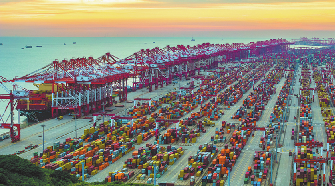
 In a sign of that push, the Copenhagen-based firm unveiled its flagship logistics center in Lingang Special Area of China (Shanghai) Pilot Free Trade Zone last week, marking one of its largest global warehousing investments.

 Representing an investment of over $140 million, the facility spans 113,000 square meters and offers 147,000 square meters of storage space.

 Maersk, which operates in more than 130 countries and regions and employs around 100,000, said the new logistics center offers a full suite of fulfillment services and is designed to serve customers in China, across the Asia-Pacific region, and beyond.

 “China is not only the world’s largest exporter, but also a key consumer market,” said Vincent Clerc, CEO of Maersk, adding that this facility will significantly enhance the group’s omnichannel fulfilment capabilities and further strengthen the connection between China and international markets.

 “It is another testament to our commitment to continuously evolve our logistics solutions, helping customers overcome trade challenges and unlock new growth opportunities,” he said.

 Silvia Ding, managing director of Maersk China, said that China’s foreign trade is evolving from an export-driven model to a more diversified approach, encompassing exports, imports and transshipments.

 Ding said businesses are increasingly seeking unified inventory management to meet a wide range of trade demands.

 “With the omnichannel fulfilment capabilities of this new warehouse, customers can now achieve this goal and efficiently meet both B2B and B2C requirements,” she added.

 China’s foreign trade grew 3.6 percent year-on-year to 37.31 trillion yuan ($5.27 trillion) in the first 10 months, said the General Administration of Customs.

 zhongnan@chinadaily.com.cn

Article inline ad

Data In Focus To Boost Soes

0

NDA, SASAC team up to facilitate exploration, utilization of resources

By FAN FEIFEI | CHINA DAILY | Updated: 2025-11-28

China is ramping up efforts to enhance data efficiency and boost the development and utilization of data resources of State-owned enterprises, as part of a broader push to enhance the core competitiveness of such firms and cultivate new quality productive forces, said the country’s top data governance regulator.

 The National Data Administration, in collaboration with the State-owned Assets Supervision and Administration Commission of the State Council, carried out a pilot project and selected 12 centrally administered State-owned enterprises to promote the exploration and utilization of SOEs’ data resources.

 By 2027, the initiative is expected to further strengthen the data governance capabilities of SOEs, significantly improving the development, utilization and sharing of data resources, effectively enhancing industrial chain collaboration and supporting more than 100,000 small and medium-sized enterprises, the NDA said.

 Chen Ronghui, deputy head of the NDA, said at a news conference in Beijing on Tuesday that the initiative will encourage SOEs to integrate data applications across various fields, such as research and development, production, operations, services and management, thereby driving profound changes in corporate governance and business models.

 “The initiative mainly focuses on innovating data management mechanisms, cultivating and expanding the data industry, bolstering industrial transformation and upgrading, and optimizing the innovation environment,” Chen said.

 It mainly covers key fields like energy and power, transportation and logistics, mineral resources, equipment manufacturing, satellite remote sensing, new materials and green and low-carbon industries, promoting the deep collaboration of SOEs and upstream and downstream enterprises of industry chains in the establishment of trusted data space, openness and sharing of data resources, collaborative innovation of data products and innovative applications of artificial intelligence, he said.

 Chen said efforts have been made to encourage SOEs to break down data barriers, proactively open their data resources, and enable safe and efficient data circulation across enterprises and industries.

 Apart from the centrally administered SOEs, private enterprises, research institutions and professional organizations have participated in the pilot programs.

 China unveiled guidelines on promoting the development and utilization of corporate data resources last year in a bid to fully unleash the value of data elements and bolster high-quality development of the digital economy.

 The guidelines stipulate 13 measures including improving a mechanism to safeguard corporate data rights and interests, cultivating digital competitiveness of enterprises, as well as fostering an open, transparent and predictable development environment.

 Zhang Dong, vice-president of China Mobile, said the company has built a big data platform, enabling the efficient aggregation and processing of massive amounts of data, with the data scale for large model training exceeding 10 trillion tokens.

 Zhang said the massive data volume has been applied to deepen intelligent management, with more than 340 models tailored for auditing already built, while improving the auditing efficiency by over 70 percent.

 Li Peng, chief artificial intelligence officer of China Southern Power Grid, said the company has launched a trusted data space for the energy industry integrating advanced technologies such as blockchain, privacy computing and data sandboxes.

 A trusted data space is an infrastructure for secure data circulation and use, connecting trusted players including data owners, providers, users and developers.

 Li said they are also actively promoting the deep integration of data from the power sector with areas such as manufacturing, finance, environmental protection, emergency management and urban governance, adding that over 400 data products have been developed.

 The nation’s total data output reached 41.06 zettabytes last year, up 25 percent year-on-year, while the added value of core industries of the digital economy accounted for about 10 percent of GDP, said the NDA.

 Data elements have been rapidly integrated into various areas like production, circulation and consumption, and are playing an increasingly pivotal role in bolstering industrial upgrade, said Ouyang Rihui, assistant dean of the China Center for Internet Economy Research at Central University of Finance and Economics.

 Ouyang said the country’s accelerated efforts to drive the development and utilization of data resources of SOEs will propel the deeper integration of data elements with the real economy, boost the efficient application of data resources and promote high-quality development of the digital economy.

 fanfeifei@chinadaily.com.cn

Article inline ad

Chinese Solar Power Giant Longi Enters Storage Sector

0

By Zheng Xin | chinadaily.com.cn | Updated: 2025-11-27

Chinese solar power giant Longi Green Energy Technology Co officially announced its entry into the storage sector with the launch of the Longi Energy Storage One-Stop Solution.

 This marks Longi’s strategic evolution from a global photovoltaic leader to an integrated “solar-storage-hydrogen” comprehensive energy solution provider.

 “The synergy of these three will build a truly widespread, highly resilient, and affordable zero-carbon energy system,” Dennis She, vice-president of Longi, said.

 “The current development stage of the energy storage industry is very similar to the early days of solar, with confidence-driven rapid growth, but also some disorderly competition,” She said.

 “The future dimension of competition in energy storage has evolved from ‘having the technology’ to ‘value reliability’. Safety, reliability, and stability are the yardsticks for measuring energy storage solutions, and are also the cornerstone for winning the long-term trust of the market and customers.”

 Currently, Longi possesses leading technologies in PV and hydrogen energy – with its HIBC cell efficiency reaching 27.81 percent and its ALK electrolyzer capacity ranking first globally.

 This expansion into energy storage signifies the further enhancement of its strategic layout, it said.

 Longi has also officially announced the establishment of its first Solar-Storage Technology Innovation Center (Center of Excellence) in Europe.

 This center will integrate core functions including project consulting, technical training, O&M support, and spare parts services, dedicated to providing European customers with rapid-response, full-lifecycle localized professional services.


Article inline ad

Massimo Dutti Unveils ‘The Order Of Things’ Pop-Up Store In Shanghai

0

chinadaily.com.cn | Updated: 2025-11-26

Spanish fashion brand Massimo Dutti has launched its pop-up store, “The Order of Things”, in Xintiandi, Shanghai, which will run from November 22 to 30, as part of its continuous efforts to strengthen its reach and enhance connections with local consumers through innovative experiences.

 The immersive space promises a unique exploration of style where order transforms into art and tranquility takes shape as luxury, offering visitors a week-long opportunity to engage with a new dimension of design, the company said.

 “This is not merely a product presentation, but a profound practice of integrating our brand’s aesthetics into the local cultural context,” Eugenio Bregolat, president of Inditex Greater China, said, highlighting the significance of the launch.

 “Alongside the successful launches of new stores in Xi’an, Shaanxi province and Tianjin this year,” Bregolat said, “this pop-up underscores Inditex’s ongoing commitment to meet the evolving demands of Chinese customers while creating deeper connections through innovative experiences.”

 Massimo Dutti has collaborated with renowned architect and design consultant Xie Ke, known for his minimalist, poetic approach that blends Eastern philosophy with modern sensibilities. Xie’s iconic works, chosen specifically for this space, will lend a sculptural presence to the environment, enhancing the overall spatial narrative, the company said.

 The pop-up will showcase Massimo Dutti’s Autumn/Winter 2025 collection, where high-quality fabrics, clean lines, and a neutral color palette blend into the space.

 Moreover, the store has created a partnership with premium tea brand Basao, adding an extra layer of refinement to the experience. Visitors can unwind in an exclusive tea lounge on the second floor — where the brand’s signature teas are served — allowing guests to immerse themselves in a sensory journey of flavors.

 Founded in 1985 in Spain as a menswear brand, Massimo Dutti has grown to encompass over 500 stores across more than 70 markets worldwide. In China, the brand continues to strengthen its presence, with a growing retail network and a robust online platform through Tmall, its official e-commerce site, WeChat Mini Program, and JD.com.


Article inline ad

China-Russia SME Forum Convenes In Xi’an To Boost Cooperation

0

By QIN FENG in Xi’an and CHEN MEILING | chinadaily.com.cn | Updated: 2025-11-26

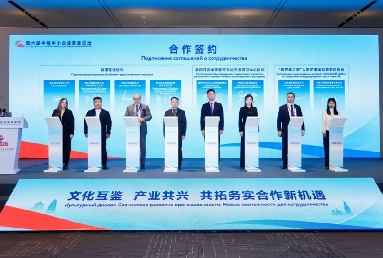
The sixth China-Russia Small and Medium-sized Enterprises Forum convened on Monday in Xi’an, Shaanxi province, bringing together officials and business representatives to explore new areas of cooperation. A related conference examined opportunities in cultural tourism, film and television, and the food and beverage industry.

 Representatives of government and enterprises outlined recent cases of cross-border SME projects and shared approaches they believe could attract more collaboration in both directions. Several presenters highlighted the role of culture and media in shaping demand and sustaining long-term exchange.

The film and television segment featured three guests who described their experience with joint productions and distribution. They argued that collaborative projects can widen audience reach and create steadier commercial channels for smaller studios.

 The discussion on food and beverage trends touched on traditional cuisine, heritage elements, and expanding supply chains. Participants described efforts to pair cultural content with industrial development so that small firms can enter new markets with fewer barriers

The conference included an interactive exhibition of Shaanxi’s unique intangible cultural heritage. Related enterprises signed collaboration agreements on tourist and culture exchange and F&B collaboration.

 Li Hongzhong, vice-chairman of the National People’s Congress Standing Committee, said that China would continue improving collaboration and offer more convenient conditions and environments for SMEs of both sides.

 Qi Zichen contributed to this story.

Article inline ad

Securities Commission Seeks Public Opinions On Pilot Program For Reits

0

By Li Jing and Zhou Lanxu | chinadaily.com.cn | Updated: 2025-11-28

The China Securities Regulatory Commission said in a statement on Friday that it is soliciting public opinions on launching a pilot program for commercial real estate investment trusts, a move designed to broaden financing channels and support the stable development of the property sector.

 The initiative seeks to implement the new set of nine guidelines on capital markets and decisions by the central authorities, aimed at fostering high-quality development in the REITs market while serving the real economy, the regulator said.

 According to the draft announcement, commercial REITs are defined as closed-end, publicly offered securities investment funds. These funds will hold commercial properties to generate stable cash flows and distribute yields to investors.

 The draft rules, consisting of eight articles, outline specific requirements for fund registration, due diligence, and the responsibilities of fund managers and custodians. The commission emphasized that fund managers must assume active responsibility for operational management to ensure the quality of the underlying assets.

Article inline ad

Efforts On To Unlock Consumption Potential

0

Goal to improve adaptability of consumer goods supply/demand

By LI JIAYING | CHINA DAILY | Updated: 2025-11-28

China is stepping up efforts to improve the adaptability of supply and demand in its consumer market, as authorities move to further unlock consumption potential and support high-quality economic growth, said officials and experts.

 “Adaptability means that producers proactively respond to shifting consumption trends and design products from the outset to match diverse consumer needs. It is about enabling supply and demand to meet in both directions through dynamic alignment in quality, structure and utility,” said Xie Yuansheng, vice-minister of industry and information technology, at a news conference on Thursday.

 “Ensuring a closer overall fit between supply and demand will help unleash consumption potential and support smoother economic circulation,” Xie said.

 Xie’s remarks came after the Ministry of Industry and Information Technology and five other departments jointly released an action plan on Wednesday, in a bid to improve the adaptability of consumer-goods supply and demand to spur consumption.

 According to the plan, by 2027 China aims to significantly upgrade its supply structure, build three consumption sectors each exceeding 1 trillion yuan ($141.2 billion), and cultivate 10 consumption hot spots worth over 100 billion yuan each. By 2030, a high-quality development pattern featuring mutually reinforcing supply and demand drivers is expected to take shape, with consumption contributing more steadily to economic growth.

 The three trillion-yuan sectors include intelligent connected vehicles, eldercare products and consumer electronics, while hot spot categories span baby and children’s products, smart wearables, cosmetics, fitness equipment, outdoor gear, pet food and supplies, civilian drones, trendy collectibles, jewelry and guochao (China chic) fashion.

 “These priority areas reflect our assessment of consumer trends, industrial capacity and technological change, and will be the focus of cultivation in the coming years,” the vice-minister said.

 As one of the largest consumer categories, the automobile sector will be a key focus for expanding downstream demand, said Yang Nie, deputy director-general of the department of market operation and consumption promotion at the Ministry of Commerce.

 “Efforts will include pilots for circulation reform, wider flows of used cars and the expansion of aftermarket activities such as vehicle modification, rentals, motorsports and RV camping,” Yang said.

 Beyond big-ticket items such as autos, home appliances and home furnishings, the Ministry of Commerce will also move to grow new forms of consumption and foster a more internationalized consumption environment, the official added.

 The newly released action plan targets key areas where supply-demand mismatches persist and lays out measures across five fronts — expanding incremental growth, tapping existing market potential, developing niche markets, fostering new consumption scenarios and formats, and improving market management.

 Zhu Keli, founding director of the China Institute of New Economy, said the core of supply-demand adaptability lies in the supply side’s ability to precisely capture and respond to changes in consumer preferences.

 One key step in this direction is upgrading industrial chains for greater flexibility — for example, platform-based production in the auto industry that enables multiple models to be made on one line, or apparel firms adopting new digital technologies to support small-batch, multicycle customized production.

 “This kind of flexible supply chain allows companies to retain scale advantages while meeting niche-market needs, providing solid technical support for balancing supply and demand,” Zhu said.

 The action plan also calls for promoting flexible and customized production models, advancing factory-specific upgrading programs that can meet tailored and diverse needs, as well as building a fully digital chain linking user demand, intelligent design and flexible manufacturing.

 PL-Universe Robotics, a manufacturer of embodied-intelligence robots for flexible production lines, recently reported that its first batch of delivered robots is already operating on home appliance production lines, performing key tasks.

 “On lines producing two or more types or models of products, robots may offer clear advantages in both efficiency and cost,” said Ge Jin, founder and chief operating officer of the company.

 Through single-robot offline commissioning and other flexible switching methods, production lines can shift between products without downtime, enabling multicategory, small-batch, rapid-changeover manufacturing, Ge said.

 lijiaying@chinadaily.com.cn

Article inline ad