Wednesday, November 25, 2026

Home Blog Page 136

China Ready To Work With US On Implementation Of Economic And Trade Talks

0

By Zhong Nan | chinadaily.com.cn | Updated: 2025-11-27

China is willing to maintain close communication with the United States and work together to ensure the implementation of the outcomes of their economic and trade consultations, said the Ministry of Commerce.

 He Yongqian, a spokeswoman for the ministry, made the remarks in response to a question on China’s soybean trade with the US at a weekly news conference in Beijing.

 Also on Thursday, Yang Fan, a spokeswoman for the China Council for the Promotion of International Trade, said that at the invitation of the US Chamber of Commerce, the council will organize a delegation of Chinese entrepreneurs to visit the US in early December.

 The participating companies will represent a broad array of sectors, including agriculture, machinery and electronics, financial services, cross-border trade, logistics and transportation, biopharmaceuticals, and cultural industries.

 Yang said the delegation will engage extensively with US political and business communities, and hold multiple exchange events between Chinese and US business leaders.

Article inline ad

Yuan Seen On Sustained Gradual Rise

0

Resilient performance of China’s economy secures RMB on steady track

By Jiang Xueqing | China Daily | Updated: 2025-11-27

The central parity rate of the renminbi in the interbank foreign exchange market strengthened 30 pips to 7.0796 against the US dollar on Wednesday, following a 21-pip increase on Tuesday. Analysts said the Chinese currency is likely to retain a mildly stronger bias in the near term and maintain a stable and gradually appreciating trend over the longer run.

 Wang Qing, chief macroeconomic analyst at Golden Credit Rating International, said the recent rapid depreciation of the Japanese yen and other factors have intensified volatility in global currency markets, with the US Dollar Index exhibiting an upward trend amid fluctuations.

 Under these circumstances, the renminbi has held a steady but firm footing against the greenback. The onshore RMB closed at 7.0802 at 4:30 pm on Wednesday, strengthening by 136 pips from the previous session. During intraday trading, the onshore rate climbed above the 7.08 level, with both onshore and offshore quotes reaching their highest levels since mid-October 2024.

 Wang said the central parity rate of the RMB has recently been adjusted consistently toward a stronger level. This may be related to China’s stronger-than-expected economic performance so far this year and the sharp decline in the US dollar. Although the RMB has appreciated, it has not fully caught up with the dollar’s drop.

 In addition, China’s exports have outperformed expectations this year, and domestic capital markets have strengthened since July. Wang believes this has increased foreign-exchange settlement demand and bolstered market confidence in the RMB.

 He expects the Chinese currency to maintain a mildly stronger nature in the short term.

 Wang Zhiyi, president of the Cross-Border Finance Research Institute, said that externally, rising expectations of a US Federal Reserve rate cut in December have pushed the US Dollar Index into choppy trading around the 100 level, providing support for non-US currencies. Internally, the RMB central parity rate has remained stable with an upward trend, guiding expectations for RMB appreciation, while improving cross-border capital flows have moved in tandem with the strength of China’s capital markets.

 Zhou Ji, an analyst at Nanhua Futures, said that as China’s year-end growth-stabilization policies gradually take effect — combined with the seasonal patterns of exchange-rate movements — the USD/RMB spot rate is expected to show a volatile bottoming pattern, with the bottom gradually edging lower.

 Recently, the USD/RMB spot rate has repeatedly opened higher but trended lower intraday as settlement demand continued to rise, indicating that appreciation momentum for the Chinese currency is gradually accumulating, said Zhou.

 Sheng Songcheng, adjunct professor of economics and finance at China Europe International Business School and president of the Research Institute of China Chief Economist Forum, said the RMB has a strong foundation for maintaining stability with a gradual upward trend over the medium to long term. This outlook is supported by China’s transition into a new stage of “two-way investment”, the accelerated diversification of its trading partners and rising labor productivity.

 As China’s economy shifts to innovation-driven growth, patterns of cross-border capital flows have undergone profound changes. Sheng emphasized that China is transitioning from a development model focused mainly on bringing in foreign investment to one that gives equal weight to both “bringing in” and “going global”.

 Sheng said against the backdrop of expanding two-way investment, maintaining moderate stability in the RMB — or even allowing it to appreciate steadily over the medium to long term — will provide strong support for Chinese companies’ overseas expansion, the internationalization of the RMB and the development of global trade and economic relations.

 He stressed that China remains committed to keeping the RMB at a reasonable and balanced level, avoiding excessively rapid or sharp appreciation that could temporarily hurt exports, while allowing the market to play a decisive role in exchange rate formation and balancing both internal and external stability.

 jiangxueqing@chinadaily.com.cn

Article inline ad

Science Program Names 35 New Fellows

0

By Cheng Yu | China Daily | Updated: 2025-11-26

China’s New Cornerstone Investigator Program, one of the country’s largest privately funded initiatives for basic science, named 35 new fellows on Monday, and pledged to offer 10 years of stable support for 200 to 300 leading scientists.

 The program, funded by Chinese tech company Tencent Holdings in 2022 with a pledge of 10 billion yuan ($1.4 billion) over a decade, offers some of the most generous grants available for fundamental research in China. Researchers each receive 25 million yuan over five years, while theoretical researchers are granted 15 million yuan, with an option to apply for renewal after the first term.

 Tencent Chairman and CEO Pony Ma said in a statement that the program focuses on the next 10 to 20 years, which will be critical for China to stand tall in global science.

 “Feedback from the first two cohorts shows the program truly helps scientists pursue original breakthroughs. This gives us confidence to make a long-term commitment beyond commercial boundaries,” he said.

 The third cohort’s average age is 45, well below the program’s upper application limit of 55 and younger than last year’s average of 47. Nine of the appointees qualify as young scientists, making up a record share of more than one quarter.

 The program also named its first foreign researcher, Yuval Rinkevich of the Chinese Institute for Medical Research, whose work focuses on organ repair after injury.

 Shi Yigong, an academician of the Chinese Academy of Sciences and chair of the program’s scientific committee, said: “China’s basic research has made great progress in the past decade. This year’s new fellows are outstanding and at the frontiers of their fields. We hope they aim at big problems and deliver original breakthroughs.”

 In developed countries, nongovernmental sources or social capital play a substantial role in supporting basic research and scientific breakthroughs. In China, however, the vast majority of funding for such innovations comes from the central government.

 China is also encouraging private enterprises, especially platform-based companies, to give full play to their role in supporting technological innovations, as per the country’s latest efforts to promote the development of the private sector.

 “Although the R&D intensity of China has been continuously increasing, the country’s investment in basic research is insufficient, which directly leads to a relative lack of innovations based on complex, underlying supporting technologies and scientific research,” Liu Qiao, dean of the Guanghua School of Management of Peking University, said in a note.

 Liu said China’s position index in the global value chain, or GVC, in 2018 was 0.01 while the US index was 0.29. Thus, the US continues to be at the absolute upstream of the GVC, with strong control over core technologies and raw materials. This gives it the power to create constraints downstream for other countries and economies in the GVC.

 “To change this situation, China must increase investment in basic R&D and promote Chinese industries to move upstream in the global value chain. Only when breakthroughs are achieved in basic research can we truly break developed countries’ vice-like grip on key technologies,” he said.

 chengyu@chinadaily.com.cn


Article inline ad

Chinese Travelers Crave Experiences Over Mere Scenery

0

By Cheng Yu | China Daily | Updated: 2025-11-26

On a crisp autumn evening, laughter echoes in Qiyun Mountain, a Taoist tourist spot in Xiuning county of Huangshan, Anhui province.

 At the bustling dice hall, Lu Mengya, a visitor from Shanghai, is caught in a playful standoff with a costumed non-player character, or NPC, and a local actor dressed in flowing robes.

 “Come, young master, place your bet!” the actor teases. Lu rolls the dice, wins a handful of silver-printed coins and bursts into laughter.

 “I didn’t expect to come to a mountain and end up playing an ancient dice game,” she said. “It’s not just sightseeing. It feels like time-travel with friends.”

 That, in essence, is the new face of China’s domestic tourism. At a time when travelers crave experiences over mere scenery, Qiyun Mountain is rewriting what a mountain getaway means.

 Once known mainly for its mist-shrouded Taoist peaks, the resort has evolved into an immersive playground that blends nature, storytelling, and interaction.

 Since early 2025, the resort has rolled out what it calls the new generation of experience tour, which has been designed to meet the growing appetite from visitors for personalized and diversified travel.

 The revamped experience stretches beyond daytime sightseeing. With the slogan “Entertain by day, Immersive by Night”, the resort has launched a lively ancient-style town where tourists can slip into fantasy worlds inspired by Chinese mythology and martial arts lore.

 Four themed zones host more than 100 live performances across 50 activities, ranging from role-playing quests to marketplace games. Visitors can earn and spend the resort’s exclusive in-game currency by completing challenges or winning games with NPCs, adding a sense of adventure and reward to their stay.

 The numbers tell a story of success.

 From January to September, the resort received 1.81 million visitors, up 21.3 percent year-on-year. Within that, 426,600 people entered the scenic mountain area, marking a 36.5 percent surge year-on-year.

 During the National Day holiday, visitors number reached 291,400, with a 14.9 percent jump in mountain entries, which is evidence that the immersive approach is resonating with travelers.

 What sets Qiyun Mountain apart is its deliberate fusion of cultural narrative and modern entertainment logic.

 Instead of simply preserving heritage, the resort is turning ancient folklore into living stories that visitors can enter, touch and influence. Each NPC character, from wandering swordsmen to hidden scholars, is trained to improvise with guests, building spontaneous connections that feel part theater, part game.

 As China’s tourism industry transitions from sightseeing to experience-based consumption, destinations like Qiyun Mountain are extending their value chain, from tickets and accommodation to cultural IP, nighttime economy and retail.

 It has become a blueprint for how traditional scenic spots can reinvent themselves as immersive cultural theme parks, appealing to young travelers who expect interaction, emotion and Instagram-worthy moments.

 “Visitors today don’t just want to see something — they want to feel part of it. We aim to create a place where stories unfold with the traveler inside them,” said Huang Ying, director of the culture, tourism and sports bureau of Xiuning.

 As twilight descends, lanterns flicker to life and the air fills with the rhythm of drums. NPCs roam the cobbled lanes, inviting visitors to one last duel of wits or luck before nightfall.

 “For tourists, it’s more than a vacation, it’s a living stage where the line between guest and character disappears,” Huang said.

Article inline ad

Tech Giants Target Unmanned Logistics

0

By Fan Feifei | China Daily | Updated: 2025-11-26

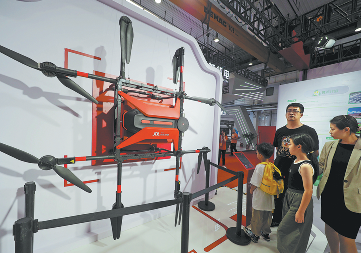
Chinese tech heavyweights are ramping up resources to expand their presence in the fast-developing unmanned logistics and delivery sector to boost efficiency and address challenges from rising labor costs and a shortage of couriers.

 Compared to traditional delivery practices, unmanned deliveries entail lower delivery costs, larger carrying capacity and greater safety records, while improving user experience in the fiercely competitive logistics field, industry experts said.

 Liu Qiangdong, Chinese e-commerce giant JD’s founder and chairman, recently said that the company will build the world’s first fully unmanned delivery station in April.

 According to Liu, with the appearance of artificial intelligence and robotics, the proportion of China’s social logistics costs in GDP is expected to drop from over 14 percent to less than 10 percent in the next five years.

 The company has announced plans to purchase 3 million robots, 1 million autonomous vehicles and 100,000 drones to upgrade logistics and supply chains over the next five years.

 He said many of JD’s automated devices have already realized large-scale operation, estimating that robotics and drones will see explosive growth in the future.

 Liu said robots will liberate human beings from repetitive and heavy work, and technological advancements will create a large number of new types of jobs, new demand and new services.

 Cainiao Group, the logistics arm of Alibaba Group Holding Ltd, has invested heavily in the research, development and operation of unmanned delivery vehicles since 2016, aiming to boost last-mile delivery efficiency and cut operational costs for courier stations.

 Li Qiang, chief technology officer of Cainiao, said autonomous driving is the key technology to significantly cut the share of logistics costs in GDP.

 Driven by rising demand for unmanned delivery, a series of supportive policies and technological innovation, unmanned vehicles are rapidly penetrating into a wide range of industries, Li said.

 “In the next three to five years, we expect over 200,000 unmanned vehicles to be deployed in the logistics industry, which will further drive technological advancement and cost reductions across the sector,” he said, adding that autonomous vehicles have achieved commercialization and large-scale application in the logistics sector.

 The company will bolster the development and transformation of the logistics industry by leveraging its strengths in intelligent technologies covering AI and autonomous driving, so as to address last-mile delivery challenges.

 Mo Daiqing, a senior analyst at the Internet Economy Institute, a domestic consultancy, said the adoption of autonomous delivery vehicles can potentially reallocate couriers’ work hours by releasing them from parcel delivery and giving them a chance to spend more time on customer service and maintenance of such vehicles.

 Industry statistics showed that revenue from China’s low-speed autonomous driving industry reached 12.3 billion yuan ($1.73 billion) last year, up 45 percent year-on-year, with approximately 33,000 unmanned vehicles sold, an increase of 34 percent from the previous year.

 By the end of 2025, sales of low-speed autonomous vehicles in China are expected to exceed 47,000 units, with the revenue reaching 18.5 billion yuan.

 Currently, unmanned delivery vehicles are gradually moving toward large-scale commercial adoption, with application scenarios expanding from designated areas to fully open roads, said Guo Tao, deputy head of the China Electronic Commerce Expert Service Center.

 “The open road scenarios are mainly concentrated in the urban delivery segment, including traditional logistics services such as express and freight delivery, as well as deliveries related to community group-buying and supermarket retail. The widespread use of unmanned delivery vehicles will be conducive to greatly reducing logistics costs.”

 “Along with the advancements of autonomous driving, the internet of things, and sensor technologies, unmanned delivery vehicles boast enhanced capacities in terms of road condition perception and obstacle avoidance,” Guo said, adding that these vehicles could effectively relieve logistics pressure during e-commerce platforms’ promotional campaigns.

 Lu Zhenwang, CEO of Shanghai-based Wanqing Consultancy, said unmanned delivery services have been deployed in some designated areas and scenarios, such as hotels, universities and supermarkets, given the current autonomous driving technologies and complicated traffic situations.

 Lu said Chinese tech giants are betting big on the intelligent logistics sector, covering driverless vehicles, drones and robots to gain an upper hand amid fierce competition.

 fanfeifei@chinadaily.com.cn

Article inline ad

Upgrades, Trade-Ins Attracting Mncs

0

Elevator makers major beneficiaries of residential housing refurbishment trend

By Zhong Nan | China Daily | Updated: 2025-11-26

China’s implementation of large-scale equipment upgrades and consumer goods trade-in programs will effectively attract global capital and boost consumption, supporting growth in the near term and reinforcing the economy over the long run, senior executives of foreign firms said on Tuesday.

 They said that by stimulating both production and demand, these initiatives are emerging as a crucial driver for sustaining growth amid ongoing economic transformation.

 China launched an action plan in March 2024 to promote the renewal of large-scale equipment and trade-ins of consumer goods as part of efforts to boost domestic demand and support economic growth, said the Ministry of Commerce.

 These measures have further promoted the development of the circular economy, attracted foreign investment and innovation-related resources, created new business models and strengthened momentum for green and intelligent upgrades, thereby improving the safety and resilience of industrial and supply chains, said Guo Chaoxian, a researcher at the Institute of Industrial Economics of the Beijing-based Chinese Academy of Social Sciences.

 Kone Corp, a Finnish elevator manufacturer with over 60,000 employees globally, has been actively contributing to these national initiatives by modernizing elevators to contemporary standards, particularly in aging residential complexes where the elderly face daily mobility challenges.

 “We delivered one of China’s largest bond-funded elevator modernization programs in Kunshan, Jiangsu province, last year, setting a new industry benchmark and becoming a national reference case. We have since replicated this model in more than 40 cities nationwide,” said Joe Bao, executive vice-president of Kone China.

 Bao said that smart capabilities — such as artificial intelligence monitoring — enable earlier risk detection, while big data and AI analytics drive the transition from reactive servicing to predictive maintenance.

 “At the same time, digital integration with government platforms ensures stronger public oversight,” he said, adding these efforts have generated strong market momentum, with double-digit growth in Kone’s modernization orders in China this year.

 Also upbeat about the Chinese market and the growing momentum generated by large-scale equipment renewal, Judy Marks, chairwoman, CEO and president of Otis Worldwide Corp, a United States-based elevator manufacturer, reaffirmed that China remains one of the group’s most dynamic and promising markets with expanding opportunities in service and refurbishment.

 After securing a contract in early September to upgrade 106 elevators in a residential community in Shanghai’s Baoshan district, the US company won additional bids in Shijiazhuang, Hebei province, and Hefei, Anhui province, to renovate elevators in several neighborhoods in mid-September.

 Nearly 200 aging elevators in the two cities are now slated for comprehensive modernization under the new projects, marking another step in expanding its equipment renewal footprint in China.

 From accessible mobility and urban renewal to AI-enhanced safety and improved ride experiences, Otis aims to advance mobility by integrating technology with user needs, contributing to a safer and more sustainable urban life in China, said Marks.

 Adele Tao, CEO of water technology for China at Japanese housing products and building material company Lixil Group, said that China’s focus on fostering new quality productive forces is transforming how industries evolve. Lixil sees these policies creating strong momentum for manufacturers to innovate and upgrade.

 “The Chinese government’s new initiatives continue to send a strong and positive signal to the global business community,” said Tao, who is also Lixil’s senior vice-president.

 “China is not only a leading market in manufacturing, design and innovation today, but also home to consumers who are eager to explore high-quality, smart and sustainable products. We will continue to develop and first launch products tailored to local needs, many of which have later found success in global markets,” she added.

 The Tokyo-based firm launched its international competence center in Guangzhou, Guangdong province, in July to support new product development and shorten lead times, particularly for components and sub-assemblies sourced from key Chinese suppliers.

 zhongnan@chinadaily.com.cn

Article inline ad

NPL Disposals On Rise Amid Asset Cleanup

0

Reasons include optimizing holdings structures, enhancing profitability

By Jiang Xueqing | China Daily | Updated: 2025-11-26

Many commercial banks have been intensively disposing of nonperforming loans since the beginning of the fourth quarter, in an effort to alleviate asset quality pressure and optimize overall structure.

 Data from the China Central Depository & Clearing Co (CCDC) show that nearly 30 banks have issued NPL transfer announcements since October, covering categories such as personal consumption loans, individual business loans and credit card overdrafts.

 Ping An Bank launched two NPL transfer projects involving credit card overdrafts on Monday, with total outstanding principal and interest of around 328 million yuan ($46.3 million) and 477 million yuan, respectively. On the same day, the Changsha, Hunan province branch of China Guangfa Bank relisted an NPL transfer project involving individual business loans, with outstanding principal and interest exceeding 220 million yuan.

 China Bohai Bank announced on Oct 10 that it would transfer creditor’s rights assets totaling 69.83 billion yuan. The preliminary minimum consideration for the planned transfer will be no less than around 48.88 billion yuan, equivalent to about 70 percent of the total creditor’s rights value.

 The core reasons many banks are accelerating NPL transfers include optimizing asset structures, saving on capital occupation, and enhancing capital adequacy and profitability. This trend helps lower banks’ NPL ratios, reduce provisioning pressure, and free up room to focus on high-quality clients and growth areas, said Lou Feipeng, a researcher at Postal Savings Bank of China.

 Since the beginning of this year, nonperforming assets disposal in the banking sector has accelerated. The National Financial Regulatory Administration said banks disposed of 1.5 trillion yuan of NPAs in the first half, 123.6 billion yuan more than a year earlier.

 Some lenders are increasingly shifting toward proactive NPA management, building a full-cycle, proactive and ecosystem-based NPA value management system. For firms that still have operating value but are temporarily undergoing difficulties or varying levels of distress, banks are working with asset management companies to design comprehensive restructuring plans to maximize asset value, said Dong Ximiao, deputy director of the Shanghai Institution for Finance & Development.

 The CCDC said that in the first quarter, the total transaction volume of NPL transfers, including both unpaid principal and interest, reached 48.3 billion yuan, up 139 percent year-on-year. During the same period, transaction volume for batch transfers of personal NPLs surged 761 percent year-on-year to 37.04 billion yuan, of which batch transfers of personal consumption NPLs accounted for 72.4 percent.

 Recently, several banks have begun selling real estate directly via third-party platforms, with many properties already listed or in the process of being listed.

 Experts said that compared with judicial auction properties, “direct-from-bank properties” have an advantage in title clarity. Before listing, banks have conducted title checks and completed separation of creditor’s rights and obligations, mitigating potential risks associated with judicial auction properties, such as private lending disputes, undisclosed lease agreements or second mortgages.

 One reason banks are accelerating real estate disposals is rising NPL pressure. Interim results for 2025 showed rising mortgage NPL ratios among listed banks, with some lenders seeing increases above 20 basis points. However, mortgage NPL risks remain generally manageable, said a report by Kaiyuan Securities.

 In addition to NPLs from individual borrowers, some property developers also defaulted on loans. After litigation and court judgments, banks obtained property titles and explored direct sales to the public.

 Li Yujia, chief researcher at the Guangdong Housing Policy Research Center, said recent attention to direct-from-bank property sales is driven by an increase in sales volume, mainly among small and medium-sized banks, and banks’ shifting emphasis from B2B to a balance of B2B and B2C.

 jiangxueqing@chinadaily.com.cn

Article inline ad

Robotics Eldercare Expands Amid Aging Population Challenge

0

Xinhua | Updated: 2025-11-25

SHENYANG – Artificial joints fitted closely around Zhang’s legs, tiny motors humming as they learned his strides. With each step, the sensors tracked his movements and the whole frame gently pushed him forward.

 In a rehabilitation center in Beijing’s Fengtai District, the 76-year-old, once dependent on a caregiver, lifts his feet, one after the other, walking with the help of a robotic exoskeleton.

 “I used to need someone by my side,” he said with a grin. “With the robot training, I can walk myself.”

 An eldercare robot for each elderly person has long been the stuff of science fiction, but it is now edging closer to reality as robots are making their way into households to help more and more senior people with daily challenges and inconveniences.

 GROWTH FUELED BY POLICY, DEMAND

 China is witnessing a swift integration of artificial intelligence (AI) and robotics into eldercare services, providing innovative solutions to address the challenges that come with an aging population.

 Driven by policy support and rising demand, China’s eldercare robot industry is entering a period of rapid expansion.

 This year, new guidelines for elderly care service reforms call for advancing humanoid robots, brain-computer interfaces, and AI technologies to enhance senior care.

 Across China, local governments are rolling out a range of new policies. Beijing’s three-year action plan on embodied intelligence encourages the pilot use of intelligent robots in eldercare institutions, while Jiangsu’s innovation plan calls for the broader adoption of service robots in both household and eldercare environments.

 Earlier this year, the International Electrotechnical Commission released a global standard for elderly-care robots. Led by China in its formulation, the standard sets technical benchmarks for product design, manufacturing, testing and certification for such robots.

 “Since early last year, we’ve clearly seen demand for eldercare robots picking up,” said Chen Yuxi, industry director of the service robot division at Siasun Robot & Automation Co., Ltd., a leading robotics firm in northeast China’s Shenyang.

 By the end of 2024, China’s population aged 60 and above reached 310 million, accounting for roughly 22 percent of its total population.

 “Elderly people who are disabled, cognitively impaired or of a very advanced age have certain requirements when it comes to toileting, bathing, eating, getting dressed and moving around both indoors and outdoors. In addition, the demand for technological solutions that provide emotional companionship is also becoming increasingly prominent,” said Sun Liguo, vice-president of the Beijing association of senior citizens.

 REAL-WORLD APPLICATION TAKING SHAPE

 While eldercare robots are still in the early stages of development compared to industrial robots, some users are already beginning to enjoy the convenience these technologies provide.

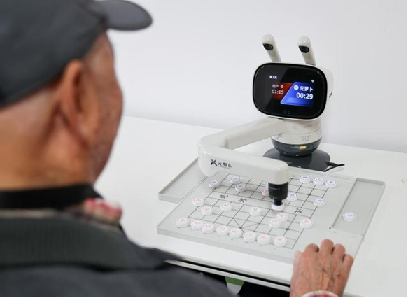
 At a nursing home located in the country’s tech hub Shenzhen, robots are now an integral part of daily life, playing chess with seniors, offering AI-assisted moxibustion therapy, and providing enhanced mobility assistance.

 “We place great emphasis on the application of technology in eldercare,” said Li Xipo, director of the nursing home. “By integrating AI robots, rehabilitation robots, and robotic pets, we aim to improve seniors’ quality of life while creating a testing ground for industry innovation.”

 “Eldercare robots represent an untapped market,” said Bi Yalei, secretary-general of the Shenzhen Robots Association. “With pressing issues in senior care, such as mobility assistance, fall prevention, and rehabilitation support, many companies in Shenzhen are actively investing in this sector due to strong demand.”

 BARRIERS TO LARGE-SCALE DEPLOYMENT

 Despite notable momentum, experts say eldercare robots still face multiple obstacles before they can be deployed on a large scale.

 On the consumer side, the feedback has been mixed. Some seniors remain skeptical.

 “Robots are too cold and emotionless. I just can’t accept them,” said Qu Suling, a 66-year-old resident of Shenyang. She expressed particular concern about safety. “If a machine malfunctions, it could hurt me,” she added, reflecting a common fear among seniors who are wary of humanoid robots operating close to their bodies.

 Another major hurdle is access to real-world data needed to improve algorithms and the user experience.

 To improve algorithms and user experiences, companies need large volumes of real-world training data, something they currently lack, according to Ji Junjie, an algorithm specialist at the Beijing Innovation Center of Humanoid Robotics. “We have limited opportunities to enter seniors’ homes or eldercare facilities,” Ji said.

 The high prices of many eldercare robots represent another significant barrier, as they are well beyond the reach of most households. Exoskeleton walking aids typically cost more than 10,000 yuan ($1,411), and bathing-assistance robots average 30,000 to 50,000 yuan, a price point that keeps them out of ordinary homes for now.

 “Eldercare robots represent a critical opportunity for people’s wellbeing, which must be seized now,” said Zhang Yunquan, a researcher at the Institute of Computing Technology under the Chinese Academy of Sciences, estimating that breakthroughs will be needed in three key areas, namely core technologies, real-world scenario adaptation and ecosystem building.


Article inline ad

Applications Of High-Tech Innovation Gain Traction

0

China Daily | Updated: 2025-11-25

HEFEI — In a sprawling park in Hefei, capital of East China’s Anhui province, which was transformed from a retired civil airport, the future of transportation is being quietly tested.

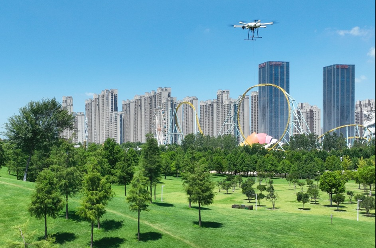
 Self-driving cars share the road with pedestrians, while delivery drones and electric vertical take-off and landing aircraft (eVTOLs) buzz overhead.

 Hefei Luogang Park is one of many application scenarios that authorities in Hefei opened for the testing of new technologies, products and business models.

 The local government is playing a key role by organizing roadshows and meetings to connect technologies with real-world applications, facilitating deeper integration of scientific and industrial innovation, said Gao Zhengrong, an official with Hefei’s Development and Reform Commission.

 China is seeking to drive high-quality economic development by exploring further application scenarios for new technologies and products, with the aim of promoting their large-scale industrial application and development, and accelerating the development of emerging industries.

 Earlier this month, China unveiled a guideline aimed at “accelerating the cultivation and openness of scenarios and promoting the large-scale application of new scenarios”.

 Scenarios have become key innovation resources, defined as a bridge that connects technology and industry, and links research and development with the market, Li Chunlin, deputy head of the National Development and Reform Commission, said at a recent policy briefing in Beijing.

 The guideline prioritizes five key areas, including emerging industries, industrial transformation and public services, and has identified 22 specific fields for scenario cultivation and openness.

 In South China’s Guangdong province, authorities are leveraging the region’s vast market and diverse application scenarios to drive scenario innovation in 20 fields, including advanced manufacturing, the maritime economy and low-altitude economy.

 Ai Xuefeng, head of the Guangdong Provincial Development and Reform Commission, said the province has released 20 rounds of scenario supply-and-demand lists to connect innovators with potential users.

 These real-world trials offer more than technical validation. They also provide a form of verification by testing the feasibility of business models and institutional reforms.

 Central government departments are actively supporting the initiative. The State-owned Assets Supervision and Administration Commission of the State Council has opened 190 pilot test and verification platforms of centrally administered State-owned enterprises. The Ministry of Industry and Information Technology is focusing on nurturing application scenarios in sectors such as “5G+”, “AI+”, “robotics plus” and “industrial internet plus.”

 Regions across China are transforming into innovation testing hubs. Beijing is promoting the application of smart city technologies, while Anhui plans to deploy 1,000 quantum information technology application scenarios by 2027.

 Sichuan province in Southwest China is ramping up efforts in cutting-edge urban rail technologies, as Southwest Jiaotong University, together with industrial leaders such as China Railway 23rd Bureau Group Corp (CR23G), initiated a joint maglev technology laboratory at a recent industrial forum in Chengdu, Sichuan province.

 As part of the innovation project, CR23G — China’s only builder with both high and medium-speed maglev track experience — shoulders the construction of a line specially for maglev tests, which allows ultra-high-speed trains operating at a maximum speed of 1,500 kilometers per hour.

 To eliminate administrative barriers, 20 cities, including Hefei, Shanghai, Hangzhou in Zhejiang province and Foshan in Guangdong, formed a scenario innovation city alliance earlier this year, aiming to promote the wide application of new technologies and products across the country.

 Experts say this nationwide push to create real-world testing environments is crucial for accelerating innovation and driving high-quality economic growth.

 “Placing enterprises’ research and development in real environments will allow new technologies, products and business models to rapidly verify and evolve,” said Liu Quanhong, director of the institute of industrial and technological economics under the NDRC.

 Xinhua

Article inline ad

China Mulls Steps To Woo More Chip Mncs

0

Market-oriented, law-based, internationalized environment in development focus

By Ma Si | China Daily | Updated: 2025-11-25

China welcomes multinational semiconductor enterprises to establish research and development centers, production bases and operational hubs in the country, benefitting from its vast market potential, the country’s top industry regulator said.

 Gao Dongsheng, chief economist at the Ministry of Industry and Information Technology, said China is committed to expanding international cooperation in semiconductors, which form the bedrock of the information society and represent a strategic, foundational and forward-looking industry essential to modern economic development.

 “We welcome global semiconductor players to establish local R&D and manufacturing centers, share development opportunities offered by China’s sizable market, and participate in building regional cooperation platforms,” Gao said at the ongoing 22nd China International Semiconductor Expo, also known as IC China, in Beijing.

 The expo, which concludes on Tuesday, has attracted more than 600 enterprises from the United States, the United Kingdom, South Korea, Japan, Israel and other countries.

 Gao said the ministry will push for closer collaboration across the entire industrial chain, spanning chip design, manufacturing, packaging and testing, equipment and materials.

 “By optimizing resource allocation and deepening convergence with emerging sectors such as artificial intelligence, new energy and smart connected vehicles, the ministry aims to create richer application scenarios and enhance the value of the industrial chain,” Gao said.

 Meanwhile, the government will continue to improve the industry environment by fostering market-led growth, guiding rational regional layout, facilitating the orderly flow of production factors and strengthening intellectual property protection. These efforts are designed to cultivate a first-class business environment that is market-oriented, law-based and internationalized, Gao added.

 Zhang Li, secretary-general of the China Semiconductor Industry Association, said that China’s IC sector maintained steady expansion during the 14th Five-Year Plan period (2021-25), with total industry sales exceeding 1.8 trillion yuan ($253.3 billion) in 2024 and notable progress made in technological innovation, product supply and industrial structure.

 Zhang shared his outlook on future development, emphasizing the importance of building an integrated innovation ecosystem covering the entire industrial chain. In addition, he highlighted the need to strengthen application-driven development and actively open up new scenarios to help new semiconductor technologies move faster from labs to the marketplace.

 He urged the industry to eliminate barriers between R&D, product verification and market application to improve the efficiency of innovation. In addition, he highlighted the need to strengthen application-driven development and actively open up new scenarios to help new semiconductor technologies move faster from labs to the marketplace.

 “More efforts are needed to deepen global cooperation based on mutual trust, closer collaboration in technology compatibility, standards interoperability and personnel exchanges to create an open, win-win industrial ecology,” Zhang, who is also president of the China Center for Information Industry Development, said.

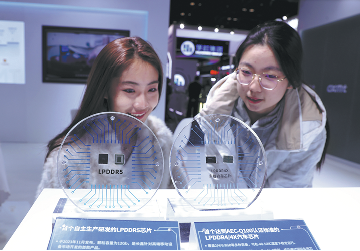
 On the product front, Chinese memory chipmaker ChangXin Memory Technologies launched a string of products at the expo, targeting applications from servers and workstations to personal computers, in a bid to meet high-end demand across various sectors.

 As the world’s largest chip market, China’s semiconductor industry has advanced in recent years, said Roger Sheng, vice-president of research at market research company Gartner.

 However, there is still a technical gap between Chinese chipmakers and their foreign peers, especially in cutting-edge semiconductor-making equipment and fundamental chip materials, Sheng said, adding that “some advanced chip packaging and testing devices are dependent on imports”.

 He said more efforts are needed to step up policy support and encourage domestic companies in the upstream and downstream of the semiconductor industrial chain to strengthen cooperation and increase investment in R&D, in order to master critical technologies in the sprawling sector.


Article inline ad