Wednesday, November 25, 2026

Home Blog Page 137

Path Lights Up For China’s Rare Earth Nanocrystals

0

By Cheng Yu | chinadaily.com.cn | Updated: 2025-11-24

Chinese and Singaporean researchers have reported a breakthrough that could cause a valuable rare earth material to emit light when powered directly by electricity.

 Rare earth nanocrystals are already used in some lighting applications due to their pure colors, but the reported research breakthrough could expand their use in next generation displays, sensors and medical devices.

 Industry experts said the progress gives China a clearer route to converting its abundance in rare earth materials into higher value technologies for high-end industrial applications.

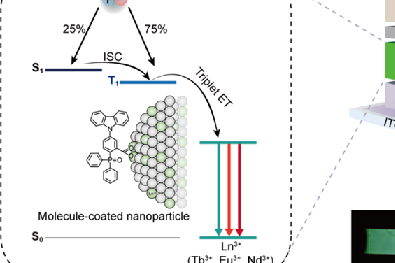
 Scientists from Heilongjiang University, Tsinghua University and the National University of Singapore said they had, for the first time, achieved efficient electroluminescence in insulating rare earth nanocrystals — a problem that has prevented their use in high-end optoelectronics for more than a decade.

 “It’s like trying to run while wearing a heavy winter coat. The insulating nature makes it very hard for electricity to activate their glow,” said one member of the research team.

 The team addressed the problem by adding a specially designed molecular coating that works as an “energy conversion layer”. The coating captures electrical energy and transfers it efficiently into the rare earth core, allowing the nanocrystals to light up and produce tunable, high-purity colors.

 Researchers said the approach could pave the way for new applications, including health monitoring, non-invasive diagnostics and crop lighting, as well as future infrared and biomedical technologies.

 The group is now working to optimize its findings for potential use in targeted healthcare and near-infrared applications.


Article inline ad

Tech: Major Players Race To Scale Up Battery Use

0

By CHENG YU | chinadaily.com.cn | Updated: 2025-11-23

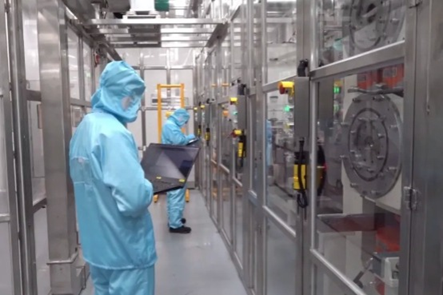
China has completed its first high-capacity all-solid-state battery production line and is running small batch tests, signaling the country’s accelerated efforts to commercialize this game-changing technology for the global new energy vehicle sector.

 The new production line, built by automaker GAC Group, is capable of mass producing all-solid-state batteries of above 60 ampere-hours, GAC said on Saturday. Above 60 Ah is a threshold considered by industry experts as sufficient for vehicular applications. Until now, most such vehicle batteries worldwide have had an amperage range of 20 Ah to 40 Ah.

 Industry sources said that Chinese authorities are preparing to expand efforts and introduce stronger policy and financial support for the research and development of all-solid-state batteries.

 Those measures are intended to accelerate and steer resources toward breakthroughs in materials, technical routes, safety performance, large-scale manufacturing and application of all-solid-state batteries, sources said.

 All-solid-state batteries are a type of power batteries used in electric vehicles. Compared with lithium-ion batteries, which are now widely used in most electric vehicles, all-solid-state batteries allow higher energy density, improved safety, faster charging and lower fire risk, thus earning a reputation as a disruptive technology.

 Ouyang Minggao, an academician of the Chinese Academy of Sciences and a professor at Tsinghua University, said that China is progressing “faster than expected” in the research and industrialization of all-solid-state batteries this year, thanks to more government support.

 “The gap between China and leading countries in all-solid-state batteries has narrowed sharply, and China has been ahead in some areas. The next two to three years will be critical for China to choose industrial routes and move laboratory results into production, with the goal of achieving commercialization by 2030,” he said.

 A group of Chinese EV and battery makers announced accelerated efforts in manufacturing all-solid-state batteries this year.

 Qi Hongzhong, head of research and development of new energy and power at a research institute of GAC, said that GAC plans small-batch vehicle tests of all-solid-state batteries by 2026 and aims for gradual mass production between 2027 and 2030.

 China’s largest EV maker, BYD, said that the company plans to begin small-scale production of sulfide-based all-solid-state batteries by 2027, and incorporate them into its mainstream EV models by 2030.

 Gotion High-Tech, a leading battery maker, has launched the first road testing for its next-generation all-solid-state batteries, after completing the country’s first fully localized 0.2 gigawatt-hour pilot production line.

 Automaker SAIC Motor Corp said on Sunday that its partner Qingtao has completed the main production line for an all-solid-state battery plant in Shanghai, and sample cells are expected to roll off the line by the end of the year.

 According to China International Capital Corp, China’s new all-solid-state battery equipment market could reach 2.5 billion yuan ($352 million) by 2027 and grow at a compound annual rate of 122 percent to 27.3 billion yuan by 2030.

 China also set up the China All-Solid-State Battery Collaborative Innovation Platform last year, a consortium that united almost all the country’s battery makers and automakers to commercialize all-solid-state batteries as part of a united government-led drive.

 However, the commercialization timeline for such batteries in China is still being debated. Most industry insiders expect small-batch installation in EVs to start as early as 2027 and broader commercialization to begin after 2030.

 Zhu Xingbao, chief scientist at Gotion, said that vehicles could adopt the technology as early as 2026 if composite technical routes are used. But Wu Zhixin, former deputy general manager of the China Automotive Technology and Research Center, remained prudent and said that the commercial use of such batteries in the country may begin between 2032 and 2033.

 chengyu@chinadaily.com.cn

Article inline ad

Shipping Industry On Course For Greener Future

0

By Zheng Xin | China Daily | Updated: 2025-11-25

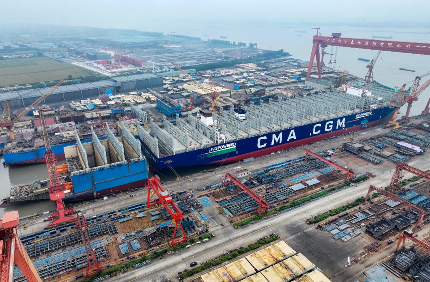
China is leveraging its dominance in shipbuilding and renewable energy to drive the decarbonization of the global maritime sector, a shift industry executives say is vital for meeting international climate targets.

 While the global shipping industry faces steep challenges in cutting emissions, Patrick Kettschau, managing director of Everllence China, points to China’s integrated supply chain — from shipyards to alternative fuel production — as a critical solution.

 “While decarbonizing the global shipping industry remains a long-term challenge, China, an indispensable partner in this endeavor, is emerging as a driving force in this transformation,” he said.

 “This is thanks to its strong industrial base, world-leading shipbuilding capacity and growing strength in renewable energy.”

 As the world’s largest consumer and producer of renewable energy, China plays a pivotal role in the transition. Its position as a strategic hub for international shipping and a major investor in clean technologies has attracted multinational collaboration in recent years, he added.

 Everllence, which is headquartered in Augsburg, Germany, has been expanding its investment in key technologies, including future fuel engines, hydrogen, carbon capture, utilization and storage (CCUS), and industrial heat pumps, to support the decarbonization and digital transformation of the global shipping industry, he said.

 According to Kettschau, partnerships with Chinese companies have been focusing on developing low and zero carbon engine solutions powered by clean fuels like liquefied natural gas (LNG), liquefied petroleum gas (LPG), methanol and ammonia dual-fuel engines.

 “These collaborations are advancing next-generation technologies while driving the integration of innovation, local manufacturing and sustainable growth,” he said.

 The push for greener shipping is reshaping China’s energy landscape.

 In August, the National Energy Administration formally recognized green liquid fuels, including green ammonia and green methanol, as renewable energy sources, sending a strong signal to the market while aligning with surging global demand.

 The global green fuel market, according to market research firm Verified Market Reports, was valued at $70.2 billion in 2023 and is projected to reach $175.1 billion by 2030, with a compound annual growth rate of 12.66 percent.

 The International Maritime Organization (IMO) predicts that by 2050, green methanol demand could hit 190 million metric tons, comprising 42 percent of the shipping fuel mix, while fossil fuels shrink to 15 percent.

 Beyond the vessels themselves, Chinese utilities are also targeting the carbon footprint of the shipbuilding process.

 State Grid Nantong Power Supply Co recently launched a pilot program to create “near-zero carbon “shipyards, implementing precise carbon management across the manufacturing cycle.

 By replacing traditional ceramic heating with electromagnetic induction in the welding stage, the project improved heating efficiency by 50 percent and cut power consumption by 60 percent, it said during this year’s United Nations climate change conference, or COP30.

 In the coating workshop, which accounts for the bulk of energy use, smart temperature controls reduced electricity usage by 30 percent, while further efficiency gains were realized in the assembly stage, where upgrading air compressors cut power use by 40 percent.

 The company has also deployed an AI-driven digital energy management platform, allowing shipyards to schedule energy-intensive production during low-cost electricity periods, creating a commercially viable road map for green manufacturing in the heavy industry sector.

 Everllence has just unveiled its new, dual-fuel ME-LGIA (liquid gas injection ammonia) engine. The development of this engine is not just a technical achievement. It is another concrete step to advance the green transition and toward a climate-neutral future, said Kettschau.

 “With more than a century of history in China, strong local production capabilities in collaboration with our Chinese ship engine licensees, and a shared commitment to a sustainable future, Everllence will continue working hand-in-hand with Chinese partners,” he said.

 “We are committed to helping achieve the nation’s dual carbon goals and accelerate the global shipping industry’s green transition, contributing lasting momentum to the world’s shift toward a low-carbon energy and industrial system.”

Battery tech progress to power EV sector’s future

Article inline ad

Shanghai Secures Its Standing At Top Of Livestreaming Totem

0

Policy support, action plan ensure city sets the pace for industry

By WANG YING in Shanghai | CHINA DAILY | Updated: 2025-11-25    

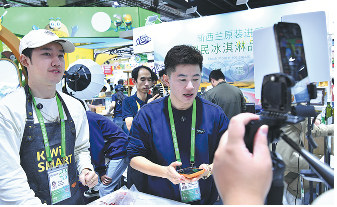
Zhu Yiwen, better known online as “Wangwang”, has been hailed by netizens as a model of how ordinary people can reach the peak of the livestreaming industry.

 With 860,000 followers on lifestyle-sharing platform Xiaohongshu, or RedNote, she started in the industry in February 2019 by joining Meione (Shanghai) Network Technology Co.

 On Aug 18 the same year, Wangwang became an assistant to top livestreamer Li Jiaqi. She gradually, and literally, moved into the frame, first showing a shoulder, then taking over the livestream for a few seconds, and eventually, a few minutes.

 On Nov 1, 2020, when Li had to step away from the livestream for more than 20 minutes Wangwang had to take over. It was her first time hosting on her own, and to her surprise, the session went well. That moment gave her confidence, and today, at 29, she is one of Meione’s front-line livestreaming hosts.


On Oct 15, Wangwang joined the hectic annual Singles Day shopping festival, streaming for seven to eight hours a day, compared with her usual four to five hours.

 Shanghai’s booming e-commerce economy is inspiring many young people to pursue careers as livestream hosts.

 Zhang Ying, known as Niannian, is 26 and originally from Anhui province. She began her livestreaming career at the end of 2021 after graduating from a university in Nanchang, Jiangxi province, and has now been in the industry for nearly four years.

 Niannian started in Hangzhou, Zhejiang province, covering the computer, communication and consumer electronics sector, then moved on to beauty products and women’s fashion.

 In September 2024, Niannian joined the Shanghai-based company Baozun, an e-commerce service provider for brands. Unlike many other young people, her day often begins as early as 4 am.

 “A typical livestreaming day has a morning, noon, and evening session, and I mainly handle the morning slot. We arrive at the studio just after 6 am to prepare products, plan outfits, and arrange the display order before going live at 7 am. My session usually ends around noon, followed by a team meeting to review the broadcast,” Niannian said.

 Afternoons are her free time. She often goes shopping with friends to discover the latest products and trends, and has recently started taking Pilates classes to stay active and maintain a lighter posture. She typically goes to bed between 8 pm and 9 pm.

Early adopter

 Beyond the efforts of individual livestreamers, Shanghai has been working hard to create a favorable environment for the industry.

 “The rapid growth of Shanghai’s livestreaming industry reflects the strong momentum of advanced productivity in the digital economy era,” Yuan Zhongyu, an official with the Shanghai Municipal Commission of Commerce told the Shanghai Observer.

 According to the commission, livestreaming retail sales in the city reached about 493.7 billion yuan ($69.48 billion) in 2024, up 12.9 percent year-on-year, and ranked first among Chinese cities.

 Thanks to Shanghai’s accelerated development in digital consumption, the city’s e-commerce transactions grew 12.7 percent year-on-year to exceed 3.27 trillion yuan during the first nine months of this year. This included 369 billion yuan from the livestreaming sector, which surged 23.6 percent from the previous year, said Hua Yuan, secretary-general of the Shanghai municipal government, at a recent news conference ahead of the China International Import Expo.

 Shanghai was the first city in the country to introduce dedicated policies to promote the high-quality development of the livestreaming economy.

 Last year, the city issued a three-year action plan for the high-quality development of the livestreaming economy between 2024 and 2026, aiming to become a globally influential hub for livestreaming commerce by 2026, with retail sales in the sector targeting 600 billion yuan.

 The plan calls for expanding the scale of all types of participants in the livestreaming economy, establishing 10 leading platforms with national and international competitiveness, and nurturing a group of large, influential MCN (multi-channel network) agencies to support top-tier livestreaming hosts.

 Shanghai’s livestreaming e-commerce stands out for its emphasis on quality and strong brand advantage.

 Under top-level planning and policy guidance, the city has formed four livestreaming economy clusters and established 20 distinctive municipal-level livestreaming e-commerce bases, Yuan said.

 Wei Yinghui, partner and deputy general manager of Meione, said the action plan provides a clear blueprint for the industry and offers strong policy support for livestreaming e-commerce companies.

 “For example, the plan explicitly includes livestreaming e-commerce in the scope of high-tech enterprise recognition, offering eligible companies tax reductions and targeted funding. These direct financial and fiscal incentives can significantly ease the cost pressures of technology development and content innovation, giving companies the confidence to experiment and innovate.”

 Wei said that by strengthening standards and regulating the industry, the plan helps create a healthier and fairer market environment, allowing competition to focus on quality, service, and innovation.

 Su Quan, chief operating officer of Baozun Location, the livestreaming division of Baozun, said the Shanghai municipal government has clearly called for accelerating the development of the industry ecosystem, strengthening key players, optimizing comprehensive services, and reinforcing leading livestreaming platforms. This creates a favorable policy environment and space for top-tier companies like Baozun to grow.

 Founded in 2007 and headquartered in Shanghai’s Jing’an district, Baozun operates across East Asia, Southeast Asia, Europe, and North America. As of the end of 2024, the company had served more than 490 global brands.

Major opportunities

 Shanghai Oriental-pearl Intelligent Shopping operates a livestreaming base in Shanghai’s Yangpu district, equipped with four professional broadcast studios and 10 livestreaming studios. Beyond its flagship location, the company also runs eight studios across the city under the “Shanghai Onair Studio” IP.

 “We see three major opportunities: first, policy support has created a favorable environment for industry growth; second, Shanghai, as an international consumption center, offers huge market potential; and third, technological innovation provides new possibilities for upgrading the livestreaming business model,” said Li Huirong, president of the company.

 “Our current target is to triple the scale of our own brands in 2026, which is projected to surpass 50 million yuan this year,” she added.

 In the first eight months of this year, the company conducted 3,539 livestreaming activities, attracting 34.93 million viewers.

 Lao Guoling, director of the e-commerce research center with Shanghai University of Finance and Economics, said achieving a 600-billion-yuan livestreaming economy by 2026 was a reasonable target. “From my point of view, it is even a bit of a conservative goal,” Lao said.

 The city’s livestreaming e-commerce retail revenue reached 437.1 billion yuan in 2023 and jumped to 493.7 billion yuan in 2024. With an annual growth rate of 12.9 percent, the figure is projected to reach 557.4 billion yuan in 2025 and further expand to 629.2 billion yuan in 2026, Lao said.

 The livestreaming retail sector grew by 23.6 percent between January and September this year, an even more impressive rate, she added.

 The early rise of livestreaming e-commerce was driven by strong technological capabilities, from digital livestreaming technologies to the application of artificial intelligence in livestreaming studios, Lao said. While digital innovation empowers the industry, proper regulation and oversight are equally essential to preventing the disorderly competition seen in the past.

“The goal is to address key bottlenecks along the industry chain and ensure its sustainable development,” Lao added.

 Wang Mengyu, deputy secretary-general of the Shanghai Livestreaming E-commerce Alliance, said, “Shanghai ranks first in the country in livestreaming e-commerce transaction volume, thanks to its many leading livestreaming platforms and a large number of well-known domestic and international brands.”

 The concentration of resources helps the city’s brand livestreaming grow faster, she added.

 “In addition, Shanghai hosts numerous consumer festivals, such as the China International Import Expo, the Double Five Shopping Festival and Shanghai Summer, creating a strong culture of consumption,” Wang noted.

 Compared with other cities strong in livestreaming e-commerce, such as Hangzhou and Guangzhou, Guangdong province, Shanghai still faces disadvantages in supply chain resources and industrial clustering. “In other words, its local production capacity remains relatively limited,” she said.

 “Moreover, Shanghai’s livestreaming bases are more scattered and smaller in scale than those in other cities, largely due to higher operating costs. While livestreaming bases in Hangzhou or Guangzhou can span tens of thousands or even hundreds of thousands of square meters, those in Shanghai tend to follow a small but refined model, focusing on distinctive and specialized development.”

Talent cultivation

 Over the next three to five years, Baozun plans to continue deepening its investment in livestreaming e-commerce, with a focus on cultivating professional talent and creating innovative content, said Su, the chief operating officer of Baozun Location.

 “We plan to develop top livestreaming talent for the industry through in-store livestreams and by nurturing local influencers, and expect to train nearly 100 professionals each year. At the same time, we are exploring content innovation, such as cinematic-style livestreams and sessions hosted by everyday users, to better convey brand value and build emotional connections with consumers.

 “In terms of trends, content-driven sales will become mainstream. Users no longer just want product demonstrations and promotional pitches; they seek professional knowledge, lifestyle tips, and cultural content. Livestreaming e-commerce will increasingly integrate culture, entertainment, and education,” Su said.

 Li of Shanghai Oriental-pearl Intelligent Shopping said the livestreaming industry faces intense competition, “but we believe the key is to find a differentiated path for development”.

 “The current challenges mainly include the pressure to continuously innovate content and produce high-quality material, as well as the rapid pace of technological iteration, which requires ongoing investment in research and development,” Li added.

 Wei of Meione said: “With rapid technological advances and growing livestreaming e-commerce adoption, the sector has vast market potential and strong growth prospects. Content innovation and technology integration will drive the next phase of industry development.”

 Livestreaming will become an important way for people to access information, enjoy entertainment, and socialize, turning shopping into a deeply digital lifestyle experience, Wei said.

 Despite the rosy outlook for the livestreaming economy, experts also noted fierce market competition may create problems.

 “Livestreaming e-commerce sometimes faces a crisis of trust. For instance, when a host becomes embroiled in public controversy, consumers may doubt the authenticity or quality of the products they promote. Such trust issues pose a direct threat to the industry’s sustainable growth,” Lao said.

 Wang from the Shanghai Livestreaming E-commerce Alliance said Shanghai is still at the forefront of the livestreaming economy, and its scale is the largest in the country.

 “Since the release of Shanghai’s three-year action plan, other provinces and cities have launched similar initiatives, looking to learn from Shanghai,” she said.

 “In other words, in building a national hub for livestreaming e-commerce, Shanghai is playing a leading and exemplary role,” she added.

 Lao said: “Behind the livestreaming economy lies the entire value chain. Livestreaming e-commerce is not just about the person on camera. … As traditional industries undergo transformation and upgrades, the livestreaming economy has also opened up a wide range of new job opportunities.”

 The Ministry of Human Resources and Social Security in July 2024 released information on new occupations and job types, including online hosts, livestreaming recruitment specialists, lifestyle experience assistants, and user growth operators — all closely linked to the livestreaming sector.

 Chinese livestreaming and short video-sharing platform Kuaishou had created 43.2 million jobs and spawned 174 new occupations as of the end of 2024, according to public information.

 wang_ying@chinadaily.com.cn

Article inline ad

CEO: Subway Marching Toward 4,000-Store Goal

0

By WANG YING in Shanghai | China Daily | Updated: 2025-11-25

US-based restaurant brand Subway, which opened its 1,000th store in China earlier this year, is making steady progress toward its ambitious goal of reaching 4,000 stores in the country over the next two decades.

 The company’s top executive expressed strong confidence in Subway’s future in China, which he considers one of the brand’s most important markets globally and the biggest opportunity in Asia.

 “China is probably top on the list in terms of the most important strategic markets for us. China is a fast growing market for us and one of the most important markets in the world for us,” Jonathan Fitzpatrick, global CEO of Subway, said in an exclusive interview with China Daily.

 “Within the Asia region, we have multiple opportunities for growth. However, China is the biggest opportunity, so China within our Asia region, I think will maintain its importance as likely the number one market for us,” Fitzpatrick said.

 Subway announced in 2023 that it plans to open 4,000 stores in China over the next 20 years. Its 1,000th store was opened in August in Shanghai. Fitzpatrick said he believes the current pace of expansion is sufficient to meet the target, noting that “China (for) Subway is about growth for the next couple of decades.

 “I couldn’t be more optimistic about exceeding our target … I have no doubt. I have full confidence that we will more than exceed that 4,000 target over the next 20 years,” he said.

 Such optimism stems from Subway’s strong outlook for its business in China, as well as confidence in the country’s economy in the coming decade.

 “I’m incredibly confident about Subway China’s future outlook. I’m also very optimistic and bullish about the Chinese economy. All you have to do is look around this vibrant city. It is full of buildings and young people and technology and globalization,” Fitzpatrick said.

 “China at this point, I would say that we’re still in the early stages of growing this market … So I think the importance of the Chinese business for Subway will only continue to grow over the next decade … My dream is that one day I’ll be here celebrating our 10,000th Subway store. But first of all, we want to get to 4,000, and I have really big dreams for Subway in China,” he added.

 “If you look at China, it is a massive country with massive areas of opportunity. I was reminded today that there are over 600 cities in China with more than 1 million people. So we have lots of areas of what we call ‘white space’ to open the brand,” he said.

 The scale of opportunity is reflected in China’s catering industry. In 2024, it generated about 5.6 trillion yuan ($786 billion) nationwide, marking a year-on-year increase of 5.3 percent, which is 1.8 percentage points higher than the growth of total retail sales of consumer goods over the same period. This demonstrates the resilience of the catering industry and its significant contribution to the overall consumer market, Xinhuanet reported, citing data from the National Bureau of Statistics and a report on China’s catering industry.

 Data from business information platform Qichacha showed there were 16.89 million catering-related enterprises nationwide as of March this year, a year-on-year increase of 7.9 percent, the report said.

 Subway China, which opened its first store in Beijing in 1995, has entered a fast-growth phase over the past two years, opening more than 400 stores during this period.

 As the headquarters of Subway China, Shanghai currently operates nearly 200 stores, the largest number among Chinese cities.

 Founded in 1965, Subway now operates more than 35,000 locations in over 90 countries worldwide, with the US remaining its biggest and most mature market.

 wang_ying@chinadaily.com.cn

Article inline ad

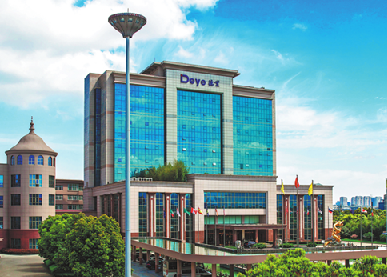
CNBM & Deye: Jointly Powering South Africa’s New Energy Transformation

0

Two Companies’ Efforts Becoming A Key Force Driving High-Quality Development

By YUAN SHENGGAO | China Daily Global | Updated: 2025-11-24 

 As the G20 focuses on sustainable supply chains, the strategic partnership between CNBM and Deye showcases a replicable model for South-South cooperation, delivering stability, growth, and inclusivity.

 In the face of a global energy crisis, the 2025 G20 Summit is set to prioritize building sustainable supply chains and climate-resilient infrastructure. Embodying this spirit, Chinese enterprises are at the forefront, demonstrating how strategic cross-border collaboration can effectively address pressing challenges. The partnership between China National Building Material Group and solar-storage leader Ningbo Deye Technology is powering South Africa’s energy transition, stabilizing its fragile grid, and reshaping its economic future.

 Confronting an energy crisis

 South Africa’s electricity shortage ranks among the world’s most severe. An aging, overburdened grid plagued by frequent breakdowns has led to rotational power cuts, known locally as “load-shedding”, lasting up to 12 hours daily. The economic toll is staggering; the South African Reserve Bank estimates the daily cost at nearly 899 million rand ($49 million). This energy deficit stifles business productivity, disrupts households, and fuels soaring electricity costs, which have seen average annual increases of 11 percent over the past decade — more than double the inflation rate.

 Strategic pivot: CNBM’s localized foothold

 CNBM’s entry into the South African market in 2016 initially focused on traditional building materials. However, keen market observation revealed a more profound national need: energy security. This insight prompted a strategic pivot toward renewable energy solutions.

 Today, CNBM-SA, headquartered in Johannesburg, South Africa, has transformed into a comprehensive platform offering one of the widest ranges of engineering and new energy products in Southern Africa. Its “1+5” regional logistics model — with a central hub in Johannesburg and branch warehouses in Cape Town, Durban, Port Elizabeth, Bloemfontein, and Nelspruit — has become the cornerstone of its renewable energy business. This localized infrastructure ensures agile supply chains and rapid deployment of critical solar and battery systems.

 Engineering excellence: Deye’s adaptive technology

 Concurrently, Deye identified a critical market gap for hybrid inverters capable of operating in regions with unstable grids. Its engineering team developed cutting-edge systems with key features of seamless transition between on-grid and off-grid operation; 4-millisecond switching speed during power outages; smart zero-export control to protect the grid; programmable charging and discharging for cost optimization; and diesel generator compatibility for automated and fuel-saving backup.

 These innovations enabled the creation of robust, distributed microgrids, reducing dependence on centralized generation and empowering communities and industries with energy independence.

A synergistic partnership in action

 In 2019, the strategic alliance was formed, merging CNBM’s deep regional footprint with Deye’s technological prowess. The results have been transformative across South Africa.

 One of the benefits lies in industrial reliability. A precision metal factory in Johannesburg stabilized its voltage, eliminating costly downtime losses.

 The cold chain has also enhanced its efficiency as a national food processor slashed its energy costs by more than 80 percent, securing its operations.

 Moreover, a rural solar project now provides clean water and energy to 2,500 residents, while upskilling 20 local electricians in system maintenance and operations.

 Embedding sustainability and localization

 The partnership integrates commercial success with deep social responsibility. Together, the companies employ more than 200 staff in South Africa and have trained more than 5,000 local installers and engineers through hands-on programs. By fostering local expertise and creating sustainable jobs, they ensure South Africa’s clean energy transition is both technologically advanced and socially inclusive.

 Driving measurable change

 The impact is visible at a national scale. In 2024, the Council for Scientific and Industrial Research reported that distributed solar adoption contributed to a 3-percent reduction in national grid demand. This was a key factor behind the dramatic fall in load-shedding hours — from 6,948 in 2023 to just 1,656 in 2024. CNBM’s robust logistics and Deye’s adaptable technologies have made “Made in China” synonymous with practical, people-centered solutions.

 A blueprint for global cooperation

 The CNBM-Deye collaboration is a living example of the G20’s vision for a Just Energy Transition. Through tangible technology transfer, skill development, and community inclusion, it demonstrates how Chinese innovation and industrial excellence can drive sustainable, inclusive growth in emerging markets. This partnership stands as a powerful new model for global cooperation — where Chinese capability meets global demand — to power a shared future of prosperity and resilience.

Article inline ad

Beyond Play: Labubu Gains Popularity In Afghanistan Amid Retail, Cultural Shifts

0

Xinhua | Updated: 2025-11-25

KABUL – In the heart of Kabul’s bustling marketplace, rows of colorful figurines with mischievous smiles and elf-like ears have become a surprising fixture in local shops, reflecting a refreshing scene in Afghanistan’s retail and cultural landscape.

 These figurines are Labubu, a viral Chinese collectible that has quickly evolved from a much-sought-after quirky toy into a symbol and facilitator of economic transformation and cultural shift in Afghanistan.

 Mostafa Seerat, who runs a shop in Kabul’s crowded marketplace, began selling Labubu just six months ago in response to customer demand.

 “The sales have been incredible. We now sell around 400 units a day,” Seerat said. “It has become one of our top-selling items.”

 Tamim Behzad, a veteran businessman with over 20 years of experience in Yiwu, a small commodities hub in eastern China, was one of the first to recognize Labubu’s potential in Afghanistan.

 Behzad’s company, which supplies products to Europe and Russia, has always been quick to spot global trends. However, introducing Labubu to Afghanistan was a bet.

 “When we realized the speed of sales and the strong market demand for Labubu, we decided to take a risk and bring Labubu to Afghanistan, uncertain whether it would sell or not,” said Behzad.

 The popularity of Labubu in Afghanistan is a pleasant surprise for businesspeople like Behzad, and for many, the rise of the trendy toy has echoed a broader shifting landscape in the country.

 Shafiqullah, a Labubu seller who has been tracking the toy’s rise in the past few years, considered the popularity of Labubu in Afghanistan to be a part of a wider cultural change.

He noted that Afghanistan is in the process of modernization, and people are not afraid of global modern brands.

 Afghanistan’s traditional consumer market, long dominated by local and regional products, is now expanding to include international goods. Labubu, which is often purchased as a gift for fiances, spouses, or children, is a reflection of this growing desire for modern and globally recognized products.

 For many Afghans, Labubu’s success has also highlighted the potential of small-scale entrepreneurship. Erfan began his business with a stock worth just $100, and within a year, his capital had grown to between $5,000 and $6,000.

 “In Afghanistan, jobs are hard to come by, but with a small investment, you can start a business and watch it grow,” he said. “Labubu has shown that even a small investment can lead to big returns.”

 In addition, the fanciful Chinese toy has given women and young people in Afghanistan a new dimension of opportunity.

 Erfan, an online retailer, started his business with a modest initial investment and now employs three staff members, two of whom are women. These women are responsible for managing the delivery of Labubu orders across Afghanistan, often within one or two days.

 “This has been a positive development,” Erfan noted. “It’s not just about making money; it’s about giving women an opportunity to work and grow professionally. This is something that was less common in Afghanistan in the past.”


Article inline ad

China’s Economy In Masterful Upgrading

0

By Yang Zekun | China Daily | Updated: 2025-11-24

In the first three quarters of 2025, China’s economy maintained steady performance despite a complex external environment and domestic structural adjustment pressures. According to data released by the National Bureau of Statistics, China’s gross domestic product grew by 5.2 percent year-on-year. This rate not only surpasses most major economies, but also demonstrates the strong resilience of the Chinese economy.

 The World Bank’s Global Economic Prospects report released in June forecasted global economic growth at 2.3 percent in 2025. In this challenging global environment, China’s remarkable performance stems fundamentally from a profound process of “power transformation” and “system upgrading”. This is not a simple repetition of past models, but rather a comprehensive evolution driven jointly by new quality productive forces, activated domestic demand, supportive macroeconomic policies, and improved development quality and efficiency.

 Accelerating with new quality productive forces to build new growth pillars is the most distinctive feature of China’s transformation of growth drivers. Economic growth no longer relies on traditional infrastructure or real estate, but is driven by advanced manufacturing led by technological innovation.

 In the first three quarters, the value-added industrial output of equipment manufacturing and high-tech manufacturing rose by 9.7 percent and 9.6 percent, respectively — well above the overall industrial output growth rate — becoming the main engines of industrial expansion. This shows that China’s industrial system is striving toward the mid-to-high end of the global value chain.

 The value-added industrial output of integrated circuits increased by 22.4 percent, reflecting notable progress in overcoming technological bottlenecks and ensuring industrial chain security and self-reliance. The country’s “grain” of the digital economy is becoming increasingly self-sufficient.

 The output of intelligent equipment manufacturing rose by 12.2 percent, proving that the application of technologies such as artificial intelligence and the industrial internet is spawning a massive market for smart equipment, providing strong support for the nation’s digital transformation.

 Meanwhile, products linked to green and intelligent transformation saw simultaneous growth in both quantity and price. The output of new energy vehicles surged 29.7 percent. Chinese brands not only dominate the domestic market, but also show strong competitiveness globally. A complete ecosystem — from battery materials and vehicle manufacturing to intelligent charging — has taken shape.

 Industrial robot output jumped 29.8 percent, as the pace of “machines replacing humans” accelerated rapidly across sectors amid demographic changes. This trend not only addresses labor shortages, but also greatly enhances production efficiency and product quality.

 In China, new quality productive forces are not an abstract concept. They materialize in high-speed intelligent production lines, smart electric vehicles shipped worldwide, and advanced chips produced domestically — all becoming the most powerful engines propelling economic growth.

 Given the enormous scale of China’s economy, its resilience lies in the mutual reinforcement of domestic and international circulation. On the external front, the foreign trade structure continues to improve, enhancing risk resistance. Goods exports grew by 7.1 percent — an impressive performance amid sluggish global trade. Exports to countries participating in the Belt and Road Initiative rose by 12.4 percent, indicating that China’s “circle of friends” in foreign trade has become more diversified, effectively offsetting weak demand in traditional markets and stabilizing the overall trade foundation.

 On the domestic front, internal demand continues to expand, with consumption serving as a key stabilizer. Final consumption expenditure contributed 53.5 percent to economic growth — over half of the total — indicating that domestic demand has become the fundamental driver of growth.

 Service retail sales rose 5.2 percent, and during long holidays, the cultural and tourism markets saw robust activity. New consumption scenarios such as guochao, or China chic, consumption, and immersive experiences continued to emerge, showcasing China’s vast consumption potential and upgrading trend.

 On one hand, corporate profitability has improved significantly. Profits of industrial enterprises above a designated size grew by 3.2 percent year-on-year, with the September figure alone surging 21.6 percent. This figure is crucial — it indicates that business operations are fundamentally improving, shifting from “revenue without profit growth” to “rising both in quantity and quality”, and market vitality is effectively being restored.

 On the other hand, prices have risen moderately. The core consumer price index, which excludes volatile food and energy prices, has expanded for consecutive months, reflecting a recovery in underlying demand, steadily improving market expectations, and smoother economic circulation.

 The Chinese government has refrained from adopting large-scale stimulus measures and instead implemented a series of targeted and effective macro policies.

 Investment directions have been highly strategic. First, they are forward-looking, focusing on emerging sectors such as the digital economy and artificial intelligence to secure competitive advantages for the future. Second, they address weak links, with strong support for urban renewal in areas such as transport and energy, which not only boost current investment, but also enhance urban capacity and development potential. Third, they stimulate market consumption potential through initiatives like equipment upgrades and consumer goods trade-ins, directly driving both consumption and investment to form a virtuous cycle.

 China’s outstanding economic performance in the first three quarters of 2025 represents a systemic victory. It vividly illustrates three key facts. The transformation of growth drivers is bearing fruit. The transition from old to new engines of growth has reached a crucial inflection point, with new quality productive forces evolving from a rising star into a mainstay.

 In short, China’s economic growth story is turning a new page — from pursuing speed to pursuing quality, from factor-driven to innovation-driven growth. The doubling of its growth rate over the global average is not merely a numerical advantage, but a comprehensive lead in development model, industrial structure, and growth resilience.

 The writer is a researcher at the National Academy of Development and Strategy at Renmin University of China.

 The views do not necessarily reflect those of China Daily.

Article inline ad

Steady Growth Forecast For Nation’s Export Sector

0

By Luo Zhiheng | China Daily | Updated: 2025-11-24

Since the beginning of this year, despite multiple pressures including uneven global economic recovery, rising geopolitical uncertainties and especially the US imposition of high tariffs on Chinese goods, China’s exports maintained relatively high growth year-on-year, showing resilience well beyond market expectations.

 In the first three quarters, China’s total exports reached $2.8 trillion, up 6.1 percent year-on-year — the highest growth rate for the same period since 2023. Net exports of goods and services contributed 1.5 percentage points to year-on-year GDP growth, the second-highest contribution in the past decade for the same period.

 Overall, I expect China’s share of global exports to continue rising in 2025, further consolidating its relative advantage in global export competitiveness.

 Some have attributed China’s stronger-than-expected export performance to front-loaded shipments by Chinese firms in the first half to avoid new US tariffs. However, if the export surge was mainly driven by such factors, growth should have been concentrated in the first half. Yet, US import growth has slowed notably since April, while China’s exports maintained solid growth in the third quarter.

 Moreover, the export momentum did not come primarily from the US market or transshipment hubs such as the Association of Southeast Asian Nations, but from simultaneous expansion into multiple markets including ASEAN, the European Union, Africa and Latin America. This shows that China’s export resilience should not be viewed as a temporary fluctuation, but rather a result of a structural reshaping of long-term growth drivers.

 China’s export resilience stems from market diversification and product structure upgrading. While exports to the US have continued to decline, exports to most non-US markets have maintained rapid growth.

 In the first three quarters, among major export destinations, China recorded negative year-on-year growth only in exports to the US, Russia and South Korea. By contrast, exports to Africa, ASEAN, India, the United Kingdom, the EU, Latin America and Canada all saw significant increases, together contributing about 6.3 percentage points to total export growth.

 On the one hand, Europe’s demand recovery and the accelerated industrialization of emerging markets have created favorable conditions for Chinese exports. From January to August, the EU’s total imports (in euro terms) rose 4 percent year-on-year, with imports from China up 9.4 percent.

 Meanwhile, emerging markets are accelerating industrialization and infrastructure construction, driving demand for related equipment and components. In the first three quarters, China’s exports of electromechanical and transport equipment to seven major ASEAN members — Vietnam, Thailand, Indonesia, Singapore, Myanmar, Malaysia and the Philippines — grew 28.3 percent and 42.7 percent year-on-year, respectively. From January to August, China’s exports of ships, vehicles and machinery to Africa rose 80.1 percent, 55.4 percent, and 32.1 percent year-on-year, respectively.

 On the other hand, Chinese companies have been actively expanding into overseas markets. From January to August, the share of Chinese goods in the EU’s total imports rose to 21.9 percent, up 1.1 percentage points year-on-year. Among emerging markets, the share of imports from China increased by 1.4 percentage points in India, 2.1 in Brazil, 1.5 in Malaysia, and 0.4 in South Africa over the same period.

 Thanks to the rise of emerging markets, China’s dependence on the US market has continued to decline. Between 2018 and 2024, the share of exports to the US in China’s total exports dropped from 19.2 percent to 14.7 percent, and further to 11.4 percent in the first three quarters of 2025.

 From a product perspective, exports of consumer goods have come under pressure, while exports of intermediate and capital goods have grown strongly, supporting overall exports.

 Intermediate goods — components, materials and semi-finished products used to produce other goods — reflect a country’s capability in global supply chains. Capital goods are machinery, equipment and technology-intensive products used for expanding production capacity, while consumer goods are final products aimed at end markets, often in labor-intensive industries. A rising share of intermediate and capital goods alongside a declining share of consumer goods is generally seen as a sign of structural upgrading.

 In recent years, China’s export structure has significantly upgraded. From 2017 to 2024, the share of intermediate goods in total exports rose from 41.7 percent to 45.4 percent, capital goods fell slightly from 21.2 percent to 20 percent, and consumer goods dropped from 37.2 percent to 34.6 percent. In the first three quarters of 2025, the share of intermediate goods rose further to 47.4 percent, while consumer goods fell to 32.5 percent.

 Intermediate and capital goods have become the main drivers of export growth. In the first three quarters, exports of intermediate goods grew 10.2 percent year-on-year, contributing 4.7 percentage points to total export growth; and capital goods grew 6.9 percent, contributing 1.4 percentage points.

 “Going global” companies rely on importing key components and raw materials from China, boosting intermediate and capital goods exports.

 Some mid and low-end industries have shifted to lower-cost economies due to rising costs and trade frictions. To expand overseas markets, Chinese firms have invested in local manufacturing abroad. Yet, because China retains advantages in key components, machinery and materials, foreign firms still depend heavily on China’s upstream supply chains — thereby driving exports of intermediate and capital goods.

 At the same time, China’s domestic industrial chains are rapidly upgrading toward higher value-added segments. Between 2017 and 2024, the share of high-tech manufacturing in large-scale industrial output rose from 12.7 percent to 16.3 percent. In the first three quarters of this year, exports of high-tech products continued to grow, with autos, ships and integrated circuits up 10.8 percent, 21.4 percent and 23.3 percent year-on-year, respectively.

 The transformation of China’s export structure is deeply reshaping its trade relationships with different economies. For developed economies such as the US and the EU, China’s improved competitiveness in high-tech manufacturing is challenging their traditional industrial advantages. For mid-tier economies such as ASEAN and Mexico, the spillover effects of China’s industrial chains have strengthened regional division of labor and cooperation. However, as these economies upgrade local manufacturing and geopolitical frictions intensify, they are seeking to transition from contract manufacturing toward higher-value-added segments such as research and development and design to play a more proactive role in regional supply chains. For emerging markets still at the lower end of value chains, China’s exports of mid and low-end equipment and industrial capacity fit well with their industrialization needs.

 China’s trade relationship with developed economies is shifting from primarily complementary to a new pattern of “coexistence of complementarity and competition”. Trade frictions and industrial rivalries will exert sustained pressure on bilateral trade.

 Looking ahead, China’s export growth to developed economies such as the US and the EU may find it difficult to return to previous highs, but there remains room for growth in high-value-added intermediate and capital goods exports.

 For developing economies, stronger local consumption and the spillover effects of China’s industrial chains have led to rapid import growth from China. ASEAN has overtaken the EU and the US to become China’s largest export destination.

 As these developing economies improve their manufacturing capacity and local supply chains, some of their consumer goods are gradually replacing China’s previous market share. However, their growing demand for China’s upstream intermediate and capital goods continues to rise.

 Looking forward, China’s exports are expected to enter a phase of high-quality and steady growth. Although exports to the US face downward pressure, deepening engagement with the EU and other developed markets — along with export expansion of intermediate and capital goods to emerging economies driven by moderate industrial relocation — will continue to strengthen China’s export stability and resilience.

 In conclusion, I propose a series of policy measures to bolster China’s economic resilience and global competitiveness, calling for efforts to accelerate industrial upgrading, strengthen domestic demand and promote high-quality globalization of Chinese enterprises.

 The recommendations include advancing technological innovation and expanding the services sector to support structural transformation and ease employment pressures. I also urge comprehensive reforms to boost domestic demand and gradually shift from an export-dependent model to a more balanced growth structure.

 Enterprises expanding overseas should do so in a steady and orderly manner. Key and strategic sectors should remain within China to safeguard economic security and employment, while firms with technological or brand advantages are encouraged to pursue deeper international integration through investment, mergers and partnerships.

 For export-oriented small and medium-sized enterprises, I suggest expanding markets through overseas warehouses, cross-border e-commerce and local service networks rather than simple capacity relocation.

 I also call for improving overseas service systems for Chinese enterprises with stronger financial and information support, as well as deepening bilateral and multilateral trade cooperation through free trade and investment agreements to foster mutually beneficial relations and resolve differences through shared development.

 The writer is chief economist at Yuekai Securities and president of the company’s research institute.

 The views do not necessarily reflect those of China Daily.

Article inline ad

Industry-College Alliance Expanding Globally To Aid Chinese Companies

0

By Han Jingyan | China Daily | Updated: 2025-11-24

Amid the country’s urge to boost high-quality Belt and Road cooperation, a Chinese industry-education alliance is expanding globally to help more Chinese enterprises going overseas.

 On June 27, the “Tiangong College” Alliance was established at Jiangxi Vocational College of Foreign Studies, grouping 101 universities and colleges, and 18 enterprises in Jiangxi province, and borrowing its name from Tiangong Kaiwu (Heavenly Creations) — a book by Ming Dynasty (1368-1644) scientist Song Yingxing from Jiangxi.

 Within less than five months, it had established Tiangong Workshops in seven countries, helping train talent for Chinese enterprises operating abroad.

 On July 5, an unveiling ceremony was held at the China-Europe Trade and Logistics Cooperation Park in Budapest, setting up the first “Chinese Language Workshop” in Central and Eastern Europe.

 “This workshop will inject new vitality into China-Europe economic and trade relations,” said Gyorgy Laszlo, an official from the Hungarian prime minister’s office.

 Yu Yunfeng, director of the Center for Language Education and Cooperation under China’s Ministry of Education, stressed: “It is a vivid practice of China’s vocational education ‘going global’. It will radiate across Central and Eastern Europe, becoming a highland for talent cultivation and economic cooperation.”

 Gabor Balazs, CEO of the park, said the first phase of the workshop has trained over 80 local employees, with an annual target of training 500 international talents to help park enterprises. Its general manager Tian Hongbing said the project can reduce communication costs for Chinese enterprises by some 30 percent.

 Akos Kovacs, a Hungarian employee at the park, said: “Through the workshop’s module, I learned to describe supply chain processes in Chinese. Now, I can directly discuss cargo Customs clearance with partners in Jiangxi and my work efficiency has more than doubled.”

 “This isn’t just a language course; it’s a key to unlocking the Chinese market,” he said.

 On Sept 9, Yan Bin, Party secretary of JXVCFS, paid a visit to Hungary. Eleven days later, it decided to launch its Hungarian branch (Tiangong Workshop), covering teaching facilities and practical training equipment, and incorporating more Jiangxi elements such as ceramic design studios.

 The communique published following the fourth plenary session of the 20th Central Committee of the Communist Party of China urged to pursue high-quality Belt and Road cooperation and extend the reach and appeal of Chinese civilization.

 Every step taken by the alliance is driven by the “pressing demands” of enterprises operating overseas.

 Liu Zhongpei, assistant to the chairman of Zhongyang Construction Group, noted: “During our Ethiopia Social Security Building project, the shortage of local skilled workers exceeded 40 percent. Our company had to dispatch key personnel from China, increasing labor costs by 30 percent.”

 The alliance responded actively, collaborating with other organizations to establish applied technology universities and vocational training centers overseas, developing occupational standards that meet local needs.

 In partnership with Jiangxi International Corp, JXVCFS has set up overseas branches in Zambia, Kenya and Tanzania, and delivers cross-border e-commerce courses in the UK.

 The alliance has expanded its role by exporting Jiangxi (Gan) cuisine and infrastructure expertise.

 In October, an academic exchange delegation from JXVCFS, led by Professor Huang Guoqing, visited Tunku Abdul Rahman University of Management and Technology, a private comprehensive university in Malaysia, with both sides reaching a consensus on jointly establishing Southeast Asia’s first “Tiangong Workshop”.

 “On the occasion of the 50th anniversary of Malaysia-China diplomatic relations, this platform will deepen the kinship between our peoples, making the concept of ‘Malaysia-China Friendship’ more deeply rooted in the hearts of the people,” said Lee Sze Wei, president of TAR UMT.

 A Malaysian engineering student, Amina Ali, noted: “Professor Huang’s lecture showed me the ‘speed and human touch’ behind China’s infrastructure projects. I plan to apply for an exchange program to study in Jiangxi.”

 “Tiangong College” is rapidly evolving from a regional Jiangxi brand into an international vocational education identifier, and it expands with a three-pronged strategy — standards, culture and competitions.

 So far, the number of member enterprises in the alliance has increased to 20, and their overseas training programs have grown by 80 percent year-on-year.

 JXVCFS President Zhu Longliang said: “By 2027, the alliance aims to establish itself as a globally influential brand in vocational education going global, contributing more Jiangxi solutions to the Belt and Road Initiative.”

Article inline ad