Wednesday, November 25, 2026

Home Blog Page 138

JD, Other Local Retailers Show Offshore Effect

0

Chinese e-commerce platforms help boost sales of nation’s goods overseas

By Fan Feifei | CHINA DAILY | Updated: 2025-11-21

Shoppers overseas displayed strong purchasing power for Chinese-made intelligent tech products during this year’s Singles Day shopping carnival, driven by the robust growth of artificial intelligence, steep discounts and free shipping delivery services provided by e-commerce platforms.

 Chinese e-commerce giant JD showed that during the just-concluded promotional gala, sales of digital products such as smart robots and gaming laptops among consumers abroad rose more than threefold year-on-year, while trendy items like motion sensor cameras and fast chargers surged over tenfold from a year earlier.

 Kitchenware saw both sales and order volume increase over tenfold compared with the same period last year, and turnover of pet supplies and homegrown beauty brands skyrocketed more than tenfold year-on-year, JD said.

 Overseas Generation Z shoppers — those born between the mid-1990s and early 2010s — and middle-income groups abroad, have become the core driving forces for consumption, and they pursue preferential prices and high-quality lifestyles.

 JD Global Sales, JD’s cross-border e-commerce platform, has expanded its direct mailings to 36 countries, with sales and orders in markets like Japan, South Korea, Singapore, Malaysia, Thailand and Australia doubling year-on-year during the shopping spree.

 With cross-border free-shipping services covering 12 countries, transaction volume in these countries via JD’s online marketplaces grew by more than 300 percent year-on-year, while the number of overseas users placing orders surged over 400 percent on a yearly basis.

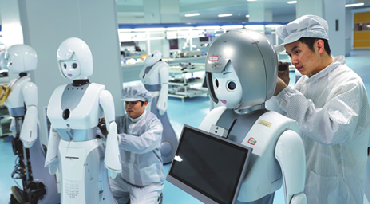
 Amid the boom of AI, offshore demand for China’s high-end tech products continues to rise. It is noteworthy that AI-powered exoskeleton robots boasting functions such as stair climbing and rehabilitation have grabbed attention from shoppers worldwide.

 JD said the rapid growth of gaming equipment perfectly matches the preferences of young overseas consumers. High-performance gaming laptops and desktops have become the essential gear for study and entertainment among younger generations.

 Moreover, household appliances and home furnishing products have gained popularity among families abroad. In Singapore, upgraded home appliances like air purifiers and gaming chairs designed for esports enthusiasts have been making appearances on family shopping lists, fueled by free shipping policies provided by the platform.

 These products not only address basic household needs, but also align with overseas middle-income groups’ pursuit of improved lifestyles, JD said. Meanwhile, the rise of homegrown Chinese beauty products and robust sales of pet supplies with innovative designs point to overseas consumers’ rising recognition of Chinese brands and commodities.

 Hannah Evans, a university student in New York, said she prefers buying Chinese products, such as apparel, kitchen utensils and sporting equipment on Chinese e-commerce platforms as she has access to a dizzying array of choices at much cheaper prices.

 Experts said China has taken great strides in technological innovation and industrial upgrades in recent years, resulting in a remarkable improvement in the competitiveness of its products.

 “The popularity of made-in-China products among overseas consumers is an affirmation of the country’s robust manufacturing capabilities, product quality and homegrown brands,” said Hong Yong, an associate research fellow at the Chinese Academy of International Trade and Economic Cooperation.

 Hong said premium products containing AI elements have gained an upper hand in terms of both cost and price competitiveness vis-a-vis counterparts around the world. To attract new foreign consumers, Hong said Chinese enterprises should step up investment in product research and development, design and marketing.

 The Ministry of Commerce, together with five other government departments, have launched the “Shopping in China” campaign to deepen opening-up and boost consumption.

 Denis Depoux, global managing director of Roland Berger, said the “Shopping in China” initiative aims to increase purchasing in China by foreigners and foreign visitors.

 Depoux said statistics indicate a growing preference for Chinese goods among younger generations, driven by innovative tech products, electric vehicles and electronics, alongside traditional items valued for their natural qualities, practicality and value for money.

 “For multinationals, it means that the bar is even higher because they need to compete with Chinese products that are meeting expectations not only of Chinese consumers but also of Western consumers that like the difference, and maybe some more traditional features that they can find here,” he added.

 fanfeifei@chinadaily.com.cn

 

Article inline ad

AI Glasses Market Set For Explosive 158% Growth

0

By Fan Feifei | chinadaily.com.cn | Updated: 2025-11-20

The artificial intelligence-powered glasses market is on track to experience strong growth, with shipments expected to increase by 158 percent year-on-year, reaching 5.1 million units globally this year, according to market research company Omdia.

 China is set to become the second-largest market for AI glasses after the United States, with shipments projected to reach 1.2 million units by 2026, representing 12 percent of the global market share, the consultancy said.

 To capitalize on this immense growth potential, Hangzhou, Zhejiang province-based smart glasses manufacturer Rokid, has unveiled a lightweight AI-powered eyewear in partnership with domestic eyewear brand Bolon.

 The new device integrates leading Chinese AI models, including Alibaba’s Qwen, DeepSeek and ByteDance’s Doubao, to offer a voice-activated digital assistant capable of recording videos, taking photos, playing music and providing navigation.

 Zhu Mingming, founder and CEO of Rokid, predicts that within the next three to five years, AI-enabled glasses will undergo dramatic changes, with more interactions shifting to smart glasses while smartphones serve as terminal devices for communication, computing and storage.

 The company aims to sell more than 1 million units of AI glasses next year, with shipments expected to reach 2 to 3 million units by 2027, and surpass 10 million units by 2028, he said, adding that “AI glasses are approaching their iPhone moment.”

 In addition, plans to invest heavily in developing its ecosystem, with third-party developers already designing accessories for its glasses.

 AI glasses have witnessed explosive growth in sales during this year’s Singles Day shopping carnival. Data from e-commerce platform Tmall showed that the turnover of smart glasses surged 2,500 percent year-on-year, while JD said the transaction volume of smart glasses rose 346 percent from a year earlier, making it the fastest-growing category among all digital products.

Article inline ad

AI-Related Skills Prove To Be Hot Commodity

0

By CHENG SI | CHINA DAILY | Updated: 2025-11-22

As all sectors in China prepare for “smart” transformation due to rapidly developing AI technology, market demand for AI-related talent continues to grow, with recruitment priorities shifting from AI research and development to practical and commercialized applications of the technology.

 China’s recruitment portal Zhaopin recently released a report on the market’s recruitment trends for AI-related talent, stating that in the third quarter of this year, the number of job openings in the AI sector increased by 11 percent year-on-year, while job seekers for these positions grew by 23 percent year-on-year on the platform.

 In the first nine months of this year, AI-related job openings grew by 3 percent, and job seekers applying for AI-related positions increased by 39 percent, the report said.

 It noted that most AI-related job openings in the first three quarters focused on algorithms, big data, and product development. This reflects Chinese employers’ balanced and comprehensive business plans, emphasizing not only AI technology development but also the commercialization of the technology and AI products.

 AI technology is highly sought after in various industries, including communications, finance, education and healthcare. Job openings for positions such as front-end engineer, test engineer and AI product manager have increased in the first three quarters, according to Zhaopin.

 The report highlighted regional differences in the demand for AI-related talent, with first-tier cities such as Beijing, Shanghai, and Shenzhen in Guangdong province, showing the highest demand.

 Beijing, for example, ranked first in the number of AI job openings in the first three quarters for positions such as algorithm engineer and AI product manager, thanks to its academic advantage and active steps to establish AI industry clusters, the report said.

 “AI technology is a buzzword of the new era and has entered every aspect of life, and it will keep integrating with different sectors of China’s socioeconomic development and bring fundamental changes,” said Li Qiang, Zhaopin’s vice-president.

 “Amid the current wave of AI technology, we see the medical industry improve the efficiency and precision of diagnosis with algorithm-aided diagnosis and smart image recognition, while the agriculture industry gives pest and disease warnings or yield predictions through smart monitoring systems,” he said.

 Global consulting company McKinsey earlier predicted that by 2030, AI technology will create a market value of over $1 trillion for China.

 “Based on our data, job openings showing significant growth are for AI application engineers and AI product managers with knowledge of the technology, business and a sound industry background. Thus, all-rounders who can combine their skills with AI will gain the greatest advantage in the future job market,” Li said.

 Xu Zifan, who completed his postgraduate education in Shanghai in 2024 and landed a job at a technology startup in the city in June, said that AI will become a must-have skill for new employees in the future.

 “It’s not to say that individuals should be ‘tech experts’ in AI, but they should know how to use AI tools such as ChatGPT or Deep-Seek to increase their work efficiency,” he said.

 Wang Hanzhi, who is preparing for job interviews, said that several companies have included questions about AI during interviews, even though she is not applying for technology-related positions.

 Wang, who majored in marketing for both her undergraduate and postgraduate studies in Beijing, said that candidates with interdisciplinary abilities are now the popular choice for employers. As a result, mastering some AI skills and using AI tools to analyze problems are vital to increase job seekers’ competitiveness in the employment market.

 Li from Zhaopin said that individuals can view AI as a working partner rather than a rival. “AI has created many new opportunities in sectors like modern services, the silver economy, and the green economy. Individuals can use AI as a partner to have a side job and develop more diversified working patterns,” he added.

 chengsi@chinadaily.com.cn

Article inline ad

World Computing Conference Kicks Off In Changsha

0

By LI MUYUN | chinadaily.com.cn | Updated: 2025-11-20

The 2025 World Computing Conference opened in Changsha, Hunan province, on Thursday.

 Under the theme “Calculating the World to Create a New Era – Intelligent Computing Drives Quality Productive Forces”, the two-day conference, hosted by the Hunan provincial government, features 12 sessions, including an opening ceremony and main forum, seminars and discussion panels on cutting-edge computing technologies, and an exhibition of the latest innovation achievements.

 More than 10 industry experts from around the world, along with executives from leading enterprises, gathered to discuss advanced computing, artificial intelligence and quantum technology.

Advanced computing technology forms the critical foundation for future industries, said Xu Xiaolan, former vice-minister of industry and information technology and chairperson of the Chinese Institute of Electronics, in her report during the main forum on Thursday morning.

 Humanoid robots serve as a vivid example of the application of advanced computing technology, she said.

 Over the past decade, China’s robotics industry has achieved remarkable progress, with technologies and applications in specific fields becoming global leaders, she added.

Otthein Herzog, a member of the German National Academy of Science and Engineering and a foreign member of the Chinese Academy of Engineering, presented his report on autonomous digital twins for agentic artificial intelligence.

 Knowledge stands as the core of AI industries, he said. To fully leverage AI, we must adopt knowledge-driven manufacturing as the central approach.

 Thanks to the country’s intense buildup of complex manufacturing supply chains, China’s factory managers, engineers and workers have decades of “process knowledge”, which enables interactive innovation with better efficiency, he added.

Thomas Sargent, a 2011 Nobel laureate in economic sciences and a member of the US National Academy of Sciences, shared his insights on the past, present and future of AI, and expressed his confidence in China’s future in AI-related technologies.

 The event’s onsite exhibitions featured a range of innovative products, including integrated intelligent computing clusters, humanoid robots, intelligent connected vehicles, and brain-computer interface devices.

 Since its inception in 2019, the World Computing Conference has been held six times in Changsha, evolving into an international and professional platform for dialogue in the computing field.

Article inline ad

Analysts See A-Shares In Consolidation Despite Friday’s Decline

0

By Jiang Xueqing | chinadaily.com.cn | Updated: 2025-11-21

Despite a dip in China’s A-shares on Friday, analysts believe the market remains in a consolidation phase as it prepares for 2026. They expect the Shanghai Composite Index to remain broadly stable around the 4,000-point level, with ongoing market style rotation.

 By Friday’s close, the Shanghai Composite Index finished at 3,834.89, down 2.45 percent, while the Shenzhen Component Index closed at 12,538.07, down 3.41 percent. The ChiNext Index, which tracks China’s Nasdaq-style growth enterprises, closed at 2,920.08, down 4.02 percent.

 Despite corrections in individual stocks, several sectors still displayed notable activity, including AI and digital-related sectors, online gaming, banking, and industries related to the Hainan Free Trade Port.

 Analysts at the China International Capital Corporation believe the upward, though volatile, trend in A-shares that began on Sept 24, 2024, will likely continue. However, following valuation recovery, fundamentals will become increasingly important. CICC forecasts that full-market earnings growth could reach 4.7 percent in 2026, with more industries experiencing both high prosperity and turning points in performance.

 In its 2026 outlook, CITIC Securities said that China’s A-share market is heading toward a “low-volatility slow bull market”, with “global exposure” becoming a core factor in market assessments. According to the report, companies with high overseas exposure contributed 39 percent of profits and 35 percent of market capitalization within the non-financial A-share universe — enough to influence overall market trends. Over the 15th Five-Year Plan period (2026-30), Chinese enterprises are expected to gain greater pricing power within global value chains, laying the foundation for this slow bull market.

 Zhang Gang, an analyst at Central China Securities, noted that the average price-to-earnings ratios for the Shanghai Composite Index and ChiNext Index currently stand at 16.14 and 47.93 times, respectively — above their median levels over the past three years — making the current period favorable for medium- to long-term positioning.

 October financial data shows that households are continuing to shift their assets toward financial products, providing incremental capital to the market. In the short term, the market is expected to remain in a stable but fluctuating pattern, said Zhang.

 Another Central China Securities analyst, Xu Zhi, said in a report that looking ahead to 2026, as valuation reversion gains momentum, the value-oriented style in the A-share market is expected to gradually strengthen. Meanwhile, risk-averse capital, particularly from insurance and bond funds, is gradually shifting toward “fixed income plus” and multi-asset strategies. High-dividend assets and undervalued value stocks are expected to attract key incremental capital.

 jiangxueqing@chinadaily.com.cn

Article inline ad

Early Warning System Secures Cargo Throughput Of Largest Port

0

By ZHAO YIMENG in Ningbo, Zhejiang | chinadaily.com.cn | Updated: 2025-11-21     

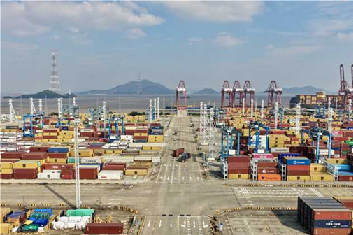
A sophisticated early warning system is helping the world’s largest port by cargo throughput cut weather-related downtime and keep global supply chains moving, officials said.

 Ningbo-Zhoushan Port — the first port in the world to surpass 1 billion metric tons in annual cargo throughput — has held the top global ranking, in terms of cargo throughput, for 16 consecutive years, according to Huang Linlin, deputy director of the traffic management center at the Ningbo Maritime Safety Administration.

The port has managed this feat despite its location in the Yangtze River Delta region, which makes it highly vulnerable to gales, sea fog, and strong convective weather. “Unpredictable conditions can shut down operations for as many as 800 to 1,000 hours annually,” Huang said.

 To address the problem, the Ningbo meteorological bureau has developed a programmatic early-warning and control system, along with a mobile version. Upgraded last year, the platform integrates meteorological, maritime, port, and hydrological data for real-time sharing and provides minute-by-minute alerts directly to frontline operators.

 “It blends forecasts with real-time observations and uses measured data as the basis for more precise management,” Huang said.

During Typhoon Co-may in late July, chief forecasters were stationed at the port’s dispatch center. As the storm’s track shifted, they updated wind forecasts in real time, enabling port managers to adjust work schedules and recover 10 hours of operating time, he said.

 The platform has also proved vital for coordinating vessel traffic, according to Lian Sheng, deputy director of operations at the port’s dispatch center.

 In November, when strong monsoon winds swept the East China Sea, Mediterranean Shipping Co (MSC) — the world’s largest container carrier and one of the port’s biggest clients — ordered several vessels to skip scheduled calls at Ningbo and Shanghai. Its safety team in Geneva, Switzerland, predicted gales of Beaufort scale 9 to 10 along the coast based on European forecasts.

 “That decision meant the ships could not berth as planned,” Lian said.

Foreign shipping companies often only see reports of rough seas offshore and are unaware of how different conditions are once vessels enter the port, causing unnecessary losses. For those operating large container vessels, daily charter costs can run into $100,000 per vessel, Lian explained.

 “While offshore areas saw severe winds, conditions inside the pocket-shaped harbor dropped by force 1 or 2,” Lian said.

 After the weather system passed, port officials communicated with MSC and explained that the port’s localized forecasting tools determined that the weather inside the harbor was milder than the offshore areas due to the shielding effect of the Zhoushan Islands.

The clarification led to a quick turnaround. During a cold air event this week, MSC relied fully on the port’s meteorological guidance, allowing its vessels to enter and leave on schedule. “It shows how precise weather services and smart early warning system can genuinely empower port operations,” he said.

 Since 2024, officials have issued 135 targeted warnings for high-impact weather and conducted 65 coordinated operations for traffic control, Huang said.

 Port statistics show the early-warning system added an estimated 98 hours of workable time last year and generated 370 million yuan ($51 million) in direct economic benefits.

Article inline ad

Companies Expanding In Emerging Markets

0

By ZHOU LANXU and OUYANG SHIJIA | CHINA DAILY | Updated: 2025-11-21

Amid a profound restructuring of the global economic landscape, Chinese enterprises are accelerating expansion in emerging markets in the Middle East and Association of Southeast Asian Nations, shifting from exports to deeper localization and partnerships, executives and analysts said.

 The economic weight of the Global South — represented by the BRICS economies — has been steadily rising, while that of the G7 economies has shown a clear downward trend. This shift is a defining feature of the ongoing global economic restructuring, and enterprises should adapt to this trend, said Huang Wentao, chief economist of China Securities.

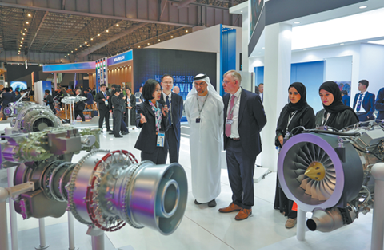
 “China is broadening its global partnerships by deepening economic ties and advancing high-level cooperation with a growing number of countries. Going forward, the nation will accelerate institutional opening-up, creating a strategic window of opportunity for Chinese enterprises to expand globally,” Huang said at the 2026 Global Investor Conference and China-Saudi Arabia Cooperation Forum, co-hosted by China Securities and the Saudi Exchange in Beijing last week.

 Speaking at the forum, Mohammed Al-Rumaih, CEO of the Saudi Exchange, said foreign direct investment from China into Saudi Arabia reached nearly $8.3 billion by the end of last year, up 28.8 percent year-on-year, reflecting the growing size and depth of bilateral economic ties.

 Xu Yuejian, deputy general manager of SANY Renewable Energy’s overseas marketing company, said the Chinese company’s global business has grown rapidly under the Belt and Road Initiative, from being just a supplier of machinery to becoming a partner for technology and project investment in emerging economies like Saudi Arabia.

 Li Xiang, general manager for the Middle East, Africa and Central Asia at Jinko Solar, a Chinese solar module manufacturer, said the company is accelerating efforts to localize its equipment production and workforce in Saudi Arabia.

 “As our industrial chain expands, we need more skilled and adaptable talent,” he said. “That is why we are investing in long-term localization, working hand in hand with local partners in Saudi Arabia to build stronger capabilities.”

 Recommendations of the Central Committee of the Communist Party of China for Formulating the 15th Five-Year Plan for National Economic and Social Development have called for expanding two-way investment cooperation and guiding the overseas distribution of industrial and supply chains in a rational, orderly manner over the next five years.

 Apart from the Middle East, ASEAN has also become one of the fastest-growing markets for Chinese companies’ overseas investments.

 In Thailand, for instance, China’s outbound greenfield investment consecutively reached new highs from 2022 to 2023, focusing on industries such as automobile manufacturing, electronic components and rubber processing, according to a report released by the China Finance 40 Forum, a Chinese think tank, and Kasikornbank, a commercial lender in Thailand.

 The report showed that Chinese manufacturing investment in ASEAN economies is becoming more specialized, with new energy vehicles, lithium batteries and photovoltaics, collectively known as the “new trio”, emerging as major areas of expansion.

 Contact the writers at zhoulanxv@chinadaily.com.cn

Article inline ad

China Champions High-Quality Development Of China-Europe Railway Express

0

By Ouyang Shijia in Beijing and Qin Feng in Xi’an | chinadaily.com.cn | Updated: 2025-11-20

China will intensify efforts to advance the high-quality development of the China-Europe Railway Express, with officials at a recent forum in Xi’an outlining further steps to boost connectivity, strengthen innovation, enhance security and promote deeper integration.

 Zhou Haibing, deputy head of the National Development and Reform Commission, China’s top economic regulator, said future efforts will focus on expanding diversified and efficient routes, upgrading port capacity and improving innovation by strengthening the application of big data and artificial intelligence.

 He added that more efforts will also be made to consolidate security foundations through a whole-chain governance system and enhance spillover effects by deepening the integration of the trains with trade and industry.

 Zhou made the remarks at the second China Railway Express Cooperation Forum held on Tuesday in Xi’an, Shaanxi province. About 450 representatives from 45 countries and regions gathered under the theme “Connecting Asia and Europe for a Shared Future”.

 The forum has produced 111 cooperation outcomes—significantly more than the first forum—providing strong momentum for the high-quality development of China-Europe Railway Express.

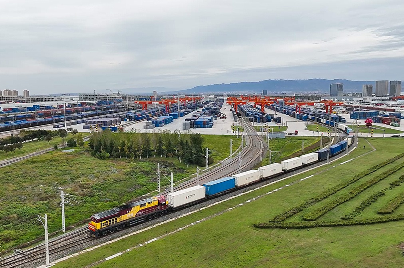
 Official data showed that by the end of October 2025, the China-Europe Railway Express had cumulatively made 118,600 trips, transporting 11.7 million twenty-foot equivalent units (TEUs) of goods. It has reached 232 cities in 26 European countries and more than 100 cities in 11 Asian countries, covering almost the entire Eurasian region.

 Cargo types have expanded to 53 categories, encompassing over 50,000 products. In 2024, high value-added goods such as automobiles, auto parts and machinery accounted for more than 60 percent of total cargo, marking a shift from “smooth flow of trade” to “industrial cooperation”.

 Liang Linchong, director of the Department of Regional Opening-up at the NDRC, said China is promoting a shift from “point-to-point” to “hub-to-hub” operations, forming a land-sea interconnected network linking three domestic corridors in the west, central and east with three overseas corridors in the north, central and south.

 From January to October 2025, China-Europe Trans-Caspian Express made 371 trips, up more than 30 percent year-on-year, official data showed.

 Efficiency improvements and technology adoption became a key consensus at the forum. The China-Europe Railway Express now run about one-third faster than traditional international rail transport, covering 1,600 kilometers per day within China. Transit times for scheduled services have been shortened by more than 30 percent, with the Xi’an-Duisburg journey achievable in as little as 10 days.

Article inline ad

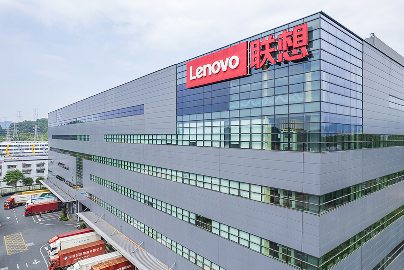
AI Boost Propels Lenovo To Record-Breaking $20.5b Revenue

0

By Ma Si | chinadaily.com.cn | Updated: 2025-11-21

Lenovo Group Ltd delivered historic results for the quarter ending in September, with revenue reaching an all-time high of $20.5 billion, up 15 percent year-on-year, on the back of strong performance in artificial intelligence.

 Adjusted net income also grew 25 percent year-on-year to $512 million.

 Yang Yuanqing, chairman and CEO of Lenovo, said, “Capitalizing on the AI democratization trend, and thanks to our clear strategy, operational excellence and relentless innovation, Lenovo delivered another quarter of record performance, while making important progress in both personal AI and enterprise AI businesses.”

 “We will continue to leverage our unique global and local model to navigate uncertainties and capture the tremendous hybrid AI opportunities, and in doing so not only deliver sustainable long-term returns to our shareholders, but also make AI truly personalized for every individual and every enterprise,” Yang said.

 Lenovo delivered double-digit year-on-year revenue growth across all main business groups and sales geographies. The AI-related revenue mix increased by 13 percentage points year-on-year, accounting for 30 percent of the company’s total revenue this quarter.

 The growth was driven by high-double-digit revenue growth in AI servers and triple-digit revenue growth in AI PCs, AI smartphones and AI services, Lenovo added.

 Lenovo noted that the shift in AI infrastructure from initial build-out to a more human- and enterprise-centric phase is underway, as large language models become commoditized and user priorities shift toward personalization and private domain solutions.

Article inline ad

Schott Charts Fresh Investment Plan

0

By Zhong Nan | CHINA DAILY | Updated: 2025-11-21

With China entering a new era of innovation-driven and green-led growth, German specialty materials manufacturer Schott AG plans to invest more than 60 million yuan ($8.4 million) in Suzhou, Jiangsu province in the coming months, said a senior executive.

 Upon full completion and ramp-up, the project aims to generate an annual output value of more than 1 billion yuan in China by 2030, covering new manufacturing capacity, research and development, and local technology deployment.

 Describing the investment plan as both “strategic” and “inevitable”, Salvatore Ruggiero, vice-president for marketing and communication at the Mainz, Germany-headquartered group, said the decision is fueled by China’s vast market size, strong innovation momentum, rapid emergence of new industries and growing potential for exports.

 As China is about to enter the 15th Five-Year Plan (2026-30) period, Ruggiero said the nation’s policy emphasis on new energy vehicle technologies, advanced electronics and healthcare solutions matches the company’s core strengths.

 “The investment will be concentrated primarily in Suzhou, where Schott already operates key manufacturing and application centers,” he said. “We can’t fully understand China’s market from Europe. We need to innovate in China, with Chinese engineers, for Chinese customers.”

 To strengthen local supply chains and support innovation in China’s automotive industry, Schott’s electronic packaging division launched a new production line in Suzhou in June. The new line focuses on producing key sealing components for airbag systems and new energy vehicles.

 The executive confirmed that Suzhou has been selected for expansion due to factors including a solid base of engineering talent, proximity to major Chinese partners and customers, and the ability to collaborate closely with the company’s Shanghai commercial office.

 “Beyond Suzhou, we are also evaluating additional future capacity in Fuzhou, Fujian province, and possibly Southwest China, depending on downstream demand,” he added.

 Schott provides specialty materials for key components such as ignition systems and sensors for electric vehicles. With EVs now visible “on every street”, the company believes China has become a top priority for new investment, including expanded local material production.

 Eager to seize more market share, Schott is also developing advanced glass-based materials to support artificial intelligence computing and semiconductor growth, and will produce high-precision materials for advanced medical technologies in China. In pharmaceuticals, it is developing low-carbon tubing technologies to meet rising healthcare demand under the Healthy China 2030 initiative.

 Currently, about 90 percent of Schott’s products made in the country are sold domestically, but the new investment will enable exports to Southeast Asia, South Korea and Japan. Still, Ruggiero emphasized that China will remain the company’s top priority, adding: “When we have capacity beyond local needs, we will export.”

 Established in 1884, Schott, supported by 17,400 employees in more than 30 countries and regions, saw its sales revenue reach 2.8 billion euros ($3.24 billion) in its 2024 fiscal year.

 Despite mounting geopolitical headwinds, China’s strong economic resilience, ongoing business-friendly reforms and rising innovation capacity continue to underpin its role as a stabilizing force in the global economy. These strengths are helping to cushion external shocks and sustain growth momentum, said Gao Lingyun, a researcher at the Chinese Academy of Social Sciences’ Institute of World Economics and Politics in Beijing.

 zhongnan@chinadaily.com.cn

Article inline ad