Wednesday, November 25, 2026

Home Blog Page 139

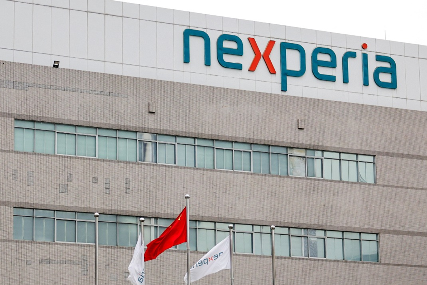
Talks Prompt Dutch Action On Nexperia

0

Netherlands hoped to ‘truly shoulder its responsibilities’ in resolving disputes

By WANG KEJU | CHINA DAILY | Updated: 2025-11-22

China has urged the Netherlands to take further action after the latter suspended its administrative order against chipmaker Nexperia, as Commerce Minister Wang Wentao separately raised the issue with senior officials from the United Kingdom and the United States — a move signaling Beijing’s push for a coordinated international response to safeguard the company’s lawful rights and stabilize the global semiconductor supply chain.

 During a video meeting with UK Secretary of State for Business and Trade Peter Kyle on Thursday, Wang said that the Netherlands’ recent initiative to suspend its administrative order represents “a first step in the right direction toward resolving the issue appropriately”.

 “We hope the Dutch side will truly shoulder its responsibilities, take concrete actions at the earliest opportunity and facilitate companies in resolving internal disputes through lawful consultations, thereby fostering more enabling conditions for restoring security and stability to the still-fragile global semiconductor industry and supply chains,” Wang added.

 Kyle said that a long-term solution lies in relevant enterprises resolving their internal disputes through consultations, and that the UK is willing to communicate with the Dutch side on this matter.

 In a separate meeting with US Ambassador to China David Perdue on the same day, Wang elaborated on China’s position regarding the Nexperia issue as well. During the meeting, Wang said that China and the US need to foster a mindset that the two countries must coexist peacefully and can achieve win-win outcomes by slashing the list of problems and expanding the scope of cooperation.

 On Sept 29, just one day prior to the Dutch ministerial order against Nexperia — the Netherlands-based semiconductor manufacturer owned by China’s Wingtech Technology — the US introduced the Affiliates Rule, which extends equivalent export control sanctions to subsidiaries in which entities already on the US “Entity List” hold more than a 50 percent stake.

 Since Nexperia is wholly owned by Wingtech, the former automatically fell under the same US export restrictions as its parent company. Analysts said that this situation could have triggered the Dutch government’s intervention.

 On Sept 30, the Netherlands invoked a rarely used Cold War-era statute — the Goods Availability Act — to assume control of Nexperia, following what it described as “acute signals of serious governance shortcomings” and concerns that the firm’s former chief executive was seeking to relocate its European operations to China.

 On Nov 10, the US announced it would suspend the implementation of the Affiliates Rule for one year, as part of the outcomes of the China-US trade talks in Malaysia in October. This development provided relief for Nexperia, which was one of the primary companies affected by the rule.

 Earlier this week, the Dutch government also suspended the administrative order following talks with Chinese authorities in Beijing. This “show of goodwill”, according to Dutch Minister of Economic Affairs Vincent Karremans, was a response to measures taken by China to ensure the resumption of chip exports, easing immediate pressure on supply chains.

 Wingtech said in a statement on Thursday night that the Dutch Ministry of Economic Affairs should “permanently” revoke its order while also withdrawing its support in court proceedings, to ensure the restoration of legitimate control to the Chinese shareholders and the reinstatement of all legal rights for Chinese personnel.

 Jian Junbo, director of Fudan University’s Center for China-Europe Relations, said that the ultimate resolution remains uncertain, and the impact on related industries, including automakers, will directly depend on the final settlement by the Dutch government.

 Zhou Mi, a senior researcher at the Chinese Academy of International Trade and Economic Cooperation, said that cooperation between China and the Netherlands in the semiconductor sector remains extensive and holds significant implications for both nations and the global industrial chain.

 wangkeju@chinadaily.com.cn


Article inline ad

Growing Optimism Leads Australian Firms To Further Invest In China

0

By YIN MINGYUE and ZHOU LANXU | China Daily | Updated: 2025-11-21

Almost half of Australian companies plan to increase investment in China, reflecting growing confidence in the bilateral trade and investment relationship, according to a new report released by the China-Australia Chamber of Commerce (AustCham China).

 The 2025 Doing Business in China Flash Report, which polled 730 Chinese and foreign companies active across the China-Australia business corridor, shows strengthening business confidence in the bilateral relationship amid global complexities.

 “Confidence is holding firm and broadening — a sign that the stability we’ve seen in the bilateral relationship is translating into sustained business optimism,” said Vaughn Barber, chair of AustCham China.

 The report notes that the primary driver of this rising confidence is the stabilization of diplomatic relations between China and Australia, while US-China tariff tensions remain the leading negative factor. Nearly eight in 10 firms have responded by adapting or diversifying rather than scaling back — actively managing risks instead of retreating.

 According to the report, nearly 80 percent of respondents report higher confidence in the Australia-China trade and investment relationship since February, with the increase strongest among Chinese-controlled firms.

 “Over the next 12 months, most Australian firms plan to maintain or slightly increase their investment in China, and looking two to three years ahead, the outlook brightens,” said Barber.

 Up to 46 percent of foreign respondents of the survey expect their company’s investment in China to rise — the clearest signal from the survey that short-term caution is paired with long-term commitment, positioning for sustained engagement in the Chinese market.

 This confidence is also reflected in the changing composition of Australian investment, said Barber.

 Advanced manufacturing and high-value goods have jumped around 30 points into the top tier, alongside agribusiness, resource-efficiency technologies, and education and training.

 Australian companies increasingly see China not only as a market, but also as a partner in industrial upgrading and skills development, said Barber.

 “Taken together, these results highlight a relationship that is broadening and deepening — one that, over the next five years, will be increasingly defined by co-development and joint capability,” he added.

 Recommendations of the Central Committee of the Communist Party of China for Formulating the 15th Five-Year Plan for National Economic and Social Development have called for expanding two-way investment cooperation and fostering new strengths in attracting foreign investment in the coming five years.

 The optimism reflected in the AustCham China report echoes sentiment among US businesses operating in China.

 Sean Stein, president of the US-China Business Council, said that most US companies remain deeply committed to the Chinese market. “We’ve seen over the last nine or 10 months that there has not been a significant increase in US companies leaving China.”

 Stein said China is “enormously important” to US businesses, which goes far beyond its vast consumer market. “If you want to be globally competitive, you want to have China in your supply chain.”

 He pointed to the abundance of skilled Chinese talent — from researchers to welders and coders — and the speed of innovation as key factors driving US firms to deepen their footprint. “You can do research in China at ‘China speed’ in a way that you can’t do necessarily in other markets.”


Article inline ad

Strong Demand For China’s Sovereign Bonds Signals Global Confidence

0

By ZHANG ZHOUXIANGin Luxembourg and JIANG XUEQING in Beijing | chinadaily.com.cn | Updated: 2025-11-21

The overwhelming demand for China’s latest offering of euro-denominated sovereign bonds reflects confidence of global investors in the country’s sovereign credit and long-term economic potential, financial professionals and experts said.

 They added that China’s back-to-back issuance of two sovereign bonds in a month also highlights the country’s commitment to high-level opening-up and deeper integration with global financial markets.

 The Ministry of Finance raised 4 billion euros ($4.6 billion) through a dual-tranche offering in Luxembourg on Wednesday — selling 2 billion euros worth of four-year bonds with a coup rate of 2.401 percent and another 2 billion euros of seven-year bonds with an yield of 2.702 percent.

 The offering attracted total orders of 100.1 billion euros, 25 times the issuance amount. The seven-year tranche alone was oversubscribed more than 26-fold.

 The latest offering is China’s second foreign-currency bond issuance this month, with the first being a $4 billion dollar-denominated sovereign bond issuance in Hong Kong two weeks ago.

 Wang Yunfeng, president of HSBC Bank China, said the country’s back-to-back issuance of two sovereign bonds sends a positive signal to investors about China’s commitment to high-level opening-up and deeper integration with global financial markets. HSBC served as a joint lead underwriter and joint bookrunner for the deal.

 Bank of China, another joint lead underwriter, said the offering, which is China’s first euro-denominated sovereign bond issuance in Luxembourg, helps further diversify the country’s foreign-currency sovereign bond portfolio. It also provides global investors with a safe, high-quality asset and sends a clear signal of China’s solid sovereign credit to international markets.

 Moreover, analysts said the overwhelming response to the latest offering reflects global confidence in China’s long-term economic development.

 Samuel Fischer, head of onshore debt capital markets at Deutsche Bank China, a joint lead manager and joint bookrunner for the deal, said this issuance reaffirms global investors’ strong confidence in China’s sovereign credit and macroeconomic fundamentals.

 “The deal further enhances the prominence of Chinese assets in global fixed-income portfolios and strengthens China’s benchmark positioning in the international capital markets,” Fischer said.

 Tian Lihui, university chair professor of finance at Nankai University, said the massive oversubscription of the seven-year tranche indicates that long-term investors see sustained opportunities in the Chinese market.

 According to the ministry, the investor base was diversified in both geography and type, with more than half of the allocations going to European buyers and a sizable share to Asian investors. Sovereign institutions made up 26 percent of the investor base, while funds and asset managers accounted for the largest share, followed by banks, insurers and a small portion of dealers.

 Lynn Song, chief Greater China economist at ING Bank, told Bloomberg that Chinese assets remain underweighted relative to the country’s importance in the global economy, adding that a truly international investment portfolio seeking genuine global representation should include exposure to Chinese assets.

 Speaking to Bloomberg, Keith Cheung, head of debt syndicate for Greater China and North Asia at Standard Chartered said: “Global investors are actively seeking diversification, yet high-quality Asian sovereign bonds denominated in euros remain scarce.”

 “The deal will contribute to developing China’s euro-denominated bond pricing system in the international arena, providing a benchmark for future euro-market financing by Chinese companies,” said Timothy Huang, head of Global Corporate Banking for Greater China at JP Morgan, another joint lead underwriter and bookrunner for the offering.

 Zhang Chenxu contributed to this story.

 Contact the writers at zhangzhouxiang@chinadaily.com.cn

Article inline ad

AI Innovation Powers China’s Lead In Smart Eyewear

0

By FAN FEIFEI | CHINA DAILY | Updated: 2025-11-20

As artificial intelligence is rapidly evolving and spearheading an industrial revolution, Chinese tech heavyweights are doubling down on the burgeoning smart glasses sector, which experts said is expected to become a key gateway for next-generation human-machine interaction and inject new vitality into the global consumer electronics market.

 Fueled by the widespread adoption of large language models, the intelligent and lightweight wearable devices boast strong features such as semantic understanding, voice interaction, image recognition and search functions, allowing users to access information more conveniently and interact with the surroundings in real time, the experts added.

 Estimated figures from market research company International Data Corp show that global smart glasses shipments will reach 12.8 million units in 2025, up 26 percent year-on-year. Shipments from the Chinese market alone are projected to exceed 2.75 million units, surging 107 percent year-on-year and ranking first worldwide.

 In the first half of 2025, shipments from Chinese smart glasses manufacturers surpassed 1 million units, accounting for 26.6 percent of the global total. The compound annual growth rate of China’s smart glasses shipments is estimated to reach 55.6 percent between 2024 and 2029, taking the top spot globally, according to IDC.

 Leading Chinese tech companies are racing to make smart glasses the next mass-market device after smartphones. Baidu recently launched its AI-powered glasses Xiaodu Pro, which weighs just 39 grams and integrates a multimodal large model, supporting an array of AI functions, including translation, object recognition, photography, recording and conference memo.

 Alibaba’s self-developed Quark AI glasses are available for presales on the company’s e-commerce platform, with the official release scheduled for next week. The eyewear is powered by the company’s Qwen LLM and its Quark AI assistant, featuring hands-free calling, music streaming and real-time language translation to compete with United States-based tech company Meta’s smart glasses.

 Ye Qingqing, an analyst at IDC China, said the integration of AI models with lightweight hardware devices will give rise to a new human-machine interaction platform, estimating that the AI glasses market is on track to experience rapid growth in 2026.

 Continuous breakthroughs in multimodal AI perception and semantic understanding technologies, coupled with customized AI services based on massive data from user behaviors, will accelerate the development of the smart glasses industry and the integration of such devices into people’s daily lives, she said.

 Ye estimated that Chinese smart glasses shipments will exceed 4.9 million units next year, driven by technological advancements, improved user experience and decline in prices.

 Zhu Keli, founding director of the China Institute of New Economy, said that Chinese internet companies have accumulated abundant technological strength in AI algorithms, natural language processing and visual recognition.

 “As a next-generation intelligent terminal, AI-powered glasses meet users’ growing demands for interaction and real-time information acquisition,” he said.

 Highlighting that smart wearables are becoming a new growth engine in the consumer electronics market, Zhu said he is bullish on the prospects of AI glasses, which will likely serve as personal digital assistants and deeply integrate with smart homes, vehicle-mounted systems and healthcare applications.

 He called for further efforts to boost innovation in key technologies, such as computing power and optical display, to enhance the performance of devices, enrich the content ecosystem and formulate relevant industry standards.

 Zhu Mingming, founder and CEO of Rokid, a manufacturer of smart glasses based in Hangzhou, Zhejiang province, said that in the next three to five years, “AI-enabled glasses will undergo dramatic changes as more interactions will take place through smart glasses”.

 Last week, Rokid unveiled a lightweight, AI-powered eyewear device in partnership with domestic eyewear brand Bolon. The new device is integrated with leading Chinese AI models, enabling a voice-activated digital assistant.

 fanfeifei@chinadaily.com.cn

Article inline ad

Experts: Advances In Precision Medicine To Reshape Future Of Respiratory Health

0

By Han Jingyan | chinadaily.com.cn | Updated: 2025-11-19

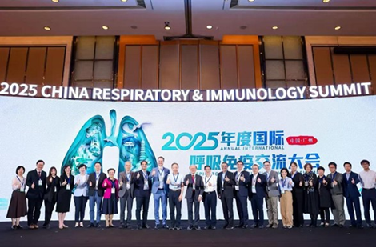
Chinese and foreign medical experts attending a global summit in Guangzhou, Guangdong province, have noted that with chronic respiratory diseases having become a major global public health challenge, advances in precision medicine will reshape the future of respiratory health.

 The 2025 International Respiratory Immunology Summit, held on Nov 15, brought together leading experts to explore the latest academic advances in respiratory immunology and address critical challenges in respiratory health, in order to bolster progress toward precision diagnosis and treatment for chronic respiratory diseases.

 Professor Chen Rongchang, from the First Affiliated Hospital of Guangzhou Medical University, stressed that chronic respiratory diseases now constitute a major global public health challenge.

 He affirmed that while the rapid evolution of respiratory immunology provides vital insights into underlying disease mechanisms, continuously driving innovation in precision targeted therapy, this transformation from symptom relief to tackling fundamental mechanisms offers new hope for altering disease trajectories.

 The summit, hosted by the Beijing Association for the Prevention and Treatment of Chronic Diseases with Integrated Traditional Chinese and Western Medicine and supported by Sanofi China, also intends to design a new blueprint to benefit the grand vision of “Healthy China 2030”.

 Dr Tong Yu, medical head of Sanofi Greater China, emphasized that chronic airway diseases, particularly Chronic Obstructive Pulmonary Disease (COPD) and asthma, pose a substantial burden on patients, families, and society.

 Recent years have witnessed a greater understanding of type 2 inflammatory mechanisms, which play a pivotal role in disease progression and represent a key therapeutic target, Tong said.

 As a global healthcare leader, Sanofi remains dedicated to developing innovative therapies that deliver improved treatment options for patients and drive remarkable scientific progress — especially in type 2 inflammatory chronic airway disease research.

 The summit’s morning session featured three key presentations.

 While delivering his “Overview of Immune Progress in Chronic Respiratory Diseases”, Professor Kian Fan Chung, from Imperial College London, explained that asthma and COPD share common type 2 inflammatory mechanisms primarily driven by IL-4 and IL-13, which can trigger airway remodeling.

 Professor Chen Ruchong from the First Affiliated Hospital of Guangzhou Medical University followed with “Assessment and Identification of Type 2 Inflammatory Biomarkers and Comorbidities”, emphasizing that evaluating type 2 inflammation has become central to managing chronic airway diseases in the precision medicine era.

 “Recognizing type 2 inflammatory comorbidities and implementing co-treatment strategies can maximize individual patient benefits”, Chen Ruchong said.

 In sharing his “Advancing Lung Function Preservation and Recovery”, Professor Frederik Trinkmann, from Heidelberg University in Germany, highlighted cutting-edge technologies for preserving and restoring lung function, noting that lung function assessment plays a vital role not only in screening and diagnosis, but also in predicting long-term prognosis for asthma and COPD patients.

 Delivering opening remarks at the summit’s afternoon session, professor Wen Fuqiang, from West China Hospital of Sichuan University, emphasized the growing importance of biologics in respiratory disease treatment and the direction of precision medicine.

 Professor Matteo Bonini, from Sapienza University of Rome in Italy, presented “Unlocking the Benefits of Early Biologic Therapy in Asthma”, stating that early biologic initiation enables more comprehensive airway inflammation control, preserves lung function, reduces exacerbations, and provides long-term benefits, potentially achieving “clinical remission”.

 Professor Guo Yanfei from Beijing Hospital elaborated on “COPD Entering the Era of Biologics”, stating that COPD treatment has formally entered a new biologic therapy era.

 The attendees also engaged in a discussion on “Initiation Timing and Selection of Biologics Targeting Type 2 Inflammation in Asthma and COPD”, affirming its critical importance and thoroughly exchanging clinical perspectives.

 Professor Zhang Min from Shanghai General Hospital emphasized that developing locally applicable consensus guidelines based on Chinese patient evidence is crucial for enhancing domestic standards and embodying a truly patient-centric approach.

 The participants also discussed “Chinese Asthma Guidelines ‘Tailored to Local Realities’, to improve the Efficiency of Asthma screening, Diagnosis, and Evaluation, and Refine the Application of Biologics”.

 Through Sino-foreign exchanges on advanced diagnostic and therapeutic concepts, the event will positively contribute to optimizing local clinical pathways and enhancing precision targeted therapy efficacy.

 Tong said Sanofi remains committed its mission to “Chase the Miracles of Science to Improve People’s Lives” and also to contributing to the ambitious vision of “Healthy China 2030”.

Article inline ad

Nation Sees Rise In Scale Of Concentrated Solar Power

0

By Zheng Xin | China Daily | Updated: 2025-11-20

China’s concentrated solar power (CSP) sector is accelerating its pace of industrialization and scale-up, with its growth rate far surpassing the global average and domestic technology localization almost reaching self-sufficiency.

 China’s installed CSP capacity grew at an annual compound rate of 11.7 percent between 2020 and 2024, significantly higher than the global rate of 4.24 percent over the same period, according to data released by the China Electricity Council.

 This rapid expansion positions China as a dominant force in the global clean energy transition, it said.

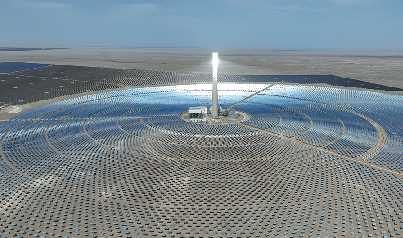
 CSP technology, which uses mirrors to concentrate solar energy to heat a fluid that drives a turbine, has the unique advantage of built-in thermal energy storage. This allows it to generate dispatchable power, providing grid stability by supplying electricity even when the sun is not shining, a feature essential for national energy security.

 According to Yang Kun, executive vice-chairman of the council, China’s installed CSP capacity reached 1.57 million kilowatts across 21 power stations by the end of September, placing it third globally.

 Crucially, the country currently has 30 CSP projects under construction, representing a massive 3.10 million kW of capacity. This makes China the primary contributor to new CSP installations worldwide, he said.

 The rapid iteration of technology and the emerging scale effect have led to a continuous decline in project construction costs, with China’s domestic content rate for CSP technology and equipment now exceeding 95 percent.

 Leading enterprises are playing a central role in achieving technological self-reliance. China General Nuclear Power Corp (CGN), for instance, is accelerating key integrated solar thermal and storage projects, demonstrating the industry’s rapid pace of development.

 According to Ding Yeliang, deputy general manager of CGN New Energy Holdings Co Ltd, construction costs will decline further during the 15th Five-Year Plan period (2026-30), which will significantly enhance the industry’s competitiveness.

 Benefiting from rapid technological iteration and the realization of scale effects, China has nearly halved the on-grid price for concentrated solar power, said the company.

 China’s CSP industry is poised to seize this opportunity, leveraging its technological leadership and massive domestic build-out to embark on a new journey in clean energy development, it said.

 Looking ahead, forecasts indicate robust global growth for the sector. Global CSP installed capacity is expected to increase to 22.4 million kW by 2030. By 2050, solar thermal power is projected to account for approximately 10 percent of the world’s electricity supply.

 zhengxin@chinadaily.com.cn

Article inline ad

Russia Visa-Free Policy Spurs Flight Searches In China

0

By Zhu Wenqian | chinadaily.com.cn | Updated: 2025-11-19

Searches for flights to Russia by Chinese travelers surged following Russian President Vladimir Putin’s announcement on Tuesday that Chinese citizens will soon be able to visit the country visa-free.

 As of 9 am on Wednesday, both the search volume for flights to Moscow and its search growth rate have ranked among top 10 globally, according to Qunar, a Beijing-based online travel agency.

 The top five most popular departure cities according to the searches are Beijing, Shanghai, Guangzhou and Shenzhen of Guangdong province, and Chengdu, Sichuan province, with searches from Beijing in particular ballooning by 3.4 times compared to data from an hour before the announcement.

 Putin said that Russia will introduce visa-free travel for Chinese citizens in the very near future, multiple Russian media outlets including Russia Today reported.

 The move came months after Beijing lifted visa requirements for Russian nationals. From Sept 15, 2025 to Sept 14, 2026, a visa-free policy is being tested for holders of ordinary passports from Russia, according to China’s Ministry of Foreign Affairs.

 The search volume for flights from Chinese cities to St. Petersburg has also grown significantly, with some of the most popular departure cities including Wuhan, Hubei province, Tianjin, Shanghai and Guangzhou.

 Since the beginning of this year, Russia has been one of the fastest-growing outbound travel destinations. As of Wednesday, the number of hotel bookings in Russia this year has grown by 43 percent over the same period last year, while the number of flight bookings has risen by 29 percent year-on-year, Qunar found.

 So far, the number of flights operating between China and Russia has rebounded to 94.9 percent of the pre-pandemic level seen in 2019. Among these flights, Chinese carriers operate more than 52 percent, according to Flight Master, a Chinese travel services platform.

Article inline ad

China’s CSP Industry Drives Global Clean Energy Transition

0

By Zheng Xin | chinadaily.com.cn | Updated: 2025-11-19

China’s concentrated solar power (CSP) industry is accelerating its pace of industrialization and scale-up, with growth rates far surpassing the global average and domestic technology localization reaching near-full self-sufficiency.

 From 2020 to 2024, China’s installed CSP capacity grew at an annual compound rate of 11.7 percent, significantly higher than the global growth rate of 4.24 percent over the same period, according to figures from the China Electricity Council.

 This rapid expansion positions China as a dominant force in the global clean energy transition, it said.

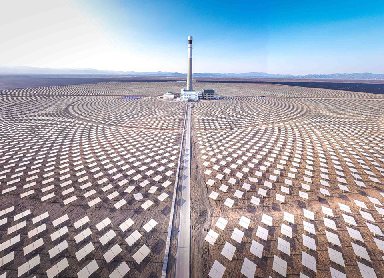
 CSP technology harnesses solar energy by using mirrors to concentrate sunlight and heat a fluid that drives a turbine. Its unique advantage lies in built-in thermal energy storage, enabling the generation of dispatchable power—providing grid stability by supplying electricity even when the sun is not shining—a feature essential for national energy security.

 According to Yang Kun, executive vice-chairman of the council, China’s installed CSP capacity reached 1.57 million kilowatts (kW) across 21 power stations by the end of September, placing it third globally.

 Crucially, the country currently has 30 CSP projects under construction, representing a massive 3.10 million kW of capacity. This makes China the primary contributor to new CSP installations worldwide, he said.

 The rapid iteration of technology and the emerging scale effect have led to a continuous decline in project construction costs, with China’s domestic content rate for CSP technology and equipment now exceeding 95 percent.

 Leading enterprises are playing a central role in achieving technological self-reliance. China General Nuclear Power Corp (CGN), for instance, is accelerating key integrated solar thermal and storage project, demonstrating the industry’s rapid pace of development.

 CGN New Energy Holdings Co Ltd anticipates that construction costs will decline further during the 15th Five-Year Plan period (2026-2030), which will significantly enhance the industry’s global competitiveness.

 Looking ahead, forecasts indicate robust global growth for the sector. Global CSP installed capacity is expected to increase to 22.4 million kW by 2030. By 2050, solar thermal power is projected to account for approximately 10 percent of the world’s electricity supply.

Article inline ad

Experts: Dutch Suspension Of Nexperia Order Should Be Followed By Concrete Steps

0

By Zhong Nan | chinadaily.com.cn | Updated: 2025-11-20

The Netherlands’ move to suspend its administrative order against Nexperia – a Chinese-owned semiconductor company based in the Netherlands – will only be meaningful if the Dutch government takes concrete steps to restore stability to the global semiconductor industrial and supply chains, experts said on Thursday.

 Chinese and Dutch government officials held two rounds of consultations regarding the Nexperia issue in Beijing on Tuesday and Wednesday. During the talks, the Dutch side offered to suspend the administrative order issued under the “Availability of Goods Act”, according to a statement released by China’s Ministry of Commerce.

 For China, the “suspension” of the order is substantive only if the Netherlands takes steps to re-establish the conditions to their prior state, before its government intervened, Wang Yong, a professor of international relations at Peking University, said.

 “The real measure of non-interference will be whether the Chinese-appointed leadership can return and the nationalization measures are rescinded,” Huang Mengmeng, an associate researcher at the Chinese Academy of Social Sciences’ Institute of European Studies, said.

 Huang said a credible solution requires not only suspension, but also concrete assurances that similar administrative interventions will not be repeated.

 A spokesperson for the Ministry of Commerce said on Wednesday that China welcomes the Dutch move as “a first step in the right direction”, toward a proper resolution of the issue. However, it cautioned that this falls short of addressing the root cause — the need to fully revoke the administrative order.

04 14China hopes the Dutch side will continue to demonstrate sincerity in cooperating with China and put forth genuinely constructive proposals to resolve the problem, the spokesperson said.


Article inline ad

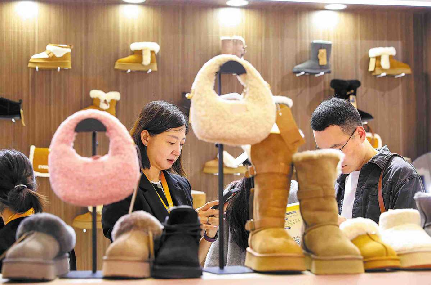
Foreign Firms Bullish On China’s Consumption Drive

0

China Daily | Updated: 2025-11-20

Editor’s Note: As China steps up efforts to boost domestic demand and drive consumption-led growth, foreign corporations are uniquely positioned to seize the opportunities presented by this transformative period. China Daily examines how these companies are aligning with China’s new round of high-standard opening-up policies, embracing emerging tech innovation trends and expanding their presence in a market that increasingly values high-quality development and upgraded consumption.

 Q1 The 15th Five-Year Plan (2026-30) draft recommendations emphasize high-quality development and the modernization of industrial systems. How do you view China’s long-term economic resilience and growth potential? How will your company seize opportunities in the Chinese market to achieve shared growth with China’s economy?

 James Zhao, executive vice-president and region head of Greater China, Hitachi Energy

Zhao: Focusing on high-quality development and building a smart and green modern industrial system will power the next-level of economic and social development in China. As a global technology leader, Hitachi Energy’s purpose is to “inspire the next era of sustainable energy”. We are well positioned to support China to realize the goals across the utility, industry, transportation, data centers and infrastructure sectors. With over a century in pioneering mission-critical technologies like high-voltage products and transformers, we are addressing the most urgent energy challenge of our time — balancing soaring electricity demand while decarbonizing the power system. As a company deeply rooted in China for over four decades, we are strengthening our footprint across the country by continuous investment and upgrading of our facilities.

 Chen Pu, chief Asia officer of Syensqo

Chen: We are very optimistic about China’s long-term growth and economic resilience. The 15th Five-Year Plan’s focus on high-quality development and industrial modernization aligns closely with Syensqo’s strengths in innovation and sustainability. We see great opportunities in key areas such as air mobility, electrification, smart agriculture and advanced healthcare — all of which depend on advanced specialty chemical solutions. Our strategy emphasizes localization and strong partnerships with Chinese companies, allowing us to support China’s goals while expanding our own business. By working closely with local partners, we aim to deliver solutions that drive high-quality growth for both China and Syensqo. We are confident this approach will lead to shared success in the years ahead.

 Ren Xinting, KraussMaffei China managing director

Ren: China boasts the world’s most complete industrial system, bolstered by strong policy support for manufacturing and a firm commitment to open development. This gives me strong conviction that the Chinese market has the solid resilience needed to navigate global economic and industrial transformations, and has the solid foundation required for sustained and sound economic development. As an upstream equipment manufacturer, KraussMaffei views this grand blueprint for a world-class innovation environment and advanced manufacturing with full confidence, reinforcing our commitment to deepening our development in China. By leveraging our global innovation resources and our deep understanding of the local market, we are uniquely positioned to meet China’s emerging demands in advanced manufacturing, green and low-carbon development, and high-end equipment. We are dedicated to working closely with our Chinese partners to achieve mutual success.

 Gus Pichot, Fortescue growth and energy CEO

Pichot: China has proven time and again that it can adapt and lead through change. Its focus on high-quality growth and modernization shows a clear long-term vision. For Fortescue, China isn’t just a key market — it’s a long-term partner. Our relationship spans more than two decades. We supply iron ore to most of China’s leading steelmakers. Today, that partnership is expanding as we work alongside green energy and technology leaders to advance the green energy transition. This evolution reflects how Fortescue’s engagement with China has grown from traditional trade to deep collaboration. Beyond trade and economics, we’re also seeing China take a leadership role in steering global transition — not just adapting to climate challenges, but actively shaping solutions through technology, renewable energy build-out and industrial innovation.

 Q2 The plan calls for advancing high-level scientific and technological self-reliance and fostering new quality productive forces. How do you view China’s policy direction in innovation and emerging industries? How will your company’s R&D or technological innovation in China align with and contribute to this development process?

 Zhao: Innovation is the DNA of Hitachi Energy, and it’s the cornerstone of our century-old legacy. Hitachi Energy has been constantly going beyond our boundaries to advance the energy system to be more affordable, reliable and sustainable. China’s innovation-driven development strategy has created a favorable environment for us to co-innovate with local customers and partners to shape a modern power system. We believe three fundamental technologies will drive the evolution of the power system, namely power electronics, digitalization and service, and sustainable products. We recently helped a local utility company deploy software solutions to its transformers, enabling real-time analysis of operations and conditions. This greatly helps improve transformer availability, reduce unnecessary maintenance and enhance operational reliability.

 Chen: We view China’s focus on scientific and technological self-reliance as a positive, forward-looking goal. This aligns well with Syensqo’s commitment to innovation and advanced technology. In China, our major research & innovation center in Shanghai is our largest in Asia and third largest globally, with 10 percent of our local workforce dedicated to R&I and 30 percent holding PhDs. We invest in green chemistry, advanced materials and digital solutions. Our material application development lab and new automotive lab in Shanghai help us respond quickly to local needs and leverage AI for innovation. By partnering with local companies and universities, we co-develop solutions that support China’s transformation and build a more resilient industrial ecosystem.

 Ren: The 15th Five-Year Plan charts a clear and determined course for China’s future industrial and technological development, underscoring the nation’s deep commitment to innovation. At KraussMaffei, we have clearly seen the robust policy support for China’s manufacturing transformation and its dynamic innovation ecosystem. This gives us great confidence in partnering with our Chinese industry-chain counterparts to drive high-quality development together. KraussMaffei is focused on building a collaborative, chain-wide innovation ecosystem, one that creates systemic synergy to translate technological breakthroughs into industrial upgrades. We are actively shaping our “Innovate in China, Drive Global Growth” strategy, serving as a model for integrating Chinese and global industrial and innovation chains. As an exhibitor with a perfect attendance record, we are proud to have recently participated in the CIIE for the eighth consecutive year. In our “Future Tech” sector, we will showcase innovative solutions tailored for China’s strategic emerging industries, including the low-altitude economy and embodied intelligence, offering our partners clear, proven pathways based on our global successes.

 Pichot: What’s exciting about China’s approach is how seriously it takes innovation, not as a slogan, but as the foundation for long-term growth. The push to build new quality productive forces aligns closely with what Fortescue is doing to decarbonize its mining operations, using R&D and technology to reinvent how industry operates. Our work in China focuses on renewable energy and decarbonization — solar, wind, batteries and energy storage. We see a huge opportunity to learn from China’s speed, scale and technical capability as we work together to accelerate the global energy transition.

 Q3 China is committed to high-level opening-up and high-quality Belt and Road cooperation. How do you view China’s role in global industrial and supply chains? How does your company position itself as a key participant in China’s new pattern of openness?

 Zhao: China has been upholding its opening-up policy for nearly four decades. Hitachi Energy is a witness, a contributor and a beneficiary of the policy. Over the four decades, we have become a company with a full value chain setup, including over 10 manufacturing sites in China. Now Hitachi Energy is deepening its local presence by expanding investments in several sites. Meanwhile, some of our local operations are becoming an integral part of the company’s global supplier base. Following Chinese enterprises “going global”, Hitachi Energy has partnered with over 400 Chinese companies across 100+ countries and regions. In the coming years, we will continue to leverage our technological expertise and global resources to collaborate with Chinese engineering, procurement and construction firms to build a green Belt and Road, and to enable global energy transition.

 Chen: We see China as a vital hub in global industrial and supply chains, playing a leading role in driving innovation, efficiency, and connectivity across regions. China’s commitment to high-level opening-up and high-quality Belt and Road cooperation not only strengthens its own economy, but also creates new opportunities for international collaborations. Syensqo has been present in China for over 40 years. Our “China-for-China” strategy is focusing on localization and building strong partnerships with Chinese companies to build the supply chain. This approach enables us to respond quickly to local needs and contribute to the development of resilient, sustainable supply chains. By aligning our operations with China’s new pattern of openness, we aim to be a trusted partner in supporting China’s integration into global value chains and advancing high-quality development together.

 Ren: China’s steadfast commitment to opening-up, combined with its enormous market, dynamic innovation environment and comprehensive industrial and supply chain systems, makes it an undeniable stabilizing force and growth engine for the global economy. This, in turn, provides companies operating in China with a stable and expansive market environment rich in opportunities. KraussMaffei is dedicated to demonstrating, through our own operations, a premier model of win-win cooperation and exchange between China and the world. In active support of the Belt and Road Initiative, our China team’s responsibilities have now expanded to include the Southeast Asia market. We are exporting the tangible benefits, mature expertise and innovative digital solutions honed from our success in China to empower local industrial development across the region.

 Pichot: China plays a critical role in global supply chains, especially in green energy and manufacturing. Its commitment to openness, free markets and international cooperation gives companies like Fortescue the confidence to work together for long-term mutual benefit. A continued focus on open and free markets will be critical to sustaining this growth, helping China maximize its own benefits and reinforcing its position as a trusted, high-value partner in global trade and innovation. We rely on strong partnerships with Chinese suppliers and technology companies — from equipment manufacturing to renewable infrastructure. These relationships are vital to accelerating the global shift to green energy. As China deepens international cooperation, Fortescue is proud to be part of that journey, not just as a supplier or customer, but as a genuine partner in building a new green industrial ecosystem.

 Q4 The plan underscores green development and shared prosperity. How does your company pursue sustainable operations in China while contributing to the Chinese society, local partnerships and inclusive growth?

 Zhao: China is accelerating the development of a new energy system, steadily advancing toward peaking carbon emissions and actively addressing climate change to build a beautiful China. These goals are closely aligned with Hitachi Energy’s vision.

 Sustainable solutions and technologies are a key area for Hitachi Energy to support our partners to build a new type of energy system. For instance, we just launched the world’s first 550 kilovolt SF6-free gas insulated switchgear in China this year. The alternative gas in the equipment replaces the potent greenhouse gas SF6, significantly cutting emissions.

 On our own sustainability journey, Hitachi Energy runs all sites on 100 percent non-fossil energy in China. In 2023, we launched an education support program in Sichuan province, partnering with schools and NGOs to empower ethnic minority children.

 Chen: Sustainability is central to Syensqo’s strategy in China. Over 80 percent of our innovation pipeline is focused on sustainable solutions, and we aim for 18 percent of sales from circular products by 2030 — already reaching 16 percent. In China, 100 percent of our manufacturing sites use renewable energy. We have developed digital tools to calculate product carbon footprints, expanded mass balance products, and worked closely with suppliers to meet greenhouse gas standards, thus reducing emissions across the supply chain.

 Our solutions help industries lower emissions through electrification, reducing weight, advanced connectivity and resource efficiency. We produce natural vanillin from rice husk waste, recycle metals from used electric vehicle batteries and offer biobased beauty ingredients. These efforts create value for the society, the environment and the economy, supporting China’s green and inclusive growth.

 Ren: KraussMaffei firmly believes that true sustainability isn’t just a feature, but a systemic capability that must be woven into both product function and the entire production process. As an upstream equipment manufacturer, our commitment is to help the industry achieve high-quality development while maximizing environmental benefits.

 A prime example is how KraussMaffei’s ColorForm technology disrupts conventional processes by seamlessly blending decoration, protection and functionality. This gives customers a clear competitive edge in sustainability, high-volume production and design flexibility.

 At the eighth CIIE, KraussMaffei presented a comprehensive showcase of automotive solutions that not only drove the industry’s shift toward intelligent and lightweight manufacturing, but also enabled more efficient, green production. Fostering local partnerships and inclusive growth is another vital component of KraussMaffei’s deepening commitment to China. Our entry into the smart sanitary ware sector, for instance, began with a partnership established at the third CIIE.

 Since then, we have deepened our engagement in this field, pooling resources to foster highly efficient collaboration across the innovation and industrial chains within the South China region. Just recently, this effort culminated in our third Smart Sanitary Ware Forum in Xiamen, Fujian province, which brought together over 100 guests from industry, academia and research to jointly explore cutting-edge technologies and future market trends.

Article inline ad